Dear friends,
As we walk through the bustling cities and quiet coastal towns of Asia, we often forget that the “Far East” was never far from the heart of the Great Commission. From the very moment our Lord commanded His disciples to go forth to the ends of the earth, the light of Christ began to flicker across the vast landscapes of this continent. Today, we stand in awe of the physical structures—the stone, the mortar, and the wood—that have survived centuries of change, conflict, and growth to remain as beacons of the Catholic faith.
In this journey, we are not merely looking at architecture or historical dates. We are looking at the faithfulness of God. Each of these churches represents a “yes” whispered by missionaries like St. Francis Xavier or St. Thomas the Apostle, and a “yes” shouted by generations of local believers who kept the flame of faith alive through persecution and peace alike. To visit these sites is to realize that the Church is truly universal, a home for every tribe and nation under heaven.
I invite you to join me as we travel from the shores of India to the islands of the Philippines and the historic neighborhoods of China. Let these sacred spaces remind us that while empires may rise and fall, the Word of the Lord endures forever. May your heart be encouraged as we witness how the Christian Way has been carved into the very soil of Asia over the last two thousand years.
A Summary of Sacred Treasures
| Rank | Church Name | Location | Founded/Established |
|---|---|---|---|
| 10 | St. Joseph’s Cathedral | Hanoi, Vietnam | 1886 |
| 9 | Holy Rosary Church (Kalawar) | Bangkok, Thailand | 1787 |
| 8 | San Agustin Church | Manila, Philippines | 1607 |
| 7 | Basilica of Bom Jesus | Goa, India | 1605 |
| 6 | Cathedral of the Immaculate Conception (Nantang) | Beijing, China | 1605 |
| 5 | Basilica Minore del Santo Niño | Cebu, Philippines | 1565 |
| 4 | San Thome Basilica | Chennai, India | 1523 |
| 3 | St. Paul’s Church (Ruins) | Malacca, Malaysia | 1521 |
| 2 | St. Mary’s Forane Church | Champakulam, India | 427 AD |
| 1 | St. Thomas Syro-Malabar Church | Palayur, India | 52 AD |
Top 10. St. Joseph’s Cathedral — Hanoi, Vietnam (1886)
Rising like a silver-grey sentinel in the heart of Hanoi’s Old Quarter, St. Joseph’s Cathedral is a stunning testament to the French missionary spirit in Indochina. Built in the Neo-Gothic style to resemble Notre Dame de Paris, its twin bell towers and stained glass windows offer a slice of European devotion amidst the vibrant Vietnamese culture. When you step inside, the scent of incense and the hushed prayers of the faithful remind us that this is a living house of God, not just a relic of the colonial past.
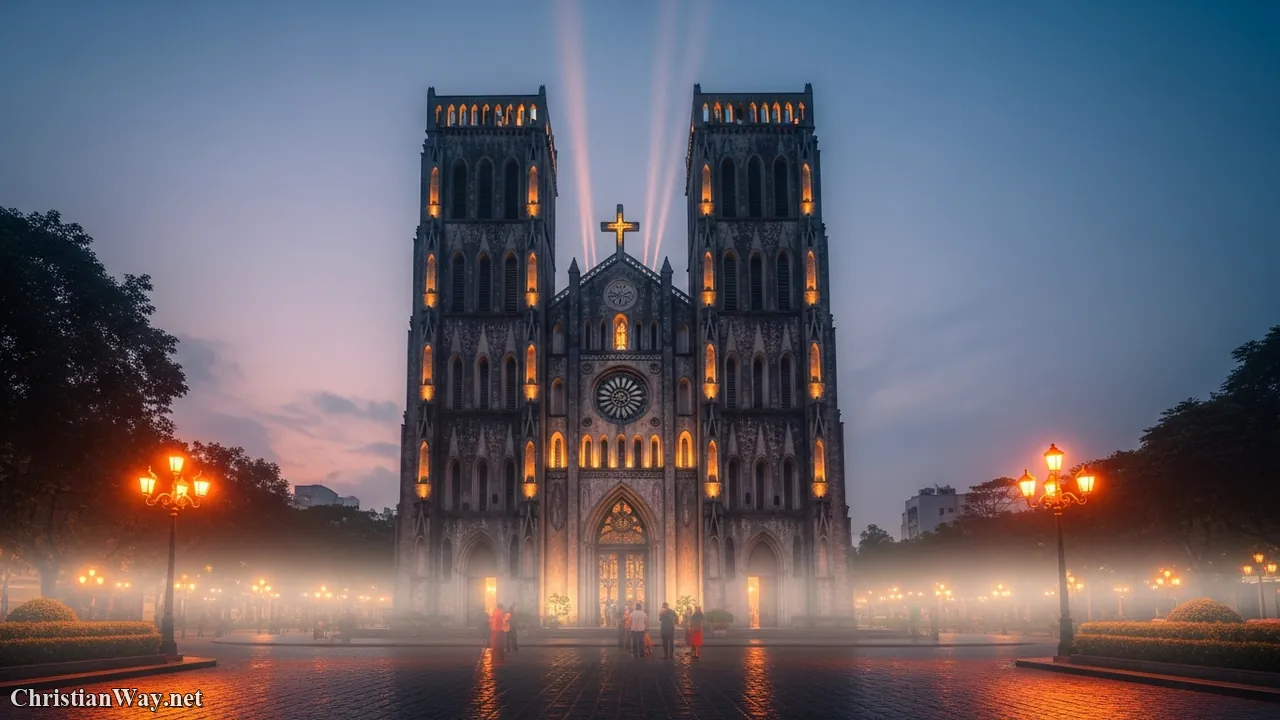
Theology often finds its way into the very stones of such buildings. The cathedral is dedicated to St. Joseph, the patron of the universal Church and of Vietnam itself. Just as Joseph protected the Holy Family in their flight to Egypt, this cathedral has stood through the turbulence of the 20th century, sheltering a community that has known both great suffering and great joy. For the weary heart, it serves as a reminder that God provides a sanctuary even in the busiest of cities.
Spiritual Highlights:
- Modeled after the Gothic majesty of Notre Dame de Paris.
- “Behold, I am with you always, to the end of the age.” — Matthew 28:20
- Symbolizes the resilience of the Vietnamese Catholic community.
Top 9. Holy Rosary Church (Kalawar) — Bangkok, Thailand (1787)
Turning our hearts to the banks of the Chao Phraya River, we find the Holy Rosary Church, known locally as Kalawar. Established by Portuguese Catholics after the fall of Ayutthaya, the current Gothic Revival structure dates to the late 19th century, but the foundation of faith here is much older. Its soaring spire and the intricate carvings of its facade reflect a community that refused to let their faith be washed away by the tides of history.
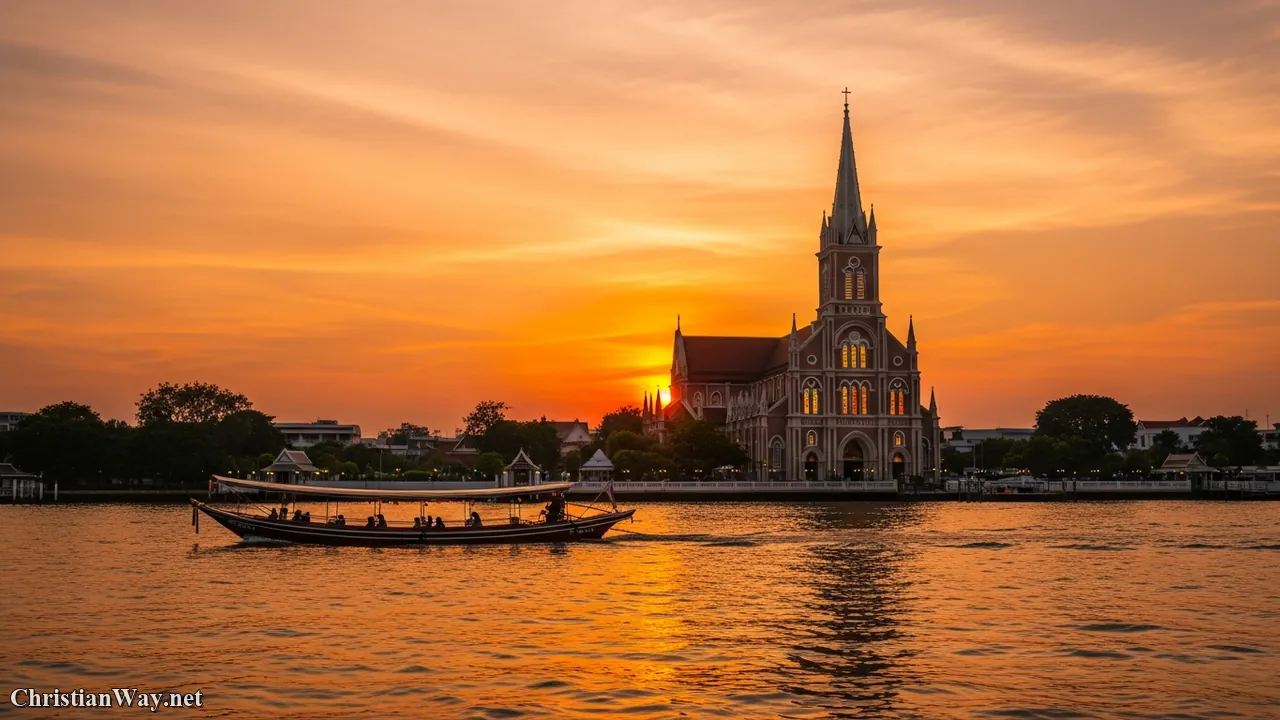
The name “Kalawar” is derived from the Portuguese “Calvario,” reminding us that our journey with Christ always leads us to the foot of the Cross before it leads to the Resurrection. In a nation where Christians are a small minority, this church stands as a witness to the beauty of the Gospel. It challenges us to be “the salt of the earth,” preserving the flavor of God’s love even when we feel outnumbered by the world around us.
Spiritual Highlights:
- Famous for its exquisite stained-glass windows depicting the life of Christ.
- Founded by refugees who carried their faith as their most precious possession.
- A quiet refuge of Marian devotion in the heart of bustling Bangkok.
Top 8. San Agustin Church — Manila, Philippines (1607)
As we journey deeper into the archipelago of the Philippines, we enter the walled city of Intramuros to find San Agustin Church. Completed in 1607, it is the oldest stone church in the Philippines and has survived countless earthquakes and the ravages of World War II. Its massive buttresses and “Earthquake Baroque” architecture are a physical manifestation of a faith that is built upon the rock, unshakeable even when the ground beneath it trembles.
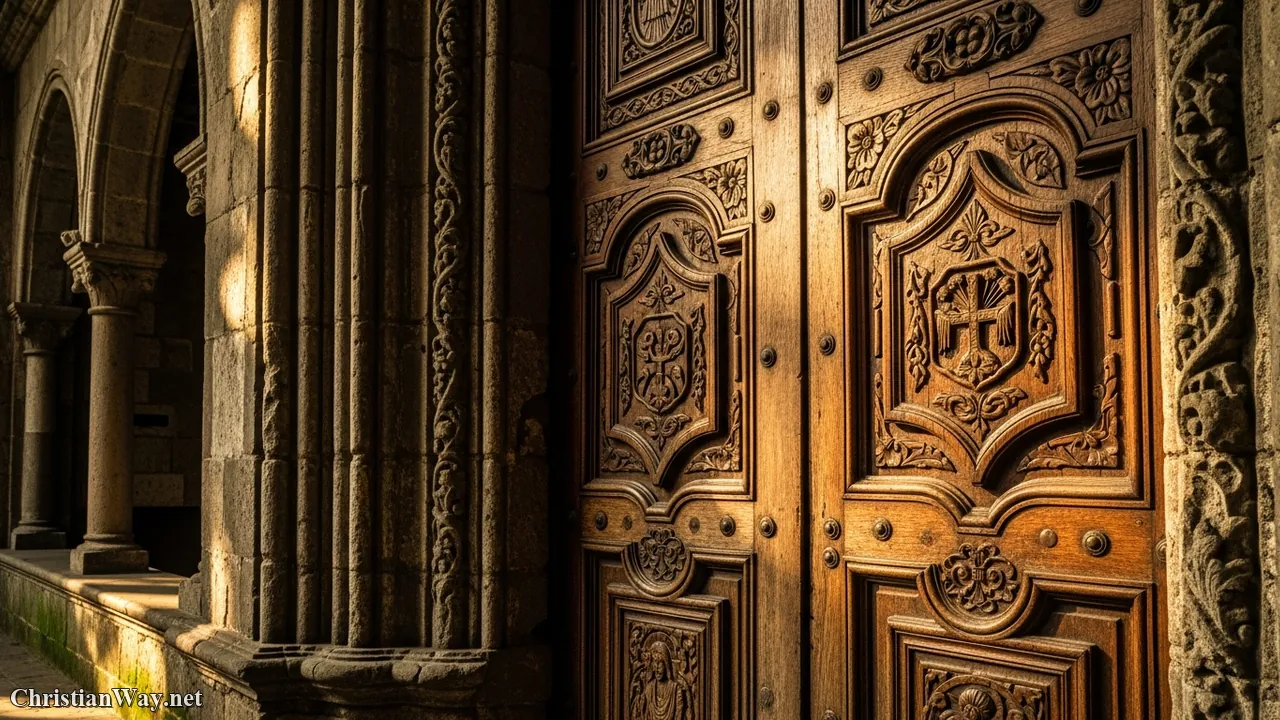
Inside, the trompe-l’oeil ceilings create an illusion of depth and height, lifting the soul toward the heavens. It is a place where history and eternity meet. We are reminded of the Augustinian friars who brought the sacraments to these shores, sowing seeds that would eventually make the Philippines the largest Catholic nation in Asia. It teaches us that true strength is found in endurance and that God’s grace is the mortar that holds our lives together.
Spiritual Highlights:
- A UNESCO World Heritage site and a National Historical Landmark.
- “The rain fell, and the floods came… but it did not fall, because it had been founded on the rock.” — Matthew 7:25
- Home to the tomb of Miguel López de Legazpi, the first Spanish Governor-General.
Top 7. Basilica of Bom Jesus — Goa, India (1605)
In the quiet, palm-fringed ruins of Old Goa stands the Basilica of Bom Jesus, perhaps one of the most famous churches in the entire Christian world. Completed in 1605, this Jesuit masterpiece is a jewel of Baroque architecture. Its simple, unplastered brick exterior hides an interior of immense spiritual wealth, most notably the silver casket containing the incorrupt remains of St. Francis Xavier, the “Apostle of the Indies.”
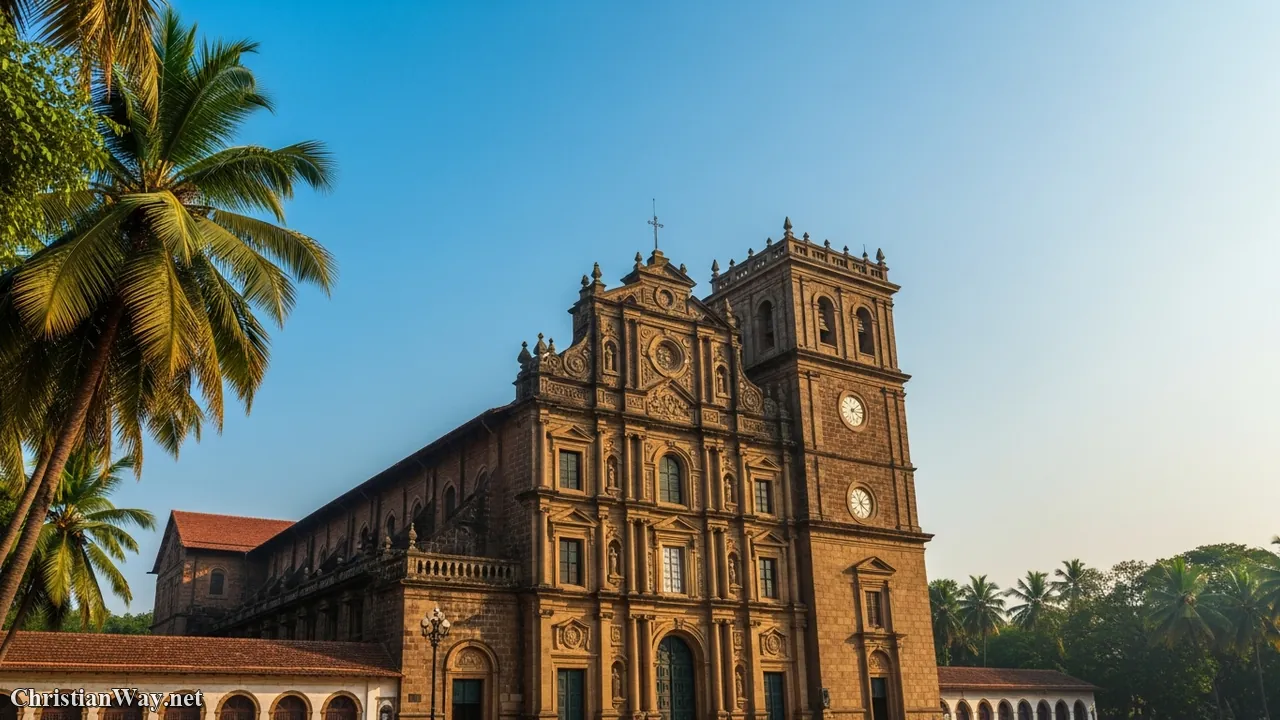
St. Francis Xavier’s life was a testament to the missionary heart of the Church—restless, burning with love, and eager to share the “Good Jesus” (Bom Jesus) with every soul he met. Standing before his tomb, one cannot help but feel the call to evangelization. The Basilica reminds us that our bodies are temples of the Holy Spirit and that a life poured out for Christ leaves a fragrance that never fades. It is a place of pilgrimage where the weary find strength in the witness of a saint.
Spiritual Highlights:
- Holds the sacred relics of St. Francis Xavier.
- A prime example of the Jesuit “Baroque” style in the East.
- Designated as a Minor Basilica, reflecting its international spiritual importance.
Top 6. Cathedral of the Immaculate Conception (Nantang) — Beijing, China (1605)
In the midst of the soaring skyscrapers of modern Beijing lies the “South Cathedral” or Nantang. Its origins trace back to 1605, when the great Jesuit missionary Matteo Ricci established a small chapel on this site. While the building has been destroyed and rebuilt several times, the current structure remains a vital center for the Catholic community in China’s capital, standing as a bridge between East and West.
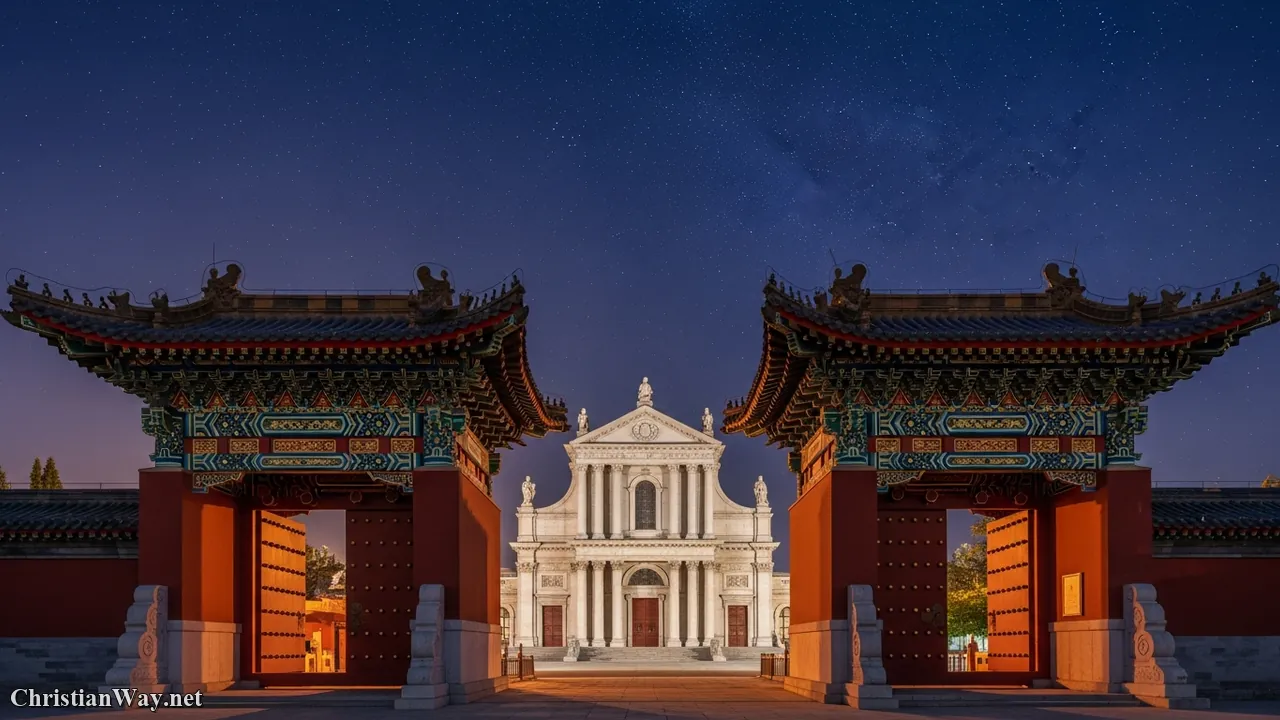
Matteo Ricci believed in “inculturation”—the idea that the Gospel can take root in any culture without destroying what is beautiful within it. The Nantang is a physical symbol of this dialogue. Here, we see the Church as a mother who speaks many languages. For the modern believer, this cathedral is a call to pray for our brothers and sisters in China, that they may continue to flourish as “Immaculate” witnesses to Christ’s love in a changing world.
Spiritual Highlights:
- Founded by the venerable Matteo Ricci, a pioneer of cultural dialogue.
- The oldest continuous Catholic site in Beijing.
- A symbol of the enduring presence of the Holy Spirit in the heart of China.
Top 5. Basilica Minore del Santo Niño — Cebu, Philippines (1565)
We return to the Philippines, to the very spot where the first seeds of the faith were planted. The Basilica of the Holy Child (Santo Niño) in Cebu stands on the site where Spanish explorers found a small statue of the Christ Child in 1565. This church is the spiritual heart of the Philippines, where the “Sinulog” festival draws millions of devotees who dance in honor of the King who became a child for our sake.
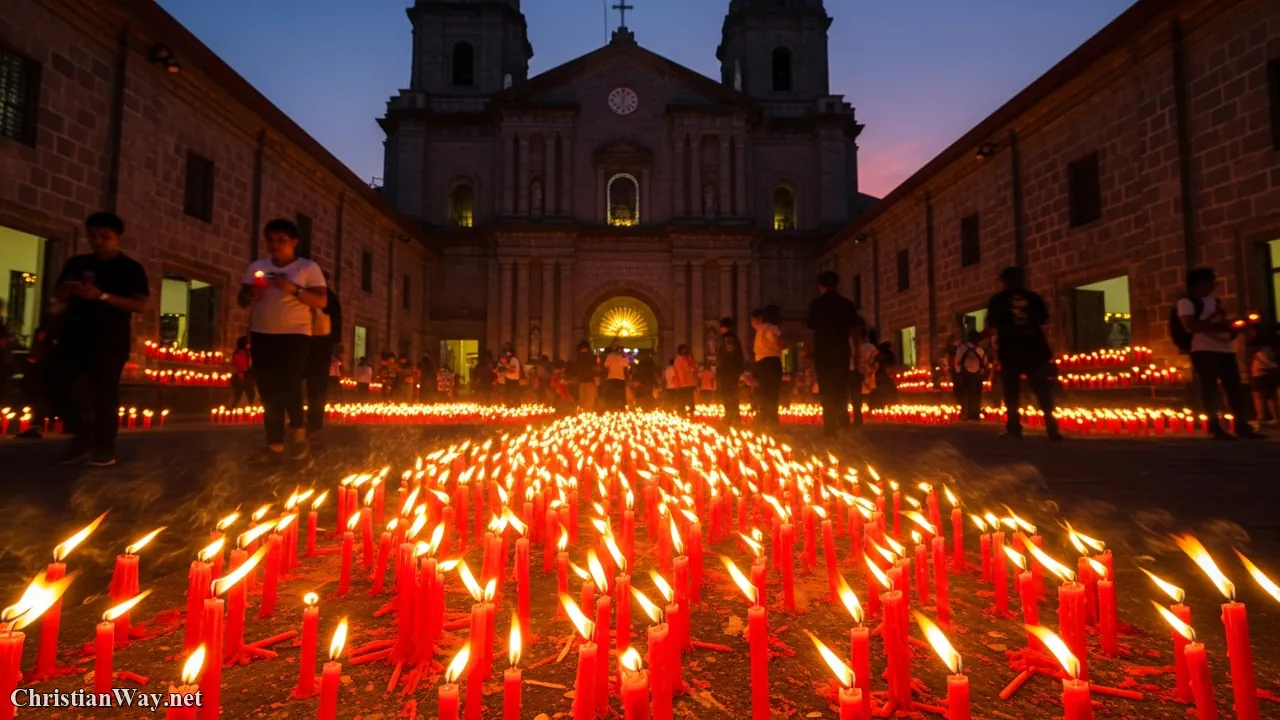
The devotion to the Santo Niño reminds us of our Lord’s words: “Unless you turn and become like children, you will never enter the kingdom of heaven.” The Basilica is not just a building; it is a cradle. It teaches us that the path to greatness in God’s eyes is through humility and trust. When we look at the small, regal figure of the Santo Niño, we see the God who holds the universe in His hands, yet allows Himself to be held by us.
Spiritual Highlights:
- Houses the oldest religious icon in the Philippines, given by Magellan.
- “Let the children come to me, and do not hinder them.” — Luke 18:16
- The cornerstone of Christianity in the Far East.
Top 4. San Thome Basilica — Chennai, India (1523)
In the coastal district of Mylapore in Chennai, we find a cathedral that connects us directly to the apostolic age. The San Thome Basilica is built over the tomb of St. Thomas the Apostle, who is said to have reached the shores of India in 52 AD. The current Neo-Gothic structure, built by the Portuguese in 1523 and later renovated, stands as one of only three churches in the world built over the tomb of an Apostle (the others being St. Peter’s in Rome and Santiago de Compostela in Spain).
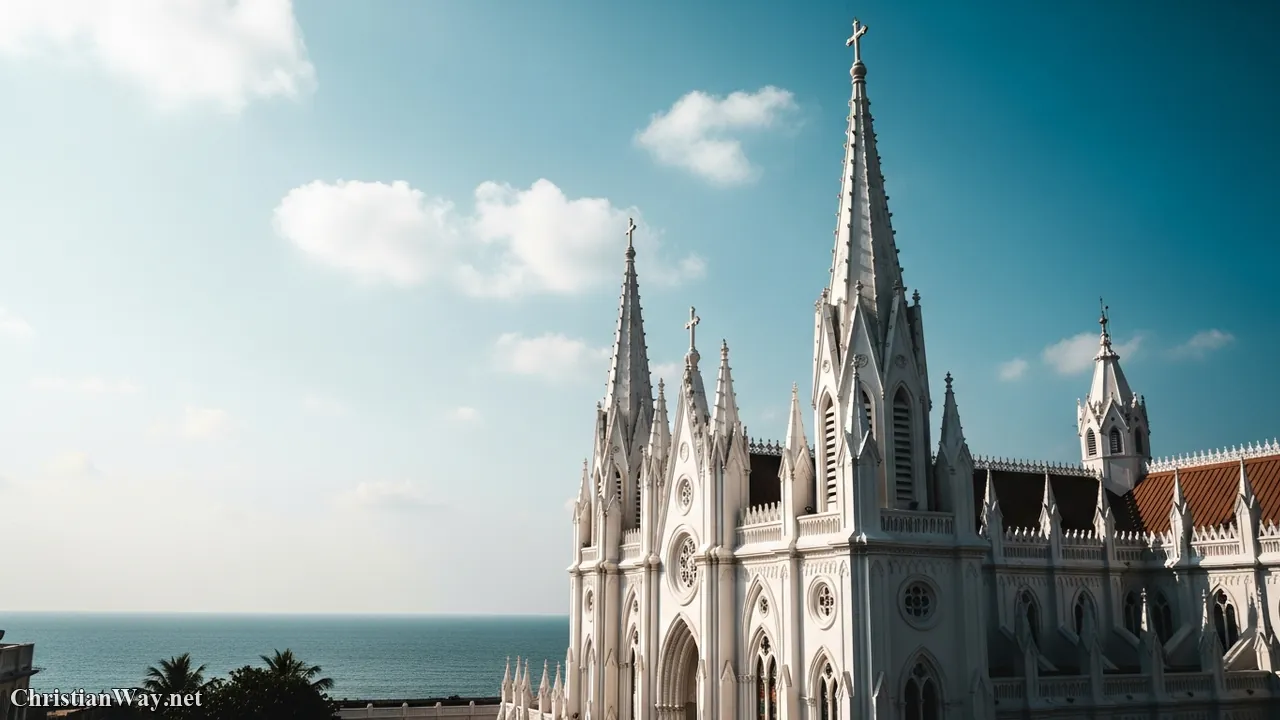
St. Thomas is often remembered for his doubt, but his journey to India proves his ultimate faith. He traveled further than any other Apostle to bring the Gospel to the subcontinent. The Basilica invites us to move from “doubting Thomas” to “confessing Thomas,” crying out with him, “My Lord and my God!” It is a place where the ancient history of the Church in India breathes, reminding us that we are part of a lineage that stretches back to the Upper Room.
Spiritual Highlights:
- Built over the actual burial site of St. Thomas the Apostle.
- A rare pilgrimage site of global apostolic significance.
- Features a museum with ancient relics and artifacts from the saint’s life.
Top 3. St. Paul’s Church (Ruins) — Malacca, Malaysia (1521)
High atop St. Paul’s Hill in Malacca, the roofless walls of St. Paul’s Church stand as a hauntingly beautiful monument to the early Portuguese mission. Built in 1521 by a Portuguese captain in gratitude for his survival at sea, it eventually became a center for Jesuit work in the region. It was here that St. Francis Xavier frequently prayed and where his body was temporarily laid to rest before being moved to Goa.
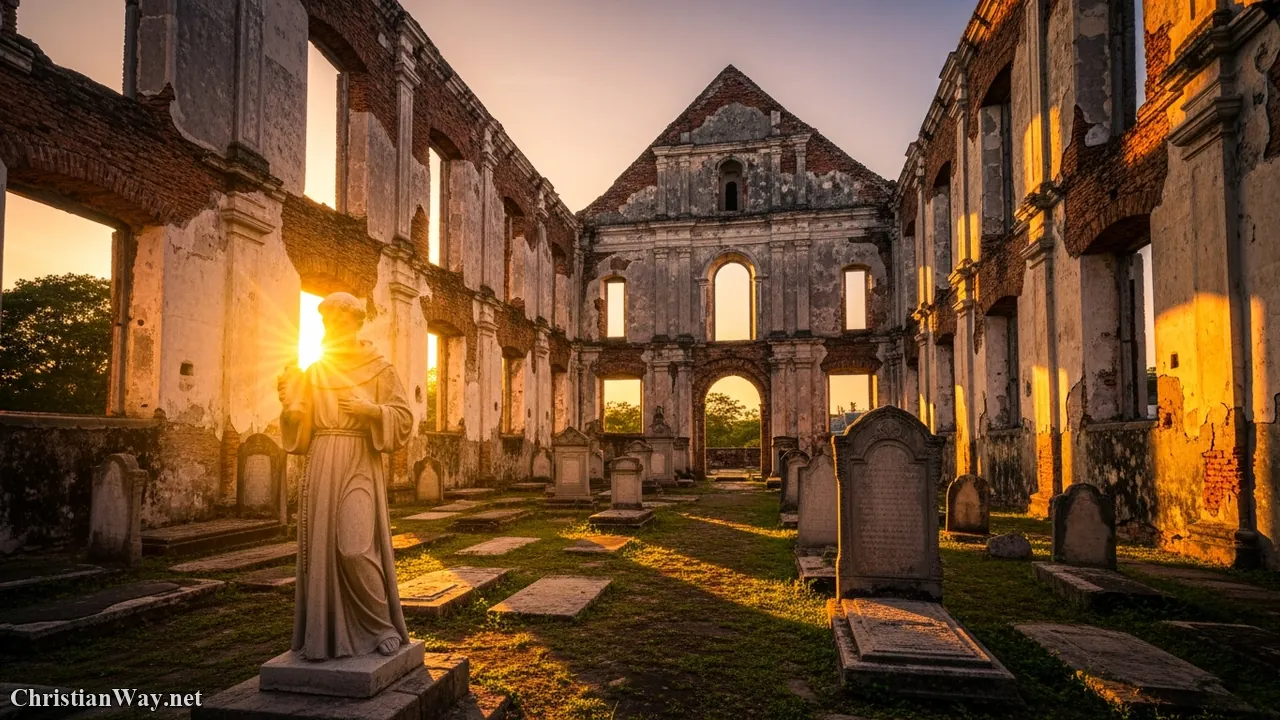
Though now in ruins, the “empty” space of St. Paul’s is filled with the presence of history. It serves as a memento mori—a reminder that while our earthly structures may decay, the spiritual work done within them resonates for eternity. The open sky above the nave suggests that our worship is never confined to buildings but rises to the heavens. It challenges us to build “houses” of faith in people’s hearts, which no time or tide can destroy.
Spiritual Highlights:
- The oldest church building in Malaysia and Southeast Asia.
- Includes the open grave where St. Francis Xavier was initially interred.
- Offers a panoramic view that symbolizes the “watchman” role of the Church.
Top 2. St. Mary’s Forane Church — Champakulam, India (427 AD)
Tucked away in the backwaters of Kerala, St. Mary’s Forane Church in Champakulam is a testament to the deep, ancient roots of the St. Thomas Christians. While the structure has been renovated throughout the centuries, the parish foundation dates back to 427 AD. It is part of the Syro-Malabar Catholic Church, which maintains the East Syriac liturgy and traditions that pre-date European arrival in Asia by over a millennium.
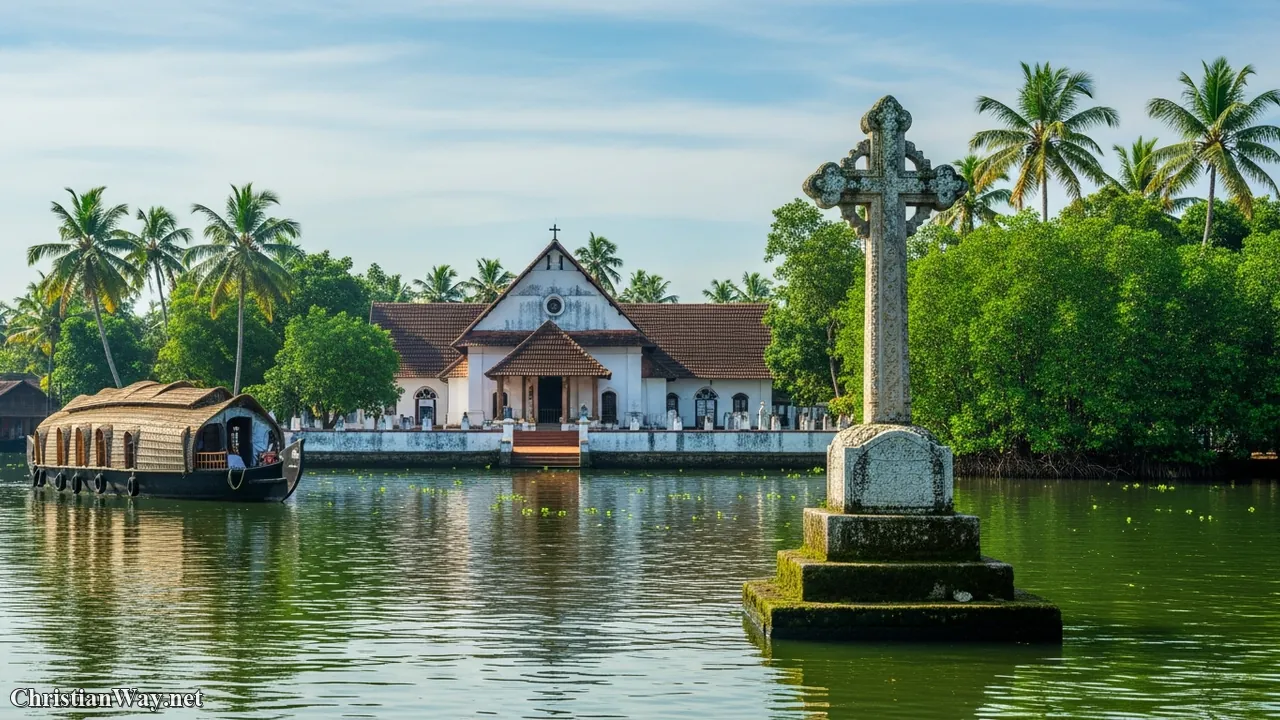
This church reminds us that Christianity is not a “Western” import to Asia, but an ancient, indigenous reality. The Champakulam church is famous for its “Kalloorkad” cross, a granite monument that has witnessed centuries of prayer. Here, the theology of the “Great Mother” (Theotokos) is central, as Mary is seen as the protector of the faithful. It teaches us about the continuity of tradition and the importance of honoring the spiritual ancestors who cleared the path for our own walk with God.
Spiritual Highlights:
- One of the oldest Christian settlements in India.
- Home to a massive ancient open-air granite cross.
- “Hail Mary, full of grace, the Lord is with thee.” — The Angelic Salutation
Top 1. St. Thomas Syro-Malabar Church — Palayur, India (52 AD)
We arrive at the summit of our journey: the St. Thomas Church in Palayur, Kerala. Tradition holds that this is the very first church established by St. Thomas the Apostle himself in 52 AD. While the modern buildings reflect various periods of Indian and Portuguese influence, the site has been a place of continuous Christian worship for nearly two thousand years, making it the oldest Catholic site in Asia.
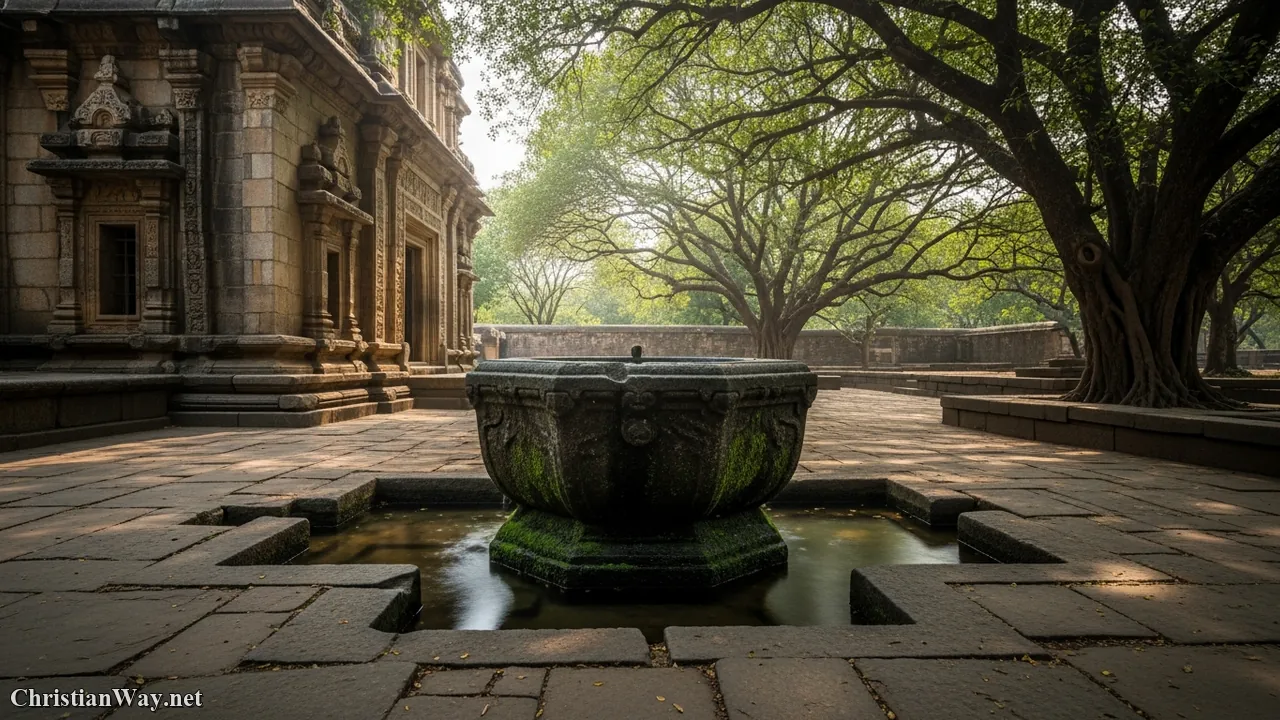
At Palayur, St. Thomas is said to have performed a miracle involving water, which led to the baptism of many local families whose descendants still worship there today. This is the “cradle of Indian Christianity.” It stands as a profound reminder that the Gospel is a living water that can transform any culture. For the believer, Palayur is a call to return to our first love—the simple, apostolic fire that seeks only to proclaim that Jesus is Lord. Here, at the beginning of the road, we find our home.
Spiritual Highlights:
- Considered the first of the “Seven and a Half Churches” founded by St. Thomas.
- The primary fountainhead of the Syro-Malabar Catholic tradition.
- A bridge between the era of the Apostles and the modern world.
Reflect and Pray
As we conclude our pilgrimage through these ten sacred sites, let us pause to reflect on the “living stones” that make up the Church. A building is only as strong as its foundation, and our foundation is Jesus Christ. Whether a church is a towering cathedral in a capital city or a quiet chapel by a river, its purpose remains the same: to be a place where heaven and earth meet. May we, in our own lives, become sanctuaries of the Holy Spirit, carrying the light of the East into every corner of our world.
— Fr. John Matthew, for Christian Way