Dear friends,
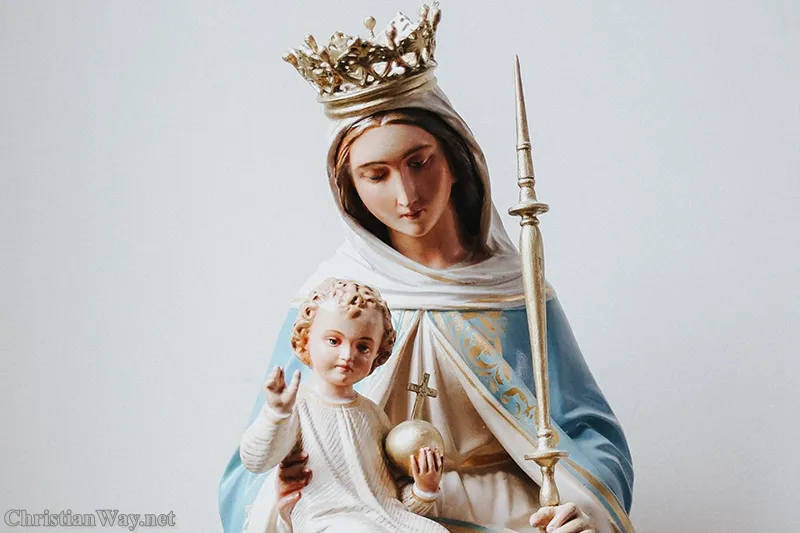
When we speak of devotion to the Blessed Virgin Mary, we are not speaking of a distraction from Christ, but rather a magnification of Him. Just as the moon has no light of its own but purely reflects the sun, so too do the saints show us that to draw near to the Mother is to find oneself inevitably, and often suddenly, standing in the blazing light of the Son.
Throughout the history of the Church, God has raised up men and women who understood this secret. They did not just admire Mary from afar; they took her into their homes, as the Beloved Disciple did. They defended her dignity, wept at her sorrows, and championed her role as the “Aqueduct of Grace.” Whether they were theologians writing in candlelit cells or simple peasants kneeling in the mud, they all shared one common heartbeat: a total trust in her maternal intercession.
In this list, we journey through twenty centuries of faith. We will meet the “New Eve” of the early Church, the defenders of her icons in the East, and the modern martyrs of charity. Let these holy lives be more than just history to you today; let them be an invitation. May you find here a companion who can help you whisper, with greater confidence, “Behold, your Mother.”
Table of The Top 10 Saints Devoted to the Virgin Mary
| Rank | Saint | Era | Title / Known For | Feast Day |
|---|---|---|---|---|
| 10 | St. John Paul II | Modern (20th C.) | The “Totus Tuus” Pope | Oct 22 |
| 9 | St. Bernadette Soubirous | 19th Century | Witness of the Immaculate Conception | Apr 16 |
| 8 | St. Alphonsus Liguori | 18th Century | Doctor of Mary’s Glories | Aug 1 |
| 7 | St. Louis de Montfort | 17th Century | Apostle of Marian Consecration | Apr 28 |
| 6 | St. Juan Diego | 16th Century | The Messenger of Guadalupe | Dec 9 |
| 5 | St. Dominic | 13th Century | Preacher of the Holy Rosary | Aug 8 |
| 4 | St. Bernard of Clairvaux | 12th Century | Mary’s Troubadour | Aug 20 |
| 3 | St. John of Damascus | 8th Century | Doctor of the Assumption & Icons | Dec 4 |
| 2 | St. Irenaeus of Lyons | 2nd Century | Theologian of the “New Eve” | Jun 28 |
| 1 | St. John the Apostle | 1st Century | The Guardian of the Virgin | Dec 27 |
Top 10. St. John Paul II (1920–2005)
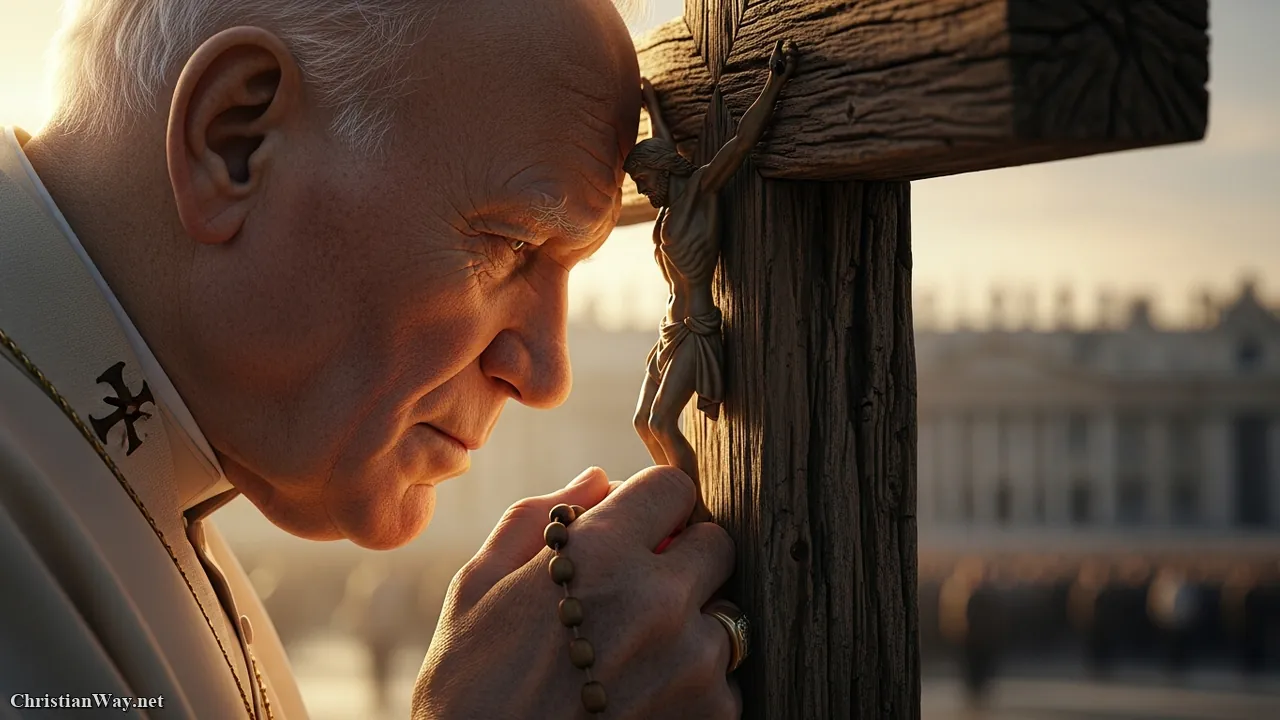
The Context: We begin with a figure many of us remember vividly. Born Karol Wojtyła in Poland, he lost his earthly mother at a young age, a tragedy that propelled him into the arms of his heavenly Mother. As Pope, he survived an assassination attempt in St. Peter’s Square, crediting his survival to Our Lady of Fatima, saying one hand fired the bullet, but “another hand guided it.”
The Theology: His papal motto, Totus Tuus (“Totally Yours”), was taken from St. Louis de Montfort, but John Paul II brought it to the global stage. He taught that Mary’s “fiat” (her “yes” to God) is the model for all Christian discipleship. He also enriched the Rosary by adding the Luminous Mysteries, helping us see Mary not just in sorrow or glory, but walking the dusty roads of Jesus’ public ministry.
Pastoral Application: In a world that often treats faith as a private hobby, St. John Paul II challenges us to wear our love for Mary like a shield. He teaches us that surrendering to Mary is the quickest way to stand firm in Christ, especially when suffering strikes.
Spiritual Highlights:
- Motto: Totus Tuus (Totally Yours).
- Gift to the Church: The Luminous Mysteries of the Rosary.
- Scripture: “Do whatever he tells you.” (John 2:5)
Top 9. St. Bernadette Soubirous (1844–1879)

The Context: In the damp, obscure grotto of Massabielle in Lourdes, France, a “beautiful lady” appeared not to a theologian, but to a poor, asthmatic fourteen-year-old girl gathering firewood. Bernadette faced intense skepticism from her parents, the police, and the clergy, yet she remained startlingly simple and truthful in her testimony.
The Theology: When the lady finally revealed her name, she did not say, “I am Mary.” She said, “I am the Immaculate Conception.” This confirmed the dogma Pope Pius IX had defined just four years prior. Bernadette became the living witness that God chooses the weak to shame the strong, and that Mary’s purity is a fountain of healing for a broken world.
Pastoral Application: Bernadette reminds us that we do not need to be eloquent or powerful to be close to the Mother of God. We only need humility. When you feel small or unheard, remember that the Queen of Heaven chose a peasant girl to reveal her most beautiful title.
Spiritual Highlights:
- Apparition Site: Lourdes, France (major healing shrine).
- Key Quote: “I am the Immaculate Conception.”
- Virtue: Humility and simplicity of heart.
Top 8. St. Alphonsus Liguori (1696–1787)
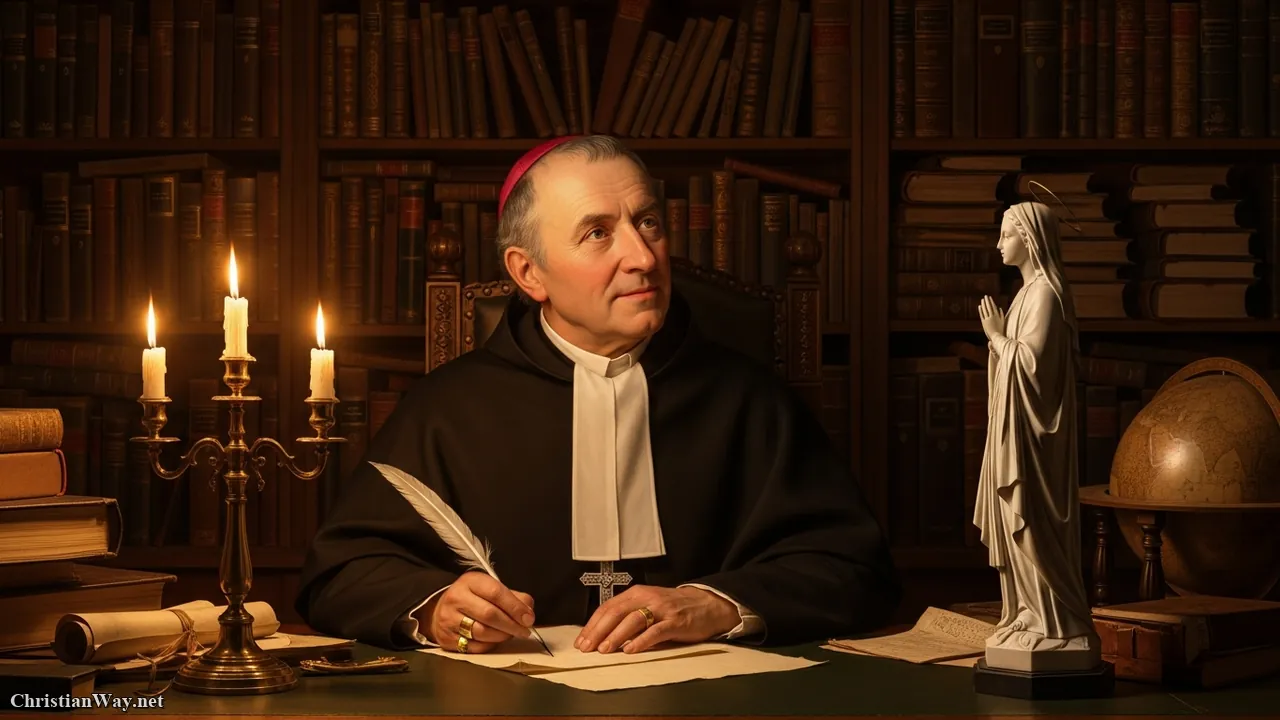
The Context: A brilliant lawyer turned priest, Alphonsus was deeply concerned for the poor and uneducated. He lived in a time when a cold theological movement called Jansenism tried to make God seem distant and harsh, discouraging devotion to Mary. Alphonsus fought back with the pen of a scholar and the heart of a son.
The Theology: His masterpiece, The Glories of Mary, is a defense of Mary as the “Queen of Mercy.” He argued that while Christ is the King of Justice, He has entrusted the administration of His mercy to His mother. Alphonsus meticulously gathered quotes from Church Fathers to prove that devotion to Mary is a “sign of predestination”—meaning a strong indicator that a soul is on the path to heaven.
Pastoral Application: Do you ever feel too sinful to approach Jesus? St. Alphonsus gently guides you to Mary first. He assures us that a mother cannot reject a child who cries out to her, no matter how far they have fallen.
Spiritual Highlights:
- Masterpiece: The Glories of Mary.
- Title: Doctor of the Church.
- Key Teaching: Mary is the “Gate of Heaven.”
Top 7. St. Louis de Montfort (1673–1716)
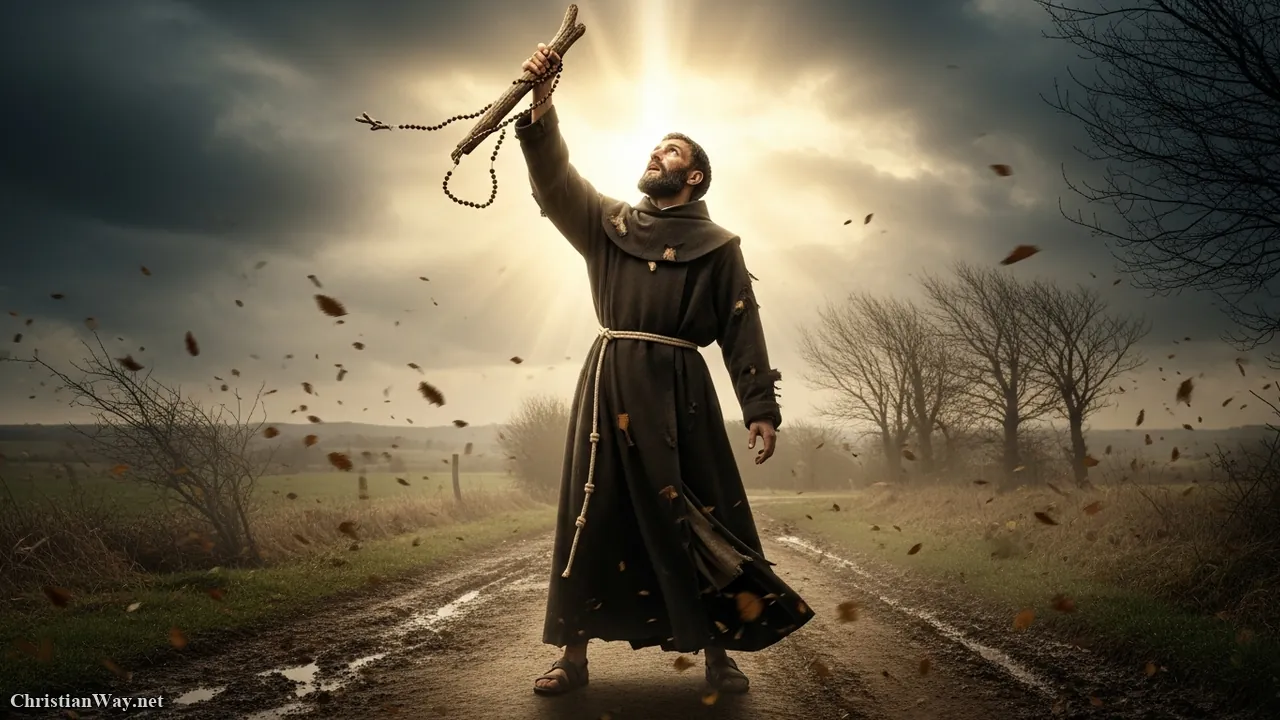
The Context: A vagabond preacher in ragged clothes, Louis de Montfort walked through western France fueled by a fiery love for the Cross and the Rosary. He was often misunderstood and persecuted by his own bishops during his life, yet his writings were like time bombs of grace, hidden away to be discovered centuries later.
The Theology: He is the architect of “Total Consecration to Jesus through Mary.” His thesis in True Devotion to Mary is radical but simple: since Jesus came to us through Mary, the surest way for us to return to Jesus is through her. He viewed Mary as the “mold of God”—if we cast ourselves into her, we are formed into the image of Christ quickly and securely.
Pastoral Application: This is for the soul seeking a deeper commitment. Montfort invites us to stop giving Mary “leftover” prayers and instead to give her everything—our body, soul, and even the value of our good works—trusting her to manage our spiritual bank account better than we ever could.
Spiritual Highlights:
- Classic Text: True Devotion to Mary.
- Practice: The 33-day preparation for Consecration.
- Analogy: Mary as the “Mold of God.”
Top 6. St. Juan Diego (1474–1548)

The Context: Imagine the confusion of 16th-century Mexico—a clash of Aztec and Spanish cultures, often marked by violence. Into this tension walked a humble indigenous convert, Juan Diego, climbing Tepeyac Hill. There, he met a maiden who spoke to him not in Spanish, but in his native Nahuatl, calling him “Juanito, my dearest little son.”
The Theology: The image of Our Lady of Guadalupe imprinted on his tilma is a visual theology. She wears the sash of pregnancy, signaling that she brings Christ to a new world. By appearing to Juan Diego, she affirmed the dignity of the indigenous peoples and showed that the Gospel is not foreign, but a mother’s embrace that makes all nations one family.
Pastoral Application: St. Juan Diego is the patron of the “unimportant” people. His life comforts us when we feel inadequate for God’s work. It reminds us of Mary’s tender words to him: “Am I not here, who am your Mother? Are you not under my shadow and protection?”
Spiritual Highlights:
- Relic: The miraculous Tilma of Guadalupe.
- Title: The Talking Eagle (his indigenous name).
- Message: Maternal protection for the marginalized.
Top 5. St. Dominic (1170–1221)
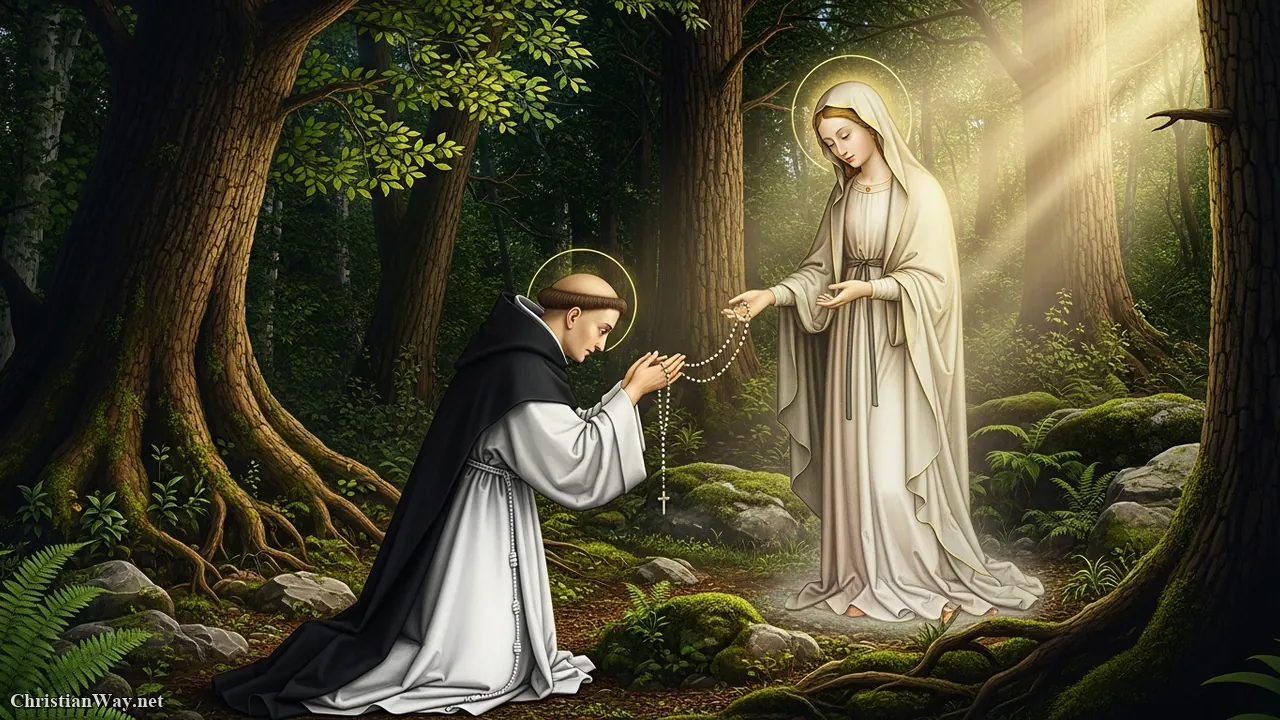
The Context: St. Dominic walked through southern France during a time of terrible heresy (Albigensianism) that denied the goodness of the physical world. He tried preaching with logic and debate, but made little headway. Tradition tells us he retreated into the forest to pray, where the Virgin Mary gave him the weapon he needed: the Psalter of Mary, the Rosary.
The Theology: The Rosary was not just a prayer; it was a “catechism on beads.” By meditating on the Incarnation, Death, and Resurrection of Jesus, the people learned the truth of the Gospel that the heretics denied. Dominic understood that Mary is the destroyer of heresies not through violence, but through the gentle, rhythmic contemplation of Truth.
Pastoral Application: St. Dominic teaches us that when we face “heresies” in our own lives—lies that say we are unlovable or that God is distant—the Rosary is our sword. It anchors our restless minds to the rhythm of the Gospel.
Spiritual Highlights:
- Legacy: Founder of the Order of Preachers (Dominicans).
- Weapon: The Holy Rosary.
- Scripture: “Hail, full of grace.” (Luke 1:28)
Top 4. St. Bernard of Clairvaux (1090–1153)
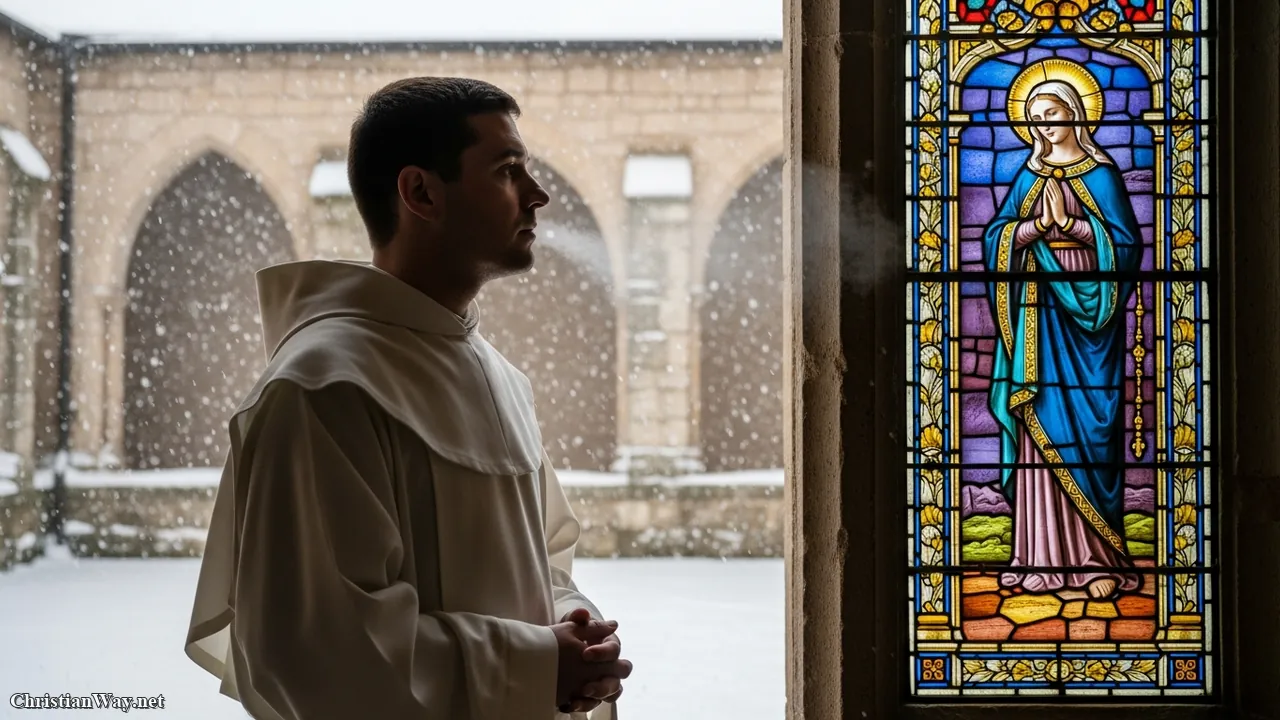
The Context: Known as the “Mellifluous Doctor” because his words flowed like honey, Bernard was a Cistercian abbot who dominated the 12th century with his holiness. Yet, despite his intellect, he was a man of deep emotion. He is often called “Mary’s Troubadour” because he wrote of her with the passion of a knight serving his queen.
The Theology: Bernard famously described Mary as the Aqueduct. Christ is the source of living water, but Mary is the channel that brings that water into the parched soil of our history. He urged the faithful to “look to the star, call upon Mary” in times of temptation, insisting that God wills for us to have nothing that does not pass through the hands of Mary.
Pastoral Application: Bernard’s devotion is the remedy for anxiety. His famous homily reminds us: “Following her, you will not stray; invoking her, you will not despair; thinking of her, you will not wander.” He invites us to lean on her strength when our own is depleted.
Spiritual Highlights:
- Title: The Mellifluous Doctor.
- Metaphor: Mary as the Aqueduct of Grace.
- Prayer: Associated with the Memorare piety.
Top 3. St. John of Damascus (675–749)
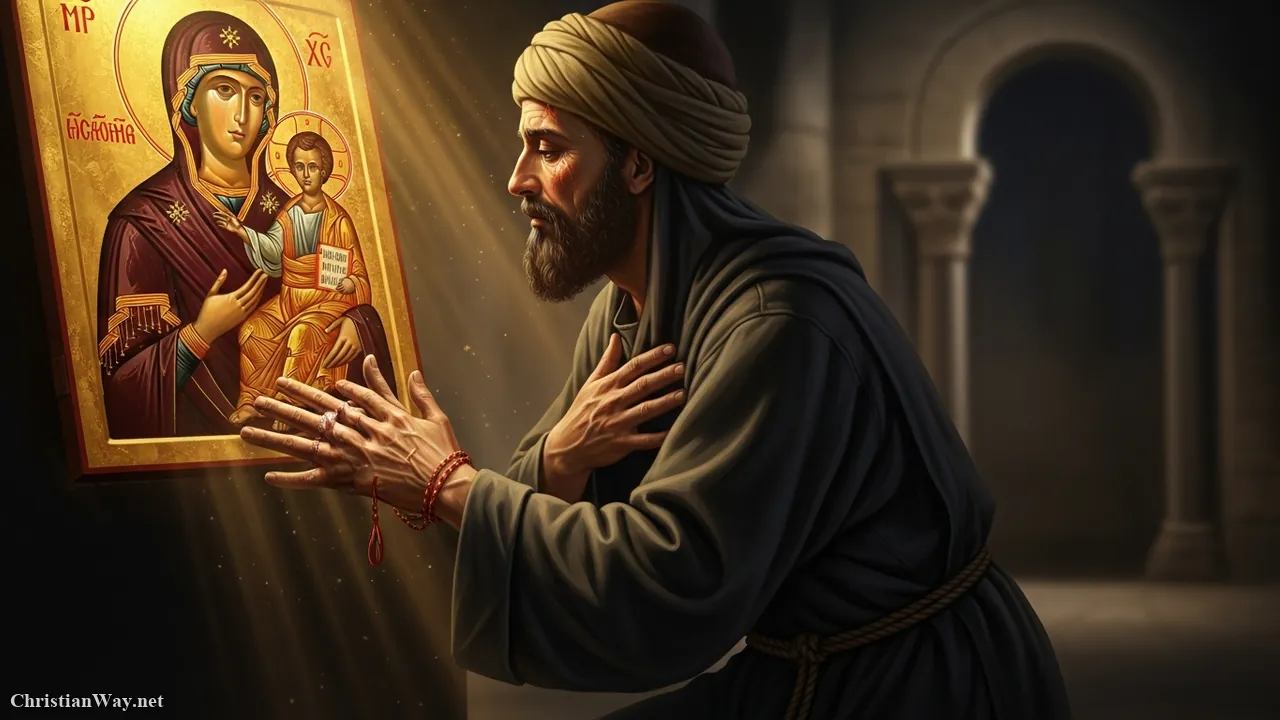
The Context: Living under Muslim rule in Damascus, this great monk and scholar faced a crisis within the Church: Iconoclasm, the heresy that claimed depicting Jesus or Mary in art was idolatry. St. John fought back, risking his life and reputation. Legend holds that his hand was cut off as punishment for his defense of the faith, but was miraculously restored after he prayed before an icon of the Theotokos.
The Theology: He is the great “Doctor of the Assumption.” Centuries before the dogma was defined, he preached eloquent homilies on how it was fitting that the body which held God should not see corruption. He argued that because the Invisible God became flesh in Mary’s womb, we can and must depict Him and His Mother in art. To deny the icon is to deny the Incarnation.
Pastoral Application: St. John of Damascus teaches us the value of sacred beauty. He reminds us that matter matters to God. Our bodies, our art, and our physical world are sanctified because Mary gave God a body.
Spiritual Highlights:
- Titles: Doctor of the Assumption; The Golden Stream.
- Icon: The “Three-Handed” Mother of God.
- Defense: The validity of venerating icons.
Top 2. St. Irenaeus of Lyons (c. 130–202)
The Context: A disciple of St. Polycarp (who was a disciple of St. John the Apostle), Irenaeus is a direct link to the Apostles. As a bishop in Gaul (modern France), he wrote against Gnostic heresies. He is one of the earliest and most important voices to systematically explain Mary’s role in salvation history.
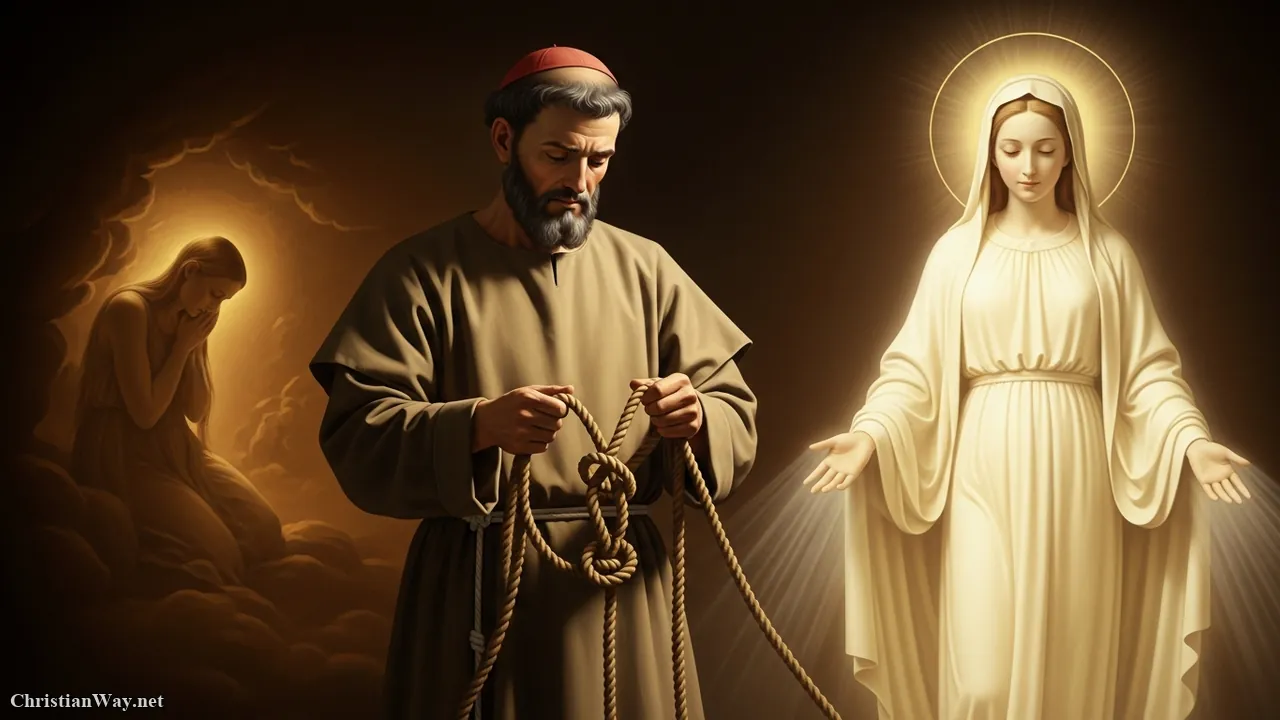
The Theology: Irenaeus gave the Church the doctrine of the “New Eve.” He famously wrote: “The knot of Eve’s disobedience was loosed by the obedience of Mary.” Where Eve listened to a fallen angel and brought death, Mary listened to a good angel (Gabriel) and brought Life. He shows us that Mary is not an afterthought, but a key player in God’s “recapitulation” (restoration) of the world.
Pastoral Application: This is deep, ancient hope. If your life feels like a “knot” of mistakes and disobedience, St. Irenaeus points to Mary as the “Untier of Knots.” Her obedience can help unravel the tangles of our sinfulness.
Spiritual Highlights:
- Title: Doctor of Unity (declared by Pope Francis).
- Key Concept: Mary as the New Eve.
- Contrast: Eve’s disobedience vs. Mary’s obedience.
Top 1. St. John the Apostle (c. 6–100 AD)
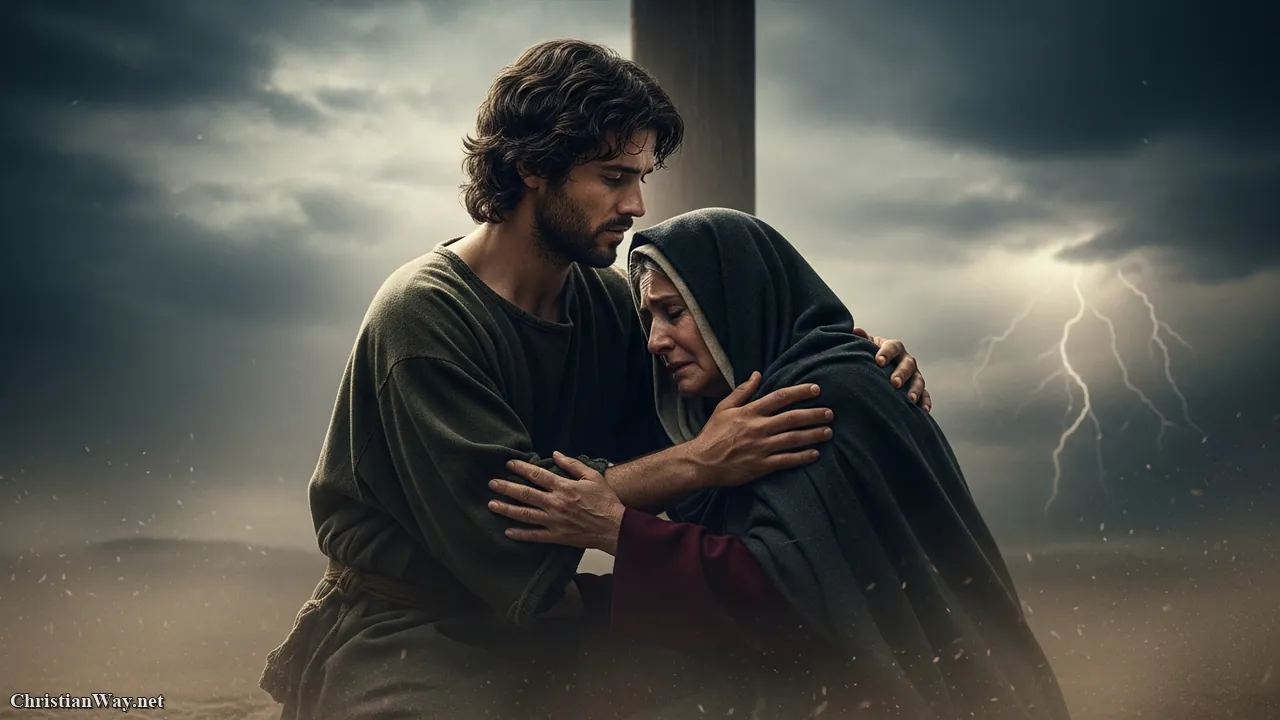
The Context: We arrive at the source. St. John was the only Apostle who did not run away at the Cross. He stood in the darkness of Good Friday, shoulder to shoulder with Mary. It was there, in the final moments of His life, that Jesus looked at him and said, “Behold, your mother.” And from that hour, the Gospel tells us, “the disciple took her into his own home.”
The Theology: St. John is the Guardian of the Virgin. His devotion was not written in books but lived in daily service. He cared for her, ate with her, and prayed with her until her Assumption. In his Gospel and the Book of Revelation (the Woman clothed with the sun), he provides the biblical foundation for all Mariology. He shows us that Mary is the Mother of the Church because she was given to the disciple whom Jesus loved.
Pastoral Application: To be a “beloved disciple,” we must do what John did: take Mary into our homes. St. John invites us to make space for her in our daily lives—our kitchens, our struggles, our quiet moments. He teaches us that we cannot be close to the Crucified Lord without standing close to His Mother.
Spiritual Highlights:
- Role: The Beloved Disciple.
- Action: Took Mary into his home (John 19:27).
- Vision: The Woman Clothed with the Sun (Rev 12).
Conclusion: A Heart Open to the Mother
As we look back on these ten extraordinary lives, we see a beautiful pattern. Whether it was the theological brilliance of St. Irenaeus or the quiet humility of St. Juan Diego, the result of their devotion was always the same: they became more like Jesus.
Christian Way invites you to choose one of these saints as a guide this week. Read their words, or simply ask for their intercession. Let them teach you the prayer that pleased God so much it brought Him down from heaven: “Let it be done to me according to Your word.”
— Fr. John Matthew, for Christian Way