Dear friends, peace be with you. As we walk the path of our daily lives, often amidst the noise and swift currents of the modern world, we look for anchors. There is perhaps no anchor more vital, nor more besieged in our times, than the family—the “domestic church,” as the Fathers of the Second Vatican Council so beautifully termed it. It is within the home that the faith is first whispered, where the love of God is first mirrored in the love of a parent, and where the young first learn to navigate the waters of existence.
Throughout the grand tapestry of Church history, the Chair of Saint Peter has been occupied by men of profound intellect and iron will. Yet, among them, there are those who possessed a specific charism: a tender heart for the youth and an unwavering defense of family life. These are the shepherds who understood that the future of the Church does not lie merely in stone cathedrals, but in the living stones of children, teenagers, and parents striving for holiness in the ordinary.
In this reflection for Christian Way, we do not merely list historical figures; we invite you to encounter them. We look to these Holy Fathers not just as administrators of a global institution, but as spiritual grandfathers who have left us a treasury of wisdom. From the dawn of the 20th century to our present moment, these Popes have shouted from the rooftops that the family is sacred and that the youth are not just the future, but the vibrant “now” of God.
Let us journey together through their lives, drawing strength from their words and example, so that we might better serve our own families and encourage the young souls entrusted to our care.
Table of The Top 10 Popes Who Inspired the Youth and Families
| Rank | Pontiff | Papacy Dates | Spiritual Legacy for Families & Youth |
|---|---|---|---|
| 1 | St. John Paul II | 1978 – 2005 | Founder of World Youth Day; Theology of the Body |
| 2 | Pope Francis | 2013 – Present | Amoris Laetitia; Emphasis on Mercy and Accompaniment |
| 3 | St. John XXIII | 1958 – 1963 | The “Moonlight Speech”; Warmth and Paternal Gentleness |
| 4 | Pope Benedict XVI | 2005 – 2013 | Intellectual formation of youth; Defender of Truth in Love |
| 5 | St. Paul VI | 1963 – 1978 | Humanae Vitae; Defender of Married Love and Life |
| 6 | Pope Leo XIII | 1878 – 1903 | Rerum Novarum; Dignity of the Family Wage |
| 7 | St. Pius X | 1903 – 1914 | lowering the age for First Communion; Spiritual food for children |
| 8 | Pope Pius XII | 1939 – 1958 | Defending the Family during War; Definition of the Domestic Church |
| 9 | Pope Pius XI | 1922 – 1939 | Casti Connubii; Christian Education of Youth |
| 10 | Pope John Paul I | 1978 (33 Days) | The “Smiling Pope”; Simplicity in Catechesis |
Top 10. Pope John Paul I: The Catechist of the Smile
Though his time on the Chair of Peter was fleeting—a mere thirty-three days—Albino Luciani, known to history as Pope John Paul I, left an indelible mark of joy that resonates with families to this day. Before his election, he was known for his extraordinary ability to explain complex theological truths in simple, affectionate language that children could understand. He possessed a warmth that dissolved the distance between the Vatican and the family living room.
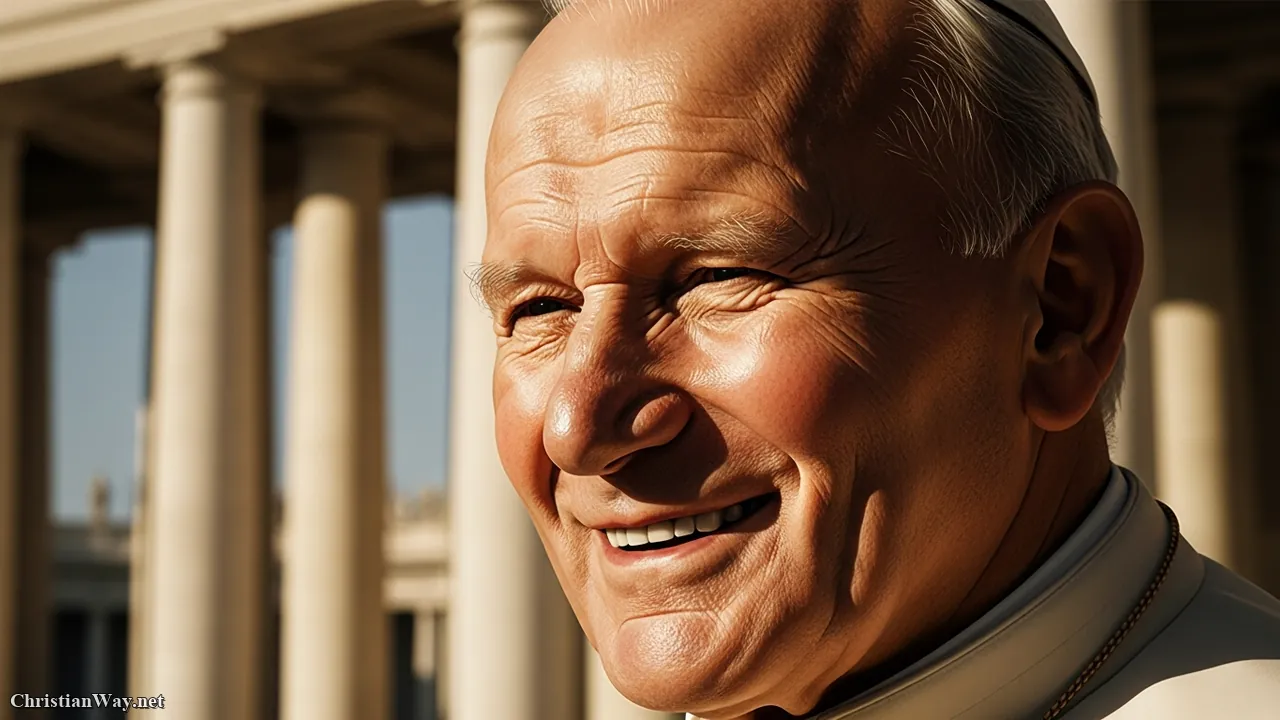
Theologically, he reminded us that God is a Father who loves us with an infinite tenderness. In his few general audiences, he spoke of the family as a school of love, emphasizing that the “smiling” aspect of Christianity is vital for drawing the youth to Christ. He famously wrote letters to historical and fictional characters to teach moral lessons, a creative method that parents today can emulate to engage their children’s imaginations.
For us today, the “Smiling Pope” serves as a gentle reminder that our evangelization within the home need not be rigid or overly academic. It should be characterized by joy. If our children see the joy of the Lord on our faces, they are far more likely to seek Him. He teaches us that a smile can be the first step in a young person’s journey toward holiness.
Spiritual Highlights:
- Key Trait: Known for his beaming smile and humility (“Humilitas”).
- Pastoral Wisdom: “The family is the first school of the social virtues that all societies need.”
- Scripture: “Rejoice in the Lord always; again I will say, Rejoice.” (Philippians 4:4)
Top 9. Pope Pius XI: The Guardian of Christian Marriage
In the tumultuous years between the World Wars, Pope Pius XI stood as a bulwark for the sanctity of the home. He recognized that the modern world was beginning to chip away at the foundational stones of society. With a scholar’s mind and a shepherd’s heart, he penned Casti Connubii (On Christian Marriage) and Divini Illius Magistri (On Christian Education), documents that remain strikingly relevant.
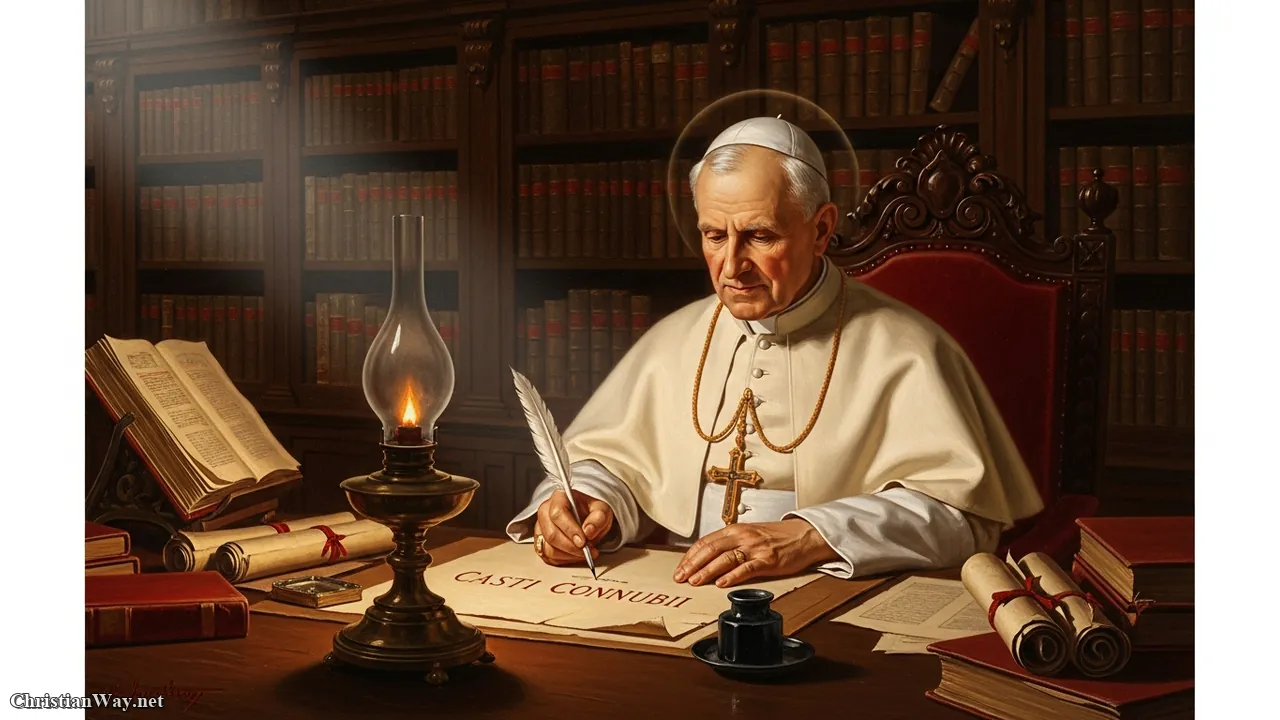
Pius XI saw the family not just as a social unit, but as a divine institution. He boldly proclaimed that parents have the primary right and duty to educate their children—a right that the state cannot usurp. This was a radical defense of parental authority in an era of rising totalitarianism. He taught that the love between husband and wife is a participation in the love of Christ for His Church, elevating the struggles of domestic life to a supernatural level.
His legacy challenges modern parents to take ownership of their children’s spiritual formation. In an age of digital distraction and secular influence, Pius XI calls us to be the gatekeepers of our homes, ensuring that the education our youth receive nourishes their souls as well as their minds. He reminds us that the “classroom” of the dining table is more important than any university lecture hall.
Spiritual Highlights:
- Major Work: Casti Connubii (1930), reaffirming the sanctity of marriage.
- Focus: The parents as the primary educators of their children.
- Scripture: “Train up a child in the way he should go; even when he is old he will not depart from it.” (Proverbs 22:6)
Top 8. Pope Pius XII: The Defender of the Hearth
Eugenio Pacelli, Pope Pius XII, guided the Barque of Peter through the darkest storm of the 20th century: the Second World War. Amidst the rubble of Europe, he worked tirelessly to reunite families torn apart by conflict and to define the family as the ultimate refuge of humanity. His teachings on the “domestic church” laid the groundwork for the Second Vatican Council’s later emphasis on the laity.
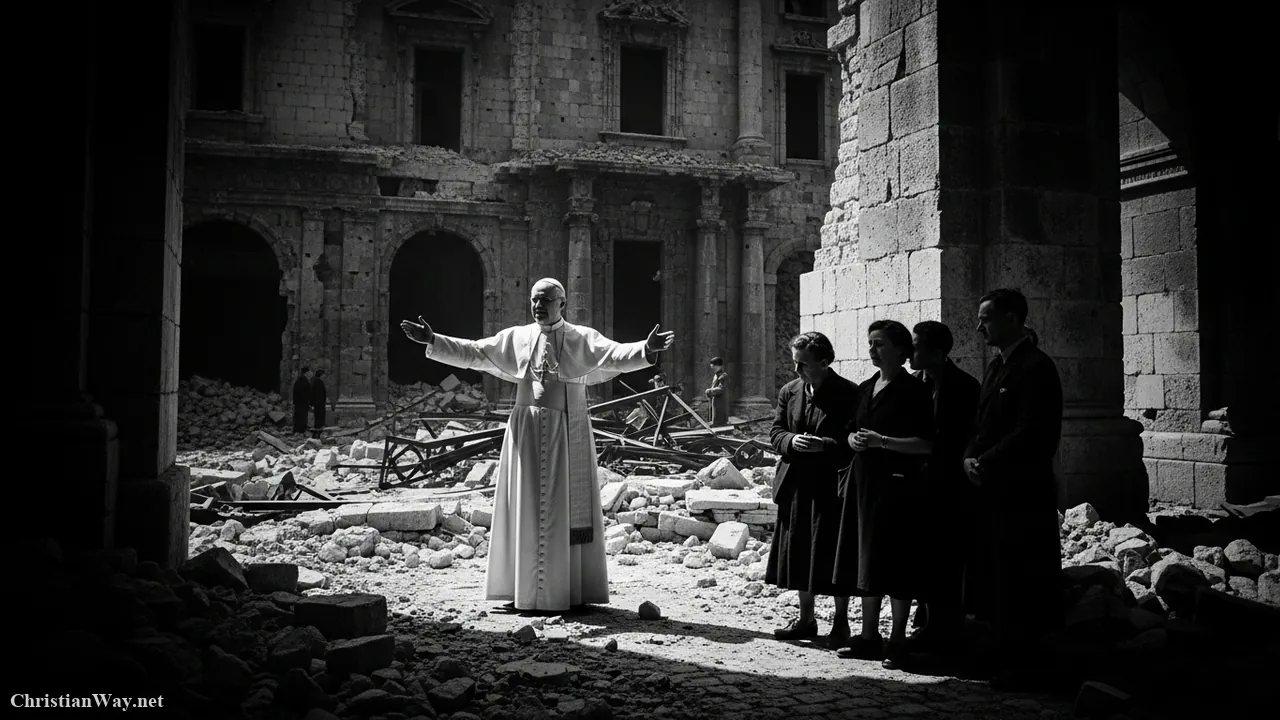
Theologically, Pius XII emphasized the “vital cell” of society. He spoke frequently to newlyweds (the Sposi Novelli), offering them specific audiences where he counseled them on the virtues of patience, fidelity, and mutual sacrifice. He understood that if the family crumbles, civilization collapses. He was a pioneer in addressing the moral dimensions of modern science and medicine, always with an eye toward protecting the vulnerable and the unborn.
For those of us navigating a culture that often feels hostile to faith, Pius XII offers a model of dignified resistance. He teaches us that the family is a fortress of peace. His life asks us: Is our home a place where the wounded can find healing? Do we protect the sanctity of our family time against the encroachments of a busy world?
Spiritual Highlights:
- Legacy: His vast addresses to newlyweds set a standard for marriage preparation.
- Key Teaching: The family as the “vital cell” of society.
- Scripture: “God is our refuge and strength, a very present help in trouble.” (Psalm 46:1)
Top 7. St. Pius X: The Pope of the Eucharist
Imagine a time when children were kept from the Holy Table until their teenage years. It was Saint Pius X who looked upon the innocence of youth and heard the echo of Christ saying, “Let the children come to me.” In a revolutionary act of pastoral love, he lowered the age of First Holy Communion to the age of reason (around seven years old), opening the floodgates of grace for millions of young souls.
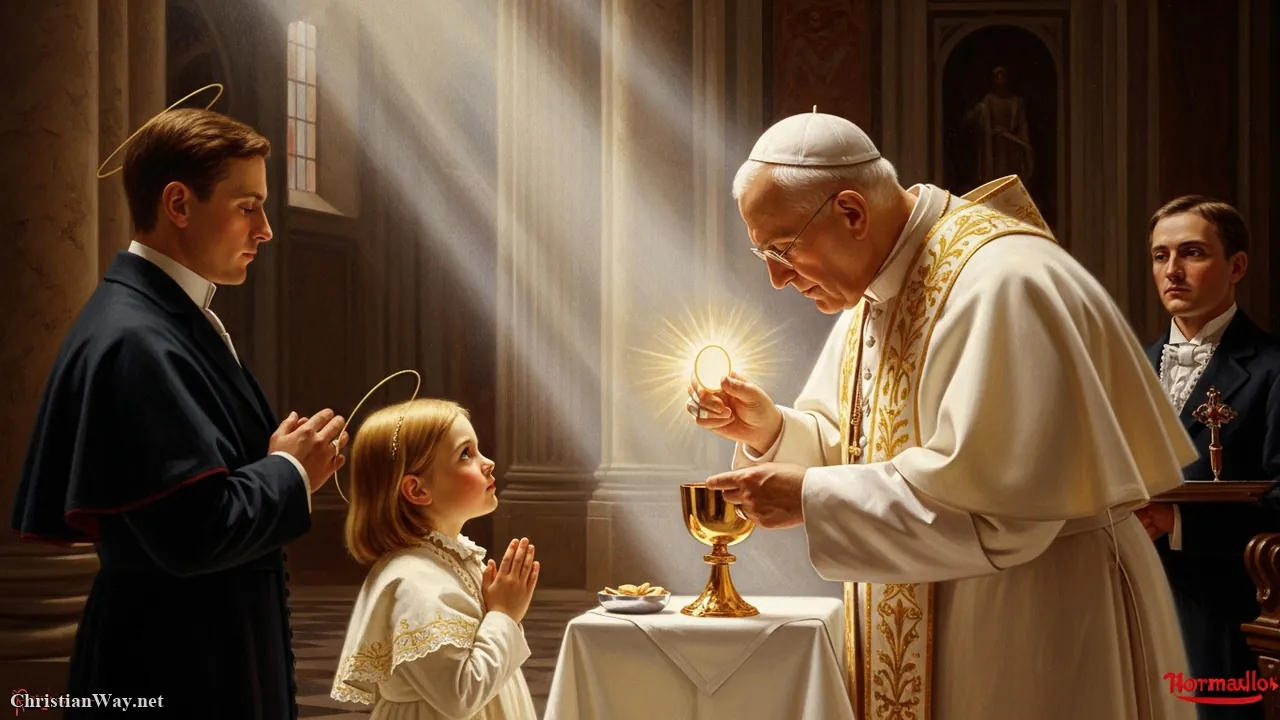
This decision was rooted in deep theology: he believed that children, in their simplicity, were capable of a profound love for Jesus that adults often lose. He urged frequent, even daily, Communion for all. He saw the Eucharist not as a prize for the perfect, but as medicine for the weak and nourishment for the growing. By inviting the youth to the altar, he placed the Sacrament at the center of family life.
Today, as we watch our children receive the Body of Christ, we have St. Pius X to thank. His legacy challenges us to never underestimate the spiritual capacity of a child. It asks us to prioritize the Sacraments in our family schedule, ensuring that the Eucharist is the sun around which our domestic planets orbit.
Spiritual Highlights:
- Title: “The Pope of the Blessed Sacrament.”
- Action: Issued Quam Singulari, allowing children to receive Communion.
- Scripture: “Let the children come to me, and do not hinder them, for to such belongs the kingdom of God.” (Luke 18:16)
Top 6. Pope Leo XIII: The Prophet of Social Justice
While often remembered for his social encyclicals, Pope Leo XIII was a profound champion of the family’s economic and spiritual well-being. In his landmark encyclical Rerum Novarum, he argued for a “family wage”—income sufficient to support a wife and children in reasonable comfort. He understood that spiritual health is hard to maintain when a family is crushed by grinding poverty.
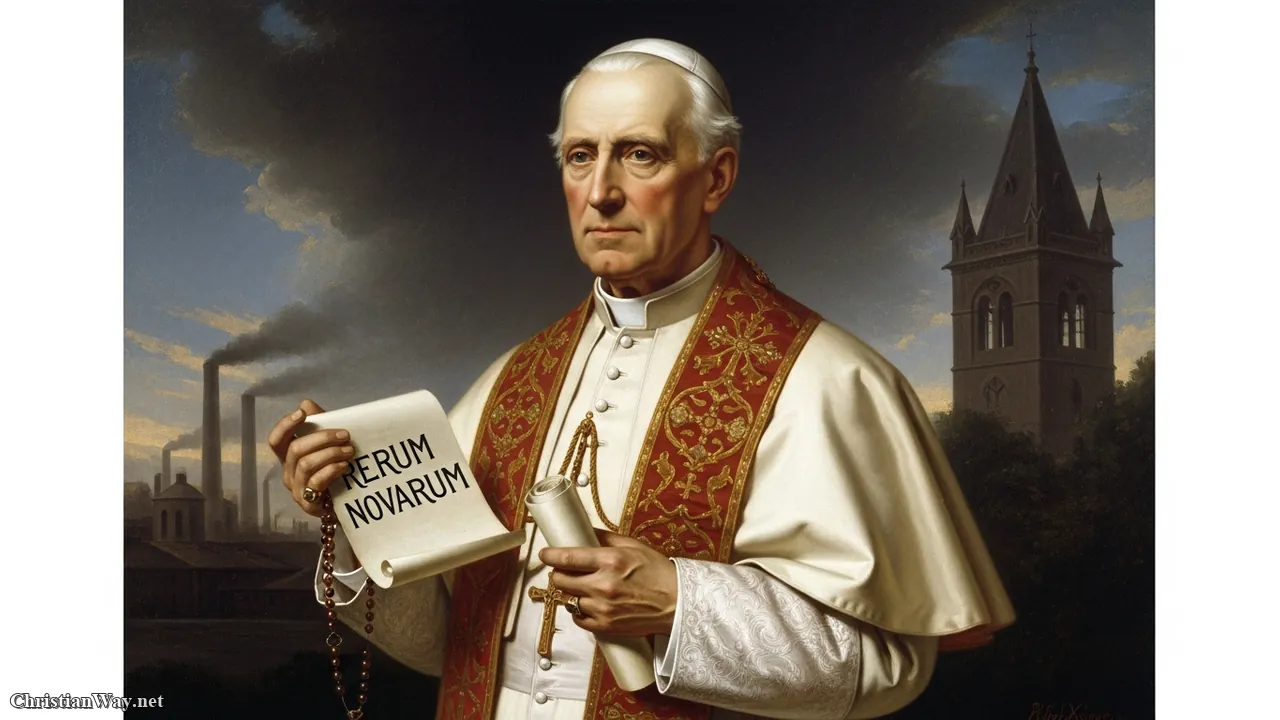
Furthermore, Leo XIII is known as the “Pope of the Rosary.” He wrote nearly a dozen encyclicals on this Marian prayer, urging families to pray it together. He saw the Rosary as a spiritual weapon that would bind the family together in the rhythm of the Gospel. By meditating on the life of Christ through the eyes of Mary, families could find a common language of prayer.
His dual focus on economic justice and Marian devotion offers a holistic approach for modern fathers and mothers. We are called to work diligently to provide for our families, but also to ensure that our homes are schools of prayer. He reminds us that “the family that prays together, stays together.”
Spiritual Highlights:
- Major Work: Rerum Novarum (1891) and numerous Rosary encyclicals.
- Key Concept: The rights of the family precede the rights of the State.
- Scripture: “But if anyone does not provide for his relatives, and especially for members of his household, he has denied the faith.” (1 Timothy 5:8)
Top 5. St. Paul VI: The Defender of Life
Saint Paul VI shepherded the Church during the seismic cultural shifts of the 1960s and 70s. With prophetic courage, he penned Humanae Vitae, reasserting the Church’s teaching on the beauty of married love and the openness to life. At a time when the world was separating the unitive and procreative aspects of sexuality, he held firm to the truth that they are inseparable.
This was not a restriction, but a protection. Paul VI foresaw the objectification of women and the breakdown of the family if this bond were severed. He deeply loved the family and established the World Day of Peace, understanding that peace in the world begins with peace in the womb and in the home. He was a pilgrim pope, the first to travel extensively, showing the youth that the Church is universal.
For us, St. Paul VI is a model of courage. He teaches us that following Christ often means swimming against the tide of popular culture. His life encourages parents to have difficult but necessary conversations with their youth about the dignity of the human body and the sacredness of creating life.
Spiritual Highlights:
- Major Work: Humanae Vitae (1968).
- Legacy: A prophetic voice for the sanctity of marriage and human life.
- Scripture: “So God created man in his own image… male and female he created them.” (Genesis 1:27)
Top 4. Pope Benedict XVI: The Grandfatherly Teacher
Pope Benedict XVI, with his gentle voice and brilliant mind, engaged the youth not by watering down the truth, but by elevating them to meet it. He respected the young enough to answer their hardest questions. At World Youth Days in Cologne, Sydney, and Madrid, he presided over moments of profound silence in Adoration, teaching millions of young people the art of listening to God.
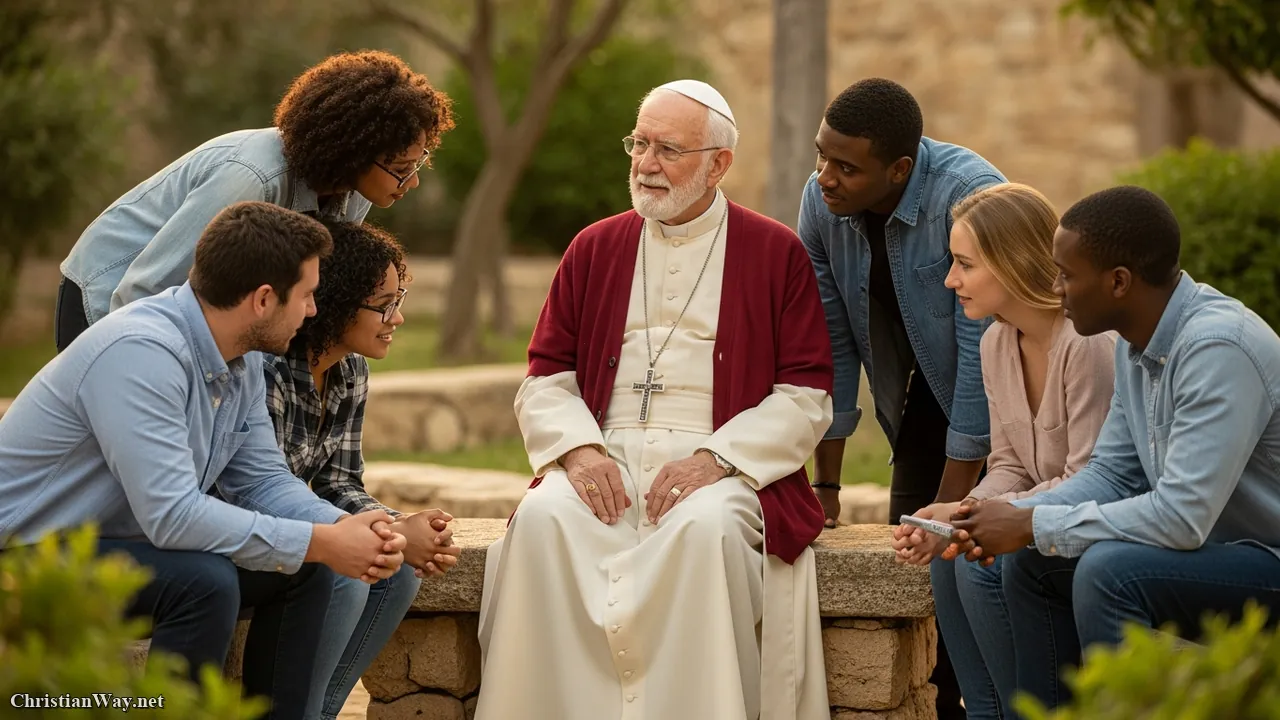
He spoke often of the “dictatorship of relativism,” warning families that a life without truth leads to emptiness. He presented Christianity not as a set of rules, but as an encounter with a Person: Jesus Christ. His trilogy of books on Jesus of Nazareth serves as a masterclass for families wishing to deepen their biblical literacy.
Benedict’s legacy is that of a wise grandfather sitting by the fire, explaining the mysteries of the universe. He reminds us that our youth crave substance. They do not want a superficial faith; they want the deep, challenging, and beautiful Truth. He encourages us to study our faith so we can share it with the next generation.
Spiritual Highlights:
- Style: Gentle, intellectual, and deeply Christ-centered.
- Key Message: Faith and Reason work together; Christianity is an encounter with Love.
- Scripture: “Sanctify Christ as Lord in your hearts, always being ready to make a defense to everyone who asks you to give an account for the hope that is in you.” (1 Peter 3:15)
Top 3. St. John XXIII: The Good Pope
Angelo Roncalli, St. John XXIII, burst onto the scene with a warmth that melted hearts worldwide. He is perhaps best remembered for his impromptu “Moonlight Speech” at the opening of Vatican II. Looking out at the torchlit crowd in St. Peter’s Square, he told them: “Go home to your families. Hug and kiss your children and tell them: This is the hug and kiss of the Pope.”
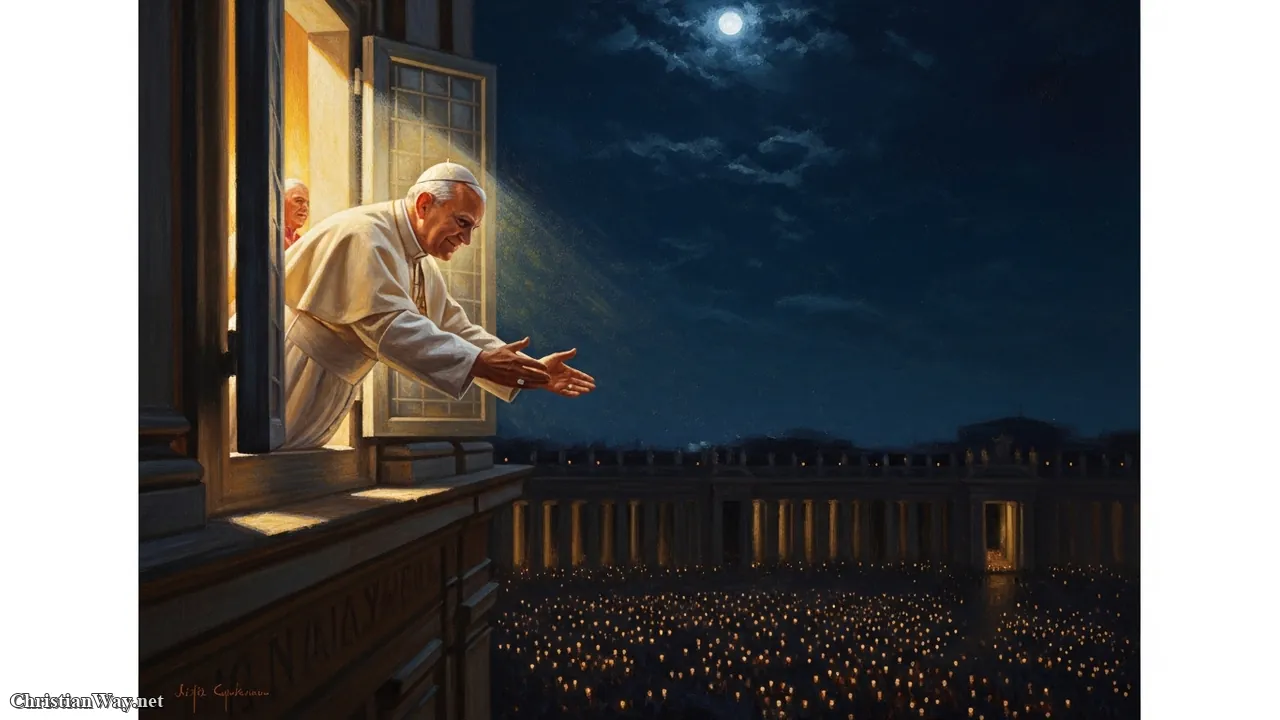
With those simple words, he connected the grandeur of the Council to the intimacy of the nursery. He convened the Second Vatican Council to “open the windows” of the Church, allowing the fresh air of the Spirit to reinvigorate the faithful. He wanted the Church to be a loving mother, accessible to all, especially the simple and the young.
St. John XXIII teaches us the power of kindness. In a world that is often harsh and critical, his example calls families to be places of gentleness. He reminds us that the most profound theology is often expressed in a parent’s embrace of a child before sleep.
Spiritual Highlights:
- Nickname: “Il Papa Buono” (The Good Pope).
- Iconic Moment: The Speech to the Moon (“Date una carezza ai vostri bambini”).
- Scripture: “Love is patient, love is kind.” (1 Corinthians 13:4)
Top 2. Pope Francis: The Pope of Mercy
Since stepping onto the balcony in 2013, Pope Francis has focused intensely on the reality of family life. In his apostolic exhortation Amoris Laetitia (The Joy of Love), he addresses the complexities, struggles, and beauties of modern marriage. He famously advises families to use three phrases frequently: “Please, Thank you, and I’m sorry.”
Francis speaks the language of the youth. He urges them to “make a mess” (in the sense of shaking up complacency) and not to let others steal their hope. He describes the Church as a “field hospital,” a place where the wounded families of the world can find healing rather than judgment. His emphasis on grandparents as the memory of the family bridges the generational gap.
His pontificate challenges us to look at the messy reality of our lives with eyes of mercy. He reminds us that no family is perfect, but every family is loved by God. He calls us to accompaniment—to walk with our children and spouses through the mud of life, holding the lantern of faith high.
Spiritual Highlights:
- Major Work: Amoris Laetitia (2016) and Christus Vivit (2019).
- Key Advice: “Please, Thank you, Sorry.”
- Scripture: “Be merciful, even as your Father is merciful.” (Luke 6:36)
Top 1. St. John Paul II: The Father of the Youth
At the summit of our list stands a giant of history and holiness: Saint John Paul II. No Pope in history has had a more profound impact on the youth and the theology of the family. He is the architect of the “Theology of the Body,” a revolutionary teaching that reveals how our physical bodies express the mystery of God’s love. He taught us that we are made for self-giving love.
It was John Paul II who, when advised that the youth would not respond to a call for a massive pilgrimage, trusted his intuition and the Holy Spirit to launch World Youth Day. Millions responded. He looked into the eyes of young people and saw not a problem to be solved, but the hope of the Church. He famously told them, “You are the men and women of tomorrow. In your hearts and in your hands is the future of the world.”
His letter Familiaris Consortio is the magna carta of the Christian family. He urged families to “become what you are”—a living icon of the Trinity. His recurring command, echoing Christ, was “Be not afraid!” He emboldens us today to stand firm in our faith, to love our spouses heroically, and to lead our children with the confidence of saints in the making.
Spiritual Highlights:
- Titles: Pope of the Family; Founder of World Youth Day.
- Masterpiece: The Theology of the Body.
- Scripture: “Do not be afraid… I am with you always.” (Matthew 28:20)
Reflect and Pray
As we conclude this journey through the lives of these holy shepherds, we see a common thread: the unwavering belief that the family is the school of love and the youth are the bearers of the flame. Each Pope, in his own time and way, has handed us a torch.
Now, it is our turn. Whether we are parents, grandparents, or young people ourselves, we are called to build the domestic church. Let us ask for the intercession of these holy men. May we have the courage of John Paul II, the mercy of Francis, the intellect of Benedict, and the gentleness of John XXIII.
Let us pray together: Lord, bless our families. Make our homes sanctuaries of peace and prayer. Guide our youth through the storms of this world, and let us always look to your Vicars on earth as guides to your heavenly heart. Amen.
— Fr. John Matthew, for Christian Way