Dear friends in Christ,
There are stories so filled with sorrow that we may wonder how anyone could survive them without becoming hardened by pain. There are wounds that enter a life so early that they seem to steal not only safety, but identity itself. A child may lose a home, a name, a family, or the simple confidence that the world can be trusted. A person may endure cruelty so long that hope appears to become impossible.
Yet the Gospel tells us that Christ can enter even the places where human dignity has been violated. He does not stand at a distance from the wounded. He comes near. He sees the forgotten. He hears the cry of those whose voices have been silenced. He restores the dignity that sin, violence, exploitation, and fear have tried to destroy.
Saint Josephine Bakhita is one of the most tender and powerful witnesses to this truth.
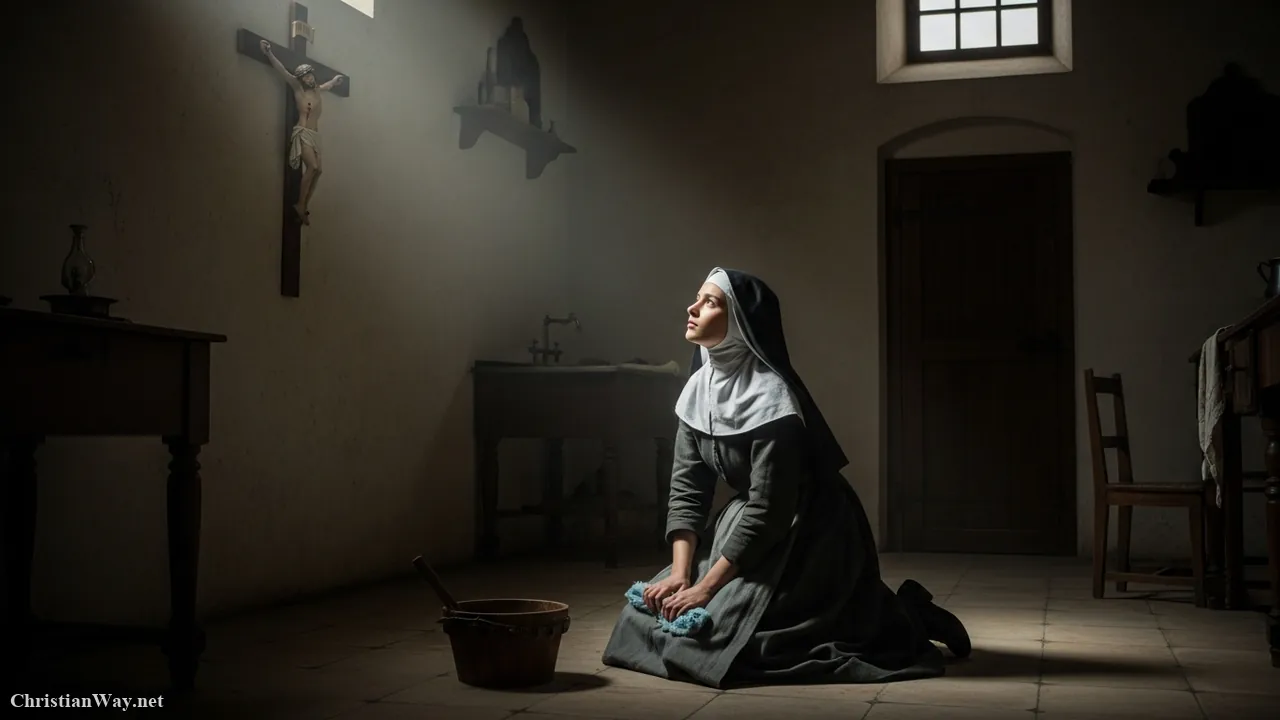
Her life began in the land of Sudan, amid the beauty of Africa and the ordinary life of a family. Yet while still a child, she was taken from her home, separated from those she loved, and sold into slavery. She suffered deeply. Her body carried scars, and her heart knew the pain of being treated not as a beloved child of God, but as though she were an object to be bought, used, and controlled.
But her story did not end there.
The God who saw Hagar weeping in the wilderness, the God who heard Israel crying out beneath oppression in Egypt, the God who came near to the poor, the sick, and the rejected in Jesus Christ, was quietly leading Josephine Bakhita toward freedom. Her life would become a testimony not only to survival, but to forgiveness; not only to suffering, but to hope; not only to personal healing, but to the unshakable dignity of every human person.
Saint Josephine Bakhita: The Flower of Sudan and Witness to Hope is a reflection for every person who has ever felt wounded by life. It is for those who carry memories they do not know how to speak about. It is for those who have endured injustice, betrayal, fear, or loss. It is for those who struggle to believe that God can still bring beauty from what has been broken.
Her witness also speaks to those who have not suffered as she suffered, but who are called to see the pain of others. It speaks to parents, teachers, workers, leaders, and ordinary Christians who want to become people of mercy in a world where too many remain unseen. Bakhita teaches us that Christian hope is not a shallow optimism that denies suffering. It is the deep confidence that Christ can make a path through darkness and that no human life is ever beyond His loving gaze.
A Child Whose Name Was Taken but Whose Dignity Remained
Josephine Bakhita was born around 1869 in the Darfur region of Sudan. As a young child, she was abducted from her family and sold repeatedly into slavery. The trauma was so great that she later could not remember the name her parents had given her. Her captors called her “Bakhita,” a name often translated as “fortunate” or “lucky,” though the cruel irony of that name could not have been lost on a child whose freedom had been taken away.
To speak of this part of her life requires reverence. Her story must never become merely a dramatic tale that people repeat without allowing it to touch their conscience. She was not a symbol. She was a real child. She had a family. She had a home. She had a name known first by those who loved her. She had dreams, fears, memories, and a soul created in the image of God.
This is where the Christian vision of the human person begins: every human life is sacred.
No one becomes less human because they are poor.
No one becomes less worthy because they are weak.
No one becomes less beloved because others have treated them badly.
No one can be reduced to a price, a possession, a number, a social status, or a burden.
The Book of Genesis tells us that God created humankind in His own image and likeness. This truth is not reserved for the strong, the wealthy, the educated, or the powerful. It belongs equally to the child, the elderly person, the refugee, the prisoner, the sick person, the worker, the forgotten person, and the one whom society has pushed aside.
When Josephine Bakhita was taken from her family, the world around her may have treated her as though her life no longer belonged to her. But God had not forgotten her. Her deepest identity had not been erased. Before she was known by any human title, she was known by God.
The Psalmist says, “I will praise thee; for I am fearfully and wonderfully made” (Psalm 139:14). These words remain true even when a person cannot feel them. They remain true when someone has been wounded. They remain true when a person’s story has been marked by fear, exploitation, or humiliation.
The God Who Knows Every Name
There is something deeply moving about the fact that Bakhita lost the name given to her by her family. A name is precious. It tells us that we are not invisible. It tells us that we belong somewhere. It tells us that someone has looked upon us and recognized us as a person.
Many people carry a hidden fear that they have been forgotten.
Perhaps they have been ignored in their own family.
Perhaps they have been judged only by their failures.
Perhaps they have been defined by a painful past.
Perhaps they have spent years serving others while no one asks how they are doing.
Perhaps they feel that the world sees only their work, their mistakes, their appearance, or their usefulness.
But God sees deeper.
When the prophet Isaiah speaks of God’s love, he says, “Can a woman forget her sucking child, that she should not have compassion on the son of her womb? yea, they may forget, yet will I not forget thee” (Isaiah 49:15).
This is one of the great promises of Scripture.
Human beings may forget.
Families may fail.
Friends may leave.
The world may turn away.
But God does not forget.
Saint Josephine Bakhita teaches us that the dignity God gives cannot finally be destroyed by the cruelty of others. It may be wounded. It may be hidden beneath fear. It may take many years to heal. But the image of God remains.
The Long Road Through Suffering
Bakhita’s childhood and early youth were marked by repeated suffering. She was sold from one master to another and endured harsh treatment, humiliation, and violence. The scars on her body became signs of a life that had known cruelty long before she could understand why such cruelty existed.
It is important to say clearly that God did not desire this evil.
Sometimes people try to comfort the suffering by saying, “Everything happens for a reason,” as though every terrible act were directly planned by God. But this can wound the heart even more. Human trafficking, slavery, violence, abuse, and exploitation are not expressions of God’s will. They are sins against the God-given dignity of the human person.
God does not look upon evil with indifference.
He hears the cry of the oppressed.
He sees the tears hidden from others.
He stands against everything that treats a person as less than beloved.
When the people of Israel were enslaved in Egypt, God said to Moses, “I have surely seen the affliction of my people which are in Egypt, and have heard their cry” (Exodus 3:7). This passage does not say that God was unaware. It says that He saw, heard, and came down to deliver.
The God of Scripture is not a distant observer of suffering. He is the God who comes near.
Bakhita’s life reminds us that many people today still carry wounds that the world does not see. Some are victims of trafficking, forced labor, violence, abuse, or exploitation. Some have been wounded by addiction within their family. Some carry the effects of war, displacement, poverty, racism, abandonment, or betrayal. Some have survived experiences so painful that words seem too small.
The Church must never turn away from these realities.
To preach Christ is not only to speak beautiful words about heaven. It is to stand beside the wounded here and now. It is to protect the vulnerable. It is to refuse indifference. It is to build communities where those who have suffered can be received with tenderness, safety, truth, and practical care.
Suffering Does Not Have the Right to Define the Soul
One of the greatest dangers after trauma is the belief that pain has the final word. A wounded person may begin to think, “This is all I am. I am only what happened to me. I am only my fear. I am only my shame. I am only my past.”
But Christ speaks another word.
The wounds we carry are real. We should not pretend they do not matter. Healing may take time. Some wounds require prayer, trusted companionship, professional care, medical support, counseling, justice, and patient rebuilding of trust. There is no shame in needing help. The person who seeks healing is not weak. They are choosing life.
Yet the deepest identity of a Christian is not “wounded.” It is “beloved.”
Jesus Himself bore wounds after the Resurrection. When He appeared to the disciples, His hands and side still carried the marks of the Cross. The wounds remained, but they no longer spoke of defeat. They became signs of love stronger than death.
This does not mean that every wound becomes beautiful. Some wounds remain painful. Some memories still bring tears. But in Christ, wounds need not become prisons. They can slowly become places where compassion, wisdom, humility, and mercy are born.
Saint Josephine Bakhita did not become holy because she had suffered. Suffering alone does not make a person holy. She became a witness of hope because she allowed the grace of God to meet her within suffering and to lead her toward freedom.
The Doorway to Freedom
In time, Bakhita was taken to Italy. There, through circumstances that she could not have foreseen, she came into contact with the Canossian Sisters, a community of religious women dedicated to serving the poor and forming young people in faith. Their kindness, their prayer, and their witness opened before her a new world.
For perhaps the first time, she encountered people who treated her not as property, but as a person.
She learned about Jesus Christ.
She learned that God is Father.
She learned that Christ had suffered, not because He was weak, but because love had led Him to the Cross.
She learned that there was a Lord greater than every master who had ever claimed power over her life.
Bakhita later spoke of God with a tenderness that came from deep experience. She understood that beneath all the cruel hands that had wounded her, there was another hand that had been guiding her toward life. She came to know that she belonged not to the powers of the world, but to God.
When those who had once claimed ownership over her attempted to take her away from the sisters, Bakhita chose to remain. A legal decision recognized that slavery had no standing in Italy and that she could not be forced back into bondage. Her freedom was confirmed, and she began a new life in the Church.
What a holy moment that must have been.
A woman who had been treated as though she belonged to others was able to say, in freedom, “I belong to God.”
Freedom Is More Than the Absence of Chains
We often think of freedom only in outward terms. And outward freedom matters greatly. No one should be enslaved. No one should be trafficked. No one should be beaten, exploited, or controlled. Christians must work for justice, protection, and the freedom of those who suffer under oppression.
But Bakhita’s life also reveals a deeper freedom.
A person may be outwardly free and still live imprisoned by fear.
A person may have money, choices, and social respect, yet still be controlled by anger, pride, addiction, resentment, greed, or the need for approval.
A person may escape a painful past and still carry it as a chain within the heart.
Christ came to offer a freedom that reaches the deepest places of the soul.
Jesus said, “If the Son therefore shall make you free, ye shall be free indeed” (John 8:36). This freedom does not mean that Christians never struggle. It means that sin, suffering, and fear no longer have the right to rule us forever.
Bakhita’s freedom was not only a legal victory. It was a spiritual awakening. She discovered that she had a Father in heaven. She discovered that her life had meaning. She discovered that her past, though real and painful, did not own her future.
This is good news for every person who feels trapped.
Perhaps you are trapped in a habit you cannot seem to break.
Perhaps you are trapped in memories of failure.
Perhaps you are trapped in anger toward someone who hurt you.
Perhaps you are trapped in the belief that you will never change.
Perhaps you are trapped in a situation where you need help, protection, or guidance.
Christ sees you. The path to freedom may be gradual, but it is not impossible. The first step may be a prayer. It may be a conversation with someone trustworthy. It may be asking for help. It may be returning to the sacraments. It may be seeking support from a counselor, pastor, priest, friend, doctor, or family member.
God is not impatient with the wounded heart.
Baptism, Belonging, and the Joy of a New Name
Bakhita was baptized and received into the Catholic faith in 1890. She took the name Josephine Margaret Fortunata. In baptism, she did not become valuable for the first time. She had always been valuable in the eyes of God. But she received the grace of knowing herself as a beloved daughter of the Father, united to Christ and welcomed into the life of the Church.
Baptism is not merely a ceremony from the past. It is the beginning of a new identity.
In baptism, God says to us: “You are Mine.”
The world may call us by many names. It may call us successful or unsuccessful, attractive or unattractive, rich or poor, strong or weak, admired or forgotten. It may define us by a mistake, a career, a family background, a wound, or a failure.
But in Christ, there is a deeper name.
Beloved.
Forgiven.
Called.
Redeemed.
Saint Paul writes, “If any man be in Christ, he is a new creature: old things are passed away; behold, all things are become new” (2 Corinthians 5:17).
This does not mean that the past disappears as though it never happened. Bakhita did not forget her story. But she no longer lived as a captive of that story. She lived as a woman who had encountered the mercy of God.
The Church as a Home for the Wounded
For Bakhita, the Church became a place of belonging. The Canossian sisters gave her not only shelter, but a spiritual family. They helped her encounter Christ, receive the sacraments, and discover a vocation of love.
This is what the Church is called to be.
The Church must be a home for those who have nowhere else to rest.
It must be a refuge for the wounded.
It must be a place where people are not reduced to their past.
It must be a community where the poor are welcomed, the broken are heard, the sinner is invited to repentance, and the lonely are not ignored.
The Church is not a museum for perfect people. It is the family of those who need grace.
Sometimes people hesitate to come near to God because they feel unworthy. They think that they must first become better before they can pray, attend church, ask forgiveness, or receive mercy.
But this is like refusing to visit a doctor until we are already healed.
Jesus said, “They that are whole need not a physician; but they that are sick” (Luke 5:31). Christ does not wait for us to become strong before He welcomes us. He receives us so that He can make us whole.
Bakhita’s life is a quiet invitation to return home to God.
A Hidden Life of Service
After entering religious life with the Canossian Sisters, Sister Josephine Bakhita spent many years serving in humble and ordinary ways. She worked as a cook, sacristan, porter, and caretaker. She greeted visitors. She helped children. She prayed. She performed duties that might seem small to the world but became beautiful because they were offered with love.
This hiddenness is one of the most moving parts of her life.
She had endured a story that could have made her bitter, withdrawn, or consumed by anger. Instead, she became known for gentleness. People who met her were touched by her peace. Children loved her. Those who came to the convent found in her a warmth that did not demand attention.
She did not need to become famous in order to become holy.
She loved where God had placed her.
This is a lesson for all of us.
The world often tells us that a meaningful life must be visible. We are encouraged to seek recognition, influence, applause, followers, titles, and proof that our work matters. Yet many of the holiest lives unfold quietly.
A mother caring for children.
A father working faithfully.
A nurse comforting the sick.
A teacher helping a struggling student.
A grandparent praying for the family.
A worker completing an honest task.
A neighbor visiting someone who is lonely.
A person forgiving when no one else knows the cost.
These lives may never appear important in the eyes of the world. But they are known in heaven.
Jesus says, “He that is faithful in that which is least is faithful also in much” (Luke 16:10). Saint Josephine Bakhita lived this truth. Her little acts of service became a witness to the greatness of love.
Holiness Grows in Ordinary Duties
Many people wait for a great moment before they decide to serve God. They imagine that holiness will begin when life becomes easier, when they have more money, more time, more confidence, fewer responsibilities, or a clearer plan.
But God is present now.
He is present in the meal that needs to be prepared.
He is present in the work that must be completed.
He is present in the child who needs attention.
He is present in the apology we need to make.
He is present in the patience we are called to offer.
He is present in the task no one else wants to do.
Saint Josephine Bakhita teaches us that love does not need a spotlight. It needs faithfulness.
Perhaps you feel that your life is too ordinary to matter. Perhaps your days seem repetitive. Perhaps you are tired of serving without thanks. Perhaps you wonder whether anyone sees the sacrifices you make.
God sees.
Nothing offered to Him in love is wasted.
Forgiveness That Does Not Deny the Wound
One of the most extraordinary aspects of Bakhita’s witness is her spirit of forgiveness. She did not deny the evil she had endured. She did not pretend that slavery was acceptable. She did not say that suffering was good. But she refused to let hatred become the deepest truth of her heart.
This kind of forgiveness is not easy.
Forgiveness does not mean calling evil good.
Forgiveness does not mean abandoning justice.
Forgiveness does not mean returning to unsafe situations.
Forgiveness does not mean pretending that wounds never happened.
Forgiveness means refusing to allow the one who hurt us to possess our heart forever.
It means placing judgment into the hands of God.
It means choosing not to build our identity around resentment.
It means allowing Christ to heal the place where hatred would otherwise grow.
Bakhita reportedly spoke with remarkable peace about those who had enslaved her. She believed that, if she met them again, she would kneel and kiss their hands, because without the path through suffering, she might never have come to know Christ and religious life. Such words should never be misunderstood as approval of slavery. They reveal the astonishing freedom of a soul that refused to let evil have the final word.
Only grace can create such freedom.
Jesus Himself prayed from the Cross, “Father, forgive them; for they know not what they do” (Luke 23:34). These words do not make the Cross less terrible. They reveal the depth of divine love. Christ does not answer violence with violence. He breaks the cycle of hatred through mercy.
The Slow Path Toward a Merciful Heart
Some people hear about forgiveness and feel burdened rather than comforted. They may think, “I cannot forgive yet. The pain is too deep.” This is understandable.
Forgiveness is often not a single moment. It can be a long journey.
Sometimes it begins with a small prayer: “Lord, I cannot carry this hatred anymore. Help me.”
Sometimes it begins by naming what happened truthfully.
Sometimes it requires healthy boundaries.
Sometimes it requires justice and protection.
Sometimes it requires speaking with a trusted pastor, counselor, or friend.
Sometimes it takes years.
God is patient.
He does not force the wounded heart to heal quickly. He walks with us. He receives our anger, our tears, our questions, and our fear. Then, little by little, He teaches us how to place what we cannot carry into His hands.
Forgiveness is not forgetting. It is remembering without being destroyed.
Saint Josephine Bakhita shows us that mercy is not weakness. It is one of the deepest forms of strength. It is the strength of a heart that has been freed by Christ.
Hope That Is Stronger Than Despair
Christian hope is not the belief that life will always go as we wish. It is not the promise that suffering will disappear quickly. It is not a cheerful smile placed over a wounded heart.
Christian hope is the confidence that God remains faithful.
It is the belief that darkness cannot finally overcome the light of Christ.
It is the courage to continue praying when answers do not come quickly.
It is the strength to take the next step when the future is unclear.
Pope Benedict XVI reflected on Saint Josephine Bakhita as a woman who came to know a hope greater than the hopes of childhood or the promises of human masters: she had come to know the living God, whom she called “Paron,” a word expressing her discovery of a true and loving Master unlike those who had enslaved her.
This is the center of Bakhita’s hope.
She did not hope only in changed circumstances.
She hoped in God.
The world can take many things from us. It can take security, possessions, reputation, health, comfort, or even the plans we thought would shape our future. But it cannot take God from the heart that clings to Him.
Saint Paul writes, “For I am persuaded, that neither death, nor life, nor angels, nor principalities, nor powers… shall be able to separate us from the love of God, which is in Christ Jesus our Lord” (Romans 8:38–39).
This is not a promise that Christians will never suffer. It is a promise that suffering cannot separate us from the love of Christ.
When Hope Feels Small
Sometimes hope does not arrive as a great feeling. Sometimes it is very small.
It is the prayer whispered before sleep.
It is the decision to get out of bed after a difficult night.
It is the courage to ask someone for help.
It is the choice to begin again after failure.
It is the willingness to believe that God may still have a future for us.
It is the simple sentence: “Lord, stay with me.”
Do not despise small hope.
A small candle can give light in a dark room.
A small seed can become a tree.
A small act of trust can open the heart to grace.
Saint Josephine Bakhita: The Flower of Sudan and Witness to Hope reminds us that hope is not measured by how loudly we feel it. Hope is measured by the One in whom we place it.
A Saint for a World Still Wounded by Exploitation
The story of Saint Josephine Bakhita is not only about the past. It speaks urgently to the present.
Human trafficking and modern slavery still exist. Women, men, and children continue to be exploited through forced labor, sexual exploitation, domestic servitude, coercion, and many forms of abuse. The feast of Saint Josephine Bakhita on February 8 is observed by Catholics as a day of prayer and awareness against human trafficking, inviting Christians to remember those whose freedom and dignity are still threatened.
This must move us beyond sadness into compassion.
We may not know how to solve every global problem. But we can refuse indifference.
We can pray for victims and survivors.
We can support trustworthy organizations that provide protection and recovery.
We can learn to recognize exploitation rather than looking away.
We can treat workers with dignity.
We can teach children that every person deserves respect.
We can resist words and attitudes that reduce people to objects.
We can speak with care about migrants, refugees, the poor, and those who are vulnerable.
We can remember that behind every statistic is a face, a name, a family, and a life loved by God.
Pope Francis has described human trafficking as a grave wound against human dignity. The witness of Bakhita calls Christians not to passive sorrow, but to a love that protects, heals, and restores.
Seeing Christ in the Vulnerable
Jesus tells us that whatever we do for the least of His brothers and sisters, we do for Him.
When we feed the hungry, we serve Christ.
When we welcome the stranger, we serve Christ.
When we care for the sick, we serve Christ.
When we defend the vulnerable, we serve Christ.
When we refuse to ignore someone’s suffering, we serve Christ.
This does not mean that we must become overwhelmed by every need in the world. None of us can carry every burden alone. But it does mean that we must not close our hearts.
Bakhita’s life asks us a quiet question: Whom have I stopped seeing?
Perhaps it is the worker whose name we do not know.
Perhaps it is the elderly neighbor who rarely receives visitors.
Perhaps it is the child who is struggling at school.
Perhaps it is the family living under financial pressure.
Perhaps it is the person in our own home who is carrying pain silently.
Love begins when we choose to see.
The Flower That Bloomed After the Storm
The title “Flower of Sudan” is beautiful because it reminds us that God can bring forth beauty where the world expected only sorrow.
A flower does not deny the storm that came before it. It simply opens toward the light.
Saint Josephine Bakhita’s life was not beautiful because of the evil she suffered. It was beautiful because grace allowed her heart to remain open to God. She became a woman of prayer, gentleness, service, forgiveness, and hope. She became a reminder that the human soul can bear wounds without becoming only wounded.
In this way, she is a saint for every person who feels unfinished.
You may not yet see the beauty God is growing in your life.
You may still be in the middle of the storm.
You may still be carrying questions without answers.
You may still be waiting for healing.
But do not believe that God has abandoned His work in you.
The Lord who brought Bakhita from fear into freedom, from suffering into service, and from hiddenness into a witness for the world is still at work in the hearts of those who trust Him.
You do not need to understand every part of your story in order to place it in His hands.
You only need to keep turning toward the light.
Reflect and Pray
Dear friends, Saint Josephine Bakhita teaches us that no human being is ever only a victim of the past. No wound is too deep for the mercy of Christ. No darkness is so complete that the light of God cannot enter.
Perhaps you are carrying a painful memory. Perhaps you feel forgotten. Perhaps you are struggling to forgive. Perhaps you are tired of hoping. Perhaps you see suffering around you and wonder what one person can do.
Begin where you are.
Bring your heart to Christ.
Ask Him to heal what is wounded.
Ask Him to free what is afraid.
Ask Him to make you an instrument of mercy for someone else.
Saint Josephine Bakhita, flower of Sudan and witness to hope, pray for us. Intercede for all who suffer under slavery, trafficking, violence, poverty, fear, and oppression. Pray for those who carry hidden wounds. Pray for those who struggle to forgive. Teach us to see every person as a child beloved by God, and help us to become people of courage, compassion, and faithful hope.
Lord Jesus Christ,
You came to set the captives free
and to bind up the wounds of the brokenhearted.
Through the prayers of Saint Josephine Bakhita,
give comfort to those who suffer in silence.
Protect the vulnerable, strengthen the weary,
and bring freedom to those who live under oppression.
Heal the wounds we carry in our own hearts.
Teach us to forgive without denying truth,
to hope without denying pain,
and to love without counting the cost.
May Your mercy make us instruments of peace
in a world that longs for freedom. Amen.
May the witness of Saint Josephine Bakhita fill your heart with hope, strengthen you in every trial, and lead you ever more deeply into the merciful love of Christ.
— Fr. John Matthew