Dear friends in Christ,
There are lives that appear ordinary until we look at them with the eyes of faith. A person studies, works, marries, raises children, visits the sick, worries about the future, prepares meals, pays bills, prays in quiet moments, and tries to love the people entrusted to them. From the outside, such a life may seem familiar. It may contain no distant mission field, no monastery, no public pulpit, and no great display of power.
Yet God often reveals holiness precisely there.
He reveals it in the mother who rises before dawn to care for her child. He reveals it in the father who works honestly, though no one praises his effort. He reveals it in the doctor who sees not merely a patient but a person beloved by God. He reveals it in the husband and wife who remain faithful through fatigue, misunderstanding, illness, and the many hidden sacrifices of family life. He reveals it in the person who chooses love when fear would make selfishness seem easier.

Saint Gianna Beretta Molla belongs to this beautiful company of ordinary saints.
She was a physician, a wife, a mother, a daughter, a friend, and a woman whose Christian faith was not separated from the responsibilities of daily life. She loved beauty, enjoyed the mountains, served the poor, cared for the sick, and desired to build a family rooted in Christ. Her life was not holy because she escaped the world. It was holy because she allowed the love of Christ to enter the very places where human life is most real: work, marriage, motherhood, suffering, and death.
The title Saint Gianna Beretta Molla: A Martyr of Maternal Love and Modern Holiness speaks of a woman whose final sacrifice has touched the hearts of countless Christians. Yet we must understand that title carefully. Saint Gianna did not seek suffering, and she did not treat life carelessly. As a doctor, she knew the seriousness of illness and the importance of medicine. Her witness was not a call to romanticize pain or to place impossible burdens upon mothers facing difficult pregnancies. Rather, it reveals the depth of a conscience formed by faith, the tenderness of a mother’s love, and the courageous freedom of a woman who placed her life and the life of her child into the hands of God.
Her story is not meant to leave anyone feeling judged or afraid. It is meant to lead us toward the merciful heart of Christ.
Saint Gianna speaks to the mother who feels tired and unseen. She speaks to the woman balancing work, family, faith, and worries that no one else fully understands. She speaks to the father who longs to create a home of peace. She speaks to doctors, nurses, caregivers, teachers, and all who serve human life through their work. She speaks to young people who wonder whether marriage and family can truly become a path to holiness in a restless and distracted world.
Above all, she reminds us that love is not proven only by great words. Love is revealed through the daily gift of self.
A Life Rooted in the Gift of God
Gianna Beretta was born on October 4, 1922, in Magenta, near Milan in Italy. She grew up in a deeply Christian family, where faith was received not merely as an idea but as a living way of seeing the world. Prayer, trust in Providence, care for others, and gratitude for life shaped the foundation of her heart.
This beginning matters.
A child does not usually remember every prayer spoken in the home, every act of kindness witnessed between parents, every sacrifice made quietly for the family. Yet these things form the soul. A home where faith is lived sincerely can become a first school of love. It can teach children that God is near in joy and sorrow, that other people are never objects to use, and that life is a gift to be received with gratitude.
Gianna learned early that faith is not meant to remain inside church walls. She became involved in Catholic Action and in works of charity, especially among young people, the elderly, and those in need. As she grew older, she pursued medicine with dedication, receiving degrees in Medicine and Surgery in 1949 and later specializing in pediatrics. Her medical work gave particular attention to mothers, children, the elderly, and the poor.
What a beautiful vision of vocation this gives us.
Gianna did not see medicine merely as a profession. She saw it as a mission. She understood that the work of healing is never only technical. Knowledge and skill are essential, but the patient also needs respect, patience, gentleness, and the assurance that their suffering matters. A sick person does not want to be treated as a problem to solve. They long to be seen as a person.
This is true not only in hospitals and clinics. It is true in every form of service.
The teacher who helps a child understand a difficult lesson is serving a person.
The driver who carries passengers safely is serving persons.
The worker who completes a task honestly is serving persons.
The parent who listens to a child’s fear is serving a person.
The neighbor who visits someone who is lonely is serving a person.
Each of these acts can become a place where Christ is present.
Jesus tells us, “As ye have done it unto one of the least of these my brethren, ye have done it unto me” (Matthew 25:40). This is not only a call to occasional acts of charity. It is a new way of seeing the world. Every person has a dignity that comes from God. Every person carries a hidden story. Every person is someone for whom Christ gave Himself.
Saint Gianna lived with this awareness. She understood that a life of faith should make us more attentive to others, not less.
The Sacredness of Ordinary Work
Many people feel that their work is too ordinary to be holy. They may wake early, travel through traffic, spend long hours at a desk, teach in a crowded classroom, work in a shop, cook for a family, care for elderly parents, or perform tasks that seem repetitive and unnoticed.
Yet the life of Saint Gianna shows us that ordinary work can become an offering.
Work becomes holy when it is done with integrity.
Work becomes holy when it protects the dignity of others.
Work becomes holy when it is joined to gratitude rather than bitterness.
Work becomes holy when it becomes service.
This does not mean that every job is easy or that Christians should accept injustice without seeking change. Some workplaces are exhausting. Some people work under great pressure. Some are underpaid, disrespected, or treated unfairly. Christians should care about justice and the dignity of workers. But even in difficult circumstances, a person can place their labor before God and pray, “Lord, receive this day. Use my hands, my mind, and my weariness for love.”
Saint Paul writes, “Whatsoever ye do, do it heartily, as to the Lord” (Colossians 3:23).
This is not a command to become endlessly productive. It is an invitation to remember that our worth is not measured by success alone. We are loved by God before we achieve anything. But when we work with honesty and love, even the simplest duty can become prayer.
A Woman Who Loved Life
Saint Gianna was not a saint who despised the world or treated joy as something suspicious. She loved life. She enjoyed beauty. She found delight in nature, skiing, mountaineering, music, friendship, and the simple gifts that remind us of God’s goodness. Her faith did not make her less human. It made her more fully alive.
This is important because some people imagine holiness as sadness.
They imagine that a saint must always look severe, speak little, avoid beauty, and carry religion as though it were only a burden. But the saints teach us something far more beautiful. Holiness is not the rejection of life. It is life received as a gift from God.
Jesus said, “I am come that they might have life, and that they might have it more abundantly” (John 10:10).
The abundant life of Christ does not mean a life without trials. Gianna knew suffering. Every family knows that joy and sorrow often walk together. But the abundant life is a heart that remains open to God’s goodness even in the midst of difficulty.
To enjoy a meal with gratitude can be holy.
To laugh with family can be holy.
To admire a sunrise can be holy.
To take a child’s hand can be holy.
To rest after honest work can be holy.
To thank God for a small moment of peace can be holy.
Saint Gianna reminds us that Christianity is not a refusal of human joy. It is the healing of human joy. It teaches us to receive good things without worshiping them, to love others without possessing them, and to see creation as a sign that the Father is generous.
The Danger of Forgetting Gratitude
Modern life often moves too quickly for gratitude.
We wake and immediately look at a screen. We hurry through meals. We work without pause. We compare ourselves with others. We worry about what is missing. We measure our worth by income, appearance, achievement, or the approval of people who may not truly know us.
In such a world, gratitude becomes a quiet form of resistance.
Gratitude says, “My life is not only a list of problems to solve.”
Gratitude says, “There is still beauty.”
Gratitude says, “God is present in what I have been given.”
Gratitude does not deny pain. A person can grieve and still give thanks. A person can face illness and still notice a loving hand, a kind word, a moment of rest, or the quiet comfort of prayer.
Saint Gianna’s love for life invites us to ask whether we still know how to receive life as a gift.
Perhaps today, before we ask God for more strength, more answers, or more security, we might first say, “Thank You.”
Thank You for breath.
Thank You for food.
Thank You for the people I love.
Thank You for another day.
Thank You that Your mercy is new this morning.
Marriage as a Path of Faithful Love
Gianna discerned her vocation with prayer and seriousness. She considered religious life, missionary service, and the possibility of marriage. In time, she recognized that God was calling her to become a wife and mother. She married Pietro Molla on September 24, 1955, and together they built a family life shaped by faith, affection, work, and hope. They welcomed three children before the pregnancy of their fourth child, Gianna Emanuela.
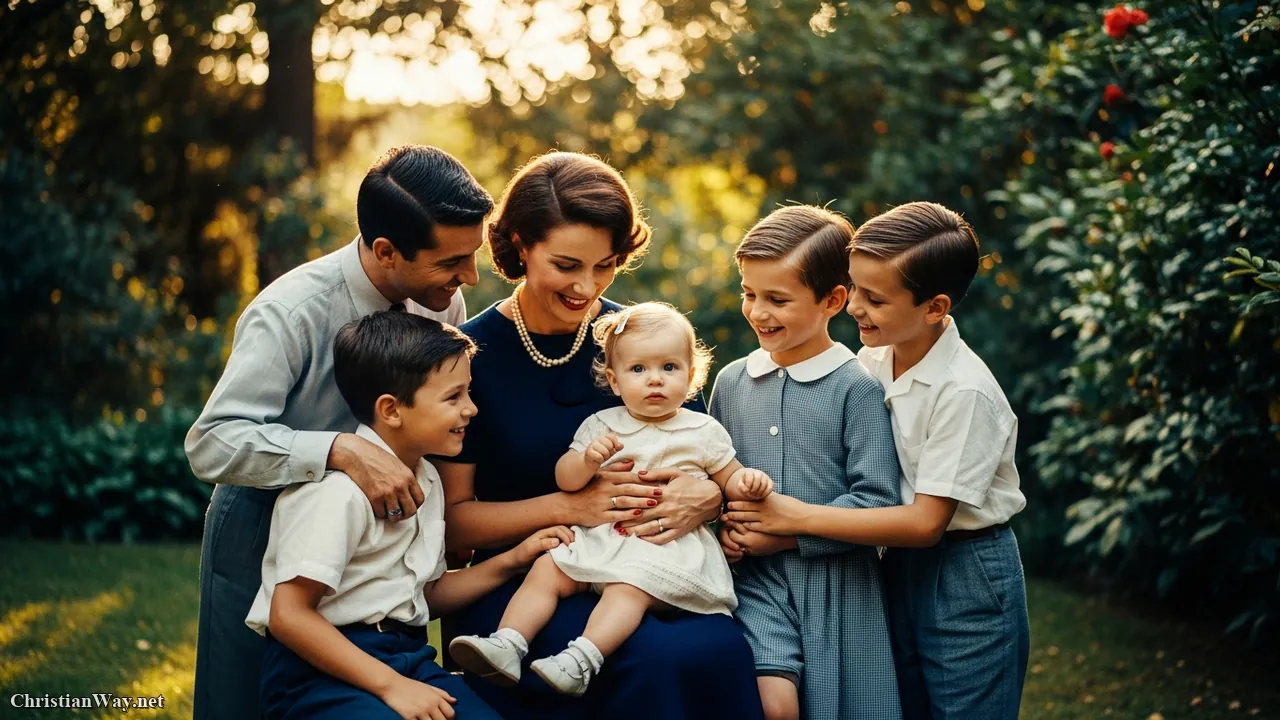
This is one of the great gifts of Saint Gianna’s witness: she shows that marriage is not a lesser path to holiness.
Marriage is not merely a private arrangement for companionship. It is a vocation. It is a call to learn the difficult and beautiful art of self-giving love.
A husband and wife do not promise one another a life without pain. They promise to remain present through the seasons of life: when health is strong and when it becomes fragile, when finances are secure and when they are uncertain, when children bring joy and when family burdens become heavy.
Marriage asks two imperfect people to keep returning to love.
That return may take many forms.
It may mean apologizing after a harsh word.
It may mean listening when tired.
It may mean forgiving what cannot be changed.
It may mean carrying responsibilities that no one else sees.
It may mean caring for a spouse through illness.
It may mean choosing faithfulness when feelings are weak.
It may mean praying together when words are difficult.
The world often speaks of love as a feeling that either appears or disappears. But Saint Gianna reminds us that love is deeper than emotion. Feelings are precious, and tenderness matters, but real love becomes visible in faithfulness.
Pope John Paul II called Saint Gianna a “significant messenger of divine love” and described her final witness as an expression of a marriage commitment lived with heroic fidelity.
Love That Gives Rather Than Takes
The deepest question in every relationship is not only, “How does this person make me feel?” It is also, “How am I learning to give myself in love?”
This question is not meant to create unhealthy self-neglect. Christian love does not require a person to accept abuse, violence, manipulation, or cruelty. Love must be joined to truth. Healthy relationships need honesty, boundaries, mutual respect, and the courage to seek help when harm is present.
But love always asks us to move beyond selfishness.
It asks us to see another person not as a tool for our happiness, but as someone entrusted to us by God.
This is why marriage can become such a powerful school of holiness. It teaches patience. It teaches humility. It teaches us that we cannot always be right. It teaches us to forgive. It teaches us to receive forgiveness. It teaches us that joy grows when it is shared.
Saint Gianna’s family life was not holy because it was free of difficulty. It was holy because she desired to let Christ remain at the center.
This is the call of every Christian home.
A home becomes holy through small practices:
A prayer before sleep.
A meal shared with gratitude.
A parent blessing a child.
A spouse saying, “I am sorry.”
A family attending worship together.
A conversation in which each person is heard.
A willingness to begin again after failure.
The home does not need to be perfect to be a dwelling place of grace. It simply needs to make room for Christ.
The Difficult Pregnancy and the Cost of Love
In September 1961, during the early months of her fourth pregnancy, Gianna learned that she had developed a uterine fibroma. She faced a grave medical situation. Before surgery, she asked the surgeon to preserve the life of the child she carried, entrusting herself to God’s providence and prayer. She gave birth to Gianna Emanuela on April 21, 1962, and died one week later, on April 28, after severe suffering.
We should approach this part of Saint Gianna’s story with reverence.
It is not a simple story. It is not a slogan. It is not a weapon to use against people who are afraid or suffering. It is the story of a real woman, a real doctor, a real wife, and a real mother facing a painful decision in a particular medical circumstance.
Saint Gianna did not reject medicine. She accepted surgery. She sought treatment. She understood the risks. She prayed. She trusted. She made a decision of conscience in which the love of her unborn child and the surrender of her own life to God became inseparable.
Her witness points us toward the sacredness of every human life, including the life of the mother and the life of the child she carries.
It also calls the Church to become more compassionate, not less.
When a woman faces a difficult pregnancy, she should not be left alone.
She needs skilled and ethical medical care.
She needs truthful information.
She needs prayer.
She needs the support of her husband, family, friends, parish, and community.
She may need financial help, emotional support, practical assistance, and a safe place to rest.
She needs to know that her suffering matters and that she is not a problem to be solved.
Saint Gianna’s life should move Christians toward greater tenderness for every mother in fear, every family carrying a difficult diagnosis, every couple facing uncertainty, and every child whose life is vulnerable.
The Meaning of Sacrificial Love
The word sacrifice is sometimes misunderstood.
Some hear it and imagine suffering forced upon a person. Others hear it and think Christianity is only about pain. But in the Gospel, sacrifice is not the worship of suffering. It is love that gives itself freely.
Jesus says, “Greater love hath no man than this, that a man lay down his life for his friends” (John 15:13).
Christ does not glorify death for its own sake. He reveals that love is stronger than self-protection. He gives Himself not because pain is good, but because His mercy is greater than sin, fear, and death.
Saint Gianna’s final act has been remembered in this light.
Her love was not sentimental. It was not a passing emotion. It was a love rooted in her understanding that life belongs to God and that every human person is precious.
Still, we must say clearly: no mother who is frightened, ill, or overwhelmed should ever be made to feel that she has failed God because her situation is complicated. God sees the whole heart. He knows the medical realities, the fears, the pressures, the grief, and the circumstances that no one else may understand.
The Church is called first to accompany.
To pray.
To listen.
To support.
To protect.
To offer mercy.
Saint Gianna does not stand above suffering mothers as a cold standard. She stands beside them as a sister in faith, whispering that Christ is near even when the road is dark.
The Dignity of Every Human Life
Saint Gianna’s witness is closely connected to the Christian belief that every human life is sacred.
This belief does not begin with politics. It begins with God.
The Book of Genesis tells us that every human person is created in the image and likeness of God. This dignity does not depend on health, wealth, age, ability, intelligence, productivity, social status, or public recognition.
A newborn child has dignity.
A mother carrying a child has dignity.
An elderly person has dignity.
A person living with disability has dignity.
A patient who cannot speak has dignity.
A poor person has dignity.
A person who has made mistakes has dignity.
A person whom the world has forgotten has dignity.
The Christian faith asks us to look at every human face and remember that Christ has come near.
Pope John Paul II wrote that human life is a sacred reality entrusted to us, to be protected responsibly and brought to fulfillment in love and self-gift. This truth is not meant to create fear. It is meant to awaken reverence.
We live in a world that often measures people by usefulness. We praise those who are strong, successful, wealthy, beautiful, or admired. We may quietly dismiss those who are weak, dependent, sick, unborn, elderly, poor, or inconvenient.
But Christ overturns these measurements.
He was born as a child, dependent upon Mary and Joseph.
He welcomed children when others tried to send them away.
He touched lepers.
He ate with those considered sinners.
He stopped for blind beggars.
He wept with the grieving.
He carried the Cross.
He died outside the city walls.
The life of Jesus tells us that no one is beyond the reach of God’s love.
A Culture of Welcome
To honor the sacredness of life is not only to speak about it. It is to build a culture where people are welcomed and supported.
A culture of life cares for mothers who are struggling.
It protects children.
It supports families under financial pressure.
It respects the sick.
It honors the elderly.
It helps those living with disability.
It offers practical care to people facing grief, illness, and uncertainty.
It sees the poor not as a burden, but as neighbors.
It refuses the idea that anyone can be discarded.
This work is not only for governments or charities. It begins in the family, parish, neighborhood, workplace, and daily choices of ordinary people.
A culture of welcome grows when we call someone who is lonely.
It grows when we help a family in need.
It grows when we speak respectfully about those who are vulnerable.
It grows when we stop treating human beings as problems.
It grows when we choose mercy over indifference.
Saint Gianna reminds us that the defense of life must always be joined to the tenderness of love.
Modern Holiness Is Possible
One of the reasons Saint Gianna touches so many hearts is that she lived in the modern world.
She used her education.
She practiced medicine.
She drove through ordinary streets.
She wrote letters.
She cared for a home.
She raised children.
She experienced the demands of work-life balance.
She faced medical uncertainty.
She lived not in some distant age, but in a world that feels close to our own.
This makes her witness especially powerful.
Sometimes people think saints belong to the past. We picture ancient martyrs, medieval monks, or heroic missionaries from centuries ago. Their lives inspire us, but we may wonder whether holiness is really possible amid traffic, phones, careers, family schedules, appointments, debt, exhausted evenings, and the many pressures of modern life.
Saint Gianna answers with a quiet yes.
Yes, you can become holy while working.
Yes, you can become holy in marriage.
Yes, you can become holy while raising children.
Yes, you can become holy through medicine, teaching, building, driving, cleaning, creating, managing, and serving.
Yes, you can become holy while carrying worries and unfinished questions.
Holiness does not mean that life becomes easy. It means that Christ becomes the center.
Pope Benedict XVI described Saint Gianna as a wife and mother whose life made the beauty and joy of faith, hope, and charity shine in the modern world.
The Holiness of an Unfinished Life
Many people wait to become holy.
They say, “When I have more time, I will pray.”
“When the children are older, I will serve.”
“When work becomes easier, I will attend church more faithfully.”
“When I am less tired, I will forgive.”
“When I feel stronger, I will trust God.”
But life rarely becomes perfectly settled.
There will always be another concern, another bill, another family responsibility, another fear, another reason to delay the work of grace.
Saint Gianna teaches us to begin where we are.
Begin with the prayer you can pray today.
Begin with the apology you can offer today.
Begin with the person you can love today.
Begin with the duty you can perform faithfully today.
Begin with the small act of gratitude you can make today.
God does not ask us to become someone else before He can use us. He asks us to offer Him the life we actually have.
The holiness of Saint Gianna was not created in one final decision. It was formed through thousands of small choices: prayer, service, work, tenderness, family love, and trust.
So it is with us.
The Cross Does Not Have the Final Word
Saint Gianna’s death was a real sorrow. Her husband lost his wife. Her children lost their mother. Her newborn daughter entered life in a world already marked by grief. It would be wrong to speak of such a loss lightly.
Christian faith does not pretend that death is beautiful. Death is painful because love is real.
Jesus Himself wept at the tomb of Lazarus.
He knew the sorrow of losing friends.
He knew the fear of Gethsemane.
He knew the loneliness of the Cross.
He entered the fullness of human suffering.
Yet the Cross is never the final word.
The Resurrection tells us that love is stronger than death.
This does not mean grief disappears. It means grief is no longer hopeless.
It does not mean that the wounded heart never cries. It means that every tear is held by God.
It does not mean that we understand every loss. It means that Christ has entered even the mystery we cannot explain.
Saint Gianna’s life points us toward this hope.
She reminds us that a life given in love is never wasted.
The world may measure success by length of years, wealth, fame, or achievement. But God sees the heart. He sees the love hidden inside ordinary duties. He sees the prayer no one heard. He sees the sacrifice no one understood. He sees the mother who fears for her child. He sees the father who carries the family’s burdens. He sees the doctor who chooses compassion. He sees the person who returns to Him after years of wandering.
Nothing offered to Christ in love is lost.
When We Cannot Understand God’s Ways
There are seasons when faith feels difficult because we do not understand what God is doing.
A loved one becomes ill.
A pregnancy becomes complicated.
A marriage becomes strained.
A job disappears.
A child struggles.
A prayer seems unanswered.
We may ask, “Lord, why?”
This question is not a failure of faith. It is often the beginning of honest prayer.
The Psalms are full of such cries. “How long, O Lord?” asks the psalmist. Jesus Himself cried from the Cross, “My God, my God, why hast thou forsaken me?”
God is not offended by our tears.
We do not need to approach Him with polished words. We can bring Him our fear, confusion, anger, sorrow, and weakness. We can simply say, “Lord, I do not understand, but do not leave me.”
Saint Gianna’s life does not explain away suffering. It teaches us to bring suffering into the light of Christ.
A Saint for Mothers, Fathers, and Families
Saint Gianna is often remembered especially by mothers, but her witness belongs to the whole family.
She speaks to mothers who are carrying more than others can see.
She speaks to fathers who want to protect and provide but sometimes feel overwhelmed.
She speaks to children who have lost a parent or who fear losing someone they love.
She speaks to husbands and wives trying to remain tender in difficult seasons.
She speaks to grandparents who pray for the generations after them.
She speaks to doctors, midwives, nurses, and caregivers who stand beside people at fragile moments of life.
She speaks to young people discerning whether God is calling them to marriage, religious life, priesthood, service, or another path of love.
Her life reminds us that family is not merely a private matter. It is a holy place where people learn how to give and receive love.
The family is where children first learn whether they are safe.
It is where they first learn the meaning of forgiveness.
It is where they begin to understand prayer.
It is where they see whether love is patient.
It is where they learn that sacrifice can be joyful when it is rooted in care.
Of course, not every family is peaceful. Some are marked by absence, conflict, addiction, betrayal, poverty, or grief. Some people carry wounds from childhood that make the idea of family painful.
Saint Gianna does not ask us to pretend these wounds are not real. She calls us to bring them to Christ.
The Church must become a spiritual family for those who feel alone.
It must become a place where the wounded are welcomed.
It must become a community where parents receive support rather than judgment.
It must become a home where children are protected and cherished.
It must become a place where people know they are not forgotten.
The Courage to Ask for Help
One of the greatest lies many people believe is that they must carry every burden alone.
A mother may feel ashamed to say she is exhausted.
A father may feel ashamed to admit fear about money or work.
A couple may hide struggles because they do not want others to think their marriage is weak.
A person facing illness may smile outwardly while quietly losing hope.
But God often sends His help through other people.
It can take courage to say, “I need prayer.”
It can take courage to say, “I need help with the children.”
It can take courage to say, “Our family is struggling.”
It can take courage to seek medical care, counseling, pastoral support, or a trusted friend.
This is not weakness. It is humility.
Saint Gianna’s story reminds us that love is not only about giving. It is also about receiving. A person who receives help allows another person to practice compassion. A family that admits its need may find grace through the support of others.
The Christian community should be a place where people can be honest.
Mercy for Those Who Feel They Have Failed
Whenever we speak about a saint, there is a temptation to compare our lives with theirs and feel discouraged.
We may think, “I am not patient enough.”
“I am not faithful enough.”
“I do not pray as I should.”
“I have made too many mistakes.”
“I have failed my family.”
“I have not loved as generously as I should have.”
But the saints are not given to us to make us despair. They are given to us to point us toward mercy.
Saint Gianna did not become holy because she was born without weakness. She became holy because she kept placing her life before God.
The Gospel is not the story of people who never fail. It is the story of a Savior who meets people in their failure.
Peter denied Jesus, yet Christ restored him.
The woman caught in sin was not condemned by Christ, but called into new life.
The prodigal son returned home after wasting everything, and his father ran to meet him.
Thomas doubted, and Jesus invited him to touch His wounds.
This is the mercy of God.
Perhaps you carry guilt about the past.
Perhaps you regret words spoken in anger.
Perhaps you wish you had been more patient with your children.
Perhaps you feel you have failed in marriage.
Perhaps you have been far from prayer.
Perhaps you fear that you have wasted too much time.
Bring it to Christ.
He does not ask you to repair your whole life in one day. He asks you to return.
The first step may be simple:
“Jesus, have mercy on me.”
“Jesus, help me begin again.”
“Jesus, teach me to love.”
This is enough to begin.
Love in Small Things
Saint Gianna’s final sacrifice is powerful, but we should not overlook the quiet holiness that came before it.
She loved through ordinary gestures.
She loved through service.
She loved through attention.
She loved through work.
She loved through prayer.
She loved through the responsibilities that make up daily life.
This is where most of us will meet God.
Perhaps we will never make a dramatic decision that becomes known beyond our family. But we can love in small things.
We can speak gently when someone expects anger.
We can forgive an old hurt.
We can prepare a meal with gratitude.
We can visit someone who is sick.
We can give a child our full attention.
We can drive safely and patiently.
We can treat a worker with respect.
We can pray for someone who has hurt us.
We can resist gossip.
We can say thank you.
We can show up.
These things may seem small. But the Kingdom of God is built through small acts of love.
Jesus says, “He that is faithful in that which is least is faithful also in much” (Luke 16:10).
Saint Gianna teaches us that modern holiness is not reserved for extraordinary people. It is available to every person willing to love faithfully where God has placed them.
Reflect and Pray
Dear friends, Saint Gianna Beretta Molla reminds us that holiness can grow in a home, a clinic, a classroom, a workplace, a hospital room, and the hidden places of family life. She teaches us that love becomes real when it is patient, generous, faithful, and willing to place itself in the hands of God.
Perhaps you are tired today. Perhaps you are carrying worries for your children, your spouse, your parents, your health, your work, or your future. Perhaps you feel that your life is too ordinary to matter. Perhaps you are struggling to see how God could bring beauty from your unfinished story.
Do not lose heart.
Christ sees every hidden act of love.
He sees the sacrifices no one thanks you for.
He sees the prayers you whisper when everyone else is asleep.
He sees the fear beneath your courage.
He sees the love that remains when life becomes difficult.
Saint Gianna Beretta Molla, faithful wife, loving mother, compassionate physician, and witness to the beauty of modern holiness, pray for us. Pray for mothers carrying difficult burdens, for fathers seeking wisdom and strength, for children needing protection, for families facing illness or uncertainty, and for all who serve life through their work. Teach us to welcome life with reverence, to love with courage, and to trust Christ when the road is difficult.
Lord Jesus Christ,
You entered a human family
and blessed the hidden duties of ordinary life.
Through the prayers of Saint Gianna Beretta Molla,
teach us to receive every day as a gift from Your hand.
Give strength to mothers, wisdom to fathers,
peace to families, and compassion to all who care for the sick.
Help us to protect the vulnerable,
to serve without seeking praise,
and to love with the generous heart You revealed on the Cross.
When we are afraid, remain near to us.
When we are tired, renew us.
When we cannot see the way forward,
lead us by the light of Your mercy. Amen.
May the witness of Saint Gianna Beretta Molla fill your home with peace, strengthen your heart in every sacrifice, and help you discover the holy beauty of love lived faithfully each day.
— Fr. John Matthew