Dear friends in Christ,
When people hear the words Roman Catholic Church, they may think first of grand cathedrals, the Pope, ancient ceremonies, saints, stained glass, or the Mass. Others may think of family memories: a grandmother praying the rosary, a child lighting a candle, a parish bell calling people to worship, or the quiet comfort of entering a church when life has become too heavy to carry alone.
Yet the Roman Catholic Church is more than a building, a set of customs, or a long list of teachings. At its deepest, it is a living community gathered by Jesus Christ. It is a people called by grace, nourished by Scripture and the sacraments, formed through prayer, sent into the world to serve, and held together by the hope that Christ remains faithful to His Church.
The Church has lived through many centuries of human history. She has known seasons of courage and holiness, but also seasons of confusion, scandal, division, and failure. She has carried the Gospel into many languages and cultures. She has founded schools, hospitals, shelters, monasteries, missions, and works of mercy. She has given the world saints whose lives shine with compassion, wisdom, prayer, sacrifice, and courage.
But none of this is the deepest reason the Church exists.
The Roman Catholic Church exists because Jesus Christ calls people to Himself.
He gathers disciples.
He forgives sinners.
He breaks bread with the hungry.
He teaches the truth.
He gives His life upon the Cross.
He rises from the dead.
He sends the Holy Spirit.
He invites people from every nation into communion with God and with one another.
The Church is not meant to stand in the place of Christ. She is meant to lead people toward Christ. She is not meant to become a monument to human achievement. She is meant to become a living sign of God’s mercy in the world.
The Second Vatican Council describes the Church as a sign and instrument of humanity’s union with God and of the unity of the human family. This is a beautiful way to understand Catholic life. The Church is called to become a place where people discover that they are not abandoned, that forgiveness is possible, that faith can be lived in ordinary life, and that Christ still meets wounded hearts with mercy.
For those who have grown up Catholic, this article may be an invitation to see familiar things with fresh gratitude. For those who are curious about Catholicism, it may offer a gentle beginning. For those who have been hurt by members of the Church, it may be a reminder that the failures of Christians must never be confused with the faithfulness of Jesus Christ.
The living heart of Christian tradition is not a human system. It is Christ Himself.
The Church Begins With the Call of Jesus
The story of the Roman Catholic Church begins with Jesus Christ calling people by name.
He calls fishermen beside the sea.
He calls Matthew from his tax collector’s table.
He calls women and men who have carried sorrow, illness, confusion, or shame.
He does not wait until people become perfect before inviting them to follow Him. He enters their lives where they are and calls them toward something new.
“Follow me,” Jesus says.
This simple invitation becomes the beginning of the Church.
Christian faith is personal, but it is never merely private. Jesus calls each human heart personally, yet He also gathers people into a community. He teaches His disciples to pray, “Our Father.” He commands them to love one another. He gives them a shared meal. He sends them into the world together.
The Church is therefore not simply a gathering of people with similar religious opinions. It is a people called into communion.
A person may encounter Christ in silence, while reading Scripture, during a season of suffering, or through the kindness of another believer. Yet Christ also invites that person into the life of His people: worship, prayer, forgiveness, service, teaching, fellowship, and sacramental grace.
The first disciples were not chosen because they were impressive.
Peter was impulsive and would later deny Jesus.
Thomas struggled with doubt.
James and John sometimes sought status.
Matthew carried a past many people would have judged.
Judas betrayed the Lord.
This should comfort every person who feels unworthy or unready.
The Church is built not upon the perfection of human beings, but upon the mercy and faithfulness of Christ.
Jesus forms His disciples patiently. He teaches them through parables, meals, journeys, questions, corrections, and acts of love. He shows them that greatness means service. He washes their feet. He tells them that the greatest commandment is love.
This is the foundation of Catholic life.
The Church is not first about status, power, or cultural identity. It is about following Christ.
Why the Church Is Called “Catholic”
The word Catholic means universal.
It comes from an ancient Greek expression meaning “according to the whole.” The word points to the Church’s calling to belong not to one nation, tribe, social class, or language, but to the whole world.
The Catholic Church is called catholic because Christ is for all people.
He is for the person who has known faith since childhood.
He is for the person returning after many years away.
He is for the person carrying guilt.
He is for the person who has never entered a church.
He is for the poor and the wealthy, the educated and the simple, the strong and the weary, the confident and the questioning.
The Catechism teaches that the Church is called catholic because Christ is present in her and because she is sent to all peoples.
This does not mean that Catholicism asks every culture to become identical.
A Catholic parish in Vietnam may carry a deep reverence for ancestors, family prayer, and local expressions of hospitality.
A Catholic community in Africa may worship with languages, music, and cultural rhythms rooted in its own people.
A parish in Latin America may have a rich devotion to Mary and the saints.
A Catholic church in Europe may carry centuries of sacred art, pilgrimage, and liturgical memory.
A Catholic family in North America may express faith through service, parish life, Scripture study, and works of charity.
The Gospel does not erase what is good in a people. It enters human cultures, purifies what wounds human dignity, and leads every people toward the fullness of life in Christ.
Catholicity is therefore not uniformity. It is unity in Christ amid a beautiful variety of languages, nations, gifts, and experiences.
The Church is universal not because she belongs everywhere by human ambition, but because the love of Christ is meant for everyone.
The Roman Catholic Church and the Apostolic Foundation
Catholic tradition understands the Church as apostolic. This means that she is rooted in the apostles whom Christ chose, taught, sent, and entrusted with the proclamation of the Gospel.
Jesus says to His disciples, “As my Father hath sent me, even so send I you” (John 20:21).
This mission does not end with the first generation of Christians. The Gospel is handed on. Communities are formed. Leaders are ordained to teach, serve, pray, and guide the faithful. The Church grows through preaching, Baptism, the Eucharist, works of mercy, and the power of the Holy Spirit.
Catholics believe that bishops stand in a living continuity with the apostles through apostolic succession. This does not mean that every bishop is personally holy or incapable of failure. The Church’s history makes it painfully clear that human leaders need accountability, humility, conversion, and prayer.
Apostolic succession is not a guarantee that human beings will never sin. It is a sign that the Church is not inventing herself anew in every generation.
The faith received from the apostles is meant to be preserved, proclaimed, celebrated, and lived.
The Church’s unity is also connected to the ministry of Peter. Catholics understand Peter as having a particular pastoral role among the apostles, a role connected with strengthening the brethren and serving visible unity within the Church.
This ministry is not meant to replace Christ. Christ alone is Lord. Christ alone saves. Christ alone is the true Shepherd of His people.
The Pope, as Bishop of Rome, is called to be a servant of unity, faith, and communion. Catholic authority has meaning only when it reflects the humility of Jesus, who says, “Whosoever will be great among you, let him be your minister” (Matthew 20:26).
Whenever authority becomes pride, it wounds the Church.
Whenever authority becomes service, it reflects Christ.
The Church as the People of God
The Roman Catholic Church is not made up only of clergy, religious sisters, monks, theologians, or people who appear especially devout.
The Church is the People of God.
It includes children learning their first prayers.
It includes parents trying to raise a family with patience and faith.
It includes workers trying to remain honest in difficult circumstances.
It includes the elderly who carry decades of prayer and hidden sacrifice.
It includes the sick, the grieving, the poor, the doubtful, the wounded, and the searching.
It includes people who have failed and are trying to begin again.
The Catechism speaks of the Church as the People of God, the Body of Christ, and the Temple of the Holy Spirit. These images help us see the Church not as a cold institution, but as a living communion.
As the People of God, the Church is called together by the Father.
As the Body of Christ, the Church belongs to Jesus and receives life from Him.
As the Temple of the Holy Spirit, the Church is renewed and strengthened by the presence of God.
This means that every baptized person has dignity and a calling.
Not everyone has the same vocation.
Some serve as priests, deacons, religious sisters, monks, missionaries, teachers, or catechists.
Some serve through marriage and family life.
Some serve through caring for the sick.
Some serve through work, hospitality, generosity, music, prayer, education, or quiet acts of mercy.
The Church needs every gift.
A grandmother praying faithfully for her family is serving the Church.
A young person choosing honesty in school is serving the Church.
A doctor caring for the sick with compassion is serving the Church.
A worker refusing corruption is serving the Church.
A parishioner visiting someone lonely is serving the Church.
A parent who teaches a child to say, “Thank You, Jesus,” is serving the Church.
The Christian life is not reserved for a few visible people. It is lived wherever ordinary believers allow Christ to shape their daily lives.
The Mass: The Heartbeat of Catholic Worship
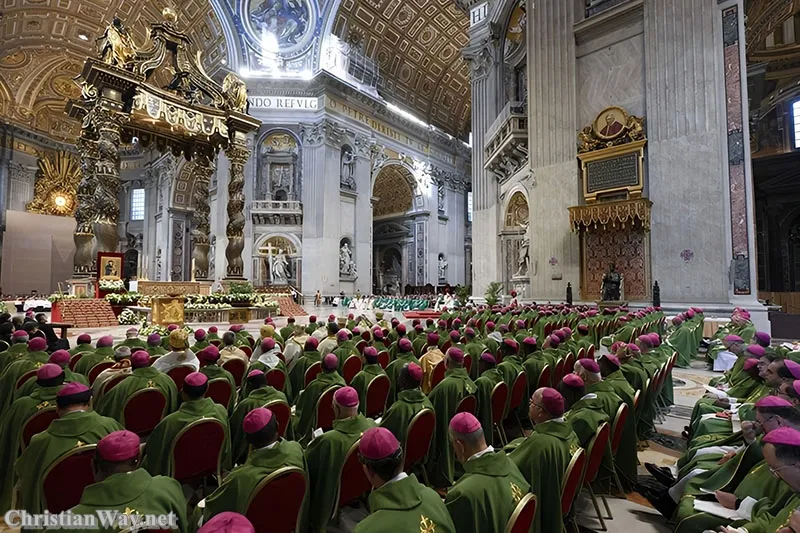
At the center of Catholic life is the Mass.
For Catholics, the Mass is not simply a weekly religious gathering. It is the Church coming together to hear the Word of God, give thanks, confess sin, pray for the world, receive Christ in the Eucharist, and be sent forth to live the Gospel.
The word Eucharist means thanksgiving.
This is important because Catholic worship begins not with human accomplishment, but with gratitude. Life is a gift. Creation is a gift. Forgiveness is a gift. Salvation is a gift. Christ Himself is a gift.
The Mass brings believers into the mystery of Jesus’ death and resurrection.
At the Last Supper, Jesus takes bread and says, “This is my body which is given for you” (Luke 22:19). He takes the cup and speaks of His blood poured out for many.
Catholics believe that Christ truly gives Himself in the Eucharist. The bread and wine become the sacramental gift of His Body and Blood. This is not understood as a mere reminder of something absent, but as a holy mystery in which Christ nourishes His people.
The Church receives this gift with reverence because the Eucharist gathers believers into one Body.
No one comes to Communion because he has earned it.
No one receives Christ as a private possession.
The rich and poor, young and old, strong and weak, all come before the same Lord with empty hands.
The Second Vatican Council calls the liturgy the summit toward which the Church’s activity is directed and the source from which her strength flows. This does not mean that Catholic life ends when Mass is over. It means that worship gives strength for life beyond the church doors.
A person who receives Christ is called to see Christ in the hungry.
A person who receives forgiveness is called to forgive.
A person who receives peace is called to become a peacemaker.
A person who receives mercy is called to show mercy.
The Mass is not an escape from ordinary life. It is the grace to live ordinary life in the light of Christ.
Scripture and Tradition: A Living Memory of Faith
Catholics love the Bible.
The Scriptures are proclaimed at every Mass. The Psalms shape prayer. The Gospels reveal Jesus Christ. The letters of the apostles teach the Church how to live faithfully. The Old Testament tells the long story of God’s covenant love and prepares hearts for Christ.
The Catholic Church does not see Scripture as separated from the life of the Church that received, prayed, preserved, and proclaimed it. Catholics speak of both Sacred Scripture and Sacred Tradition.
Tradition does not mean that every old habit is automatically holy.
It does not mean that Catholics are forbidden to ask questions.
It does not mean that the Church should ignore the wounds or challenges of the present world.
Holy Tradition means the living faith handed down from the apostles through worship, teaching, the sacraments, councils, creeds, saints, and the life of the Christian community.
Tradition is not meant to be a museum.
It is meant to be a living memory of Christ.
A family keeps photographs, stories, prayers, recipes, and customs because these things help it remember who it is. In a deeper way, the Church remembers Jesus through the Scriptures, the Eucharist, Baptism, the creeds, the liturgical year, the saints, and the ongoing life of prayer.
The purpose of Tradition is not to draw people away from Christ. It is to keep the Church close to Him.
Catholics believe that Scripture must be heard within the communion of faith. This protects believers from treating every private opinion as though it were the full meaning of God’s Word.
At the same time, the Bible should never become a closed book. It belongs to the whole people of God.
Children should hear its stories.
Families should pray its Psalms.
Young people should encounter the Gospels.
The grieving should hear its promises of resurrection.
The searching should discover the mercy of Jesus within its pages.
The Sacraments: Grace Touching Human Life
Catholicism is sacramental because it believes that God meets human beings through the visible realities of life.
Water becomes a sign of new life in Baptism.
Bread and wine become the Eucharistic gift of Christ.
Oil becomes a sign of healing, strengthening, and consecration.
Human words of forgiveness become a sign of reconciliation.
Marriage becomes a sacred covenant.
The laying on of hands becomes a sign of service and ministry.
These visible signs matter because human beings are not disembodied spirits. We live through bodies, senses, memories, relationships, and time.
We need water.
We need food.
We need touch.
We need words.
We need community.
The sacraments remind Catholics that grace is not merely an idea. It meets people in the real circumstances of their lives.
In Baptism, a person is welcomed into new life in Christ.
In Confirmation, the Holy Spirit strengthens the baptized for witness and service.
In the Eucharist, Christ nourishes His people.
In Reconciliation, the repentant heart receives mercy.
In Matrimony, husband and wife are called to a faithful love that reflects God’s covenant.
In Holy Orders, men are ordained to serve the Church through preaching, sacraments, and pastoral care.
In the Anointing of the Sick, the Church brings prayer and consolation to those facing illness, frailty, or danger.
The sacraments do not mean that God is limited to rituals. God is free and greater than every human structure.
But they tell us something tender: God does not despise the material world He created.
He enters human life.
He blesses water, bread, wine, oil, touch, tears, marriage, illness, work, and death with His grace.
Mary and the Communion of Saints
Catholics honor Mary because she is the mother of Jesus Christ.
Her place in Catholic faith does not take anything away from Christ. Everything Catholics honor in Mary comes from what God has done in her through grace.
When the angel announces that she will bear the Savior, Mary answers, “Be it unto me according to thy word” (Luke 1:38).
Her response is one of trust.
She receives the Word of God.
She carries Christ.
She remains near Him through His public ministry.
She stands at the Cross.
She waits in prayer with the disciples.
Mary’s life points beyond herself to Jesus.
At Cana, she says, “Whatsoever he saith unto you, do it” (John 2:5). These words remain the heart of Catholic devotion to Mary. She leads believers toward her Son.
Catholics also honor the saints.
The saints are not people who never struggled. They are people who allowed God’s grace to work within their weakness.
Some were scholars.
Some were missionaries.
Some were parents.
Some were contemplatives.
Some were martyrs.
Some spent their lives caring for the poor.
Some lived hidden lives of prayer.
Some had difficult pasts and became witnesses to mercy.
The communion of saints reminds Catholics that the Church is larger than the present moment. It includes believers across centuries, cultures, languages, and nations. The Catechism describes the Church as one family in Christ, called to love one another and praise God together.
The saints do not replace Jesus.
They reveal what Jesus can do in a human life.
A saint reminds us that holiness is possible.
A mother can become holy through patient love.
A worker can become holy through honesty.
A young person can become holy through courage.
A person who has suffered can become holy through mercy.
A sinner can become holy through repentance.
The saints do not exist to make ordinary people feel small. They exist to show that no ordinary life is beyond the transforming grace of Christ.
Mercy and Reconciliation at the Heart of Catholic Life
The Roman Catholic Church speaks often about sin because sin is real.
Sin wounds families.
Sin creates injustice.
Sin divides communities.
Sin can make people hide from God and from one another.
But Catholic faith does not end with sin.
It begins again and again with mercy.
The Gospel is the story of God seeking those who are lost.
Jesus receives the repentant.
He speaks with those others avoid.
He forgives sinners.
He tells stories of lost sheep, lost coins, and lost sons.
He reveals a Father who runs toward the child returning home.
The sacrament of Reconciliation is one of the most tender expressions of this mercy.
A person comes before God honestly, naming what has gone wrong. He does not come to be humiliated. He comes to receive healing.
Confession is not meant to create fear. It is meant to open the heart to grace.
There are people who carry shame for years. They believe they have gone too far. They remember words they cannot take back, choices that hurt others, duties they neglected, or relationships they damaged.
The mercy of Christ speaks into these places.
No sin is greater than God’s desire to forgive the repentant heart.
This does not mean sin is unimportant. Repentance is real. Truth is real. Where repair is possible, Christians are called to seek it.
But shame does not have the final word.
Jesus Christ has the final word.
The Church is faithful when she becomes a place where people can tell the truth about their brokenness and still find the door of mercy open.
The Church and the Call to Serve the World
The Catholic Church does not exist only for those already inside her walls.
She is sent into the world.
Jesus tells His disciples to care for the hungry, welcome the stranger, visit the sick, and remember the imprisoned. He teaches that love of God cannot be separated from love of neighbor.
This call is not optional decoration around faith.
It belongs to the heart of the Gospel.
A Catholic parish is meant to be more than a place where sacraments are celebrated. It is meant to become a community of service.
It should care for children.
It should welcome the lonely.
It should support families under pressure.
It should remember the poor.
It should bring comfort to the grieving.
It should defend the dignity of those who are ignored or exploited.
It should seek peace where conflict has taken root.
The Church’s mission is not to control the world. It is to serve the world in the name of Christ.
The Second Vatican Council teaches that the Church is sent to the nations as a universal sacrament of salvation, called to proclaim the Gospel to all people. This mission must always be shaped by humility.
Christians do not bring Christ into places where He has never been present. God is already at work in every human heart, every culture, every longing for truth, goodness, beauty, and mercy.
The Church’s task is to bear witness to the One who has come near.
She does this not only through preaching, but through service.
She does it when a Catholic school forms children in wisdom and compassion.
She does it when a hospital cares for the sick with dignity.
She does it when religious sisters serve the poor.
She does it when families open their homes to someone in need.
She does it when believers speak truthfully and refuse corruption.
She does it when a parish becomes a refuge for the lonely and the grieving.
The Church Is Holy, Yet Her Members Need Conversion
The Nicene Creed calls the Church one, holy, catholic, and apostolic.
For many people, the word holy can feel difficult when they look at the failures of Christians throughout history.
The Church has been served by saints, but she has also been wounded by sin.
There have been abuses of power.
There have been scandals.
There have been times when Christians have failed to protect the vulnerable.
There have been moments when members of the Church have acted with pride, cruelty, racism, greed, or indifference.
These failures must not be minimized, excused, or hidden behind religious language.
The Church is holy because Christ is holy.
The Church is holy because the Holy Spirit is at work within her.
The Church is holy because she carries the sacraments, the Scriptures, the Gospel, and the call to salvation.
But her members remain in need of conversion.
This is why every Catholic must return continually to Christ.
The Church must never become proud of her own history while forgetting the Cross.
She must never speak of mercy while ignoring the wounded.
She must never defend institutions at the cost of truth.
She must never ask the vulnerable to carry the burden of silence.
The Church is most faithful when she repents honestly, protects those in need, seeks justice, and returns to the Gospel.
The Catechism teaches that the Church is one, holy, catholic, and apostolic because she belongs to the life and work of the Father, Son, and Holy Spirit. This truth should make Catholics more humble, not more self-satisfied.
The Church is a gift before she is an achievement.
Catholic Life in Ordinary Days
Catholic faith is not lived only at Christmas, Easter, Baptisms, weddings, funerals, or great pilgrimages.
It is lived in ordinary days.
It is lived when a parent prays quietly before a child wakes.
It is lived when a worker chooses honesty instead of an easier dishonest path.
It is lived when a family gathers for a simple meal and gives thanks.
It is lived when someone visits an elderly neighbor.
It is lived when a person returns to prayer after months of distraction.
It is lived when a Catholic chooses forgiveness rather than feeding resentment.
It is lived when someone lights a candle in church and places an impossible situation before God.
The Catholic rhythm of life helps believers remember Christ throughout the year.
Advent teaches waiting.
Christmas teaches that God has come near.
Lent teaches repentance.
Holy Week teaches the cost of love.
Easter teaches that death does not have the final word.
Pentecost teaches that the Holy Spirit gives courage.
The feasts of Mary and the saints remind believers that grace can transform ordinary human lives.
The rosary, the Psalms, Eucharistic adoration, the sign of the cross, fasting, works of charity, and daily prayer all become ways of returning the heart to God.
These practices are not meant to become burdens.
They are meant to become pathways of grace.
A person may begin very simply.
One verse of Scripture.
One decade of the rosary.
One moment of silence.
One prayer before sleep.
One act of kindness offered in Christ’s name.
Faith grows not only through dramatic experiences, but through small acts of daily faithfulness.
The Roman Catholic Church and Christian Unity
Catholics believe that the fullness of the Church of Christ subsists in the Catholic Church. At the same time, Catholic teaching calls believers to recognize the real gifts of faith, Scripture, prayer, holiness, and service found among other Christians.
The desire for Christian unity is not a small matter. Jesus prayed that His disciples might be one.
Catholics, Orthodox Christians, Anglicans, Lutherans, Baptists, Pentecostals, and other Christian communities do not agree on every question of doctrine, ministry, sacraments, or Church authority. These differences are real and should not be dismissed lightly.
Yet the call of Christ remains.
Christians are called to speak truth without contempt.
They are called to listen without fear.
They are called to recognize the work of God wherever they see faith, love, prayer, service, and the sincere proclamation of Jesus Christ.
The Church’s unity is not meant to become an excuse for superiority.
It is meant to become a witness of reconciliation.
The Catechism teaches that the Church is one because she confesses one Lord, one faith, one Baptism, and is given life by one Spirit. This unity is both a gift and a task.
Every Christian who forgives, serves, prays, and seeks truth helps make visible the unity for which Christ prayed.
The Living Heart of Tradition Is Christ
Tradition can become empty when it is separated from love.
A person may know every prayer and still refuse mercy.
A parish may preserve beautiful worship and still ignore the poor.
A family may attend Mass faithfully and still fail to forgive one another at home.
A Catholic may speak strongly about doctrine and still become proud.
This is why the Roman Catholic Church must always return to the living heart of Christian tradition: Jesus Christ.
He is the One who washes feet.
He is the One who welcomes children.
He is the One who touches the leper.
He is the One who forgives the sinner.
He is the One who feeds the hungry.
He is the One who carries the Cross.
He is the One who rises from the dead.
He is the One who sends the Spirit.
Everything in Catholic life is meant to lead back to Him.
The Mass leads to Christ.
The sacraments lead to Christ.
Mary leads to Christ.
The saints lead to Christ.
The Church’s teaching leads to Christ.
The Church’s works of mercy lead to Christ.
The entire life of the Church is healthy only when it helps people see the face of Jesus more clearly.
Reflect and Pray
The Roman Catholic Church is the living heart of Christian tradition not because she belongs to the past, but because Christ remains alive within her.
She is living whenever the Gospel is proclaimed with courage.
She is living whenever a child is baptized into the love of God.
She is living whenever the Eucharist gathers believers around the table of Christ.
She is living whenever a sinner returns in repentance.
She is living whenever the poor are served.
She is living whenever a family prays through a difficult season.
She is living whenever a person chooses forgiveness over bitterness.
She is living whenever the Church remembers that she belongs to Jesus.
The Church is not perfect because her members are not perfect.
But Christ is faithful.
He continues to call.
He continues to forgive.
He continues to nourish.
He continues to heal.
He continues to send His people into the world with mercy and hope.
Whether you are Catholic, returning to the Church after years away, curious about the faith, or simply seeking Christ more deeply, remember this: the heart of the Church is not fear.
It is not pride.
It is not human power.
The heart of the Church is Jesus Christ.
Let us pray:
Lord Jesus Christ,
You call Your people into one family of faith
and nourish them with Your mercy and love.
Teach Your Church to remain humble, faithful, and compassionate.
Give courage to those who are searching for truth.
Bring healing to those wounded by sin, disappointment, or loss.
Strengthen families, priests, religious, and all believers
to serve with the gentleness of Your heart.
May Your Church be a refuge for the weary,
a home for the searching,
a voice for the vulnerable,
and a living witness to Your Gospel.
Keep us close to Your Cross,
faithful in the Eucharist,
open to the Holy Spirit,
and ready to love the people You place before us.
Amen.
— Fr. John Matthew