Dear friends in Christ,
There are truths in the Christian faith that can be stated simply, yet contemplated for a lifetime. The Trinity is one of them. Christians speak of one God: Father, Son, and Holy Spirit. We make the sign of the cross in this name. We are baptized in this name. We begin prayers in this name. We hear it in hymns, creeds, blessings, and the quiet words spoken beside a child’s bed at night.
Yet many hearts still ask, What is the Trinity?
Does Christianity believe in one God or three? Is the Father one God, Jesus another, and the Holy Spirit another? Does the Trinity mean that God has three different forms, like one person wearing different clothes? Is it only a difficult theological idea reserved for scholars, priests, pastors, and teachers?
The answer begins with humility. The Trinity is not a puzzle that human beings can fully solve. God is greater than our minds, our language, and our ability to explain. If we could place the living God inside a simple formula, He would no longer be God as Christians confess Him: eternal, holy, infinite, and beyond all created things.
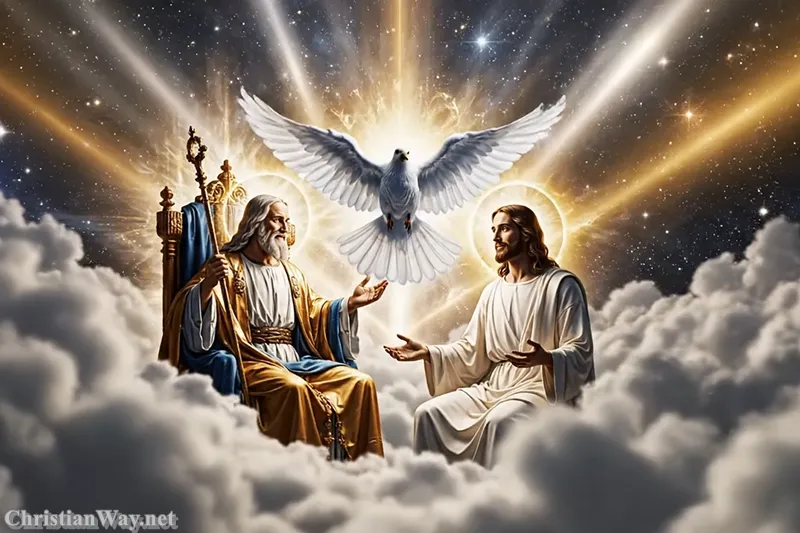
Yet the Trinity is not meaningless or distant. It is the heart of how Christians understand God’s love.
The Father is not lonely. The Son is not an afterthought. The Holy Spirit is not merely an invisible force. Before the world was created, God was already love: Father loving the Son, the Son receiving and returning that love, and the Holy Spirit given as the living communion of divine love.
The Trinity tells us that love is not something God began to do only after creating human beings. Love belongs to who God is.
This matters deeply.
If God were only power, we might fear Him.
If God were only judgment, we might hide from Him.
If God were only distant mystery, we might wonder whether He sees our pain.
But the God revealed in Jesus Christ is Father, Son, and Holy Spirit. He is holy, yes. He is just, yes. He is beyond all understanding, yes. But He is also eternally love.
The Bible says, “God is love” (1 John 4:8). These words do not mean that love is merely a pleasant feeling or that God approves of everything we choose. They mean that the deepest reality of God is self-giving, faithful, holy love.
The Trinity is therefore not an abstract lesson added to Christianity after everything else has been explained. It is the mystery behind creation, salvation, prayer, worship, forgiveness, hope, and the promise that we are never abandoned.
When Jesus teaches His disciples to pray, He directs them to the Father.
When Jesus gives His life for the world, He reveals the Father’s love.
When the Holy Spirit is poured out upon the Church, God comes near to strengthen, comfort, guide, and transform human hearts.
The Christian life begins and ends in this holy name: Father, Son, and Holy Spirit.
One God, Not Three Gods
The first truth Christians confess is that there is only one God.
The Bible begins with this confession. The God of Israel is not one deity among many. He is the Creator of heaven and earth, the One who calls the world into being, sustains every life, and remains faithful to His people.
The Old Testament says, “Hear, O Israel: The Lord our God is one Lord” (Deuteronomy 6:4).
Christians never leave this faith behind. To believe in the Trinity is not to believe in three gods. Christians worship one God.
There is one divine nature, one divine life, one divine will, one holiness, one power, one eternal love.
The Father is God.
The Son is God.
The Holy Spirit is God.
Yet the Father is not the Son, the Son is not the Holy Spirit, and the Holy Spirit is not the Father.
This can sound difficult at first, but the Christian claim is not that God has been divided into three pieces. God is not one-third Father, one-third Son, and one-third Holy Spirit.
Nor is God like a person who sometimes acts as a father, then becomes a son, and later becomes a spirit. The Father, Son, and Holy Spirit are not temporary roles that God puts on and removes.
The Father is eternally Father.
The Son is eternally Son.
The Holy Spirit is eternally Holy Spirit.
They are distinct in person, yet perfectly one in divine being.
This is why Christians say that God is one being in three Persons.
The word “Person” can be confusing because in ordinary life, a person is one separate individual among many others. But when Christians speak of the three Persons of the Trinity, they do not mean three separate beings standing beside one another.
They mean that the one God exists eternally as Father, Son, and Holy Spirit in perfect communion of love.
The mystery is not something we can flatten into a simple object from nature. Every comparison eventually becomes incomplete.
Water can be liquid, ice, and vapor, but those are changing states of one substance, not three eternal Persons.
The sun, its light, and its warmth can help us think about source and radiance, but the comparison is still limited.
A family can reveal something about love between persons, but every human family is imperfect and created, while God’s life is eternal and without division.
These images may offer a small beginning, but they must never replace the truth itself.
The Trinity is not a riddle to conquer. It is a holy mystery before which the heart learns to worship.
The Father: Source of All Life and Love
When Christians speak of God the Father, they do not mean that God is male in the limited human sense. God is spirit and is not confined by human bodies or categories.
The name “Father” is given to us through the language of Scripture and through the words of Jesus Himself. It tells us something real about God: He is the source of life, the giver of all that is good, the One from whom the Son is eternally begotten and from whom all creation receives its being.
Jesus teaches His disciples to pray, “Our Father which art in heaven” (Matthew 6:9).
This prayer is astonishing because it invites fragile human beings to speak to the Creator with trust.
For many people, the word “father” can bring warmth. It may call to mind protection, provision, patience, wisdom, and a home where one is received with love.
For others, the word may carry pain. Some have known absence, harshness, rejection, neglect, or fear in their relationship with an earthly father. God understands that wound. The Father revealed by Jesus is not a magnified version of human failure.
He is perfect love.
He does not abandon His children.
He does not grow weary of their cries.
He does not use weakness against them.
He does not delight in shame.
Jesus tells the story of the prodigal son to reveal this heart of the Father. The younger son leaves home, wastes his inheritance, and returns in humiliation. He expects judgment. He expects to be treated as unworthy.
Instead, the father runs toward him.
He embraces him.
He restores him.
He welcomes him home.
This is not a story that excuses sin. The son must come to his senses. He must return. He must speak honestly about what he has done.
But the father’s love is greater than the son’s shame.
This is how Christians understand God the Father. He is holy, and sin matters. Yet His holiness does not make Him cold. His justice does not cancel mercy. His love is not weak sentiment. It is the faithful love that calls the wandering child home.
The Father is not distant from the world He made. In Him, every human life has dignity. Every child is known. Every tear is seen. Every hidden act of love matters.
When life feels uncertain, believers can remember that they are not held by chance alone. They are held by the Father whose care is deeper than the fears of the moment.
The Son: Jesus Christ, the Word Made Flesh
The second Person of the Trinity is the Son, Jesus Christ.
Christians confess that Jesus is not merely a wise teacher or a prophet sent by God. He is the eternal Son of God, the Word through whom all things were made.
The Gospel of John begins with these words: “In the beginning was the Word, and the Word was with God, and the Word was God” (John 1:1).
Then John gives the great mystery of the Christian faith: “And the Word was made flesh, and dwelt among us” (John 1:14).
Jesus Christ is fully God and fully human.
He is not half God and half human, as though divided between two incomplete identities. He is truly God and truly human.
This matters because only God can save humanity from sin and death, and only one who truly shares our humanity can heal what human beings have suffered.
Jesus knows the reality of ordinary life.
He knew hunger.
He knew exhaustion.
He knew friendship.
He knew betrayal.
He knew the grief of standing beside a tomb.
He knew the loneliness of being misunderstood.
He knew the pain of the cross.
When Christians say that the Son became flesh, they are saying that God did not remain far away from human sorrow. He came near.
He entered the world not in wealth or earthly power, but in humility.
He was born in Bethlehem.
He grew up in Nazareth.
He worked with His hands.
He walked dusty roads.
He ate with friends.
He touched lepers.
He spoke with people others avoided.
He welcomed children.
He forgave sinners.
He wept with the grieving.
He revealed the love of the Father not only through words, but through His whole life.
When Philip asked Jesus to show him the Father, Jesus replied, “He that hath seen me hath seen the Father” (John 14:9).
To see Jesus welcome the outcast is to see the heart of the Father.
To see Jesus forgive is to see the mercy of the Father.
To see Jesus wash the feet of His disciples is to see the humility of the Father.
To see Jesus carry the cross is to see the self-giving love of the Father.
The Son does not compete with the Father. He reveals the Father perfectly.
Jesus says, “I and my Father are one” (John 10:30).
This does not mean that Jesus and the Father are the same Person. Jesus prays to the Father. He obeys the Father. He speaks of the Father’s love.
Yet He is one with the Father in divine life and glory.
The Son is eternally begotten of the Father. There was never a moment when the Father existed without the Son. Before creation, before time, before stars, before human history, the Son was with the Father.
This is why Christians worship Jesus Christ.
They do not honor Him only as a holy man. They confess Him as Lord.
When Thomas sees the risen Christ, he says, “My Lord and my God” (John 20:28).
The Son reveals that God’s love is not only spoken. It is given.
The Holy Spirit: God Near to Us
The Holy Spirit is sometimes the most misunderstood Person of the Trinity.
Some people imagine the Holy Spirit only as a feeling during worship. Others think of the Spirit as an impersonal force, like energy or inspiration. Still others speak of the Holy Spirit only in moments of dramatic spiritual experience.
But the Holy Spirit is not merely a feeling, a force, or an atmosphere.
The Holy Spirit is God.
He is the giver of life.
He is the One who moved over the waters at creation.
He spoke through prophets.
He overshadowed Mary at the conception of Jesus.
He descended upon Christ at His baptism.
He strengthened the disciples at Pentecost.
He comforts the Church.
He convicts hearts of sin.
He gives courage to the fearful.
He inspires prayer.
He forms believers into the likeness of Christ.
Jesus promised His disciples that the Father would send the Holy Spirit to help them. He called the Spirit the Comforter, the Advocate, the One who would remain with them and guide them in truth.
The Holy Spirit is God’s presence within the life of the believer.
When a person is too weak to pray, the Spirit helps.
When a heart is burdened by guilt, the Spirit convicts not to destroy, but to lead toward repentance and healing.
When a believer faces fear, the Spirit gives courage.
When a church becomes divided, the Spirit calls people back to unity, humility, and love.
When a person feels alone, the Spirit reminds the heart that Christ has not abandoned it.
The Apostle Paul writes, “The Spirit itself helpeth our infirmities” (Romans 8:26).
This is a precious promise.
Sometimes we do not know what to say.
We may sit before God with confusion, grief, anger, or exhaustion. We may feel that our prayers are too broken, too weak, or too incomplete.
But the Holy Spirit meets us there.
The Spirit can turn a sigh into prayer.
The Spirit can turn tears into prayer.
The Spirit can turn silence into prayer.
The Spirit does not remove our humanity. He enters it with mercy.
The Holy Spirit also gives gifts to the Church.
Some are given wisdom.
Some are given courage.
Some are given patience.
Some are given the ability to teach.
Some are given the grace to comfort.
Some are given gifts of healing, hospitality, service, leadership, mercy, music, or prayer.
These gifts are not given so that one believer may feel superior to another. They are given for the building up of the whole body of Christ.
A person who quietly visits the sick may be carrying the Spirit’s gift of mercy.
A parent who teaches a child to pray may be serving through the Spirit’s gift of faith.
A worker who chooses honesty in a corrupt environment may be living by the Spirit’s courage.
The Holy Spirit is not far away. He is God near to us.
The Trinity Is Revealed in Scripture
The word “Trinity” does not appear as a single sentence in the Bible. Yet the faith of the Trinity arises from the whole witness of Scripture.
Christians see the Father, Son, and Holy Spirit revealed together in key moments of the Gospel.
At the baptism of Jesus, the Son stands in the water. The Spirit descends like a dove. The voice of the Father is heard from heaven: “This is my beloved Son, in whom I am well pleased” (Matthew 3:17).
Here, the Father, Son, and Holy Spirit are not one Person changing roles. They are revealed together.
At the end of Matthew’s Gospel, Jesus commands His disciples to baptize “in the name of the Father, and of the Son, and of the Holy Ghost” (Matthew 28:19).
Notice that Jesus does not say “in the names,” as though speaking of three separate gods. He says “in the name,” revealing one divine name shared by Father, Son, and Holy Spirit.
The Apostle Paul also blesses the Church with words that express this Trinitarian faith: “The grace of the Lord Jesus Christ, and the love of God, and the communion of the Holy Ghost” (2 Corinthians 13:14).
Christians have prayed these words for centuries because they reveal the shape of salvation.
The love of the Father sends the Son.
The grace of the Son saves the world.
The communion of the Holy Spirit brings believers into the life of God.
The Trinity is not a theory added to the Bible. It is the Church’s faithful way of confessing the God revealed in Scripture.
Why the Church Spoke So Carefully About the Trinity
In the early centuries of Christianity, believers had to defend the truth about Jesus Christ.
Some taught that Jesus was merely a great human teacher.
Some suggested that He was less than fully God.
Others confused the Father and the Son, as though there were no real distinction between them.
Still others treated the Holy Spirit as though He were only a created power.
The Church had to speak clearly because the Gospel itself was at stake.
If Jesus were not truly God, could He truly reveal the Father and save humanity?
If Jesus were not truly human, could He truly heal and redeem human life?
If the Holy Spirit were not truly God, could He truly bring believers into communion with God?
Through prayer, Scripture, worship, and careful reflection, the Church expressed its faith in the creeds.
The Nicene Creed, confessed by Catholic, Eastern Orthodox, Anglican, Lutheran, and many Protestant Christians, declares faith in one God, the Father Almighty; in one Lord Jesus Christ, the only-begotten Son of God; and in the Holy Spirit, the Lord and giver of life.
These words are not meant to make faith complicated. They are meant to protect the mystery of salvation.
The Father is truly God.
The Son is truly God.
The Holy Spirit is truly God.
And yet God is one.
When Christians confess the Trinity, they are not trying to sound clever. They are trying to remain faithful to the God who has revealed Himself through Jesus Christ.
The Trinity Shows Us That God Is Love
The Trinity teaches something beautiful about love.
Human love is often imperfect. We love, but we can also become selfish. We care, but we may still fear being hurt. We give, but we may secretly hope to receive something in return.
God’s love is not like this.
The Father gives Himself to the Son.
The Son receives and returns this love perfectly.
The Holy Spirit is the living communion of divine love.
Within God, there is no jealousy, no rivalry, no selfishness, no fear, no betrayal, no loneliness.
There is perfect communion.
This is why Christians say that God is love.
God did not need to create the world because He lacked something. He did not create human beings because He was lonely. He created out of overflowing goodness.
Creation is a gift.
Life is a gift.
Every breath is a gift.
The world may be wounded by sin, violence, greed, and fear, but it was created in love.
This also means that human beings are made for communion.
We were not made only to compete, consume, achieve, or protect ourselves.
We were made to love God and one another.
We were made for family, friendship, worship, service, forgiveness, and community.
The Trinity reveals that true life is not found in isolation.
A person may have wealth, status, knowledge, and success, yet still feel empty without love.
A person may be surrounded by people, yet remain lonely if no one truly knows the heart.
The love of the Trinity calls us beyond selfishness. It teaches us that love gives, receives, forgives, listens, serves, and remains faithful.
The Trinity and Prayer
The Trinity shapes Christian prayer.
Christians pray to the Father, through the Son, in the Holy Spirit.
This does not mean prayer must always follow one fixed formula. A believer may pray directly to Jesus. A believer may call upon the Holy Spirit for help. A believer may pray to the Father with the words Jesus taught.
But the whole life of prayer is Trinitarian.
We pray to the Father because He is the source of all love and life.
We pray through the Son because Jesus Christ has opened the way to God through His death and resurrection.
We pray in the Holy Spirit because the Spirit awakens faith, strengthens weakness, and helps us draw near to God.
When someone says, “Father, help me,” the Son hears.
When someone whispers, “Lord Jesus, have mercy,” the Spirit carries that prayer.
When someone says, “Come, Holy Spirit,” the Father is not absent.
The Trinity is not three separate doors leading to three different places. It is the one God drawing us into His love.
This can bring comfort in difficult seasons.
A person facing illness may pray, “Father, hold me.”
A person carrying shame may pray, “Jesus, forgive me.”
A person overwhelmed by fear may pray, “Holy Spirit, strengthen me.”
Each prayer is received by the one God.
The Trinity and the Cross
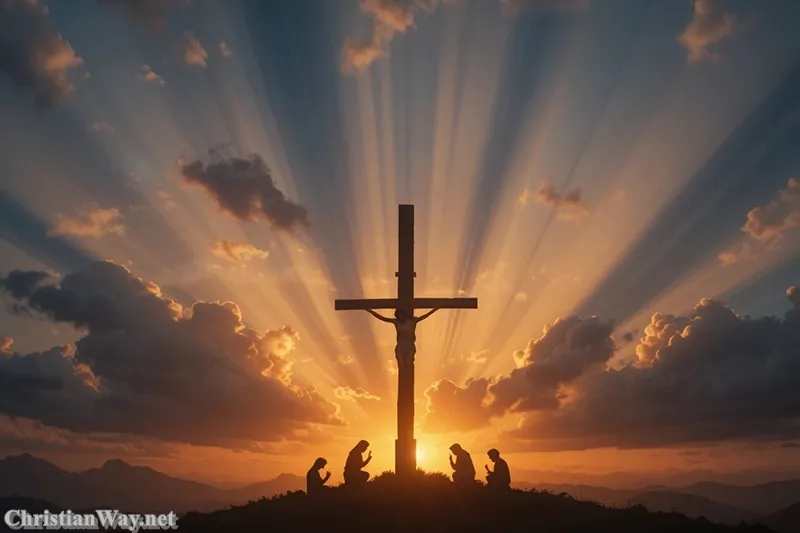
The mystery of the Trinity is revealed with particular depth at the cross.
Jesus does not suffer alone as a tragic human hero. He gives Himself in love to the Father for the salvation of the world.
The cross reveals the Son’s obedience, the Father’s love, and the Spirit’s life-giving power.
This mystery must be spoken of carefully. Christians do not believe that the Father cruelly turns against the Son as though the Trinity were divided. The cross is not a story of one divine Person against another.
It is the self-giving love of the one God.
The Father sends the Son in love.
The Son freely gives Himself in love.
The Holy Spirit brings the saving work of Christ into human hearts.
At the cross, we see the seriousness of sin. Sin wounds. Sin destroys. Sin brings death.
But we also see that love is stronger.
Jesus does not answer hatred with hatred.
He does not answer betrayal with revenge.
He prays, “Father, forgive them; for they know not what they do” (Luke 23:34).
The cross shows that God’s love is not distant sympathy. It is love that enters suffering and transforms it from within.
When believers face pain, grief, or fear, they are not speaking to a God who knows nothing of human suffering. In Christ, God has entered the depths of it.
The Trinity and the Resurrection
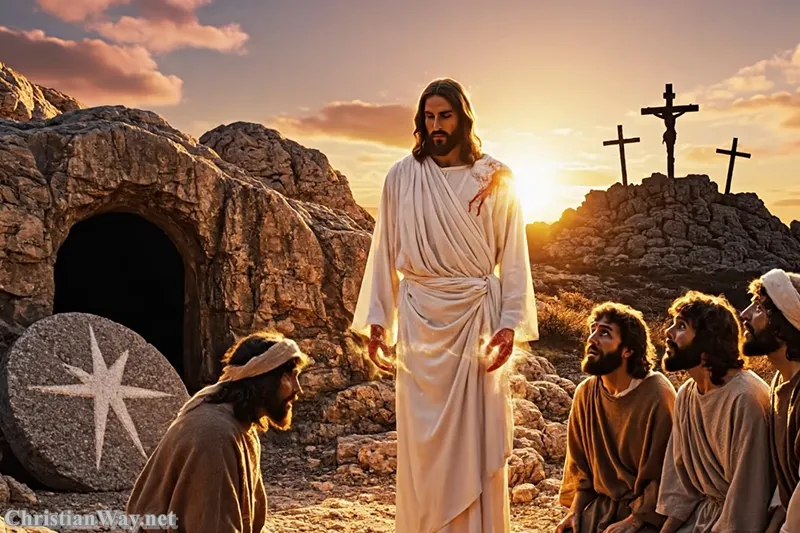
The resurrection reveals that the love of the Trinity is stronger than death.
The Father raises the Son.
The Son rises in glory.
The Holy Spirit gives life.
The tomb is empty because God’s love cannot be defeated by sin, violence, fear, or death.
This is the hope of Christianity.
The resurrection does not tell us that suffering is unreal. Jesus still bears the wounds of the cross. Grief is still real. Tears are still real. Human life remains fragile.
But death is not final.
The risen Christ comes to frightened disciples and says, “Peace be unto you” (John 20:19).
This peace is not merely a calm feeling. It is the assurance that the God who created the world has not abandoned it.
The Trinity reveals that salvation is not escape from God, but communion with God.
The Father welcomes.
The Son redeems.
The Holy Spirit renews.
The Christian hope is that one day, all who belong to Christ will see God more fully and live in the joy for which they were created.
The Trinity in Everyday Life
The Trinity may seem like a doctrine for Sundays, churches, or theological books. But it changes the way believers see ordinary life.
Because God is Father, Christians learn that life is a gift.
Because Jesus is the Son, Christians learn that no person is beneath dignity or beyond mercy.
Because the Holy Spirit is present, Christians learn that no faithful act of love is wasted.
The Trinity teaches a parent to see a child as a gift, not a possession.
It teaches a husband and wife that love is more than emotion; it is self-giving faithfulness.
It teaches a worker that honesty matters even when no one is watching.
It teaches a community that leadership should serve, not control.
It teaches a wounded person that healing is possible.
It teaches a lonely person that God is near.
It teaches a Christian that faith is not merely private. We are called into communion.
Every act of genuine love becomes a small reflection of the life of God.
When someone forgives after being hurt, the love of God is reflected.
When someone cares for an elderly parent with patience, the love of God is reflected.
When someone offers food to the hungry, listens to a grieving friend, or welcomes a stranger, the love of God is reflected.
When a family prays together in the middle of uncertainty, the love of God is reflected.
The Trinity calls Christians to become people of communion in a world that is often divided.
Common Misunderstandings About the Trinity
Because the Trinity is difficult to explain, people often fall into misunderstandings.
One misunderstanding is that Christians believe in three gods. They do not. Christians believe in one God.
Another misunderstanding is that the Father, Son, and Holy Spirit are merely different names for the same Person. They are not. The Father loves the Son, the Son prays to the Father, and the Holy Spirit is sent to guide the Church.
Another misunderstanding is that Jesus became God only after His birth, baptism, resurrection, or ascension. Christians confess that the Son is eternal. He did not begin to exist at Bethlehem. At Bethlehem, the eternal Son took human flesh.
Another misunderstanding is that the Holy Spirit is only an emotion. The Spirit may bring joy, conviction, peace, courage, and comfort, but the Spirit is not reduced to changing feelings.
Another misunderstanding is that the Trinity can be completely explained by one analogy. Every analogy helps only in a limited way. The mystery of God is greater than water, fire, family, light, or any object we can hold in our hands.
The purpose of Christian teaching is not to make God seem small enough to fit inside our understanding. It is to help us speak truthfully about the One who has revealed Himself in Christ.
Living Before the Mystery
There are some truths we do not master. We receive them.
The Trinity is one of these truths.
We do not stand above God and examine Him as though He were an object. We stand before Him in worship.
We confess the Father who made us.
We confess the Son who saved us.
We confess the Holy Spirit who renews us.
The more deeply a person enters the Christian life, the more the Trinity becomes not merely an idea but a living reality.
At Baptism, the believer is received in the name of Father, Son, and Holy Spirit.
In worship, the believer praises Father, Son, and Holy Spirit.
In prayer, the believer turns to the Father through the Son in the Spirit.
In suffering, the believer is held by the Father’s love, strengthened by Christ’s presence, and comforted by the Spirit.
In service, the believer becomes a small witness to the communion of love that is God’s own life.
The Trinity teaches us that the Christian faith is not about reaching God by our own strength. It is about being drawn into the life of God by grace.
Reflect and Pray
What is the Trinity?
The Trinity is the Christian confession that there is one God: Father, Son, and Holy Spirit.
The Father is the source of all life and love.
The Son, Jesus Christ, is the Word made flesh who reveals the Father and saves the world.
The Holy Spirit is the Lord and giver of life who comforts, guides, renews, and draws believers into communion with God.
The Trinity is not three gods.
It is not one God wearing three masks.
It is the one eternal God, living in perfect communion of love.
This mystery may be greater than our understanding, but it is not far from our lives.
The Father knows us.
The Son redeems us.
The Holy Spirit remains with us.
When we are afraid, we can turn to the Father.
When we are burdened by sin, we can turn to Jesus Christ.
When we feel weak or lost, we can ask the Holy Spirit to strengthen us.
And in every season, we can remember that we are invited into the love of the one God who made us, saved us, and never abandons us.
Let us pray:
Holy Father,
through Your beloved Son
and in the power of Your Holy Spirit,
draw us deeper into Your life of love.
Teach us to trust You when we do not understand,
to receive Your mercy when we have failed,
and to walk faithfully when the road is difficult.
May the love of the Father guide us,
the grace of Jesus Christ save us,
and the fellowship of the Holy Spirit
strengthen us each day.
Keep our hearts humble,
our faith steadfast,
and our lives open to Your peace.
Amen.
— Fr. John Matthew