Dear friends, it is a joy to journey with you through the “Windy City,” a place known for its towering skyscrapers and bustling streets, but also home to some of the most profound spiritual anchors in our nation. Chicago is a city built by the hands of immigrants—faithful souls who carried their traditions, their languages, and their deep love for Christ across the oceans. As they laid the bricks of their homes, they also raised the spires of their churches, creating a landscape of “Polish Cathedrals,” Irish sanctuaries, and Byzantine domes that still speak to us today.
When we enter these sacred spaces, we are not merely stepping into museums of art or history. We are entering the “House of God and the Gate of Heaven.” Each arch, each stained-glass window, and each quiet side chapel is a testament to the enduring presence of the Holy Spirit in the midst of urban life. Whether you are a lifelong resident or a pilgrim passing through, these churches offer a moment of stillness—a chance to breathe in the “aroma of Christ” and find rest for your weary soul.
In this guide, we will look beyond the limestone and marble to see the living faith that these walls have protected for generations. We will remember the priests who stayed during the Great Fire, the mothers who prayed for their sons at war, and the communities that continue to gather today to break the Bread of Life. As we explore these ten treasures, let us ask the Lord to open our eyes to the beauty of His Church, both in stone and in the “living stones” of the faithful.
It is my hope that as you read about these sanctuaries, you feel a tug at your heart to visit them, to kneel in their pews, and to join your voice with the thousands who have gone before us. In a world that is often loud and distracting, these churches stand as silent sentinels of the Eternal. Let us begin our pilgrimage through the Christian Way of Chicago’s most sacred landmarks.
A Summary of Chicago’s Sacred Treasures
| Rank | Church Name | Neighborhood | Architectural Style |
|---|---|---|---|
| 10 | Queen of All Saints Basilica | Sauganash | Neo-Gothic |
| 9 | St. Nicholas Ukrainian Cathedral | Ukrainian Village | Byzantine-Ukrainian |
| 8 | Saint Clement Church | Lincoln Park | Byzantine-Romanesque |
| 7 | Saint Hyacinth Basilica | Avondale | Polish Cathedral Style |
| 6 | Our Lady of Sorrows Basilica | East Garfield Park | Renaissance Revival |
| 5 | Church of the Holy Family | Near West Side | Victorian Gothic |
| 4 | Saint Mary of the Angels | Bucktown | Italian Renaissance |
| 3 | Old Saint Patrick’s Church | West Loop | Romanesque Revival |
| 2 | Saint John Cantius Church | West Town | Renaissance Revival |
| 1 | Holy Name Cathedral | Near North Side | Gothic Revival |
Top 10. Queen of All Saints Basilica
In the quiet, leafy neighborhood of Sauganash stands a monument to the mid-20th-century Catholic boom in Chicago. Queen of All Saints Basilica is a breathtaking example of Neo-Gothic architecture, designed to feel both ancient and grand. When you approach the exterior, the massive limestone walls and the soaring spire suggest a fortress of faith, protecting the peace of the surrounding community. It was raised to the status of a minor basilica by Pope John XXIII, a testament to its role as a spiritual lighthouse.
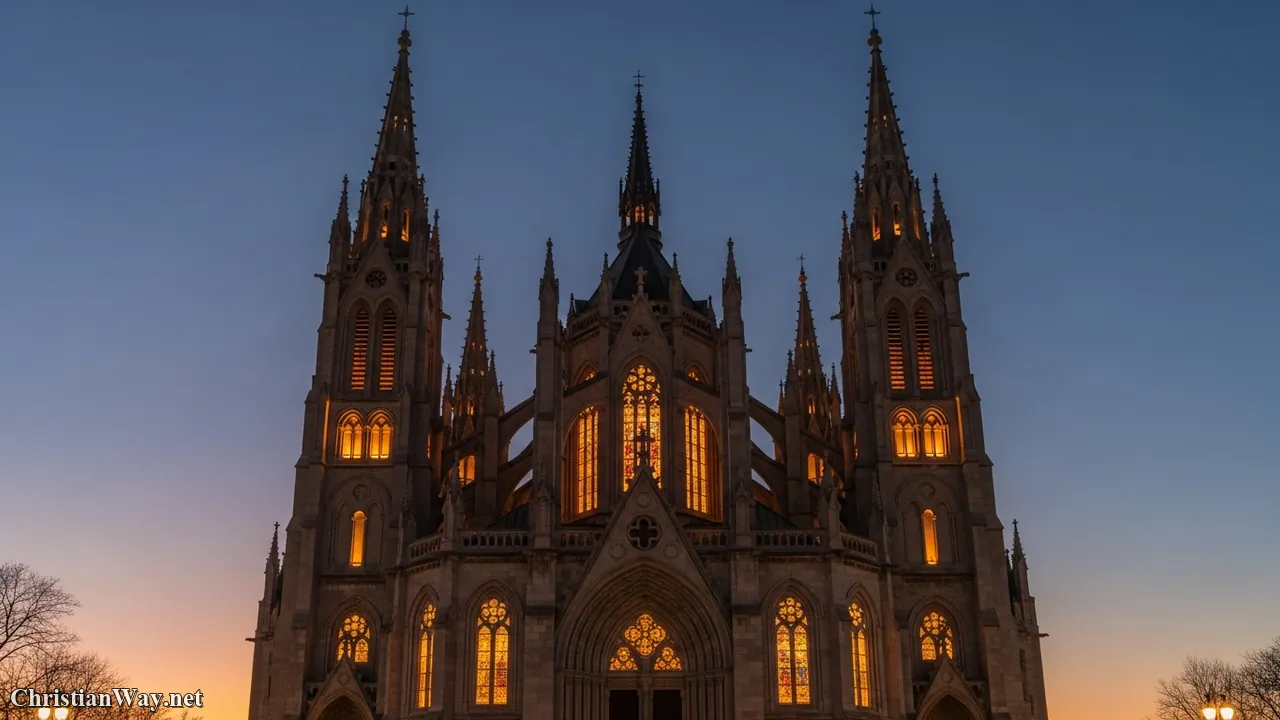
Inside, the atmosphere is one of regal solemnity. The stained glass windows are particularly noteworthy, casting a kaleidoscope of celestial colors across the nave. Theology tells us that Mary, as Queen of Heaven, always leads us to her Son. In this basilica, that royalty is expressed through every detail—from the intricate wood carvings of the reredos to the crown-like light fixtures. It is a place where one feels the dignity of being a child of God, called to a heavenly inheritance. For the modern believer, it serves as a reminder that even in the suburbs of our lives, there is room for the transcendent and the majestic.
Spiritual Highlights
- Features 104 stained glass windows depicting various saints and biblical scenes.
- “And a great sign appeared in heaven: a woman clothed with the sun, with the moon under her feet, and on her head a crown of twelve stars.” — Revelation 12:1
Top 9. Saint Nicholas Ukrainian Catholic Cathedral
Turning our hearts to the Ukrainian Village, we encounter the magnificent domes of Saint Nicholas. Completed in 1915, this cathedral is a vibrant witness to the Eastern Rite within the Catholic Church. The thirteen domes, representing Christ and His twelve Apostles, dominate the skyline, acting as a visual prayer for the city. The Byzantine-Ukrainian style is a departure from the Western Gothic we often see, offering a “window into the East” that enriches the tapestry of Chicago’s faith.
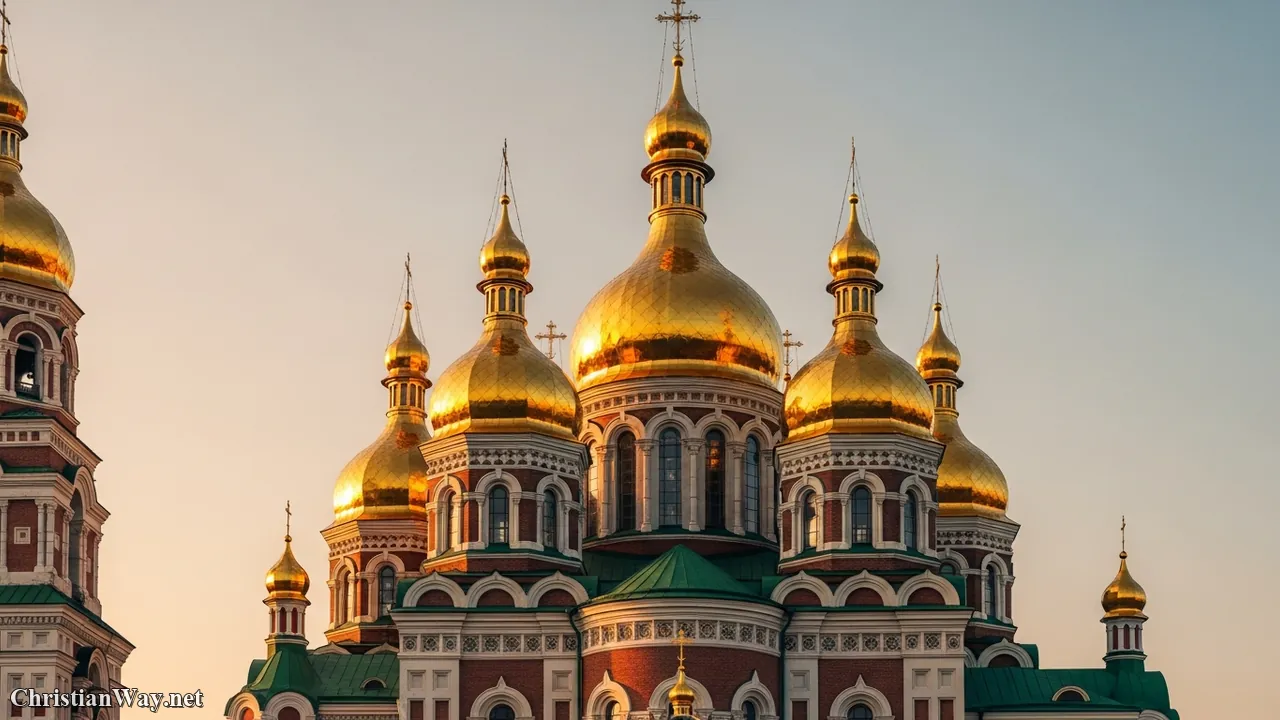
Entering the cathedral is like stepping into a different world—one where the liturgy is “heaven on earth.” The walls are covered in stunning icons, each telling the story of salvation through color and form. In the Eastern tradition, an icon is not just a painting; it is a presence. As we look upon the face of the Pantocrator (Christ the Ruler of All) in the dome, we are reminded that Jesus sustains the universe with His love. This sanctuary has been a place of refuge for generations of Ukrainians, especially during times of trial in their homeland. It teaches us that the Church is a mother who speaks every language and welcomes every culture into the one Body of Christ.
Spiritual Highlights
- The interior is modeled after the Cathedral of St. Sophia in Kyiv.
- Features a massive, intricately carved iconostasis that separates the nave from the sanctuary.
Top 8. Saint Clement Church
Nestled in the Lincoln Park neighborhood, Saint Clement Church offers a unique spiritual experience through its Byzantine-Romanesque design. Unlike the soaring verticality of Gothic churches, Saint Clement feels grounded and intimate, modeled after the ancient Church of San Clemente in Rome. The highlight of the sanctuary is the massive mosaic in the apse, known as the “Tree of Life.” It depicts the Cross not just as an instrument of death, but as a vibrant vine spreading its branches to all of creation.
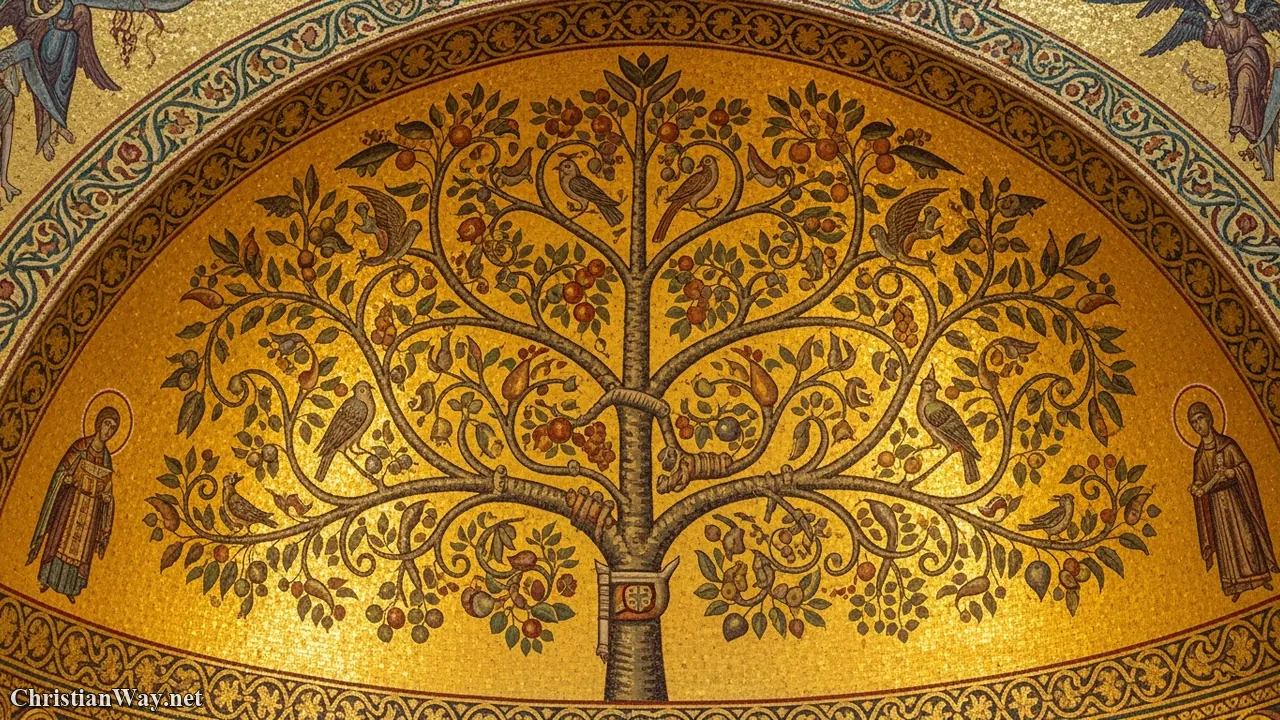
As we meditate on this mosaic, we see the interconnectedness of the Church. We see the saints, the early Church fathers, and the common people all gathered around the living water that flows from the foot of the Cross. This church challenges us to see our faith as something that must grow and bear fruit in the world. Saint Clement himself was a bishop of Rome who urged the early Christians toward unity and order. His legacy lives on here, inviting us to find harmony in our own communities. For a weary heart, the soft light reflecting off the gold tiles provides a sense of warmth and “at-home-ness” in the presence of the Lord.
Spiritual Highlights
- The “Tree of Life” mosaic contains over 30,000 pieces of glass and stone.
- “I am the vine, you are the branches. He who abides in Me, and I in him, bears much fruit.” — John 15:5
Top 7. Saint Hyacinth Basilica
In the heart of the “Polish Village” of Avondale, Saint Hyacinth Basilica stands as a monumental expression of ethnic pride and Catholic devotion. It is a premier example of the “Polish Cathedral style,” characterized by its massive scale and ornate Renaissance details. Walking up the steps, one is struck by the three great portals, inviting the faithful to leave the world behind and enter the sanctuary of the Lord. It was designated a basilica by Pope Saint John Paul II, who himself visited the church as a cardinal.
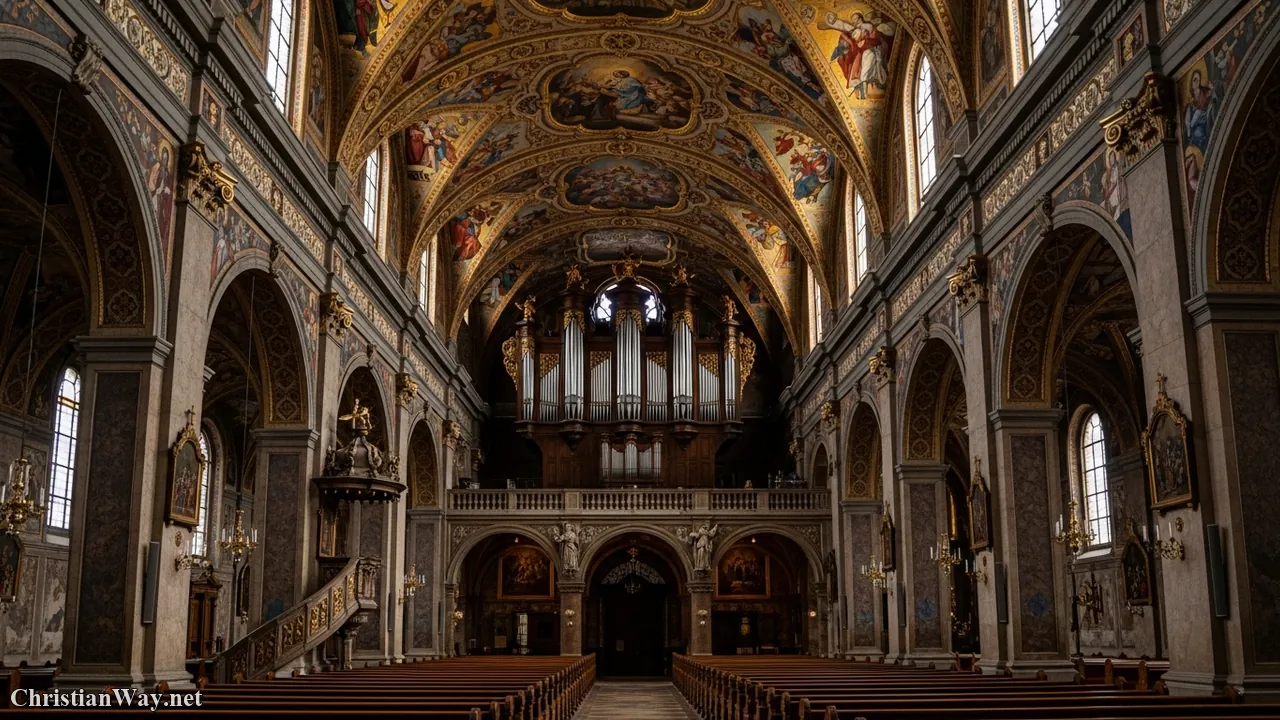
The interior is a festival of sacred art. The ceiling is adorned with murals that depict the history of the Polish people intertwined with the history of the Church. There is a profound sense of “communio” here—a feeling that we are part of a great cloud of witnesses. Saint Hyacinth, the “Apostle of the North,” is often depicted holding the Blessed Sacrament and a statue of Mary. This reflects the core of the parish’s life: a deep Eucharistic and Marian heart. It serves as a reminder to the modern pilgrim that our faith is not a solitary journey but a walk with our ancestors and the saints toward the light of the Resurrection.
Spiritual Highlights
- Houses a significant collection of relics, including those of St. John Paul II and St. Faustina.
- The massive pipe organ is one of the largest and most beautiful in the city.
Top 6. Our Lady of Sorrows Basilica
Our Lady of Sorrows is a sanctuary that truly takes one’s breath away. Located on the West Side, this basilica is the “Mother Church” of the Servite Order in the United States. Its Renaissance-style architecture is of a scale rarely seen in the Midwest, featuring a nave that stretches toward a distant, magnificent altar. The church is perhaps most famous for its National Shrine of St. Peregrine, the patron saint of those suffering from cancer, making it a place of intense prayer and hope.
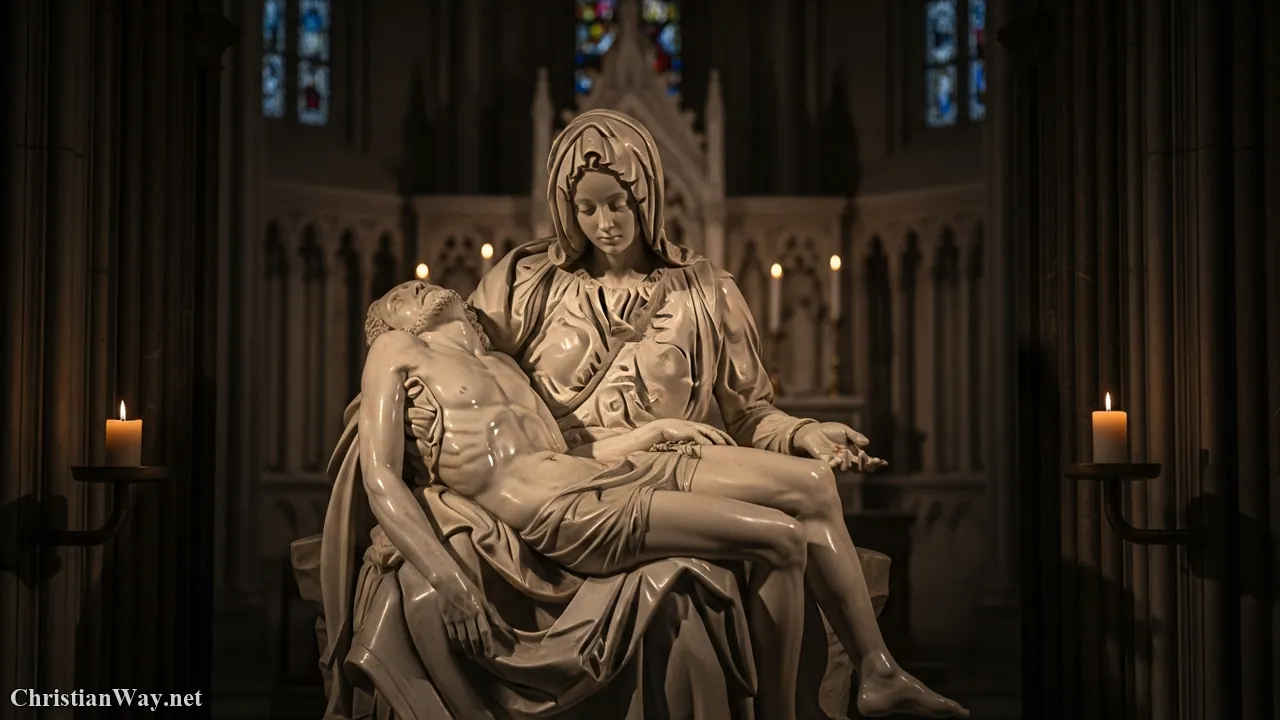
Theologically, this church invites us to stand with Mary at the foot of the Cross. The “Sorrows” of Mary are not just historical events; they are the moments where she identifies with our own human suffering. When we look at the beautiful replica of Michelangelo’s Pieta within these walls, we see a Mother who understands our grief and offers it to God. This basilica reminds us that the Church is a hospital for the soul. In an age where we often try to hide our pain, Our Lady of Sorrows encourages us to bring our brokenness to the altar, trusting that the Lord who suffered for us will also heal us.
Spiritual Highlights
- The site of the world-famous “Perpetual Novena” to Our Lady of Sorrows.
- “Near the cross of Jesus stood his mother…” — John 19:25
Top 5. Church of the Holy Family
Stepping into the Church of the Holy Family is like stepping into a miraculous survivor’s story. Founded by the Jesuits in 1857, it is the second-oldest Catholic church in Chicago. Legend tells us that when the Great Chicago Fire of 1871 was racing toward the church, the pastor, Father Arnold Damen, was away preaching. He promised Our Lady that he would keep seven candles burning before her image forever if the church were spared. The wind famously shifted, and the church remained untouched while the city around it burned. To this day, seven electric “candles” burn in the shrine as a witness to that answered prayer.
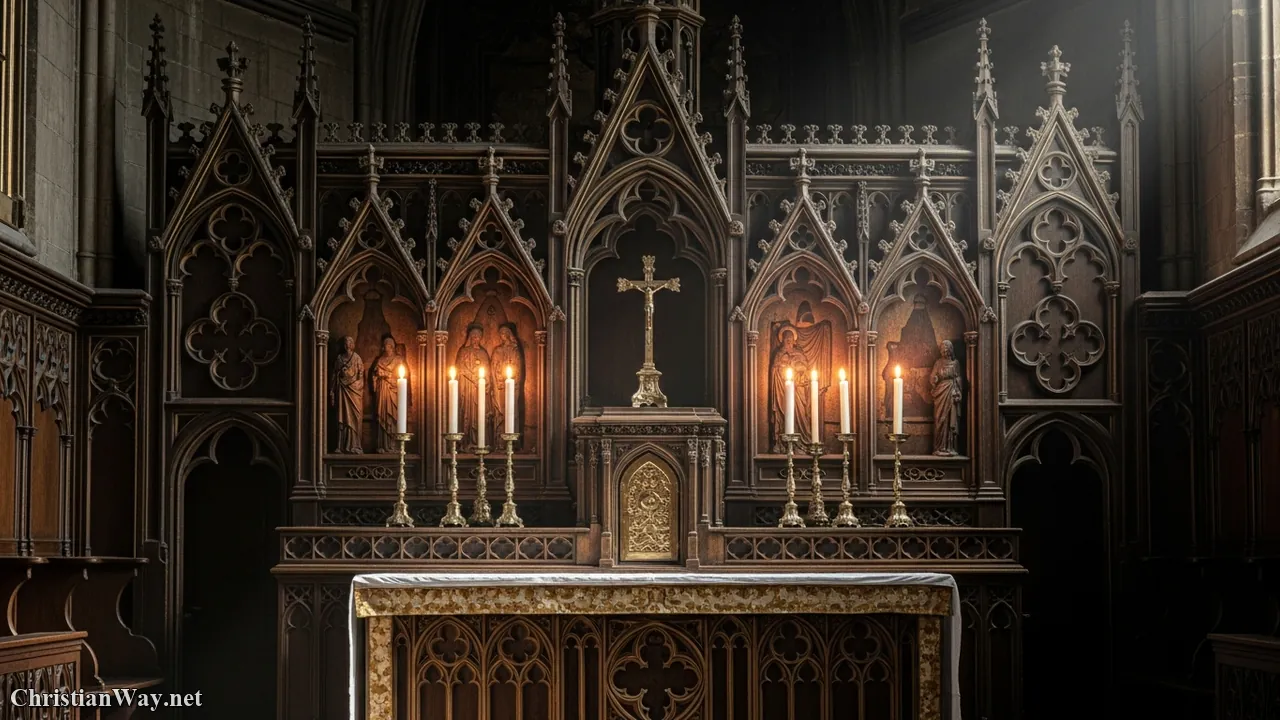
The Victorian Gothic interior is dark, wooden, and profoundly prayerful. It has an “old world” soul that modern buildings struggle to replicate. The presence of the Holy Family—Jesus, Mary, and Joseph—is felt in the warmth of the space, reminding us that God chose to enter human history through the intimacy of a family. This church is a sanctuary for those seeking stability in a changing world. It whispers to us that no matter how hot the fires of life may burn, the providence of God is greater. It stands as a reminder that we are never alone in our trials; the family of God is always there to shelter us.
Spiritual Highlights
- Features original stained glass from the 19th century and hand-carved altars.
- One of the few public buildings in Chicago to survive the Great Fire of 1871.
Top 4. Saint Mary of the Angels
Rising high above the Kennedy Expressway in Bucktown, the massive white dome of Saint Mary of the Angels is a landmark familiar to almost every Chicagoan. Crowned with 26 larger-than-life angels, the church seems to stand guard over the city. Built in the Italian Renaissance style, it was designed to echo the grandeur of St. Peter’s Basilica in Rome. For years, the church faced the threat of demolition, but it was saved and restored by the faithful, standing today as a symbol of resurrection and renewal.
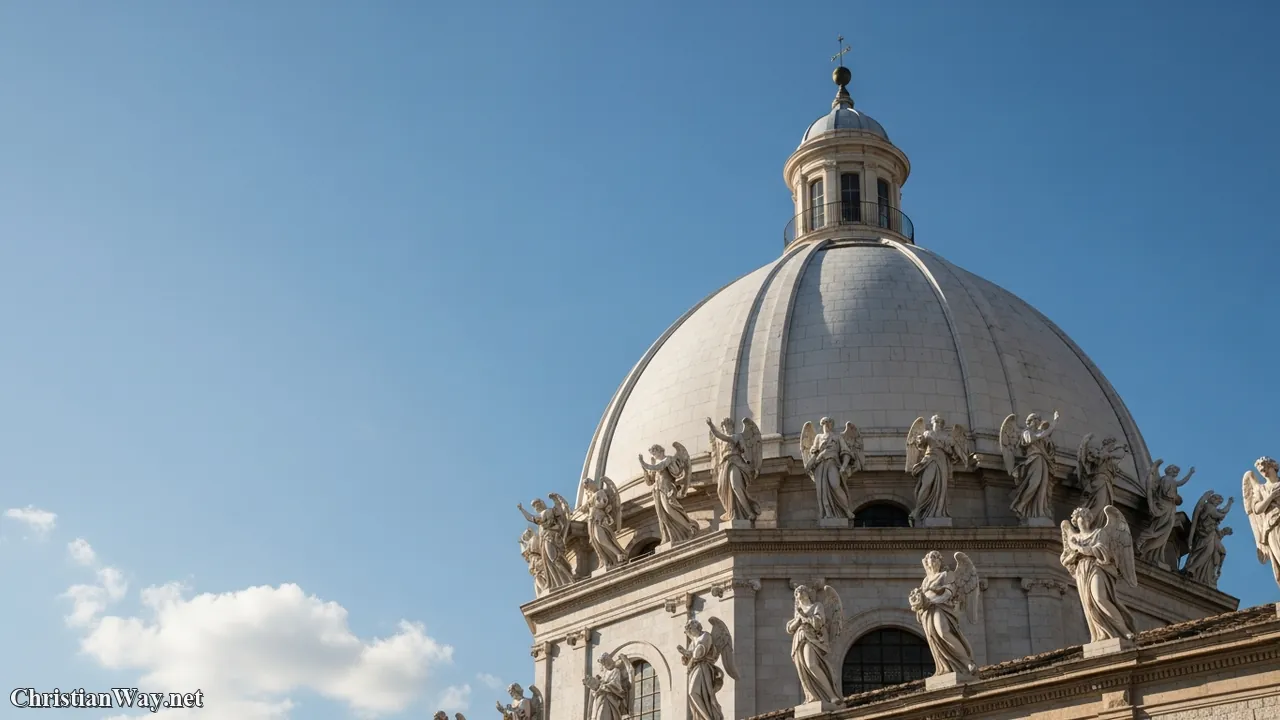
Inside, the church is bathed in light. The blue and gold ceiling reflects the heavens, and the murals tell the story of Mary’s life with a tenderness that touches the heart. The presence of the angels reminds us of the invisible reality of God’s kingdom—that we are surrounded by a celestial host as we worship. This parish is now under the care of the priests of Opus Dei, and it continues to be a vibrant center for the “sanctification of ordinary life.” It teaches us that our daily commute, our work, and our families are all part of a larger, angelic story. It is a place to rediscover the joy of our Catholic identity.
Spiritual Highlights
- The central dome rises 125 feet above the floor of the nave.
- “Bless the Lord, all you his angels, mighty in strength, who do his bidding.” — Psalm 103:20
Top 3. Old Saint Patrick’s Church
Old Saint Patrick’s is the very definition of a “living landmark.” Founded on Easter Sunday in 1846, it is the oldest public building in Chicago. While many churches of that era were built for specific immigrant groups, “Old St. Pat’s” has evolved into a spiritual home for people from every corner of the metropolitan area. The church is a stunning example of the Celtic Revival, with an interior decorated by the artist Thomas O’Shaughnessy, who was inspired by the ancient Book of Kells.
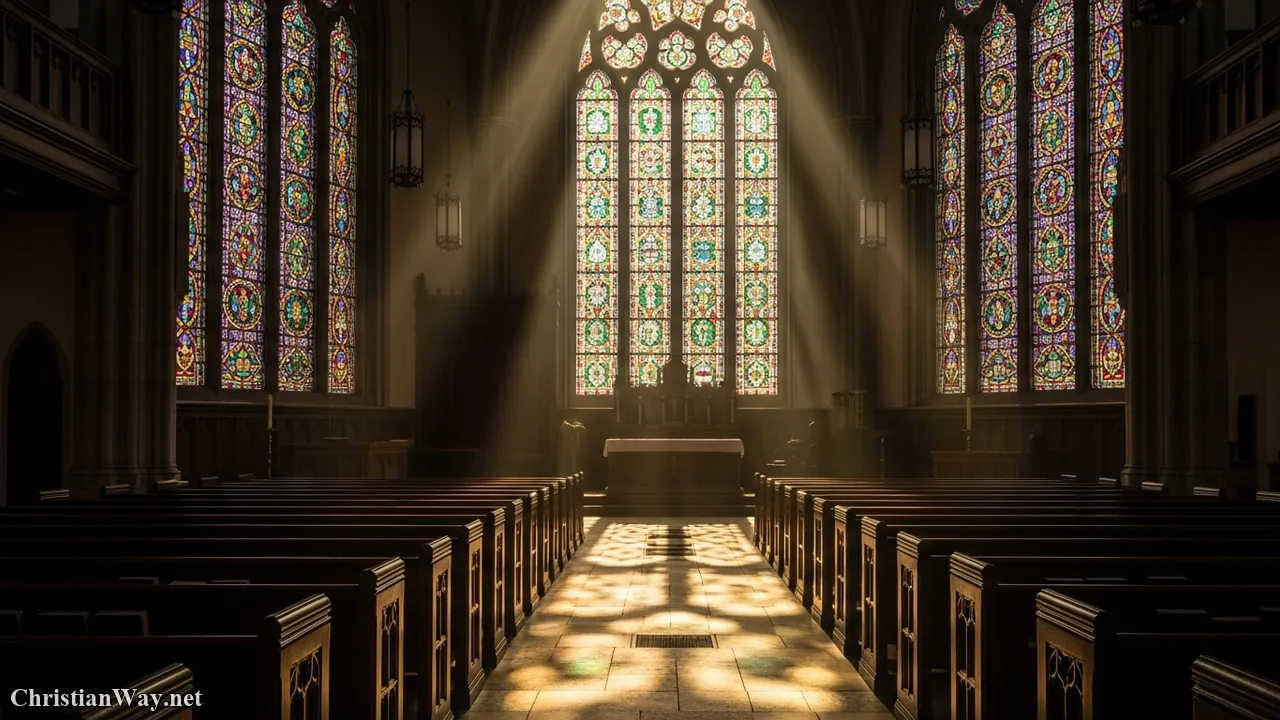
The stained glass windows here are unlike any others in the world. Instead of traditional biblical scenes, they are filled with intricate Celtic knots and interweaving patterns, symbolizing the eternal nature of God’s love and the interconnectedness of all life. To pray here is to be reminded of our Irish Catholic roots—a faith that is rugged, poetic, and deeply communal. The parish is known for its “outward-looking” mission, focusing on social justice and modern urban ministry. It teaches us that while we honor the past, the Holy Spirit is always calling us forward into new ways of serving our neighbors. It is a church that feels both ancient and remarkably young.
Spiritual Highlights
- The 15 stained glass windows are considered a masterpiece of Celtic art in America.
- The “Faith, Hope, and Charity” windows in the facade are a focal point of the church’s identity.
Top 2. Saint John Cantius Church
As we journey deeper into the heart of Chicago’s sacred architecture, we find Saint John Cantius. In an era where many sought to modernize, this parish—under the care of the Canons Regular of St. John Cantius—has dedicated itself to “Restoring the Sacred.” The church is a Neo-Renaissance masterpiece, filled with museum-quality art, relics, and a sense of liturgical perfection that draws pilgrims from across the globe. It is a place where the “beauty of holiness” is not just a phrase, but a felt reality.
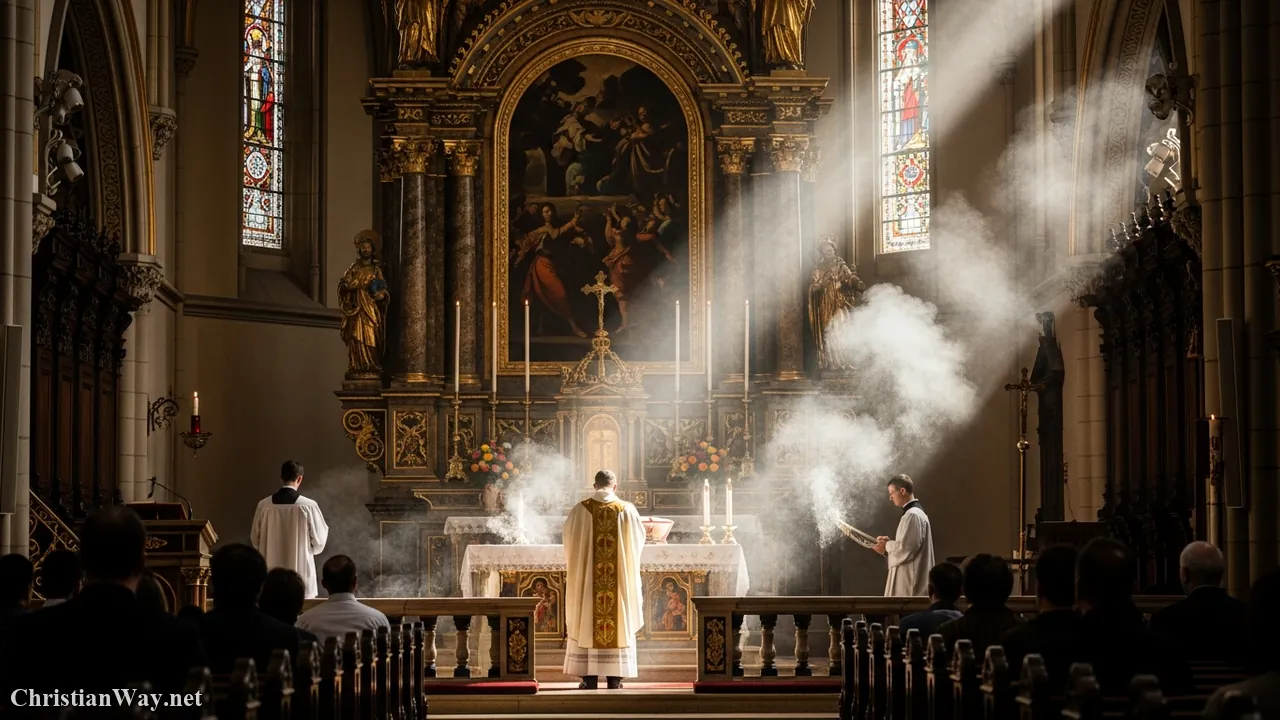
The experience of Mass here—whether in the Ordinary or Extraordinary Form—is designed to lift the soul from the mundane to the Divine. The air is often thick with incense, and the sounds of Gregorian chant or polyphony fill the vaulted ceilings. This environment reminds us that we are created for more than just this world; we are created for the adoration of God. Saint John Cantius was a priest known for his humility and his love for the poor, and this church carries that spirit by offering a refuge of beauty for all people, regardless of their background. It is a place where one can truly “be still and know that I am God.”
Spiritual Highlights
- Houses an incredible collection of over 1,800 relics of the saints.
- “Worship the Lord in the beauty of holiness; tremble before him, all the earth.” — Psalm 96:9
Top 1. Holy Name Cathedral
Finally, we arrive at the mother church of the Archdiocese of Chicago: Holy Name Cathedral. Standing in the shadows of the Magnificent Mile, this Gothic Revival masterpiece is the seat of the Archbishop and the spiritual heart of the city’s 2.2 million Catholics. Dedicated in 1875 to replace the cathedral destroyed in the Great Fire, Holy Name is a symbol of a faith that cannot be extinguished. Its spire points heavenward, a constant reminder of our ultimate destination amidst the skyscrapers of commerce.
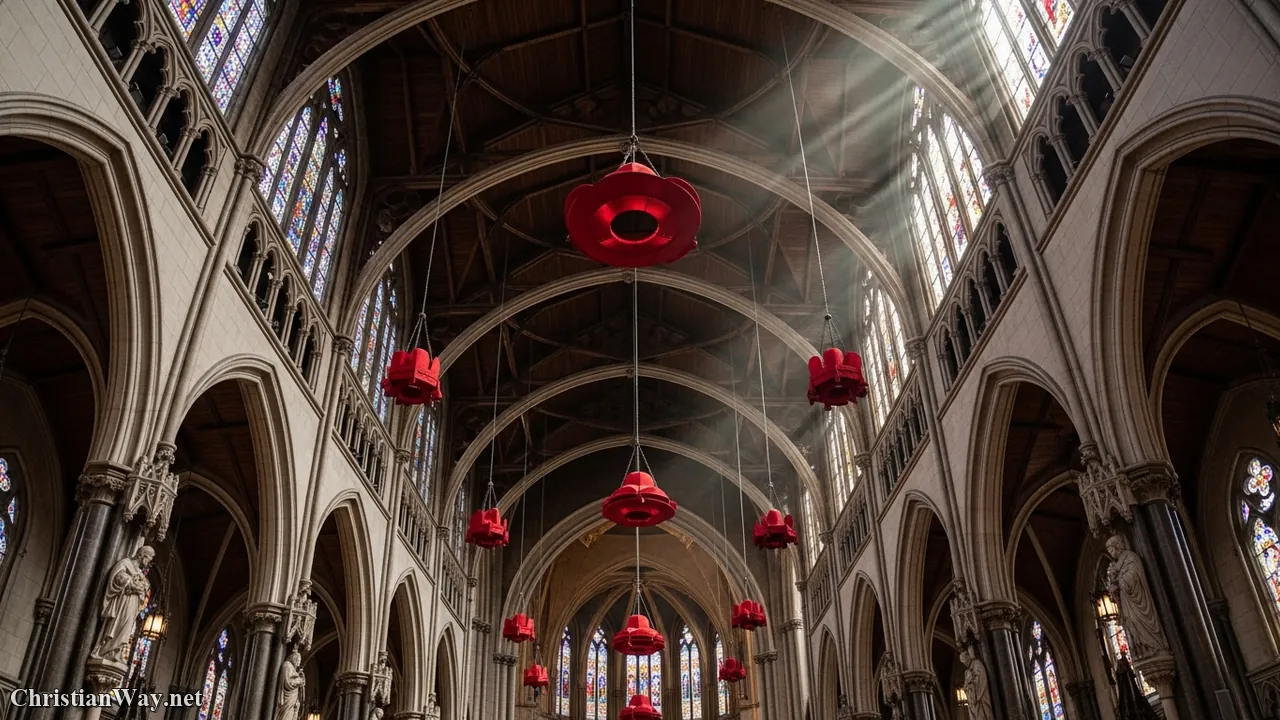
The interior of Holy Name is a masterclass in Gothic verticality and grace. One of the most unique features is the “galeros”—the wide-brimmed hats of deceased cardinals—hanging from the ceiling. Tradition says that when the hat falls, the soul of the cardinal has entered heaven. This reminds us of the continuity of the Church and our connection to those who have shepherded us. The cathedral is a place of grand liturgies and quiet confessions, serving as a “living room” for the entire Catholic community. Here, the Word is preached, the Sacraments are celebrated, and the Name of Jesus—the “Holy Name”—is exalted above all others. It is the perfect place to end our pilgrimage, returning to the center of our faith: Christ Himself.
Spiritual Highlights
- The massive bronze doors weigh 1,200 pounds each and depict scenes from the life of Christ.
- “Therefore God exalted him to the highest place and gave him the name that is above every name.” — Philippians 2:9
Reflect and Pray
As we conclude this journey through the sacred spaces of Chicago, let us take a moment to reflect. These churches are more than just stone and glass; they are the physical manifestations of centuries of prayer, sacrifice, and hope. They remind us that our faith is not a private matter, but something meant to be built into the very fabric of our cities and our lives. Whether you find yourself in the grand nave of Holy Name or the quiet mosaics of Saint Clement, remember that the same Lord is present in every tabernacle, waiting to meet you.
May these sanctuaries inspire you to build a “cathedral” in your own heart—a place where the Lord is always welcome, where beauty resides, and where the light of Christ shines through the windows of your soul. Peace be with you on your journey.
— Fr. John Matthew, for Christian Way