Dear friends, peace be with you.
In our walk with the Lord, we often find ourselves like the disciples on the road to Emmaus—walking beside Him, yet sometimes struggling to recognize Him until the breaking of the bread. The Holy Eucharist is the source and summit of our Christian life, a mystery of love where Jesus makes Himself truly present to us. Yet, in His infinite mercy, knowing the frailty of our human faith, our Lord has occasionally pulled back the veil of the sacramental appearance to reveal the physical reality of His Body and Blood.
These events, known as Eucharistic miracles, are not magic tricks intended to dazzle the curious. They are, rather, tender whispers from the Bridegroom to His Bride, the Church. They are calls to return to the table, to believe that He is truly “I Am” in the midst of our doubts and our scientific skepticism. From the ancient stones of Italy to the modern parishes of the Americas and India, these sanctuaries stand as testaments to a love that refuses to remain hidden.
I have gathered for you here a list of ten holy places—sanctuaries where the heartbeat of Christ has been made visible. Whether you are a pilgrim seeking a destination or a soul seeking assurance in the quiet of your home, may this journey into the mystery of the Altar strengthen your heart. Let us walk together to these places where the bread of angels became the bread of life, visible to the naked eye.
Table of The Top 10 Catholic Churches with Eucharistic Miracles
| Rank | Location & Church | Year of Miracle | The Sign |
|---|---|---|---|
| 1 | Lanciano, Italy Church of San Francesco |
~750 A.D. | Host turned to Flesh; Wine to Blood |
| 2 | Orvieto, Italy Cathedral of Orvieto |
1263 | Blood dripped from Host onto Corporal |
| 3 | Siena, Italy Basilica of San Francesco |
1730 | Stolen Hosts remain perfectly fresh |
| 4 | Santarém, Portugal Church of St. Stephen |
1247 | Bleeding Host encased in crystal |
| 5 | Buenos Aires, Argentina Parish of St. Mary |
1996 | Discarded Host became heart tissue |
| 6 | Sokółka, Poland Church of St. Anthony of Padua |
2008 | Host tissue integrated with heart muscle |
| 7 | Legnica, Poland Sanctuary of St. Hyacinth |
2013 | Reddish stain confirmed as myocardial tissue |
| 8 | Tixtla, Mexico Parish of San Martín de Tours |
2006 | Host effused a reddish substance |
| 9 | Chirattakonam, India St. Mary’s Church |
2001 | Face of Christ appeared on the Host |
| 10 | Faverney, France Abbey of Notre-Dame |
1608 | Monstrance levitated unscathed in fire |
Top 10. The Abbey of Notre-Dame (Faverney, France)
We begin our pilgrimage in the quiet French countryside of the early 17th century. During the night of Pentecost in 1608, a fire broke out in the abbey church where the Blessed Sacrament was exposed for adoration. The flames were fierce, consuming the altar and the linens. Yet, amidst the ash and ruin, the monstrance containing the Body of Christ was found floating in the air, untouched by the flames that had destroyed everything around it. It remained suspended for over 30 hours until it gently lowered itself onto a replacement altar.
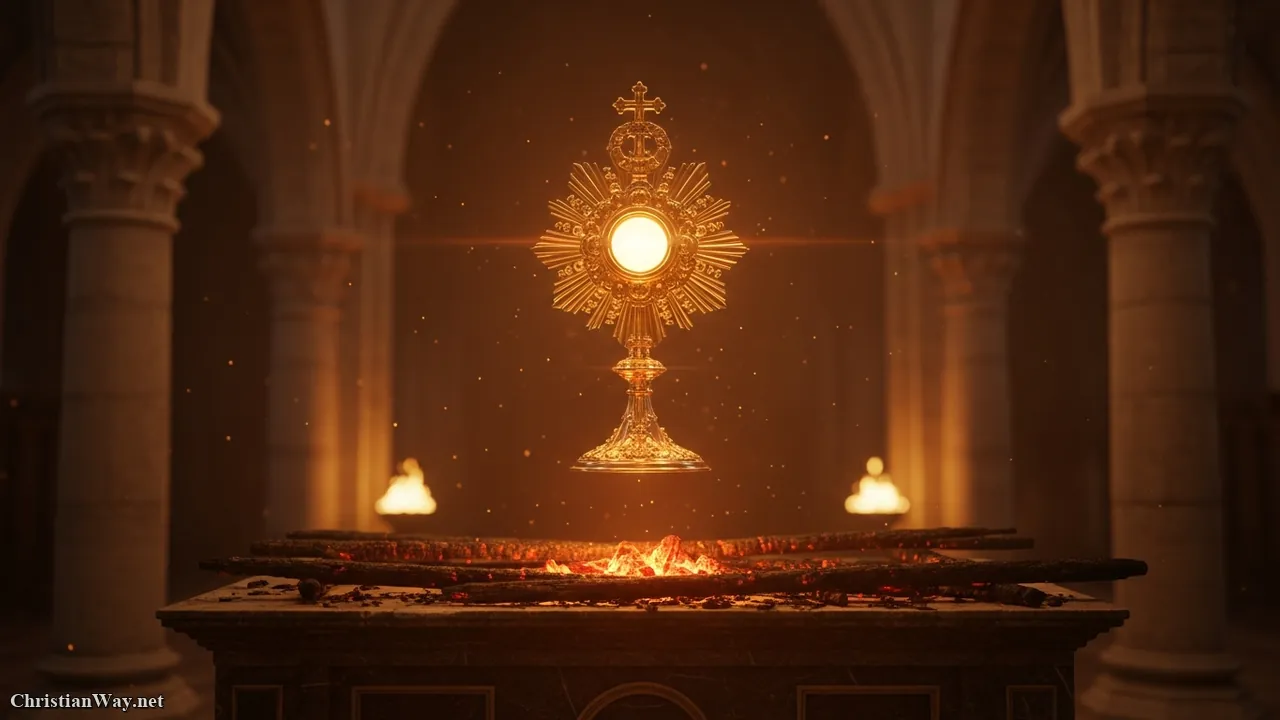
This miracle speaks to us of God’s sovereignty over the elements. In a world where we often feel consumed by the “fires” of tribulation—anxiety, loss, or persecution—Jesus remains suspended above the chaos, waiting for us to prepare a place for Him to land. He is the bush that burns but is not consumed.
Pastoral care often involves reminding the faithful that while everything around us may turn to ash, the presence of God remains. If you feel your life is being dismantled by fire, look for the miracle in the center of the room. Christ is there, defying the laws of nature to be with you.
Spiritual Highlights:
- The Lesson: God preserves what is His, even in the fire.
- Scripture: “When you walk through fire you shall not be burned, and the flame shall not consume you.” (Isaiah 43:2)
Top 9. St. Mary’s Church (Chirattakonam, India)
Journeying to the vibrant state of Kerala, India, we find a modern testament to the Lord’s desire to be seen. In 2001, during a novena, the priest noticed three red dots on the consecrated Host. Within days, these dots formed the unmistakable countenance of a human face—a face crowned with thorns. It is a hauntingly beautiful image, reminding us that the Eucharist is not an object, but a Person.
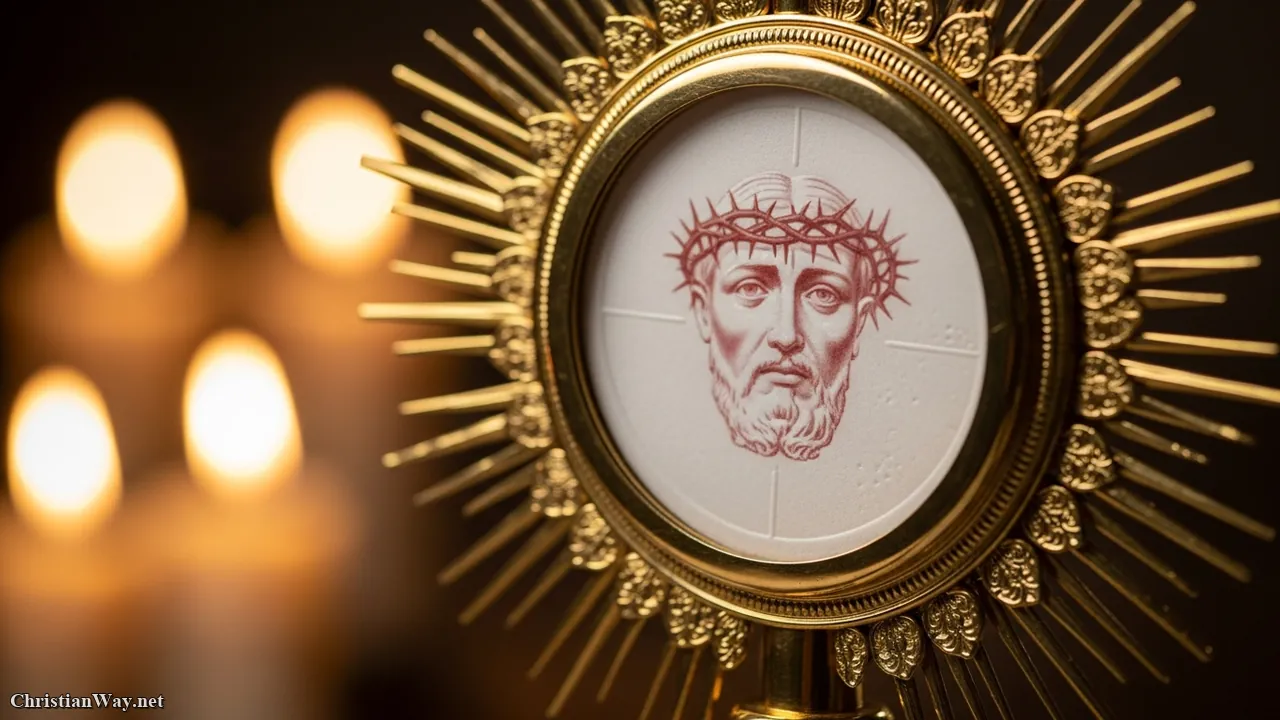
Theologically, this miracle emphasizes the “Face of God.” In the Old Testament, to see the face of God was to die; in the New Covenant, to see His face is to live. Jesus shows Himself here not in glory, but in His Passion. It is a visual echo of His words, “This is my body, given for you.” He is eternally offering Himself.
For those of us who feel unseen or forgotten, this miracle is a comfort. The God who reveals His face on a small piece of bread sees you. He looks back at you from the monstrance with eyes of mercy, inviting you into a relationship that is as real as the face of a friend.
Spiritual Highlights:
- The Lesson: The Eucharist is a personal encounter with the Suffering Servant.
- Scripture: “Look to him, and be radiant; so your faces shall never be ashamed.” (Psalm 34:5)
Top 8. Parish of San Martín de Tours (Tixtla, Mexico)
In 2006, during a retreat in the Diocese of Chilpancingo-Chilapa, a nun distributing Communion noticed a reddish substance flowing from a consecrated Host. Scientific analysis later revealed the substance to be blood containing hemoglobin and DNA of human origin. What is most striking is that the blood type was AB—the same type found on the Shroud of Turin and in the miracle of Lanciano.
This miracle in Tixtla brings the reality of the Passion into our present day. The analysis showed the blood came from the interior of the host, as if bleeding from a deep wound. It reminds us that the Mass is a sacrifice. We are not merely recalling a past event; we are present at Calvary. The love of Christ is active, living, and vital.
This can be a challenging sign for the modern heart. We often want a sanitized religion, one without blood or sacrifice. But true love bleeds; true love gives everything. Tixtla calls us to ask: How much am I willing to sacrifice for the One who gave His blood for me?
Spiritual Highlights:
- The Lesson: The Mass is the one true sacrifice of Calvary made present.
- Fact: The blood type (AB) connects this miracle across centuries to other major Eucharistic events.
Top 7. Sanctuary of St. Hyacinth (Legnica, Poland)
On Christmas Day in 2013, a consecrated Host fell to the floor—a moment of distress for the priest. Following protocol, it was placed in water to dissolve. But instead of dissolving, a red stain appeared. Intense analysis by forensic medicine departments declared the fragment to be human heart tissue, specifically tissue that had undergone “agony.”
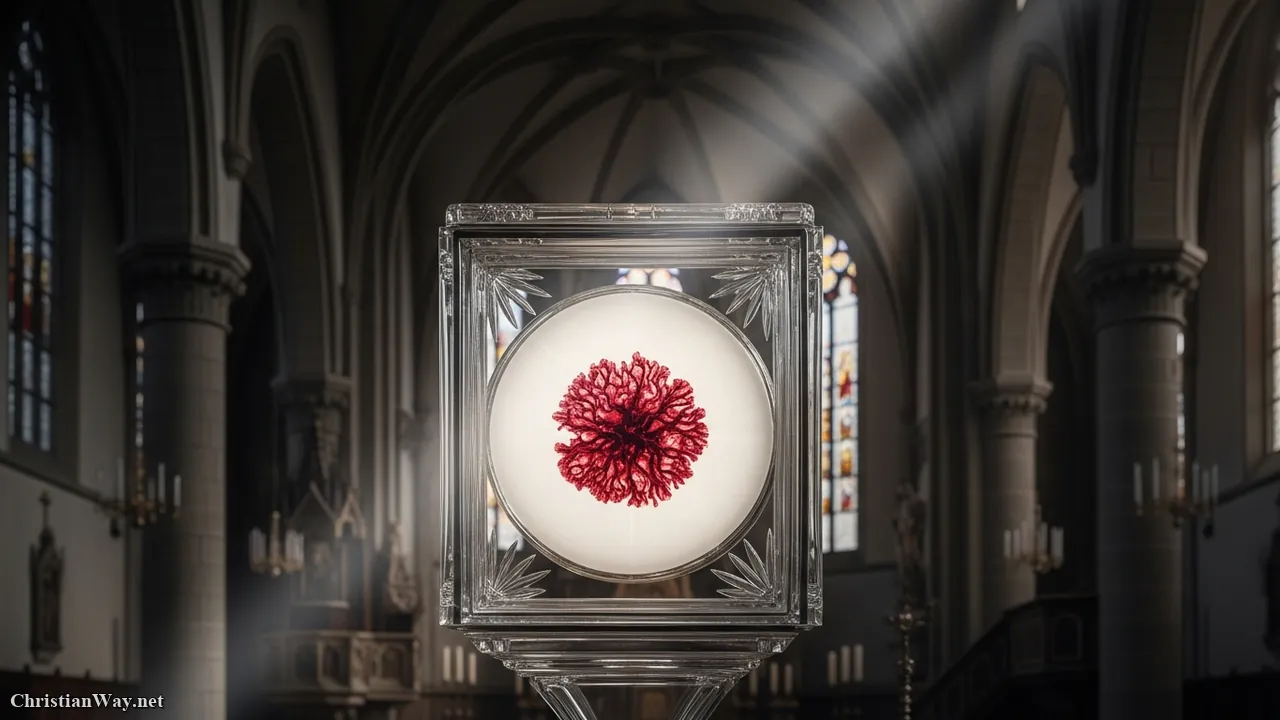
There is a profound sadness and beauty here. The tissue resembled a heart under extreme stress. It is the Sacred Heart in its moment of total self-giving. This miracle, occurring on Christmas, links the wood of the Manger to the wood of the Cross. The Incarnation was always destined for this outpouring of love.
For those of you carrying heavy burdens or hearts broken by stress and anxiety, look to Legnica. Jesus reveals that His heart, too, knows agony. He is not a distant observer of your pain; He physically participated in it. He shares your stress so that you might share His peace.
Spiritual Highlights:
- The Lesson: Jesus bears the stress of the world in His Sacred Heart.
- Scripture: “My heart is like wax; it is melted within my breast.” (Psalm 22:14)
Top 6. Church of St. Anthony of Padua (Sokółka, Poland)
Similar to Legnica, this miracle occurred in 2008 when a dropped Host was placed in water. A week later, the water was clear, but the Host had a red clot in the center. Independent pathologists confirmed it was myocardial (heart) tissue. The most baffling scientific finding was that the bread and the heart tissue were tightly interwoven—no human technology could fuse bread and human tissue in such a way.
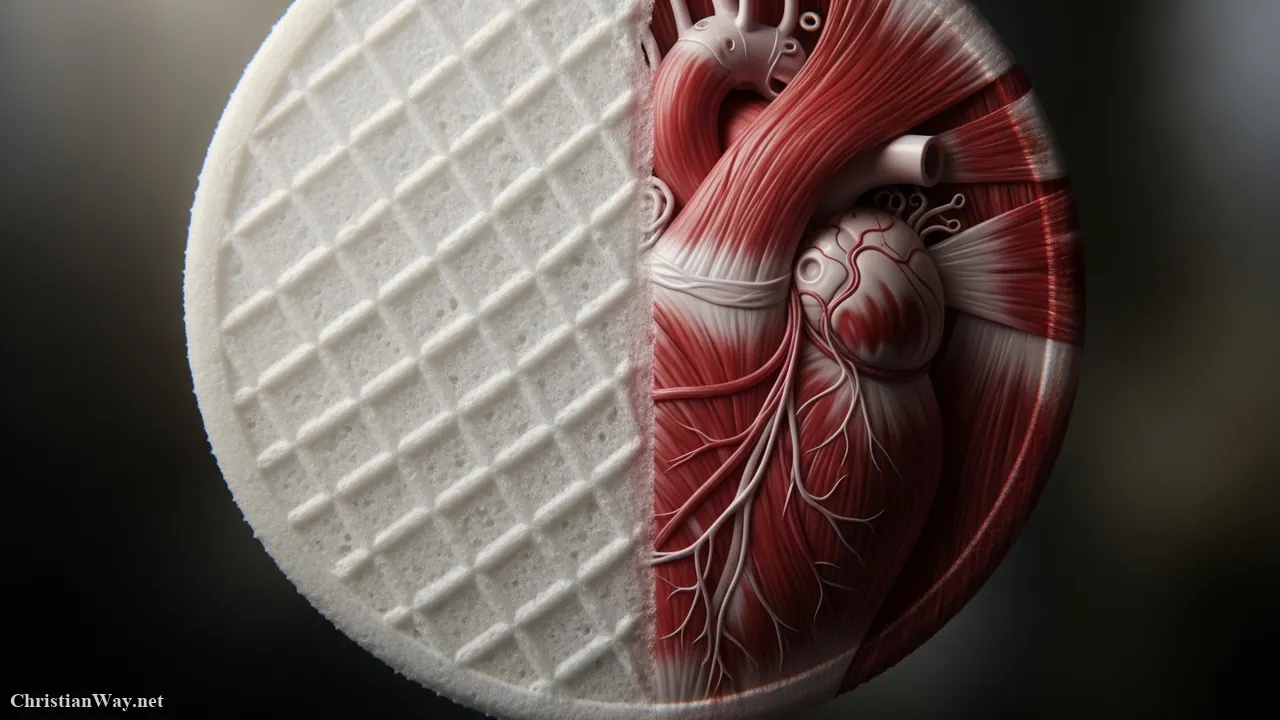
This “interweaving” is a powerful theological symbol of the Hypostatic Union—true God and true Man. It also speaks to our communion with Him. He does not just sit *on* our lives; He wants to be woven *into* the very fiber of our being.
Brothers and sisters, we often try to compartmentalize our faith—Sunday for God, Monday for work. Sokółka challenges that. Christ wants to be as inseparable from your daily life as the heart tissue is from the bread. Let Him into the “fiber” of your routine.
Spiritual Highlights:
- The Lesson: God desires total integration with our humanity.
- Fact: Scientists stated the interweaving of bread and tissue was scientifically inexplicable.
Top 5. Parish of St. Mary (Buenos Aires, Argentina)
This miracle holds a special place in history because of its connection to Pope Francis. In 1996, when he was Auxiliary Bishop Jorge Bergoglio, a discarded Host was found and placed in water. It transformed into a piece of bloody flesh. The analysis, conducted by scientists who were not told the origin of the sample, concluded it was heart muscle from the left ventricle—the pump that sends blood to the body. The tissue was also found to be “alive” at the time of collection, containing white blood cells.
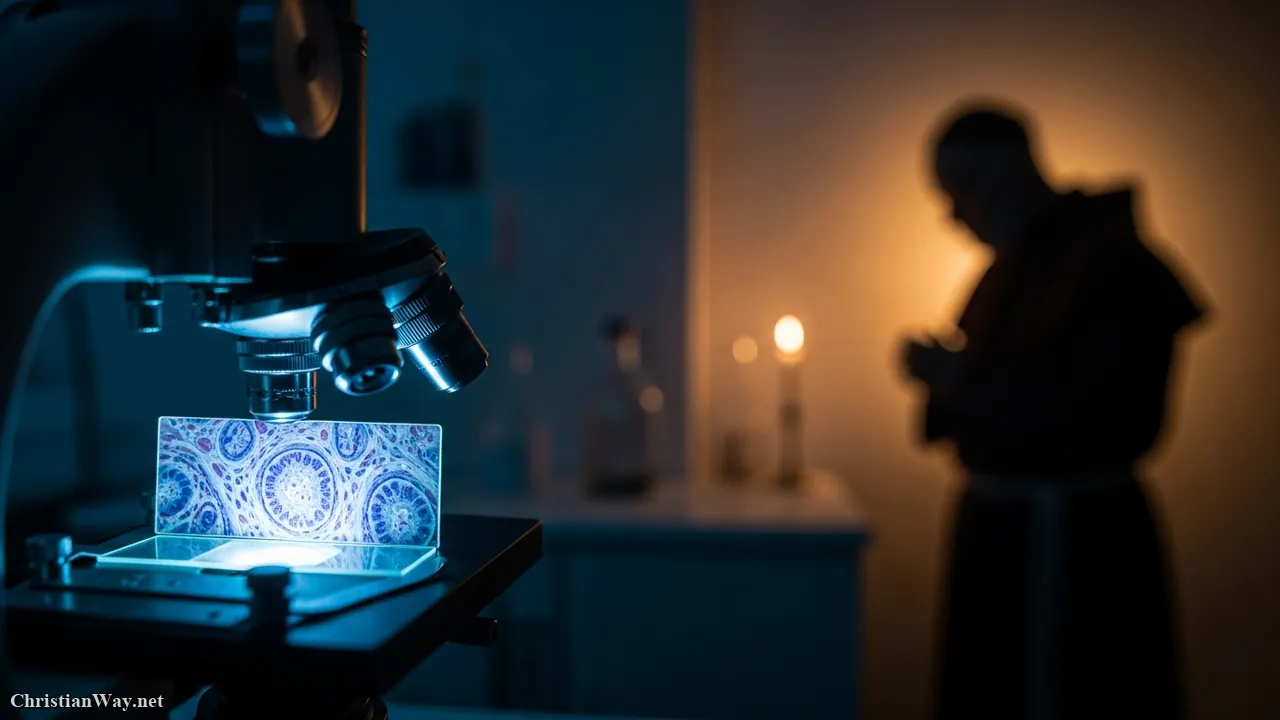
The location of the tissue—the left ventricle—is significant. It is the part of the heart that pumps oxygenated blood to the rest of the body. Jesus is the life-blood of the Church. Without Him, the body dies. It is a stark reminder that the Church is not an NGO or a social club; it is a living organism sustained by the Heart of Christ.
Pastoral wisdom here invites us to check our own spiritual pulse. Are we connected to the pump? Are we receiving the life He offers in the Sacraments? Or are we trying to live on our own strength?
Spiritual Highlights:
- The Lesson: The Eucharist is the living pump of the Church’s life.
- Key Figure: Investigated under the oversight of the future Pope Francis.
Top 4. Church of St. Stephen (Santarém, Portugal)
This 13th-century miracle reads like a dramatic parable. A woman, desperate to regain her husband’s faithfulness, consulted a sorceress who demanded a consecrated Host as payment. The woman stole the Host, but on her way out, it began to bleed through the cloth. She hid it in a trunk at home, but a brilliant light shone from it at night, forcing her to confess to her husband and later the priest.
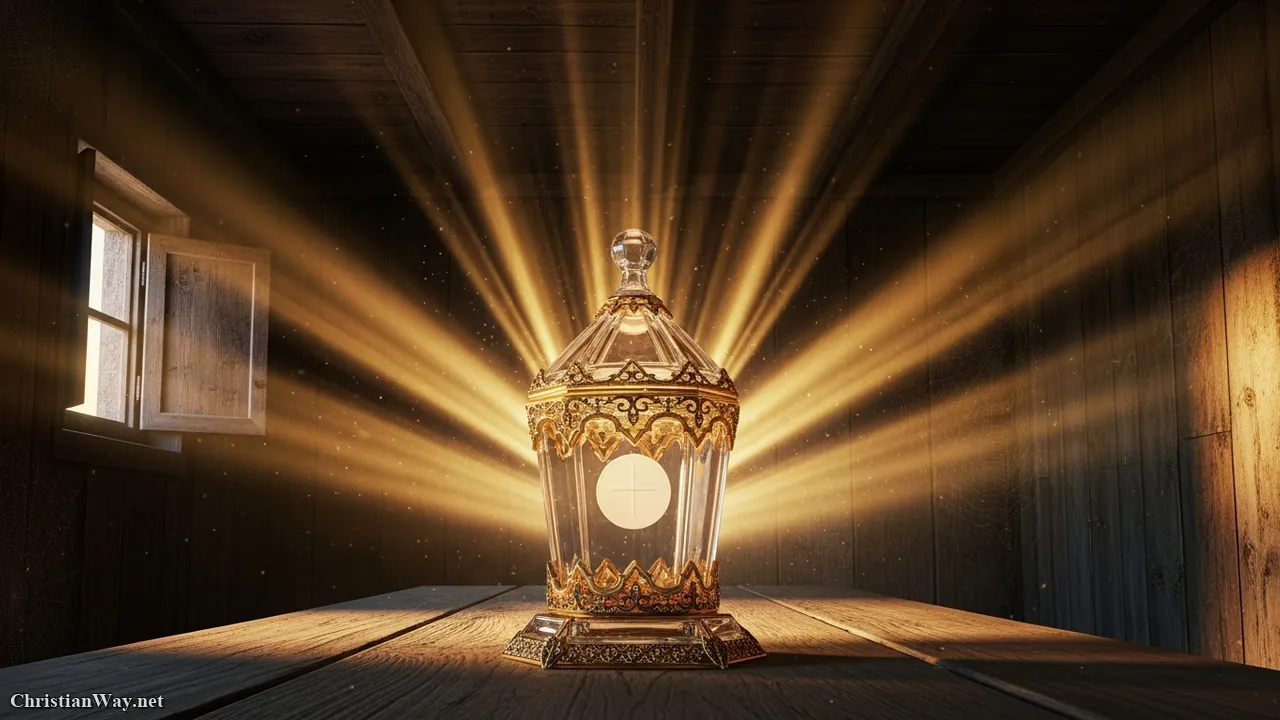
This is a story of the “Hound of Heaven.” The woman tried to use God for her own ends, yet God used her sin to reveal His glory. The light shining from the trunk represents the truth that Christ cannot be hidden. Even in our darkest mistakes, if we bring them to the light, He is there.
To anyone reading this who feels unworthy because of a past sin or sacrilege: look at Santarém. The Lord did not strike the woman down; He shone a light to guide her back to the Church. Bring your secrets out of the trunk and into the confessional. He is waiting to shine His mercy upon you.
Spiritual Highlights:
- The Lesson: You cannot hide from the light of God, nor should you fear it.
- Scripture: “The light shines in the darkness, and the darkness has not overcome it.” (John 1:5)
Top 3. Basilica of San Francesco (Siena, Italy)
In 1730, thieves stole a ciborium full of consecrated Hosts. They were eventually found in a dusty poor box, dirty and cobwebbed. Instead of being consumed, they were preserved to see if they would deteriorate naturally. Nearly 300 years later, they have not. They remain fresh, while unconsecrated hosts from the same era turned to dust long ago.
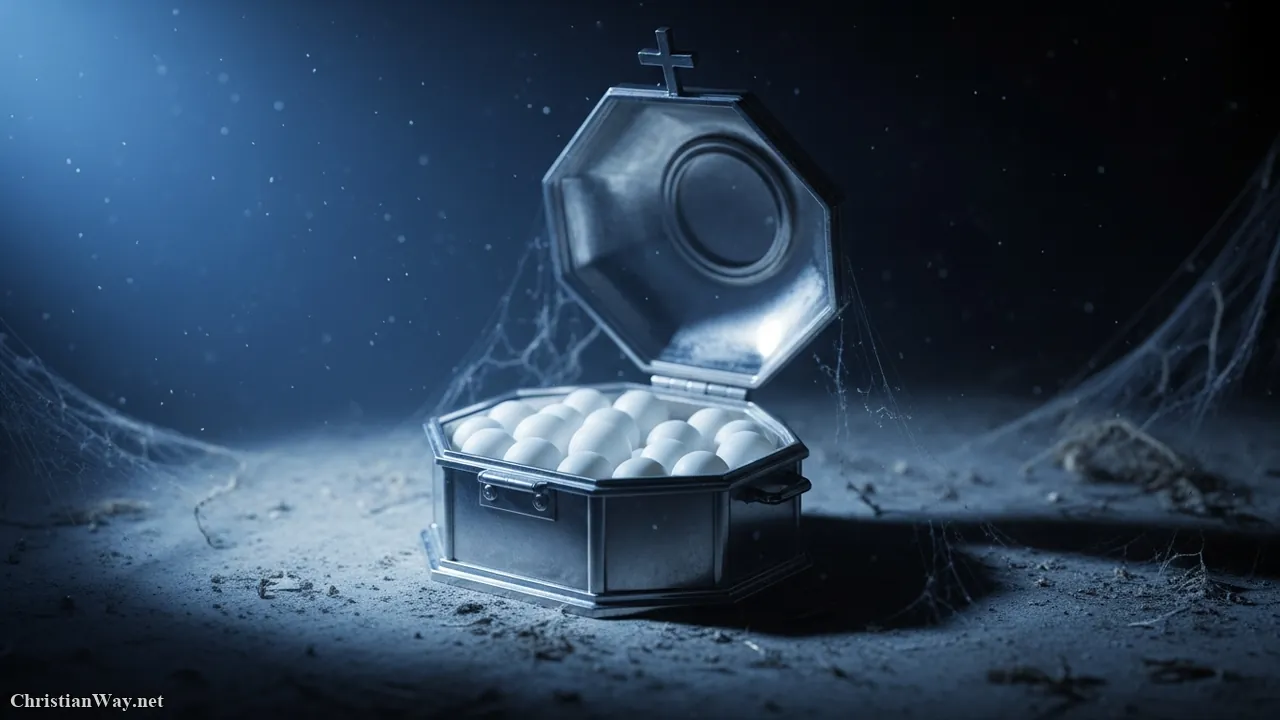
This is the miracle of preservation. It reminds us of the Resurrection—the body that does not see corruption. In a world obsessed with anti-aging and the fear of death, the Hosts of Siena stand as a quiet defiance of time. Christ is the Lord of History and the Lord of Time. Decay has no power over Him.
This sanctuary invites us to trust God with our future. We worry about growing old, about being forgotten, about “turning to dust.” But if we are in Christ, we possess the seed of eternity. He preserves the souls of His faithful just as He preserves these Hosts.
Spiritual Highlights:
- The Lesson: Christ conquers the corruption of death and time.
- Fact: Chemical tests confirm the bread should have decomposed within weeks.
Top 2. Cathedral of Orvieto (Orvieto/Bolsena, Italy)
In 1263, a German priest stopping in Bolsena was plagued by doubts regarding the Real Presence. As he celebrated Mass, the Host began to bleed, staining the corporal (the altar cloth) with precious blood. This cloth is now enshrined in the magnificent Cathedral of Orvieto. This miracle directly inspired Pope Urban IV to institute the Feast of Corpus Christi and commissioned St. Thomas Aquinas to write the beautiful hymns we still sing, like the Tantum Ergo.
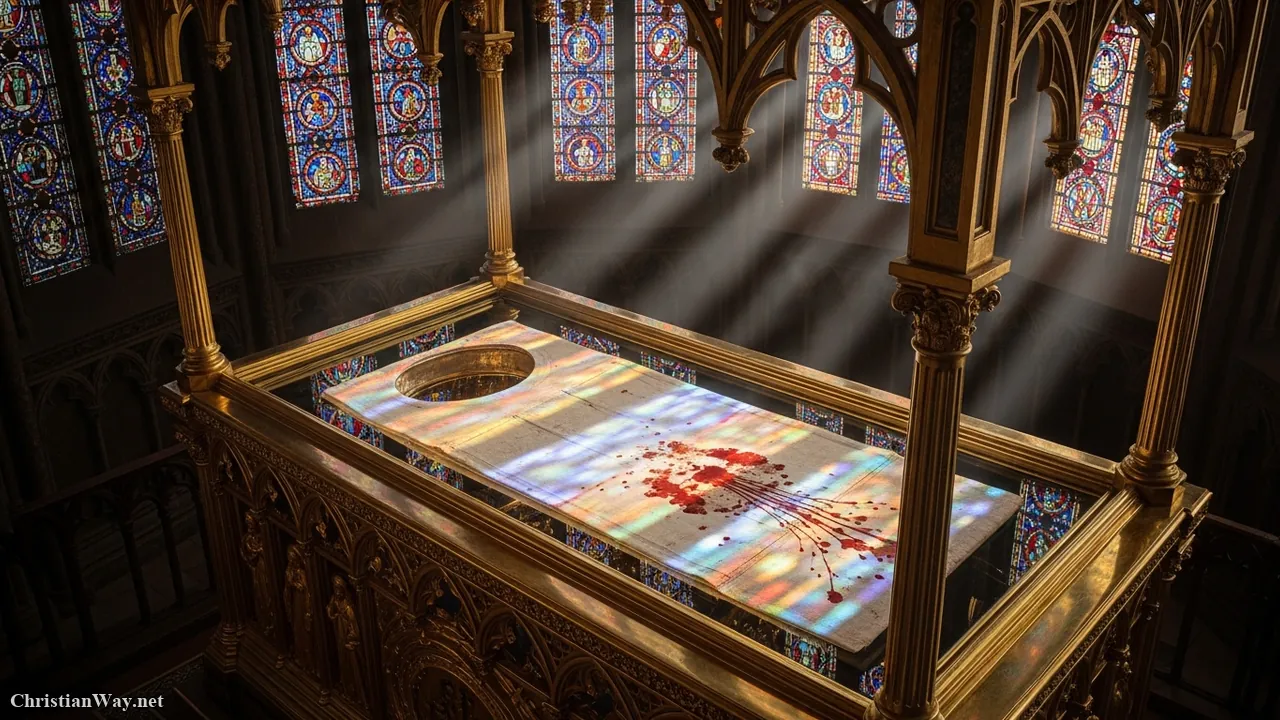
This miracle addresses the intellectual struggle of faith. The priest was not a bad man; he was a doubting man. God met him in his doubt not with lightning, but with blood—with undeniable reality. It is the origin of our public adoration of the Blessed Sacrament.
Do you struggle with doubt? You are in good company. This miracle teaches us that we should bring our doubts to the altar, not run away from it. Ask the Lord, “Help my unbelief,” and He will reveal Himself to you, perhaps not in bleeding linen, but in a peace that surpasses understanding.
Spiritual Highlights:
- The Lesson: Honest doubt can be the soil for a great deepening of faith.
- Legacy: The direct cause for the universal Feast of Corpus Christi.
Top 1. Church of San Francesco (Lanciano, Italy)
We arrive at the most renowned and scientifically scrutinized Eucharistic miracle in the world. In the 8th century, a Basilian monk struggled with his belief in transubstantiation. At the words of consecration, the Host turned into physical Flesh and the Wine into physical Blood. Twelve centuries later, the Flesh remains as fresh heart tissue, and the Blood (type AB) has the chemical composition of fresh blood.
Lanciano is the “gold standard” of these miracles. It is a direct confrontation with our materialist worldview. The Flesh is heart tissue; the Blood contains the proteins of a living person. It is as if Jesus is saying across the centuries, “I am here. I have a heart. I am alive.”
As we conclude this list here, at the feet of the Lord in Lanciano, I invite you to see the Eucharist with new eyes. When you next attend Mass, you are not receiving a symbol. You are receiving the same Heart that beat in Galilee, the same Blood that fell at Golgotha. It is the ultimate intimacy.
Spiritual Highlights:
- The Lesson: The Eucharist is the literal Heart of Jesus, alive and beating for you.
- Scripture: “My flesh is true food, and my blood is true drink.” (John 6:55)
Reflect and Pray
My dear brothers and sisters, we have journeyed from the fires of France to the scientific labs of Poland and Argentina. Yet, the greatest miracle is not that bread turns to flesh, but that God turns to us. These miracles are signs pointing to a greater reality: that in every humble tabernacle in the world, the King of Kings waits for you.
You do not need to travel to Italy or India to find Him. He is in your local parish, waiting in the silence. Go to Him. Bring your doubts, your fears, and your hopes. He is the Living Bread, and He is hungry for your love.
— Fr. John Matthew, for Christian Way