Dear friends, peace be with you.
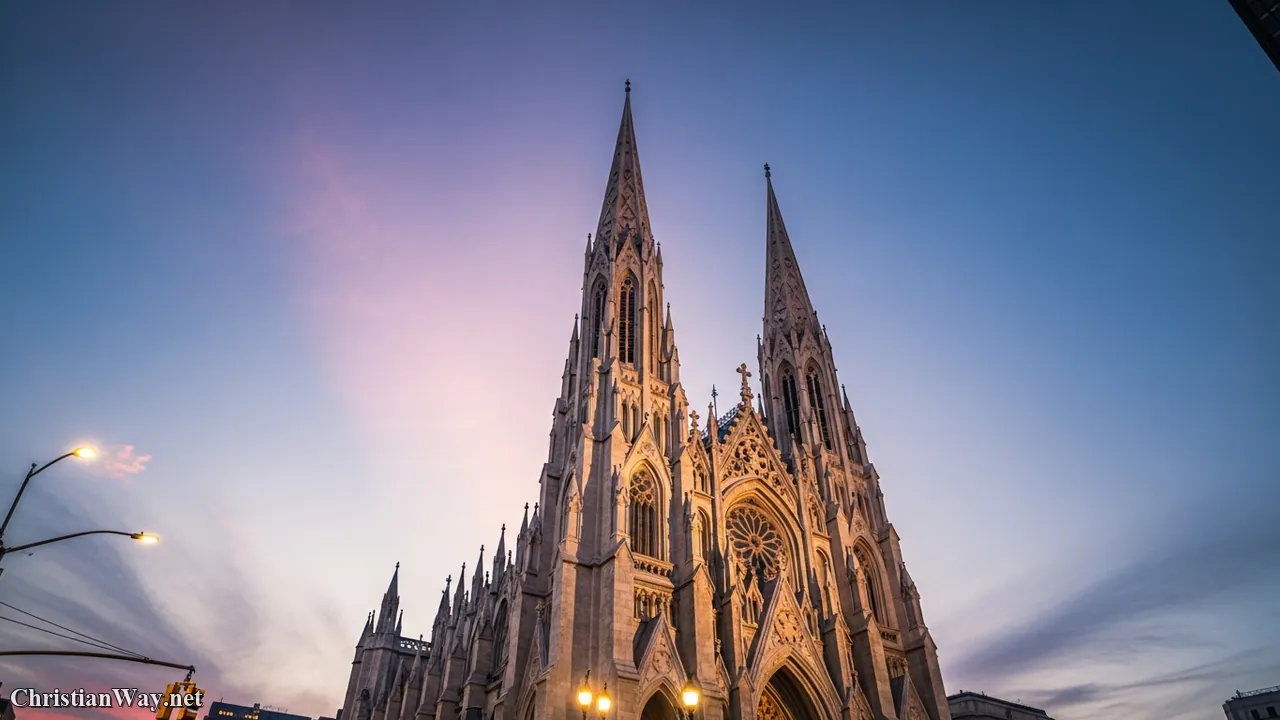
There is a profound moment that occurs when one steps across the threshold of a true Gothic cathedral. The noise of the modern world falls away, not merely because of thick walls, but because the very architecture commands a holy silence. In the 12th century, a theological revolution took place in the heart of the Church—a move from the heavy, fortress-like safety of the Romanesque to the soaring, light-filled vulnerability of the Gothic. It was a decision to build not just shelters for people, but mirrors of the Heavenly Jerusalem.
Abbot Suger of Saint-Denis, widely considered the father of this style, believed that light (lux nova) was the most direct physical manifestation of God. To build Gothic was to dissolve the walls to let the Light of Christ flood in. These structures are not static museums; they are what I like to call “theology in stone.” Every pointed arch is a pair of hands joined in prayer; every flying buttress is an act of communal support, bearing the weight so the interior can remain open to the Spirit.
As we journey through this list, I invite you to look beyond the tourism statistics and the architectural feats. Instead, let us walk as pilgrims. Whether you are seeking solace, inspiration, or a deeper understanding of our Catholic heritage, these sanctuaries stand as testaments to a faith that dares to reach for the infinite.
Here, for Christian Way, are ten places where the earth touches the sky.
Table of The Top 10 Gothic Catholic Cathedrals in the World
| Rank | Cathedral | Location | Spiritual Essence |
|---|---|---|---|
| 10 | St. Stephen’s Cathedral | Vienna, Austria | The Resilience of Faith |
| 9 | St. Vitus Cathedral | Prague, Czech Republic | The Light of History |
| 8 | Burgos Cathedral | Burgos, Spain | The Intricacy of Devotion |
| 7 | Amiens Cathedral | Amiens, France | The Majesty of Height |
| 6 | Seville Cathedral | Seville, Spain | The Grandeur of God |
| 5 | Reims Cathedral | Reims, France | The Joy of the Angels |
| 4 | Cologne Cathedral | Cologne, Germany | The Journey of the Magi |
| 3 | Milan Cathedral (Duomo) | Milan, Italy | The Forest of Prayer |
| 2 | Chartres Cathedral | Chartres, France | The Path of Pilgrimage |
| 1 | Notre-Dame de Paris | Paris, France | The Beating Heart |
Top 10. St. Stephen’s Cathedral (Stephansdom) — Vienna, Austria
We begin our pilgrimage in the heart of Vienna. St. Stephen’s is instantly recognizable by its magnificent multi-colored tile roof, depicting the double-headed eagle and the coat of arms of Vienna. It stands not apart from the city, but intimately woven into its daily rhythm. During the dark days of World War II, the cathedral suffered terrible fire damage, yet its reconstruction became a symbol of a nation rebuilding its soul upon the cornerstone of Christ.
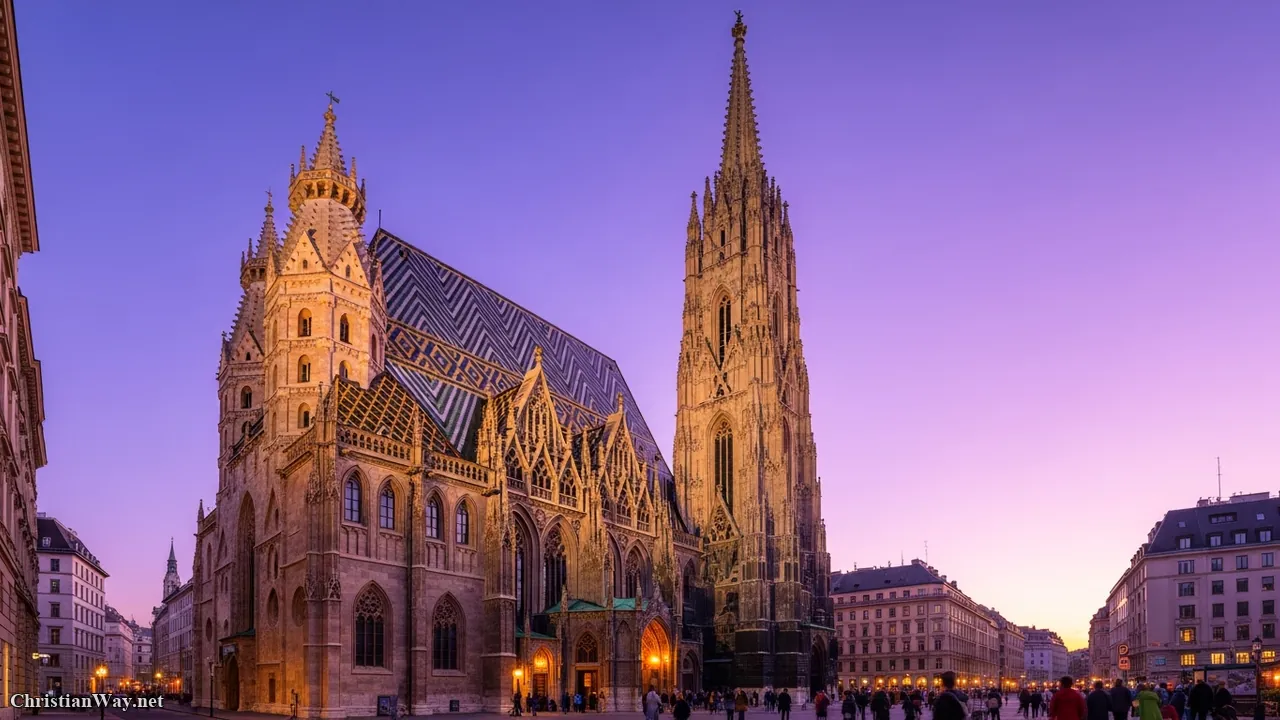
Theologically, St. Stephen’s reminds us of the “Church Militant” and the “Church Triumphant.” The massive South Tower, affectionately known as “Steffl,” has watched over the city for centuries, a silent sentinel against the sieges of history. It teaches us that the Church does not flee from the world’s troubles but stands firm within them, offering a roof of shelter and color amidst the grayness of life.
For the weary believer, this cathedral offers a lesson in endurance. Just as the tiles were laid piece by piece to form a glorious mosaic, so too are the small acts of our daily faithfulness laid together to form a beautiful life in God.
Spiritual Highlights:
- The Pummerin Bell: Cast from captured enemy cannons, its ringing transforms instruments of war into a voice of praise.
- Scripture: “But the Lord is in his holy temple; let all the earth keep silence before him.” (Habakkuk 2:20)
Top 9. St. Vitus Cathedral — Prague, Czech Republic
Rising from the Prague Castle complex, St. Vitus is a masterpiece that took nearly 600 years to complete. Walking through its nave, one experiences a unique blend of time; the foundations are ancient, yet the stained glass—including a window by the Art Nouveau master Alphonse Mucha—speaks of a more modern yearning for the divine. The light here is different; it is vibrant, almost swirling, painting the stone floor in kaleidoscope colors.
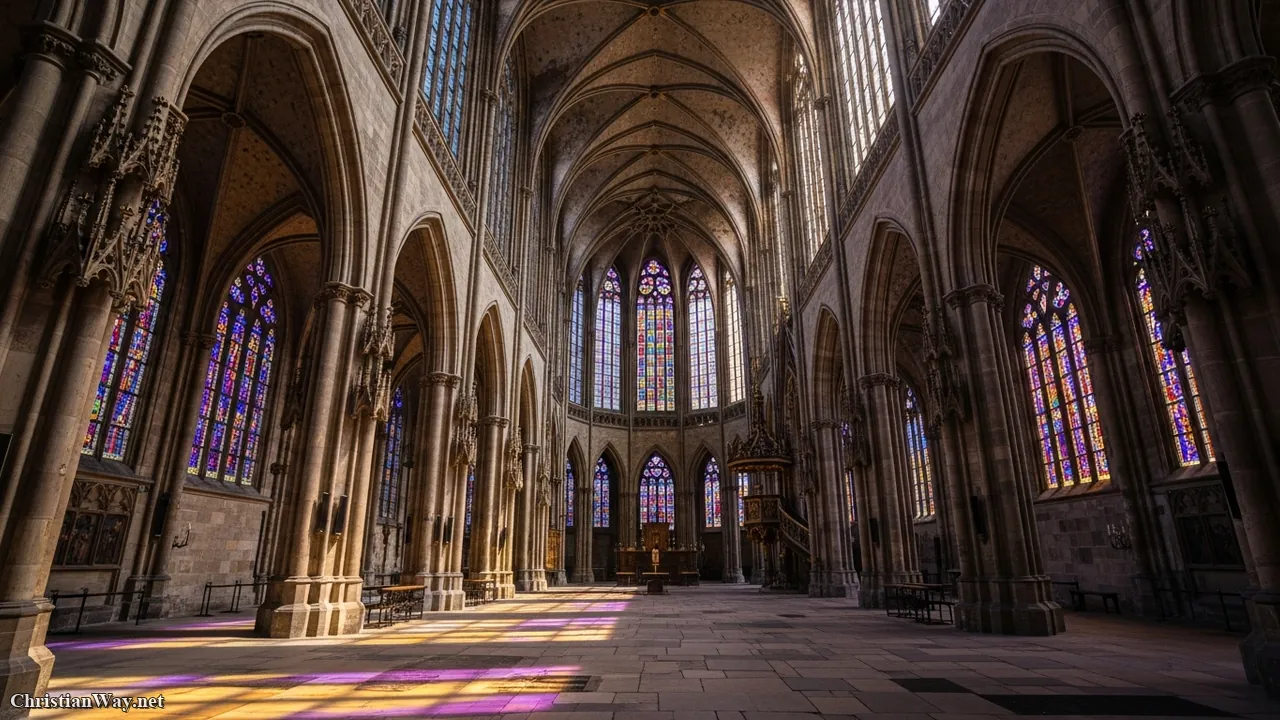
This long duration of construction is a powerful metaphor for our own spiritual formation. We are rarely “finished” quickly. God works on us across the seasons of our lives, generation after generation. St. Vitus holds the tombs of saints and kings, reminding us that we are part of a vast communion of saints. The cathedral is dedicated to St. Vitus, St. Wenceslaus, and St. Adalbert—martyrs who gave everything.
When you feel impatient with your spiritual progress, look to St. Vitus. It took centuries to perfect, yet God was present in every stage of the building. Do not despise the days of small beginnings or the long periods of waiting.
Spiritual Highlights:
- The St. Wenceslaus Chapel: The walls are encrusted with semi-precious stones, recalling the New Jerusalem described in Revelation.
- The Golden Gate: The mosaic of the Last Judgment reminds us of our ultimate destination.
Top 8. Burgos Cathedral — Burgos, Spain
As we turn our eyes to Spain, we find the Cathedral of Saint Mary of Burgos. It is perhaps the most poetic of the Spanish Gothic structures, its spires piercing the sky like filigree needles. The exterior is a marvel of stonework so delicate it resembles lace. This cathedral is a major stop on the Camino de Santiago (The Way of St. James), and for centuries, it has welcomed pilgrims with sore feet and hungry hearts.
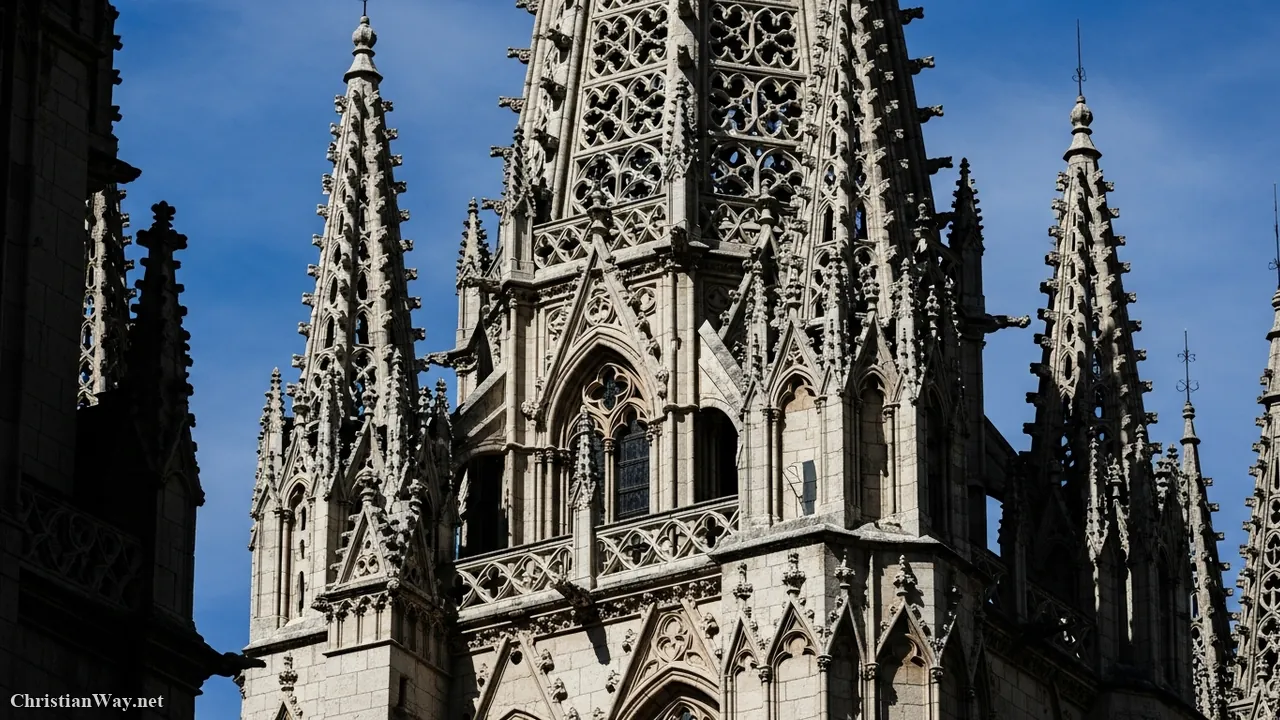
Theologically, Burgos speaks to the intricacy of creation. The sheer detail in the facade and the cimborrio (lantern tower) reflects the complexity of God’s mind. If man can shape stone with such tender care and precision, how much more care has the Creator lavished upon the shaping of your soul? It is a place that invites us to look closer, to see God in the details, and to appreciate the beauty of holiness.
Pastoral care here is found in the concept of “rest.” For the pilgrim on the Camino, Burgos is a halfway point—a place to wash, to pray, and to be fed before continuing the journey. It is a sanctuary for the midway points of our lives.
Spiritual Highlights:
- The Papalmoscas: A quirky, articulated statue that opens its mouth when the bells ring, reminding us to have a childlike joy.
- Scripture: “How lovely is your dwelling place, O Lord of hosts!” (Psalm 84:1)
Top 7. Amiens Cathedral — Amiens, France
If you wish to feel small in the presence of the Almighty, you must go to Amiens. It possesses the highest nave of any completed cathedral in France. The architects pushed the limits of physics, creating a space so vast that the ceiling seems to disappear into the heavens. Amiens is often cited as the purest example of the “High Gothic” style, where everything—absolutely everything—points up.
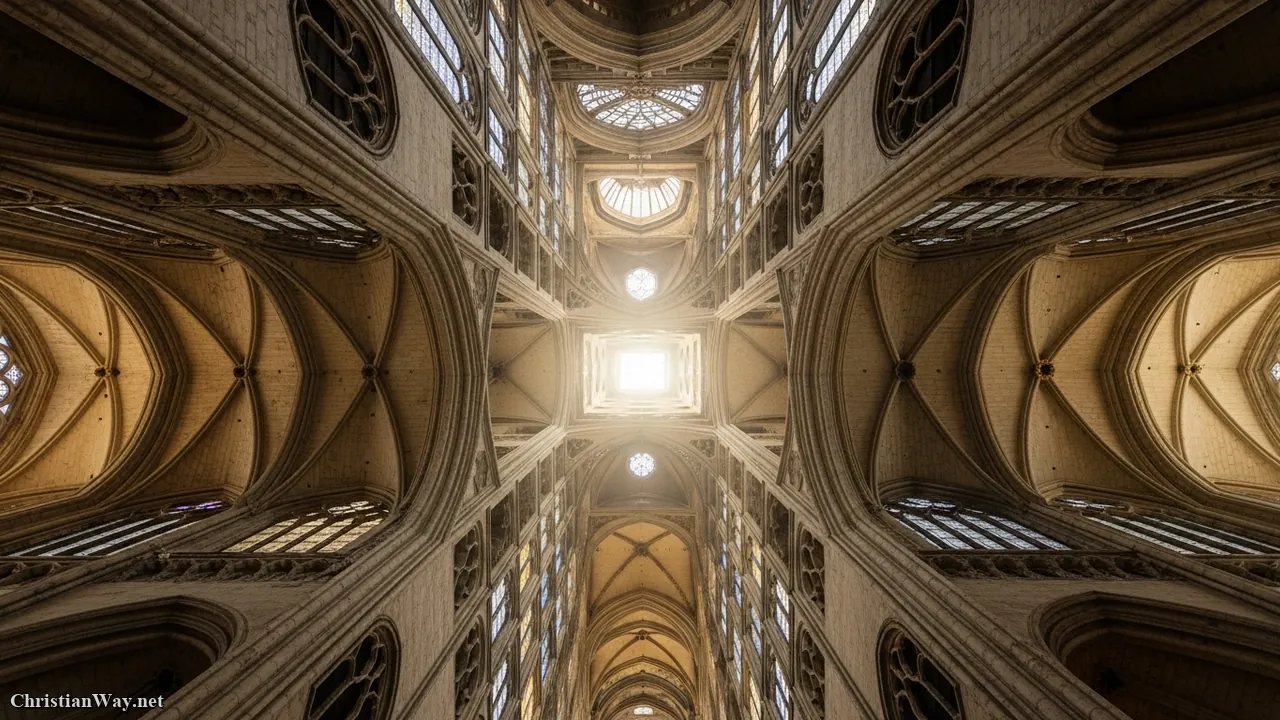
The spiritual power of Amiens lies in its unity. Unlike others built over many centuries, Amiens was built relatively quickly, giving it a singular, cohesive vision. It represents the “Unity of the Spirit.” When we stand in that nave, we are reminded of the vastness of God’s mercy. There is room here. Room for your doubts, your fears, and your hopes. The height draws our eyes upward, physically forcing us to lift our heads from our earthly worries.
In a world that constantly looks down at screens, Amiens commands us to look up. It is a physical antidote to spiritual myopia.
Spiritual Highlights:
- The Weeping Angel: A famous sculpture (L’Ange Pleureur) that resonates deeply with those who are grieving.
- The Labyrinth: Like Chartres, it has a path for pilgrims to walk in contemplation.
Top 6. Seville Cathedral — Seville, Spain
Seville Cathedral is a monument to the abundance of God. It is the largest Gothic cathedral in the world by volume. Built on the site of a former mosque, it retained the minaret (now the Giralda bell tower) and the courtyard of orange trees. The builders famously stated, “Let us build a church so beautiful and so grand that those who see it finished will think we were mad.”
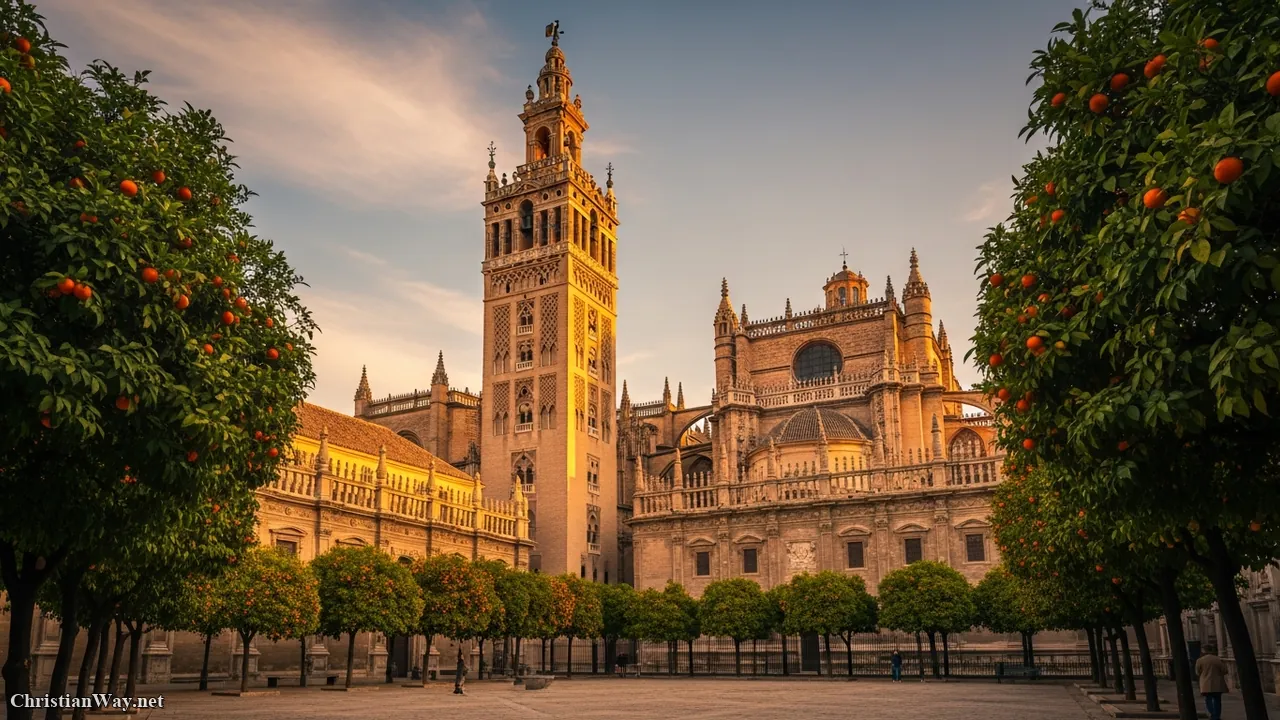
This “holy madness” is the logic of the Gospel—the logic of the widow who gave her two mites, or Mary pouring expensive perfume on Jesus’ feet. It is the theology of extravagance. God does not measure out grace in teaspoons; He lavishes it. The cavernous interior, glittering with the massive gold altarpiece (the Retablo Mayor), serves as a reminder of the Kingship of Christ.
Yet, amidst the gold and size, the Giralda tower reminds us of our history with our Muslim brothers and sisters, and the complex layers of history that the Church has lived through. It calls us to be peacemakers in a fractured world.
Spiritual Highlights:
- The Tomb of Columbus: A reminder of the spread of the Gospel to the ends of the earth (despite human imperfections).
- Scripture: “And I pray that you… may have power, together with all the Lord’s holy people, to grasp how wide and long and high and deep is the love of Christ.” (Ephesians 3:18)
Top 5. Reims Cathedral — Reims, France
Reims is the cathedral of kings. For centuries, the monarchs of France were crowned here, anointed with holy oil. But what strikes the pastoral heart most deeply at Reims is not the royalty, but the “Smiling Angel” (L’Ange au Sourire) on the western facade. Amidst the solemn statues of saints and judges, this angel looks at us with a warm, human, knowing smile.
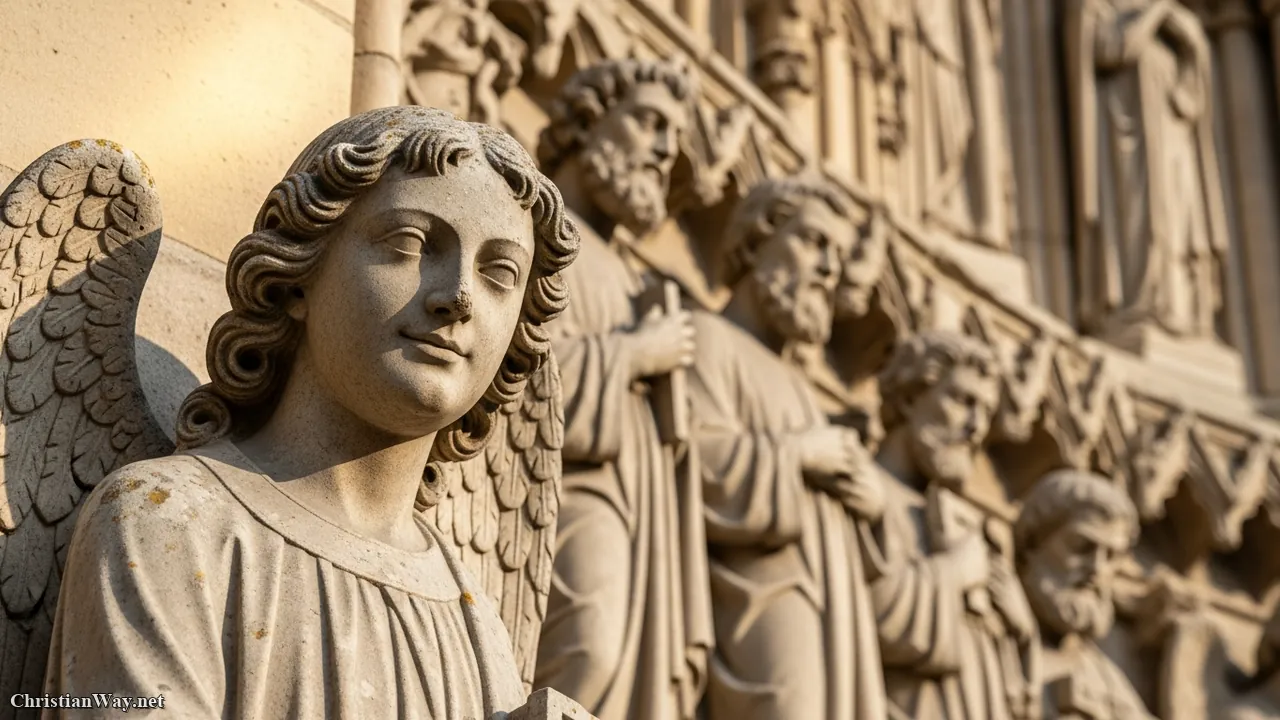
The theology of Reims is the theology of the Incarnation and the Annunciation. It was here that the divine right of kings was proclaimed, but it is the smiling angel who proclaims the true King. This smile reminds us that the Gospel is, at its core, Good News. Christianity is not a religion of dour faces; it is the faith of the Resurrection.
If you are feeling the burden of duty or the heaviness of religious obligation, let the Smiling Angel of Reims minister to you. God delights in you. Holiness does not require the loss of joy; true holiness is joy.
Spiritual Highlights:
- The Stained Glass by Chagall: A modern Jewish artist contributed windows here, a beautiful symbol of interfaith bridge-building.
- Historical Depth: The site of the baptism of Clovis in 496 AD, marking the birth of Christian France.
Top 4. Cologne Cathedral (Kölner Dom) — Cologne, Germany
Dominating the skyline of the Rhineland, the twin spires of Cologne Cathedral are dark, brooding, and utterly majestic. They took over 600 years to complete, only finishing in 1880. But the heart of this cathedral is a golden box behind the high altar: the Shrine of the Three Kings, traditionally believed to hold the relics of the Magi.
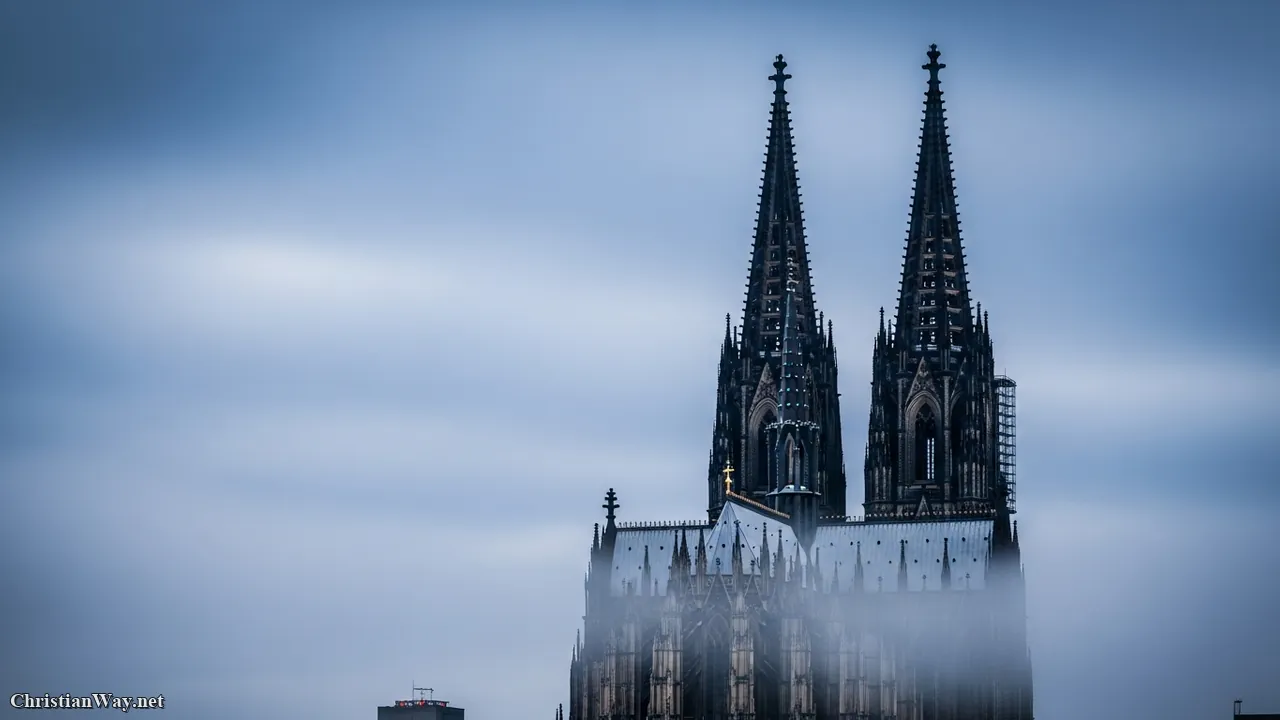
This cathedral is the sanctuary of the seeker. The Magi were not Jews; they were foreigners, astrologers, men of science and curiosity who followed a star to find the Truth. Cologne Cathedral stands as a beacon for all who are searching—for the intellectuals, the scientists, and those who feel “outside” the fold. The architecture is dark stone, but it is pierced by light, just as the mystery of God pierces our intellect.
We are all Magi. We are all traveling from afar, bearing our gifts, often unsure of the destination but trusting the Star. Cologne invites you to bring your questions and lay them before the King of Kings.
Spiritual Highlights:
- The Shrine of the Three Kings: The largest reliquary in the western world, shimmering with gold and gems.
- Scripture: “Where is the one who has been born king of the Jews? We saw his star when it rose and have come to worship him.” (Matthew 2:2)
Top 3. Milan Cathedral (Duomo di Milano) — Milan, Italy
Mark Twain once described the Duomo of Milan as “a poem in marble.” It is a structure of overwhelming complexity, adorned with more statues than any other building in the world—over 3,000 of them. It is a forest of stone. And perched at the very top, shining in gold, is the Madonnina—the Little Madonna—watching over the city.
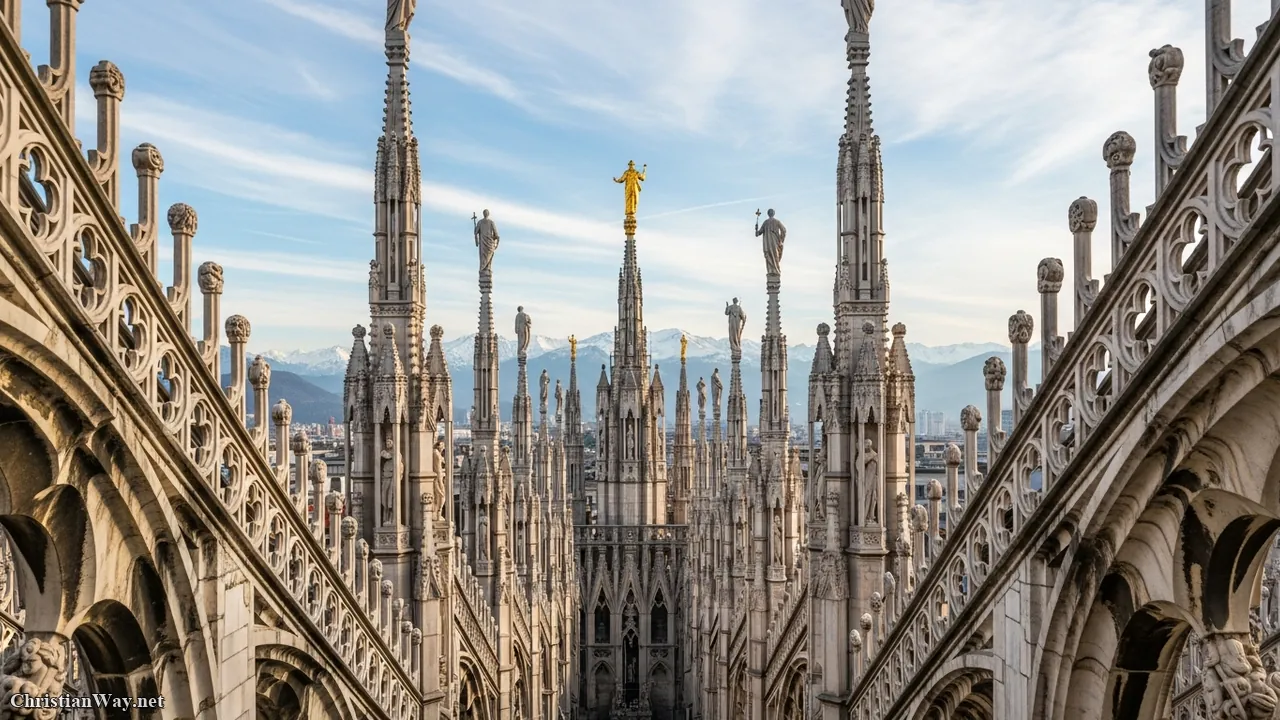
The Duomo represents the “Communion of Saints” in a literal way. The thousands of statues—saints, martyrs, biblical figures—perched on every spire and pinnacle remind us that we are surrounded by a great cloud of witnesses. The architecture is Flamboyant Gothic, looking almost like flames rising to heaven. It is a visual representation of the fire of the Holy Spirit.
When you feel alone in your walk, imagine the Duomo. Every saint on those spires had a life of struggle, doubt, and eventual victory. You are never walking this path alone; the Church, both in heaven and on earth, walks with you.
Spiritual Highlights:
- The Roof Terraces: You can walk on the roof, amidst the spires, a unique experience of being “between earth and heaven.”
- The Holy Nail: A relic believed to be a nail from the True Cross is suspended above the altar, brought down only once a year.
Top 2. Chartres Cathedral — Chartres, France
Chartres is, for many, the perfect cathedral. It preserved its original stained glass when so many others lost theirs to war or fashion. The “Chartres Blue” is a color that modern science has struggled to replicate—a deep, twilight blue that turns the interior into a womb of peace. But the most famous feature is the Labyrinth set into the floor of the nave.
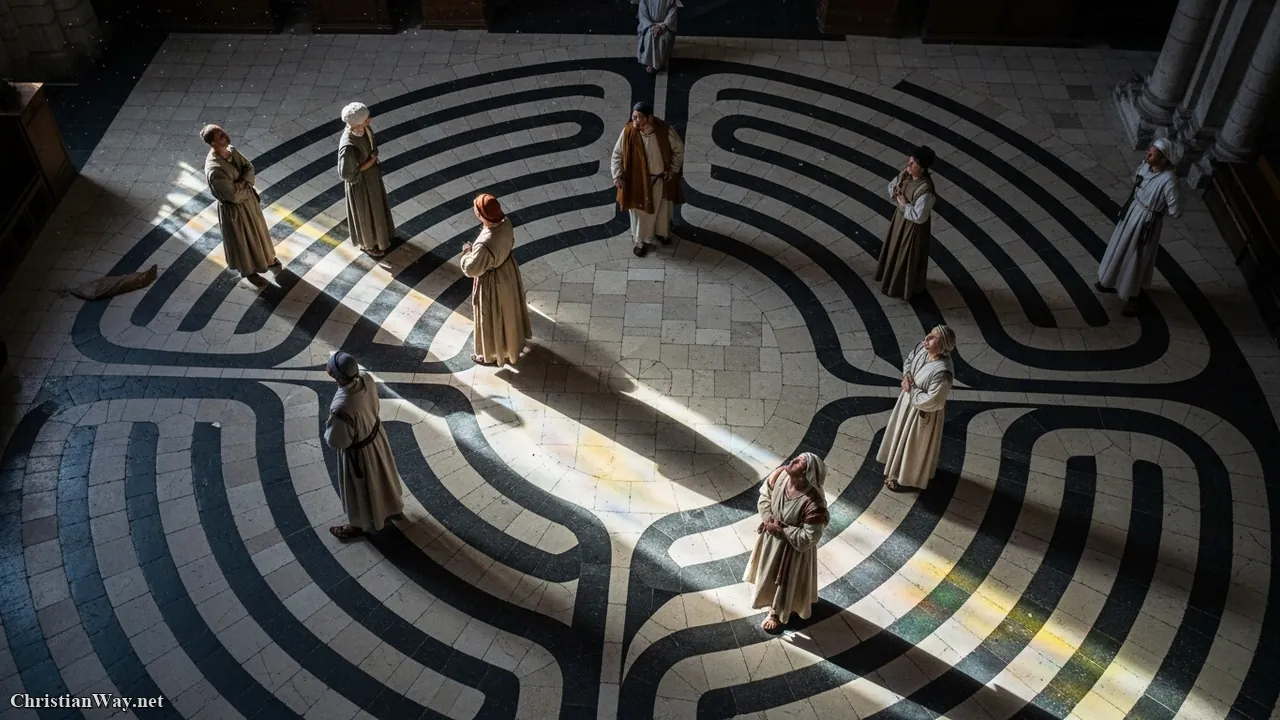
This is where theology becomes movement. In the Middle Ages, pilgrims who could not go to Jerusalem would come to Chartres and walk the labyrinth on their knees. It is not a maze; there are no dead ends. There is only one path. It winds, it turns back on itself, it seems to move away from the center just as you get close, but it always leads to the center.
This is the Christian life. We often feel we are moving backward or getting nowhere. Chartres tells us: Trust the path. Keep walking. The turns are part of the journey. The light of the blue windows watches over you, and Christ waits at the center.
Spiritual Highlights:
- The Sancta Camisa: The tunic believed to have been worn by the Virgin Mary, a relic that drew pilgrims for a thousand years.
- The Royal Portal: Sculptures of Old Testament kings and queens, the ancestors of Christ.
Top 1. Notre-Dame de Paris — Paris, France
We arrive at the first choice, a decision that needs little justification. Notre-Dame de Paris is the beating heart of Gothic architecture and, in many ways, the heart of Western Christendom. When the fire of 2019 tore through its roof, the world wept—not just for a building, but for a symbol of our collective soul. But recall what happened: the spire fell, the roof burned, but the Cross on the altar remained standing, gleaming in the darkness.
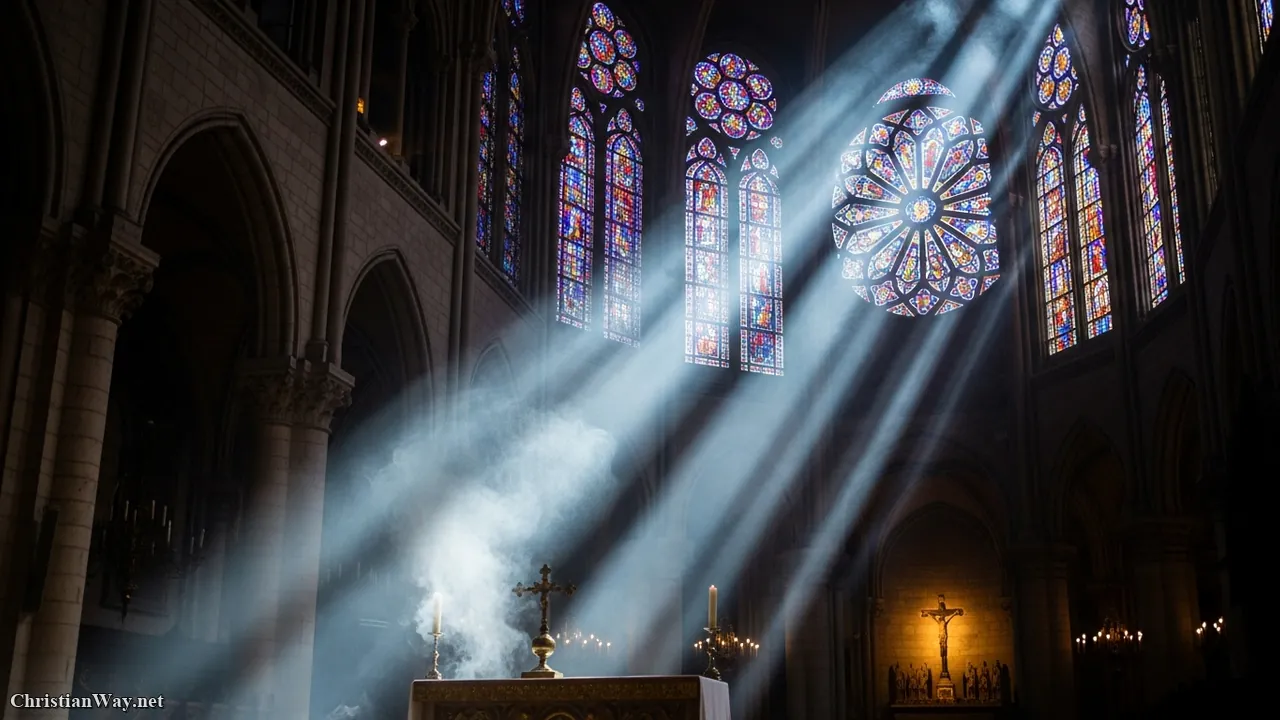
Notre-Dame is the archetype. It balances the vertical (reaching to God) with the horizontal (embracing the world) perfectly. The Rose Windows are wheels of fire and light, depicting the harmony of the cosmos with Christ at the center. It has stood through revolutions, wars, plagues, and fires. It is the theology of Resurrection made stone.
For us today, Notre-Dame is the ultimate sign of hope. We all have “fires” in our lives—tragedies that seem to burn down our structures. But the foundation remains. The walls stand. And with God’s grace, we rebuild—more beautiful, more humble, and more faithful than before.
Spiritual Highlights:
- The Crown of Thorns: The cathedral’s most precious treasure, saved from the fire by a brave chaplain.
- Scripture: “We are hard pressed on every side, but not crushed… struck down, but not destroyed.” (2 Corinthians 4:8-9)
Conclusion
As we conclude this journey through stone and glass, I am reminded of the words of Saint Peter: “You also, like living stones, are being built into a spiritual house.”
These top 10 Gothic Catholic cathedrals are magnificent, but they are merely shadows of the true temple, which is the Body of Christ—you and me. We are the cathedral God is currently building. Sometimes the chisel hurts; sometimes the construction seems slow. But the Architect knows what He is doing. He is building a place where His Spirit can dwell.
May the height of these spires encourage you to look up, may the light of their windows encourage you to let Christ shine through you, and may their endurance encourage you to stand firm in the faith.
— Fr. John Matthew, for Christian Way