Dear friends in Christ,
When we speak of the “Church,” we most truly mean the People of God—the living stones built upon the foundation of the Apostles. Yet, throughout history, our love for the Creator has compelled us to raise physical stones, creating spaces where heaven touches earth. These sanctuaries are not merely museums of art or feats of engineering; they are prayers solidified in marble, glass, and mortar.
In compiling this list for Christian Way, I have looked beyond simple square footage or tourist popularity. Instead, I have sought those sacred spaces that have shaped the very trajectory of our faith. Some are places where miracles unfolded; others are where the course of history turned; and one is the very site where Death was defeated forever.
As we walk this pilgrim path together, I invite you to see these buildings not just as historical monuments, but as testaments to the enduring hope of the Gospel. Whether they stand in the bustling streets of Rome or the quiet hills of Assisi, each one tells a story of a God who dwells among His people.
Table of The Top 10 Most Important Catholic Churches in History
| Rank | Church Name | Location | Key Significance | Consecration / Era |
|---|---|---|---|---|
| 10 | Basilica of the Sagrada Família | Barcelona, Spain | Theology written in stone; Nature and Faith combined | Consecrated 2010 |
| 9 | Notre-Dame de Paris | Paris, France | Masterpiece of French Gothic; The “Bible of the Poor” | 1163 (Construction began) |
| 8 | Basilica of St. Francis of Assisi | Assisi, Italy | Birthplace of the Franciscan renewal; Early Renaissance art | 1253 |
| 7 | Santiago de Compostela Cathedral | Galicia, Spain | Burial of St. James; Center of “The Camino” pilgrimage | 1128 |
| 6 | Basilica of Our Lady of Guadalupe | Mexico City, Mexico | The Tilma of St. Juan Diego; Evangelization of the Americas | 1709 (Old), 1976 (New) |
| 5 | Hagia Sophia | Istanbul, Turkey | Former heart of Eastern Christendom; Architectural Wonder | 537 AD |
| 4 | Chartres Cathedral | Chartres, France | Preserver of the Sancta Camisa; The blue stained glass | 1260 |
| 3 | Archbasilica of St. John Lateran | Rome, Italy | The Cathedral of Rome; The Mother of all Churches | 324 AD |
| 2 | St. Peter’s Basilica | Vatican City | Burial site of Peter; The center of Catholic Unity | 1626 (Current Structure) |
| 1 | Church of the Holy Sepulchre | Jerusalem | Site of the Crucifixion and Resurrection | 335 AD |
Top 10. Basilica of the Sagrada Família (Barcelona, Spain)
We begin our journey with a church that looks toward the future even as it honors the past. The Sagrada Família is the visionary work of the Servant of God, Antoni Gaudí. Unlike many ancient basilicas, this is a modern masterpiece, a “catechism in stone” where every tower, facade, and column carries profound theological meaning. Gaudí saw nature as God’s signature, and so the interior columns branch out like trees, creating a forest of prayer bathed in light.
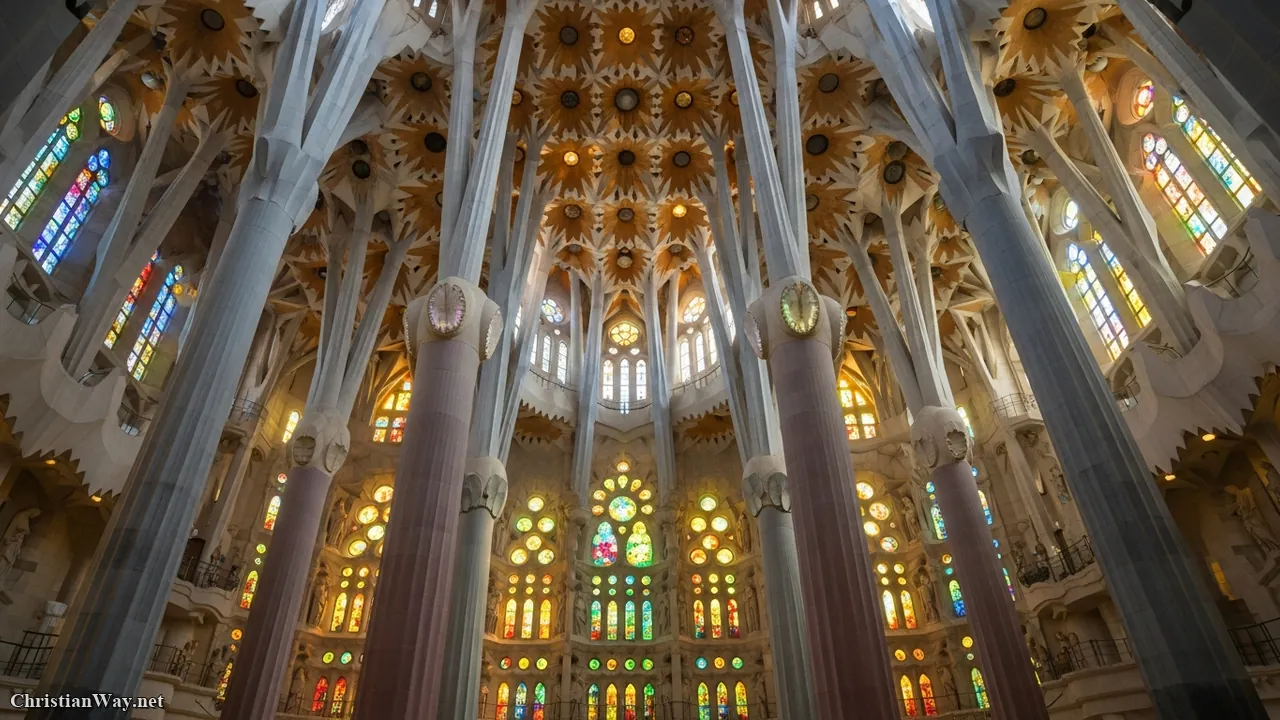
Theologically, this basilica reminds us that creation itself groans for redemption. It stands as a witness that our faith is not stagnant; it is living, growing, and still under construction, much like our own spiritual lives. It challenges the modern world’s obsession with utility, offering instead pure, transcendent beauty.
For us today, the Sagrada Família is a lesson in patience. Gaudí knew he would not live to see it finished, famously saying, “My Client is not in a hurry.” It encourages us to build for God’s glory, even if we may not see the final fruit of our labors.
Spiritual Highlights:
- The Three Facades: Nativity (Joy), Passion (Suffering), and Glory (Resurrection).
- Scripture: “For every house is built by someone, but God is the builder of everything.” (Hebrews 3:4)
Top 9. Notre-Dame de Paris (Paris, France)
Rising from the Île de la Cité, Notre Dame is the beating heart of France. Before the majority of the faithful could read, the great Gothic cathedrals served as the “Bible of the Poor.” Through its rose windows and statuary, Notre Dame taught the history of salvation to peasant and king alike. It was here that the Crown of Thorns was venerated for centuries, linking the grandeur of French royalty with the suffering of the King of Kings.
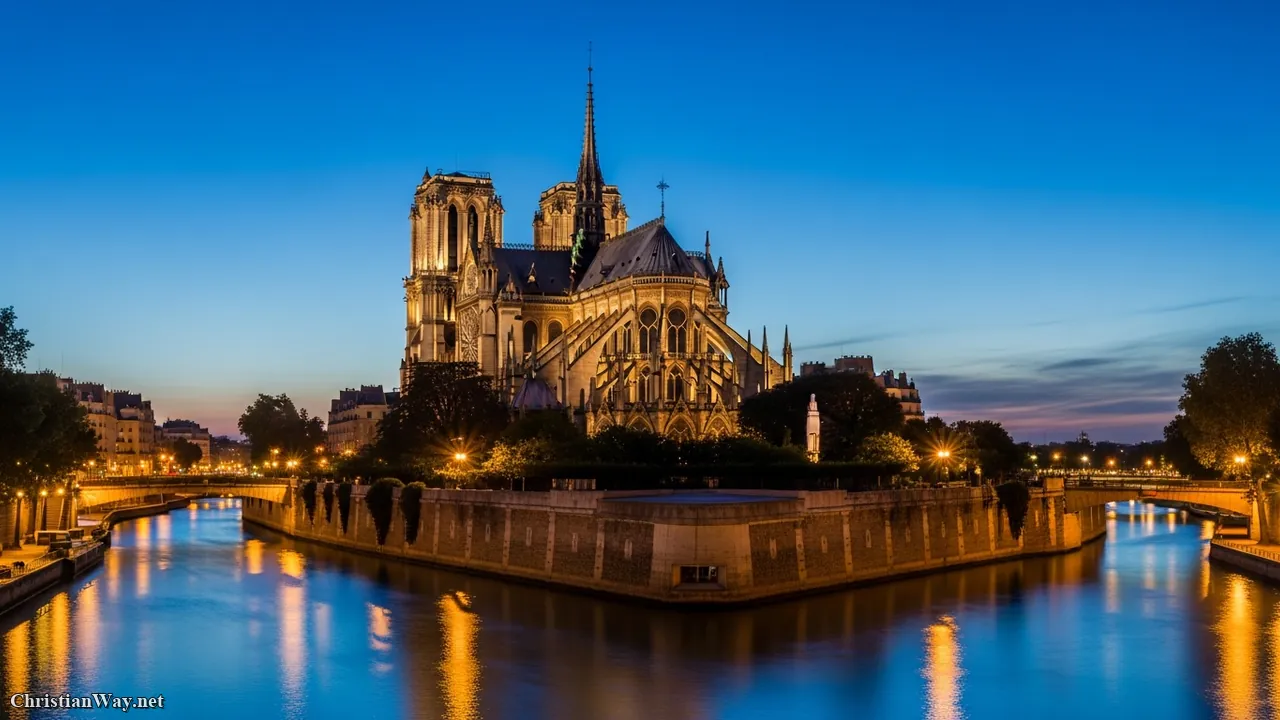
The tragic fire of 2019 and the subsequent restoration have given this cathedral a renewed theological significance: it is an icon of the Resurrection. Just as the Church has faced fires of persecution and scandal throughout history, she rises again from the ashes, rebuilt by the love of the faithful.
As we watch her spire rise once more, let us be reminded that the Church is resilient. No fire can consume the Body of Christ. It invites us to rebuild the ruined places in our own hearts, trusting that God can restore beauty from ashes.
Spiritual Highlights:
- The Rose Windows: Masterpieces of 13th-century glass depicting the glory of heaven.
- Scripture: “The glory of this present house will be greater than the glory of the former house.” (Haggai 2:9)
Top 8. Basilica of St. Francis of Assisi (Assisi, Italy)
In the quiet hills of Umbria stands a fortress of peace. This double-decker basilica—comprising an Upper and Lower church—marks a pivotal shift in Christian history. It houses the tomb of St. Francis, the man who heard Christ say, “Rebuild my Church.” The walls are adorned with the frescoes of Giotto, which moved art from stiff Byzantine icons to emotional, human depictions of the Gospel.
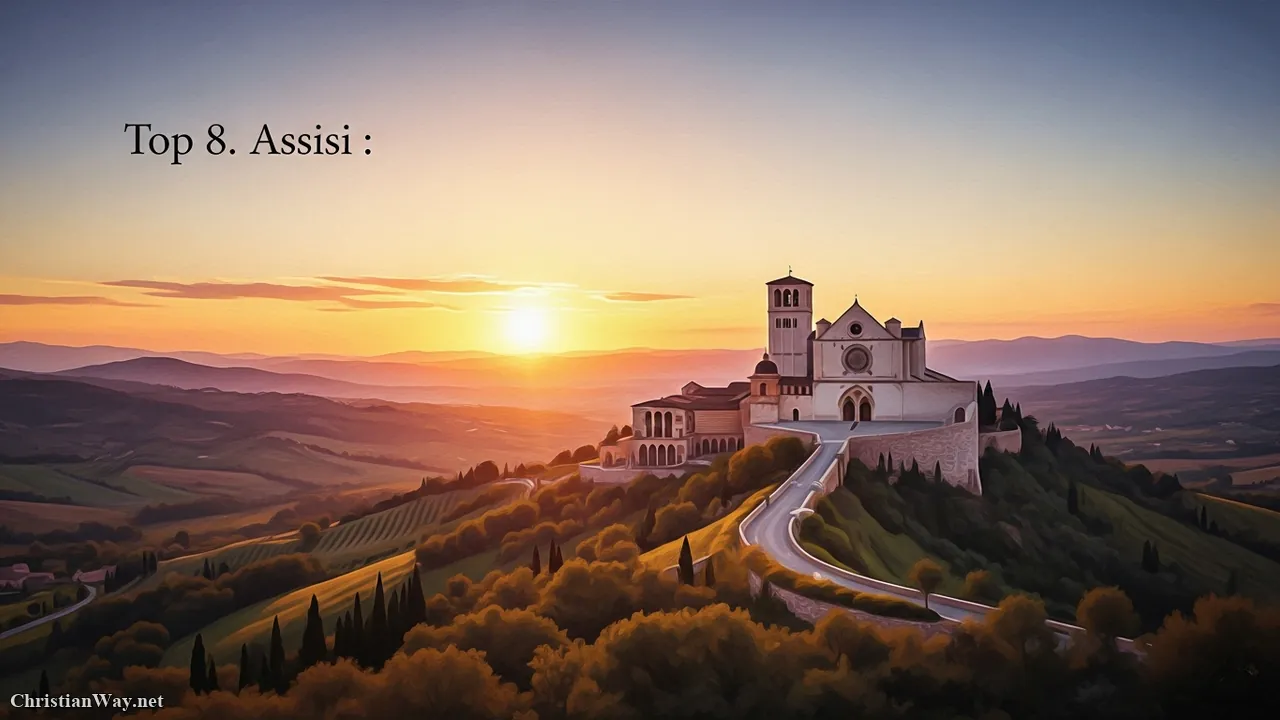
This space represents the “Revolution of Tenderness.” It stands in contrast to the power and wealth often associated with imperial Christianity. Here, the focus is on poverty, simplicity, and the joy of the Gospel. The tomb of Francis is not ornate; it is simple stone, hidden away, inviting us to go low to find God.
Pastoral care often brings me back to the spirit of Assisi. In a world of noise and accumulation, this basilica calls us to strip away the unnecessary. It asks us: Are we building walls of status, or bridges of peace?
Spiritual Highlights:
- The Fresco Cycle: 28 scenes of the life of St. Francis by Giotto.
- Scripture: “Blessed are the peacemakers, for they will be called children of God.” (Matthew 5:9)
Top 7. Cathedral of Santiago de Compostela (Galicia, Spain)
Since the 9th century, millions of feet have worn down the paths leading to this sacred site in northwest Spain. Believed to hold the remains of St. James the Greater (Santiago), the brother of John and the first Apostle to be martyred, this cathedral is the definition of “pilgrimage.” It is the culmination of the Camino, the Way of St. James.
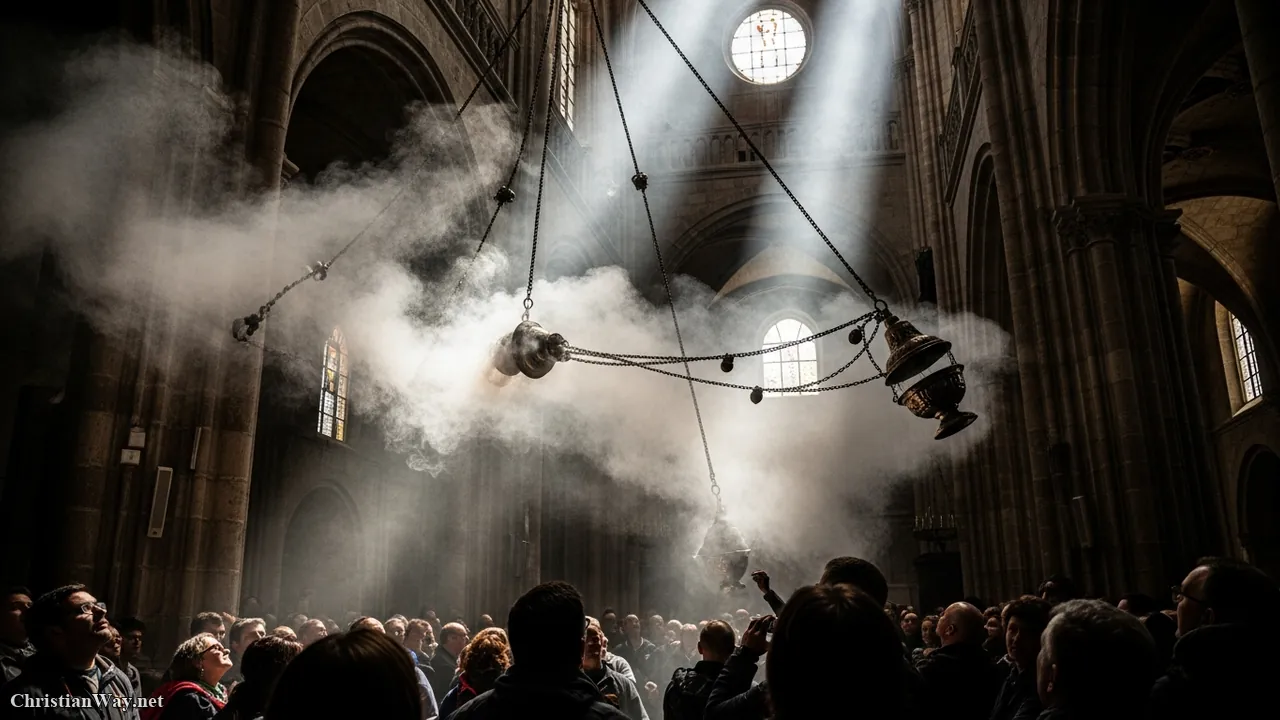
Theologically, this church reminds us that we are a pilgrim people. We have no lasting city here on earth. The massive swinging incense burner, the Botafumeiro, historically used to mask the scent of weary travelers, has become a symbol of our prayers rising to heaven amidst the sweat and toil of life.
To the weary soul, Santiago offers a profound truth: the journey matters as much as the destination. It teaches us that we do not walk alone; we walk with a “cloud of witnesses” who have gone before us.
Spiritual Highlights:
- The Portico of Glory: A Romanesque masterpiece welcoming pilgrims.
- Scripture: “We are strangers and pilgrims on the earth.” (Hebrews 11:13)
Top 6. Basilica of Our Lady of Guadalupe (Mexico City, Mexico)
This is the spiritual heart of the Americas. In 1531, the Virgin Mary appeared to a humble indigenous man, St. Juan Diego, speaking to him in his native Nahuatl tongue. She left her image imprinted on his tilma (cloak), a miraculous image that science still cannot fully explain. The modern basilica now houses this sacred relic, which draws millions of pilgrims annually—more than any other Catholic shrine.
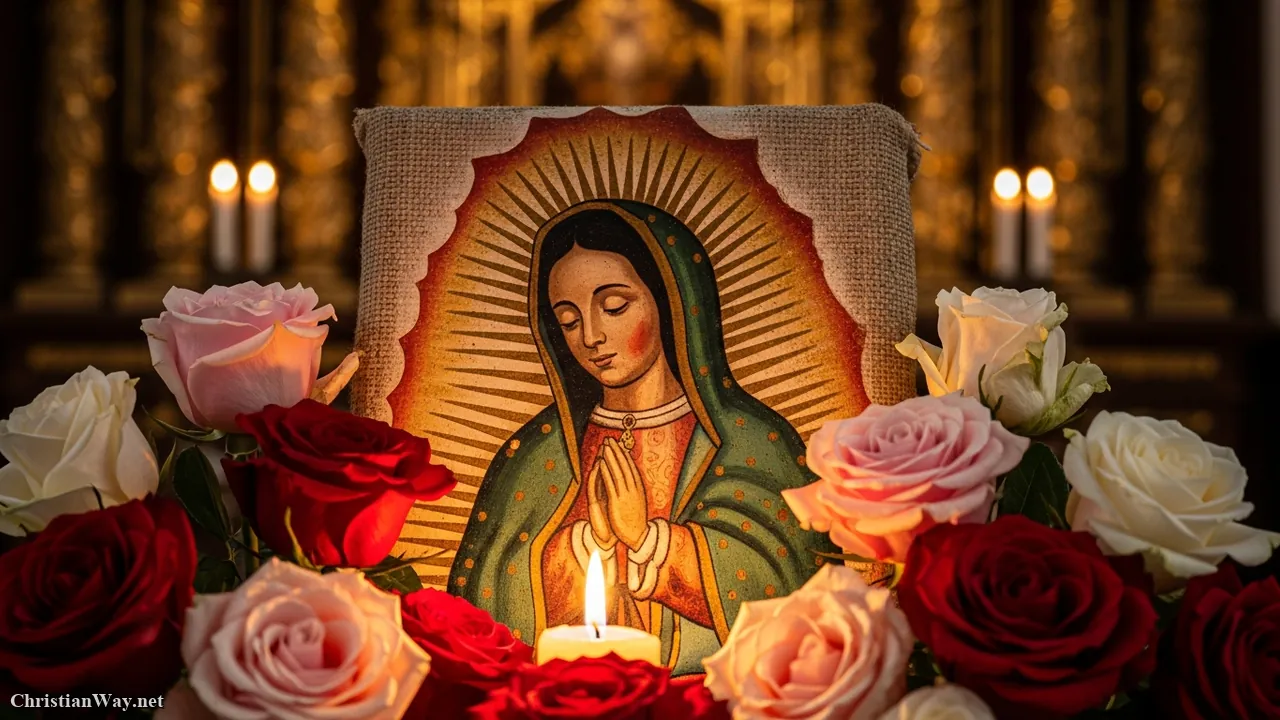
The significance here is the Inculturation of the Gospel. Mary did not come as a foreign queen, but as a mestiza mother, pregnant with the Savior. She bridged the gap between the Old World and the New, leading to the greatest mass conversion in history.
For those feeling marginalized or unworthy, Guadalupe is a warm embrace. Her words to Juan Diego echo through the centuries to us: “Am I not here, I who am your Mother?” It is a sanctuary of profound comfort.
Spiritual Highlights:
- The Tilma: The cactus-fiber cloak that has miraculously survived for nearly 500 years.
- Scripture: “My soul magnifies the Lord, and my spirit rejoices in God my Savior.” (Luke 1:46-47)
Top 5. Hagia Sophia (Istanbul, Turkey)
For nearly a thousand years, this was the largest cathedral in the world, the “Great Church” of Constantinople. Commissioned by Emperor Justinian in 537 AD, its massive dome was designed to look as if it were “suspended from heaven by a golden chain.” While it became a mosque in 1453, then a museum, and recently a mosque again, its historical and spiritual DNA remains indelibly Christian.
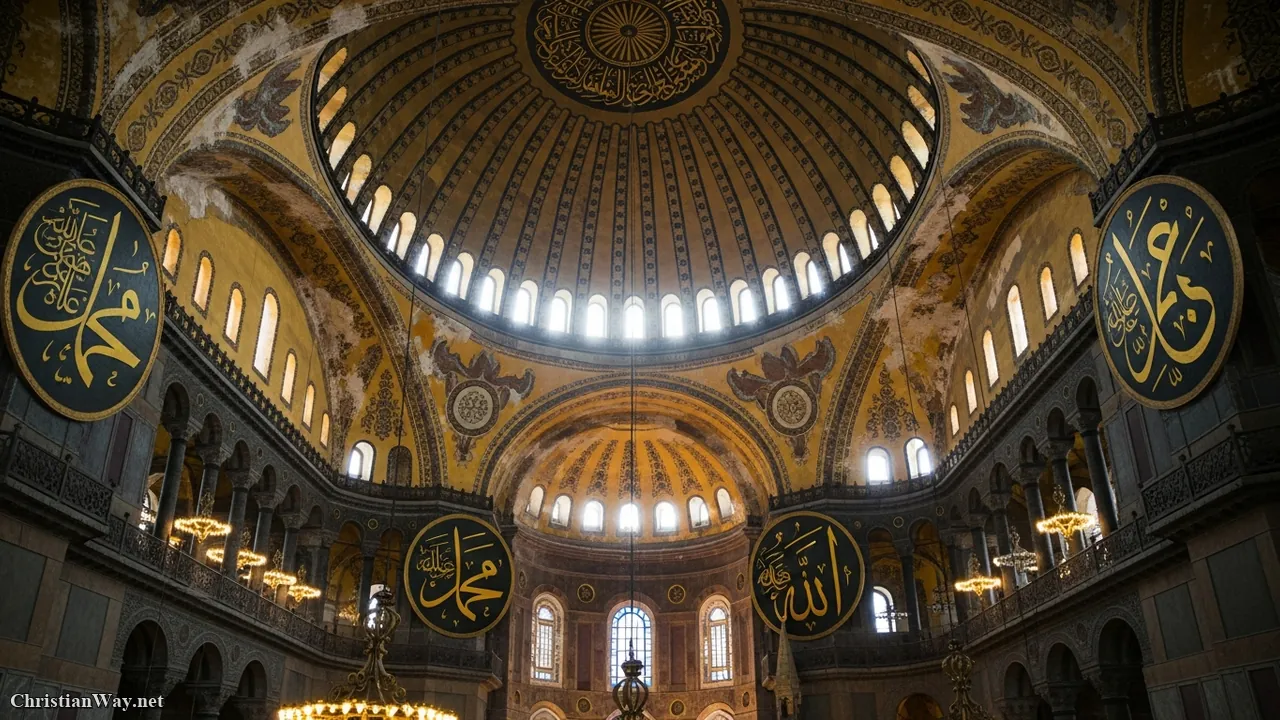
Hagia Sophia (Holy Wisdom) represents the union of the earthly and the celestial. It reminds us of the time when the Church breathed with “two lungs,” East and West. Its walls still whisper the liturgies of St. John Chrysostom and St. Basil.
We include it here to honor our Eastern heritage and the resilience of faith under pressure. It stands as a monument to Divine Wisdom, which transcends the shifting empires of men. It calls us to pray for unity and for our persecuted brothers and sisters in the East.
Spiritual Highlights:
- The Dome: A revolution in architecture symbolizing the vault of heaven.
- Scripture: “Wisdom has built her house; she has set up her seven pillars.” (Proverbs 9:1)
Top 4. Chartres Cathedral (Chartres, France)
If you wish to understand the medieval mind and its devotion to the Virgin Mary, you must look to Chartres. Miraculously preserved from wars and revolutions, it contains the most complete collection of medieval stained glass in the world. It houses the Sancta Camisa, the tunic believed to have been worn by Mary at the birth of Christ.
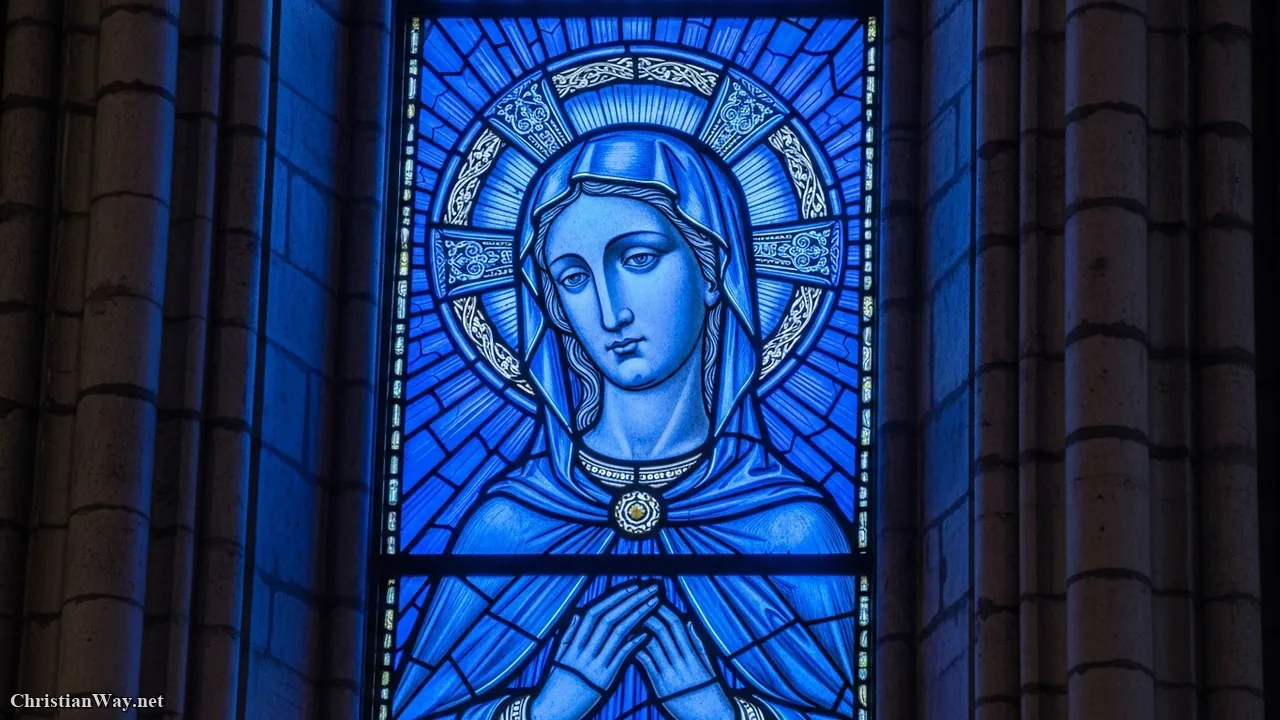
The theology of Chartres is found in its light. The famous “Chartres Blue” glass transforms the sunlight of the world into the divine light of the Spirit. The labyrinth on the floor is not a maze to get lost in, but a single path symbolizing the soul’s journey to God.
This cathedral teaches us that beauty is an attribute of God. In a utilitarian world, Chartres is a reminder that we are made for glory. It invites us to let God’s light shine through the “stained glass” of our own lives, coloring the world with grace.
Spiritual Highlights:
- The Labyrinth: A walking meditation on the nave floor.
- Scripture: “I am the light of the world. Whoever follows me will not walk in darkness.” (John 8:12)
Top 3. Archbasilica of St. John Lateran (Rome, Italy)
Many are surprised to learn that St. Peter’s is not the Cathedral of the Pope. That honor belongs to St. John Lateran. The inscription on its façade reads: “Ecclesia Omnium Urbis et Orbis Ecclesiarum Mater et Caput”—The Mother and Head of all Churches of the City and the World. It was the first legal public church in Rome, consecrated in 324 AD.
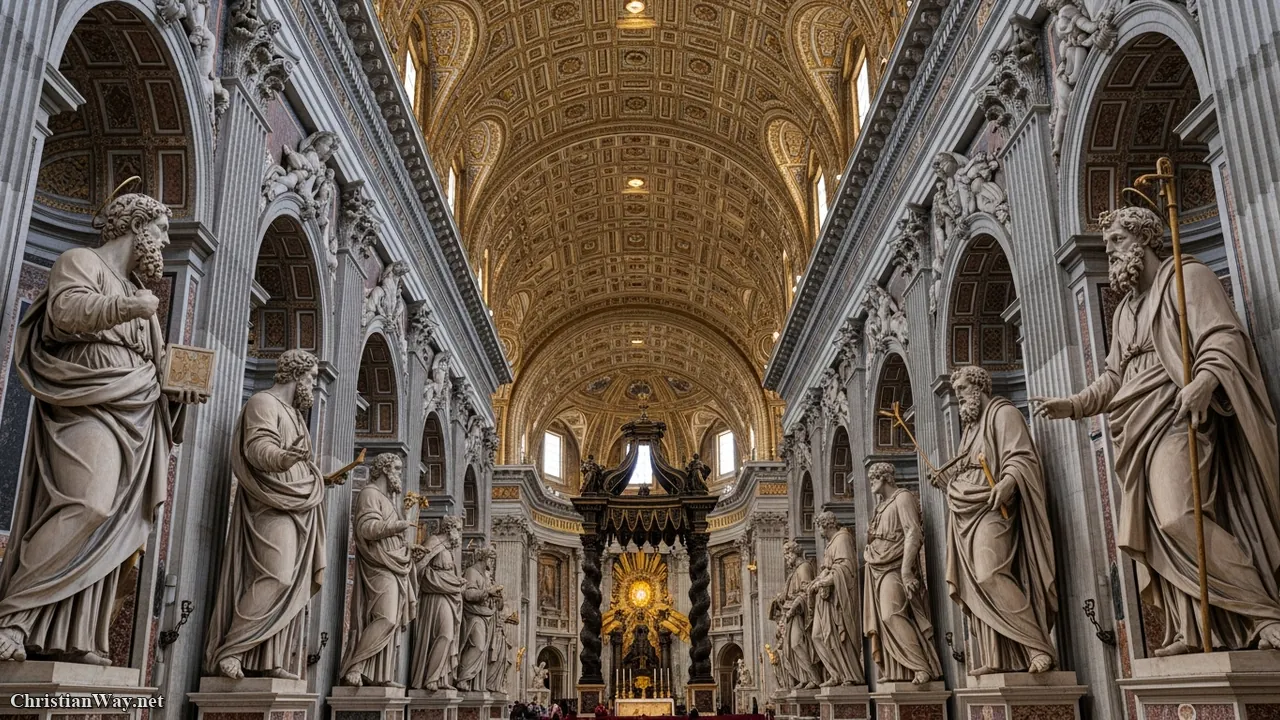
This church represents Authority and Ecclesiology. It contains the Cathedra, the Bishop’s chair, symbolizing the teaching authority of the Pope as the Bishop of Rome. It reminds us that the Church is not a democracy, but a family ordered by Christ through the Apostles.
Pastoral reflection here leads us to the importance of belonging. We are not isolated believers; we are part of a universal body with a visible head. Lateran calls us to love the Church, even with her human flaws, as our Mother.
Spiritual Highlights:
- The Holy Stairs (Scala Sancta): Steps believed to be from Pilate’s palace, brought by St. Helen.
- Scripture: “And I tell you, you are Peter, and on this rock I will build my church.” (Matthew 16:18)
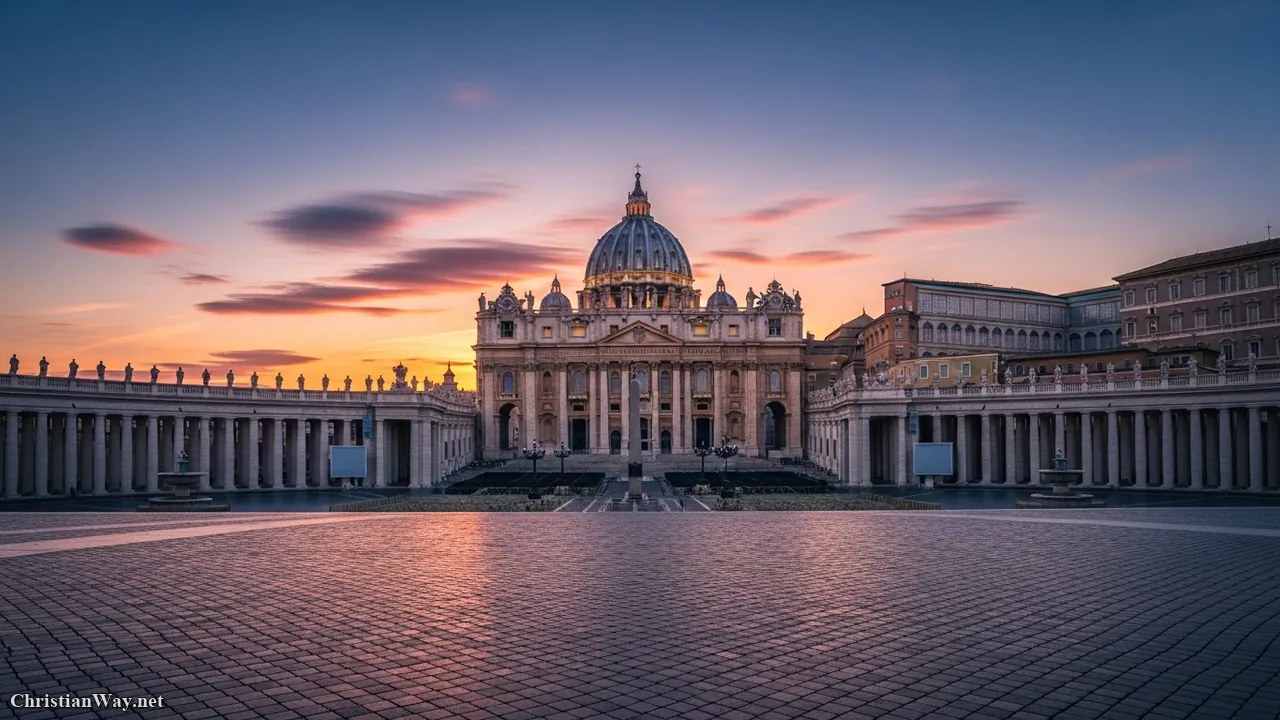
Top 2. St. Peter’s Basilica (Vatican City)
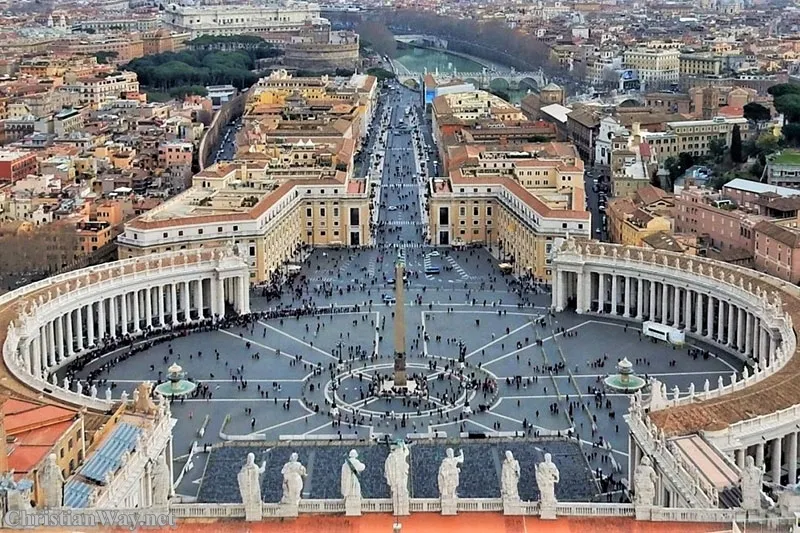
Built over the humble grave of a Galilean fisherman, St. Peter’s Basilica is the most recognizable church in Christendom. It is a testament to the paradox of the Gospel: that God chose the weak to shame the strong. The current Renaissance structure, involving Michelangelo and Bernini, replaced the ancient basilica of Constantine, but the location remains the same—directly over the bones of Peter.
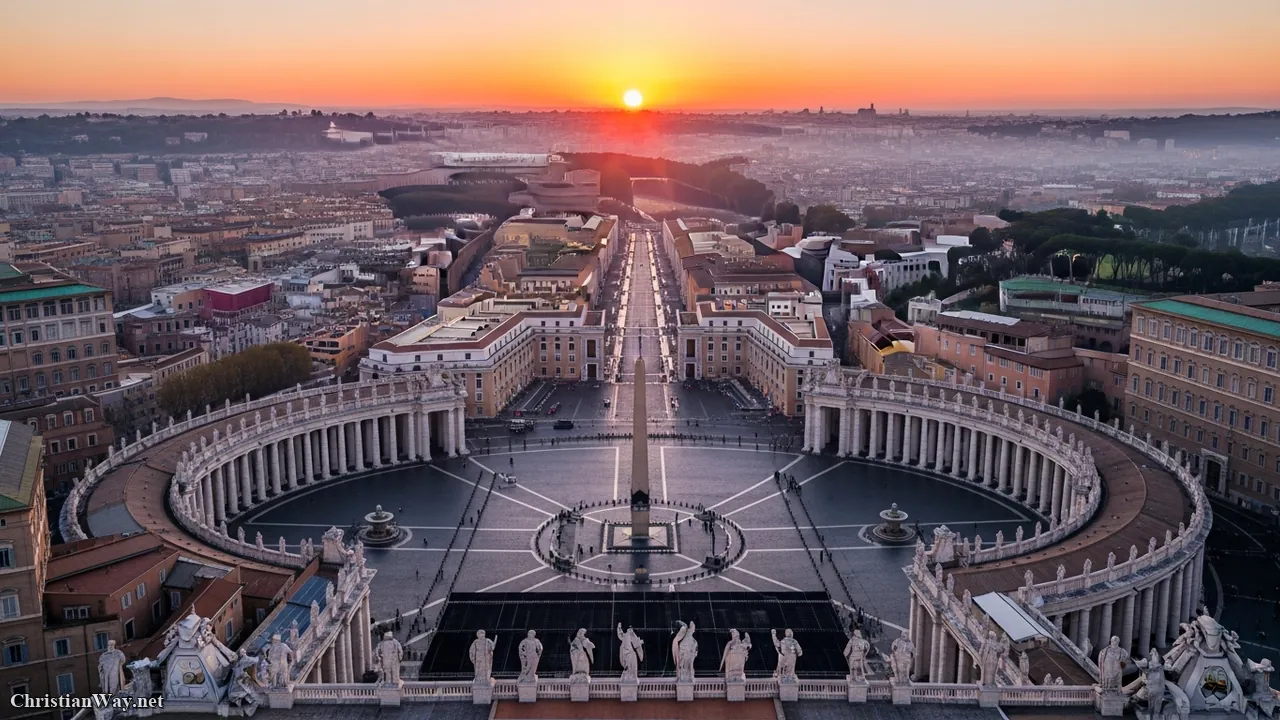
The theology here is Unity. The massive arms of Bernini’s colonnade outside embrace the world, just as Christ desires to embrace all nations. Inside, the altar sits under the great Baldachin, directly over the Apostle’s tomb, linking the current Pope to the very first Vicar of Christ.
When we look at the sheer scale of St. Peter’s, we should not feel small; we should feel protected. It stands as a promise that the gates of hell shall not prevail. It encourages us to stand firm in our faith, anchored to the Rock.
Spiritual Highlights:
- The Pietà: Michelangelo’s sculpture of sorrow and surrender.
- Scripture: “Feed my lambs… Tend my sheep.” (John 21:15-16)
Top 1. Church of the Holy Sepulchre (Jerusalem)
We arrive at the source. This is not the most architecturally perfect church, nor the cleanest. It is a complex, confusing, ancient structure shared uneasily by multiple Christian denominations. But it encloses the two most holy sites in the universe: Golgotha (Calvary), where Christ died, and the Empty Tomb, where He rose.
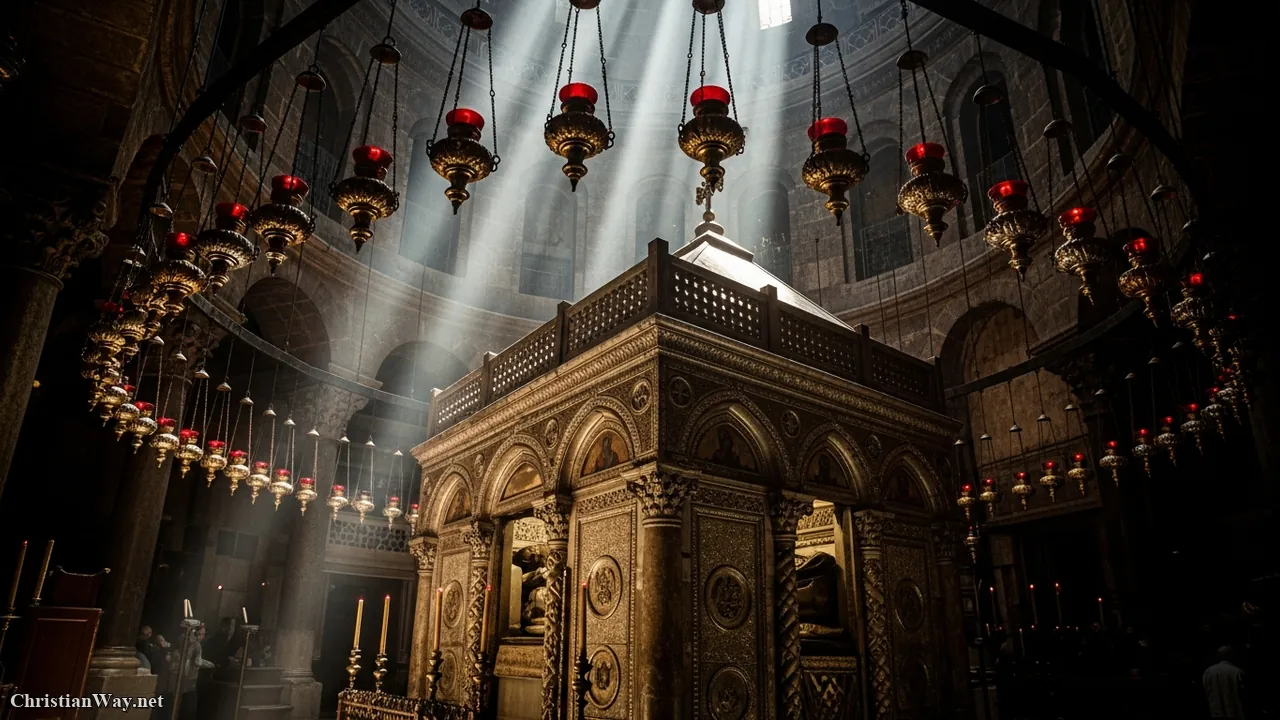
There is no theology deeper than this: He is not here; He has risen. Every other church on this list exists only because of what happened inside the walls of this one. It is the axis mundi, the center of the world. To enter the Aedicule (the tomb shrine) is to confront the reality of the Resurrection.
Dear friends, this church tells us that death is not the end. The Holy Sepulchre is the ultimate sanctuary of Hope. In our darkest moments, when we feel trapped in the tombs of our own making, this place cries out that the stone has been rolled away. The Light has won.
Spiritual Highlights:
- The Stone of Anointing: Where tradition says Jesus’ body was prepared for burial.
- Scripture: “Why do you look for the living among the dead? He is not here; he has risen!” (Luke 24:5-6)
Conclusion
We have traveled from the unfinished spires of Barcelona to the empty tomb of Jerusalem. These ten churches are magnificent, but let us never forget the words of St. Peter: “You also, like living stones, are being built into a spiritual house.”
The true Temple of God is the human heart in a state of grace. These buildings exist to guide you back to that inner sanctuary where the Holy Spirit dwells. Visit them if you can, cherish their history, but above all, let them inspire you to build a life that glorifies God.
May your faith be as solid as St. Peter’s foundation, as light-filled as Chartres, and as full of hope as the Holy Sepulchre.
— Fr. John Matthew, for Christian Way