Dear friends,
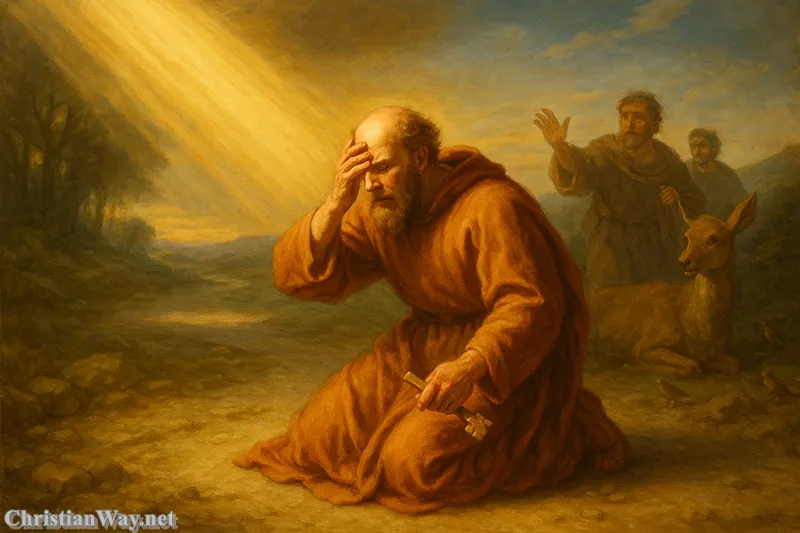
It is with a heart full of reverence that I welcome you into this reflection on the daughters of the Church. Throughout the tapestry of Christian history, woven with threads of grace and struggle, women have often served as the vibrant, golden strands that hold the entire garment together. From the foot of the Cross to the modern slums of Calcutta, it has been the fervent faith of women that has so often breathed new life into a weary world. When we speak of the “Church,” we are not speaking merely of stone structures or hierarchies, but of the Body of Christ—and in this Body, these women have served as the very heartbeat.
In our journey today, we look not just at historical figures, but at spiritual mothers. These are women who did not merely exist within the Church; they transformed it. They challenged popes, reformed corrupt systems, established vast networks of charity, and, most importantly, showed us new and profound ways to love Jesus. In a world that often struggles to understand the true dignity of the feminine genius, these saints stand as beacons, reminding us that the Holy Spirit blows where It wills, often finding Its most powerful expression in the humble and the courageous.
As we walk through this list, I invite you to slow down. Do not simply scan for names you recognize. Instead, imagine yourself sitting at their feet. What would St. Teresa say to you about your prayer life? What comfort might St. Monica offer for your family struggles? Here at Christian Way, we believe that the communion of saints is not a dusty museum, but a living family. These women are your sisters, and they are cheering you on in your own race toward heaven.
Let us open our hearts to their wisdom and allow their stories to kindle a fresh fire within our own souls.
Table of The Top 10 Female Saints Who Transformed the Church
| Rank | Saint | Era & Region | Primary Gift to the Church |
|---|---|---|---|
| 10 | St. Hildegard of Bingen | 12th Century (Germany) | Theology, Music, and Natural Science |
| 9 | St. Monica | 4th Century (North Africa) | Persevering Prayer and Patience |
| 8 | St. Perpetua | 3rd Century (Carthage) | Courageous Witness and Martyrdom |
| 7 | St. Julian of Norwich | 14th Century (England) | Optimism and Divine Love |
| 6 | St. Elizabeth Ann Seton | 19th Century (USA) | Education and Resilience in Grief |
| 5 | St. Teresa of Avila | 16th Century (Spain) | Mystical Prayer and Reformation |
| 4 | St. Catherine of Siena | 14th Century (Italy) | Political Courage and Spiritual Wisdom |
| 3 | St. Thérèse of Lisieux | 19th Century (France) | The “Little Way” of Spiritual Childhood |
| 2 | St. Teresa of Calcutta | 20th Century (India/Albania) | Radical Service to the Poorest of the Poor |
| 1 | St. Mary Magdalene | 1st Century (Judea) | Apostle to the Apostles; The Resurrection |
Top 10. St. Hildegard of Bingen: The Sybil of the Rhine
We begin our ascent in the misty, green valleys of 12th-century Germany, where a Benedictine abbess became a powerhouse of intellectual and spiritual light. St. Hildegard of Bingen was a woman who truly contained multitudes. At a time when women were often excluded from intellectual discourse, Hildegard was a polymath: a composer of ethereal music, a playwright, a student of botany and medicine, and a visionary theologian. She described herself as “a feather on the breath of God,” allowing the Holy Spirit to move her wherever He willed.

Theologically, Hildegard helps us see the cosmos as a vibrant, living symphony of God’s love. She coined the term viriditas, or “greening power,” to describe the life-giving vitality of the Creator that sustains the world. She reminds us that faith is not dry or academic; it is lush, alive, and creative. Her transformation of the Church was one of expansion—she broadened the horizons of what was possible for a believer to explore, proving that science, art, and faith sing in harmony.
For us today, Hildegard is a gentle challenge to stop compartmentalizing our lives. Do we leave God at the church door, or do we see His “greening power” in our gardens, our music, and our work? She invites us to let our unique talents, whatever they may be, become instruments of praise. If you feel your gifts are too unusual or “out of the box” for God to use, look to Hildegard and take heart.
Spiritual Highlights
- Doctor of the Church: One of only four women to hold this prestigious title.
- Key Verse: “The Spirit blows where it chooses, and you hear the sound of it…” (John 3:8)
Top 9. St. Monica: The Mother of Tears
There is perhaps no figure in Church history who better embodies the agonizing, hopeful, and relentless love of a parent than St. Monica. Living in North Africa in the 4th century, she watched her brilliant son, Augustine, drift into hedonism and heresy. For decades, Monica did not preach or nag so much as she wept and prayed. She followed him to Milan, storming heaven with her tears, believing that God loved her son even more than she did.

The transformation she brought to the Church is twofold. First, without Monica, we likely would not have St. Augustine, the giant of Western theology. But secondly, she sanctified the vocation of motherhood and intercession. She showed us that the “hidden” work of prayer is a battlefield where souls are won. A bishop once famously consoled her, saying, “It is impossible that the son of so many tears should perish.” This was not a platitude; it was a recognition of the spiritual law that prayer changes reality.
To those of you carrying the heavy cross of a loved one who has left the faith, St. Monica is your companion. She teaches us patience—not a passive waiting, but an active, burning hope. She reminds us that God’s timing is rarely our own, but His mercy is inexhaustible. Her life is a testament that our tears, when offered to God, become a form of liquid prayer that waters the driest of soils.
Spiritual Highlights
- Patronage: Mothers, wives, and abuse victims (she also endured a difficult marriage).
- Key Verse: “Pray without ceasing.” (1 Thessalonians 5:17)
Top 8. St. Perpetua: The Noble Witness
Turning our eyes to the early Church, we find a young nursing mother in Carthage named Perpetua. In the year 203 AD, to be a Christian was a capital offense. Imprisoned for her faith, Perpetua kept a diary—one of the earliest known texts written by a woman in history—documenting her visions and her resolve. Despite the pleas of her pagan father to renounce Christ and save herself for the sake of her baby, she pointed to a water pitcher and asked, “Can it be called by any other name than what it is?” When her father said no, she replied, “So also I cannot call myself anything else than what I am, a Christian.”
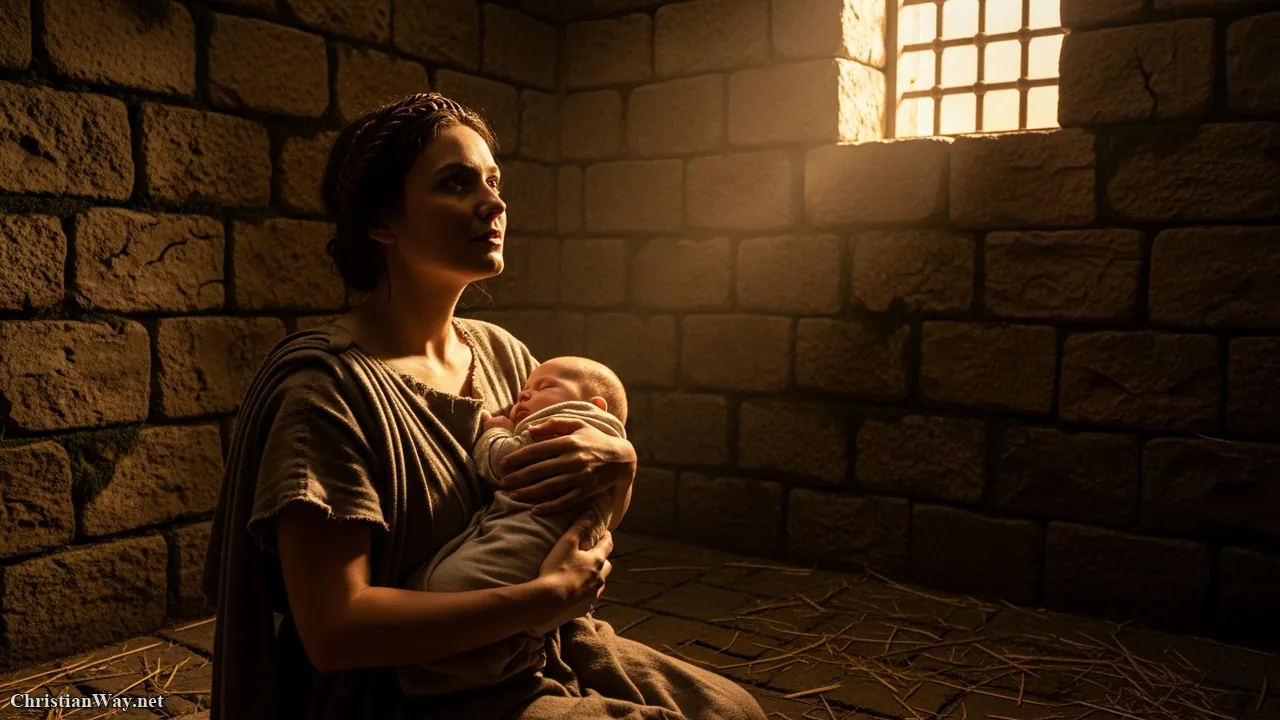
Perpetua’s transformation of the Church was forged in blood. Her martyrdom, along with her servant Felicity, sent shockwaves through the Roman Empire. It demonstrated that the power of Christ was stronger than the might of Caesar and stronger even than the natural bond of mother and child. Her courage helped convert an empire, proving that the blood of the martyrs is indeed the seed of the Church. She shows us the subversive power of identity: knowing who you are in Christ.
In our modern world, we may not face lions in an arena, but we often face the pressure to conform, to hide our light, or to compromise our values for comfort. St. Perpetua stands tall, holding her child, whispering to us across the centuries: Do not be afraid to be who you are. Her witness calls us to a faith that is not just a private hobby, but the defining truth of our existence.
Spiritual Highlights
- Legacy: Her diary, The Passion of Saints Perpetua and Felicity, was read in ancient liturgies.
- Key Verse: “For whoever wants to save their life will lose it, but whoever loses their life for me will find it.” (Matthew 16:25)
Top 7. St. Julian of Norwich: The Optimist of Divine Love
Imagine living through a literal plague, social upheaval, and war. This was the reality for Julian of Norwich, an English anchoress in the 14th century. Yet, from her small cell attached to a church, she produced a work of such blinding luminosity and hope that it still comforts millions today: Revelations of Divine Love. She was the first woman to write a book in the English language, and her theology centered intensely on the “motherhood” of God—His nurturing, protective nature.
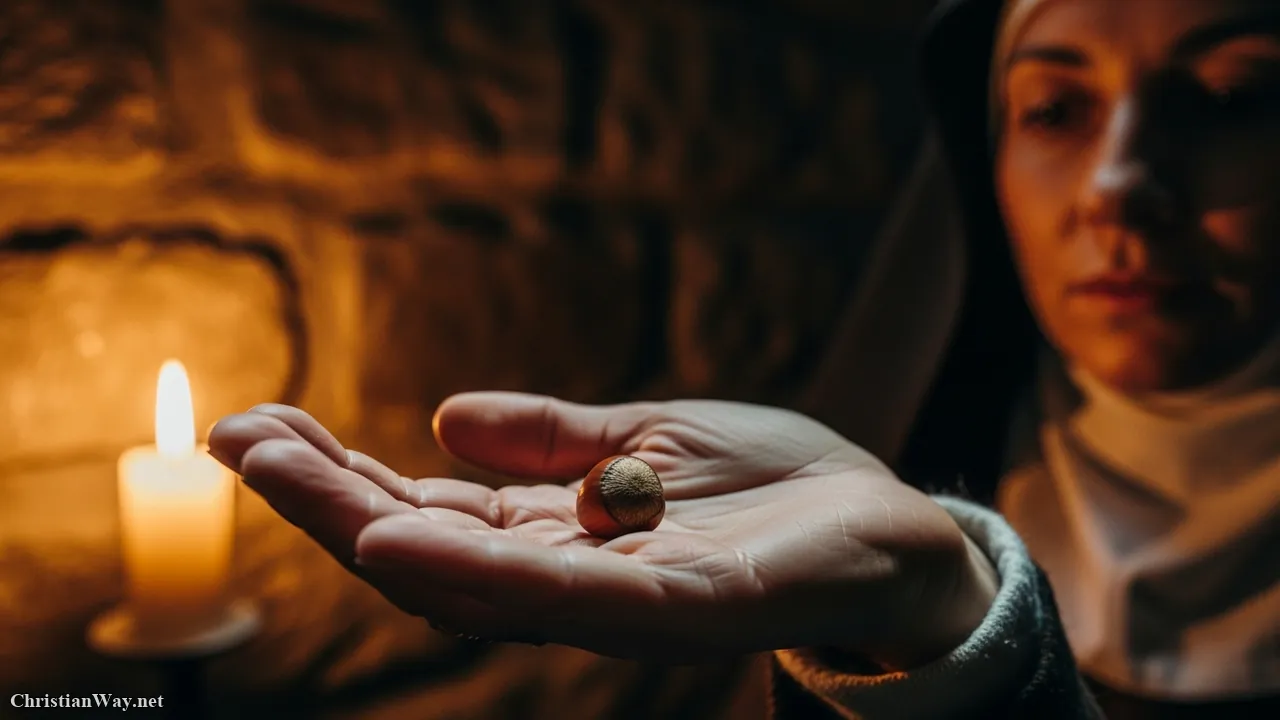
Julian’s famous mantra, “All shall be well, and all shall be well, and all manner of thing shall be well,” was not naive optimism. It was a theological assertion of God’s sovereignty. She famously saw the entire universe as a small hazelnut in the palm of her hand. She realized that it exists only because God loves it. Her transformation of the Church was a shift from fear to love. In an era obsessed with judgment and hellfire, Julian preached a God who was “courteous,” homely, and intimately close.
For the weary soul today, Julian is a balm. When the news cycle is terrifying and our personal lives feel fragile, she invites us to look at the “hazelnut”—our small, fragile existence—and realize we are held. She teaches us that we do not have to conquer the world; we only have to let ourselves be loved by the One who made it.
Spiritual Highlights
- Key Vision: The hazelnut, representing creation’s fragility and God’s sustaining love.
- Key Verse: “There is no fear in love. But perfect love drives out fear.” (1 John 4:18)
Top 6. St. Elizabeth Ann Seton: The Pioneer of Resilience
We cross the ocean now to the bustling, young United States. Elizabeth Ann Seton was a New York socialite, a loving wife, and a mother. But tragedy struck when she was widowed young in Italy, leaving her with five children and a bankrupt estate. It was in her grief that she discovered the beauty of the Catholic faith. Upon returning to America, she faced rejection from her peers for her conversion, yet she pressed on to establish the first free Catholic school for girls in the U.S. and founded the Sisters of Charity.

Mother Seton transformed the Church by laying the foundation for the parochial school system in America. She proved that faith and education are inseparable partners. But on a deeper level, she is a saint of resilience. She knew the pain of losing a spouse, the anxiety of poverty, and the misunderstanding of friends. She took the broken pieces of her life and built a cathedral of service.
Elizabeth speaks to anyone who has had to start over. If you have faced bankruptcy, divorce, widowhood, or estrangement, she is your patron. She shows us that our “Plan B” is often God’s “Plan A.” She did not let bitterness take root; instead, she looked at her empty hands and asked God, “How can these serve you?”
Spiritual Highlights
- Distinction: The first native-born citizen of the United States to be canonized.
- Key Verse: “We know that in all things God works for the good of those who love him.” (Romans 8:28)
Top 5. St. Teresa of Avila: The Doctor of Prayer
In 16th-century Spain, religious life had become somewhat comfortable and lax. Enter Teresa of Avila: fiery, witty, intelligent, and deeply in love with God. She initiated the Carmelite Reform, travelling across Spain to found convents that returned to simplicity and poverty. But her external reforms were fueled by an internal revolution. She mapped the human soul in her masterpiece, The Interior Castle, describing the journey of prayer from the outer courtyards to the innermost chamber where God dwells.
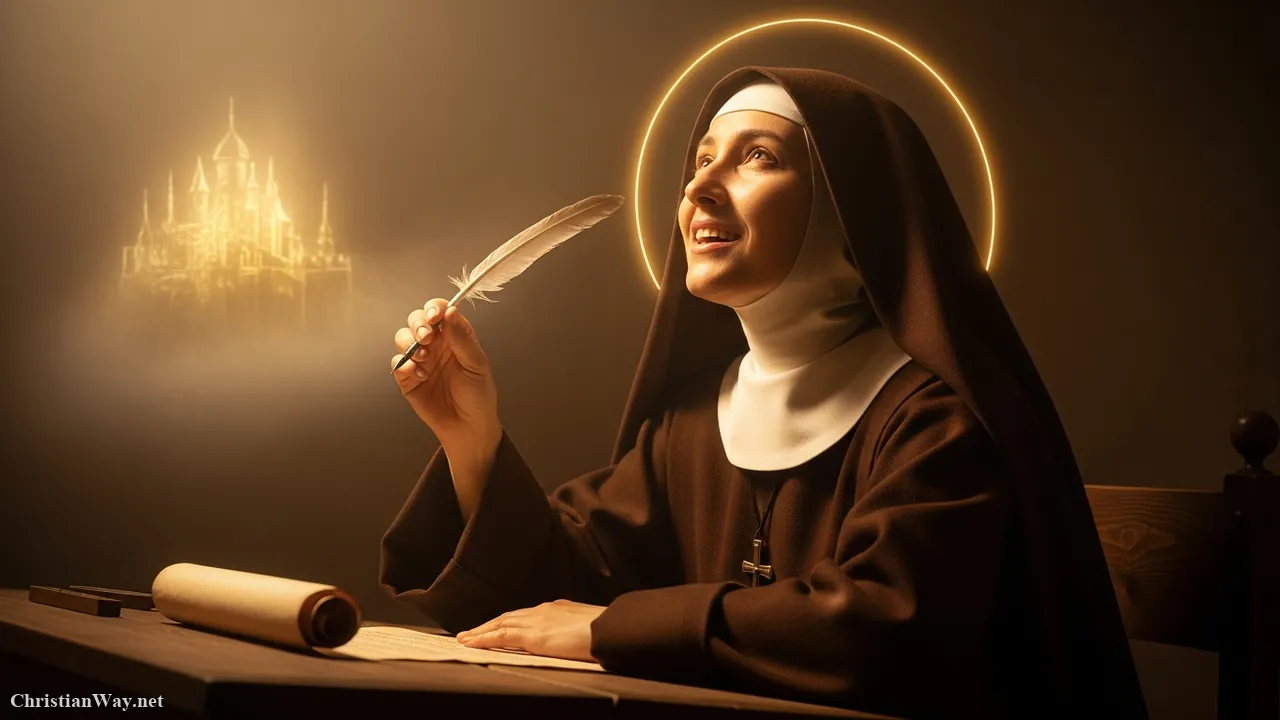
Teresa transformed the Church by democratizing mysticism. She taught that mental prayer—simply talking to God as a friend—was not just for monks in the desert but for everyone. She famously defined prayer as “nothing else than an intimate sharing between friends.” She was also incredibly human; she once told God after a mishap, “If this is how You treat Your friends, it is no wonder You have so few of them!”
Her message to us is urgent: Look within. We live in a world of distraction, constantly looking at screens and seeking external validation. St. Teresa grabs us by the shoulders and says, “The King is within you.” She challenges us to cultivate silence and to nurture that inner friendship with Christ, which is the only source of true strength.
Spiritual Highlights
- Doctor of the Church: Recognized for her unparalleled teaching on prayer.
- Key Verse: “The Kingdom of God is within you.” (Luke 17:21)
Top 4. St. Catherine of Siena: The Fire of Truth
St. Catherine of Siena was a force of nature. A laywoman and a Dominican tertiary in the 14th century, she was uneducated in the formal sense, yet her wisdom confounded theologians. She lived in a time of great corruption, when the Pope had abandoned Rome for Avignon, France. Catherine, fueled by her mystical union with Christ, wrote blistering letters to cardinals and kings, and eventually traveled to Avignon to command Pope Gregory XI to return to Rome. And he listened.
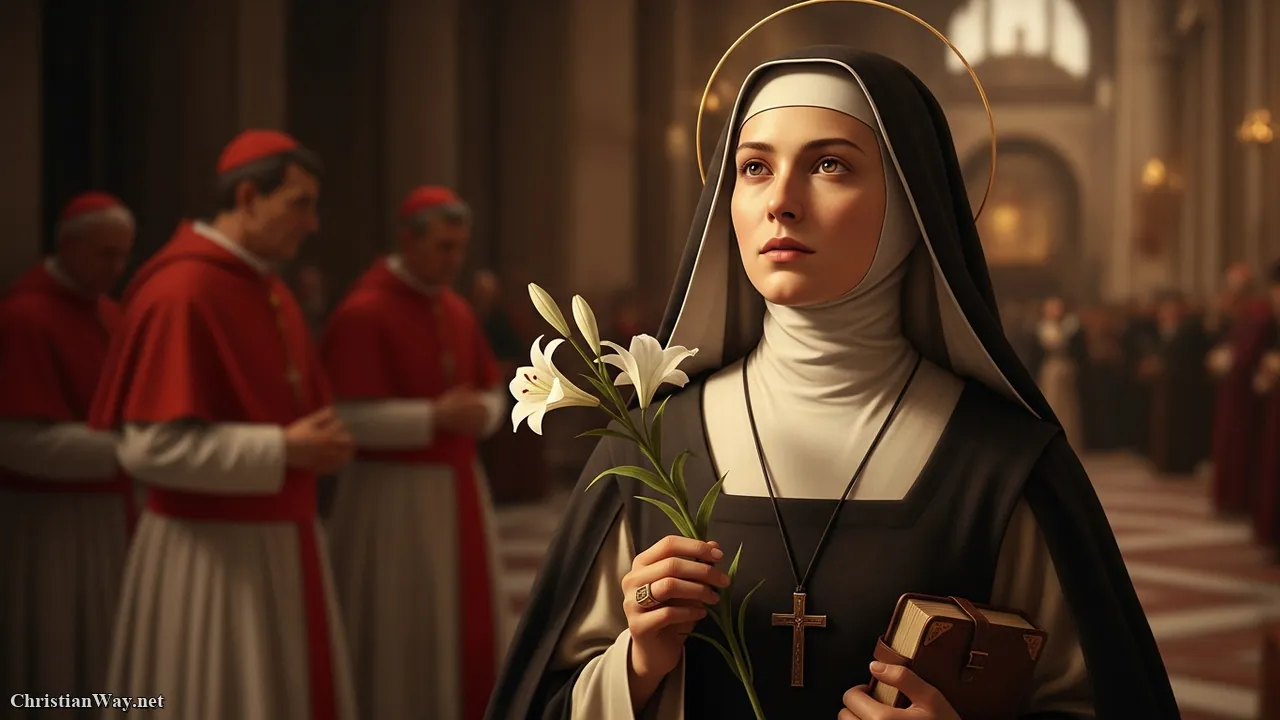
Catherine transformed the Church by speaking truth to power. She is the ultimate example of the prophetic voice. She famously said, “If you are what you should be, you will set the whole world on fire.” Her theology emphasized the “blood of Christ” and the bridge between God and man. She understood that personal holiness has political and social consequences.
We need Catherine’s spirit today. She teaches us that we should never underestimate the power of a single, holy soul. She challenges us to be bold in our convictions. Are we timid about our faith? Do we stay silent when we should speak? Catherine reminds us that humility does not mean silence; it means submitting to God’s truth so completely that we fear no earthly power.
Spiritual Highlights
- Distinction: Doctor of the Church and Patron Saint of Europe.
- Key Verse: “God did not give us a spirit of cowardice, but rather a spirit of power and of love.” (2 Timothy 1:7)
Top 3. St. Thérèse of Lisieux: The Giant of the Little Way
It seems paradoxical that a young nun who died at 24, never founded an order, and never left her cloister would be considered one of the greatest saints of modern times. St. Thérèse of Lisieux, the “Little Flower,” realized she was too small to climb the rough stairway of perfection that great saints ascended. So, she found an elevator: the arms of Jesus. She developed the “Little Way”—the theology of doing small things with great love.
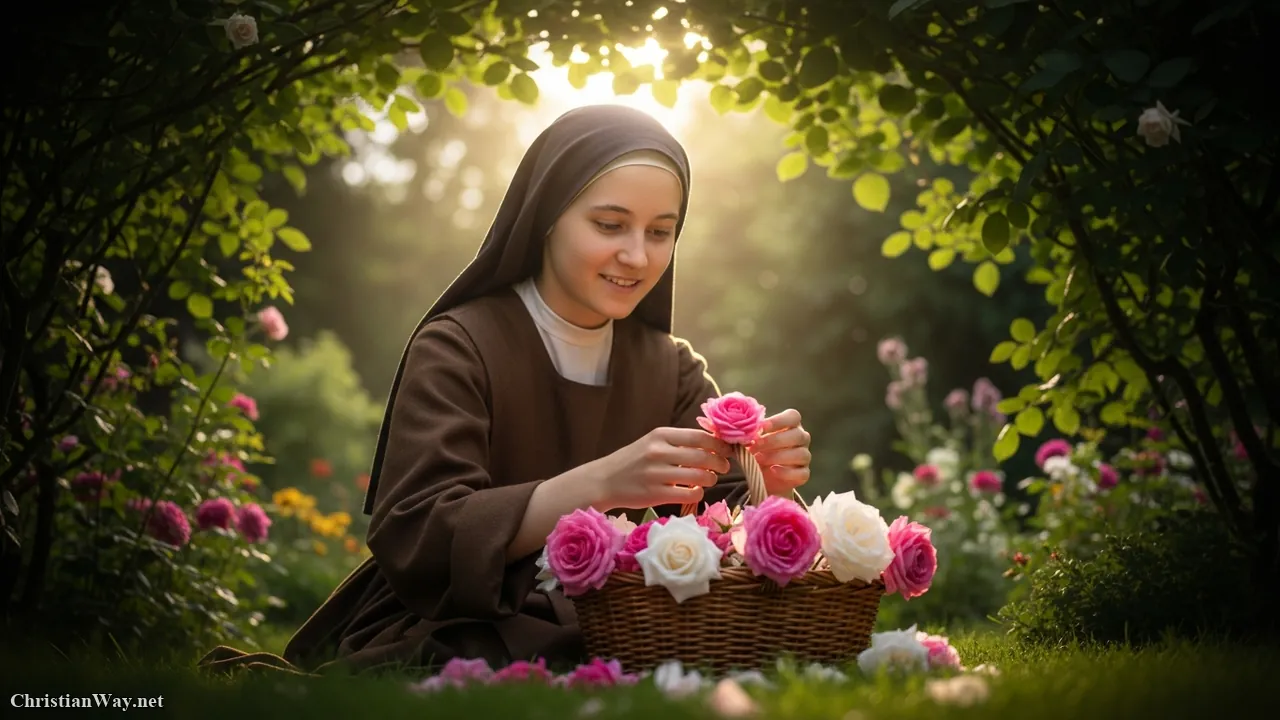
Thérèse transformed the Church by making holiness accessible. Before her, many thought sanctity required great deeds, severe fasting, or martyrdom. Thérèse showed that picking up a pin from the floor for the love of God is as powerful as preaching a cathedral sermon. She stripped away the complexities of spirituality and returned us to the Gospel truth of spiritual childhood.
This is perhaps the most comforting message for the modern believer. We are often overwhelmed by our inability to change the world. Thérèse whispers, “Just love the person in front of you.” She sanctifies our daily grind—the dishes, the commute, the diapers, the office emails. She teaches us that everything is a vehicle for grace if we offer it with love.
Spiritual Highlights
- Title: Doctor of the Church (the youngest ever).
- Key Verse: “Let the little children come to me… for the kingdom of heaven belongs to such as these.” (Matthew 19:14)
Top 2. St. Teresa of Calcutta: The Icon of Mercy
In the 20th century, as the world became increasingly secular and obsessed with material success, a diminutive Albanian nun walked into the slums of Kolkata to pick up the dying from the gutters. Mother Teresa did not just start a charity; she started a revolution of tenderness. She looked into the faces of the unwanted, the lepers, and the abandoned, and she saw the distressing disguise of Jesus Christ.
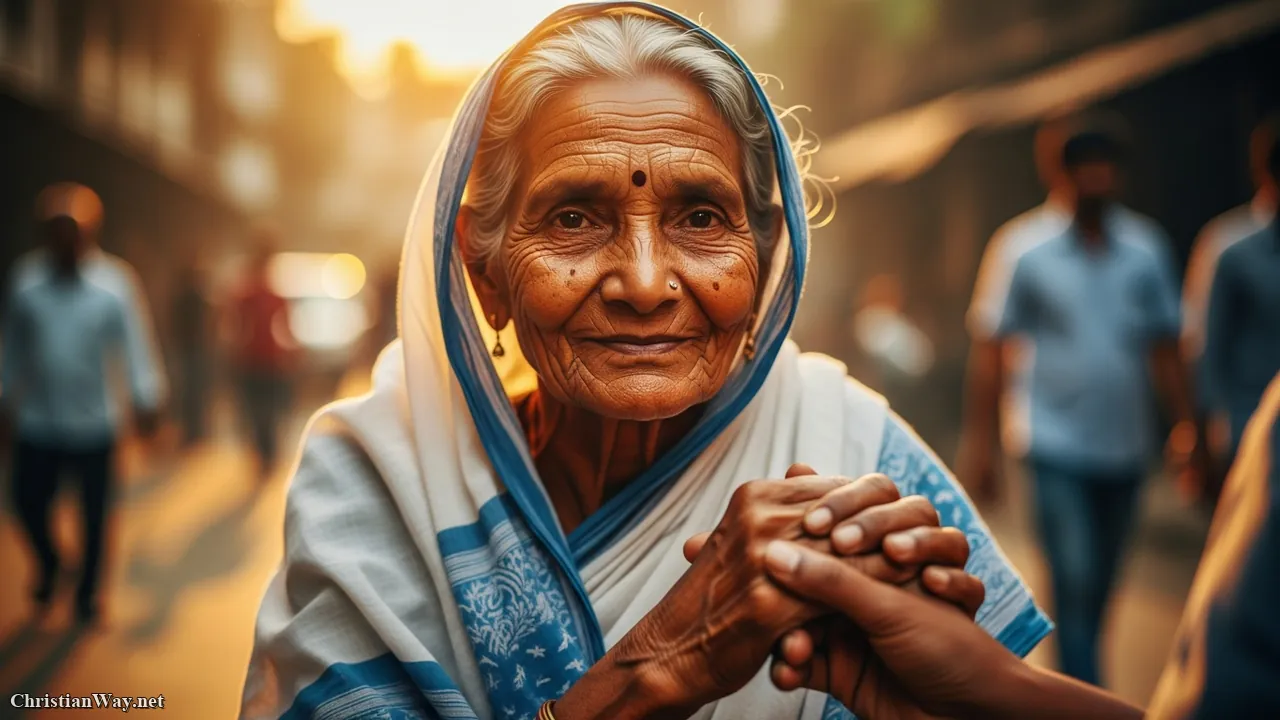
Her transformation of the Church was a jolting reminder that our faith must have hands and feet. She challenged the world’s definition of poverty. She famously noted that the West suffers from a greater poverty than India: the poverty of loneliness and being unloved. She forced the Church to look away from its internal debates and look downward, to the suffering flesh of humanity.
Mother Teresa’s challenge to us is piercing: “Calcutta is everywhere.” You do not need to go to India to find the poor. Who is the lonely person in your family? Who is the ignored coworker? Who is the outcast in your parish? She teaches us that we cannot claim to love a God we cannot see if we do not love the neighbor we can see.
Spiritual Highlights
- Legacy: Founder of the Missionaries of Charity. Nobel Peace Prize winner.
- Key Verse: “Truly I tell you, whatever you did for one of the least of these brothers and sisters of mine, you did for me.” (Matthew 25:40)
Top 1. St. Mary Magdalene: The Apostle to the Apostles
We arrive at the summit, the woman who stands at the very hinge of history. St. Mary Magdalene was the first witness to the most important event in the universe: the Resurrection of Jesus Christ. Delivered from seven demons, she followed Jesus with a loyalty that outlasted even the male apostles, standing by the Cross when others fled. On Easter morning, she was the one weeping at the tomb, and she was the one commissioned by the Risen Lord to “go and tell my brothers.”

She holds the title Apostola Apostolorum—Apostle to the Apostles. Her transformation of the Church is foundational. Without her witness, the Gospel message halts at the tomb. She represents the absolute elevation of women in the Kingdom of God; Jesus trusted a woman with the first proclamation of the Good News in a culture that did not value a woman’s testimony.
Mary Magdalene is the patron saint of hopeful converts and the bearer of good news. She teaches us that our past does not define us; only our love for Jesus defines us. No matter what “demons” you have battled, Jesus calls you by name, just as He called “Mary” in the garden. She invites us to be the ones who run to the world, breathless and joyful, saying: “I have seen the Lord!”
Spiritual Highlights
- Significance: The first person to see the Risen Christ.
- Key Verse: “Jesus said to her, ‘Mary.’ She turned toward him and cried out in Aramaic, ‘Rabboni!'” (John 20:16)
Reflect and Pray
As we conclude this journey through the lives of these holy women, we see a beautiful pattern. They were queens and peasants, mothers and virgins, scholars and mystics. Yet, they all shared one thing: a “Yes” to God that held nothing back.
They remind us that the Church is not a monolith, but a garden of diverse flowers. Perhaps you see a reflection of your own struggle in St. Monica, or your own desire for truth in St. Catherine. I encourage you to pick one of these saints this week. Ask for her prayers. Read a page of her writings. Let her walk beside you.
Lord, we thank You for the gift of these holy women. May their courage inspire our weakness, and may their love for You ignite a flame in our own cold hearts. Help us to transform our own corners of the world, just as they did. Amen.
— Fr. John Matthew, for Christian Way