Dear friends in Christ,
Every human heart knows something of restlessness. We may not always name it clearly, but we feel it in the quiet moments when success does not satisfy us as we expected, when pleasure fades quickly, when the praise of others leaves us strangely empty, or when the future we once desired arrives and still does not bring peace. We look for rest in many places: in achievement, relationships, possessions, learning, beauty, distraction, and the hope that the next season of life will finally make everything whole. Yet even when life is full, the soul can remain hungry.
Saint Augustine of Hippo knew this hunger deeply. He was brilliant, ambitious, passionate, restless, and searching. He loved words, pursued success, and wanted to make a name for himself. He was not indifferent to faith; rather, he struggled with it. He wanted truth, but he often wanted truth on his own terms. He longed for happiness, but he sought it in places that could not carry the weight of his longing. His life is precious because he does not appear before us as someone who always found faith easy. He comes to us as a man whose heart wandered, resisted, questioned, loved wrongly, suffered, and finally surrendered to the mercy of God.
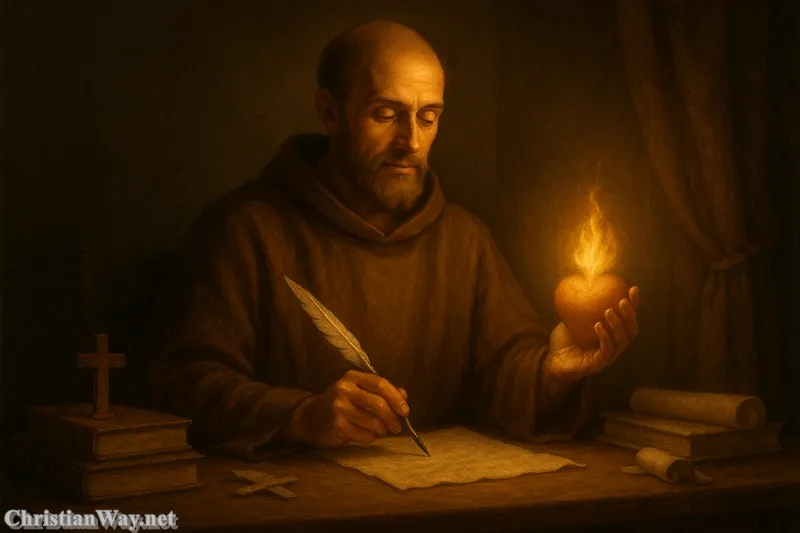
The most famous words of Augustine’s Confessions have become a prayer for countless Christians: “You have made us for Yourself, and our heart is restless until it rests in You.” These words are not merely a beautiful sentence from an ancient book. They are a diagnosis of the human condition. We are restless because we were made for God. We may try to fill the deepest place in the soul with good things, but even good things become burdens when we ask them to become our salvation.
Saint Augustine of Hippo reminds us that no one is beyond the reach of grace. A long journey does not mean that God has abandoned us. Years of confusion do not mean that the Lord has stopped calling. A past filled with regret does not prevent a future filled with holiness. Augustine’s life tells us that Christ is patient. He pursues the wandering heart. He waits at the edge of our rebellion. He speaks through Scripture, friendship, sorrow, beauty, truth, and the prayers of those who love us.
His conversion was not only the story of one man. It is a window into the mercy of God. In Augustine, we see that the Lord does not merely forgive sins. He reshapes desire. He teaches the heart to love rightly. He gives peace not by removing every difficulty from life, but by becoming the center of life.
A Child of Thagaste and a Mother of Prayer
Augustine was born in 354 in Thagaste, a town in North Africa, in what is now Algeria. He grew up in a home shaped by two very different spiritual influences. His father, Patricius, was not initially a Christian believer, while his mother, Monica, possessed a deep and persevering faith. She loved her son fiercely, prayed for him continually, and carried before God the sorrow of watching him wander far from the path she hoped he would follow.
The life of Saint Monica is inseparable from the story of Saint Augustine. Her prayer was not shallow optimism. She saw his gifts, but she also saw his pride, his confusion, and the choices that carried him away from Christ. Augustine was intelligent and persuasive from an early age. He loved language and learning. His family made sacrifices to give him an education, hoping that he would build a successful life.
Like many young people, Augustine was drawn by the desire to be admired. He wanted achievement, recognition, and freedom. He did not yet understand that freedom without truth can become another kind of slavery. He pursued the pleasures and ambitions that seemed natural to him, believing that they could give him happiness. But the more he sought satisfaction in temporary things, the more his heart remained unsettled.
This is one reason Augustine still speaks so strongly to the modern world. We live in an age that offers countless ways to distract the soul. We can fill every quiet moment with noise. We can move from image to image, desire to desire, ambition to ambition, never pausing long enough to ask what our hearts are truly seeking. We may have access to more knowledge than previous generations, yet still struggle to know why we are alive.
Augustine’s early life reminds us that intelligence alone cannot save us. Talent cannot save us. Success cannot save us. Even the love of family, though precious, cannot become the foundation of the soul. Only God can carry the deepest weight of human longing.
The Hidden Strength of a Praying Mother
Saint Monica teaches us something profoundly tender about prayer. She did not force Augustine into holiness. She could not control every decision he made. She watched him travel far from home, pursue teachings she believed were false, and live in ways that brought her grief. Yet she did not stop loving him. She did not stop praying.
There are many parents, grandparents, spouses, and friends who understand this sorrow. They love someone who has moved away from faith, made painful choices, or become distant from the life of prayer. They may wonder whether their prayers matter. They may feel helpless as they watch someone they love walk a difficult road.
The life of Monica gives hope to such hearts. Her prayer did not make Augustine’s conversion happen instantly. God did not answer her in the way of a quick miracle. Instead, grace worked slowly through years of seeking, failure, conversation, sorrow, and encounter. Monica had to learn patience as well as trust.
Prayer is not a way of controlling another person. It is an act of love placed into the hands of God. We pray because we believe that no heart is closed forever to grace. We pray because the Lord knows how to reach places in another person that we cannot reach. We pray because love refuses to abandon hope.
Augustine himself would later become one of the great teachers of Christian grace. But before he taught others about grace, he was carried by the prayers of a mother who trusted God more deeply than she understood the path.
A Brilliant Mind Searching in the Wrong Places
As Augustine grew older, he became a gifted student of rhetoric, the art of speaking and persuading. In the ancient world, rhetorical skill could open doors to influence, wealth, and public success. Augustine excelled in this field. He loved the power of language and the admiration that came with intellectual ability.
But beneath his brilliance, there was confusion. Augustine wanted truth, yet he did not always want the humility truth required. He was drawn for a time to Manichaeism, a religious movement that offered simple explanations for the struggle between good and evil. It appealed to him because it seemed intellectually satisfying and because it allowed him to place much of the responsibility for human sin outside himself.
This is a temptation that remains with us. We often want explanations that make us feel innocent without asking us to be changed. We want a faith that confirms our desires without challenging them. We want to blame circumstances, other people, society, our past, or our weakness, while avoiding the difficult work of repentance.
Yet the Gospel calls us to something deeper. It does not deny that we are wounded by sin, shaped by suffering, and affected by the failures of others. But it also tells us that grace can make us new. Christ does not merely explain our brokenness. He enters it and heals it.
Augustine gradually began to see the limits of the ideas he had embraced. The questions that had once seemed answered became more complicated. The spiritual system that had promised clarity began to feel hollow. His restless heart was still searching.
In time, Augustine moved to Milan, where he taught rhetoric and became acquainted with Ambrose, the bishop of that city. At first, Augustine was impressed by Ambrose’s eloquence. He listened because he admired the bishop’s intelligence and skill. But slowly, through Ambrose’s preaching, Augustine began to hear Christianity in a new way.
The faith he had dismissed as intellectually weak now appeared rich, deep, and capable of answering the questions of the mind without denying the mystery of God. Scripture, which he had once misunderstood, began to open before him. The words of Christ became not merely religious language, but a living call.
When Knowledge Becomes a Door to Humility
Augustine’s journey is important for people who think deeply, question seriously, or struggle with intellectual doubt. Christianity does not ask us to turn off our minds. God is the source of truth. The mind is His gift. To seek truth honestly is not a betrayal of faith; it can become a path toward faith.
But Augustine teaches us that knowledge must become humble. A person can know many things and still not know how to love. A person can speak brilliantly about truth while resisting the truth that would change his life. A person can understand religious ideas and still remain far from God.
Saint Paul writes, “Knowledge puffeth up, but charity edifieth” (1 Corinthians 8:1). Knowledge becomes dangerous when it makes us proud. It becomes holy when it leads us to wonder, gratitude, humility, and love.
Augustine had to learn that God could not be mastered like a subject in a classroom. God was not a problem to solve. He was the living Lord to be worshiped. The truth Augustine sought was not merely an idea. It was Jesus Christ.
This is the turning point for every restless mind. We may ask many questions, read many books, and seek many answers. Yet one day we must allow the truth to become personal. We must allow Christ to say to us, “Follow me.”
The Garden of Milan and the Voice That Called Him Home
The conversion of Augustine is one of the most moving stories in Christian history. By the time he came to Milan, he had begun to understand more clearly the truth of the Christian faith. He was drawn by the preaching of Ambrose. He was influenced by the witness of believers whose lives had been transformed. He had heard the testimony of people who had given up worldly ambition for the sake of Christ.
Yet understanding was not the same as surrender.
Augustine knew that he needed to change, but he feared what change would cost him. He wanted to belong to Christ, but he was still attached to old habits, ambitions, and desires. He had reached the painful moment where the mind says yes to God, while the will still resists.
Many people know this struggle. We may understand what God is asking of us, but feel afraid to obey. We may know that bitterness is poisoning us, yet struggle to forgive. We may know that a habit is harming us, yet fear life without it. We may know that prayer is necessary, yet keep postponing it. We may want a new beginning, yet hesitate because the old life feels familiar.
Augustine’s struggle came to a crisis in a garden in Milan. He was deeply troubled, weeping and wrestling with his divided heart. Then he heard what seemed like the voice of a child saying, “Take up and read.” He opened the Scriptures and read words from the Letter to the Romans calling him to leave behind the works of darkness and to put on the Lord Jesus Christ.
In that moment, something broke open within him. The struggle did not end because Augustine became strong by himself. It ended because grace entered the place where he had been resisting. The Lord gave him the courage to surrender.
Augustine later described the change as light entering his heart. The chains that had held him began to lose their power. The restless man did not suddenly receive an easy life, but he received a new center. He had found the One for whom he had been searching.
Grace Does Not Humiliate the Heart; It Liberates It
Some people fear conversion because they imagine that God will take away everything beautiful from their lives. They think of faith as a narrow path of restriction, sorrow, and loss. Augustine himself felt this fear. He believed that turning fully toward Christ would mean losing too much.
But when he finally surrendered, he discovered freedom.
This is the mystery of grace. God does not take away what is truly good. He heals what has become disordered. He does not destroy the heart’s capacity to love. He teaches the heart to love rightly. He does not remove joy. He gives a deeper joy than the world can provide.
Jesus says, “Ye shall know the truth, and the truth shall make you free” (John 8:32). Freedom is not simply the ability to do whatever we desire. Often, our desires can enslave us. Real freedom is the grace to become the person God created us to be.
Augustine’s conversion was not a rejection of his personality, intelligence, or love of beauty. God did not erase who he was. God purified and redirected his gifts. The mind that had once sought admiration would become a mind devoted to truth. The heart that had sought love in temporary things would become a heart that loved God and served His people.
Grace does not make us less human. It makes us more fully alive.
Baptism, New Beginnings, and the Tears of Monica
After his conversion, Augustine prepared for baptism. He was baptized by Ambrose at Easter in Milan, together with his son Adeodatus. It was a moment of profound joy for Augustine and for Monica, whose years of prayer had been answered in a way she had long hoped for.
Yet even this season of joy was touched by sorrow. On the journey back toward North Africa, Monica became ill and died in Ostia. Her final conversations with Augustine are remembered with deep tenderness. She had spent much of her life longing to see him come fully to faith. Having witnessed his baptism and new beginning, she could entrust him to God.
The death of Monica reveals something important about Christian hope. Faith does not remove grief. Augustine loved his mother deeply, and her death brought pain. But grief is changed when it is placed in the light of Christ. Christians do not mourn as people without hope. We weep, but we also entrust those we love to the mercy of God.
Augustine’s Confessions gives us a moving picture of this grief. He does not pretend that holy people do not cry. He does not hide the ache of losing someone beloved. Instead, he brings his sorrow before God.
This is a gift to anyone who has lost a parent, spouse, child, friend, or family member. God does not demand that we become emotionless. He invites us to bring even our tears to Him. The Lord who wept at the tomb of Lazarus understands the grief of the human heart.
Every Conversion Has a Cost, but Christ Gives More Than He Takes
Augustine’s return to faith did not mean that every earthly sorrow disappeared. His mother died. His life changed direction. He left behind ambitions he had once pursued. He had to learn how to live differently. He had to face the consequences of his past and become responsible for the new life grace had given him.
Conversion is not magic. It does not erase history. But it changes the meaning of history.
The past becomes a place where we see God’s patience.
Our failures become reminders of mercy.
Our wounds become places where we can comfort others.
Our regrets become reasons to be humble.
Our gifts become offerings to Christ.
Augustine did not deny the darkness of his earlier life. He brought it into the light. This is why his Confessions continues to speak so powerfully. He did not write as a man boasting about his holiness. He wrote as a sinner amazed by grace.
Every Christian is called to this same humility. We do not stand before God because we have made ourselves worthy. We stand before Him because Christ has loved us first.
From Restless Seeker to Shepherd of Souls
After returning to North Africa, Augustine hoped for a quiet life of prayer, study, and friendship. He desired to live simply with other believers, reflecting on Scripture and seeking God. But the Lord had another path for him.
Augustine was ordained a priest in Hippo Regius and later became bishop there. The man who had once pursued public success now found himself responsible for guiding a Christian community. He preached, taught, wrote, defended the faith, cared for the poor, corrected errors, and carried the burdens of people who came to him with questions, conflicts, grief, and need.
His conversion had not led him away from the world into private comfort. It had prepared him to serve the Church.
This is often how God works. He heals us not only for our own sake, but so that we may become instruments of healing for others. The person who has known loneliness may become more attentive to the lonely. The person who has been forgiven may become more merciful. The person who has wrestled with doubt may become a patient guide for those who question.
Augustine’s writings became a great treasure for the Church. He reflected deeply on grace, sin, prayer, Scripture, the Trinity, the Church, the sacraments, Christian love, and the hope of eternal life. Yet his greatest strength was not merely his intellect. It was his honesty before God.
He knew what it meant to be restless. He knew what it meant to resist grace. He knew what it meant to seek happiness in the wrong places. Because he knew these things, he could speak to the human heart with unusual tenderness and truth.
A Bishop Who Never Forgot His Need for Mercy
Augustine became a respected teacher, but he never presented himself as someone above the need for grace. He understood that bishops, priests, teachers, and ordinary believers all remain dependent upon the mercy of God.
This humility matters. Religious knowledge can become dangerous when it makes us harsh toward others. A person may know doctrine, quote Scripture, or defend the Church, yet forget that every truth must be lived with love.
Augustine knew that Christian teaching cannot be separated from Christian charity. He famously taught that our love must be ordered rightly. We are not called to love everything in the same way. We are called to love God above all things, and to love other people in God.
When love becomes disordered, we begin to treat created things as though they were ultimate. We may love wealth, pleasure, success, approval, or even another person more than we love God. Then those good things become burdens.
But when God is first, everything else can be loved more freely and faithfully. We can love family without turning them into idols. We can enjoy beauty without becoming enslaved by it. We can work diligently without making achievement our god. We can care for the world without forgetting the Creator.
This is the wisdom Augustine offers to restless hearts: love God first, and every other love begins to find its proper place.
The City of God and the Passing Kingdoms of the World
Augustine lived through a time of upheaval. In 410, Rome was invaded and sacked, shocking many people throughout the Roman world. For centuries, Rome had seemed almost eternal. Its power, culture, order, and influence appeared unshakable. When it suffered disaster, many wondered whether the world itself was falling apart.
Some blamed Christianity. They argued that the old gods had been abandoned and that Rome’s weakness was the result. Augustine responded with one of his greatest works, The City of God. In it, he helped Christians understand that no earthly kingdom, nation, empire, political system, or culture can become the final hope of humanity.
Human societies matter. Justice matters. Peace matters. Good leadership matters. Christians are called to seek the good of the places where they live. But no earthly city can become the Kingdom of God.
The City of God is built upon the love of God. The earthly city, in Augustine’s reflection, is marked by the love of self when it becomes separated from God. These two cities are not simply places on a map. They describe two different orientations of the heart.
One heart lives for power, pride, possession, and self-exaltation.
The other heart lives for God, humility, truth, mercy, and love.
This teaching is deeply relevant today. We are often tempted to place our ultimate hope in politics, leaders, nations, money, technology, or cultural movements. We may imagine that if only the right person wins, the right system succeeds, or the right plan is adopted, then the human heart will finally be at peace.
But Augustine reminds us that the deepest problem of humanity is not only outside us. It is within us. Sin disorders the heart. Pride divides people. Selfishness wounds communities. No human solution can fully heal what only grace can heal.
Christians as Pilgrims in the World
Augustine did not teach Christians to abandon society. He taught them to live within it as pilgrims. We care for our communities, work for justice, protect the vulnerable, and seek peace. But we remember that our final home is in God.
This gives Christians both courage and freedom.
We do not need to despair when earthly systems fail, because Christ remains Lord.
We do not need to worship political power, because no ruler can save the soul.
We do not need to become indifferent, because love calls us to serve our neighbors.
We do not need to hate those who disagree with us, because every person is still someone for whom Christ died.
The Church lives in the world, but she does not belong to the world. She belongs to Christ.
Augustine’s vision helps us avoid two opposite errors. One is despair, which says that nothing good can be done. The other is idolatry, which says that a human system can become our salvation. Christian hope walks between these errors. It works faithfully, prays sincerely, and trusts finally in God.
Grace: The Gift We Cannot Earn
One of Augustine’s most important teachings concerns grace. He understood from his own life that he could not save himself by intelligence, discipline, or willpower alone. He had known the painful experience of wanting to change but being unable to free himself fully from the habits and desires that held him captive.
This is why grace became central to his teaching.
Grace is not merely a reward God gives to people who have already proved themselves worthy. Grace is God’s gift that awakens, heals, strengthens, forgives, and transforms us. It is the love of God moving toward us before we can move fully toward Him.
Saint Paul writes, “By grace are ye saved through faith; and that not of yourselves: it is the gift of God” (Ephesians 2:8). Augustine heard this truth not as an excuse for passivity, but as a source of hope. If salvation depended only on our strength, we would all fail. But because salvation begins with God’s mercy, even the most broken life can be made new.
Grace does not cancel human freedom. It heals freedom. It gives us the strength to choose what is good. It does not force us like a machine. It draws us, persuades us, enlightens us, and enables us to respond.
Augustine’s teaching on grace became especially important in his debates with those who believed that human beings could achieve righteousness through their own natural strength. Augustine insisted that we must cooperate with God, but we can never boast as though holiness were our own achievement.
This is a freeing truth. We do not need to become perfect before God can love us. We do not need to carry the impossible burden of saving ourselves. We can come honestly before Christ and say, “Lord, I need You.”
A Grace That Meets Us Where We Are
Many people avoid God because they think they must first become better. They believe that prayer is only for the holy, that church is only for those who have their lives in order, or that forgiveness is only for people whose sins are not too serious.
Augustine’s life speaks directly against this fear.
He did not come to Christ because he had finally made himself clean. He came because he realized that Christ was the One who could cleanse him.
The Gospel tells us that Jesus came not to call the righteous, but sinners to repentance. This does not mean that sin is unimportant. It means that mercy is greater.
There may be someone reading this who feels ashamed of the past. Perhaps you have made choices that still trouble your conscience. Perhaps you have hurt someone. Perhaps you have grown cold in faith. Perhaps you have carried a secret burden for years.
Do not wait until you feel worthy to turn toward God.
Turn toward Him now.
The first step of grace is often simply honesty. “Lord, I have wandered. Lord, I am tired. Lord, I need mercy.” Such a prayer can become the beginning of a new life.
Friendship, Love, and the Healing of Desire
Augustine understood that the human person is made for relationship. His writings reveal a man who loved friendship deeply. He knew the joy of companionship, the pain of losing a friend, and the importance of shared life.
But Augustine also knew that human love becomes painful when we ask another person to give us what only God can give. No friend, spouse, parent, child, or companion can carry the full weight of our soul’s need for eternity. Human beings are precious, but they are not God.
This is not a reason to love less. It is a reason to love more truthfully.
When we make another person the center of our life, we place an impossible burden upon them. We may become possessive, fearful, disappointed, or demanding. We may panic at the thought of losing them because our hearts have made them into our foundation.
But when God is the foundation, we can love others with freedom. We can receive them as gifts. We can cherish them without trying to own them. We can grieve when they are gone, but not be destroyed by grief, because our ultimate hope remains in Christ.
Augustine’s reflections on love remain deeply pastoral. He teaches that our hearts are shaped by what we love. The question is not whether we love, but what we love most.
Do we love God above all things?
Do we love truth more than comfort?
Do we love others enough to seek their true good?
Do we love ourselves with humility, recognizing both our dignity and our need for grace?
Learning to Love Without Possessing
The world often confuses love with possession. We say, “I love you,” but sometimes mean, “I need you to make me feel secure.” We may mistake jealousy for devotion, control for care, or emotional dependence for faithfulness.
Augustine invites us toward a purer love.
Christian love does not seek to control another person. It seeks their good.
Christian love does not demand that another person fill the place of God. It helps them move toward God.
Christian love does not ignore sin or excuse harm. It speaks truth with mercy.
Christian love is patient because it knows that every person is still being formed by grace.
This kind of love is not easy. It requires prayer. It requires forgiveness. It requires the humility to admit that we cannot save another person by ourselves.
But when love is rooted in God, it becomes stronger. It can endure suffering without becoming bitter. It can give without demanding applause. It can forgive without denying the seriousness of wounds.
Augustine’s restless heart found rest in God, and from that rest he learned how to love others more faithfully.
Saint Augustine of Hippo and the Restlessness of Our Time
The life of Saint Augustine of Hippo feels remarkably close to modern people because his struggles are familiar. He knew ambition. We know ambition. He knew distraction. We know distraction. He knew intellectual questions. We know questions. He knew the pull of pleasure, the fear of surrender, the pain of loss, and the longing to be loved.
Our world may look different from the Roman world of Augustine, but the human heart has not changed as much as we imagine. We still seek happiness. We still fear suffering. We still want to matter. We still long for peace.
Many people today are exhausted not only by work, but by the pressure to become someone. We are constantly invited to compare ourselves. We are told that we must have the right appearance, the right achievements, the right income, the right relationship, the right public image. We carry a quiet fear that we are falling behind.
Augustine speaks to this anxiety with gentleness. He tells us that peace is not found in becoming impressive enough. Peace is found in returning to God.
This does not mean that work, study, creativity, family life, and responsible ambition are unimportant. Augustine himself valued learning deeply. But these things must remain gifts, not gods. They are good servants, but cruel masters.
The soul becomes restless when it tries to make a created thing into its ultimate home. It becomes peaceful when it returns to the Creator.
The Courage to Stop Running
There comes a moment in every spiritual life when we must stop running. We may have spent years seeking affirmation, pleasure, success, control, or escape. We may have become skilled at avoiding silence because silence allows the deeper questions to rise.
But God often meets us in the quiet.
He meets us when the noise fades.
He meets us when we finally admit that we are tired.
He meets us when we stop pretending that we can save ourselves.
Augustine’s conversion began in part when he became honest about his divided heart. He no longer defended every choice. He no longer hid behind his intelligence. He allowed the truth to reach him.
This is the invitation before us as well. We do not need to become someone else before we come to Christ. We simply need to come.
Prayer may begin with a few simple words:
“Lord, I am restless.”
“Lord, I have been searching in the wrong places.”
“Lord, help me to want You.”
“Lord, give me the courage to surrender.”
God hears such prayers.
Reflect and Pray
Dear friends, Saint Augustine of Hippo reminds us that no journey is too long for grace. The heart may wander. It may become proud, confused, wounded, distracted, or afraid. But Christ does not stop calling.
Perhaps your own heart feels restless today. Perhaps you have been searching for peace in success, possessions, relationships, or the approval of others. Perhaps you carry a regret from the past and fear that it is too late to begin again. Perhaps you are praying for someone you love, as Monica prayed for Augustine, and wondering whether God is listening.
Do not lose hope.
The God who called Augustine through years of searching is still calling you. The God who received Augustine’s tears receives yours. The God who transformed a restless seeker into a shepherd and teacher can transform every life surrendered to His mercy.
May Saint Augustine pray for us, that our minds may seek truth with humility, our hearts may love God above all things, and our restless souls may find their lasting peace in Jesus Christ.
Lord Jesus Christ,
You called Saint Augustine
out of confusion, pride, and restless searching
into the light of Your truth and mercy.
Come into the hidden places of our hearts.
Heal the desires that lead us away from You.
Free us from the fears that keep us from surrender.
Teach us to seek You more than success,
to love You more than comfort,
and to trust You more than our own understanding.
Bless all who pray for loved ones who have wandered from faith.
Give them the patience of Saint Monica,
the courage to keep loving,
and the hope to place every soul in Your hands.
May our restless hearts find their rest in You,
who live and reign with the Father and the Holy Spirit,
God for ever and ever. Amen.
May the peace of Christ rest upon your heart, and may the prayers of Saint Augustine lead you ever more deeply into the joy of God’s truth and love.
— Fr. John Matthew