Dear friends,
There is a unique grace that settles over the soul when one enters a sanctuary that has breathed the prayers of the faithful for centuries. In the heart of Paris, a city often celebrated for its earthly splendors, there exists a parallel map—a constellation of sacred spaces where the veil between heaven and earth feels thin. These are not merely monuments of limestone and glass; they are the living tabernacles of our history and the quiet witnesses to the “Eldest Daughter of the Church.”
As we walk these cobblestone streets, we are following in the footsteps of saints. From the martyrs of the first centuries to the humble visionaries of the 19th, Paris has been a crucible of faith. Whether it is the soaring Gothic arches that point our eyes toward the celestial or the quiet, hidden chapels where a weary heart finds rest, these churches remind us that our journey is always a pilgrimage toward the Divine.
In this guide, I invite you to look beyond the architecture and see the theology written in the very light that filters through the stained glass. Let us journey together through these ten magnificent houses of God, exploring how they continue to feed the hungry soul today. May this list serve as a companion for your own spiritual walk through the beautiful city of Paris.
A Summary of Sacred Treasures
| Rank | Name of Church | Key Significance | Location |
|---|---|---|---|
| 10 | Saint-Étienne-du-Mont | Shrine of Saint Genevieve, Patroness of Paris | 5th Arrondissement |
| 9 | Saint-Eustache | Masterpiece of Gothic-Renaissance fusion | 1st Arrondissement |
| 8 | Église de la Madeleine | Neoclassical temple dedicated to St. Mary Magdalene | 8th Arrondissement |
| 7 | Saint-Sulpice | Grandeur of the Baroque and the Delacroix Murals | 6th Arrondissement |
| 6 | Saint-Germain-des-Prés | The oldest church in Paris, rooted in 543 A.D. | 6th Arrondissement |
| 5 | Basilica of Saint-Denis | The birthplace of Gothic and burial site of Kings | Saint-Denis |
| 4 | Chapel of the Miraculous Medal | Site of the Marian apparitions to St. Catherine Labouré | 7th Arrondissement |
| 3 | Sainte-Chapelle | The “Gateway to Heaven” built for the Crown of Thorns | 1st Arrondissement |
| 2 | Sacré-Cœur Basilica | A monument of perpetual adoration and mercy | 18th Arrondissement |
| 1 | Notre-Dame de Paris | The heart of the nation and symbol of Resurrection | 4th Arrondissement |
Top 10. Saint-Étienne-du-Mont: The Guardian of Paris
As we climb the Montagne Sainte-Geneviève, we encounter a church that holds the very spirit of the city. Saint-Étienne-du-Mont is a architectural marvel, boasting the only surviving “rood screen” (jubé) in Paris—a magnificent stone bridge that separates the nave from the choir. The atmosphere here is one of scholarly devotion, sitting as it does in the shadow of the Panthéon and the great universities.
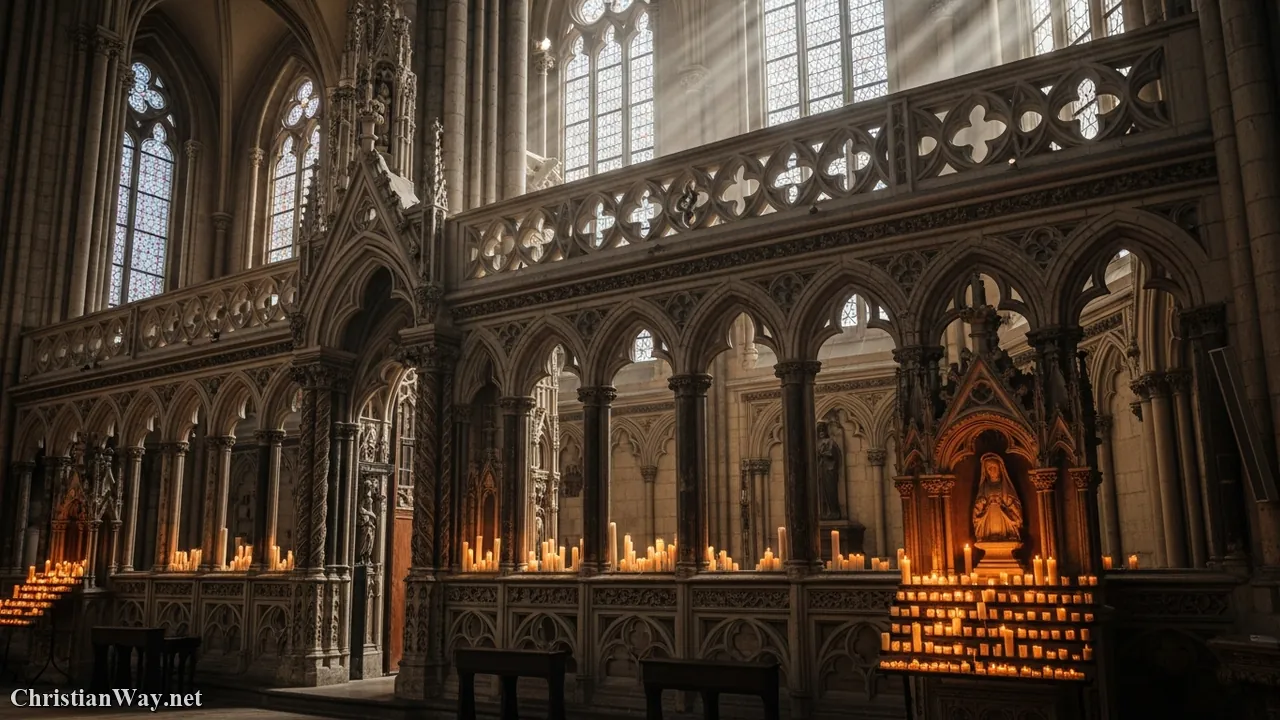
Theologically, this church serves as the guardian of the city’s origins. It houses the ornate brass reliquary of Saint Genevieve, whose prayers famously spared Paris from Attila the Hun in 451. When we stand before her shrine, we are reminded of the power of a single soul’s intercession. For the modern believer, Saint-Étienne challenges us to be “city-builders” in the spiritual sense, protecting our communities through persistent prayer and works of mercy.
Spiritual Highlights
- The tomb of Saint Genevieve, patron saint of Paris.
- “The prayer of a righteous person is powerful and effective.” (James 5:16)
- Final resting place of the great philosopher Blaise Pascal.
Top 9. Saint-Eustache: The Cathedral of the Markets
Located near the historic “Belly of Paris,” Saint-Eustache is often mistaken for a cathedral due to its immense proportions. It is a fascinating hybrid: it has the skeletal structure of a great Gothic cathedral but is dressed in the intricate “clothing” of the Renaissance. The sensory experience here is profound, often filled with the echoes of its world-renowned organ, one of the largest in France.
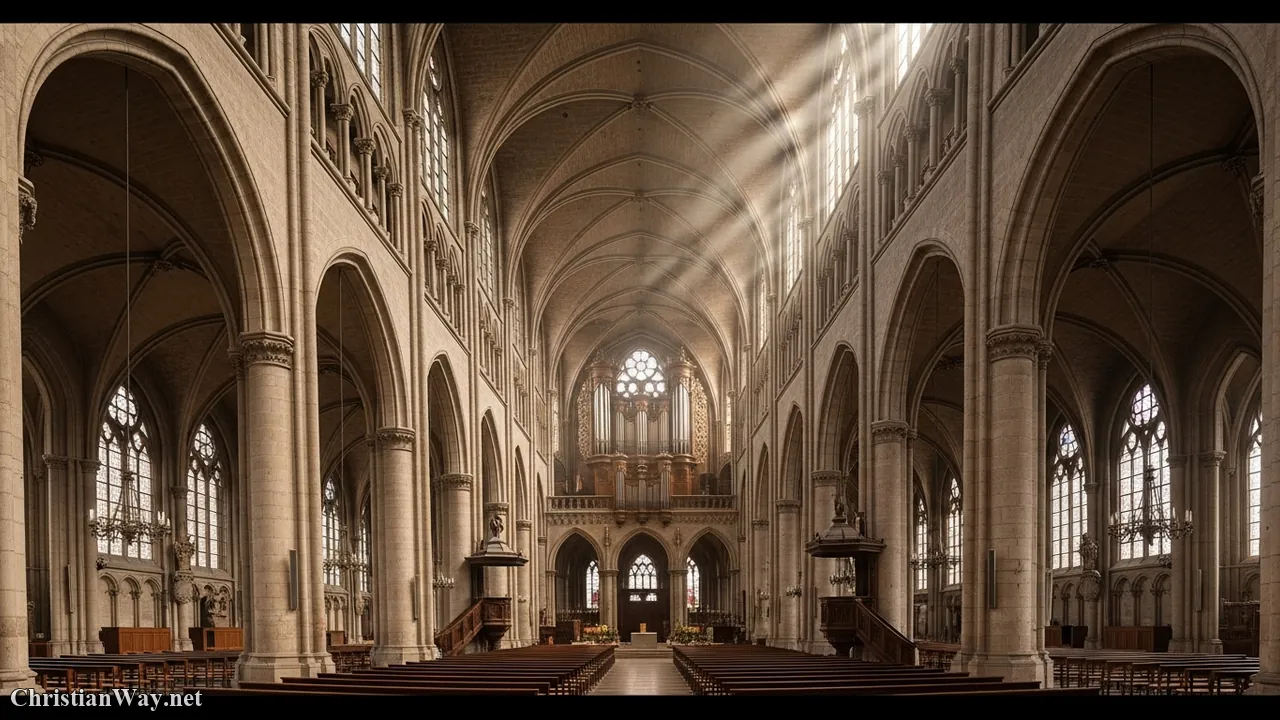
There is a beautiful humility in its history. Despite its size, it was the parish church for the common people of the Les Halles markets. It reminds us that Jesus was the son of a carpenter and spent His days among the merchants and the workers. This church invites us to sanctify our daily labor, teaching us that the grandest architecture is meant to house the simplest of hearts seeking God in the midst of a busy world.
Spiritual Highlights
- Houses the masterpiece “The Disciples at Emmaus” by Rubens.
- “Whatever you do, work at it with all your heart, as working for the Lord.” (Colossians 3:23)
- A historic center for sacred music and choral excellence.
Top 8. Église de la Madeleine: A Temple of Repentance
Standing before the 52 Corinthian columns of La Madeleine, one might think they have stumbled upon a temple of ancient Greece. Originally envisioned by Napoleon as a temple to the glory of his Great Army, it was eventually dedicated to Saint Mary Magdalene. The interior is a vast, windowless space illuminated by three great domes, creating a sense of profound interiority and focused prayer.
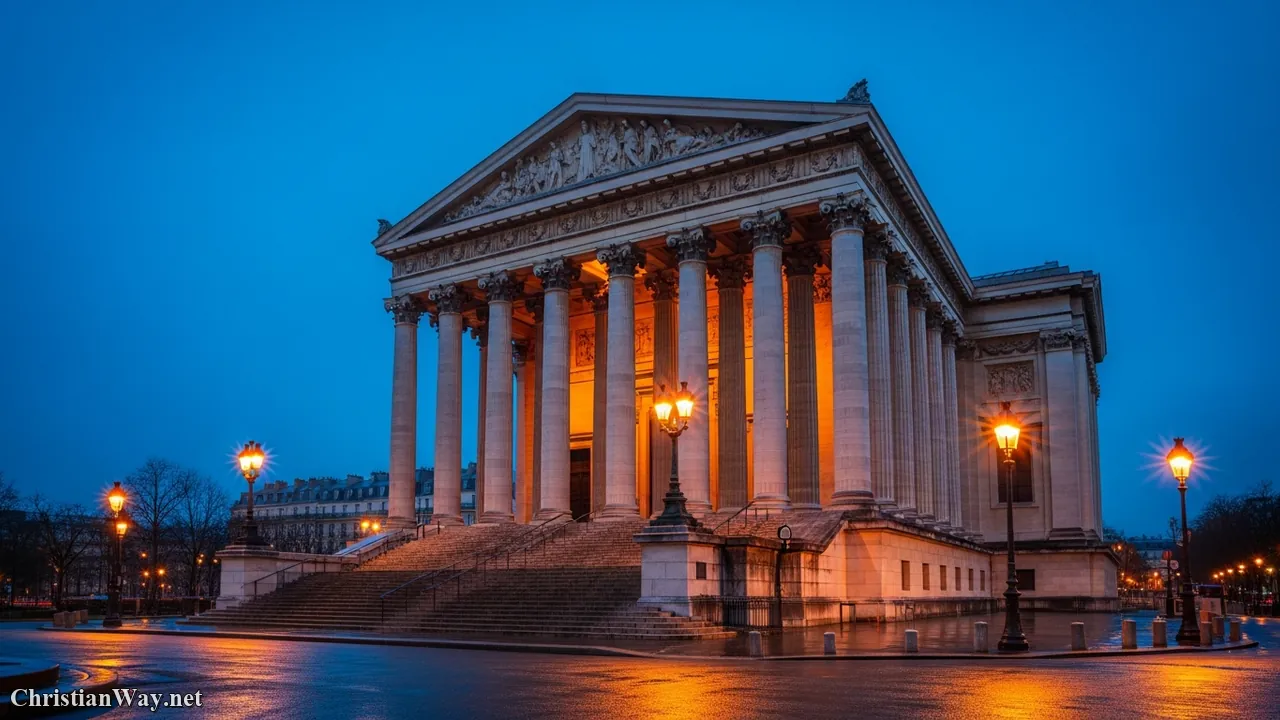
The choice of Mary Magdalene as its patroness is deeply significant. She is the witness to the Resurrection and the “Apostle to the Apostles.” The church stands as a monument to the possibility of transformation. Just as the building itself was repurposed from a secular monument to a house of God, so too are our lives invited to be reclaimed by grace. It offers comfort to the penitent, reminding us that no past is too complicated for the healing touch of Christ.
Spiritual Highlights
- The striking sculpture of Mary Magdalene being carried to heaven by angels.
- “Her many sins have been forgiven—as her great love has shown.” (Luke 7:47)
- The site of Frederic Chopin’s funeral in 1849.
Top 7. Saint-Sulpice: The Grandeur of God
As we journey to the Left Bank, we find Saint-Sulpice, the second-largest church in the city. Its mismatched towers and expansive facade give it a character of resilience. Inside, the light is soft, highlighting the magnificent murals by Eugène Delacroix in the Chapel of the Holy Angels. The church also contains a “gnomon,” an astronomical meridian used to determine the date of Easter.
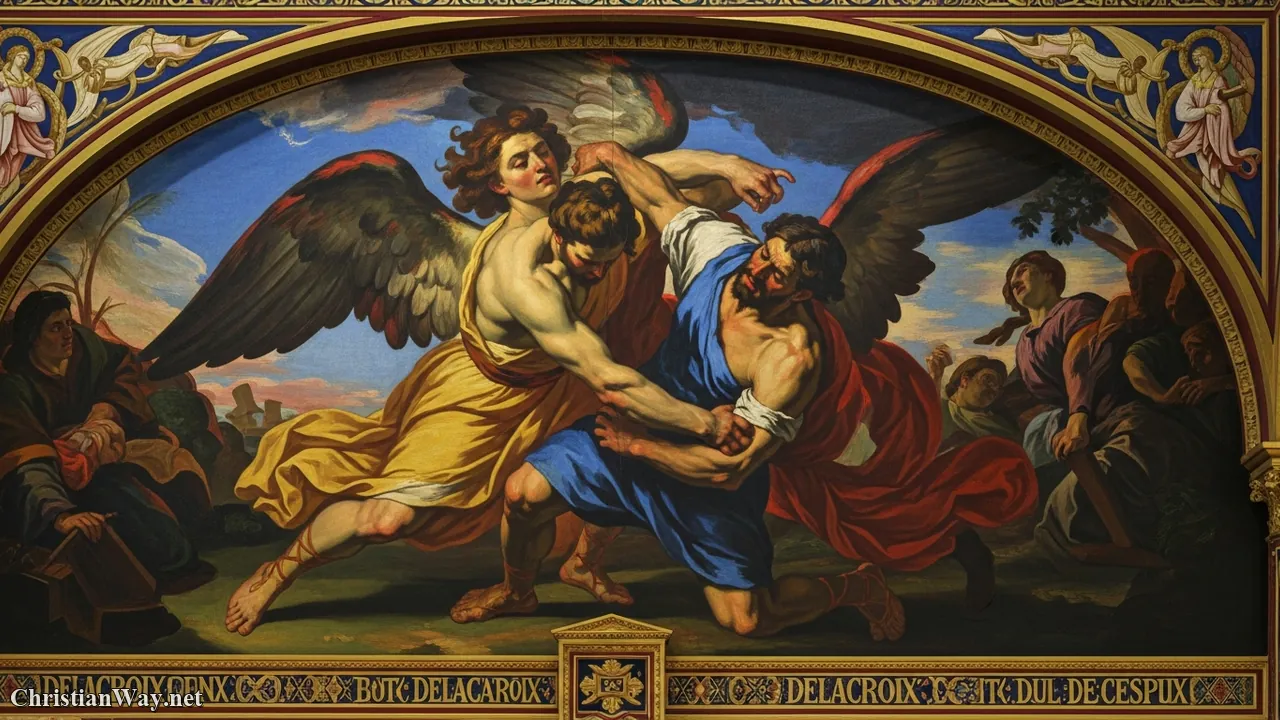
Theologically, Saint-Sulpice is a school of prayer. It was here that many of the great French school of spirituality’s giants were formed. It speaks to the “Grandeur of God,” an invitation to expand our small hearts to accommodate the vastness of Divine Mystery. When you walk its long nave, let the scale of the building remind you that God is always greater than our problems, our fears, and even our wildest dreams.
Spiritual Highlights
- The Delacroix frescoes depicting Jacob wrestling with the Angel.
- “I will not let you go unless you bless me.” (Genesis 32:26)
- The world-famous Cavaillé-Coll organ.
Top 6. Saint-Germain-des-Prés: The Roots of the Faith
In the heart of the bustling 6th arrondissement stands the oldest church in Paris. Christian Way pilgrims often find a special peace here, as the Romanesque arches and the vibrant 19th-century frescoes by Hippolyte Flandrin create a bridge to the early medieval era. Founded in 543 A.D. as a royal abbey, it has survived Viking raids and revolutionary fires.

This church is the “root” of the Parisian faith. It teaches us about endurance and the “living stones” of the Church. While empires have fallen around it, the Liturgy has continued here for nearly 1,500 years. It is a pastoral refuge for those feeling overwhelmed by the fast pace of modern life, offering the “peace that passes understanding” that comes only from being rooted in a tradition that is timeless.
Spiritual Highlights
- The colorful, restored Romanesque interior.
- “Jesus Christ is the same yesterday and today and forever.” (Hebrews 13:8)
- The tomb of philosopher René Descartes.
Top 5. Basilica of Saint-Denis: The Dawn of Light
Though technically just outside the city limits, no spiritual guide to Paris is complete without Saint-Denis. This is the place where Gothic architecture was born under Abbot Suger. He believed that “God is light,” and therefore, the architecture should be filled with windows to invite the Divine presence in. It is also the necropolis of the Kings and Queens of France.

Saint-Denis represents the transition from the dark, heavy walls of the Romanesque to the soaring, light-filled spaces of the Gothic. This is a profound theological metaphor for the Christian life: we are called to move from the darkness of sin into the “marvelous light” of Christ. As you look at the tomb effigies of monarchs, you are reminded of the equality of all souls before the throne of God. Even kings are but pilgrims.
Spiritual Highlights
- The first rose window ever created in a church.
- “The light shines in the darkness, and the darkness has not overcome it.” (John 1:5)
- The burial site of Saint Denis, the first Bishop of Paris.
Top 4. Chapel of Our Lady of the Miraculous Medal: The Mother’s Invitation
Turning our hearts toward the Rue du Bac, we enter one of the most visited pilgrimage sites in the world. This intimate chapel is where the Blessed Virgin Mary appeared to Saint Catherine Labouré in 1830, requesting the striking of the “Miraculous Medal.” Unlike the grand cathedrals, the atmosphere here is deeply personal, quiet, and maternal.

This is a place of profound Marian devotion. The theology of the Miraculous Medal is a summary of the Gospel: Mary’s hands are open, pouring out graces, while her feet crush the serpent, signifying Christ’s victory over evil. It is a sanctuary for those seeking a tangible sign of God’s care. To visit here is to be reminded that the Queen of Heaven is also our Mother, interested in the smallest details of our lives.
Spiritual Highlights
- The incorrupt body of Saint Catherine Labouré.
- “O Mary, conceived without sin, pray for us who have recourse to thee.”
- The shrine containing the heart of Saint Vincent de Paul nearby.
Top 3. Sainte-Chapelle: The Jewel Box of the King
Entering the upper chapel of Sainte-Chapelle is like stepping inside a prism. Built by King Saint Louis IX to house the Crown of Thorns, the walls are made almost entirely of 15,356 square feet of 13th-century stained glass. The light transforms the stone into a kaleidoscope of biblical history, depicting the story of the world from Genesis to the Passion of Christ.
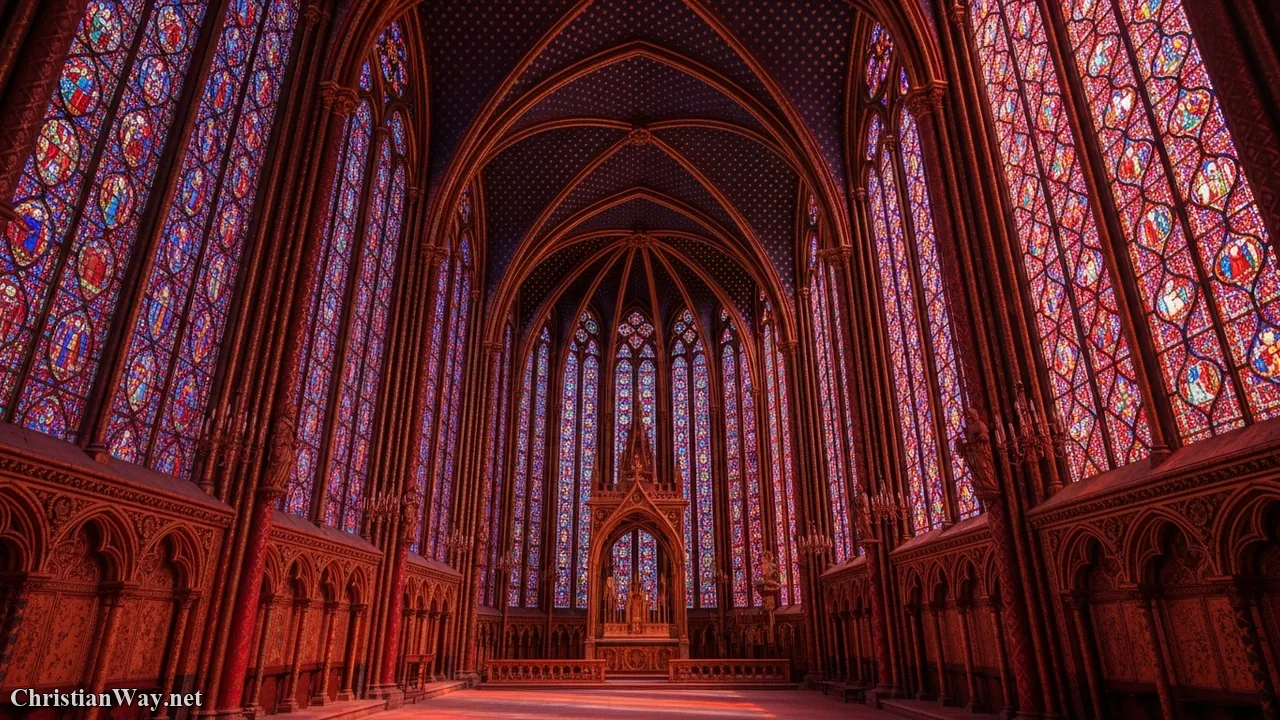
Theologically, this space represents the New Jerusalem. It was designed to be a “relic for a relic”—a house so beautiful it was worthy of the instruments of Christ’s suffering. It reminds us that our trials and “thorns” can be transformed into something radiant when offered to God. While it is no longer an active parish, it remains a sermon in glass, preaching the glory of the King of Kings to every visitor.
Spiritual Highlights
- 15 magnificent windows depicting over 1,100 biblical scenes.
- “They put a crown of thorns on his head.” (Matthew 27:29)
- A masterpiece of the Rayonnant Gothic style.
Top 2. Sacré-Cœur Basilica: The Heart of Mercy
Perched atop the hill of Montmartre, the white domes of Sacré-Cœur look down upon Paris like a shepherd watching his flock. Built as a monument of national penance and hope after a period of war and turmoil, the Basilica has maintained “perpetual adoration” of the Blessed Sacrament since 1885. Day and night, for over a century, someone has been praying before the Eucharist here.

The theology of the Sacred Heart is the theology of God’s relentless love. The great mosaic of “Christ in Glory” in the dome shows Jesus with His heart visible and His arms wide open. It is a challenge to the city below to remember that mercy is always available. For the pilgrim, the climb up the hill is a physical act of seeking the higher things, finding at the summit a Heart that never stops beating for us.
Spiritual Highlights
- The massive mosaic of Christ in Majesty, one of the largest in the world.
- “Come to me, all you who are weary and burdened, and I will give you rest.” (Matthew 11:28)
- Panoramic views of Paris that inspire a “God’s-eye” perspective of the world.
Top 1. Notre-Dame de Paris: The Heart of the Mother
Finally, our journey brings us to the “Island of the City,” to the mother church of Paris. Notre-Dame is more than a masterpiece of French Gothic; it is a symbol of the Church itself—wounded, yet standing; burned, yet rising. Since the laying of its first stone in 1163, it has been the setting for the nation’s greatest joys and deepest sorrows. Following the fire of 2019, its recent reopening is a testament to the “Resurrection” that is at the core of our faith.
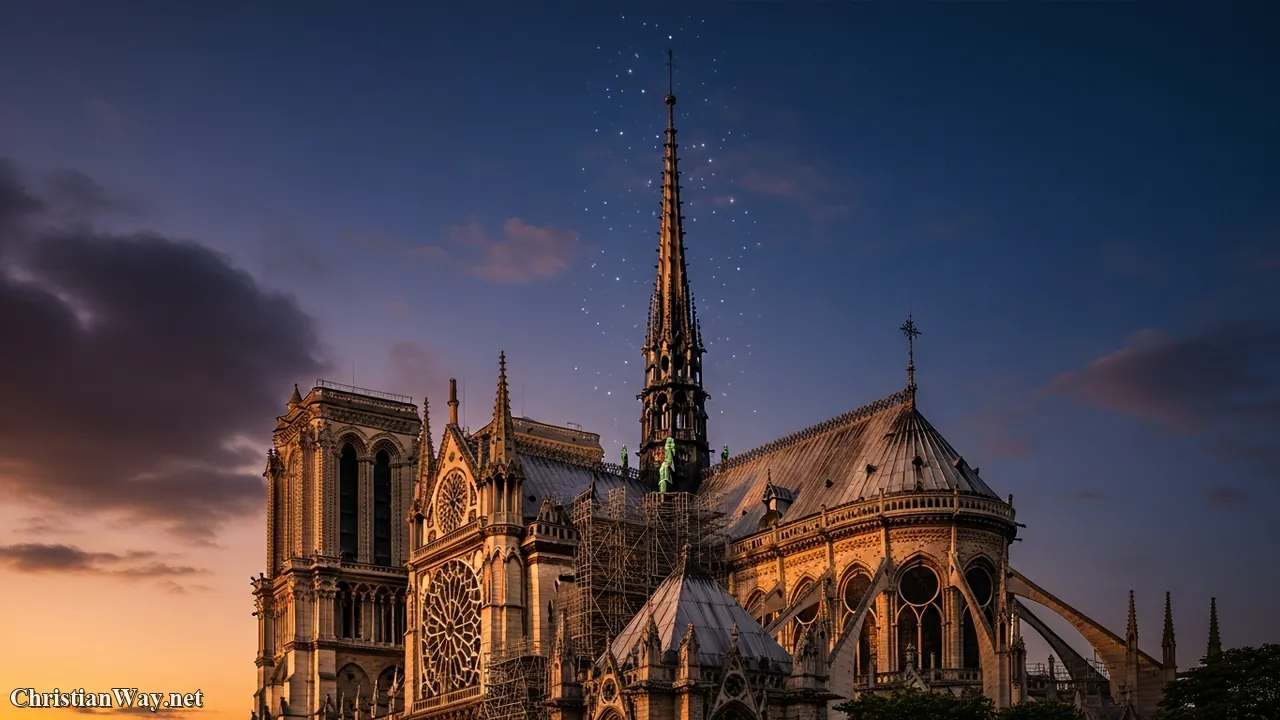
Notre-Dame is dedicated to the Virgin Mary, and like her, the building is a “vessel” for the Divine. Its flying buttresses and rose windows create a harmony that suggests the order and beauty of God’s creation. As the cathedral of the Archdiocese of Paris, it is the center of liturgical life. When we stand in its shadows, we are reminded that though the structures of this world may falter, the Church, built on the rock of Christ and sheltered by the mantle of Mary, will endure until the end of time.
Spiritual Highlights
- The historic home of the Crown of Thorns and the True Cross.
- “Upon this rock I will build my church, and the gates of hell shall not prevail against it.” (Matthew 16:18)
- The iconic Rose Windows, surviving through the centuries as symbols of divine light.
Reflect and Pray
As we conclude our journey through these ten sacred spaces, let us take a moment to carry their silence with us. Whether you are walking through Paris or visiting these sanctuaries in your heart, remember that you are a temple of the Holy Spirit. The beauty of these stones is meant to remind you of the beauty of your own soul, crafted by the Divine Architect. May the saints who walked these aisles—Genevieve, Denis, Catherine, and so many others—intercede for you. May you find, in the busy streets of your own life, a “Sacré-Cœur” where you can always rest in the love of Jesus.
— Fr. John Matthew, for Christian Way