Dear friends in Christ,
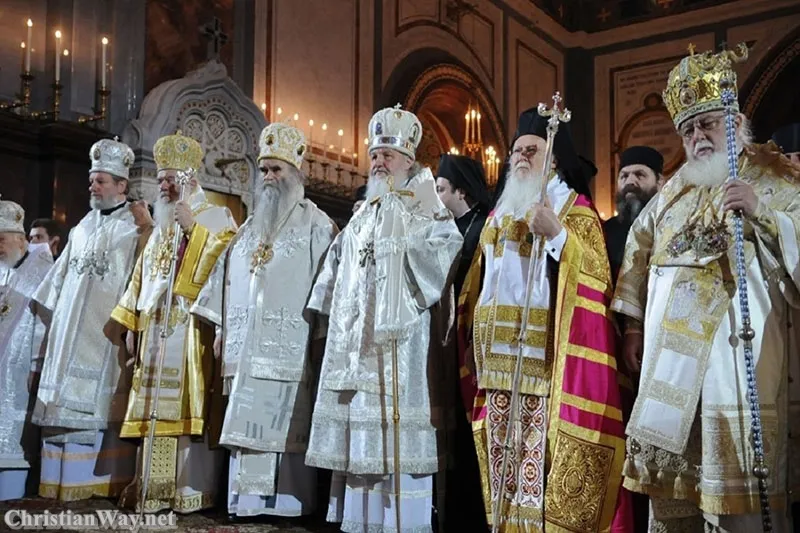
When people first encounter Eastern Orthodoxy, they are often struck by its beauty. They see glowing icons, hear ancient chants, smell incense rising in a church, and witness worship that seems to carry the memory of many centuries. Yet Eastern Orthodoxy is far more than a beautiful form of Christian worship or a tradition preserved from the past. It is a living communion of believers who seek to remain faithful to the apostolic faith, the Scriptures, the worship of the early Church, and the saving life of Jesus Christ.
For Orthodox Christians, faith is not merely a collection of ideas to be understood from a distance. It is a life to be received, prayed, sung, confessed, and lived. It is the life of Christ shared with His people through Scripture, prayer, the sacraments, the communion of saints, acts of mercy, and the daily struggle to become more fully alive in God. The Church is not simply an institution created by human beings. She is the Body of Christ, gathered by the Holy Spirit, called to carry the light of the Gospel into a wounded world.
The origins of Eastern Orthodoxy are therefore not found in a single moment when someone decided to begin a new church. Orthodox Christians understand themselves as belonging to the one, holy, catholic, and apostolic Church confessed in the ancient creeds. Their history reaches back to the apostles, the first Christian communities, the martyrs, the early bishops, the ecumenical councils, and the generations of believers who sought to preserve the faith received from Christ.
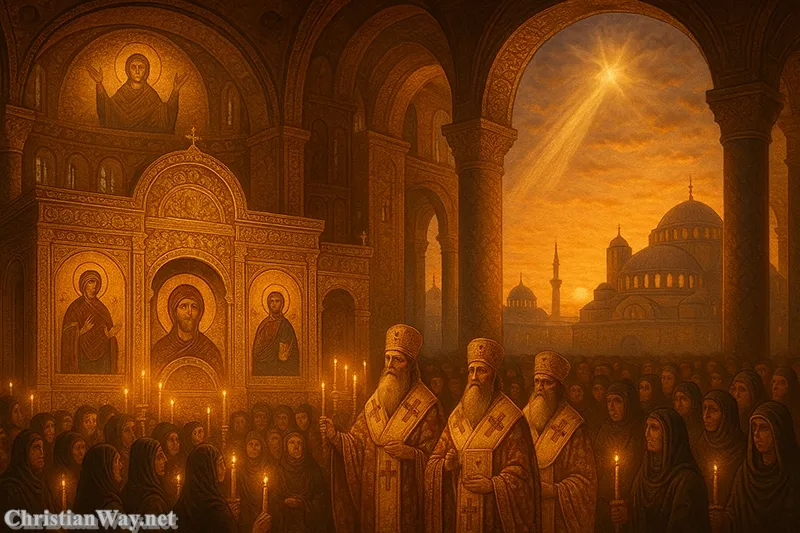
Yet the history of Eastern Orthodoxy is also shaped by a sorrowful division. Over many centuries, the churches of the Christian East and West gradually grew apart. Differences in language, culture, political circumstances, church governance, theological expression, and worship created increasing tension. These tensions became especially visible in the Great Schism of 1054, when mutual excommunications were issued between representatives of Rome and Constantinople.
Still, the Great Schism should not be understood as a simple moment when all Christians suddenly became divided overnight. The separation had been growing for a long time, and the wounds deepened through later events, especially the violence and mistrust surrounding the Fourth Crusade in 1204. The division between Eastern Orthodox and Roman Catholic Christians remains one of the deepest wounds in Christian history.
To reflect on Eastern Orthodoxy is therefore to enter both beauty and sorrow: the beauty of ancient faith, sacred worship, and profound spiritual wisdom; and the sorrow of Christian division, misunderstanding, and the long journey toward healing. Yet beneath both lies the same hope. Jesus Christ remains Lord. He still calls His people to repentance, truth, humility, and love. He still prays that His followers “may all be one” (John 17:21).
Eastern Orthodoxy and the Faith of the Early Church
Eastern Orthodoxy does not see itself as a religion that began in the Middle Ages. It sees itself as a continuation of the faith handed down by the apostles and guarded by the Church through the centuries.
The word Orthodox comes from Greek words often understood to mean “right glory” or “right worship.” It points toward the desire to glorify God faithfully and to preserve the true faith received from the apostles. Orthodox Christians do not use this name to claim that they are personally better than other believers. Rather, they use it to express their commitment to remain faithful to what they believe the Church has received from Christ.
The Apostolic Foundation
The Orthodox Church looks back to the apostles as the first witnesses of Christ’s life, death, resurrection, and ascension. Jesus called fishermen, tax collectors, seekers, and ordinary people to remain with Him before sending them into the world. They heard His teaching, witnessed His mercy, stood in fear beneath the shadow of the cross, encountered Him risen from the dead, and received the Holy Spirit at Pentecost.
The Book of Acts describes the early Christians as continuing “steadfastly in the apostles’ doctrine and fellowship, and in breaking of bread, and in prayers” (Acts 2:42). This verse is especially important because it shows the Church already living as a community shaped by teaching, worship, fellowship, and prayer.
Orthodox Christians believe that this apostolic life did not disappear after the first generation of believers. It continued through the bishops, priests, deacons, monks, missionaries, saints, and faithful people who carried the Gospel from one generation to another.
This continuity is often called apostolic succession. Bishops are understood as successors of the apostles, not because they replace the apostles or create new revelation, but because they are entrusted with guarding the faith, celebrating the sacraments, teaching the Gospel, and shepherding the people of God.
The apostolic faith is not simply preserved in books or documents. It is also preserved in worship, prayer, the reading of Scripture, the sacraments, the lives of saints, and the shared memory of the Church.
One Church Before the Division
For the first thousand years of Christianity, the churches of East and West were united in faith, though they were never identical in culture or practice. Christians in Rome, Constantinople, Alexandria, Antioch, Jerusalem, and many other places shared the central faith of the Gospel while expressing it in different languages and customs.
The Christian West was shaped largely by Latin language, Roman law, and the legacy of the old Roman Empire. The Christian East was shaped largely by Greek language, Byzantine culture, and the spiritual traditions of the ancient eastern cities.
These differences did not immediately create separation. The Church has always included many peoples, languages, and cultures. The Gospel was preached in Greek, Latin, Syriac, Coptic, Armenian, Georgian, Arabic, Slavonic, and many other languages. The unity of the Church was never meant to erase the diversity of the people who belonged to Christ.
But unity requires patience, humility, and a willingness to listen. Over time, differences that might have remained gifts became sources of misunderstanding. What one part of the Church understood as a faithful development, another sometimes saw as a departure from the ancient tradition. What one region considered normal church practice, another considered harmful or unnecessary.
The path toward division was slow, human, painful, and complicated.
The Ancient Patriarchates and the Christian East
In the early centuries of Christianity, several major centers of church life emerged. These were often called patriarchates: Rome, Constantinople, Alexandria, Antioch, and Jerusalem. Each city had deep historical and spiritual importance.
Rome was associated especially with the apostles Peter and Paul. Constantinople became influential because it was the capital of the Eastern Roman Empire. Alexandria was known for theological learning and biblical interpretation. Antioch was one of the earliest centers of Christian mission, where believers were first called Christians. Jerusalem was honored as the city of Christ’s death, resurrection, and the birth of the Church at Pentecost.
A Communion of Local Churches
The early Church was not organized as one centralized institution in the modern sense. It was a communion of local churches, each gathered around its bishop, celebrating the Eucharist, teaching the faith, and remaining connected with other churches.
Orthodox Christians often describe this structure as conciliar. This means that important decisions were made through councils, prayer, discussion, and shared discernment among bishops. The Church was called to remain united not merely through one person’s authority, but through the common confession of the apostolic faith.
The Bishop of Rome held a place of honor among the early patriarchs. Orthodox Christians generally recognize that Rome had a primacy of honor in the ancient Church. Yet they do not accept the later Roman Catholic understanding that the Pope possesses universal jurisdiction over every church and bishop throughout the world.
This question of primacy and authority would become one of the central issues in the growing separation between East and West.
The Orthodox vision of Church leadership emphasizes shared responsibility, local bishops, councils, and the unity of the Church through a common faith. The Roman Catholic vision gives the Bishop of Rome a more universal pastoral authority. These are not small differences. They touch the way Christians understand the Church itself.
Yet both traditions seek to honor the apostles, protect unity, and remain faithful to Christ. Their disagreement is not rooted simply in personal rivalry. It concerns deeply held beliefs about authority, tradition, and the visible life of the Church.
The Seven Ecumenical Councils
Eastern Orthodoxy places great importance on the first seven ecumenical councils of the Church. These councils gathered bishops and church leaders to defend the faith against teachings that were believed to distort the truth about Christ, the Trinity, salvation, and the life of the Church.
For Orthodox Christians, these councils are not merely historical meetings. They are moments in which the Church, guided by the Holy Spirit, clarified the faith received from the apostles.
Defending the Mystery of Christ
The first council, held at Nicaea in 325, defended the full divinity of Jesus Christ. It proclaimed that the Son is truly God, “of one substance with the Father.” This truth matters because salvation depends upon who Christ truly is. If Jesus were only a created being, He could not reveal God fully or unite humanity to God.
The Council of Constantinople in 381 further clarified the Church’s teaching about the Holy Spirit and helped shape the Nicene Creed that Christians still confess today.
The councils of Ephesus and Chalcedon defended the truth that Jesus Christ is fully God and fully human. He is not half God and half man. He is not a human person merely joined to divine power. He is one divine Person, the eternal Son of God, who truly took human flesh from the Virgin Mary.
This teaching is precious because it reveals the depth of God’s love. God did not save humanity from a distance. In Christ, He entered human life. He knew hunger, fatigue, sorrow, friendship, betrayal, suffering, and death. He became what we are so that we might share in the life of God.
The later councils addressed questions about Christ’s will, the use of icons, and the Church’s confession of faith. The Seventh Ecumenical Council, held at Nicaea in 787, defended the proper veneration of icons. It taught that icons are not idols. Christians do not worship wood, paint, or stone. Worship belongs to God alone. Icons are honored because they point beyond themselves to Christ, His mother, and the saints.
The councils remind us that doctrine is not merely an argument for scholars. What we believe about Christ shapes how we pray, how we worship, how we understand salvation, and how we see the dignity of the human person.
The Great Schism: A Division That Grew Over Centuries
The Great Schism of 1054 is often presented as the exact moment when Eastern Orthodoxy and Roman Catholicism separated. The date is important, but the truth is more complex.
The churches of East and West had been growing apart for centuries. Language differences, political tensions, cultural misunderstandings, disputes about authority, and theological disagreements all contributed to the division.
Language, Culture, and Political Distance
The Christian East spoke mainly Greek, while the Christian West increasingly spoke Latin. Over time, many Western Christians could no longer read Greek easily, and many Eastern Christians could no longer read Latin. This made theological conversation more difficult.
Words that carried one meaning in Greek could sound different in Latin. Practices that made sense in one culture could feel strange in another. The more distance grew, the easier it became for Christians to misunderstand the intentions of their brothers and sisters.
Political circumstances also mattered. The fall of the Western Roman Empire created a very different world in the West, where the Bishop of Rome often became an important source of stability. In the East, the Byzantine Empire continued, and the Church lived in a different relationship with imperial authority.
These differences were not merely political details. They shaped the ways Christians understood leadership, unity, law, worship, and church life.
The Filioque Controversy
One major theological disagreement involved a phrase added in parts of the Western Church to the Nicene Creed. The phrase filioque means “and the Son.” It was added to describe the Holy Spirit as proceeding from the Father “and the Son.”
Orthodox Christians objected for two reasons. First, they believed the Creed should not be changed without the agreement of an ecumenical council. Second, they believed the phrase could confuse the traditional teaching that the Father is the single source within the Holy Trinity.
Roman Catholics understand the phrase in a way that seeks to preserve the unity of the Father and the Son in the Spirit’s eternal life. Orthodox Christians generally prefer the original wording of the Creed, which says that the Holy Spirit proceeds from the Father.
This disagreement may sound distant from daily life, but it concerns the mystery of God Himself. Christians must approach it with humility. The Holy Trinity is not a problem to solve. It is the eternal life of God into which we are invited through Christ.
The Question of Papal Authority
The deepest disagreement between East and West involved the role of the Bishop of Rome.
Orthodox Christians honor Rome’s ancient place in the Church and recognize the importance of Peter and Paul. Yet they reject the idea that one bishop should exercise direct universal authority over all churches.
They believe the Church is most faithfully governed through the shared responsibility of bishops gathered in councils, with each local church retaining its proper life and authority.
Roman Catholics, by contrast, believe that the Pope has a unique universal pastoral ministry as the successor of Peter. They see this ministry as a service of unity for the entire Church.
This difference remains one of the major obstacles to full communion between the Orthodox and Catholic Churches. It is not simply about power. It concerns the very shape of Christian unity.
The Events of 1054
In 1054, tensions between Rome and Constantinople reached a dramatic point. Representatives of Pope Leo IX traveled to Constantinople and placed a document of excommunication on the altar of Hagia Sophia. The Patriarch of Constantinople and his supporters responded with their own excommunication.
These actions were serious, but they did not immediately create a complete and permanent break everywhere. Many Christians at the time may not have understood the full significance of what had happened. Communication was slow, political conditions changed, and local relationships varied.
Still, the wounds continued to deepen.
The division became even more painful in 1204, when Crusaders from Western Europe attacked and looted Constantinople during the Fourth Crusade. Churches were violated, relics were taken, and Christians harmed other Christians in ways that left deep scars in the Orthodox memory.
The Great Schism was not caused by one event alone. It was the result of centuries of separation, misunderstanding, pride, political struggle, and human failure. It remains a reminder that Christian division always brings sorrow.
What Eastern Orthodox Christians Believe
Eastern Orthodoxy shares the central Christian faith confessed by Catholics, Protestants, Anglicans, and many other Christians: belief in the Holy Trinity, the divinity and humanity of Jesus Christ, His death and resurrection, the work of the Holy Spirit, the authority of Scripture, the reality of sin, the need for grace, and the hope of eternal life.
Yet Orthodoxy expresses these truths through its own spiritual language, worship, and theological emphasis.
The Holy Trinity
At the heart of Orthodox faith is the Holy Trinity: Father, Son, and Holy Spirit. God is one in essence and three in Persons.
The Father is not older than the Son. The Son is not less divine than the Father. The Holy Spirit is not merely an impersonal power. All three Persons are eternally God, united in love and glory.
This is not a doctrine meant only for theological study. The Trinity reveals that God is not lonely. God is eternal communion, love, and self-giving life. Christians are created not for isolation, but for communion with God and with one another.
Jesus Christ: Fully God and Fully Human
Orthodox Christians confess that Jesus Christ is the eternal Son of God who became truly human for our salvation. He was born of the Virgin Mary, lived among us, taught, healed, suffered, died upon the cross, rose from the dead, ascended into heaven, and will come again in glory.
Christ is not merely a teacher or prophet. He is the Savior of the world.
The Orthodox tradition speaks often of the Incarnation: the mystery that God became flesh. This is not only about forgiveness from sin. It is also about healing the whole human person. Christ entered human life to restore it, renew it, and bring it into communion with God.
Salvation as Theosis
One of the most distinctive teachings of Eastern Orthodoxy is often called theosis, sometimes translated as “deification” or “participation in the divine life.”
This does not mean that human beings become God by nature. Only God is God. Rather, it means that through grace, believers are called to share in God’s life, holiness, love, and light.
Saint Peter writes that Christians become “partakers of the divine nature” (2 Peter 1:4). Orthodox Christians understand salvation as more than receiving legal forgiveness. It is healing, transformation, and union with God.
Sin wounds the human person. It darkens the mind, weakens the will, distorts desire, and separates us from the life for which we were made. Christ comes not only to pardon us, but to restore us.
Theosis begins now through prayer, repentance, worship, love, and the work of the Holy Spirit. It will be fulfilled completely in the Kingdom of God, when all things are made new.
Scripture and Holy Tradition
Orthodox Christians deeply honor Holy Scripture. The Bible is read in worship, sung in prayers, proclaimed in the Divine Liturgy, and received as the Word of God.
Yet Orthodoxy does not see Scripture as separated from the life of the Church. The Bible was received, preserved, proclaimed, and interpreted within the Christian community. Therefore, Scripture and Holy Tradition belong together.
Tradition as the Life of the Church
In Orthodox Christianity, Holy Tradition does not mean merely old customs that must never be questioned. It means the living faith of the Church passed down from the apostles through Scripture, worship, councils, saints, hymns, prayers, icons, and the shared life of believers.
Tradition is not meant to compete with the Bible. It is meant to help the Church receive the Bible faithfully.
A person may read Scripture alone and receive real comfort from God. Yet Scripture is also meant to be read with the Church, among the people who have prayed these words, preached them, suffered for them, and lived by them across centuries.
The Orthodox Church often speaks of Scripture as the heart of Tradition, while Tradition is the life in which Scripture is heard and lived.
This approach can remind every Christian that faith is not invented privately. We receive it. We are taught by those who came before us. We learn from saints, parents, pastors, teachers, and communities of prayer. We become part of a story much greater than ourselves.
Worship, Sacraments, and the Divine Liturgy
One of the most visible aspects of Eastern Orthodoxy is its worship. Orthodox worship is deeply liturgical, meaning that it follows a sacred pattern of prayers, Scripture readings, hymns, incense, movement, silence, and sacramental life.
The central act of Orthodox worship is the Divine Liturgy, especially the liturgy associated with Saint John Chrysostom.
Heaven and Earth Meet in Prayer
For Orthodox Christians, worship is not simply a gathering where people listen to a sermon or express personal feelings about God. It is participation in the worship of heaven.
The Book of Revelation describes angels, elders, saints, and living creatures praising God before His throne. Orthodox worship seeks to join that eternal praise. The church building, the icons, the incense, the chanting, and the sacred gestures are intended to help believers recognize that worship is not ordinary time. It is an encounter with the living God.
The Divine Liturgy includes Scripture, prayer, confession of faith, intercession, thanksgiving, and the celebration of the Eucharist. Orthodox Christians believe that in Holy Communion, Christ truly gives Himself to His people. The bread and wine become a holy mystery through the work of the Holy Spirit.
Orthodox Christians often call the sacraments Holy Mysteries. This language reminds believers that God’s grace cannot be reduced to a simple formula. Baptism, chrismation, the Eucharist, confession, marriage, ordination, and the anointing of the sick are all received as sacred encounters with the healing grace of God.
The Eucharist and the Life of the Church
The Eucharist stands at the center of Orthodox life because it gathers believers into communion with Christ and with one another. In receiving the Body and Blood of Christ, believers are nourished by the One who gave Himself for the life of the world.
The Eucharist is not merely a private moment between an individual and God. It is the gathering of the Church as one body. It teaches believers that they cannot belong to Christ while refusing to love His people.
This is why Orthodox worship often feels communal rather than individualistic. The prayers are often spoken in the plural: “Let us pray,” “We believe,” “Lord, have mercy.” The believer stands before God personally, but never alone.
Icons and the Communion of Saints
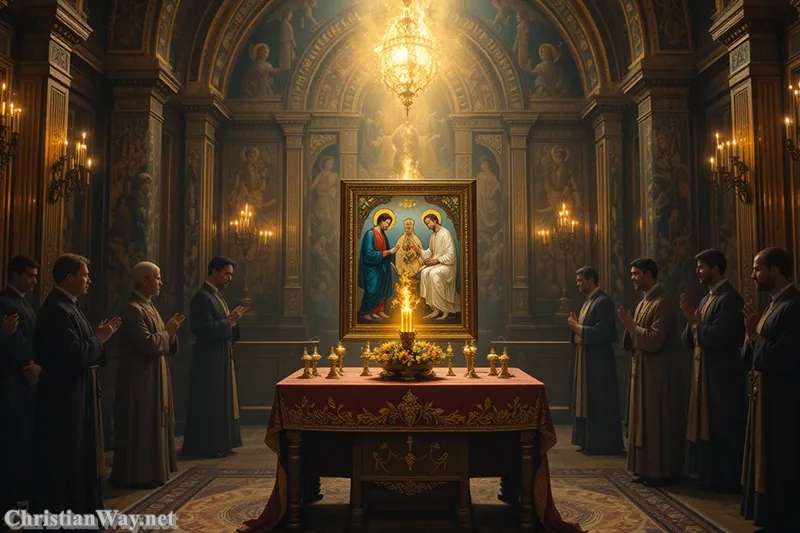
Icons are among the most recognizable features of Eastern Orthodox churches. They may depict Christ, the Virgin Mary, angels, apostles, martyrs, prophets, and saints.
To someone unfamiliar with Orthodoxy, icons may seem unusual or confusing. But their purpose is deeply connected to the Incarnation.
Windows Into the Kingdom
Orthodox Christians do not worship icons. Worship belongs to God alone. Icons are honored because they point toward the persons depicted and remind believers that Christ truly entered the visible world.
Because the Son of God became flesh, Christians may depict Him in sacred art. An icon of Christ proclaims that God truly became human. He could be seen, touched, heard, and known.
Icons also remind believers that the Church is larger than the people standing in one building. The saints are not forgotten figures from the past. They are alive in Christ. They are part of the communion of saints, the great family of God that includes believers on earth and those who have entered eternal life.
The Orthodox Church honors Mary as the Theotokos, meaning “God-bearer” or “Mother of God.” This title does not mean that Mary existed before God or created the divine nature. It means that the child she bore was truly Jesus Christ, the eternal Son of God made flesh.
Mary is honored because she responded to God with faith: “Behold the handmaid of the Lord; be it unto me according to thy word” (Luke 1:38). She is seen as a model of humility, obedience, courage, and faithful love.
Prayer, Fasting, and the Healing of the Heart
Eastern Orthodoxy places great emphasis on prayer as the healing of the heart. Faith is not merely accepting correct beliefs. It is learning to turn the whole person toward God.
The Orthodox spiritual tradition speaks often about the purification of the heart, the struggle against passions, and the slow transformation of human desire.
The Jesus Prayer
One of the best-known Orthodox prayers is the Jesus Prayer:
“Lord Jesus Christ, Son of God, have mercy on me, a sinner.”
This simple prayer is repeated quietly by many believers. It gathers the whole Gospel into a few words: the confession that Jesus is Lord, the recognition of our need for mercy, and the desire to remain close to Christ.
The Jesus Prayer is not a magical formula. It is a prayer of humility. It helps the heart return to God in moments of fear, distraction, weakness, gratitude, or sorrow.
A person may pray it while walking, working, resting, caring for a child, sitting in a hospital room, or lying awake in the night. It reminds us that prayer does not belong only to church buildings. The name of Jesus can become the quiet rhythm of the heart.
Fasting as Freedom
Orthodox Christians also practice periods of fasting throughout the year, especially during Great Lent before Pascha, the Orthodox celebration of Easter.
Fasting is not meant to prove spiritual strength or earn God’s love. It is meant to teach freedom. Human beings can become controlled by appetite, comfort, anger, money, distraction, and the desire for approval. Fasting helps believers remember that they are not slaves to their desires.
But fasting without love is empty. The prophets warned against religious practices that ignore the suffering of others. Isaiah asks whether the true fast is not to loosen the bonds of injustice, share bread with the hungry, and care for those in need.
Orthodox fasting therefore includes prayer, repentance, generosity, forgiveness, and care for the poor. The goal is not to become proud of sacrifice. The goal is to become more open to God and more compassionate toward others.
Eastern Orthodox Christianity and Other Eastern Traditions
It is helpful to distinguish Eastern Orthodoxy from other ancient Christian communities that are sometimes confused with it.
The Oriental Orthodox Churches, including the Coptic Orthodox Church, Armenian Apostolic Church, Syriac Orthodox Church, Ethiopian Orthodox Tewahedo Church, and others, are ancient Christian communities with their own rich traditions. They separated from the Byzantine and Roman churches after debates surrounding the Council of Chalcedon in 451.
Although Eastern Orthodox and Oriental Orthodox Christians are not fully united, modern conversations have shown that some historical disagreements involved differences of language and theological expression as well as deeper misunderstandings.
There are also Eastern Catholic Churches, which preserve eastern liturgical traditions while remaining in communion with the Pope of Rome.
These distinctions may seem complicated, but they remind us that Christianity has always been wider, more diverse, and more geographically rich than many people realize. The faith of Christ has taken root in Greece, Egypt, Ethiopia, Armenia, Syria, Palestine, Russia, Romania, Serbia, Georgia, Ukraine, the Middle East, Africa, Europe, Asia, and throughout the world.
The Wound of Division and the Hope of Unity
The division between Eastern Orthodox and Roman Catholic Christians remains painful because both traditions share so much. Both confess the Trinity, honor the ancient creeds, preserve apostolic succession, celebrate the Eucharist, honor Mary, venerate saints, and trace their roots to the early Church.
Yet full communion has not been restored.
Unity Without Erasing Truth
Christian unity cannot be built by pretending that differences do not matter. Questions about papal authority, the filioque, church governance, sacramental theology, and other matters remain serious.
But unity also cannot be built through hostility. The Great Schism reminds us what happens when pride, political fear, cultural suspicion, and failure to listen are allowed to grow.
Jesus did not pray that His followers would become identical in every cultural expression. He prayed that they would be one in love and truth. This unity is not shallow agreement. It is communion rooted in Christ.
In recent generations, Orthodox and Catholic leaders have taken steps toward greater respect, dialogue, and prayer. These efforts do not erase centuries of pain, but they are signs that the Holy Spirit continues to call Christians toward healing.
Every Christian can participate in this work of unity. We can speak respectfully about traditions different from our own. We can avoid repeating old accusations. We can learn history honestly. We can pray for those who worship Christ in different ways. We can remember that no Christian tradition belongs to us as a possession. We all belong to Christ.
What Eastern Orthodoxy Offers the Modern World
The world today is often rushed, distracted, noisy, and restless. Many people carry constant pressure to work harder, achieve more, appear successful, and remain connected to endless streams of information. In such a world, Eastern Orthodoxy offers a reminder that the human soul needs silence, prayer, beauty, repentance, and worship.
A Faith That Slows the Heart
Orthodox worship does not usually hurry. Its prayers repeat. Its hymns linger. Its feasts and fasts create a sacred rhythm across the year. Its icons invite stillness. Its liturgy asks believers to stand before God not as consumers seeking entertainment, but as worshipers receiving grace.
This can feel unfamiliar to people shaped by speed and efficiency. Yet it carries a needed wisdom. The soul cannot be healed in constant noise. We need moments when we stop performing, stop proving, stop arguing, and simply stand before God.
Orthodoxy also reminds Christians that the body matters. We pray with our voices, hands, posture, breath, fasting, singing, and movement. Faith is not something that happens only in the mind. God created the whole person, and Christ came to redeem the whole person.
Holiness in Ordinary Life
Orthodox spirituality is not reserved for monks, priests, or theologians. Every Christian is called to holiness. A parent serving a family, a worker practicing honesty, a young person resisting temptation, an elderly believer praying in weakness, a friend offering forgiveness, or a neighbor caring for someone in need can all become part of God’s healing work in the world.
The saints are not distant heroes meant to make ordinary people feel small. They are witnesses that grace can transform real human lives. They struggled, repented, prayed, suffered, served, and learned to love. Their lives tell us that holiness is not perfection achieved by human effort. It is the slow work of God in a willing heart.
Reflect and Pray
Dear friends, Origins of Eastern Orthodoxy: History, Beliefs, and the Great Schism is ultimately a story about the Church’s longing to remain faithful to Christ.
Eastern Orthodoxy carries a profound inheritance of apostolic faith, sacred worship, prayer, Scripture, the communion of saints, and the hope that human beings can be healed and drawn into the life of God. Its history also carries the sorrow of division, reminding all Christians that truth must always be joined to humility and love.
The Great Schism teaches us that division does not begin only with dramatic acts. It often begins with smaller failures: a refusal to listen, a fear of difference, a desire for control, a wound left unhealed, a truth spoken without charity. The path toward unity likewise begins in small acts: prayer, humility, honest conversation, forgiveness, and the willingness to see Christ in those who worship Him differently.
May we never treat Christian history as a weapon. May we receive its lessons with humility. May we learn from the beauty of Eastern Orthodoxy to pray more deeply, worship more reverently, love more faithfully, and remember that Christ is the center of His Church.
Let us pray.
Lord Jesus Christ, You are the Good Shepherd who gathers Your people from every nation, language, and tradition. Bless our Orthodox brothers and sisters, and deepen all Christians in faith, humility, truth, and love. Heal the wounds of division within Your Church. Teach us to honor the gifts You have given to others, to seek unity without abandoning truth, and to remain close to You in prayer. May Your peace dwell in our homes, Your mercy heal our hearts, and Your light guide Your people toward the fullness of communion in You. Amen.
May the peace of Christ dwell richly in your heart, and may His love guide every step you take toward Him.
— Fr. John Matthew