Dear friends,
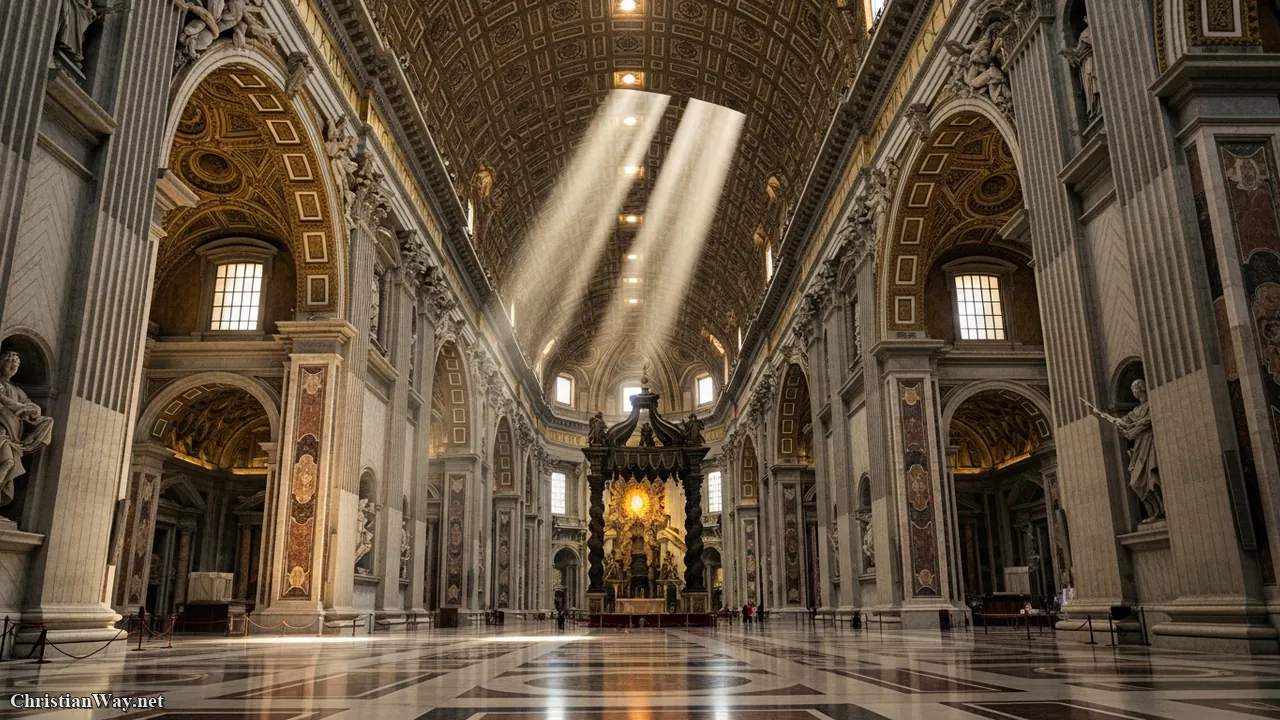
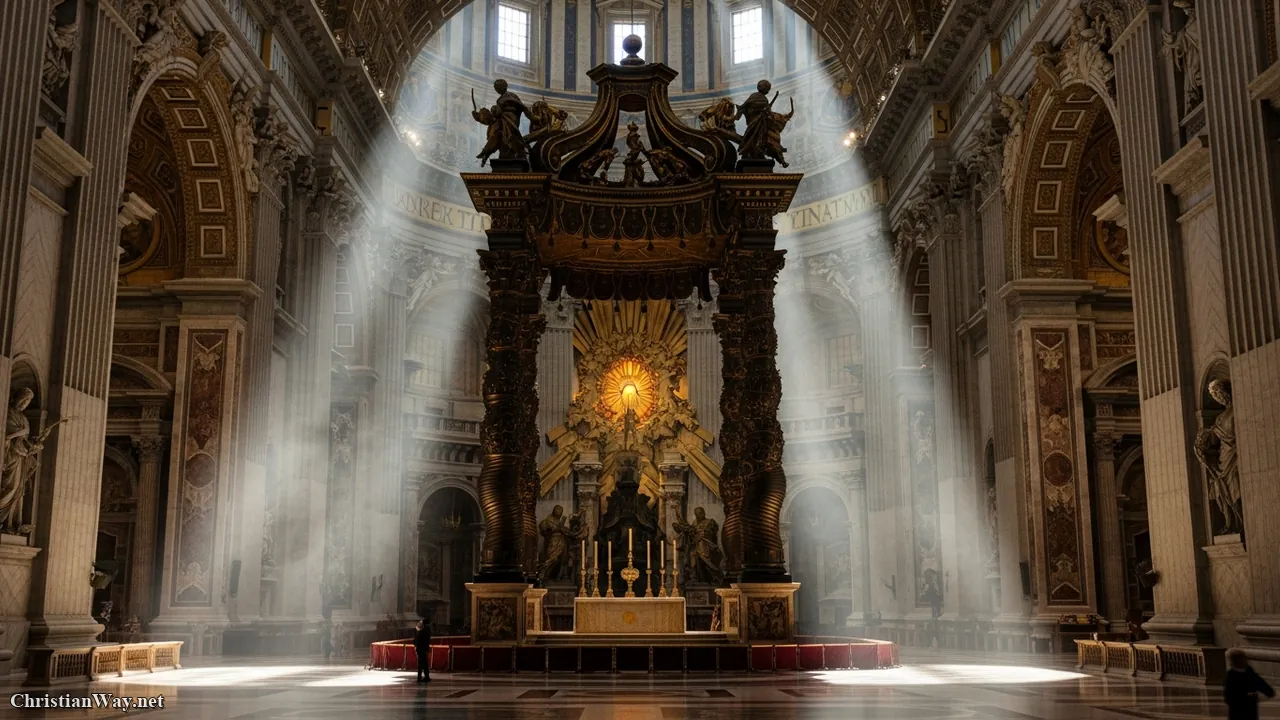
When we think of Rome, our hearts often rush immediately to the embrace of St. Peter’s Square, where the colonnades stretch out like the arms of a mother welcoming her children home. Yet, to limit our pilgrimage only to the Vatican is to miss the whisper of the Holy Spirit echoing through the cobblestone streets of the wider city. Rome herself is a living reliquary, a testament to two thousand years of struggle, grace, and enduring faith.
I have walked these streets many times, often in the quiet of the early morning before the tour buses arrive. It is in these moments, standing before ancient wooden doors or beneath mosaics that shimmer with the gold of heaven, that one feels the true weight of our inheritance. These churches are not merely museums of art; they are the upper rooms where the saints prayed, the altars where the Eucharist has been elevated for centuries, and the stones that have soaked up the tears of the faithful.
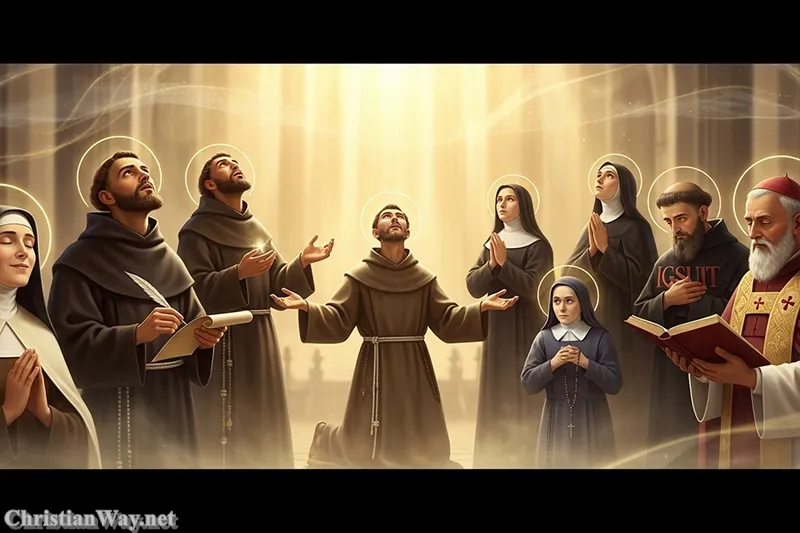
This list is more than an itinerary; it is an invitation to walk in the footsteps of Peter, Paul, Catherine, and Ignatius. Whether you are planning a physical journey to the Eternal City or a spiritual journey from your armchair, I invite you to open your heart. Let us step outside the Vatican walls and discover the deep, beating heart of Christian Rome.
Peace be with you as we begin.
Table of The Top 10 Catholic Churches in Rome (Outside the Vatican)
| Rank | Church Name | Key Spiritual Treasure | Historical Era |
|---|---|---|---|
| 10 | The Pantheon (Santa Maria ad Martyres) | Dedication to All Martyrs | 27 BC / Cons. 609 AD |
| 9 | San Pietro in Vincoli | The Chains of St. Peter | 5th Century |
| 8 | Santa Croce in Gerusalemme | Relics of the True Cross | 4th Century |
| 7 | Santa Maria sopra Minerva | Tomb of St. Catherine of Siena | 13th Century |
| 6 | Church of the Gesù | Tomb of St. Ignatius of Loyola | 16th Century |
| 5 | Santa Maria in Trastevere | Mosaics of Divine Love | 4th / 12th Century |
| 4 | Basilica of San Clemente | Layers of Christian History | 1st – 12th Century |
| 3 | Basilica of Saint Paul Outside the Walls | Tomb of the Apostle Paul | 4th Century |
| 2 | Basilica of Saint Mary Major | Relic of the Holy Crib | 5th Century |
| 1 | Archbasilica of Saint John Lateran | The Papal Cathedra | 4th Century |
Top 10. The Pantheon (Basilica of Santa Maria ad Martyres)
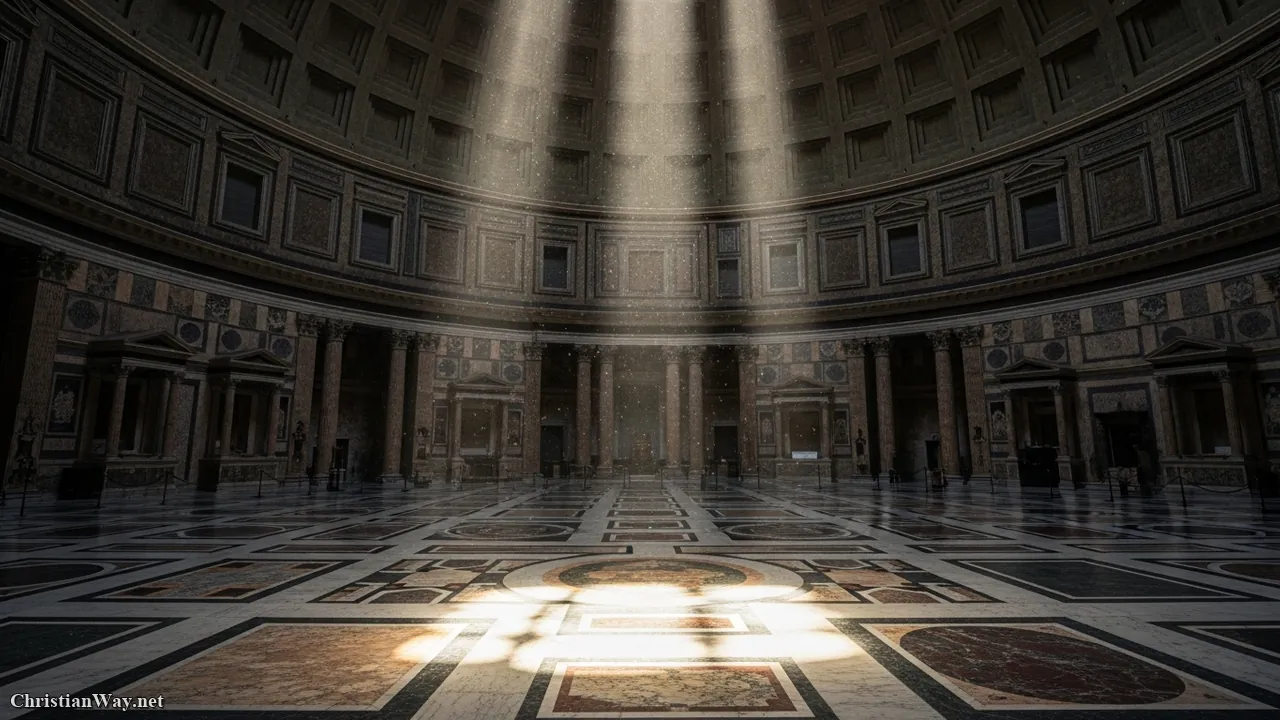
The Scene: Walking into the Pantheon is a disorienting experience. You leave the noise of the Piazza della Rotonda and enter a vast, cool silence. Your eyes are immediately drawn upward to the oculus—the Great Eye—the only source of natural light, pouring a column of sun (or rain) into the center of the sanctuary. Originally a temple to “all gods,” it was reclaimed in 609 AD by Pope Boniface IV.
The Theology: This conversion is a profound theological statement. Where once the Romans worshipped a pantheon of distant, capricious deities, we now honor Mary and the Martyrs—human beings who became vessels of God’s grace. The open oculus reminds us that our worship is always directed upward, toward the one true Creator, who is not confined by stone walls.
The Application: In our modern lives, we often build “temples” to many idols—money, status, comfort. The Pantheon asks us: have we baptized these areas of our lives? Have we converted our personal pantheons into places where Christ dwells? Stand under the light of the oculus and ask God to illuminate the dark corners of your heart.
Spiritual Highlights
- Dedicated to: St. Mary and the Martyrs.
- Scripture: “Therefore, since we are surrounded by such a great cloud of witnesses…” (Hebrews 12:1)
Top 9. San Pietro in Vincoli (Saint Peter in Chains)
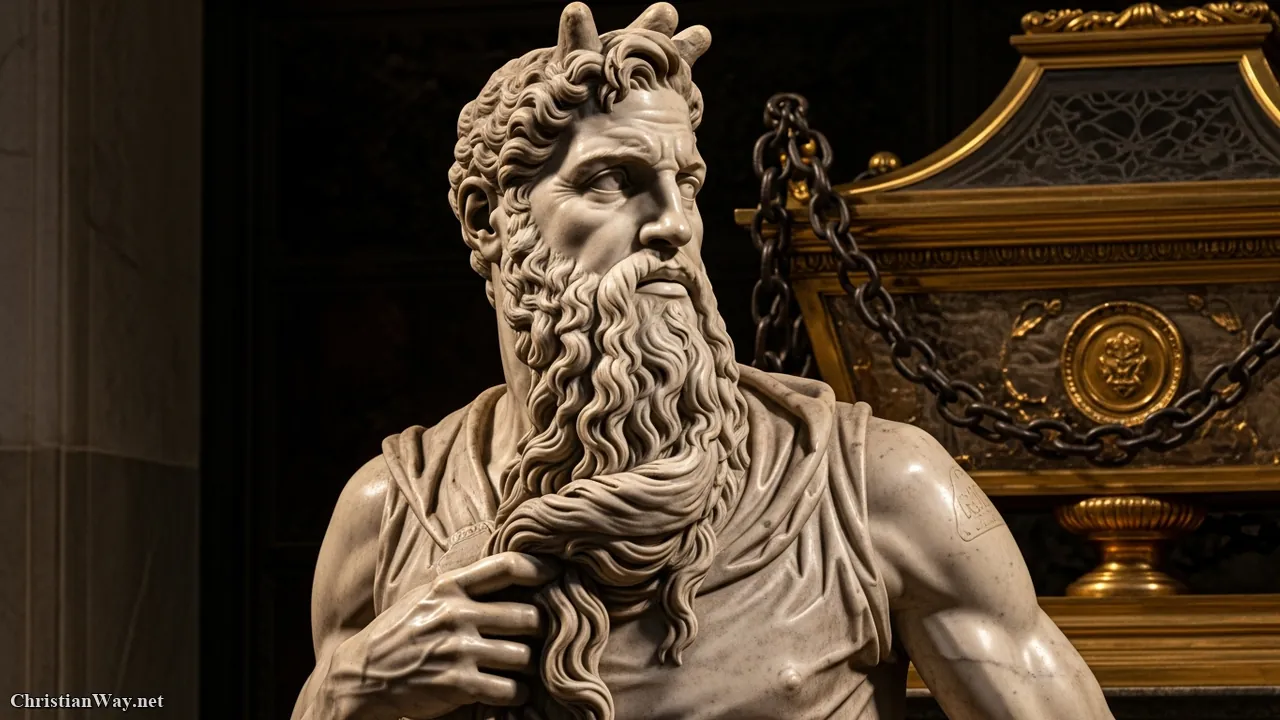
The Scene: Tucked away on a hill near the Colosseum, this basilica often feels like a hidden secret. Pilgrims come here for two things: the colossal statue of Moses by Michelangelo, and the reliquary under the altar. The chains housed here are said to be the very iron fetters that bound St. Peter in Jerusalem and in Rome.
The Theology: The chains are a paradox. They were instruments of oppression, yet they are venerated as symbols of liberation. Why? Because Peter’s faith could not be bound by iron. The Lord sent an angel to break his chains in Jerusalem, and even in his Roman imprisonment, his spirit remained free in Christ. The chains testify that worldly power has no ultimate authority over a soul belonging to God.
The Application: What binds you today? Is it anxiety, a past sin, or a grudge you cannot let go of? Kneeling before these chains, we are reminded that God is the Great Liberator. We are invited to offer our own “chains” to Him, trusting that He can break what holds us captive.
Spiritual Highlights
- Relic: The fused chains of St. Peter.
- Scripture: “The chains fell off Peter’s wrists.” (Acts 12:7)
Top 8. Santa Croce in Gerusalemme (Holy Cross in Jerusalem)
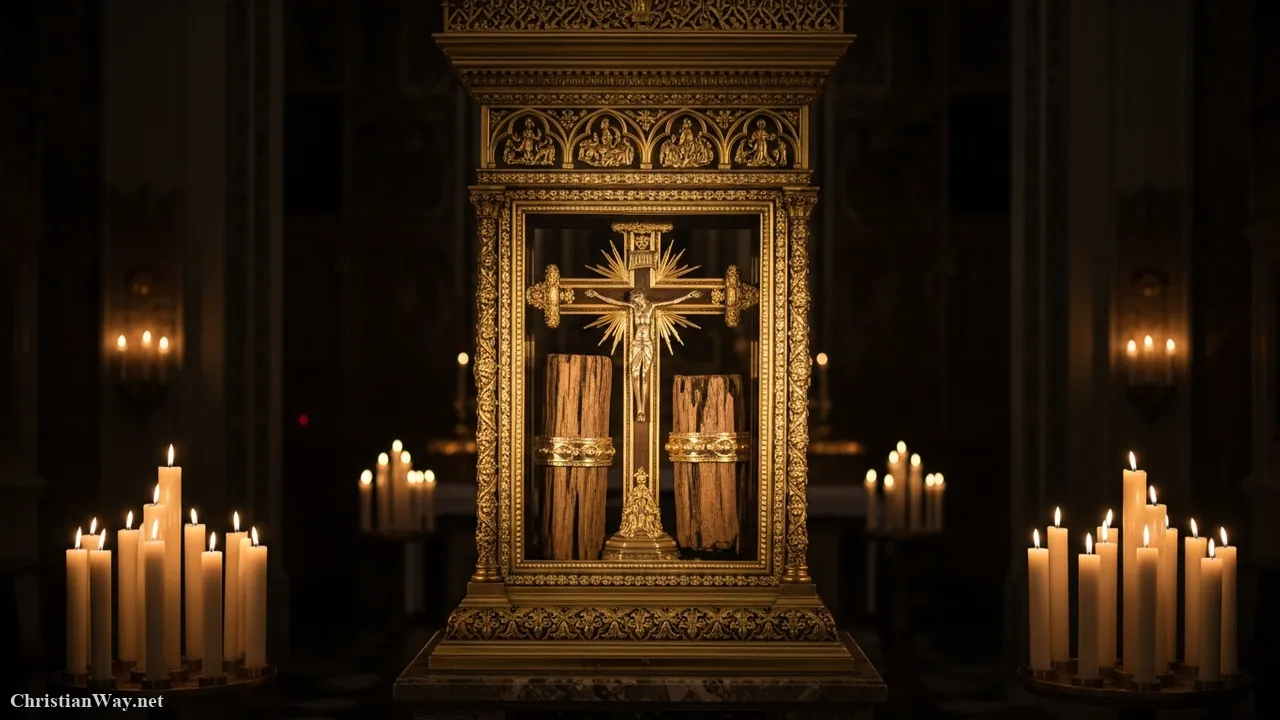
The Scene: This basilica feels different—austere, solemn, and weighty. It was built within the imperial palace of St. Helena, the mother of Emperor Constantine. Helena was a woman of fierce devotion who traveled to the Holy Land to recover the physical evidence of the Passion. Here, in a dedicated chapel, we find the relics she brought back: thorns from the Crown, a nail from the Crucifixion, and the Titulus Crucis (the sign placed above Jesus’ head).
The Theology: These relics ground our faith in history. Christianity is not a myth; it happened. There was real wood, real iron, and real blood. The Titulus Crucis, bearing the inscription “Jesus of Nazareth, King of the Jews,” proclaims the kingship of Christ even in His suffering. It reminds us that His glory was revealed most fully in His self-sacrifice.
The Application: St. Helena was an elderly woman when she went on her pilgrimage. She teaches us that it is never too late to seek the Lord with passion. As you contemplate these relics, consider the “thorns” in your own life. Can you unite your small sufferings with the great Passion of Christ for the redemption of the world?
Spiritual Highlights
- Key Relics: Fragments of the True Cross, a Holy Nail, and the Titulus.
- Scripture: “He was pierced for our transgressions, he was crushed for our iniquities.” (Isaiah 53:5)
Top 7. Santa Maria sopra Minerva
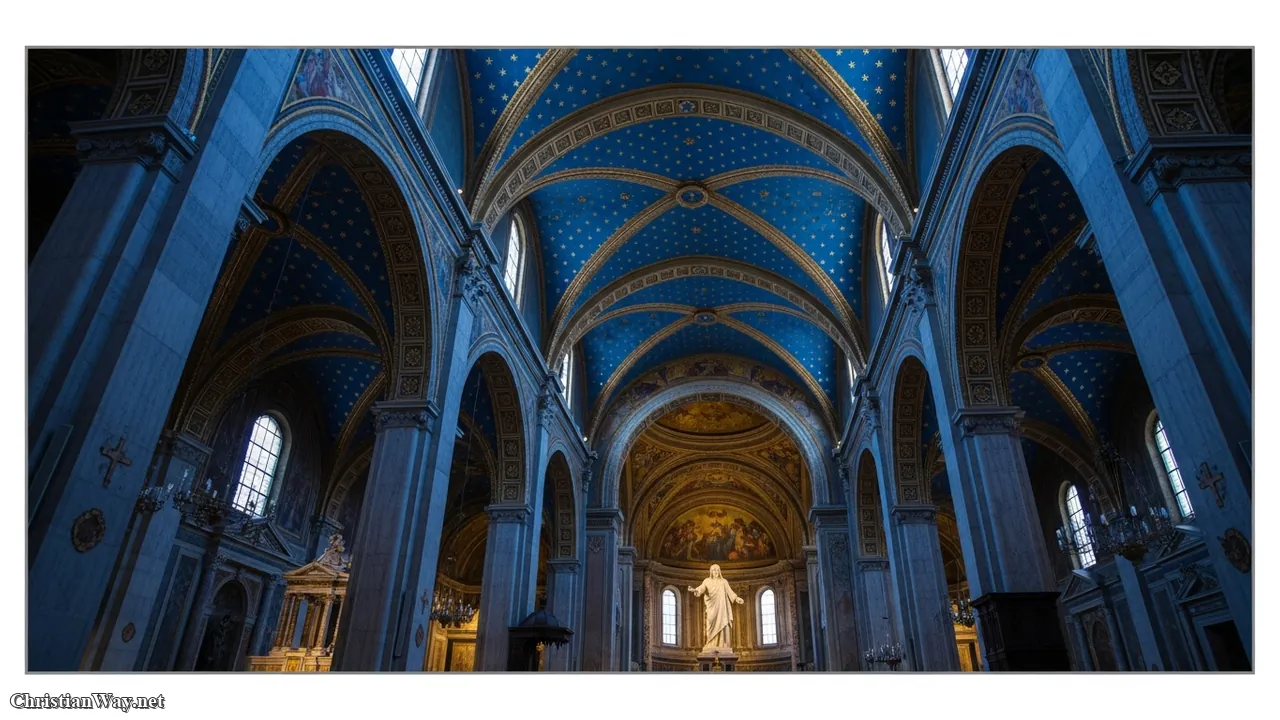
The Scene: Rome is a city of domes, but here, uniquely, we find the soaring pointed arches of the Gothic style. The ceiling is a breathtaking canvas of deep blue studded with gold stars. Beneath the high altar lies the body of St. Catherine of Siena, a Doctor of the Church and a woman who famously admonished Popes to return to Rome. To the left of the altar stands Michelangelo’s Christ the Redeemer, embracing his Cross.
The Theology: St. Catherine was a mystic who spoke of the “cell of self-knowledge.” She taught that we find God by entering deep within ourselves, where He dwells. The starry ceiling above symbolizes the heavens, but Catherine’s tomb below reminds us that the path to heaven is paved with earthly service, courage, and truth-telling.
The Application: Catherine was a laywoman who spoke truth to power out of love for the Church. She challenges us: do we love the Church enough to pray for her and, when necessary, to speak the truth with charity? In the quiet of this blue-vaulted church, ask for a spark of Catherine’s fiery love.
Spiritual Highlights
- Tomb: St. Catherine of Siena (Patroness of Europe).
- Scripture: “I am the vine; you are the branches.” (John 15:5)
Top 6. Church of the Gesù
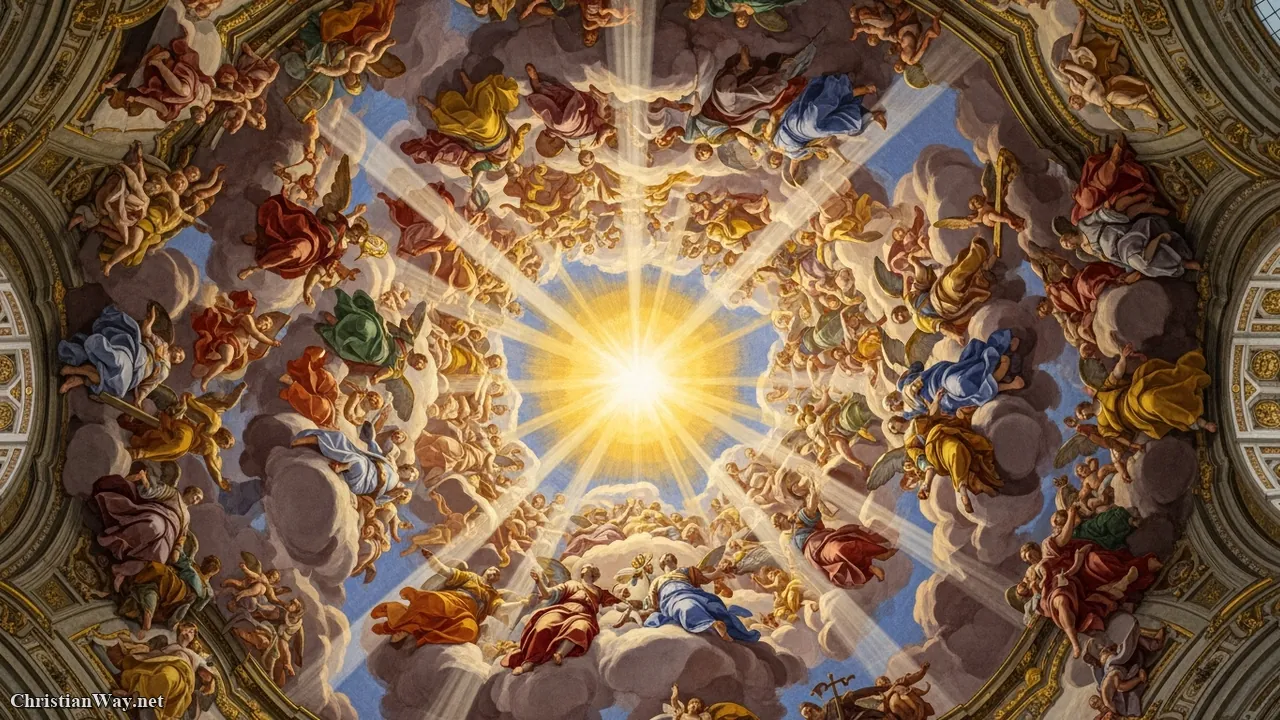
The Scene: This is the mother church of the Jesuits, and it is a masterpiece of the Counter-Reformation. The interior is an explosion of Baroque glory—gold leaf, frescoes that seem to break through the roof into the heavens, and the spectacular altar of St. Ignatius. Every afternoon, a “Baroque machine” lowers a painting to reveal the statue of the saint, accompanied by music and light.
The Theology: The art here is designed to overwhelm the senses and lift the soul to God (AMDG—Ad Majorem Dei Gloriam). The ceiling fresco, The Triumph of the Name of Jesus, shows the light of Christ banishing the darkness. It is a visual representation of the Jesuit mission: to find God in all things and to bring His light to the furthest corners of the earth.
The Application: St. Ignatius taught us the Daily Examen—a way of reviewing our day to see where God was present. The grandeur of the Gesù reminds us that God is not boring! He is dynamic, glorious, and active. As you stand here, ask yourself: Where did I see God’s glory in my life today?
Spiritual Highlights
- Art: The “Baroque Machine” at the Altar of St. Ignatius.
- Scripture: “That at the name of Jesus every knee should bow.” (Philippians 2:10)
Top 5. Santa Maria in Trastevere
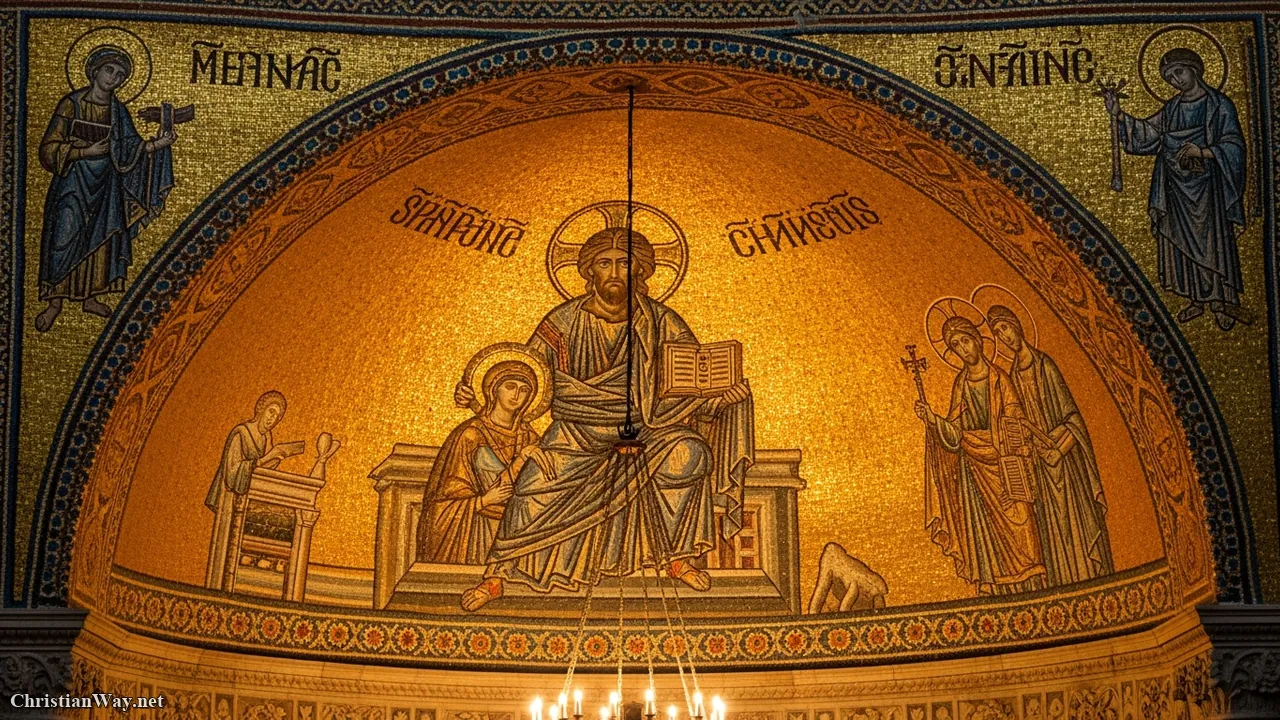
The Scene: Located in the winding, humble streets of Trastevere, this is felt by many to be the most intimate of Rome’s basilicas. It is one of the oldest places of Christian worship in the city. The golden mosaics in the apse are stunning, particularly the scene where Christ has His arm around His mother, Mary. It is not a scene of judgment, but of tender, domestic love.
The Theology: This church emphasizes the maternal aspect of the Church. The mosaic depicts Mary not just as a Queen, but as the beloved Bride and Mother. It speaks of a God who is not distant, but who puts His arm around us. The inscription on Mary’s scroll reads, “His left hand is under my head, and his right hand embraces me” (Song of Songs).
The Application: Many of us carry wounds from feeling unloved or unworthy. Santa Maria in Trastevere is a healing balm. It reminds us that the fundamental attitude of Christ toward us is one of embrace. Sit in the wooden pews here, look up at that golden embrace, and let yourself be loved by God.
Spiritual Highlights
- Treasure: 12th-century mosaics of Christ and Mary.
- Scripture: “I have loved you with an everlasting love.” (Jeremiah 31:3)
Top 4. Basilica of San Clemente
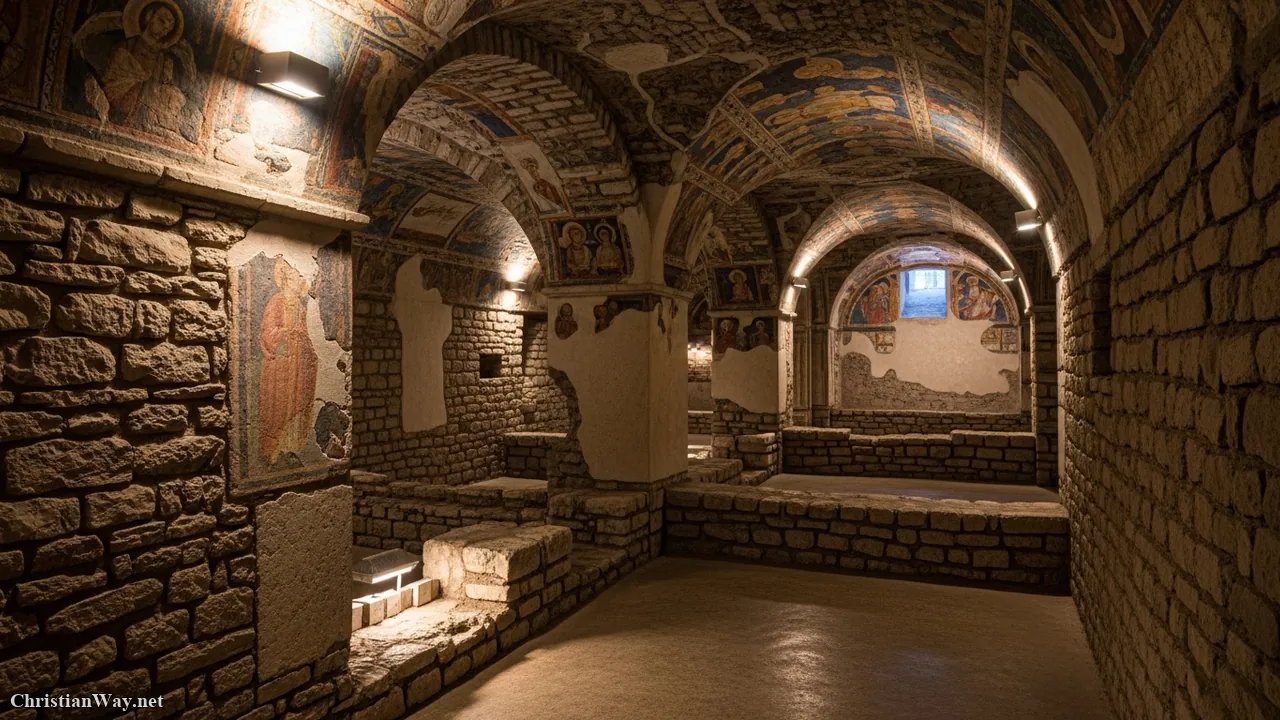
The Scene: San Clemente is a journey through time. You enter the “modern” basilica (12th century), rich with medieval mosaics. But then, you descend a staircase to a 4th-century basilica hidden beneath the floor. Descend further still, and you stand in a 1st-century Roman street and a pagan temple. It is a physical layer cake of history.
The Theology: This structure perfectly illustrates the nature of the Church. We stand on the shoulders of those who came before us. The faith is not something we invented; it is something we inherited, built upon the foundations of the apostles and martyrs. The magnificent mosaic in the upper church shows the Cross as a Tree of Life, with vines spreading out to encompass all of creation.
The Application: In a world that idolizes the “new,” San Clemente teaches us the value of tradition. We are part of a story much larger than ourselves. As you descend into the earth, pray for the grace to be a strong foundation for the generations of Christians who will come after you.
Spiritual Highlights
- Architecture: Three levels of excavation (12th, 4th, and 1st Century).
- Scripture: “For no one can lay any foundation other than the one already laid, which is Jesus Christ.” (1 Corinthians 3:11)
Top 3. Basilica of Saint Paul Outside the Walls
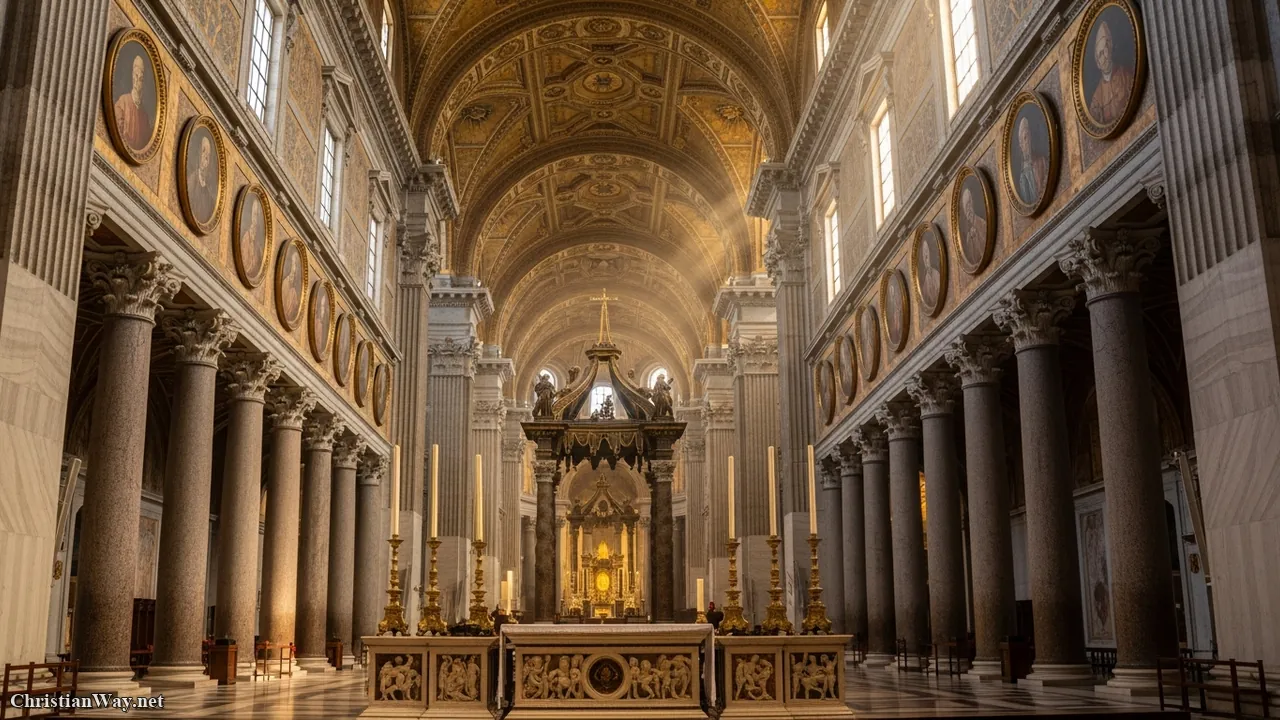
The Scene: This basilica is vast, serene, and majestic. Located slightly outside the city center, it marks the spot where St. Paul was beheaded and buried. The interior is a forest of columns, and along the nave, medallions depict every Pope in history, from Peter to Francis. The beautiful cloister garden offers a space of monastic silence.
The Theology: Paul was the Apostle to the Gentiles—to us. This basilica represents the universality of the Church. It is open, spacious, and welcoming to the world. The line of Popes reminds us of the unbroken chain of apostolic succession that guarantees the integrity of our faith. We are connected, through these men, all the way back to the Upper Room.
The Application: St. Paul was a man of fire and zeal who endured shipwrecks, beatings, and imprisonment for the Gospel. Standing near his tomb, ask yourself: What am I willing to endure for Christ? Am I ashamed of the Gospel, or do I wear it as my glory?
Spiritual Highlights
- Tomb: The sarcophagus of the Apostle Paul.
- Scripture: “I have fought the good fight, I have finished the race, I have kept the faith.” (2 Timothy 4:7)
Top 2. Basilica of Saint Mary Major (Santa Maria Maggiore)
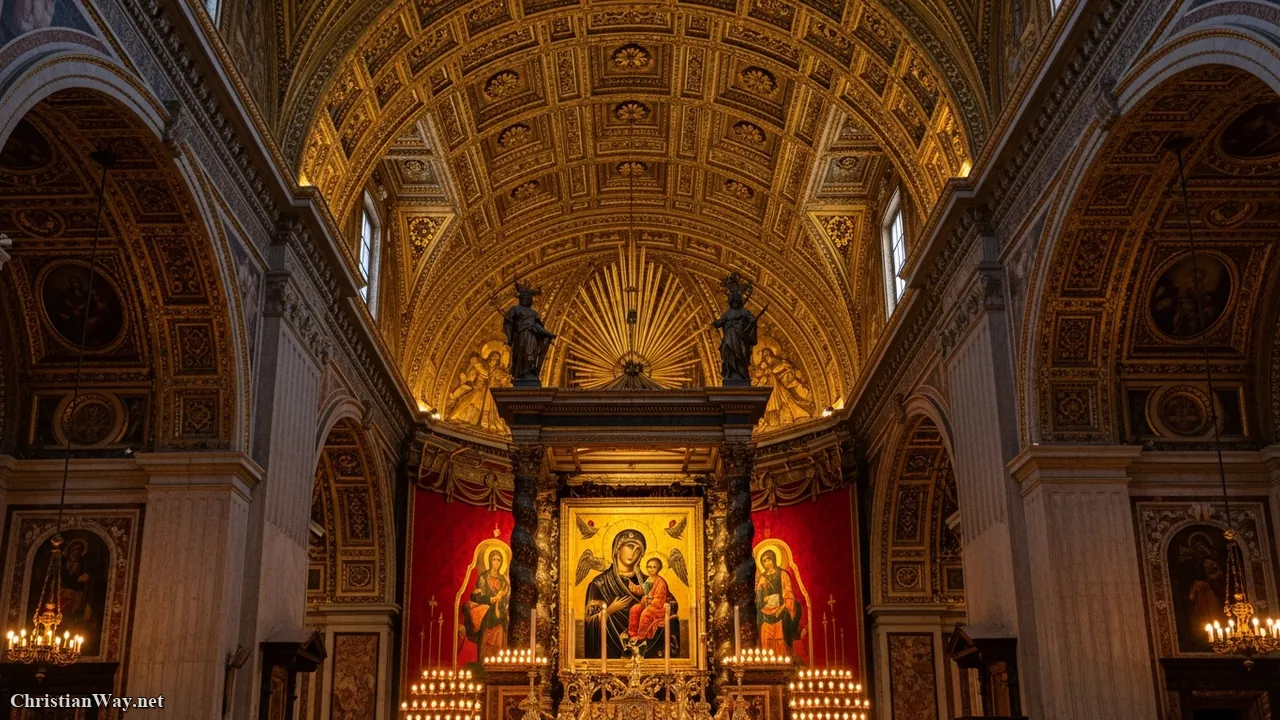
The Scene: Legend says this basilica was founded after a miraculous snowfall in August outlined its floor plan. It is the oldest church in the West dedicated to the Virgin Mary. Inside, the coffered gold ceiling (gilded with the first gold brought from the Americas) shines above the Salus Populi Romani—the icon of Mary, Protectress of the Roman People. Beneath the altar lies a reliquary containing wood from the Holy Crib of Bethlehem.
The Theology: This church links Rome to Bethlehem. It emphasizes the Incarnation—that God truly became a little child. The presence of the Holy Crib reminds us that the Almighty God humbled Himself to rest in a feeding trough. It is a sanctuary of gentleness and maternal protection.
The Application: We often complicate our faith with high concepts and rigid rules. Saint Mary Major calls us back to the simplicity of the Nativity. Can you approach Jesus with the simplicity of a child? Bring your burdens to the Salus Populi Romani, just as Pope Francis does before every journey, and entrust them to a Mother’s care.
Spiritual Highlights
- Relic: The Holy Crib (Sycamore wood from the Manger).
- Scripture: “And she gave birth to her firstborn, a son. She wrapped him in cloths and placed him in a manger.” (Luke 2:7)
Top 1. Archbasilica of Saint John Lateran
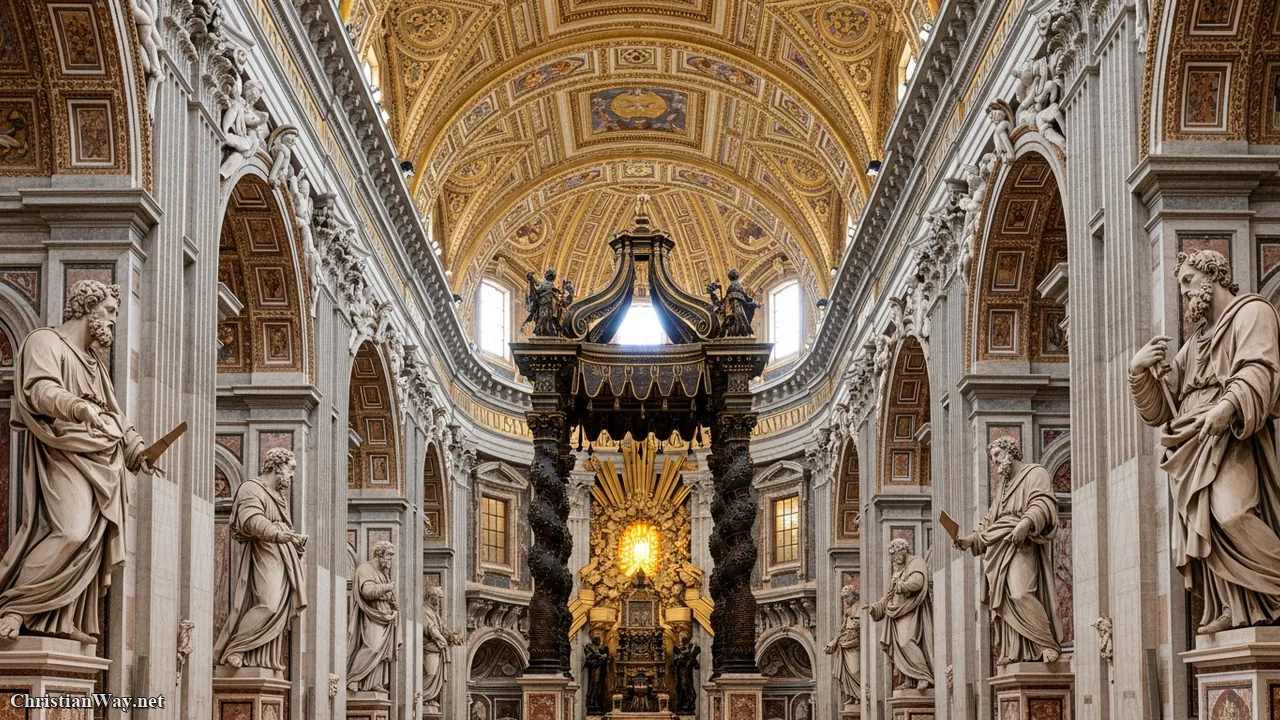
The Scene: We arrive at the summit. While St. Peter’s is the most famous, St. John Lateran is the highest ranking. The inscription on the façade proclaims it the “Mother and Head of all Churches in Rome and the World.” This is the Pope’s true cathedral, the seat of the Bishop of Rome. It is grand, imperial, and historically complex, housing the heads of Peter and Paul in the high altar baldachin.
The Theology: The Lateran symbolizes the teaching authority (Magisterium) of the Church. The “Cathedra” (chair) within represents the unity of the Church under the guidance of the Pope. It reminds us that we are not lone wanderers; we are part of a universal family with a visible head who shepherds us in charity.
The Application: It is easy to criticize the Church, for she is made of human stones that sometimes crumble. But here, at the Mother Church, we renew our loyalty—not to an institution, but to the Body of Christ. We pray for the Pope, for our bishops, and for the unity of all Christians. Standing here, we realize that despite our flaws, the gates of hell shall not prevail.
Spiritual Highlights
- Status: The Cathedral of the Bishop of Rome.
- Scripture: “And I tell you that you are Peter, and on this rock I will build my church.” (Matthew 16:18)
Reflect and Pray
Our journey through the top 10 Catholic churches in Rome (outside the Vatican) concludes here, yet the spiritual pilgrimage continues. These stones have spoken to us of martyrdom, of maternal love, of theological depth, and of missionary zeal. But remember, the most beautiful temple of the Holy Spirit is not built of marble or mosaic; it is your own soul.
I encourage you, whether you are in Rome or at home, to choose one of these churches today for your meditation. Close your eyes, visualize the scene, and ask the patron saint of that place to pray for you. May the faith of Peter, the zeal of Paul, and the love of Mary be your companions.
— Fr. John Matthew, for Christian Way