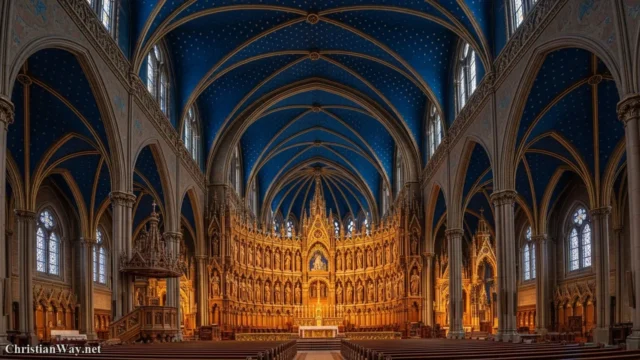
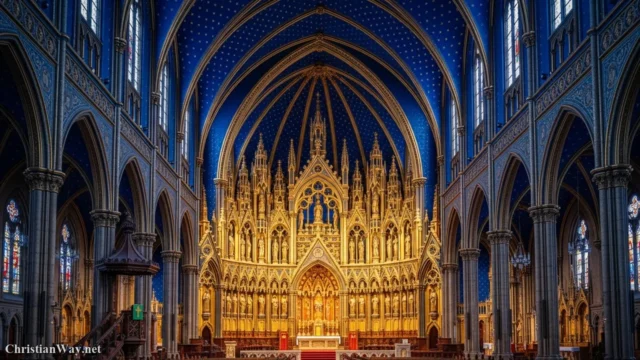
A reflection on sacred days that invite the faithful to remember, give thanks, and walk more deeply with Christ.
Dear friends in Christ,
Every human heart, at some point, becomes aware that time itself is not merely a sequence of hours and days, but a gift—something entrusted to us, something through which God quietly works. We mark birthdays, anniversaries, and memorials because love always remembers. In much the same way, the Church marks sacred moments in the rhythm of the year, moments when heaven touches earth in a particular way. These moments are known as Catholic feast days.
A Catholic feast day is far more than a religious holiday on a calendar. It is a living remembrance—a holy pause—where the Church gathers to proclaim what God has done, what He continues to do, and what He promises yet to fulfill. Through feast days, the mystery of Christ’s life unfolds before us again and again, not as distant history, but as living grace offered to the present moment.
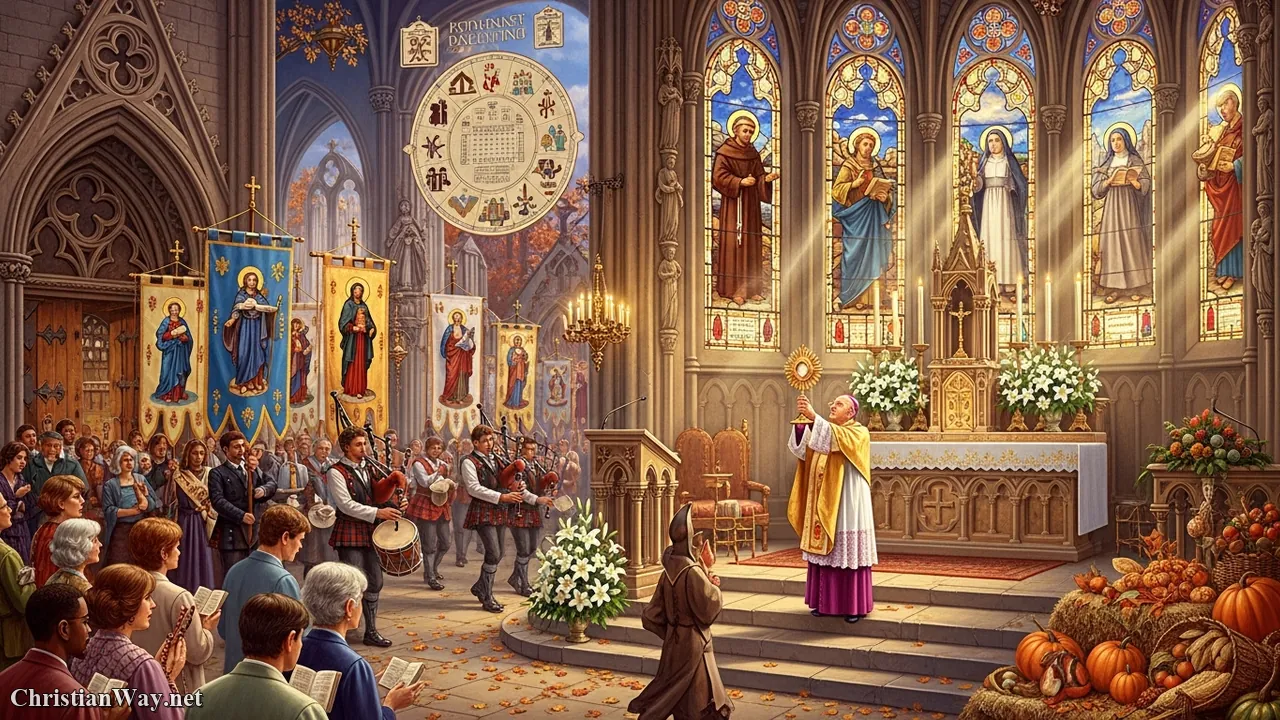
In reflecting on the meaning of a Catholic feast day, we are invited on a gentle journey: from understanding sacred time, to honoring the saints, to discovering how these holy celebrations quietly shape our daily lives. This is not a journey of information alone, but of encounter—an encounter with Christ, who walks with His people through the seasons of the year and the seasons of the soul.
Sacred Time in the Life of the Church
God Sanctifies Time, Not Just Souls
From the very beginning of Scripture, God reveals Himself as Lord of time. The Book of Genesis opens with the rhythm of days and nights, work and rest, culminating in the sanctification of the Sabbath. Time, in the biblical vision, is not empty or neutral. It is shaped by God’s presence and filled with meaning.
A Catholic feast day flows from this ancient understanding. When the Church sets aside a particular day as holy, she is proclaiming that God has acted—and that His action continues to bear fruit. Sacred time reminds us that our lives are not drifting aimlessly forward, but are held within God’s loving design.
Feast days interrupt ordinary routines. They ask us to slow down, to remember, to lift our eyes beyond immediate concerns. In doing so, they gently heal the modern temptation to treat time as something to consume rather than something to receive.
The Liturgical Calendar as a Spiritual Path
Catholic feast days are woven into the broader tapestry of the liturgical calendar. Together, they form a sacred path that guides believers through the mysteries of salvation. Seasons such as Advent, Christmas, Lent, Easter, and Ordinary Time are not simply annual repetitions. They are invitations to enter more deeply into Christ’s life, death, and resurrection.
Within this calendar, feast days shine like stars. Some celebrate pivotal events in the life of Jesus; others honor Mary, the Mother of God; still others commemorate saints whose lives reflected Christ’s love in unique and powerful ways. Each feast day, in its own quiet manner, teaches the faithful how to live the Gospel more fully.
Catholic Feast Days Throughout the Year (Chronological Overview)
The Catholic year unfolds gradually, allowing the faithful to walk with Christ through time. Each feast day marks a moment of grace, inviting reflection, worship, and renewed faith.
| Month | Feast Day | Date (Fixed / Movable) | Meaning |
|---|---|---|---|
| January | Mary, Mother of God | January 1 (Fixed) | Celebrates Mary’s role as Theotokos, Mother of God and Mother of the Church. |
| January | Epiphany of the Lord | January 6 (Fixed / Movable) | Commemorates the visit of the Magi, revealing Jesus as Savior of all nations. |
| January | Baptism of the Lord | Sunday after Epiphany (Movable) | Marks the beginning of Jesus’ public ministry after His baptism by John. |
| February | Presentation of the Lord | February 2 (Fixed) | Recalls the presentation of Jesus in the Temple and the purification of Mary. |
| February | Ash Wednesday | Movable (Start of Lent) | Marks the beginning of Lent, a season of fasting, repentance, and prayer. |
| March | St. Joseph, Spouse of the BVM | March 19 (Fixed) | Honors Joseph as the foster father of Jesus and patron of the universal Church. |
| March | Annunciation of the Lord | March 25 (Fixed) | Celebrates Gabriel’s announcement to Mary that she would conceive Jesus. |
| April | Palm Sunday | Sunday before Easter (Movable) | Commemorates Jesus’ triumphant entry into Jerusalem before His Passion. |
| April | Holy Thursday | Thursday before Easter (Movable) | Commemorates the Last Supper and the institution of the Eucharist and priesthood. |
| April | Good Friday | Friday before Easter (Movable) | Recalls the crucifixion and death of Jesus Christ on the Cross. |
| April | Holy Saturday | Saturday before Easter (Movable) | Vigil anticipating the Resurrection; Christ descends to the dead. |
| April | Easter Sunday | Movable | Celebrates the Resurrection of Jesus Christ from the dead, victory over sin. |
| April | Divine Mercy Sunday | Second Sunday of Easter (Movable) | Focuses on God’s infinite mercy revealed through Jesus Christ. |
| May | Ascension of the Lord | Thursday / Sunday after Easter (Movable) | Commemorates Jesus’ ascension into Heaven forty days after the Resurrection. |
| May | Pentecost Sunday | 50 Days after Easter (Movable) | Celebrates the descent of the Holy Spirit upon the Apostles and Mary; birth of the Church. |
| June | The Most Holy Trinity | Sunday after Pentecost (Movable) | Honors the mystery of one God in three Divine Persons: Father, Son, and Holy Spirit. |
| June | Corpus Christi | Thursday / Sunday after Trinity (Movable) | Solemnity of the Most Holy Body and Blood of Christ in the Eucharist. |
| June | Sacred Heart of Jesus | Friday after Corpus Christi (Movable) | Focuses on the compassionate and divine love of the Heart of Jesus for humanity. |
| August | Transfiguration of the Lord | August 6 (Fixed) | Commemorates Jesus’ transfiguration on the mountain, revealing His divine glory. |
| August | Assumption of Mary | August 15 (Fixed) | Celebrates Mary’s bodily assumption into Heaven at the end of her earthly life. |
| November | All Saints’ Day | November 1 (Fixed) | Honors all saints, known and unknown, who are in Heaven. |
| November | All Souls’ Day | November 2 (Fixed) | Commemoration of all the faithful departed, offering prayers for their souls. |
| December | Immaculate Conception | December 8 (Fixed) | Celebrates Mary being conceived without original sin by God’s grace. |
| December | The Nativity of the Lord (Christmas) | December 25 (Fixed) | Celebrates the birth of Jesus Christ, the Incarnation of God. |
| December | Holy Family | Sunday after Christmas (Movable) | Honors Jesus, Mary, and Joseph as the model for all Christian families. |
* Download: Catholic Feast Day table
The Year as a Sacred Pilgrimage
Seen in this way, a Catholic feast day is not isolated. Each one belongs to a greater journey—a slow, patient pilgrimage through the mysteries of Christ. The Church does not rush from feast to feast. She allows time itself to become a teacher, shaping the heart through remembrance, prayer, and hope.
Living with awareness of these sacred days helps believers see their own lives not as scattered moments, but as part of God’s unfolding work of salvation.
Feast Days of Our Lord: The Heart of Christian Memory
Celebrating the Life and Mystery of Christ
At the center of every Catholic feast day stands Jesus Christ Himself. The greatest feasts—such as Christmas, Easter, and Pentecost—are not symbolic remembrances alone. They proclaim that what God accomplished in Christ remains alive and active within the Church today.
Christmas celebrates the astonishing humility of God, who chose to enter human history as a child. Easter proclaims victory over death, not as an abstract promise, but as a living hope. Pentecost reveals the Church as a community born of the Holy Spirit, sent forth to carry Christ’s love into the world.
Each of these feast days is an invitation to step once more into the saving mystery. The Gospel proclaimed on these days is not simply read; it is received as a word spoken anew to the present generation.
The Eucharist at the Center of Every Feast
The heart of every Catholic feast day is the celebration of the Eucharist. At the altar, time itself seems to bend, as the Church participates in the eternal sacrifice of Christ. What was accomplished once in history becomes sacramentally present for the faithful today.
This is why feast days are not complete without the Mass. The prayers, readings, and hymns are carefully chosen to reflect the mystery being celebrated. Through them, the faithful are not spectators, but participants—drawn into communion with Christ and with one another.
Marian Feast Days: Honoring the Mother Who Leads Us to Christ
Mary’s Unique Place in Salvation History
Among Catholic feast days, those dedicated to Mary hold a special tenderness. They do not distract from Christ, but draw us closer to Him. Mary’s life was entirely shaped by her yes to God, and her feast days invite believers to contemplate what it means to trust God completely.
Feasts such as the Annunciation, the Assumption, and the Immaculate Conception reflect different moments of grace in Mary’s journey. They reveal God’s initiative, Mary’s humility, and the destiny prepared for all who live in faithful obedience.
Mary is not honored as a distant figure, but as a mother who understands the joys and struggles of human life. Her feast days gently remind the faithful that holiness is possible in ordinary circumstances, when life is lived with trust and love.
Marian Devotion and the Rhythm of Prayer
On Marian feast days, many Catholics turn instinctively to prayer—especially the Rosary. These days foster a contemplative spirit, inviting believers to ponder the mysteries of Christ through Mary’s eyes.
Such devotion does not remove believers from the world. Rather, it teaches them how to carry Christ into daily life with patience, humility, and quiet strength.
Saints’ Feast Days: The Gospel Lived in Human Lives
Why the Church Honors the Saints
A Catholic feast day dedicated to a saint is a celebration of grace at work in a human life. Saints are not honored because they were perfect, but because they allowed God to transform them. Their stories reveal that holiness is not reserved for the extraordinary few, but offered to all who open their hearts to God.
By honoring saints on specific days, the Church places before the faithful living examples of the Gospel. Each saint reflects a particular aspect of Christ’s love—compassion for the poor, courage in suffering, fidelity in obscurity, joy in service.
Saints as Companions on the Journey of Faith
Saints’ feast days are not nostalgic commemorations of the past. They are moments of encounter. The Church believes that the saints remain alive in Christ, interceding for those who continue the pilgrimage of faith on earth.
For many Catholics, a saint’s feast day holds personal significance—perhaps connected to one’s name, vocation, or spiritual journey. These days become moments of renewed encouragement, reminders that God works patiently through ordinary lives.
Living Catholic Feast Days in Daily Life
Feast Days Beyond the Church Walls
While feast days are centered on liturgical celebration, their meaning extends far beyond the church building. In families and communities, feast days often become moments of shared joy—through meals, traditions, and acts of charity.
In many cultures, Catholic feast days shape local customs and rhythms of life. Processions, festivals, and communal prayer reflect the deep connection between faith and everyday living. Even in quieter settings, a simple prayer or intentional act of kindness can become a way of honoring the day.
Feast Days as Spiritual Anchors
In a world marked by constant change and uncertainty, Catholic feast days serve as spiritual anchors. They remind believers that God’s faithfulness does not change, even when circumstances do. By returning year after year to the same sacred celebrations, the faithful find stability, hope, and renewal.
Feast days gently train the heart to live attentively—to recognize God’s presence not only in extraordinary moments, but in the steady rhythm of time itself.
The Quiet Power of Remembering
Memory as an Act of Faith
To remember, in the biblical sense, is never passive. It is an act of faith. When the Church remembers God’s works through a Catholic feast day, she proclaims that those works continue to shape the present and the future.
This remembering forms the soul. It teaches gratitude, fosters hope, and strengthens trust. Through feast days, believers learn to see their own lives as part of God’s unfolding story.
A Gift for a Weary World
In a culture often driven by speed, productivity, and distraction, Catholic feast days offer something profoundly countercultural: the invitation to rest in meaning. They remind the faithful that life is not defined solely by achievement, but by relationship—with God and with one another.
These sacred days whisper a truth the world easily forgets: that God is near, that grace is at work, and that every moment can become holy.
In the Light of Christ
As we reflect on the meaning of a Catholic feast day, we come to see that these sacred moments are not interruptions of ordinary life, but revelations of its deepest purpose. They teach us how to remember with gratitude, to celebrate with reverence, and to live with hope.
May each feast day you encounter become a quiet invitation—to pause, to pray, and to recognize the gentle presence of God moving through time and history, through saints and seasons, and through your own unfolding story.
May the peace of Christ sanctify your days, and may the memory of His saving love guide every step of your journey.
— Fr. John Matthew, for Christian Way.
Deeper Christian Context for Catholic Feast Day
The subject of Catholic Feast Day: Remembering God’s Work Through Saints, Seasons, and Sacred Time becomes clearer when it is placed inside the larger Christian story rather than treated as an isolated fact or devotional curiosity. The Christian calendar orders time around the mystery of Christ. Catholic feast days include celebrations of the Lord, the Virgin Mary, apostles, martyrs, pastors, and other saints, but not every celebration has the same liturgical rank or the same universal scope. ChristianWay.net aims to distinguish the central convictions shared across historic Christianity from practices or interpretations that belong more specifically to Catholic, Orthodox, Anglican, or Protestant traditions. Readers exploring Catholic Feast Day can therefore hold conviction and humility together rather than choosing one at the expense of the other.
That distinction matters for both theology and spiritual life. A reliable Christian article should be able to say what Scripture directly teaches, what later Christian tradition developed from that biblical witness, and where different churches understand the same material in different ways. Readers do not need artificial certainty; they need a faithful map of the subject, enough historical context to avoid common myths, and practical guidance that points back to Jesus Christ. Seen through Catholic Feast Day, this becomes a concrete example of how Christian doctrine, history, worship, and daily life interact.
The Liturgical Year Is Centered on Christ
The Catholic calendar is not simply a directory of saints. Sunday is foundational, Easter is the feast of feasts, and the year unfolds the mystery of Christ from Advent and Christmas through Lent, Easter, Pentecost, and Ordinary Time. Marian celebrations and memorials of saints belong within that Christ-centered pattern. For this article, that distinction helps readers interpret Catholic Feast Day without turning a devotional emphasis into a claim stronger than the evidence supports.
Solemnity, Feast, Memorial, and Local Celebration
In the Roman Rite, celebrations can have different ranks, and local calendars can add patrons or observances important to a country, diocese, religious order, or parish. Eastern Catholic churches also have their own liturgical calendars and terminology. Therefore a date found on a general website should be checked against the current calendar actually used by the reader’s church. Applied to Catholic Feast Day, the point is to keep Christ, Scripture, and the actual history of the tradition in the same frame.
Why the Church Remembers Saints
Remembering saints is not meant to distract from Christ. The logic is the opposite: the Church gives thanks for what Christ’s grace accomplished in members of his body. A martyr shows costly fidelity; a pastor shows service; a teacher may clarify doctrine; a religious founder may embody a charism; a parent or worker may reveal holiness in ordinary responsibilities. That is especially important when discussing Catholic Feast Day, because readers may come from churches that use the same Christian vocabulary in different ways.
How to Use a Feast Day Spiritually
Read the Mass readings or other appointed Scripture, learn one reliable fact about the person or mystery being celebrated, and choose one action that corresponds to the theme. A feast of a missionary might lead to prayer for evangelization; a martyr’s memorial may prompt courage; a saint known for charity may lead to concrete service. This keeps the calendar from becoming trivia. In relation to Catholic Feast Day, careful wording protects both spiritual seriousness and historical credibility.
Conclusion
Catholic Feast Day: Remembering God’s Work Through Saints, Seasons, and Sacred Time is most useful when sacred time forms Christian memory. The calendar teaches believers to remember what God has done, give thanks for holy witnesses, and carry the mystery celebrated in worship into ordinary life. This perspective keeps Catholic Feast Day connected to discipleship instead of leaving it as isolated religious information.
From Information to Discipleship
The spiritual value of studying catholic feast day appears in the kind of person the study helps form. Does it deepen worship, truthfulness, repentance, courage, patience, charity, and hope? Does it make the reader more attentive to Christ and more ready to serve a neighbor? Theology that never reaches conduct can become sterile, while devotion without truth can become sentimental. Christian formation needs both understanding and practice. Readers exploring Catholic Feast Day can therefore hold conviction and humility together rather than choosing one at the expense of the other.
Distinguishing Doctrine, History, and Devotion
Three levels are often mixed together when people discuss catholic feast day: doctrine, historical development, and devotion. Doctrine states what a church formally teaches. History studies how language, institutions, customs, and controversies developed over time. Devotion describes practices by which believers express faith. A practice can be old without being dogma, and a doctrine can be ancient even if later generations developed more precise vocabulary for it. Keeping these levels separate makes an article both clearer and fairer. Seen through Catholic Feast Day, this becomes a concrete example of how Christian doctrine, history, worship, and daily life interact.
The Place of Mystery
Not every Christian subject can be reduced to a formula. Mystery does not mean contradiction or intellectual laziness; it means that the reality of God and salvation exceeds complete human comprehension. In studying catholic feast day, Christians can make precise distinctions while still admitting the limits of language, historical evidence, and personal experience. Humility is not the enemy of conviction. It is part of learning to speak truthfully about God. For this article, that distinction helps readers interpret Catholic Feast Day without turning a devotional emphasis into a claim stronger than the evidence supports.
Questions Worth Asking
A reader can test an explanation of catholic feast day with several questions. What is the strongest biblical basis for the claim? How early is the historical evidence? Is the point universally Christian or specific to one tradition? Are important counterexamples or disagreements being hidden? What would change in prayer, worship, ethics, or community life if the teaching were taken seriously? Those questions often reveal whether an article is merely persuasive or genuinely informative. Applied to Catholic Feast Day, the point is to keep Christ, Scripture, and the actual history of the tradition in the same frame.