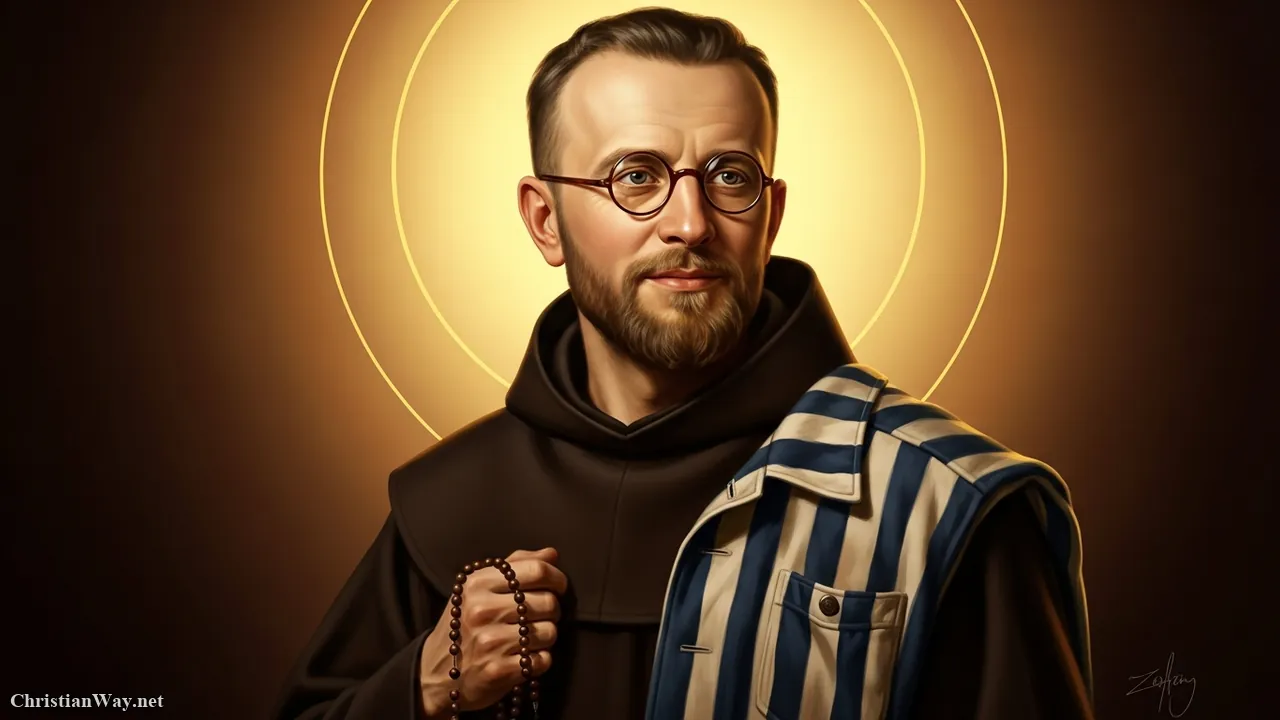
Welcome, friends. It is a profound honor to walk with you today through the life of a man whose heart was perhaps the most misunderstood of the 20th century. I am Fr. John Matthew, and here at Christian Way, we do not merely recount dates; we seek the pulse of holiness.
To understand Saint Paul VI, one must imagine a man standing on a bridge during a hurricane. Below him, the waters of tradition rushed violently; above him, the winds of a radical, secular modernity howled. His task—assigned by the Holy Spirit—was not to retreat to the safety of the shore, but to stand firm in the center, holding the bridge together so the People of God could cross safely. He was the Pope of the Council, the first pilgrim to fly to the ends of the earth, and the solitary prophet who defended the sanctity of life when the whole world—and many within the Church—demanded he surrender.

He was a man of immense intellect, deep melancholy, and hidden, radiant joy. Let us leave the noise of our current age and step into the silence of his study, where he labored for your soul and mine.
Profile of Holiness
| Attribute | Detail |
|---|---|
| Birth Name | Giovanni Battista Enrico Antonio Maria Montini |
| Lifespan | September 26, 1897 – August 6, 1978 |
| Birthplace | Concesio (Brescia), Italy |
| Service Period | 1963 – 1978 (Papacy) |
| Feast Day | May 29 |
| Patronage | Archdiocese of Milan, The Second Vatican Council, Diocese of Brescia |
| Key Virtue | Fortitude in Dialogue |
The Cradle of Grace: Historical Context & Early Life
To truly know Giovanni Battista Montini, we must look to the soil from which he grew. He was born in 1897 in Concesio, a small town in Lombardy, Italy. The world at the turn of the century was a powder keg. Italy was in the throes of a fierce anti-clericalism; the Vatican was still technically a “prisoner” within Rome, having lost the Papal States only a few decades prior. The industrial revolution was tearing apart the old social fabrics, and the specter of the First World War was looming on the horizon.
Giovanni was born into a family that did not shy away from these challenges. His father, Giorgio Montini, was a giant of a man—a lawyer, a journalist, and a director of Catholic Action. Giorgio was a warrior for the faith in the public square, teaching his son that faith was not a private hobby but a public duty. His mother, Giuditta Alghisi, provided the gentle, pious counterweight, instilling in Giovanni a sensitivity that would define his priesthood.
Yet, young Giovanni was physically frail. He was a boy of brilliant mind but weak constitution. While other boys played rough games in the piazzas of Brescia, Giovanni was often confined to bed, reading, praying, and watching the world through a window. This frailty was, in hindsight, a severe mercy. It forced him inward, developing a contemplative interior life that most active boys never acquire. It also meant that when he felt the call to the priesthood, he could not join the seminary in the traditional sense. The damp, cold dormitories would have killed him.
In a rare exception, the bishop allowed him to study as a “home seminarian.” He lived with his parents, wore his cassock at the dinner table, and studied theology in the quiet of his room. This unusual formation meant he was less shaped by the rigid, sometimes rough camaraderie of the seminary and more by the intellectual and cultural currents of the day. He was ordained in 1920, not as a rough-hewn parish priest, but as a refined, intellectual soul ready to engage the modern world on its own terms.
The Turning Point: Vocation and Conversion
The “turning point” for Montini was not a single flash of lightning, but a slow, grinding polish by the hand of God. After his ordination, his brilliance was immediately recognized, and he was swept away to Rome to study at the Gregorian University and the Ecclesiastical Academy (the school for Vatican diplomats). He entered the Secretariat of State, the nerve center of the Vatican.
For decades, Montini was the “shadow” of the Papacy. He served under Pius XI and then became the Substitute Secretary of State for Pius XII. He worked tirelessly, often late into the night, drafting documents, managing crises during World War II, and hiding Jewish refugees in Vatican properties. He was the ultimate insider—quiet, efficient, and fiercely loyal. But God does not call saints merely to be bureaucrats.
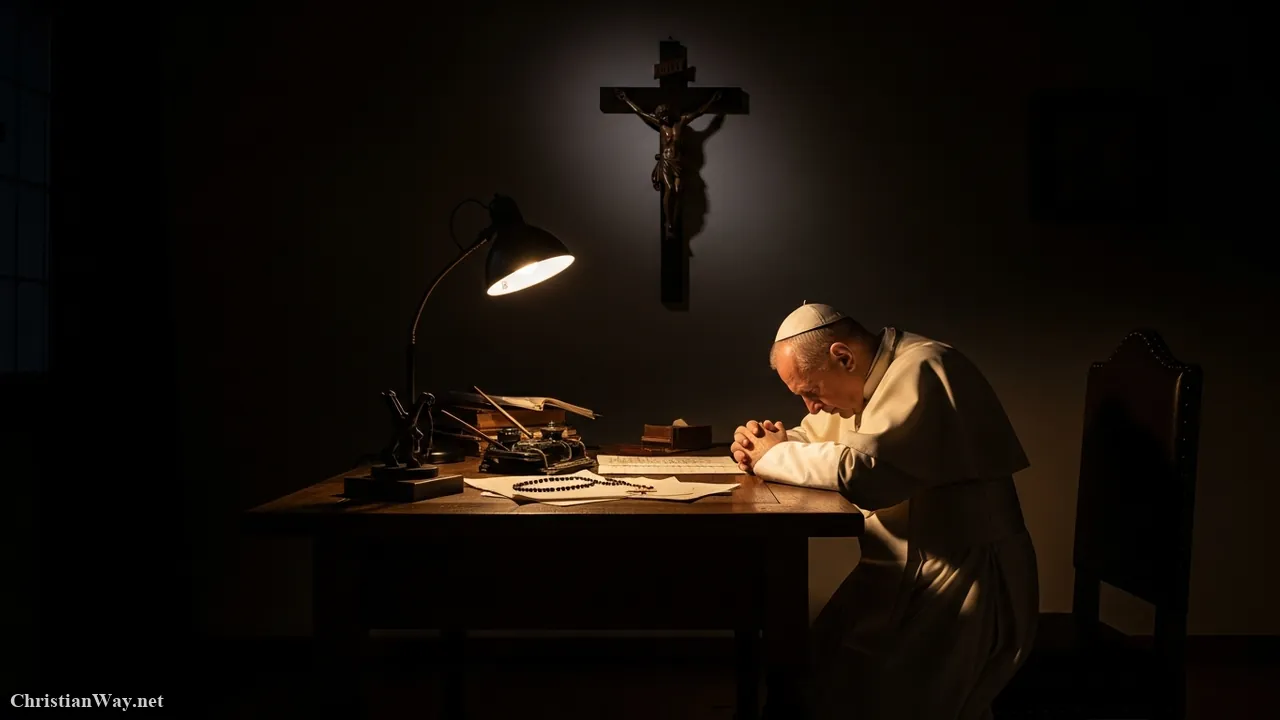
The true turning point—the moment that tested his soul—came in 1954. In a move that shocked Rome, Pope Pius XII appointed Montini as the Archbishop of Milan. On paper, it was a promotion to the largest diocese in Europe. In reality, it was viewed by many as an “exile.” He was being sent away from the levers of power in Rome to the gritty, industrial, communist-heavy streets of Milan. Furthermore, Pius XII did not make him a Cardinal, meaning Montini was effectively cut off from the next conclave.
It was here, in the smog of Milan, that the “bureaucrat” became a shepherd. He found himself face-to-face with the alienation of the modern worker. He didn’t retreat; he attacked with love. He called himself the “Archbishop of the workers.” He visited factories, mines, and communist strongholds. He preached that the Church was not the enemy of progress but its only true soul. This “exile” was God’s way of baptizing Montini in pastoral reality. He learned that lofty theology means nothing if it cannot touch the hand of the suffering. When Pope John XXIII was elected, his first act was to make Montini a Cardinal, setting the stage for the immense burden that was to come.
The Great Labor: Ministry and Mission
When “Good Pope John” died in 1963, the Church was in the middle of the Second Vatican Council. It was a chaotic, exuberant, and dangerous time. The Cardinals entered the conclave knowing that whoever was elected would have to carry the crushing weight of finishing the Council. They chose Montini. He took the name Paul VI, signaling a mission of evangelization to the Gentiles, to the world outside.
The Captain of the Council
If John XXIII was the fire that started the Council, Paul VI was the wood that kept it burning without burning the house down. He guided the sessions with a steady hand, navigating the fierce battles between the “progressive” bishops who wanted to dismantle everything and the “conservative” bishops who feared the Church was collapsing. He promulgated the major documents, including Lumen Gentium (on the Church) and Sacrosanctum Concilium (on the Liturgy). He oversaw the reform of the Mass—the Novus Ordo—a change that caused him great personal pain but which he believed necessary to make the liturgy accessible to modern man.
The Pilgrim Pope
Paul VI shattered the centuries-old tradition of the “Prisoner of the Vatican.” He was the first Pope to board an airplane. He traveled to the Holy Land in 1964, a trip of immense symbolic power. There, he met with the Ecumenical Patriarch Athenagoras. In a moment that stunned the world, the leader of the Catholic West and the leader of the Orthodox East embraced, lifting the mutual excommunications of 1054 AD. It was a miracle of charity.
He flew to the United Nations in New York in 1965. Standing before the representatives of the nations, in a world terrified by the Cold War and nuclear annihilation, he cried out in French, “Jamais plus la guerre! Jamais plus la guerre!” (“No more war! War never again!”). He became the moral conscience of a fractured world, pleading for peace not as a politician, but as a father.
The Teacher of Souls: Theological & Spiritual Legacy
While his travels were loud, his writing was where the true battle for the soul took place. Paul VI was a profound intellectual who understood that the modern world was suffering from a crisis of anthropology—we had forgotten who we were.
Humanae Vitae: The Prophetic Stand
In 1968, the pressure on Paul VI was unimaginable. The sexual revolution was in full swing. A papal commission had recommended that the Church loosen her teaching on artificial contraception. The world expected it; many bishops expected it. But Paul VI retreated into prayer. He looked at the truth of human love, the design of the Creator, and the future of the family.
He emerged with Humanae Vitae (Of Human Life). In it, he reaffirmed the 2,000-year-old teaching that the unitive and procreative aspects of the marital act cannot be separated. He predicted that if this bond were broken, we would see a rise in marital infidelity, the general lowering of morality, and the objectification of women. He wrote:
“Man cannot find true happiness—towards which he aspires with all his being—other than in respect of the laws written by God in his very nature, laws which he must observe with intelligence and love.”
The reaction was violent. He was mocked, ignored, and openly disobeyed by entire conferences of bishops. It broke his heart, but he refused to dilute the truth. Today, as we look at the demographics and broken families of the West, we see that Paul VI was not a rigorous taskmaster; he was a prophet who saw the iceberg ahead.
Evangelii Nuntiandi: The Magna Carta of Evangelization
Seven years later, he wrote Evangelii Nuntiandi, a document that Pope Francis often cites as his favorite. Paul VI taught that the Church exists in order to evangelize. He warned against a “split between faith and culture,” urging Christians to bring the Gospel not just to individuals, but to the very roots of culture itself. He famously noted that modern man listens more willingly to witnesses than to teachers, and if he listens to teachers, it is because they are witnesses.
The Via Dolorosa: Suffering, Death, and Sainthood
The last decade of Paul VI’s life was his Gethesemane. He was often called the “Hamlet of the Vatican” by the press, labeled as indecisive or melancholic. In truth, he was a man suffering from the “martyrdom of patience.” He watched as priests laicized in droves and nuns abandoned their habits. He famously lamented in a homily that “from some fissure the smoke of Satan has entered the temple of God.”
His suffering took a horrific personal turn in 1978 with the kidnapping of his dear friend, the Italian Prime Minister Aldo Moro, by the Red Brigades terrorist group. Paul VI, typically reserved, cast aside protocol. He wrote a desperate, handwritten letter to the terrorists: “I write to you, men of the Red Brigades… I beg you on my knees, liberate Aldo Moro, simply, without conditions.” Even the Pope’s plea was ignored. Moro was found murdered in the trunk of a car. The event devastated the 80-year-old Pontiff.
Three months later, on August 6, 1978—the Feast of the Transfiguration—Paul VI lay on his deathbed at Castel Gandolfo. As the sun set, he whispered his final words: “Pater noster, qui es in caelis” (Our Father, who art in heaven). The man who had carried the weight of the Council and the Cross of the modern world finally went home.
His path to sainthood was a validation of his suffering. Pope Francis, who sees himself as a spiritual son of Paul VI, beatified him in 2014 and canonized him in 2018. The miracles attributed to him involved the healing of unborn babies in the womb—a poetic confirmation of his heroic defense of life in Humanae Vitae.
Spiritual Highlights: Lessons for the Modern Christian
What can we, in the 21st century, learn from this intellectual, suffering Pontiff? Saint Paul VI offers us a roadmap for navigating chaos:
- Courage in the Face of Popular Opinion: St. Paul VI teaches us that the truth is not a democracy. Even if the whole world mocks you (as they did in 1968), you must hold fast to what God has revealed.
- The Necessity of Dialogue: He showed us that we must talk to the world without becoming the world. We can love modern culture enough to engage it, but we must love Christ enough to challenge it.
- Joy in Suffering: In 1975, he wrote Gaudete in Domino (Rejoice in the Lord). He taught that Christian joy is not an emotion but a supernatural state that exists even in the midst of pain.
- Love for the Church: Despite the betrayal and disobedience he faced, he never stopped loving the Bride of Christ. He teaches us to stay on the boat, even when the officers seem confused and the waves are high.
A Prayer for Intercession
O Saint Paul VI, courageous pilot of the Barque of Peter, you guided the Church through the storms of history with a steady hand and a loving heart. You defended the sanctity of human life when the world chose convenience over truth. You sought unity among Christians and peace among nations.
Intercede for us today, especially for those who feel overwhelmed by the confusion of our times. Grant us the grace to love the world without being of it, to speak the truth with charity, and to suffer for the Gospel with a hidden and radiant joy. Protect our families, our unborn children, and the Holy Church you served so faithfully. Amen.
— Fr. John Matthew, for Christian Way