Dear friends,
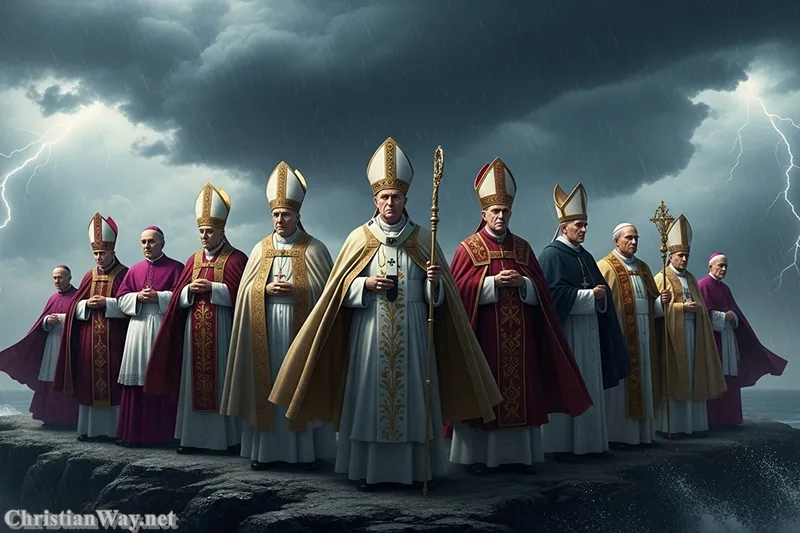
Peace be with you. As we gather here in the quiet reflection of our shared faith, I invite you to walk with me through the corridors of history. It is often easy to view the history of the Church as a series of dates, political maneuvers, or the rise and fall of empires. Yet, if we look with the eyes of faith, we see something far more profound: the slow, beautiful unfolding of the Truth, guided by the Holy Spirit. The papacy, instituted by Christ upon the Rock of Peter, has been the vessel for this unfolding, a steady hand steering the Barque of Peter through the stormy seas of the ages.
When we speak of “doctrine,” we must not think of dry, dusty rulebooks kept on high shelves. Rather, doctrine is the love language of God, clarified for our understanding. It is the Church saying, “This is who Jesus is,” or “This is how much He loves you.” The men we will discuss today were not merely administrators; they were theologians, mystics, and shepherds who, often in times of great crisis or confusion, stood up to articulate the mysteries of the Gospel with crystalline clarity.
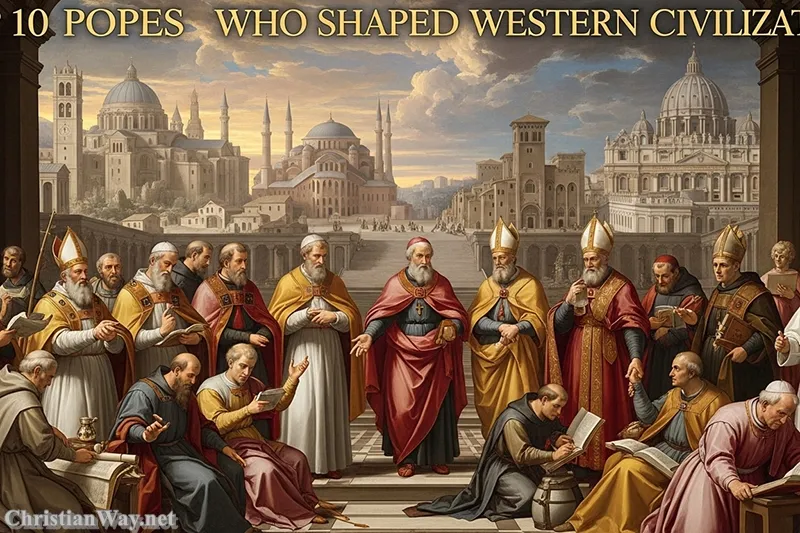
In this journey with Christian Way, we will meet pontiffs who defended the divinity of Christ, who championed the dignity of the worker, and who opened the doors of the Church to the modern world without compromising the ancient faith. Let us approach this list not as a ranking of power, but as a genealogy of grace, grateful for the wisdom handed down to us by these servants of God.
Table of the Top 10 Popes with the Greatest Impact on Catholic Doctrine
| Rank | Pontiff | Era | Primary Doctrinal Contribution |
|---|---|---|---|
| 10 | St. Pius X | 1903–1914 | The Eucharist & Anti-Modernism |
| 9 | St. Paul VI | 1963–1978 | Ecclesiology & Human Life |
| 8 | Leo XIII | 1878–1903 | Social Doctrine of the Church |
| 7 | Bl. Pius IX | 1846–1878 | Papal Infallibility & The Immaculate Conception |
| 6 | St. Gregory VII | 1073–1085 | Ecclesial Independence & Sacramental Validity |
| 5 | Innocent III | 1198–1216 | Transubstantiation & Confession |
| 4 | St. Gregory the Great | 590–604 | Liturgical Theology & Purgatory |
| 3 | St. John Paul II | 1978–2005 | Christian Anthropology & Moral Theology |
| 2 | St. Leo the Great | 440–461 | Christology (The Hypostatic Union) |
| 1 | St. Peter the Apostle | c. 30–64 | The Apostolic Foundation & The Messiah |
Top 10. St. Pius X: The Pope of the Eucharist
Imagine the early 20th century, a time when receiving Holy Communion was a rare, trembling event, reserved for the few and the ‘perfect.’ Into this rigid atmosphere stepped Giuseppe Sarto, known to history as Pius X. He looked upon the flock with the heart of a country parish priest and saw a spiritual starvation. He stripped away the Jansenist fear that kept the faithful from the altar and lowered the age of First Communion to the age of reason. He famously said, “Holy Communion is the shortest and safest way to heaven.”
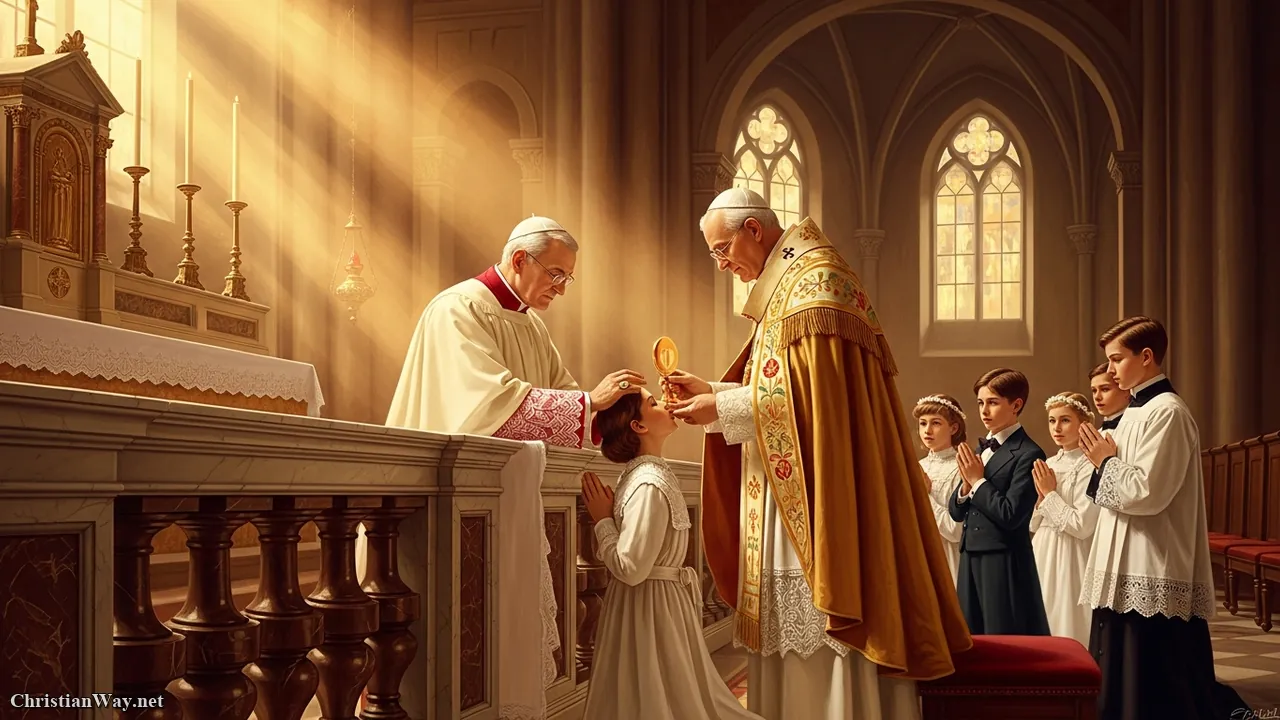
Theologically, his impact was two-fold and decisive. While he opened the banquet of the Lord to the little ones, he stood as a fortress against “Modernism,” which he termed the “synthesis of all heresies.” He understood that doctrine acts as a guardrail; if we dissolve the supernatural reality of Scripture into mere sentiment or history, we lose Christ. His encyclical Pascendi Dominici Gregis remains a masterwork of defending the objective truth of revelation.
For us today, St. Pius X offers a beautiful challenge: Do we treat the Eucharist as a prize for the righteous, or as medicine for the sick? He reminds us that sound doctrine is what protects the sanctity of the Sacraments, ensuring that when we approach the altar, we truly meet the Living God.
Spiritual Highlights
- Key Teaching: Quam Singulari (Decree on First Communion).
- Scripture: “Let the children come to me, and do not hinder them.” (Matthew 19:14)
- Legacy: Popularized frequent, daily reception of Holy Communion.
Top 9. St. Paul VI: The Pilgrim of Dialogue and Life
As we move into the complexities of the mid-20th century, we encounter the gentle, intellectual soul of Giovanni Montini. Paul VI carried the immense burden of closing the Second Vatican Council and guiding the Church through the cultural revolution of the 1960s. The world was changing rapidly—sexual mores were shifting, and technology was advancing—and the Church needed to speak to modern man without losing her ancient soul.
His doctrinal courage is most visibly seen in Humanae Vitae. Against immense pressure to conform to the spirit of the age regarding artificial contraception, Paul VI held firm to the biblical vision of marriage as both unitive and procreative. He prophesied that separating these two aspects would lead to a degradation of women and a loss of respect for human life. Beyond this, his work on Lumen Gentium helped clarify the Church’s self-understanding as the “People of God” and the “Mystical Body of Christ.”
Paul VI teaches us that truth is often lonely. To follow Christ in doctrine means we will not always receive the applause of the world. Yet, his writings on evangelization (Evangelii Nuntiandi) remind us that the Church exists to evangelize; that is her deepest identity. We are called to propose the truth with love, even when the wind blows against us.
Spiritual Highlights
- Key Teaching: Humanae Vitae (On Human Life).
- Scripture: “So God created mankind in his own image… male and female he created them.” (Genesis 1:27)
- Legacy: Defended the sanctity of life and the integrity of marital love.
Top 8. Leo XIII: The Prophet of Social Justice
Picture the late 19th century: the skies of Europe are blackened by the smoke of the Industrial Revolution. Men, women, and children toil in factories for pennies, treated as mere cogs in a machine, while socialism rises with a godless solution to their plight. Enter Leo XIII, an intellectual giant who saw that the Gospel had something specific to say about economics, labor, and human dignity. He refused to let the Church remain in the sacristy while God’s children suffered in the streets.
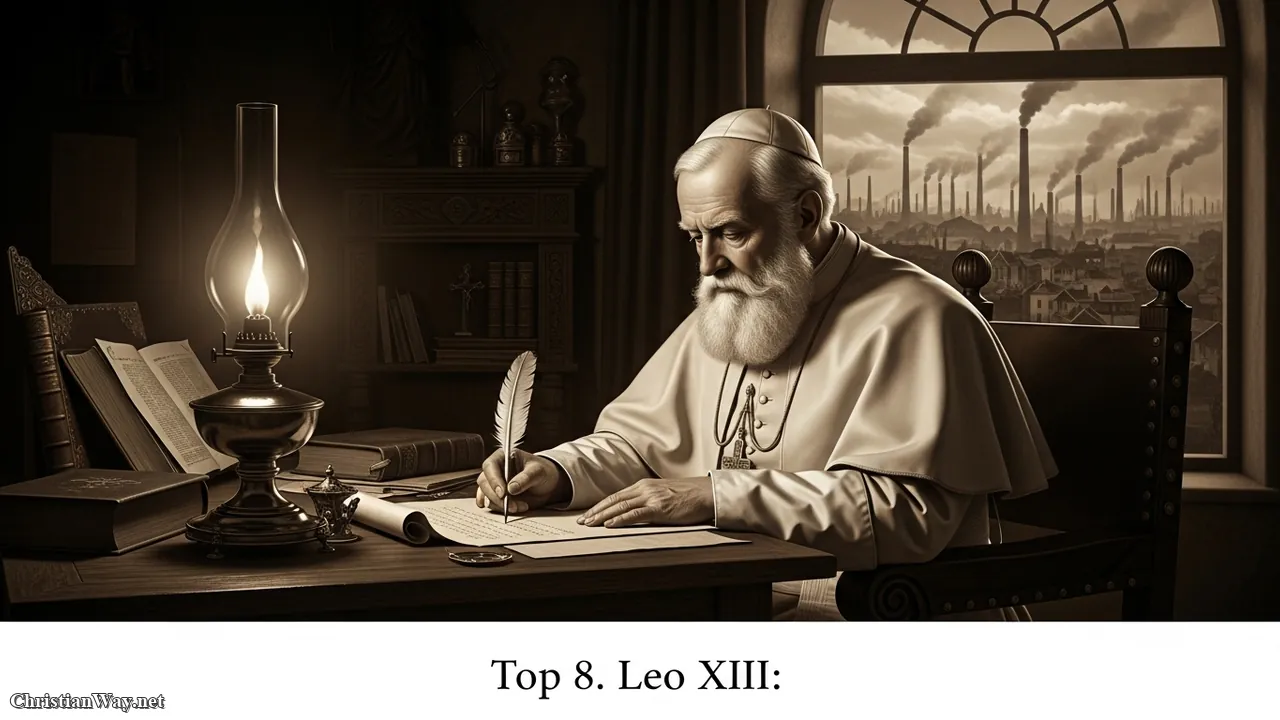
With his groundbreaking encyclical Rerum Novarum, Leo XIII laid the foundation for modern Catholic Social Teaching. He articulated a middle path between the greed of unbridled capitalism and the tyranny of socialism. He taught that capital needs labor, and labor needs capital, and that the worker is entitled to a just wage not merely by market forces, but by the laws of God. He affirmed the right to private property but insisted on the universal destination of goods.
This touches our lives deeply today. It reminds us that our faith is not just for Sunday morning. The doctrine of the Church extends to how we treat our employees, how we spend our money, and how we care for the poor. Leo taught us that to be a Christian is to seek the common good.
Spiritual Highlights
- Key Teaching: Rerum Novarum (Of New Things).
- Scripture: “The worker deserves his wages.” (1 Timothy 5:18)
- Legacy: Established the “Magna Carta” of social justice.
Top 7. Blessed Pius IX: The definer of Dogma
Blessed Pius IX holds the distinction of having the second-longest reign in history after St. Peter, but his contribution to doctrine is even more enduring than his tenure. He served during a time of violent upheaval in Italy, yet his gaze remained fixed on the eternal. He is the Pope of the Immaculate Conception. In 1854, after consulting the bishops of the world, he infallibly defined that Mary was preserved free from all stain of original sin from the first moment of her conception.
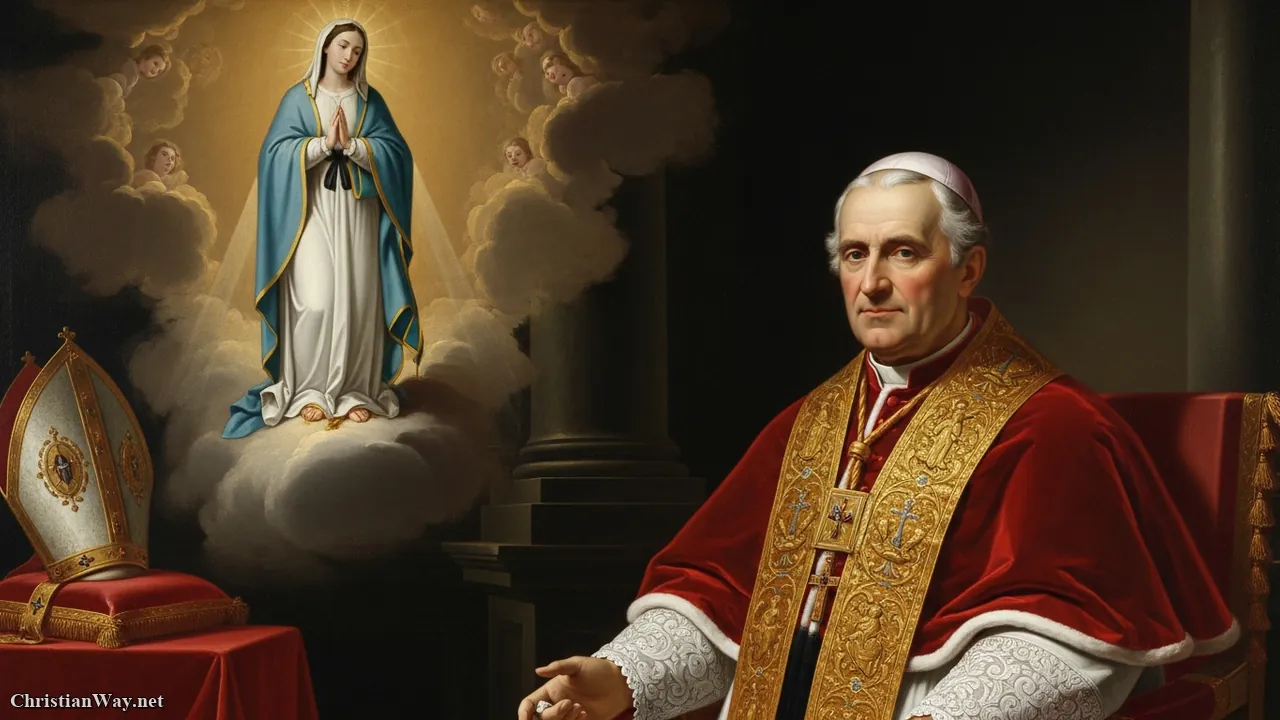
This was not a new invention, but a crystallization of what the faithful had held in their hearts for centuries. Furthermore, he convened the First Vatican Council, which formally defined the doctrine of Papal Infallibility—clarifying that when the Pope speaks ex cathedra on matters of faith and morals, he is preserved from error by the Holy Spirit. This was a crucial safeguard for the Church, ensuring that in matters of salvation, we have a sure compass.
While often viewed as a controversial figure in secular history, pastorally, Pius IX directs us to the purity of Mary. By defining her Immaculate Conception, he shows us the power of God’s grace to triumph over sin. He invites us to look at Mary to see the destiny of the Church: holy and spotless.
Spiritual Highlights
- Key Teaching: Ineffabilis Deus (The Immaculate Conception).
- Scripture: “Hail, full of grace, the Lord is with you!” (Luke 1:28)
- Legacy: Clarified the authority of the Magisterium and the holiness of Mary.
Top 6. St. Gregory VII: The Reformer of the Sanctuary
In the 11th century, the line between the Kingdom of God and the kingdoms of men had blurred dangerously. Kings were appointing bishops (lay investiture), and the priesthood was rife with corruption and simony (the selling of holy things). St. Gregory VII, a monk by heart and a lion by spirit, rose to purify the Bride of Christ. His reforms, known as the “Gregorian Reforms,” were essentially doctrinal assertions about the freedom and holiness of the Church.
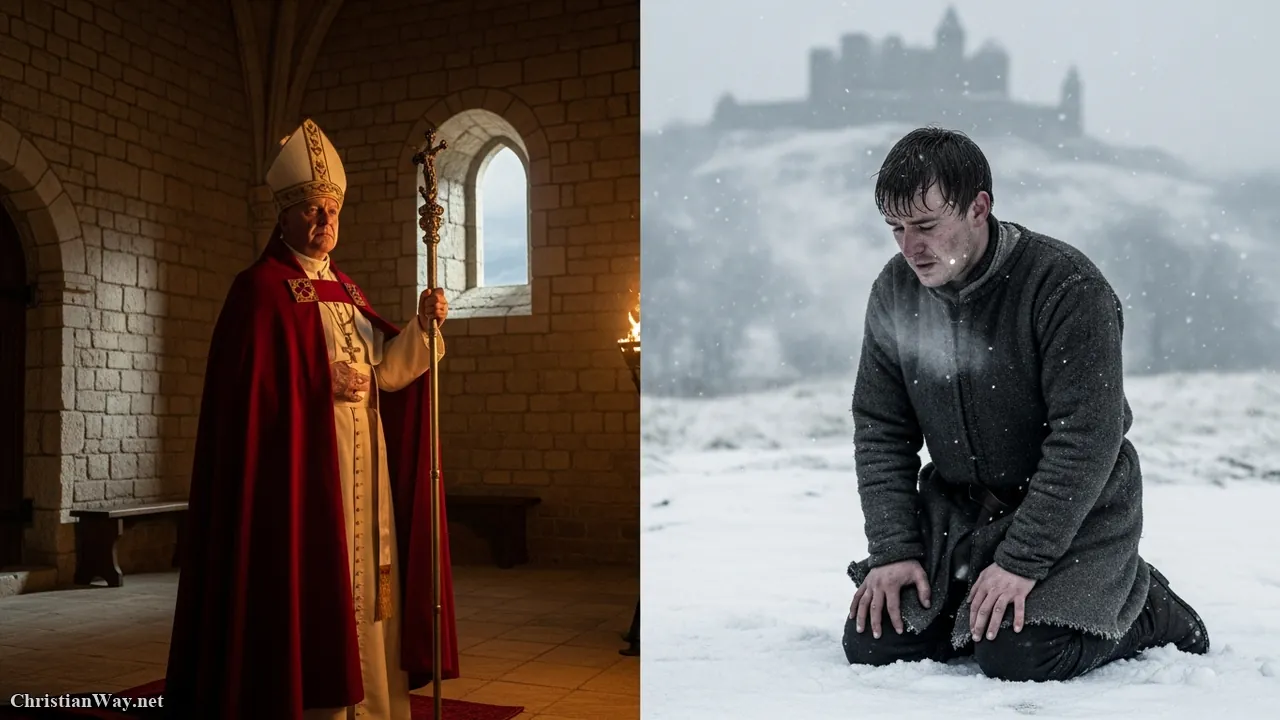
He taught that the spiritual power of the Church stems from Christ, not from the emperor. This was a radical defense of the spiritual independence of the Church. By enforcing clerical celibacy and attacking simony, he was re-asserting the sacramental theology that the priesthood belongs to Jesus alone, not to worldly ambition. He fought to ensure that the sacraments you receive are administered by shepherds whose allegiance is to heaven.
Gregory’s life reminds us that the Church must always be “in the world but not of it.” When the Church becomes too cozy with political power or worldly riches, her doctrine suffers. He calls us to a radical purity of heart, reminding us that the things of God cannot be bought or sold.
Spiritual Highlights
- Key Teaching: Dictatus Papae (Affirming the independence of the Church).
- Scripture: “You cannot serve both God and money.” (Matthew 6:24)
- Legacy: Secured the liberty of the Church from secular control.
Top 5. Innocent III: The Guardian of the Mystery
We turn now to the high Middle Ages, a time of cathedrals and scholasticism. Innocent III was perhaps the most powerful Pope in history politically, but his doctrinal legacy is what feeds us today. He convened the Fourth Lateran Council in 1215, a massive gathering that gave us the precise theological language we use to describe the miracle of the Altar: “Transubstantiation.”
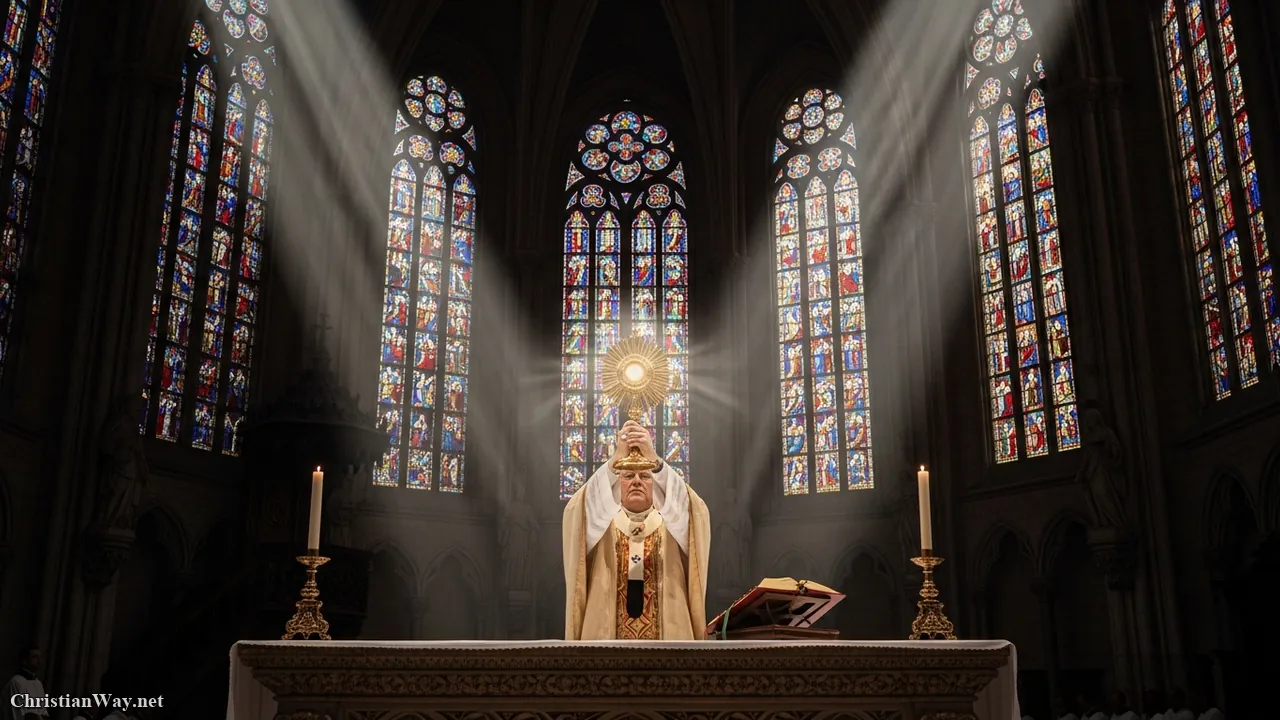
Before this, the Church knew the bread and wine became the Body and Blood of Christ, but Innocent III guided the definition that explained how the substance changes while the accidents (appearance) remain. This council also mandated the annual confession of sins and reception of the Eucharist at Easter. He brought a structural rigor to the sacramental life of the faithful, ensuring that grace was not just a theoretical concept, but a lived reality through the sacraments.
In a world that often seeks to reduce miracles to symbols, Innocent III’s legacy stands firm. He teaches us that God acts concretely in the material world. When we kneel at Mass, we are not participating in a mere memorial, but a profound, substantive miracle initiated by Christ and guarded by the Church.
Spiritual Highlights
- Key Teaching: Canons of the Fourth Lateran Council.
- Scripture: “This is my body, which is given for you.” (Luke 22:19)
- Legacy: Defined Transubstantiation and the duty of annual Confession.
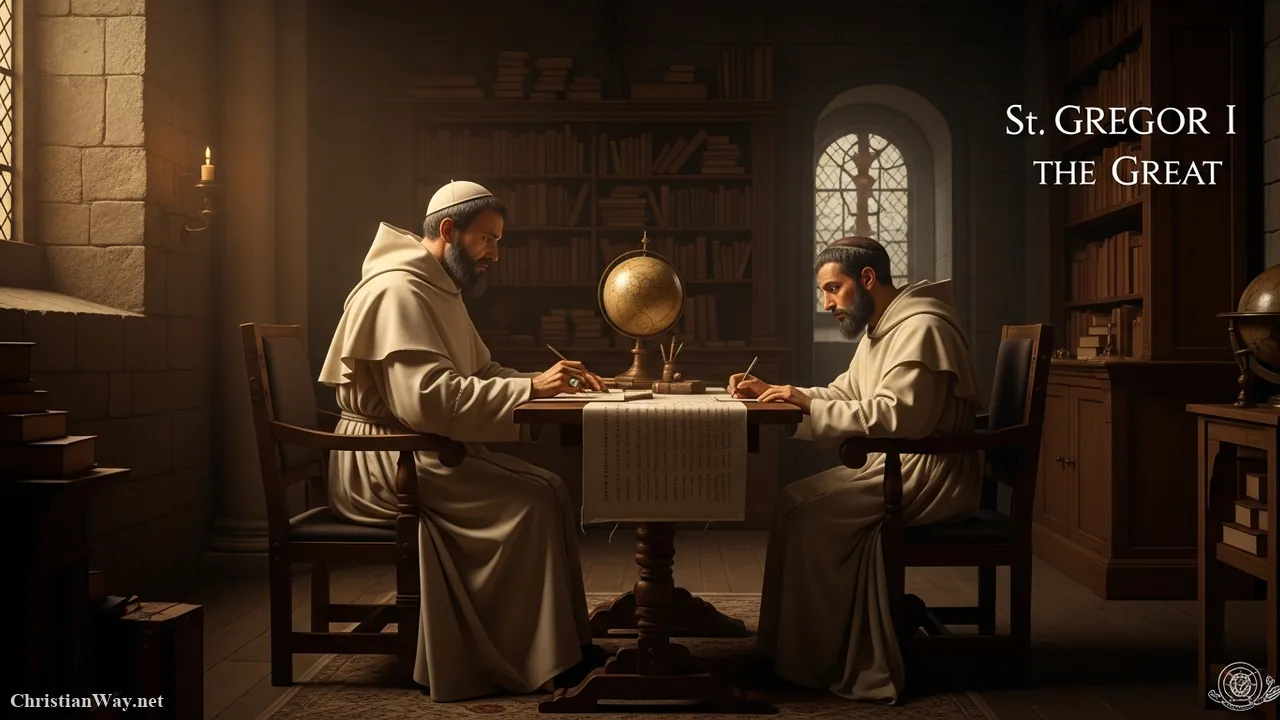
Top 4. St. Gregory the Great: The Servant of Servants
As the Roman Empire crumbled and darkness descended over Europe, one man kept the light of learning and faith burning. St. Gregory the Great was the first monk to become Pope. He did not want the job; he wanted the silence of the cloister. Yet, his doctrinal output shaped the entire medieval mind. He is the father of the medieval papacy, but he preferred the title Servus Servorum Dei—Servant of the Servants of God.
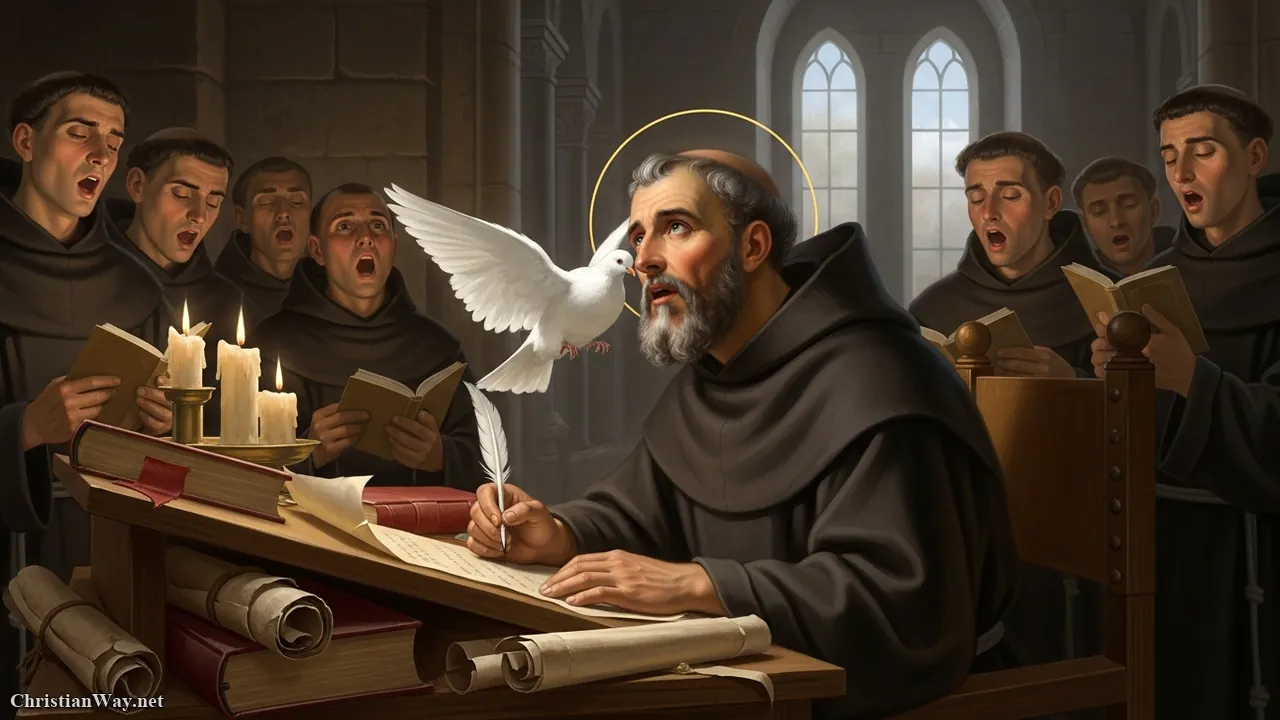
Doctrinally, Gregory clarified the existence of Purgatory, helping the faithful understand the purifying love of God that continues even after death. He revitalized the Liturgy (giving us Gregorian Chant) and wrote the Pastoral Rule, which set the standard for what a bishop and priest should be: a physician of souls. He emphasized the balance between the contemplative life (prayer) and the active life (service).
Gregory comforts us by showing that even in the collapse of civilization, the Gospel remains stable. His teachings on prayer invite us to find a “cloister of the heart” amidst our busy lives. He teaches us that true authority is found in service, and that beauty—in music and liturgy—is a path to God.
Spiritual Highlights
- Key Teaching: Regula Pastoralis (The Book of Pastoral Rule).
- Scripture: “Whoever wants to become great among you must be your servant.” (Mark 10:43)
- Legacy: Systematized the Liturgy and the doctrine of Purgatory.
Top 3. St. John Paul II: The Witness to Hope
Many of us remember the voice, the vigor, and the suffering of Karol Wojtyła. St. John Paul II was a titan who engaged in a wrestling match with the atheistic humanism of the 20th century. His doctrinal contribution is vast, but it centers on one question: “Who is man?” In a century that saw humanity degraded by totalitarianism, he proclaimed that “Christ reveals man to himself.”
He gave the Church the Catechism of the Catholic Church, a comprehensive synthesis of the faith that had not been seen for 400 years. His “Theology of the Body” revolutionized our understanding of human sexuality, not as a list of “don’ts,” but as a glorious “do”—a call to image the Trinity through self-giving love. His encyclicals, such as Veritatis Splendor, reasserted the existence of absolute moral truths in an age of relativism.
John Paul II urges us to “Be not afraid.” His doctrine is a doctrine of hope. He reminds us that we are not random accidents of evolution, but beings made for greatness, capable of choosing the good. He taught us that the moral law is not a cage, but the path to true freedom.
Spiritual Highlights
- Key Teaching: Theology of the Body and the Catechism.
- Scripture: “The truth will set you free.” (John 8:32)
- Legacy: Re-integrated faith and reason; articulated the dignity of the human person.
Top 2. St. Leo the Great: The Doctor of the Incarnation
In the 5th century, the Church was being torn apart by confusion over who, exactly, Jesus was. Was He human? Was He divine? Was He a mixture of both? The confusion threatened the very core of salvation. St. Leo the Great stands as a pillar of orthodoxy. With the barbarian hordes literally at the gates of Rome, Leo wrote his famous “Tome”—a letter to the Council of Chalcedon.
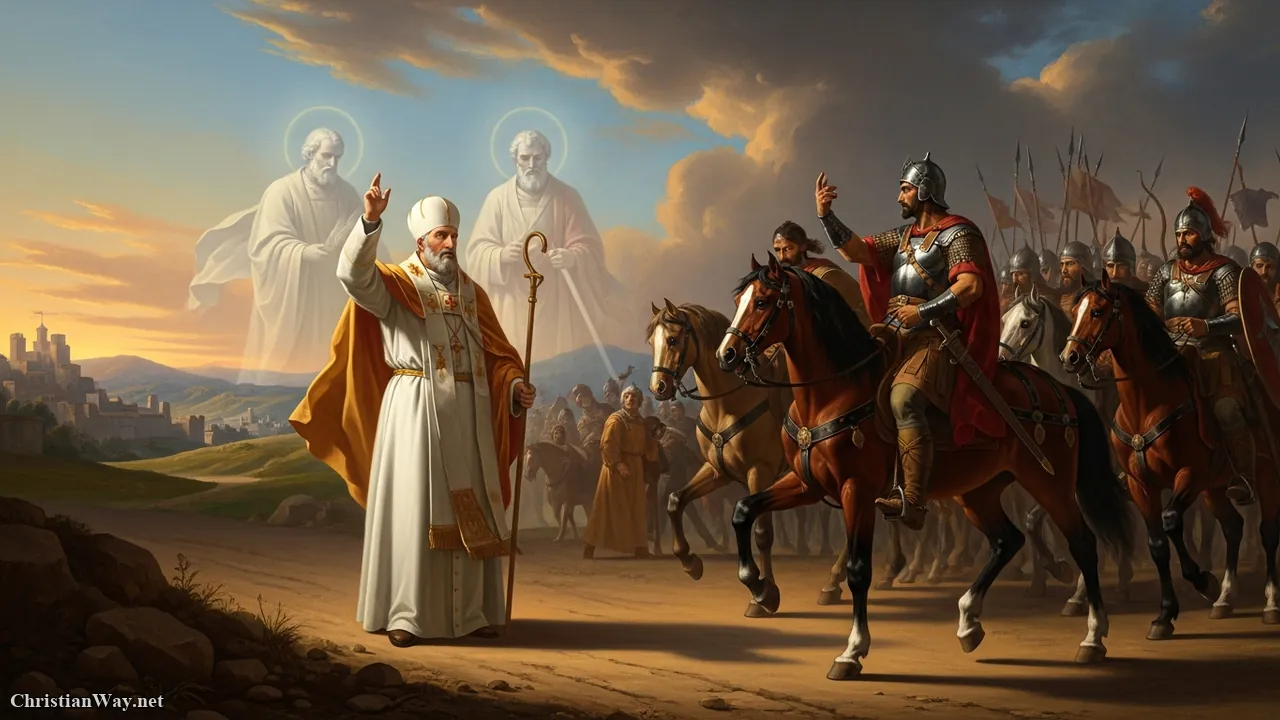
When his letter was read, the bishops cried out, “Peter has spoken through Leo!” He clarified the Hypostatic Union: that in the one person of Jesus Christ, there are two distinct natures—fully God and fully man—united without confusion, change, division, or separation. This is the bedrock of our faith. If Christ is not man, He cannot represent us; if He is not God, He cannot save us.
Leo’s boldness challenges us to know our faith. In a world that often tries to make Jesus merely a “good teacher” or a “revolutionary,” St. Leo reminds us of the awe-inspiring reality of the Incarnation. God became man so that man might become like God. His doctrine preserves the mystery of Christmas for every generation.
Spiritual Highlights
- Key Teaching: The Tome of Leo (Council of Chalcedon).
- Scripture: “The Word became flesh and made his dwelling among us.” (John 1:14)
- Legacy: Defined the two natures of Christ (Hypostatic Union).
Top 1. St. Peter the Apostle: The Rock of Revelation
We arrive at the source. While he did not write encyclicals or convene ecumenical councils in the modern sense, Simon, son of Jonah, is the fountainhead of all papal doctrine. It was Peter who, under the inspiration of the Father, first articulated the dogma upon which the Church is built: “You are the Christ, the Son of the living God.”

Jesus responded by giving him the Keys of the Kingdom. Every subsequent Pope draws his authority from this moment. In the Acts of the Apostles, it is Peter who interprets the Resurrection at Pentecost, and Peter who receives the revelation that the Gentiles are to be welcomed into the Church. His Epistles are part of the inspired Canon of Scripture, teaching us about the priesthood of all believers and the need to stand firm in times of trial.
St. Peter is number one because he is the prototype. He shows us that doctrine is not about intellectual prowess—remember, he was a fisherman, not a scholar—but about grace and obedience to revelation. He stumbled, he denied, yet he returned to feed the sheep. He teaches us that the primary doctrine of the papacy is love for Jesus. “Simon, son of John, do you love me?” That is the question that echoes through the ages.
Spiritual Highlights
- Key Teaching: The Confession of Faith at Caesarea Philippi.
- Scripture: “You are Peter, and on this rock I will build my church.” (Matthew 16:18)
- Legacy: The office of the Papacy itself and the inclusion of Gentiles.
Reflect and Pray
As we close this book of history, we see a golden thread running from the fishing nets of Galilee to the balcony of St. Peter’s Basilica. These men were earthen vessels, yet they carried a treasure that belongs to us all. Whether it was Leo staring down Attila the Hun or John Paul II staring down communism, the strength of the Papacy has always been the strength of the Truth.
Let us pray for our current Holy Father, and for the Church, that we may always be attentive to the voice of the Good Shepherd. May the courage of these ten men inspire us to study our faith deeper and love our Lord more dearly.
— Fr. John Matthew, for Christian Way