Saints in Eastern Orthodoxy reveal Christ’s transforming grace through prayer, witness, worship, icons, and holy lives today.
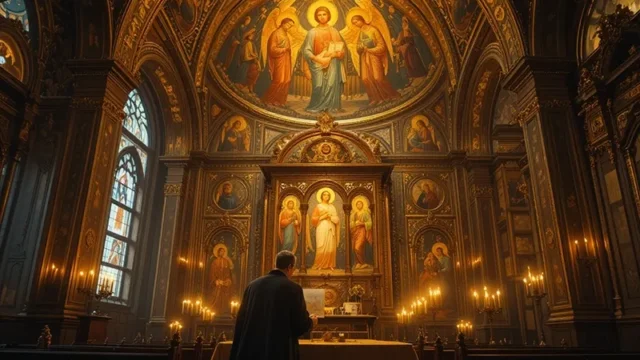
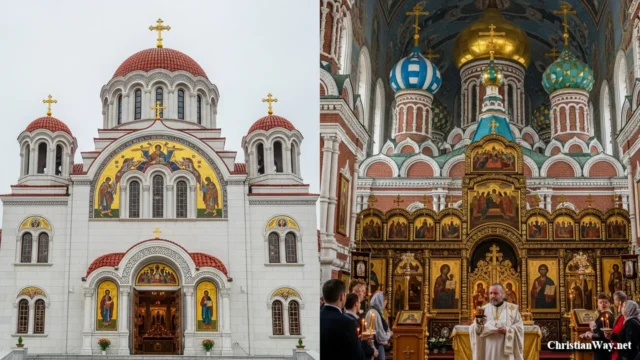
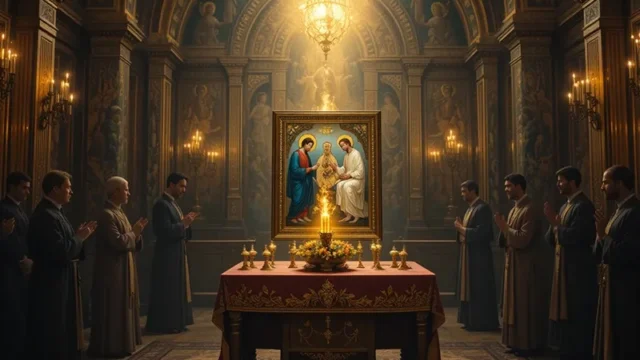
When we enter an Eastern Orthodox church, we are immediately surrounded by faces. Christ looks upon us from the holy icons. The Virgin Mary holds the incarnate Lord in her arms. Apostles, prophets, martyrs, bishops, monastics, missionaries, mothers, fathers, rulers, physicians, and humble servants stand together as a radiant assembly.
To someone unfamiliar with Orthodox Christianity, this presence of the saints may seem overwhelming. Why are there so many icons? Why do believers kiss them? Why are prayers addressed to saints? Does this devotion distract from Jesus Christ?
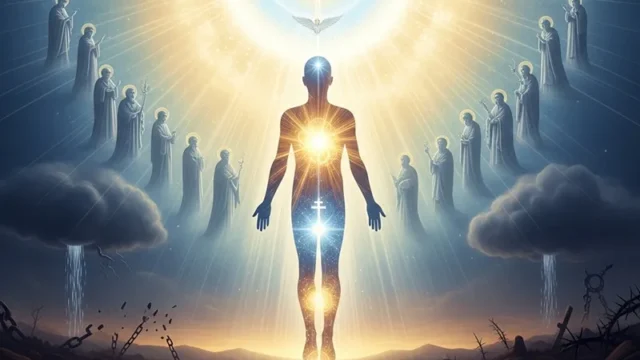
For the Orthodox Church, the saints do not compete with Christ. They reveal what His grace can accomplish in human lives. They are not alternative saviors, lesser gods, or spiritual substitutes for the Lord. They are men and women who have been united to Christ so deeply that His holiness has become visible through their repentance, courage, compassion, purity, endurance, and love.
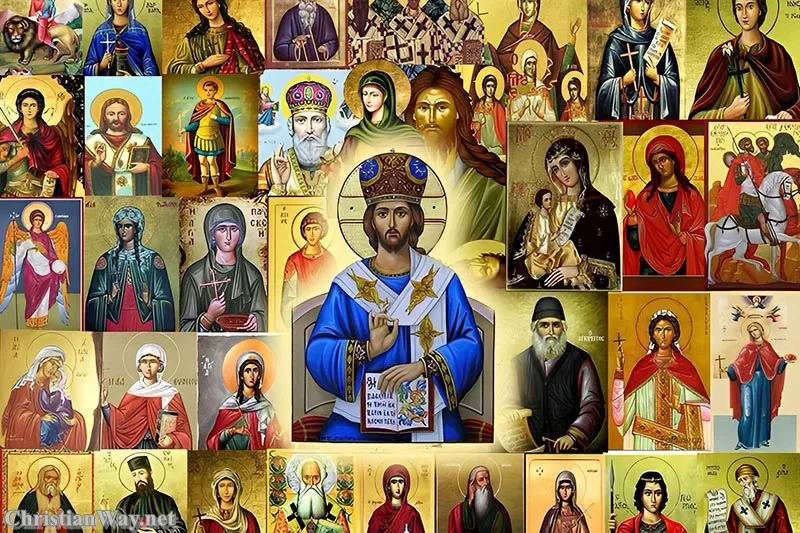
The saints are therefore not placed between the Christian and Jesus as barriers. They stand beside the Christian as members of one spiritual family, pointing toward the Savior and bearing witness to His victory over sin and death.
At the center of every authentic Orthodox devotion to the saints is the confession that Jesus Christ alone is Lord. Every saint receives grace from Him. Every saint is saved by Him. Every saint prays through Him. Every saint leads the faithful back to Him.
What Is a Saint in Eastern Orthodox Christianity?
The word saint comes from a term meaning “holy one.” In the New Testament, the apostles sometimes use the word broadly for the members of the Christian community. Saint Paul addresses believers as those who are “called to be saints,” meaning people who have been set apart for God and invited to live in holiness.
In this broad sense, holiness is the vocation of every Christian. Baptism is not merely entrance into an institution. It is the beginning of a life of communion with Christ. Every baptized believer is called to repentance, prayer, love, mercy, and participation in the life of God.
Yet the Orthodox Church also uses the word saint in a more particular way. Certain Christians are publicly recognized because the grace of God has shone through their lives with exceptional clarity. Their holiness may have appeared through martyrdom, missionary labor, theological wisdom, ascetic struggle, pastoral service, care for the suffering, faithful marriage, hidden sacrifice, or lifelong repentance.
The Church does not teach that saints were naturally flawless. They were not born without weakness, temptation, fear, or sorrow. Many passed through serious struggles. Some had troubled pasts. What distinguishes them is not the absence of human frailty but their profound response to divine grace.
A saint is a person who allowed Christ to transform weakness into humility, suffering into compassion, knowledge into wisdom, and earthly life into an offering of love.
Orthodox teaching therefore understands sanctity as the work of God within a freely responding human person. The saints are holy because God is holy and because they have become receptive to His presence through faith, repentance, prayer, the sacraments, and obedience.
The Orthodox Church in America describes glorification not as the act of creating a saint but as the Church’s recognition that God has already revealed His holiness through a particular person.
Holiness Belongs to God
Eastern Orthodox theology begins not with human achievement but with the holiness of God.
In the vision of Isaiah, the seraphim cry that the Lord is “holy, holy, holy.” In the Book of Revelation, heavenly worship again proclaims the perfect holiness of God. Human beings do not possess holiness independently. God alone is holy by nature.
The saints are holy by participation.
This distinction is essential. Orthodox Christians do not believe that saints become divine beings alongside God. They do not acquire an independent supernatural power. Whatever light, wisdom, healing, or spiritual strength appears in them is a gift of divine grace.
The image often used by the Church Fathers is that of iron placed in fire. The iron remains iron, but it becomes filled with the fire’s heat and light. In a similar way, a human person remains fully human while being filled and transformed by the grace of God.
This transformation is closely connected with the Orthodox doctrine of theosis, often translated as deification or participation in the divine life. Theosis does not mean becoming God by nature. It means sharing by grace in the life that God freely gives through Jesus Christ and the Holy Spirit.
Saint Peter writes that Christians are called to become “participants of the divine nature” while escaping the corruption of sinful desire. Saint Paul speaks of believers being transformed from glory to glory by the Spirit. Christ prays that His disciples may live in profound communion with Him and with the Father.
The saints show that these biblical promises are not abstract ideas. Divine grace can truly renew the human heart.
Saints as Witnesses to Jesus Christ
The saints are first of all witnesses.
Some witnessed through preaching. Some crossed seas, deserts, mountains, and hostile territories to proclaim the Gospel. Some defended Christian teaching during periods of confusion. Some cared for the poor, the sick, the abandoned, and the persecuted. Others remained almost unknown during their earthly lives, serving God quietly within monasteries, villages, homes, hospitals, prisons, or places of exile.
The martyrs gave the most visible form of witness. The Greek word martyr itself means “witness.” By refusing to deny Christ even under torture or the threat of death, Christian martyrs testified that communion with Him was more precious than earthly survival.
Their courage was not understood as love of suffering or contempt for life. Christians were not encouraged to seek persecution recklessly. Martyrdom was received as a final act of faithfulness when no morally faithful escape was possible.
Other saints bore what Orthodox tradition sometimes calls a bloodless martyrdom. They surrendered their self-will through prayer, fasting, chastity, poverty, obedience, and service. Parents may offer themselves through patient love for their children. Pastors may endure hardship for their people. Christians in ordinary professions may refuse corruption and practice mercy even when honesty brings personal loss.
The forms of holiness differ, but the center remains the same: Jesus Christ.
The saints are not admired merely as heroes of religious history. Their deepest significance lies in the way their lives bear witness to the death and resurrection of the Lord.
The Biblical Foundation for the Communion of Saints
Orthodox devotion to the saints is rooted in a vision of the Church that includes both heaven and earth.
Death does not separate faithful Christians from Christ. Jesus teaches that God is not the God of the dead but of the living. Saint Paul declares that neither death nor life can separate believers from the love of God in Christ Jesus.
The Church is therefore not divided into two unrelated communities: one living on earth and another lost in the past. Those who have died in Christ remain alive in Him. The faithful on earth and the faithful in heaven belong to one Body whose head is Christ.
The Letter to the Hebrews describes believers as surrounded by a “great cloud of witnesses” and immediately calls them to run the spiritual race while looking to Jesus, the pioneer and perfecter of faith. The saints do not replace this focus on Christ. Their witness encourages the Church to look more faithfully toward Him.
The Book of Revelation presents heavenly worship in which the elders hold golden bowls of incense identified with the prayers of the saints. This image helped shape the Christian understanding that heavenly life includes worship, prayer, and participation in God’s loving purposes.
Scripture also repeatedly commands Christians to pray for one another. Saint James teaches that the prayer of a righteous person is powerful and effective. Orthodox Christians reason that those who have been perfected in Christ do not cease to love or pray when they enter His heavenly presence.
The communion of saints is therefore an expression of the Church’s unity in Christ. It is not a claim that deceased Christians possess divine knowledge by their own nature. Rather, the Church entrusts the mystery of their heavenly awareness and intercession to God, through whom all members of Christ’s Body remain united.
Why Orthodox Christians Ask Saints to Pray
When Orthodox Christians say, “Saint Nicholas, pray for us,” they are asking for intercession.
The underlying logic is similar to asking a Christian friend, pastor, parent, or fellow parishioner to pray. The request does not imply that God is unwilling to listen directly. Nor does it suggest that Christ’s mediation is insufficient.
Christians pray for one another precisely because Christ has united them to Himself. All Christian intercession depends on the one saving mediation of Jesus Christ.
The Orthodox Church teaches that prayer is ultimately offered in the Holy Spirit, through the Son, to the Father. At the same time, Christians may ask the saints to join their prayers because the saints are fellow members of the Church who already live in the presence of God. Official Orthodox catechetical material describes them as helpers, intercessors, and glorified members of the same ecclesial communion.
The word pray can sometimes create confusion in modern English. Historically, it could simply mean “ask” or “entreat.” In Orthodox practice, a prayer addressed to a saint is not an act of divine adoration. It is a request such as, “Holy apostle, ask Christ to strengthen me,” or, “Holy martyr, pray that I may remain faithful.”
The saint is never regarded as the source of grace. God is the source. The saint intercedes.
A healthy Orthodox prayer to a saint should therefore deepen confidence in Christ rather than create fear, superstition, or dependence on a spiritual intermediary. When devotion becomes detached from repentance, Scripture, the Eucharist, or the commandments of Christ, it has lost its proper orientation.
Worship Belongs to God Alone
Eastern Orthodox theology makes a clear distinction between worship and veneration.
Worship in the fullest sense belongs only to the Holy Trinity: the Father, the Son, and the Holy Spirit. No creature, however holy, may receive the worship owed to God.
Saints are honored or venerated because the grace of God is visible in them. Honor directed toward a saint ultimately gives glory to the God who sanctified that person.
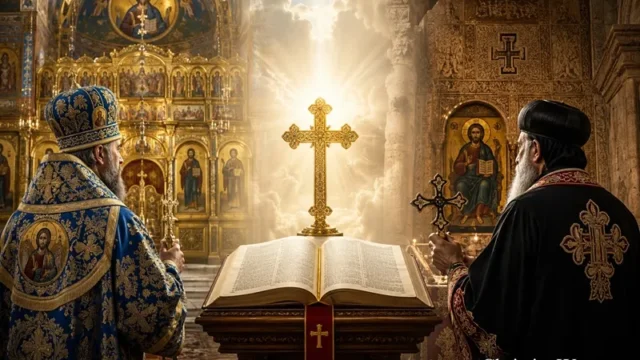
This distinction can be compared with the respect shown to the Bible. Christians may kiss a Gospel book, carry it solemnly, place it on the altar, or bow before it. They are not worshiping paper, ink, leather, or metal. Their bodily reverence expresses love for the divine Word proclaimed through the book.
Likewise, when an Orthodox Christian kisses an icon of a saint, the physical action is directed beyond the material object toward the person represented. Official Greek Orthodox teaching explains that the honor shown to an icon passes to its prototype, while worship remains due to God alone.
Because human beings are embodied, love and reverence are expressed through physical actions. We stand, bow, kneel, embrace, light candles, offer incense, make the sign of the cross, and kiss sacred objects. Orthodox worship does not treat the body as spiritually irrelevant. The body participates in prayer because the whole person is called to communion with God.
The Early Christian Roots of Honoring Saints
The veneration of saints did not suddenly appear in the medieval period. Its earliest and clearest form developed around the memory of the martyrs.
Christians gathered at the burial places of those who had died for Christ. They remembered the anniversary of a martyr’s death as a heavenly birthday, celebrated the Eucharist, preserved accounts of the martyr’s witness, and encouraged future generations to imitate that faithfulness.
One of the earliest surviving examples is The Martyrdom of Polycarp, an account associated with the second-century bishop of Smyrna. The text describes Christians gathering the martyr’s remains and hoping to commemorate the anniversary of his death for the encouragement of future believers. It also carefully distinguishes devotion to the martyrs from the worship offered to Christ.
As persecution ended and Christianity became publicly established, devotion expanded beyond martyrs. Christians honored confessors who had suffered without being killed, bishops who defended the faith, teachers who explained Scripture, monastics who pursued lives of prayer, missionaries who evangelized new peoples, and righteous laypeople whose holiness had become widely known.
This development did not remove Christ from the center of Christian worship. The saints were remembered because they belonged to Him. Their feast days proclaimed what His grace had accomplished.
The Orthodox liturgical calendar still preserves this ancient rhythm. Each day commemorates particular saints or sacred events, allowing the Church to remember the Gospel through concrete human lives.
Saints and Holy Icons
Icons are inseparable from the Orthodox experience of the saints.
An icon is not intended to be an ordinary portrait. It is a theological image shaped by prayer, Scripture, liturgy, and inherited artistic tradition. It does not merely show what a person may have looked like during earthly life. It presents the saint as a person transfigured by the light of Christ.
The meaning of icons is ultimately rooted in the Incarnation.
The invisible Son of God truly became human. He entered history, received a human body, was seen and touched, suffered under Pontius Pilate, died, and rose bodily from the grave. Because the Word became flesh, Orthodox theology teaches that Christ may be depicted according to His humanity.
An icon of Christ therefore affirms that the Incarnation was real. Icons of the saints affirm that the same incarnate Lord truly sanctifies human beings.
The use of sacred images became the subject of intense controversy during the Byzantine iconoclastic periods. The Seventh Ecumenical Council, held at Nicaea in 787, defended the presence and veneration of icons of Christ, the Mother of God, the angels, and the saints. The council distinguished respectful veneration from the worship that belongs to God alone and taught that the honor given to the image passes to the person represented.
The restoration of icons is still celebrated on the first Sunday of Great Lent, known as the Sunday of Orthodoxy. In Orthodox churches, icons are honored with candles, incense, bows, and kisses, but official teaching continues to distinguish such veneration from divine worship.
An icon invites relationship and remembrance. It says that the Gospel has entered real history and transformed real people. The saints look toward the worshiper not to draw attention to themselves but to invite the worshiper into the same life of repentance and communion with Christ.
Why the Orthodox Church Honors Relics
Orthodox Christianity also venerates the relics of saints.
A relic may be part of a saint’s bodily remains or an object closely connected with the saint’s life. This practice can be disturbing to modern readers, especially in cultures where the dead are kept distant from daily religious life. Yet Orthodox reverence for relics arises from its understanding of creation, the body, the Incarnation, and the resurrection.
The human body is not a temporary prison from which the soul must escape. God created the body. The Son of God assumed a real human body. Christ rose bodily from the dead, and Christians confess the future resurrection of the body.
A saint’s physical life mattered. With the body, the saint prayed, fasted, worked, suffered, embraced the sorrowful, received the Eucharist, served the poor, and carried out acts of mercy. The body participated in holiness.
Scripture also contains instances in which God works through physical matter. A dead man is restored to life after touching the bones of the prophet Elisha. The sick seek healing through cloths that had touched Saint Paul. The woman suffering from hemorrhage reaches for the garment of Christ. These passages do not teach magical power within objects; they show that God may communicate grace through material creation.
Orthodox teaching therefore regards relics as testimonies to the sanctification of the whole person and to the promised resurrection. Greek Orthodox explanations of relics emphasize that saints are sanctified in body as well as soul and connect the practice with biblical and early Christian tradition.
Relics must never be treated as charms. They are not objects to be manipulated for protection, wealth, success, or guaranteed healing. Their proper purpose is prayer, thanksgiving, remembrance, repentance, and hope in the resurrection.
How a Person Is Recognized as a Saint
Eastern Orthodoxy often uses the word glorification as well as canonization.
Neither term means that church authorities manufacture holiness or determine who has entered heaven. God alone knows every human heart. The Church recognizes or confirms a holiness that is believed to have already been revealed by divine grace.
Historically, devotion often begins locally. Christians remember a person’s life, visit the person’s grave, preserve teachings or testimonies, ask for prayers, and observe the spiritual fruit associated with that memory. Over time, a bishop or Holy Synod may investigate the person’s life, teaching, reputation, and continuing veneration.
The precise procedure is not identical in every autocephalous Orthodox Church. Eastern Orthodoxy does not have one worldwide administrative office that conducts every glorification. Local churches have synodal processes shaped by their canonical and historical circumstances.
Common elements may include examination of the candidate’s life and doctrine, evidence of lasting devotion among the faithful, the preparation of a written life, the composition of liturgical hymns, the painting of an icon, and the establishment of a feast day. Claims of miracles may be considered, but spectacular miracles are not the sole measure of sanctity.
Orthodox sources emphasize that official recognition normally follows the living devotion of the faithful rather than creating it from nothing. The person’s name is then entered into the Church’s calendar and publicly commemorated in worship.
A recent example is Saint Olga of Kwethluk, a Yup’ik Orthodox woman from Alaska known for humility, generosity, care for women, and service to those who suffered. The Holy Synod of the Orthodox Church in America resolved in 2023 that she be numbered among the saints, and her liturgical glorification was celebrated in Alaska from June 19–22, 2025. She became the first North American woman and the first Yup’ik person formally glorified as a saint in the Orthodox Church.
Her recognition is a reminder that sainthood is not limited to ancient empires, famous monasteries, ordained clergy, or one ethnic culture. Holiness can flower in a remote village, within family life, through hidden service, and among communities overlooked by the powerful.
The Different Ranks of Orthodox Saints
Orthodox liturgical tradition uses several categories or ranks to describe the principal forms of Christian witness.
These categories do not function as a hierarchy of spiritual value. A martyr is not necessarily more loved by God than a righteous parent, nor is a bishop automatically holier than a layperson. The categories describe different ways in which grace became visible.
Prophets
The prophets proclaimed the word of God and prepared Israel for the coming of Christ. They include figures such as Moses, Elijah, Isaiah, Jeremiah, Daniel, and John the Baptist, whom Orthodox tradition often calls the Forerunner because he prepared the way for the Lord.
Apostles and Equals-to-the-Apostles
The apostles were sent by Christ to proclaim the Gospel. The title Equal-to-the-Apostles is given to certain missionaries and rulers whose work had exceptional importance in bringing peoples to the Christian faith.
Examples include Saint Mary Magdalene, Saint Nina of Georgia, Saints Cyril and Methodius, and Saint Vladimir of Kyiv.
Martyrs and Great Martyrs
Martyrs died because of their confession of Christ. The title Great Martyr is traditionally associated with martyrs whose suffering and witness became especially prominent in the memory of the Church, such as Saint George or Saint Demetrios.
Hieromartyrs and Monastic Martyrs
A hieromartyr is an ordained bishop or priest who suffered martyrdom. A monastic martyr is a monk or nun killed for the faith.
Confessors
Confessors endured imprisonment, torture, exile, or persecution for Christ but were not killed directly by their persecutors.
Hierarchs
Hierarchs are bishops remembered for holy pastoral leadership, theological teaching, defense of the faith, or care for the Church. Saints Basil the Great, Gregory the Theologian, and John Chrysostom are honored together as the Three Holy Hierarchs.
Venerable Monastics
Monastic saints are often called venerable. Through prayer, fasting, repentance, spiritual guidance, hospitality, and ascetic struggle, they sought undivided devotion to God.
Saint Anthony the Great, Saint Mary of Egypt, Saint John Climacus, Saint Seraphim of Sarov, and Saint Silouan the Athonite are well-known examples.
Righteous Saints
The righteous include holy laypeople, married Christians, parents, rulers, physicians, workers, and others who served Christ faithfully within ordinary social life.
Unmercenary Healers
Certain saints are called unmercenary physicians because they used medical knowledge or gifts of healing without demanding payment. Saints Cosmas and Damian are among the best-known examples.
Fools for Christ
Fools for Christ adopted forms of radical humility that concealed their holiness and challenged worldly pride. Their vocation was exceptional and should not be imitated superficially. Their lives are remembered as prophetic protests against vanity, hypocrisy, and the pursuit of social honor.
Orthodox sources commonly summarize the major ranks as apostles, martyrs, prophets, hierarchs, monastics, and the righteous, while acknowledging additional titles shaped by particular forms of service.
The Unique Place of the Theotokos
Among all the saints, the Virgin Mary holds a unique place in Eastern Orthodox devotion.
She is commonly called the Theotokos, a Greek title meaning “God-bearer” or “Mother of God.” This title does not mean that Mary existed before God or caused the divine nature of Christ. It confesses that the person born from her is truly God the Son made flesh.
The title therefore protects the Church’s teaching about Jesus Christ. The one whom Mary bore is not a merely human person later joined to God. He is the eternal Son, fully divine and fully human.
The Third Ecumenical Council at Ephesus in 431 affirmed the title Theotokos within the Church’s defense of the unity of Christ’s person. Orthodox teaching and worship have continued to honor Mary under this title.
Mary is honored above the other saints because of her unique relationship with the Incarnation and her freely given response to God. At the Annunciation she receives the angelic message with faith and obedience. Her words, “Let it be with me according to your word,” express a surrender that becomes a model for every Christian. Greek Orthodox teaching emphasizes both God’s gracious choice and Mary’s willing response.
Orthodox Christians do not worship Mary. She remains a human creature saved by the grace of her Son. Yet she is regarded as the foremost example of humanity’s cooperation with God and the motherly intercessor of the Church.
In icons she is frequently shown holding Christ and directing attention toward Him. Even her visual presence is Christ-centered: she offers the Savior to the world.
Saints in Orthodox Worship
The saints are woven into the daily worship of the Church.
During the Divine Liturgy, the Church remembers the patriarchs, prophets, apostles, evangelists, martyrs, confessors, ascetics, and every righteous person perfected in faith. The Theotokos is remembered with particular honor, while the saints of the day and departed faithful are also commemorated.
This remembrance expresses the belief that the Eucharist is not a private gathering limited to the people visible in one building. It is the worship of the whole Church united in Christ, embracing both heaven and earth.
Every day of the Orthodox calendar includes commemorations. Hymns recount the saints’ witness, biblical readings illuminate their vocation, and prayers ask for their intercession.
The Sunday after Pentecost is celebrated as the Sunday of All Saints. Its placement is deeply theological. Pentecost celebrates the coming of the Holy Spirit, while All Saints reveals the fruit of the Spirit’s work in human lives. The feast honors saints known throughout the Church as well as those known only to God.
Local churches also celebrate regional saints. The second Sunday after Pentecost may honor the saints who shone forth in a particular land, such as All Saints of Russia, All Saints of Mount Athos, or All Saints of North America.
The universal Church is thus revealed through local holiness. Christ sanctifies people of every language, nation, social position, and historical period.
Patron Saints and Christian Names
Orthodox Christians commonly receive or use the name of a saint, often in connection with baptism.
The saint becomes a patron and spiritual companion, not in the sense of replacing Christ, but as a particular example of Christian discipleship. The believer may learn the saint’s life, celebrate the saint’s feast day, and ask for the saint’s prayers.
A name day can become an annual occasion for thanksgiving, worship, hospitality, and reflection. Rather than celebrating personal identity in isolation, the Christian remembers that his or her name is connected with a larger spiritual family.
Parishes, monasteries, cities, professions, and ministries may also have patron saints. This patronage gives communities a concrete model of service. A parish dedicated to Saint Nicholas may remember generosity and pastoral care. A medical ministry under Saints Cosmas and Damian may emphasize compassionate service without greed. A missionary community named for Saint Herman of Alaska may be reminded to protect the vulnerable and proclaim Christ with humility.
Patronage should never descend into spiritual tribalism, as though saints competed for followers. All saints belong to Christ, and their communion is marked by harmony rather than rivalry.
Reading the Lives of the Saints Wisely
The lives of saints, often called hagiography, have nourished Orthodox Christians for centuries.
These accounts are not written merely to provide historical information. They seek to form the reader spiritually by showing repentance, courage, prayer, mercy, and perseverance in concrete lives.
Nevertheless, they must be read with discernment.
Some lives are supported by extensive contemporary documentation. Others come through liturgical tradition, oral memory, later manuscripts, or accounts written long after the saint’s death. Historical details may sometimes be uncertain, symbolic, or difficult to verify.
A faithful reader need not treat every narrative detail as though it were documented by modern historical methods. Nor should the reader dismiss the entire spiritual tradition because a particular account contains legendary development.
The wise approach distinguishes between the central theological witness, reliable historical evidence, traditional memory, and later devotional elaboration. The Church’s recognition of a saint does not necessarily guarantee the historical precision of every story later associated with that person.
Miracle accounts also require humility. Orthodoxy affirms that God can work miracles, but Christians are not commanded to believe every rumor or dramatic claim. Genuine holiness is measured first by fidelity to Christ, humility, love, sound teaching, repentance, and spiritual fruit.
The saints themselves generally resisted spiritual sensationalism. They warned against pride, curiosity, and the desire for extraordinary experiences.
Saints and the Struggles of Daily Life
The saints matter because Christian life is difficult.
A person grieving the death of a loved one may find comfort in saints who endured loss without surrendering hope. Someone battling addiction may be strengthened by saints whose repentance unfolded through years of struggle. A mother exhausted by caregiving may recognize holiness in Saint Olga of Kwethluk’s quiet service. A Christian facing injustice may turn to martyrs and confessors who remained truthful under pressure.
The saints do not promise an escape from suffering. Many suffered profoundly. Their lives reveal that suffering need not have the final word.
They also protect believers from imagining that holiness belongs only to one personality type. Some saints were bold; others were gentle. Some were scholars; others had little formal education. Some lived in deserts; others governed cities. Some spoke publicly; others served in silence. Some were clergy or monastics; others were spouses, parents, soldiers, physicians, craftspeople, servants, or rulers.
There is no single human temperament that defines sanctity.
What unites the saints is not cultural uniformity but communion with Christ.
For the lonely, the communion of saints proclaims that no Christian walks alone. For the anxious, it offers examples of people who learned to entrust uncertainty to God. For the ashamed, it reveals that repentance can become the beginning of holiness. For those who feel insignificant, it shows that hidden acts of mercy are precious in the Kingdom of God.
Yet the saints must not be romanticized. Their lives call believers to action. Honoring a saint of charity while ignoring the hungry would be a contradiction. Kissing the icon of a martyr while remaining silent before injustice would empty the gesture of meaning. Praising an ascetic while refusing even modest self-denial would turn veneration into sentimentality.
The truest honor is imitation.
Do All Christians Understand Saints in the Same Way?
Christians share the biblical call to holiness and honor many of the same early witnesses, apostles, martyrs, and teachers. Nevertheless, traditions differ regarding the invocation, veneration, and official recognition of saints.
Roman Catholic teaching, like Eastern Orthodoxy, affirms the communion and intercession of the saints, although Catholic procedures of canonization and some devotional forms developed differently from Orthodox practice.
Many Protestant traditions remember exemplary Christians and value their writings but reject invoking saints. Reformed confessional teaching, for example, reserves prayer and religious worship directly for God and emphasizes Christ as the sole mediator.
These disagreements should be described honestly and respectfully. Orthodox Christians should not accuse all Protestants of disregarding Christian history, while Protestants should not assume that Orthodox veneration is intended as worship of created beings.
The real differences concern the nature of the Church’s communion across death, the meaning of intercession, the authority of tradition, and the distinction between worship and veneration.
Patient dialogue begins by allowing each tradition to explain its own teaching accurately.
What the Saints Ultimately Teach
Saints in Eastern Orthodoxy are not spiritual decorations. They reveal the purpose of Christian life.
The Gospel does not merely forgive the past while leaving the human person unchanged. Christ calls His people into a life of transformation. Pride can become humility. Hatred can yield to forgiveness. Greed can be healed through generosity. Fear can be overcome by faithful love.
The saints also teach that holiness is rarely dramatic from the inside. It is usually formed through small acts repeated over many years: rising to pray, confessing sin, forgiving an enemy, caring for a child, speaking truth, visiting the sick, resisting temptation, receiving the Eucharist, and beginning again after failure.
They did not become holy by admiring holiness. They surrendered themselves to God.
Their icons ask a silent question: Will we allow Christ to transform us as well?
Reflect and Pray
The saints are living testimonies that the light of Christ is stronger than human darkness.
They do not ask us to stop at their icons, relics, stories, or miracles. They invite us to pass through these signs toward the Lord whom they loved. Their lives declare that the commandments of Christ can be lived, repentance can renew the heart, prayer can sustain the suffering, and grace can make even an ordinary life radiant.
We may never preach before crowds, write books of theology, endure public martyrdom, or become known beyond our families. Yet the path of holiness is still open.
It begins wherever we are.
It begins when we tell the truth instead of protecting our pride. It begins when we forgive. It begins when we pray despite distraction, serve without recognition, repent without despair, and place our wounded lives in the hands of Christ.
The saints have completed their earthly race, but their witness remains. Surrounded by this great cloud, the Church continues forward with its eyes fixed not upon human achievement but upon Jesus Christ, the source and fulfillment of all holiness.
Lord Jesus Christ,
You are wonderful in Your saints
and merciful toward all who call upon You.
Through the prayers of Your holy Mother,
the apostles, prophets, martyrs, confessors,
pastors, monastics, and all Your righteous servants,
strengthen us in repentance and love.
Deliver us from pride, fear, and empty devotion.
Teach us to honor Your saints by following their faith,
serving our neighbors, forgiving our enemies,
and seeking Your Kingdom above all things.
May Your Holy Spirit sanctify our thoughts,
our words, our bodies, and our daily work,
so that our lives may quietly bear witness
to Your death and glorious resurrection.
For You alone are holy,
together with Your eternal Father
and Your all-holy, good, and life-giving Spirit,
now and ever and unto ages of ages. Amen.
— Fr. John Matthew