Dear friends in Christ,
Every human heart longs to belong. We may carry this longing quietly through our work, our family responsibilities, our questions, and our struggles. We want to know that we are not walking alone. We want to find people who will pray with us, speak truth to us, forgive us when we fail, and remind us of Christ when the road becomes dark.
For Christians, this longing is not accidental. God does not save His people merely as isolated individuals. He gathers them into a people. He calls them His flock, His household, His vineyard, His bride, His body, and His Church.
Yet when we look at the Christian world, we may feel confused. There are many congregations, denominations, traditions, worship styles, and theological convictions. Some churches are large; others gather in humble rooms. Some believers are well known; others pray faithfully in hidden places. Some profess Christ sincerely but later fall away. Others seem far from faith, yet God may still be quietly drawing them home.
How, then, should Christians speak about the Church?
In Protestant theology, one important way of answering this question is through the language of the visible Church and the invisible Church. These terms can sound mysterious at first. Some may imagine that one Church is real while the other is imaginary. Others may think the invisible Church makes local congregations unnecessary. Still others may hear the phrase “visible Church” and assume it refers only to buildings, leaders, denominational labels, or membership lists.
But the deeper meaning is more beautiful.
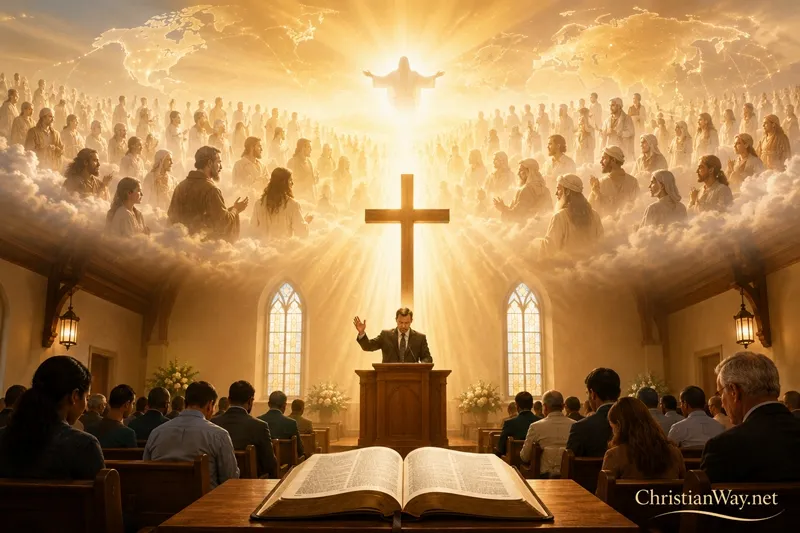
The visible and invisible Church are not two competing churches. They are two ways of speaking about the one people of Christ. The invisible Church is the whole company of those who truly belong to Christ, fully known to God alone. The visible Church is the gathered people who publicly confess Christ, hear the Word, receive Baptism and the Lord’s Supper according to their tradition, pray, worship, serve, and walk together in faith.
This distinction is meant to give humility, hope, and spiritual honesty.
It gives humility because no human being can see perfectly into another person’s heart.
It gives hope because Christ knows His own, even when His people are scattered, weak, hidden, persecuted, or unknown to the world.
It gives honesty because visible congregations are real communities of worship and discipleship, yet they are not free from weakness, sin, confusion, or the presence of people whose outward profession may not reflect a living faith within.
Above all, this teaching directs us away from pride and toward Christ. The Church does not belong to a denomination, a pastor, a culture, a nation, or a generation. The Church belongs to Jesus Christ, who said, “I will build my church; and the gates of hell shall not prevail against it” (Matthew 16:18).
The Church Is More Than a Building or a Name
When many people hear the word “church,” they first think of a building. They imagine a sanctuary, a cross, pews, stained glass, a pulpit, a choir, or a gathering on Sunday morning. These things can be beautiful signs of Christian worship. They can become places where people pray, hear Scripture, receive comfort, confess sin, celebrate God’s mercy, and learn to serve one another.
But the Church is more than a building.
A building may stand empty.
A congregation may gather in a home, a field, a schoolroom, a hospital chapel, a prison, or beneath a tree.
The Church is first the people whom Christ gathers to Himself.
Saint Paul writes, “Now ye are the body of Christ, and members in particular” (1 Corinthians 12:27). This image is deeply important. Christ is the head, and believers are members of His body. No member is unnecessary. No member exists merely for personal comfort. Each has received gifts to be used in love.
The visible Church is therefore not simply an audience listening to a sermon. It is a living community. It is a people who learn to worship together, carry one another’s burdens, correct one another with humility, pray for one another, welcome the weak, care for the poor, and remember that they are pilgrims walking toward the Kingdom of God.
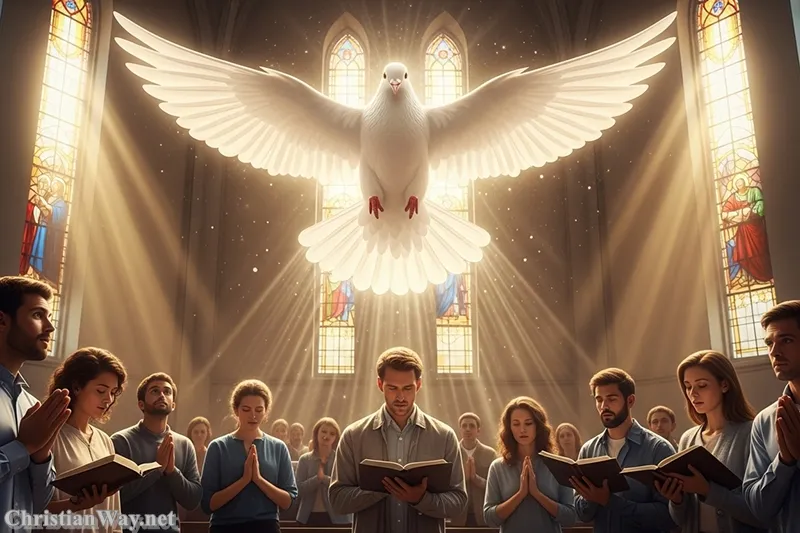
The invisible Church is not a vague spiritual idea floating above real life. It is the full reality of Christ’s redeemed people as God sees them. It includes believers from different places, languages, centuries, and circumstances. It includes those worshiping publicly today and those whose faith is known only to God. It includes the saints who have gone before us and those whom Christ will yet call to Himself.
This is why Protestant theology often speaks of the Church as both visible and invisible: because the Church is truly present in the world, yet its deepest reality is known perfectly only to the Lord.
Why Protestant Theology Uses These Two Expressions
The exact phrases “visible Church” and “invisible Church” do not appear as fixed technical terms in the Bible. They developed as theological language, seeking to protect two truths clearly found in Scripture.
The first truth is that Christ has a real people in the world. Believers gather. They are baptized. They hear the Gospel. They share fellowship. They pray. They receive the Lord’s Supper. They appoint ministers, elders, pastors, teachers, and servants. The book of Acts describes believers devoting themselves “to the apostles’ doctrine and fellowship, and in breaking of bread, and in prayers” (Acts 2:42).
The second truth is that God alone knows the deepest condition of every human heart. A person may appear outwardly religious while lacking true faith. Another may be quiet, weak, uncertain, or hidden from public attention, yet belong sincerely to Christ. Saint Paul writes, “The Lord knoweth them that are his” (2 Timothy 2:19).
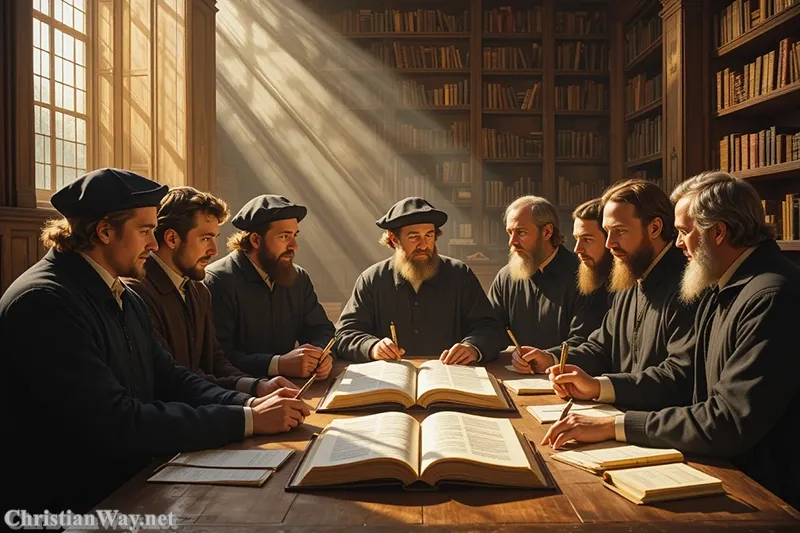
The distinction between visible and invisible Church was especially developed within the Reformed tradition. John Calvin described the invisible Church as the Church known fully to God and the visible Church as the Church as it appears before human eyes, where people are recognized by their confession of faith, their manner of life, and their participation in the sacraments.
The Westminster Confession of Faith later expressed the distinction clearly. It described the invisible Church as the whole number of God’s elect gathered under Christ, while describing the visible Church as those throughout the world who profess the true religion, together with their children in that confessional tradition.
This language was not intended to make Christians careless about visible fellowship. In fact, it was meant to preserve its importance.
If God alone knows the heart, then we must avoid judging others proudly.
If Christ gathers believers visibly through preaching, worship, sacraments, fellowship, and pastoral care, then we must avoid treating church membership as unimportant.
The visible and invisible Church belong together because grace is both hidden and revealed. God works within the heart, but He also gathers His people into communities where they can grow, serve, repent, and be strengthened.
The Invisible Church: Christ Knows Those Who Truly Belong to Him
The invisible Church refers to the complete number of those who truly belong to Christ. It is “invisible” not because it is unreal, but because it cannot be perfectly seen or counted by human beings.
Only God sees the whole heart.
Only God knows the full story of every person.
Only God knows who has genuine faith, who will persevere, who may yet return after wandering, and who may be living with hidden devotion in a place unknown to the world.
This truth should make every Christian humble.
We are often quick to judge. We see someone’s weakness, their questions, their imperfect life, their different tradition, their limited knowledge, or their past failures, and we may quietly assume that we know their standing before God.
But we do not.
We may see someone who appears strong in faith, yet only God knows whether that person is living from love or from pride.
We may see someone who seems distant from church, yet God may be working in that person through grief, prayer, repentance, or a hidden longing for mercy.
We may see a Christian from another tradition and be tempted to dismiss them because their worship, language, or theological emphasis differs from our own.
But Christ alone is Lord of the conscience.
This does not mean doctrine does not matter. Doctrine matters deeply. Truth matters. The Gospel matters. The Church must teach, correct, and proclaim Christ faithfully. Yet the invisible Church reminds us that final judgment belongs to God.
Jesus Himself taught this humility through the parable of the wheat and the tares. A field contained both wheat and weeds. The servants wanted to remove the weeds immediately, but the master warned them to wait, lest they uproot the wheat as well. The final separation belongs to God (Matthew 13:24–30).
This does not mean the Church should never practice discipline or confront public sin. Scripture calls Christians to truth, repentance, and restoration. But it does mean that we should not imagine ourselves capable of reading every hidden motive, every wounded history, or every secret work of grace.
The Invisible Church Is Not an Excuse for Isolation
Some people hear about the invisible Church and think, “Then I do not need to belong to a local church. I can simply believe in Jesus privately.” But this misunderstands the teaching.
The invisible Church is not a substitute for visible Christian fellowship.
Christ calls believers into communion.
He gives pastors and teachers “for the perfecting of the saints, for the work of the ministry, for the edifying of the body of Christ” (Ephesians 4:11–12).
He commands His disciples to baptize.
He gives the Lord’s Supper as a shared remembrance of His death and resurrection.
He teaches believers to forgive one another, pray for one another, bear one another’s burdens, and encourage one another.
A Christian may be unable to gather regularly because of illness, persecution, isolation, imprisonment, disability, family circumstances, or lack of a faithful church nearby. God sees such burdens with mercy.
But the ordinary calling of believers is not solitary spirituality. It is life together in Christ.
The invisible Church tells us that God’s people are greater than our immediate sight.
The visible Church gives us the place where that belonging becomes lived.
The Visible Church: Christ’s People Gathered in the World
The visible Church is the Church as it can be seen in history and daily life. It includes congregations, worship services, pastors, elders, teachers, missionaries, families, baptized believers, prayer meetings, acts of mercy, shared meals, Bible studies, hospital visits, funeral services, children learning Scripture, and Christians serving quietly in their communities.
It is visible because people gather publicly in the name of Christ.
They confess faith.
They hear the Word preached.
They receive Baptism and the Lord’s Supper according to their tradition.
They pray.
They serve.
They are accountable to one another.
They seek to live as disciples of Jesus.
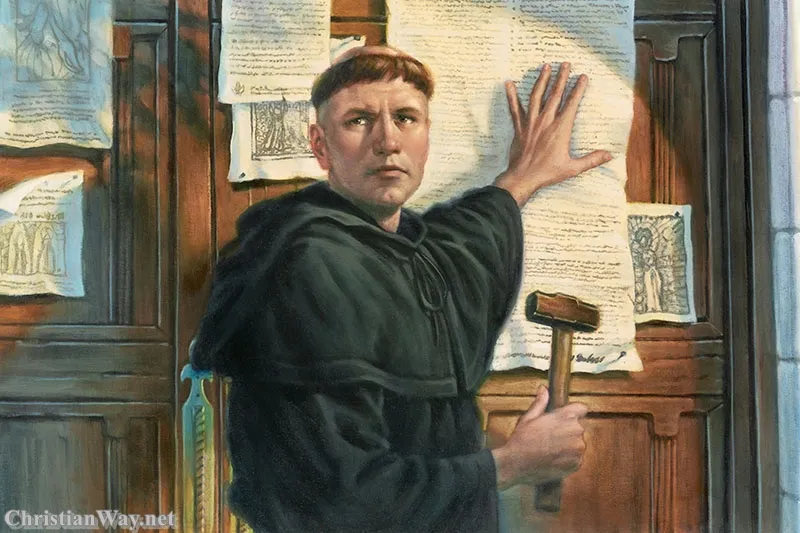
The Augsburg Confession, a central Lutheran confession, describes the Church as the congregation of saints in which the Gospel is rightly taught and the sacraments are rightly administered. It also recognizes that hypocrites and evil persons may be mingled outwardly within the Church during this present life.
This is an important Protestant insight.
A visible church is not made false simply because sinful people are present in it.
If that were so, no church could remain.
Every congregation contains people who are growing, struggling, learning, repenting, healing, doubting, serving, failing, and beginning again. The Church is not a gathering of those who have already become perfect. It is the family of those who need grace.
Yet visible churches are called to pursue holiness.
They are called to teach the Gospel faithfully.
They are called to administer the sacraments with reverence.
They are called to practice love, discipline, prayer, mercy, and truth.
They are called to protect the vulnerable.
They are called to care for those in need.
They are called to welcome sinners while also calling sinners to repentance and new life.
The visible Church is imperfect, but it is not unimportant.
It is the ordinary place where believers are nourished, corrected, comforted, and sent into the world.
The Visible Church Is Not Merely a Religious Club
A congregation is not simply a group of people who happen to enjoy the same music, culture, political views, or social connections.
It is not merely a place to make friends.
It is not merely an organization designed to meet personal needs.
It is the body of Christ gathered under His lordship.
This means the visible Church should teach us how to love people who are different from us.
It should teach us patience with the elderly, kindness toward children, care for the poor, respect for those who suffer, and mercy toward those who have failed.
It should be a place where the wealthy and the poor can kneel before the same Lord.
It should be a place where people are not valued only because they are educated, influential, talented, successful, or visible.
It should be a place where someone carrying grief can be received.
It should be a place where a young person can ask questions without shame.
It should be a place where a sinner can hear both truth and mercy.
The visible Church does not always live up to this calling. Churches can fail. Leaders can wound people. Congregations can become divided, cold, proud, fearful, or careless.
When this happens, the answer is not to abandon Christ. It is to call the Church back to Christ.
Not Two Churches, but One Church Seen in Two Ways
The most important thing to remember is this: Protestant theology does not teach that there are two separate Churches, one visible and one invisible.
There is one Church.
There is one Lord.
There is one body.
There is one baptism.
There is one hope in Christ.
Saint Paul writes, “There is one body, and one Spirit, even as ye are called in one hope of your calling” (Ephesians 4:4).
The distinction is about perspective.
From God’s perspective, the Church is the full number of all who truly belong to Christ. God sees the invisible Church perfectly.
From our human perspective, the Church is visible in its gathered life: in worship, preaching, sacraments, service, discipline, mission, and fellowship.
The visible Church is where the invisible Church ordinarily becomes known in the world.
It is where faith takes shape in public worship.
It is where the Gospel is proclaimed aloud.
It is where believers learn to forgive.
It is where children hear Bible stories.
It is where bread is broken and prayers are offered.
It is where people stand beside graves and proclaim the resurrection.
It is where missionaries are sent.
It is where the lonely are welcomed.
It is where Christians learn that they belong not only to Christ privately, but to Christ’s people.
The visible Church may contain people whose faith is not genuine. The invisible Church contains all those who truly belong to Christ. But this does not mean the visible Church is somehow unspiritual or unnecessary. It is Christ’s appointed means of gathering and nurturing His people.
The Belgic Confession speaks of one universal Church gathered from throughout the world and urges believers not to withdraw into isolation, but to unite with the Church and maintain its unity.
This is a needed word for our time.
Many people say, “I love Jesus, but I do not need the Church.”
Often this sentence comes from pain. Some have been wounded by leaders. Some have experienced hypocrisy. Some have felt unseen. Some have been judged harshly. Some have watched churches become divided by power, money, culture, or politics.
These wounds should be taken seriously.
But Christ still loves His Church.
He still gathers believers.
He still works through imperfect people.
He still calls His followers to walk together.
Different Protestant Traditions Use the Language Differently
Not every Protestant tradition uses the terms “visible Church” and “invisible Church” in exactly the same way.
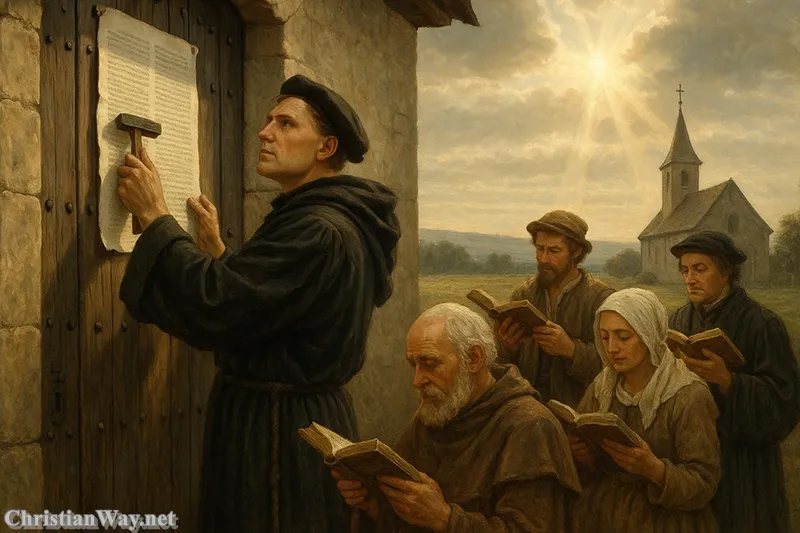
The distinction is especially important in Reformed and Presbyterian theology, where it is often used to explain why the Church is both a real public community and a people known perfectly only to God. Calvin and the Westminster Confession are among the best-known examples of this language.
Lutheran theology shares many of the same concerns but often emphasizes the Church as the place where the Gospel is preached and the sacraments are administered. The Augsburg Confession speaks clearly of the Church as a congregation of saints, while also recognizing that outwardly mixed communities exist in the present age.
Anglican and Methodist traditions also speak of the visible Church. The Church of England’s Thirty-Nine Articles describes the visible Church as a congregation in which the Word of God is preached and the sacraments are administered according to Christ’s ordinance. The United Methodist Articles of Religion use substantially similar language.
Many Baptist and free-church traditions give particular attention to the local congregation of baptized believers, gathered in covenant fellowship under the lordship of Christ. The Baptist Faith and Message, for example, describes a New Testament church as an autonomous local congregation of baptized believers united in the faith and fellowship of the Gospel.
These differences matter because Christians do not all understand baptism, church membership, ministry, sacraments, governance, and denominational unity in the same way.
But there is also a shared Christian confession beneath many of these differences:
Christ is the head of the Church.
The Gospel must be proclaimed.
Believers are called to worship and fellowship.
The Church is not merely an invisible idea.
God alone knows the heart perfectly.
Christians should not confuse outward appearance with inward holiness.
The Church is called to become a living witness to Christ’s mercy in the world.
The Marks of a Faithful Visible Church
Protestant traditions have often asked: How can we recognize a faithful church?
Different traditions answer with different language, but several themes appear again and again.
A faithful church will preach the Gospel of Jesus Christ.
It will teach that salvation is found in Christ, not in human pride, wealth, effort, or reputation.
It will proclaim repentance and forgiveness.
It will take Scripture seriously.
It will practice Baptism and the Lord’s Supper according to its understanding of Christ’s command.
It will call believers to prayer, worship, holiness, service, and love.
It will seek to exercise discipline carefully and humbly when public sin harms the community.
It will care for the weak rather than glorifying the powerful.
It will make room for repentance rather than treating failure as the end of a person’s story.
It will point people toward Christ rather than building everything around a leader’s personality.
No congregation will embody these things perfectly.
Every church needs renewal.
Every pastor needs prayer.
Every believer needs mercy.
Every tradition needs humility.
Yet Christians should not become careless about where and how they worship. We are called to discern.
A church that consistently refuses the Gospel, denies the person and work of Christ, treats sin as meaningless, exploits the vulnerable, glorifies hatred, or turns worship into a tool for power has moved away from its calling.
But discernment should be joined to patience.
A church may be imperfect and still be a place where Christ is working.
A congregation may need reform and still be a real community of faith.
A pastor may have weaknesses and still preach Christ sincerely.
A believer may be immature and still belong deeply to Jesus.
This is why discernment must be prayerful. We must seek truth without becoming proud.
The Wheat and the Weeds: Why Visible Churches Need Grace
One of the hardest realities of church life is that not everyone who appears faithful is truly faithful, and not everyone who appears weak is far from God.
Jesus warned against outward religion without inward love.
He spoke of people who honored God with their lips while their hearts were far from Him.
He spoke of false prophets who came in sheep’s clothing.
He spoke of wheat and weeds growing in the same field until the harvest.
This does not mean Christians should become suspicious of everyone around them. It does not mean that church life should become anxious, judgmental, or cold.
It means we must remain humble.
The visible Church may contain people who profess faith sincerely, people who are still growing, people who are struggling with sin, people who are wounded, people who are confused, and people who are only outwardly connected.
The invisible Church is known perfectly only to God.
This truth protects us from two dangers.
The first danger is spiritual pride.
We may think, “I belong to the right church, therefore I must be spiritually secure.” But outward membership cannot replace a living relationship with Christ. A person may attend every service and still resist grace.
The second danger is spiritual despair.
We may see hypocrisy, conflict, failure, or scandal in the Church and conclude that Christ has abandoned His people. But Christ has not abandoned His Church. He remains Lord. He continues to call sinners, heal wounds, correct error, raise up faithful servants, and build His people across generations.
The Church may be wounded, but Christ is not defeated.
Why Belonging to a Visible Congregation Still Matters
Christianity is personal, but it is never meant to be private in the sense of isolated.
We need other believers.
We need people who will pray for us when we are too tired to pray.
We need someone to remind us of God’s promises when fear becomes louder than faith.
We need worship because our hearts easily become centered on ourselves.
We need Scripture because the world gives us many voices, but the Word of God gives us life.
We need communion because Christ gave Himself not only for “me,” but for His people.
We need correction because love sometimes means hearing what we would rather avoid.
We need service because faith grows when it is given away.
The letter to the Hebrews urges believers not to forsake assembling together, but to encourage one another, especially as they see the day of Christ approaching (Hebrews 10:24–25).
This is not a command meant to burden weary people. It is an invitation into grace.
The person who worships alone may be tempted to make faith entirely about personal preference.
The person who belongs to a church learns that love requires patience.
A local congregation teaches us how to live with people we did not choose.
It teaches us to pray for those who irritate us.
It teaches us to accept correction.
It teaches us to share burdens.
It teaches us to rejoice when someone else is honored.
It teaches us that the Kingdom of God is larger than our own personality, comfort, or opinion.
When Church Has Been a Place of Pain
Some readers may find this difficult because church has been painful for them.
Perhaps you were ignored when you needed help.
Perhaps a leader abused authority.
Perhaps someone used Scripture to shame you.
Perhaps your family was divided by church conflict.
Perhaps you were wounded by hypocrisy.
Perhaps you were excluded when you most needed mercy.
God sees these wounds.
You do not need to pretend they were small.
Healing may take time.
You may need wise counsel, trusted friends, pastoral support, or professional care. You may need to leave an unsafe community. You may need space before you are ready to trust again.
But do not confuse the failure of Christians with the failure of Christ.
Jesus remains gentle with the wounded.
He does not ask you to deny what happened.
He invites you to bring it into His light.
The visible Church is called to repent when it has harmed people. It is called to protect the vulnerable, tell the truth, seek justice, and become a safer home for those who have suffered.
The Church Is Larger Than Any One Denomination
The doctrine of the visible and invisible Church can help Christians approach denominational differences with both conviction and humility.
Conviction means we should care about truth.
We should study Scripture.
We should understand why our church teaches what it teaches.
We should not act as though doctrine is unimportant.
Humility means we should remember that Christ has believers beyond our immediate congregation, culture, and tradition.
The invisible Church is not limited to the Christians we already know.
It is not limited to those who use our worship style.
It is not limited to those who share every theological conclusion we hold.
It is not limited to one country, language, ethnicity, social class, or historical period.
The book of Revelation gives us a beautiful vision of a great multitude from every nation, tribe, people, and language standing before the throne of God (Revelation 7:9).
This does not erase real differences among Christians.
Some differences are serious.
Some concern sacraments, church authority, baptism, worship, ministry, and the interpretation of Scripture.
Christians should speak honestly about these matters.
But they should speak without contempt.
The visible and invisible Church remind us that no denomination can claim to own Christ.
He is Lord.
We are servants.
Faith in Real Life: Living as Members of Christ’s Body
The doctrine of the visible and invisible Church is not merely for theology books. It changes how we live.
It teaches the parent that raising a child in faith matters, even when the results are not immediately visible.
It teaches the pastor that preaching the Gospel faithfully matters, even when attendance is small.
It teaches the quiet believer that hidden prayer matters, even when no one sees it.
It teaches the church member to be patient with imperfect people.
It teaches the Christian who feels lonely that they belong to a people larger than their immediate circumstances.
It teaches the person who has been wounded by church life that Christ has not forgotten them.
It teaches the believer from one tradition to pray for believers in another tradition.
It teaches us to stop measuring spiritual worth only by success, popularity, buildings, numbers, influence, or public recognition.
The invisible Church tells us that God sees what human eyes cannot see.
The visible Church calls us to make Christ’s love visible through worship, service, mercy, truth, and fellowship.
A mother caring for a sick child may be serving Christ’s body.
A young person refusing to join cruel gossip may be serving Christ’s body.
A worker acting honestly in a difficult workplace may be serving Christ’s body.
An elderly Christian praying faithfully for family members may be serving Christ’s body.
A pastor visiting someone in the hospital may be serving Christ’s body.
A congregation feeding the hungry may be serving Christ’s body.
A believer forgiving someone who has caused pain may be serving Christ’s body.
The Church becomes visible whenever Christ’s love takes flesh in ordinary life.
The Final Gathering of Christ’s People
One day, the distinction between visible and invisible will no longer carry the same mystery it does now.
One day, Christ will gather His people fully.
The hidden will be revealed.
The faithful will see the One in whom they trusted.
The wounded will be healed.
The divided will be brought into perfect peace.
The Church will stand before Christ not as a broken and struggling people, but as a bride made ready by grace.
Until that day, we walk by faith.
We worship in imperfect congregations.
We learn patience with one another.
We repent when we fail.
We seek truth.
We receive mercy.
We serve where we can.
We pray for unity.
We remember that Christ is building His Church even when we cannot see the whole work.
The visible Church may appear weak in some places.
The invisible Church may seem hidden from the world.
But Christ has not lost His people.
He knows every name.
He sees every prayer.
He remembers every tear.
He gathers His children from every place.
And He will not abandon the work of His hands.
Reflect and Pray
Dear friends, the visible and invisible Church remind us that we are never merely alone with our faith. Christ gathers His people in ways we can see and in ways only God can fully know.
Perhaps you feel discouraged by the weakness of Christians around you. Perhaps you have been hurt by church life. Perhaps you feel unseen in a congregation. Perhaps you are unsure where you belong. Perhaps you carry questions about denominations, unity, worship, and truth.
Bring these questions to Christ.
He is the head of the Church.
He knows His people.
He sees what is hidden.
He is patient with the weak.
He calls sinners to repentance.
He heals what has been wounded.
He gathers His children into one body.
Lord Jesus Christ,
You are the Good Shepherd
who knows every sheep by name.
Teach us to love Your Church without pride,
to seek truth without harshness,
and to serve one another with humility.
When we feel alone, remind us that we belong to Your body.
When we are wounded, lead us toward healing.
When we are tempted to judge, give us mercy.
When we are tempted to withdraw, give us courage to seek fellowship.
Gather Your people in faith, hope, and love,
until we stand before You in the fullness of Your kingdom. Amen.
May Christ strengthen your faith, lead you into faithful Christian fellowship, and give you peace as a beloved member of His one holy Church.
— Fr. John Matthew