Dear friends in Christ,
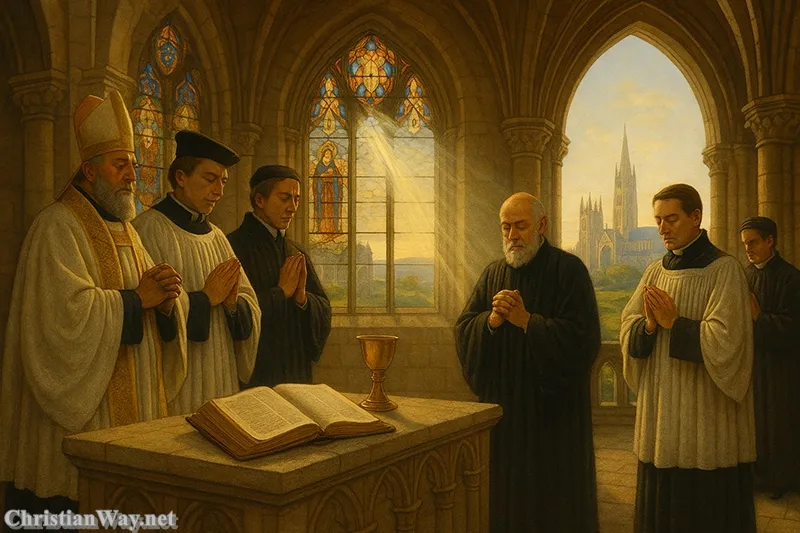
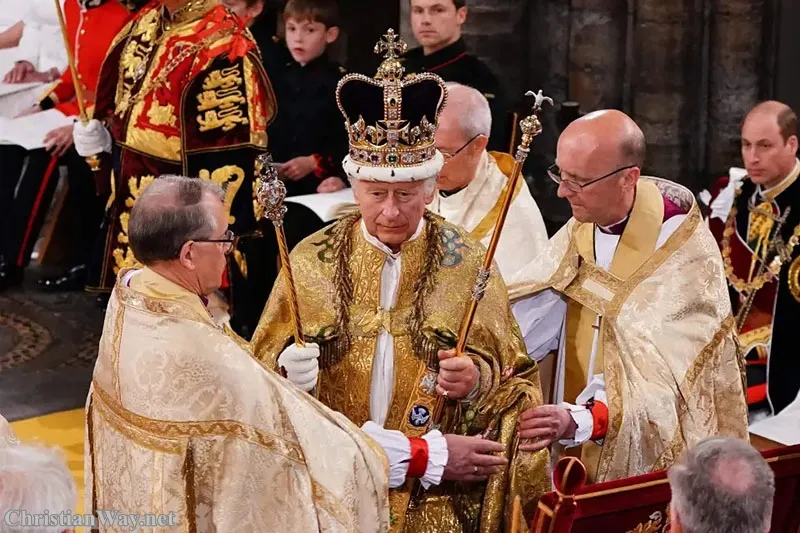
The Church of England stands within a long and sometimes difficult Christian story. Its churches rise in quiet villages, crowded cities, ancient market towns, and places where generations have prayed, married, mourned, celebrated, and sought the mercy of God. Its cathedrals carry the memory of centuries. Its parish churches have welcomed children to baptism, gathered families around the Lord’s Table, comforted the dying, and proclaimed the resurrection beside graves. Yet the deepest meaning of the Church of England cannot be found only in stone buildings, historic titles, royal events, or the beauty of ancient prayers. It is found in Jesus Christ, who remains the true foundation of His Church.
To speak of the Church of England is to speak of a community shaped by both continuity and reform. It received the ancient Christian faith that had taken root in Britain long before the sixteenth century. It preserved the creeds, the Scriptures, baptism, Holy Communion, and the ministry of bishops, priests, and deacons. Yet it was also deeply shaped by the upheavals of the Reformation, when Christians in England began asking difficult questions about Scripture, salvation, worship, authority, conscience, and the life of the Church.
Its history is not simple. It includes sincere faith and political conflict, courageous reform and painful division, beautiful worship and human weakness, martyrs on different sides of religious controversy, and generations of believers trying to remain faithful in changing times. The Church of England has carried the gifts of ancient Christianity while also bearing the wounds of separation within the wider Christian family. It has known moments of renewal, moments of confusion, moments of humble service, and moments when worldly power entered too deeply into spiritual life.
Yet perhaps this is why its story still speaks to us. The Church of England reminds us that no Christian community is sustained by human perfection. Every church needs grace. Every tradition must return again and again to Scripture, prayer, repentance, worship, and the love of Christ. Every generation must ask whether it is still listening to the Gospel or merely repeating familiar words without allowing those words to change the heart.
The historic heart of Anglican faith is not merely English identity. It is the desire to worship God faithfully, to hear the Scriptures clearly, to receive the sacraments reverently, to pray together as a people, and to carry the love of Christ into ordinary life. It is a faith that seeks to hold together ancient truth and living renewal, personal devotion and public worship, thoughtful reflection and humble prayer.
The Church of England therefore invites us to consider a question that belongs to every Christian, whatever tradition we call home: How can we remain rooted in the faith of the apostles while allowing Christ to renew us continually? The answer begins not with human systems, but with the One who said, “I am the vine, ye are the branches” (John 15:5). The Church remains alive only when she abides in Him.
Christianity in England Before the Church of England
The Church of England did not bring Christianity to England for the first time. Long before the sixteenth-century Reformation, the Gospel had already entered the British Isles. Christian communities existed in Roman Britain, and the faith continued to take root through missionaries, monks, bishops, families, and ordinary believers who carried the name of Christ through changing centuries.
The early history of Christianity in Britain is not preserved in every detail, yet it is clear that the Christian faith was present there well before the medieval period. Bishops from Britain are known to have participated in early councils of the Church, showing that Christians in the islands were connected to the larger life of the Christian world. The faith of Christ had already crossed languages, seas, and political boundaries.
A Land Shaped by Prayer and Mission
After Roman rule weakened in Britain, Christian life did not simply disappear. In different regions, communities continued to pray, serve, teach, and preserve the faith. The missionary work associated with Saint Patrick in Ireland became a powerful witness to the spread of Christianity among the peoples of the islands. Monastic communities in Ireland, Scotland, Wales, and northern England became places of learning, prayer, hospitality, and mission.
The arrival of Augustine of Canterbury in 597, sent from Rome to preach the Gospel among the English people, helped strengthen ties between Christianity in England and the wider Latin Church. Over time, monasteries, churches, schools, and dioceses grew. The Christian faith shaped the rhythms of life through feast days, fasting seasons, prayers, pilgrimages, sacred music, works of charity, and the regular gathering of believers for worship.
This older Christian inheritance matters because it reminds us that the Church of England did not arise from emptiness. It inherited a faith already rich with Scripture, prayer, saints, worship, theological learning, and sacramental life. The Church in England had already been confessing the Trinity, proclaiming the incarnation of Christ, baptizing believers, celebrating the Eucharist, and teaching the hope of resurrection for many centuries.
The Anglican story is therefore not the story of a new religion invented in the sixteenth century. It is the story of a historic church in England passing through reform, conflict, and renewal while seeking to remain connected to the faith handed down from the apostles.
This is important for every Christian today. We do not create the faith for ourselves. We receive it. We stand within a story larger than our own opinions, preferences, fears, and generations. The prayers we pray, the Scriptures we read, the creeds we confess, and the sacraments we receive come to us through the faithfulness of countless believers who carried Christ’s name before us.
A Church at the Crossroads of History
By the beginning of the sixteenth century, the Church in England belonged fully to the Western Catholic Church and recognized the authority of the Pope. English Christians worshiped according to the Latin rites of the medieval Church, received the sacraments, honored saints, followed the church calendar, and lived within a Christian culture deeply shaped by Rome.
This world contained great spiritual beauty. Monasteries cared for the poor, copied sacred texts, welcomed travelers, and preserved learning. Parish churches were centers of worship and community life. Priests, religious sisters, monks, teachers, and ordinary believers served God with sincere devotion. Medieval Christianity was not empty of grace. It was filled with people who loved Christ, prayed faithfully, and sought holiness.
Yet the Church was also marked by human weakness. Some clergy lacked proper formation. Some church leaders became too closely connected with wealth, political influence, and privilege. Some religious practices were misunderstood. Some believers carried a heavy burden of fear, wondering whether they had done enough to be received by God. Across Europe, many Christians began to call for reform, renewal, and a deeper return to the Gospel.
Reform Was Already in the Air
The desire for reform did not begin with the Church of England. It had appeared throughout Christian history whenever believers felt that the Church had become distracted from prayer, humility, service, and the truth of Christ. Saints, monastic movements, preachers, theologians, and reforming bishops had called the Church back to faithfulness long before the Protestant Reformation began.
In the early sixteenth century, the printing press helped new ideas travel quickly. Scholars studied biblical texts in Greek and Hebrew. Humanist learning encouraged Christians to return to the sources of Scripture and the early Church. Across Europe, questions about authority, salvation, worship, repentance, and church life became increasingly urgent.
The Protestant Reformation, associated with figures such as Martin Luther, Ulrich Zwingli, John Calvin, and others, challenged many aspects of Western Christian life. These reformers were not all agreed with one another, yet they shared concerns about the clarity of the Gospel, the authority of Scripture, the need for grace, and the call for reform.
England could not remain untouched by these questions. But the English Reformation would follow a distinct and complicated path, shaped not only by theology but also by royal politics, national concerns, personal conflict, and struggles over power.
Henry VIII and the Break With Rome
The separation of the Church of England from Rome is closely connected with King Henry VIII. His role cannot be ignored, though Anglicanism must never be reduced to the private desires or political decisions of one ruler.
Henry had initially opposed the teachings of Martin Luther and defended Roman Catholic doctrine. Yet his marriage to Catherine of Aragon became the center of a crisis that would eventually reshape the religious life of England. Henry sought an annulment of the marriage, partly because it had not produced a surviving male heir and partly because he believed the union should be reconsidered in light of biblical and legal questions.
When the annulment was not granted, the conflict between Henry and Rome grew deeper. In 1534, the Act of Supremacy formally declared that the English crown held authority over the Church in England. The Church of England was separated from papal jurisdiction, and a new chapter in English Christian history began.
A Break That Was More Than Personal
It would be too simple to say that Anglicanism began only because Henry VIII wanted a new marriage. The questions surrounding the English Reformation soon became larger than the king’s personal circumstances. They involved the authority of Scripture, the role of the Pope, the shape of worship, the use of English in public prayer, the nature of the sacraments, the formation of clergy, and the relationship between church and nation.
Yet Henry’s story remains a warning. It reminds us that human motives are often mixed. A person may speak about reform while also seeking control. A leader may desire change for reasons that are partly sincere and partly self-serving. A church may be called toward renewal, yet become vulnerable when worldly power enters too deeply into its life.
Christians must read this history honestly. The Church belongs to Christ, not to kings, governments, parties, or national ambition. Political rulers may influence the outward life of the Church, but they cannot become the true head of the Church. Saint Paul teaches that Christ is “the head over all things to the church, which is his body” (Ephesians 1:22–23).
Whenever the Church forgets this truth, she risks losing her freedom. She may begin serving political interests rather than the Gospel. She may become more concerned with protecting influence than with protecting the vulnerable. She may become less willing to speak truth when truth is costly.
The Church of England’s history therefore calls believers to pray for wisdom. Christians must care about public life, justice, peace, education, family, and the common good. Yet the Church must never become merely an instrument of human power. Her first loyalty belongs to Jesus Christ.
Thomas Cranmer and the Reformation of Worship
If Henry VIII helped create the political circumstances of the English Reformation, Thomas Cranmer became one of its most influential theological and liturgical figures. As Archbishop of Canterbury, Cranmer helped shape a new pattern of worship that would become central to Anglican life.
Cranmer understood that worship forms the soul. The way people pray affects the way they believe. The words spoken in church slowly enter the heart. A person who confesses sin regularly begins to understand mercy more deeply. A person who hears Scripture week after week begins to see life through the story of God. A person who gathers with others in prayer learns that faith is not a private possession.
The Book of Common Prayer
Cranmer’s greatest and most enduring contribution was the Book of Common Prayer. First published in 1549 and later revised, it gave the Church of England a shared language for worship in English rather than Latin.
The Book of Common Prayer was not merely a collection of church services. It became a spiritual home for generations. Its prayers accompanied people through baptism, marriage, illness, grief, funerals, Holy Communion, daily worship, confession, and thanksgiving. It gave ordinary people words to speak when their own words felt too weak.
Its phrases became deeply woven into English-speaking Christian memory. At funerals, people heard the words “earth to earth, ashes to ashes, dust to dust.” At weddings, they heard promises of faithfulness. In times of grief, they were reminded of the hope of resurrection. In daily prayer, they confessed their sins and received the assurance of God’s mercy.
This was one of Anglicanism’s great gifts: the belief that theology should become prayer. Christian truth is not meant to remain in books alone. It is meant to enter the voice, the heart, the home, and the daily life of believers.
The Book of Common Prayer also gave strong emphasis to Scripture. Psalms were read and sung. Lessons from the Old and New Testaments were proclaimed. The Gospels were heard in the language of the people. The Christian faith was not treated as something reserved for scholars or clergy. It was placed before the whole congregation.
Common Prayer and the Formation of the Heart
The phrase common prayer carries a beautiful spiritual meaning. It does not mean merely that everyone repeats identical words. It means that Christians learn to stand before God together.
A grieving person may come to worship unable to find words for sorrow, but the Church gives them words. A person burdened by guilt may not know how to confess, but the Church teaches them to say, “We have erred and strayed from thy ways like lost sheep.” A family may carry fear about the future, but the Church prays for peace, wisdom, healing, and grace.
Common prayer also teaches humility. We do not arrive before God only with our personal needs. We pray for the sick, the poor, those in authority, the lonely, the departed, the Church, the world, and those who suffer. Prayer enlarges the heart. It teaches us that faith is not about building a small private refuge. It is about becoming part of Christ’s love for the world.
This is why Anglican worship has often carried both beauty and simplicity. It seeks reverence, but not distance. It seeks language that is elevated, but still pastoral. It seeks to gather people before God in a way that is ordered, scriptural, communal, and open to the transforming grace of Christ.
Edward VI, Mary I, and the Cost of Religious Conflict
After Henry VIII died, his son Edward VI became king. During Edward’s reign, the Church of England moved more clearly in a Protestant direction. Worship was reshaped, the Book of Common Prayer became central, clergy were permitted to marry, and teachings associated with the wider Reformation gained greater influence.
These changes were welcomed by some and deeply painful for others. For many English Christians, the older forms of worship had shaped their entire lives. Changes in language, images, music, prayer, and sacramental practice were not merely theological adjustments. They affected families, villages, parishes, and the deepest rhythms of devotion.
Reform Touches Real Lives
It is easy to speak about reform as though it involves only ideas. But every reform touches real people. A change in worship can change how a grandmother prays, how a child learns faith, how a grieving family buries a loved one, and how a community understands the nearness of God.
The Reformation brought a renewed emphasis on Scripture and grace. It also brought confusion, fear, and division. Some people rejoiced in hearing worship in English. Others grieved the loss of familiar forms. Some believed the reforms were restoring the Gospel. Others believed sacred traditions were being abandoned.
When Mary I became queen in 1553, she sought to restore England to communion with Rome. Protestant reforms were reversed, and several leading reformers were executed. Thomas Cranmer, Hugh Latimer, and Nicholas Ridley became especially important figures in Protestant memory because they died for convictions they believed were faithful to the Gospel.
Yet Christians must not remember this period with pride or hatred. Catholics suffered under Protestant rulers. Protestants suffered under Catholic rulers. Christians who confessed the same Lord sometimes treated one another as enemies. The name of Christ was used in ways that contradicted the mercy of Christ.
This history should make every believer humble. Truth matters deeply. Doctrine matters. The Church cannot simply say that all differences are unimportant. But the defense of truth must never become cruelty. Jesus did not command His disciples to force faith through violence. He called them to preach, serve, forgive, witness, and love.
The martyrs of every Christian tradition remind us that faith can become costly. They also warn us never to rejoice in the suffering of those with whom we disagree.
Elizabeth I and the Anglican Settlement
When Elizabeth I became queen in 1558, England had already passed through years of religious instability. The nation had moved between different forms of Christian life under different rulers. The wounds of conflict were deep, and the future of the Church remained uncertain.
Elizabeth’s reign brought what became known as the Elizabethan Settlement. In 1559, the Church of England established a revised Book of Common Prayer and restored royal authority in church affairs, though Elizabeth took the title “Supreme Governor” rather than “Supreme Head.”
The settlement sought to create a more stable form of English Christianity. It was Protestant in important elements of teaching and worship, yet it also retained bishops, liturgical prayer, the creeds, sacramental life, and visible continuity with the ancient Church.
Catholic and Reformed
This mixture has often led people to describe Anglicanism as both catholic and reformed.
The word catholic here does not simply mean Roman Catholic. It means universal, ancient, and connected to the historic Church. Anglicans continued to confess the ancient creeds. They preserved the threefold ministry of bishops, priests, and deacons. They retained baptism and Holy Communion as central gifts of Christ. They worshiped through a liturgical rhythm shaped by Scripture and the Christian year.
At the same time, Anglicanism was deeply shaped by Reformation convictions. It emphasized the authority of Scripture, the grace of God in salvation, worship in the language of the people, and the need for continual reform according to the Gospel.
The Church of England was therefore not simply halfway between Roman Catholicism and Protestantism. It developed its own character. It sought to preserve continuity without refusing reform. It sought to value tradition without allowing tradition to obscure Christ. It sought to affirm Scripture without turning faith into private interpretation alone.
This vision was never easy to live. Holding together different gifts can become a source of beauty, but it can also become a source of tension. Yet the Anglican desire to remain both rooted and reformed continues to speak to Christians who long for a faith that is ancient without becoming frozen, thoughtful without becoming cold, and reverent without becoming distant from human need.
The Thirty-Nine Articles and the Shape of Anglican Belief
The Thirty-Nine Articles of Religion became one important statement of Anglican doctrine. They emerged during the sixteenth century and were given their final form during the reign of Elizabeth I. They addressed central questions about Scripture, salvation, the Church, the sacraments, ministry, and the Christian life.
The Articles reflect Protestant convictions in several clear ways. They affirm the authority of Holy Scripture. They teach that salvation is received by grace through faith in Christ. They reject the idea that people can save themselves through their own merit. They emphasize the sufficiency of Christ’s sacrifice and the need for repentance and faith.
Grace Before Human Achievement
The Church of England’s reforming emphasis on grace remains one of its most pastoral gifts. Human beings often live as though they must earn the right to be loved. We measure ourselves by success, education, income, appearance, reputation, religious performance, or the approval of others.
But the Gospel tells us that salvation begins with God’s mercy. “By grace are ye saved through faith; and that not of yourselves: it is the gift of God” (Ephesians 2:8).
This does not mean that good works are unimportant. Faith that never bears fruit is not the living faith described in Scripture. Christians are called to love, forgive, serve, pray, give generously, seek justice, and walk in holiness. But these works do not purchase God’s love. They grow from a heart that has already received grace.
This truth is especially important for people who are spiritually tired. God does not ask us to save ourselves. Christ has come to us. He has carried our sin to the cross. He has risen from the grave. He invites us not to prove ourselves, but to trust Him.
The Church of England’s historic witness to grace calls believers to live with gratitude rather than fear. We serve because we are loved. We repent because mercy is open. We forgive because we have been forgiven. We worship because God has first drawn near to us in Christ.
Scripture, Tradition, and Reason
Anglican Christianity is often associated with Scripture, tradition, and reason. This way of describing Anglican life is not meant to place three equal authorities beside one another. Rather, it reflects the desire to receive Christian faith with both reverence and thoughtful understanding.
Scripture holds a central place because it is the primary witness to God’s saving work. The Bible tells the story of creation, covenant, sin, redemption, incarnation, cross, resurrection, and the promise of new life in Christ. It reveals God’s holiness and mercy. It comforts the grieving, corrects the proud, strengthens the weak, and directs the Church toward Jesus.
Tradition matters because Christians do not begin the faith from nothing. We inherit the creeds, the wisdom of the early Church, the prayers of believers, the testimony of saints, and the shared memory of the Christian community. Tradition can protect us from thinking that Christianity is whatever we personally decide it should be.
Reason matters because God created the human mind. Faith is not opposed to careful thought. Christians are called to study, ask questions, examine history, discern wisely, and seek truth with humility.
A Faith That Prays and Thinks
The Anglican approach can be a gift in a world often divided between shallow emotion and cold argument. Some people reduce faith to personal feeling. Others reduce it to intellectual debate. But the Christian life needs both mind and heart.
A faith without thought can become easily confused. A theology without prayer can become proud. A tradition without love can become rigid. A search for freedom without roots can become lost.
The Church of England has often encouraged believers to read Scripture carefully, worship regularly, respect the wisdom of the historic Church, and use reason as a servant of faith. This does not remove every disagreement. Christians still differ on many questions. But it encourages a posture of humility: we seek truth not to defeat others, but to know Christ more deeply.
The purpose of theology is not merely to make us informed. It is to make us faithful. It should lead us toward worship, mercy, courage, and love.
The Church of England and the Sacraments
The Church of England recognizes baptism and the Lord’s Supper as the two sacraments instituted directly by Christ. These holy gifts stand at the center of Anglican worship and identity.
Baptism speaks of new life, cleansing, belonging, and incorporation into the Body of Christ. It reminds believers that faith begins with grace. Before we can do anything for God, God has already moved toward us.
Holy Communion, also called the Eucharist or the Lord’s Supper, gathers Christians around the gift of Christ’s body and blood. At the Last Supper, Jesus took bread and wine and said, “This is my body which is given for you” and “This cup is the new testament in my blood” (Luke 22:19–20).
Christ Gives Himself to His People
Anglicans have held different understandings of Christ’s presence in Holy Communion. Some emphasize a strong sacramental understanding that speaks of Christ’s real presence. Others express the mystery through a more Reformed language, teaching that believers receive Christ spiritually through faith and the Holy Spirit.
These differences are real, yet the central truth remains: the Lord’s Supper is not an empty act. It is a sacred gift in which Christians remember Christ’s sacrifice, receive grace, and are called into communion with Him and with one another.
The Eucharist reminds us that Christian faith is never merely private. We gather around one table. We hear one Gospel. We receive one Lord. We become one body in Christ.
This means that Communion carries a moral calling. We cannot claim to receive Christ while refusing to care for those whom Christ loves. Saint Paul warns believers not to approach the Lord’s Table while ignoring the needs of others. The bread and wine call us toward reconciliation, generosity, humility, and service.
In a divided world, the Lord’s Table remains a sign of hope. It reminds us that Christ’s love is stronger than the walls we build. It calls the Church to become a community where the hungry are fed, the lonely are welcomed, the grieving are comforted, and the wounded are not forgotten.
Bishops, Priests, Deacons, and the Ministry of Service
The Church of England retained the historic threefold ministry of bishops, priests, and deacons. This continuity with the ancient Church remains important within Anglican life.
Bishops are called to oversee the Church, ordain clergy, guard the faith, encourage mission, and serve as shepherds. Priests serve parishes through preaching, worship, pastoral care, teaching, baptism, Holy Communion, and the care of souls. Deacons are especially called to service, charity, and the Church’s ministry among those in need.
Authority Must Look Like Christ
Christian authority is never meant to become domination. Jesus said, “Whosoever will be great among you, shall be your servant” (Matthew 20:26). He washed the feet of His disciples and showed that leadership in the Kingdom of God is measured not by status, but by love.
A bishop who forgets the poor has forgotten the Good Shepherd. A priest who becomes more concerned with reputation than with mercy has lost the heart of ministry. A deacon who does not serve those in need has forgotten the meaning of the office.
Yet ordained ministry is not the only ministry in the Church. Every baptized Christian is called to witness to Christ. Parents teaching children to pray, volunteers visiting the sick, teachers guiding young people, workers living honestly, musicians leading worship, friends comforting those in grief, and elderly believers praying faithfully in quiet places all share in the life of the Church.
The Church becomes beautiful when every person understands that they have something to offer. Saint Paul teaches that the Body of Christ has many members. No one is useless. No one is unnecessary. Every gift can become a blessing when it is offered in love.
Parish Life: Faith Close to Home
One of the most enduring features of the Church of England is parish life. A parish church stands close to the lives of people. It may be a small stone church in a village, a busy church in a city neighborhood, a chapel near a school, or a church where families have gathered for generations.
The parish is not only a building. It is a community. It is a place where people bring the real events of life before God: birth, baptism, marriage, illness, death, fear, joy, grief, work, family struggles, and hope for life before God: birth, the future.
The Church Beside the Ordinary Life
The parish church can become a quiet sign that God has not abandoned ordinary life. It stands beside homes, farms, streets, shops, schools, hospitals, and cemeteries. It reminds people that the Gospel belongs not only to special moments, but to every day.
A child may first hear a Bible story in a parish hall. A couple may make promises before God at an altar. A grieving family may gather for a funeral. An elderly person may find companionship in a weekday service. A lonely stranger may come through the door simply because they need somewhere to sit in silence.
This is the pastoral heart of the Church. It is not always dramatic. It may not attract public attention. But it matters deeply.
The Church of England has often carried a calling to be present for people whether or not they consider themselves strongly religious. This can be challenging. It asks the Church to welcome people without abandoning the truth of the Gospel. It asks ministers and congregations to listen carefully to those who are wounded, doubtful, searching, or weary.
Christ Himself welcomed people before they understood everything. He spoke with the Samaritan woman, touched lepers, received children, ate with sinners, wept with the grieving, and called the lost by name. The parish church is faithful when it reflects this same mercy.
Cathedrals, Beauty, and the Worship of God
The Church of England is also known for its cathedrals, sacred music, choirs, architecture, stained glass, and the beauty of worship. These gifts can draw hearts toward God. They remind us that faith is not only something spoken. It is also something sung, seen, heard, and lived.
Beauty can become a doorway to prayer. A person may enter a cathedral carrying doubt, sorrow, or exhaustion and find themselves suddenly quiet. Light falls through stained glass. A choir sings a psalm. A candle burns in a side chapel. The vastness of the space reminds the heart that life is larger than immediate fear.
Beauty Must Lead to Mercy
Yet sacred beauty must never become an escape from human suffering. A beautiful church that ignores the poor has failed to understand Christ. Music that lifts the heart but does not lead us to compassion remains incomplete. Architecture that points toward heaven must also remind us to care for those who are struggling on earth.
The prophets warned against worship that is outwardly impressive but disconnected from justice and mercy. God does not desire beautiful words alone. He desires hearts that care for the weak, defend the vulnerable, tell the truth, and love their neighbors.
The best beauty in Christian worship does not make people feel superior. It makes them humble. It leads them to gratitude. It helps them see that God is holy and that His holiness is full of mercy.
The Church of England’s musical and liturgical heritage can be a great gift when it helps people encounter Christ. A hymn may comfort someone in grief. A psalm may give language to a person who cannot pray. A prayer may remain in someone’s memory long after a sermon has been forgotten. A choir may proclaim the Gospel not only through sound, but through reverence.
The Church of England and the Anglican Communion
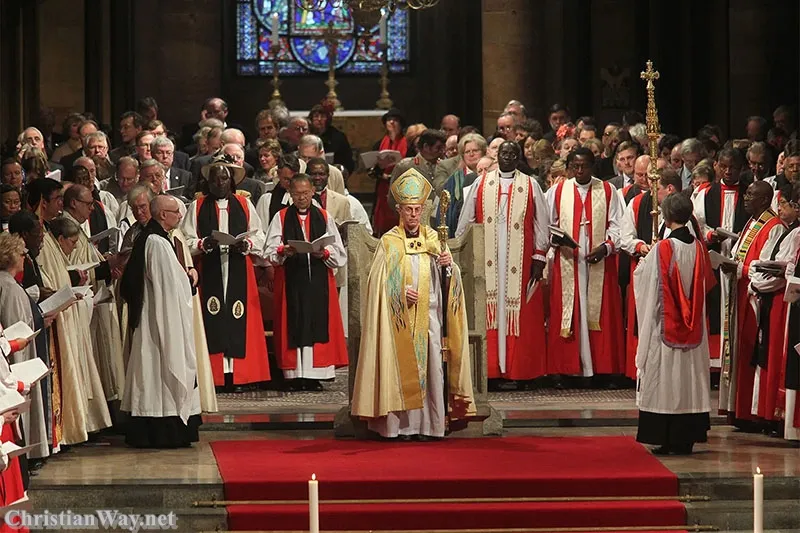
The Church of England is often described as the historic mother church of the Anglican Communion. Through mission, migration, colonial history, local leadership, and the spread of English-speaking Christianity, Anglican churches developed across Africa, Asia, the Americas, Europe, Oceania, and many other regions.
Anglican Christianity is now far wider than England. It is expressed through many languages, cultures, forms of music, local customs, and pastoral settings. An Anglican service in Africa, Asia, the Caribbean, North America, or the Pacific may look and sound very different from one in an English village. Yet many Anglicans remain connected through Scripture, common prayer, episcopal ministry, sacramental life, and a shared historic inheritance.
A Global Family With Many Voices
This worldwide diversity is a reminder that Christianity does not belong to one nation. The Gospel was born in the land of Israel, proclaimed in the Roman world, carried through Africa, Asia, Europe, and beyond, and now lives in countless cultures.
Christ does not erase the gifts of different peoples. He sanctifies them. The Gospel can be sung in many languages. It can be preached through many voices. It can enter the poetry, music, art, and daily life of a people without losing its truth.
Yet global diversity also brings challenges. Anglican churches around the world do not always agree on theological, moral, social, or liturgical questions. These disagreements can become painful. They remind Christians that unity cannot be preserved merely through institutions or history.
Unity must be rooted in Christ.
Jesus prayed that His followers “may all be one” (John 17:21). This unity does not mean that every Christian community must become culturally identical. It does not mean ignoring serious theological differences. It means learning to seek truth without contempt, to hold convictions without hatred, and to remain open to repentance, listening, and love.
The Church of England’s place within the Anglican world can remind all Christians that faith must be both local and universal. We serve Christ where we are, yet we remember that we belong to a Church much larger than our own community, language, culture, or nation.
The Church, the Nation, and the Kingdom of God
The Church of England has a particular historic relationship with the life of England. This has given it opportunities for public service, pastoral presence, education, charitable work, and engagement with national events. It has also created tensions.
Whenever the Church is close to public authority, she must be careful. The Church may serve the nation, pray for leaders, speak for justice, care for the vulnerable, and offer moral wisdom. Yet she must never become captive to political ambition or national pride.
The Cross Is Above Every Earthly Power
Jesus did not come to establish a worldly empire. He came to reveal the Kingdom of God. His kingdom is marked by humility, mercy, justice, forgiveness, truth, and self-giving love.
The Church must therefore speak to every nation with both gratitude and freedom. She may honor what is good in a people’s history, culture, and shared life. But she must also be willing to challenge injustice, greed, violence, racism, exploitation, and the neglect of the poor.
A Christian may love their homeland deeply. They may honor its history, language, music, landscape, and people. But the deepest loyalty of every Christian belongs to Christ. The cross stands above every flag. The Kingdom of God is greater than every earthly kingdom.
This is a lesson the Church of England can offer to all Christians. Faith should shape public life through compassion and truth, but it must never become a tool for control. The Church is most faithful when she stands with the weak, speaks for the forgotten, and remembers that Christ came not to be served, but to serve.
The Church of England and Christian Unity
The Church of England stands between several streams of Christian history. It shares much with Roman Catholicism through its liturgical worship, episcopal ministry, sacramental life, ancient creeds, and reverence for the historic Church. It shares much with Protestantism through its emphasis on Scripture, grace, reform, and worship in the language of the people.
It has also been shaped by conversation with Eastern Orthodoxy, Lutheranism, Reformed traditions, Methodism, Baptist communities, Pentecostal churches, Evangelicals, and many others.
Unity Without Pretending Differences Do Not Matter
Christian unity cannot be built by pretending that serious differences do not exist. Christians differ on questions of authority, sacraments, ministry, salvation, worship, moral teaching, and the relationship between Scripture and tradition. These differences matter because truth matters.
Yet truth must always be joined to love.
The divisions of Christian history should never become reasons for pride. They should make us grieve. They should remind us how easily fear, power, culture, and human stubbornness can wound the Body of Christ.
The Church of England’s history contains both the beauty of reform and the sorrow of division. This can make Anglicans especially aware of the need for humility. We do not honor Christ by speaking contemptuously about other Christians. We honor Him by seeking truth, praying for unity, serving together where possible, and refusing to let old hostility rule our hearts.
Every act of charity between Christians becomes a small answer to the prayer of Jesus. Every shared work of mercy, every honest conversation, every prayer for healing, and every refusal to repeat old accusations can help prepare the way toward deeper communion.
The Historic Heart of Anglican Faith
The historic heart of Anglican faith is not found only in documents, architecture, royal history, or church structure. It is found in a rhythm of life centered on Christ.
It is found in Scripture read aloud.
It is found in Psalms prayed in joy and sorrow.
It is found in bread and wine received with gratitude.
It is found in baptismal water poured over a child or an adult beginning a new life.
It is found in a congregation confessing together, “We believe.”
It is found in a priest visiting someone in a hospital.
It is found in a church bell calling people to prayer.
It is found in a family learning to forgive.
It is found in a quiet candle lit for someone who is suffering.
It is found in the words of Jesus being heard again: “Come unto me, all ye that labour and are heavy laden, and I will give you rest” (Matthew 11:28).
Faith for Ordinary Life
Anglican faith has often emphasized that holiness belongs not only to clergy, monks, missionaries, or famous saints. It belongs in ordinary life.
A parent who prays with a child is living faith.
A teacher who treats students with patience is living faith.
A worker who remains honest when dishonesty would be easier is living faith.
A neighbor who brings food to someone grieving is living faith.
A person who forgives after being wounded is living faith.
A young person who chooses compassion instead of cruelty is living faith.
A believer who continues to pray during a season of doubt is living faith.
The Church exists not to remove Christians from the world, but to send them back into the world with the love of Christ. Worship should shape the way we speak, work, serve, forgive, and care for others.
The Church of England is faithful when it helps people meet Christ in the ordinary places of life. It is faithful when it teaches the Gospel clearly, serves the poor generously, welcomes the searching patiently, protects the vulnerable courageously, and calls every person toward the mercy of God.
A Church Always in Need of Renewal
No church can live only on the faithfulness of earlier generations. A beautiful past cannot replace present repentance. Ancient prayers cannot help us if we speak them without listening to God. Historic buildings cannot save us if we forget the people suffering outside their doors.
The Church of England, like every Christian community, must continually return to Christ.
Reform Begins in the Heart
True reform is not first about changing structures, arguments, or outward appearances. It begins in the heart.
It begins when a Christian admits, “Lord, I need Your mercy.”
It begins when a church asks whether it has made room for the poor.
It begins when leaders choose service over status.
It begins when believers forgive rather than preserve resentment.
It begins when Scripture is heard not only with the ears, but with the whole life.
It begins when worship leads people to love their neighbors.
The Church is renewed whenever Christians return to prayer, humility, confession, truth, courage, and mercy. The Holy Spirit is still at work. Christ has not abandoned His people. He continues to call the Church back to Himself.
The historic heart of Anglican faith therefore remains a living invitation: receive the Gospel with gratitude, worship God with reverence, serve the world with compassion, and remain rooted in the love of Christ.
Reflect and Pray
Dear friends, the Church of England is part of a long and living Christian story. Its history contains ancient roots, reforming courage, beautiful worship, painful division, faithful service, and a continuing call to return to Christ.
It reminds us that the Church must be both rooted and renewed. We need the faith of the apostles, the Scriptures, the creeds, the sacraments, the wisdom of those who came before us, and the courage to ask whether we are still living faithfully in the present.
The Church of England also reminds us that Christian life is not meant to remain inside church walls. The prayers we speak must become love in action. The grace we receive must become mercy for others. The bread and wine we receive must lead us to remember the hungry. The forgiveness we ask from God must become forgiveness offered to those around us.
May we never become proud of our tradition, whatever it may be. May we receive its gifts with gratitude and carry its wounds with humility. May we remain close to Scripture, faithful in prayer, generous in service, and always centered on Jesus Christ.
Let us pray.
Lord Jesus Christ, You are the true foundation of Your Church and the source of every faithful renewal. Bless the Church of England and all Anglican communities throughout the world. Give Your people humble hearts, clear faith, reverent worship, and courageous love. Heal the wounds of division among Christians. Teach us to honor the gifts of the past without becoming trapped by fear, and to seek renewal without losing the truth of Your Gospel. May Your Church become a place of welcome for the weary, strength for the weak, hope for the grieving, and light for the world. Amen.
May the peace of Christ dwell richly in your heart, and may His love guide every step you take toward Him.
— Fr. John Matthew