A calm reflection on how Anglican and Lutheran traditions differ in history, worship, authority, sacraments, and grace today.
Dear friends in Christ,
When Christians encounter traditions different from their own, it is easy to begin with labels, historical controversies, or lists of doctrines. Yet behind every Christian tradition are real communities of people who gather around the Word of God, confess Jesus Christ as Lord, receive baptism, pray for mercy, sing hymns of praise, and seek to live faithfully in a wounded world. Anglicanism and Lutheranism are no exception. Both arose within the upheavals of the sixteenth-century Reformation, both inherited the ancient creeds and sacramental life of the historic Church, and both desired to reform Christian faith and worship according to the Gospel.
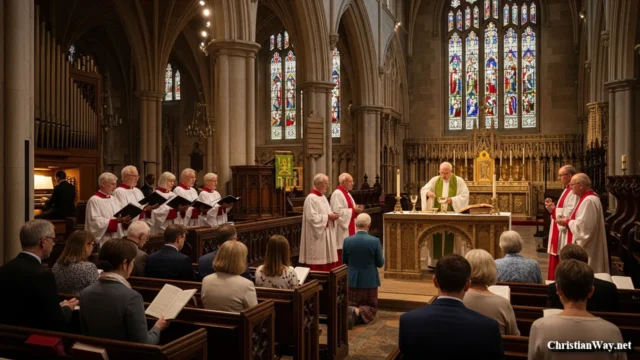
At first glance, Anglican and Lutheran churches may appear remarkably similar. In many congregations, one will see clergy wearing vestments, an altar or communion table, candles, a liturgical calendar, Scripture readings, congregational responses, hymns, a sermon, the Lord’s Prayer, and the celebration of Holy Communion. Both traditions baptize infants. Both confess the Apostles’ Creed and the Nicene Creed. Both teach that salvation is the gift of God’s grace rather than a reward earned by human virtue. Both trace their theological identity to the Reformation while insisting that the Church did not begin in the sixteenth century.
Nevertheless, important differences remain. Lutheranism developed primarily from the theological work of Martin Luther and the confessional writings of the German Reformation. Anglicanism emerged from the English Reformation and gradually became a broad communion containing Protestant, Reformed, Catholic, evangelical, and charismatic expressions. Lutheran identity is generally defined by a particular body of doctrinal confessions, while Anglican identity is often shaped by common worship, episcopal order, historic formularies, and a continuing conversation among Scripture, tradition, and theological reason.
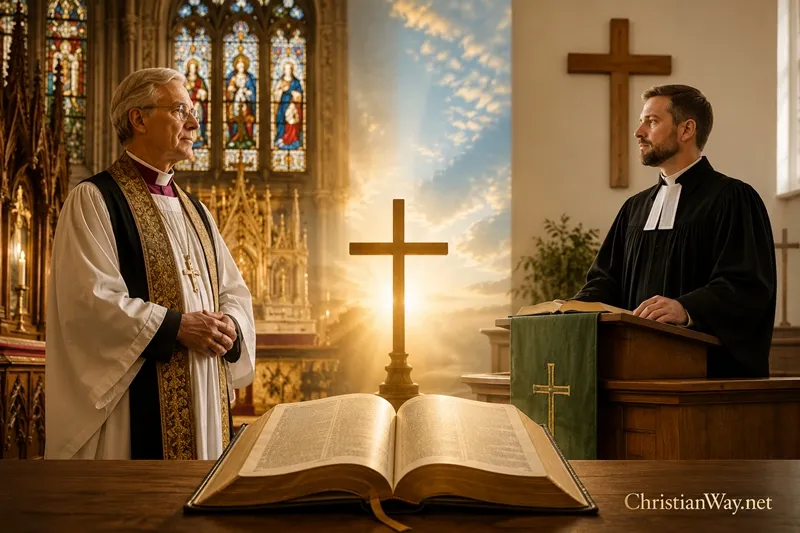
Understanding Anglicanism vs Lutheranism therefore requires more than asking which tradition is “more Protestant” or which one looks “more Catholic.” We must listen carefully to the historical experiences, theological convictions, and spiritual instincts that formed each communion. Such understanding need not weaken our convictions. It can instead teach us to speak the truth in love, to recognize the work of Christ beyond familiar boundaries, and to pray more deeply for the unity of His people.
Both Traditions Were Born Within the Reformation
Anglicanism and Lutheranism both emerged during the great religious transformation of sixteenth-century Europe, but they arose under different circumstances and followed different paths.
The Lutheran Reformation Began With a Theological Crisis
Lutheranism is closely associated with Martin Luther, an Augustinian friar, priest, professor, and biblical scholar who struggled profoundly with the question of how sinful human beings could stand before a holy God. Luther knew the demands of divine justice, but he also discovered in Scripture the liberating proclamation that sinners are justified by grace through faith in Jesus Christ.
The words of Saint Paul became central to his spiritual awakening: “The just shall live by faith” (Romans 1:17). Luther came to understand the righteousness of God not merely as the standard by which God judges sinners, but also as the gracious righteousness God gives to those who trust in Christ.
The public conflict began in 1517, when Luther challenged abuses connected with the preaching and sale of indulgences. His objections soon developed into a wider theological dispute concerning repentance, papal authority, the nature of the Church, the sacraments, and the source of Christian doctrine. Luther did not initially intend to establish a new denomination. He believed that the Western Church needed reform according to the Word of God and the Gospel of grace.
As political and ecclesiastical conflicts deepened, churches influenced by Luther formed distinct structures. Their beliefs were expressed in documents such as the Augsburg Confession of 1530 and, eventually, the Book of Concord of 1580. These confessional writings sought to demonstrate that Lutheran teaching was not an invention but a faithful confession of biblical Christianity in continuity with the ancient Church.
Lutheranism therefore began primarily as a theological and evangelical movement. Its central concern was the proclamation that sinners are justified before God through faith in Christ, apart from the merits of human works.
The English Reformation Had Political and Theological Dimensions
Anglicanism developed through a more complex process. The separation of the Church of England from papal jurisdiction occurred during the reign of King Henry VIII. Henry’s conflict with Rome involved his desire for an annulment and questions concerning royal authority. For this reason, people sometimes reduce the origin of Anglicanism to the personal ambitions of an English king.
That explanation, however, is incomplete. Reforming ideas had already entered England, and the English Church’s final theological character developed over several generations. Under Henry VIII, many traditional Catholic doctrines and practices remained. Under Edward VI, Protestant reforms advanced considerably, especially through the leadership of Archbishop Thomas Cranmer. The Book of Common Prayer was introduced, worship was conducted in English, and the Church’s doctrine was increasingly shaped by Reformation theology.
Under Queen Mary I, England briefly returned to communion with Rome. Under Queen Elizabeth I, a more enduring settlement was established. This Elizabethan Settlement maintained bishops, cathedrals, liturgical worship, and many visible elements of historic church order while affirming Reformation teachings concerning Scripture, justification, and the rejection of certain medieval doctrines.
Anglicanism was therefore shaped not by one reformer alone but by the interaction of monarchs, bishops, theologians, pastors, political realities, and competing religious movements. It retained more of the visible and institutional structure of the medieval Western Church than many other Protestant traditions, while rejecting the universal jurisdiction of the pope and revising its doctrine and worship in light of the Reformation.
Over time, the Church of England spread through migration, colonial expansion, and missionary activity. A worldwide Anglican Communion eventually developed, consisting of autonomous provinces united by a shared heritage rather than by a single central authority.
Scripture Holds Supreme Authority in Both Traditions
Both Anglicans and Lutherans affirm the unique authority of Holy Scripture. Neither tradition teaches that human customs, church leaders, or theological opinions may stand above the Word of God. Yet they often describe and apply biblical authority in somewhat different ways.
Lutheranism Emphasizes Scripture as the Final Norm
Lutherans traditionally confess sola Scriptura, meaning Scripture alone. This does not mean that history, creeds, councils, or Christian teachers are useless. Lutheran churches treasure the Apostles’ Creed, the Nicene Creed, the writings of the early Church, and the insights of faithful theologians. The phrase means that Scripture is the only infallible rule by which every doctrine must finally be tested.
Lutheran confessional writings possess great authority within Lutheran churches, but they are authoritative because Lutherans believe they faithfully summarize biblical teaching. Scripture does not become true because the confessions approve it. The confessions are accepted because they are understood to agree with Scripture.
This confessional character gives Lutheran theology a relatively clear doctrinal center. Different Lutheran church bodies may interpret or apply the confessions with varying degrees of strictness, but the Augsburg Confession and the other writings collected in the Book of Concord remain foundational reference points.
Lutheran theology also approaches Scripture through the important distinction between law and Gospel. The law reveals God’s will, exposes sin, restrains evil, and shows humanity’s need for mercy. The Gospel announces what God has freely accomplished in Christ for sinners. The law says what we ought to do; the Gospel proclaims what Christ has done for us.
This distinction does not divide the Bible into good and bad sections. Rather, it helps the believer hear both the seriousness of sin and the fullness of grace. Without the law, grace may appear unnecessary. Without the Gospel, the law can leave the conscience in despair.
Anglicanism Speaks of Scripture Within the Life of the Church
Anglicanism also teaches that Scripture contains all things necessary for salvation. Article VI of the Thirty-Nine Articles declares that nothing should be required as an article of faith if it cannot be read in Scripture or proved from Scripture.
Anglicans nevertheless often speak about Scripture in relationship with tradition and reason. This pattern is sometimes described as a “three-legged stool,” though that image can be misleading if it suggests that Scripture, tradition, and reason possess equal authority. Classical Anglican theology gives Scripture the primary and decisive place. Tradition helps the Church receive and interpret Scripture in continuity with earlier Christians, while reason enables believers to understand, apply, and defend the faith.
The Anglican appeal to tradition is visible in its respect for the ancient creeds, the teaching of the early Church Fathers, the decisions of the first ecumenical councils, the historic episcopate, and the inherited forms of Christian worship. Anglicanism generally does not seek to begin Christianity again from the sixteenth century. It understands reform as the purification and renewal of the historic Church.
Reason, in the Anglican sense, does not mean that human intelligence may simply overrule revelation. It refers to the faithful use of the mind God has given us. Questions not directly answered by Scripture may require careful moral judgment, theological reflection, historical knowledge, and pastoral wisdom.
In practice, this approach has contributed to considerable diversity within Anglicanism. Some Anglicans interpret Scripture from a strongly evangelical and Reformation perspective. Others emphasize Catholic tradition and sacramental theology. Still others give greater weight to modern biblical scholarship, cultural experience, or contemporary ethical reasoning.
Lutheran churches also contain significant diversity, but Lutheran doctrine is usually measured more explicitly against a defined confessional standard. Anglican doctrine is held together through Scripture, creeds, historic formularies, episcopal order, and shared patterns of worship, though the strength of each element differs from one Anglican province to another.
Grace and Justification Stand Near the Heart of Both Traditions
One of the deepest areas of agreement between Anglicanism and Lutheranism is the confession that salvation begins in the grace of God.
Humanity does not climb toward God through moral achievement. God comes to us in Jesus Christ. We do not purchase forgiveness, earn adoption, or make ourselves worthy of eternal life. Christ dies for sinners, rises in victory, and grants salvation as a gift.
Saint Paul writes, “For by grace are ye saved through faith; and that not of yourselves: it is the gift of God” (Ephesians 2:8).
Lutheranism Places Justification at Its Doctrinal Center
For Lutherans, justification by grace through faith is often described as the article by which the Church stands or falls. God declares sinners righteous for the sake of Christ. This righteousness is received through faith, not because faith is a virtuous work that earns salvation, but because faith receives Christ and His promises.
The believer remains a person who struggles with sin, yet is truly forgiven and accepted by God. Luther expressed this tension with the phrase simul iustus et peccator: at the same time righteous and sinful. Christians are righteous because Christ’s righteousness is counted as theirs, yet they continue to battle the old sinful nature throughout earthly life.
Good works are necessary as the fruit of faith, but they are not the foundation of our acceptance before God. A tree does not become alive by producing fruit; it produces fruit because it is alive. In the same way, acts of mercy, obedience, justice, and love flow from the new life given by grace.
This emphasis gives Lutheran spirituality a strong word of comfort for troubled consciences. Assurance rests not in the perfection of our repentance or the intensity of our spiritual feelings, but in the promise of God revealed in Christ.
Anglicanism Also Teaches Justification by Faith
The historic Anglican formularies likewise teach justification by faith. Article XI of the Thirty-Nine Articles states that human beings are accounted righteous before God only for the merit of Jesus Christ, by faith, and not for their own works or deserving.
Thomas Cranmer and other early Anglican reformers were deeply influenced by Reformation teaching on grace. The Anglican liturgy repeatedly directs worshipers away from self-confidence and toward the mercy of God. In the Communion service, believers confess that they are not worthy to approach God’s table through their own righteousness, but only through His abundant mercy.
The difference lies less in a formal rejection of justification by faith and more in the range of emphases found within Anglicanism. Evangelical Anglicans often speak about justification in language very close to Lutheran and Reformed theology. Anglo-Catholic Anglicans may place greater emphasis on sacramental participation, spiritual transformation, and the believer’s growth in holiness. Many Anglicans seek to hold together God’s declaration of forgiveness and God’s work of renewing the human person.
Lutherans also teach sanctification and new obedience. Anglicans also reject salvation by human merit. The distinction is often one of theological accent. Lutheranism guards the unconditional promise of justification with exceptional precision. Anglicanism tends to place justification within a wider vision of baptism, sacramental life, holiness, prayer, and participation in Christ.
The Sacraments Are Central to Both Traditions
Neither Anglicanism nor Lutheranism is merely a tradition of sermons, ideas, or private spirituality. Both believe that God works through visible signs joined to His Word.
How Many Sacraments Are There?
Lutherans commonly speak of two sacraments: Holy Baptism and Holy Communion. These were directly commanded by Christ, include visible elements, and convey the promise of grace. Some Lutheran theologians have also spoken of confession and absolution in sacramental terms because Christ commands the forgiveness of sins and gives His promise through the spoken word of absolution.
Anglicanism traditionally distinguishes between the two great sacraments of the Gospel—Baptism and the Lord’s Supper—and five other rites commonly called sacraments: confirmation, penance or reconciliation, ordination, holy matrimony, and anointing of the sick.
The Thirty-Nine Articles distinguish the latter five from Baptism and the Eucharist because they are not all instituted by Christ in the same manner. Nevertheless, many Anglo-Catholic Anglicans freely speak of seven sacraments. Evangelical Anglicans generally emphasize the two dominical sacraments commanded by Christ.
Thus, official Anglican teaching gives Baptism and Holy Communion a unique place, while allowing a wider sacramental vocabulary than is common in Lutheranism.
Baptism Is More Than a Symbol
Both traditions practice infant baptism and reject the idea that baptism is merely a public testimony of an already completed inward conversion.
Lutherans teach that baptism is a means of grace through which God grants forgiveness, new birth, and salvation. Baptism joins the person to Christ’s death and resurrection. Its power does not come from the spiritual maturity of the one being baptized, but from God’s Word and promise.
Luther wrote that baptism “works forgiveness of sins, delivers from death and the devil, and gives eternal salvation” to those who believe God’s promise. Faith receives what baptism gives, but the gift originates in God.
Anglican baptismal liturgies also speak strongly of regeneration, adoption, forgiveness, and incorporation into the Church. Through baptism, the person is united with Christ and welcomed into the covenant community. Anglican traditions differ in explaining precisely how baptismal grace relates to later personal faith, conversion, and perseverance, but baptism is ordinarily treated as an effective sign of God’s grace rather than an empty ceremony.
Both Anglicans and Lutherans therefore encourage Christians to remember their baptism. Baptism says that our deepest identity does not rest in occupation, achievement, nationality, social approval, or even personal success in the spiritual life. We belong to Christ.
The Eucharist Reveals a More Noticeable Difference
Both traditions reject the idea that Holy Communion is only a mental recollection of an absent Christ. Yet Lutheran teaching is generally more definite and uniform than Anglican teaching.
Lutherans confess that Christ’s true body and blood are really present in, with, and under the bread and wine. The language of “in, with, and under” is a common explanation, though Lutheran confessional theology more precisely speaks of Christ’s body and blood being truly present and received orally by those who commune.
Lutherans generally reject the term consubstantiation. That word can suggest a philosophical explanation that Lutheran teaching does not officially require. Lutherans prefer to rest in Christ’s words: “This is my body” and “This is my blood.” The mystery is affirmed without claiming to explain how Christ accomplishes it.
The presence of Christ does not depend upon the faith of the recipient. Even an unworthy recipient receives Christ’s body and blood, though not to spiritual benefit. For this reason, many Lutheran churches practice careful preparation for Communion, and some restrict reception to those who share their confession of faith.
Anglican Eucharistic theology is broader. All Anglicans regard Holy Communion as central, but they do not all explain Christ’s presence in the same way.
Evangelical Anglicans may emphasize a spiritual reception of Christ by faith and reject any suggestion that the bread and wine change in their substance. Classical Anglican theology often speaks of a true heavenly and spiritual participation in Christ. Anglo-Catholic Anglicans may affirm an objective real presence in language very close to Roman Catholic or Eastern Orthodox theology, with some accepting the term transubstantiation.
The Thirty-Nine Articles reject transubstantiation as a required explanation and state that Christ is received in a heavenly and spiritual manner through faith. Yet Anglican liturgy can speak of the Eucharist with great reverence and sacramental depth.
Consequently, a Lutheran can usually predict what another confessional Lutheran believes about Christ’s presence. An Anglican may need to ask whether another Anglican is evangelical, broad-church, high-church, or Anglo-Catholic before knowing how the Eucharist is understood.
Church Government and the Role of Bishops Differ Significantly
One of the clearest visible differences between Anglicanism and Lutheranism concerns church order.
Anglicanism Is Fundamentally Episcopal
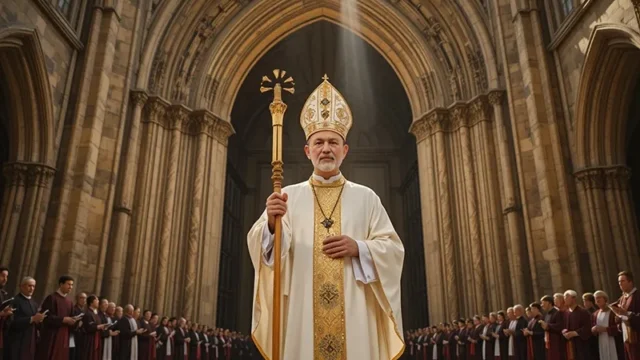
The word episcopal comes from the Greek word for bishop. Anglican churches are governed by bishops, priests, and deacons. This threefold ministry is regarded as part of Anglican continuity with the ancient Church.
Bishops ordain clergy, provide pastoral oversight, guard doctrine, confirm baptized believers, and serve as visible signs of unity within a diocese. Archbishops or presiding bishops may exercise wider leadership, though they do not possess the universal authority claimed for the pope in Roman Catholicism.
The Archbishop of Canterbury holds a special position of honor within the worldwide Anglican Communion, but he does not govern all Anglicans. Each province is largely autonomous. The Archbishop serves as a focus of unity and is traditionally regarded as first among equals among Anglican primates.
Many Anglicans attach great importance to apostolic succession—the historic continuity of episcopal ordination through the laying on of hands. Some understand this succession primarily as an unbroken ministerial lineage. Others emphasize continuity in apostolic teaching rather than a mechanical chain of ordinations. For Anglo-Catholics, the historic episcopate is often considered essential to the Church’s sacramental life. Evangelical Anglicans may value episcopacy as an ancient and beneficial form of order without regarding it as absolutely necessary for the existence of a true church.
Lutheran Church Structures Are More Varied
Lutheran reformers did not reject bishops simply because they were bishops. The Augsburg Confession expressed a willingness to retain episcopal government if bishops permitted the preaching of the Gospel. The problem arose when existing bishops opposed the Reformation and refused to ordain ministers who accepted Lutheran teaching.
As a result, Lutheran churches developed different forms of government. Some, especially in parts of Scandinavia and northern Europe, retained bishops and historic episcopal structures. Others came to be led by superintendents, presidents, synods, or elected church officials.
Lutherans generally teach that the Church’s true continuity depends upon the faithful preaching of the Gospel and the right administration of the sacraments. Historic episcopal succession may be valued, but it is not ordinarily regarded as necessary for a valid ministry or a true church.
This difference is important. Anglicanism generally sees episcopal order as a defining element of its identity. Lutheranism sees church government as capable of taking several legitimate forms, provided the Gospel is preached and the sacraments are faithfully administered.
The Confessions Function Differently
Lutheranism is explicitly a confessional tradition. Anglicanism possesses historic formularies but often allows greater interpretive breadth.
The Lutheran Book of Concord
The Book of Concord contains several documents, including the ancient creeds, the Augsburg Confession, its Apology, Luther’s Small and Large Catechisms, the Smalcald Articles, the Treatise on the Power and Primacy of the Pope, and the Formula of Concord.
Confessional Lutherans subscribe to these writings because they believe the documents agree with Scripture. The confessions define Lutheran teaching on justification, the sacraments, original sin, free will, repentance, ministry, election, and other subjects.
Not every Lutheran denomination requires the same form of subscription. Some accept the confessions strictly because they agree with Scripture, while others value them as historical witnesses without treating every formulation as permanently binding. Nevertheless, Lutheranism possesses a recognizable doctrinal standard.
The Anglican Formularies
The classic Anglican formularies include the Thirty-Nine Articles of Religion, the Book of Common Prayer, and the Ordinal governing the ordination of bishops, priests, and deacons.
These documents shaped Anglican faith and worship for centuries. Yet their authority differs among Anglican provinces. In some churches, clergy formally affirm the historic formularies. In others, the Articles function mainly as historical foundations. Evangelical Anglicans often appeal strongly to the Articles, while Anglo-Catholics may interpret them in ways that emphasize continuity with the pre-Reformation Church.
The Book of Common Prayer has perhaps shaped Anglican identity even more deeply than a systematic confession. Its language of repentance, grace, worship, Scripture, and sacrament formed generations of Christians. Anglican unity has therefore often been liturgical and ecclesial as much as doctrinal.
Lutherans are commonly united by a confession expressed through shared teaching. Anglicans have often been united by a pattern of prayer under episcopal oversight, even when theological interpretations differ.
Worship Can Look Similar but Carries Different Emphases
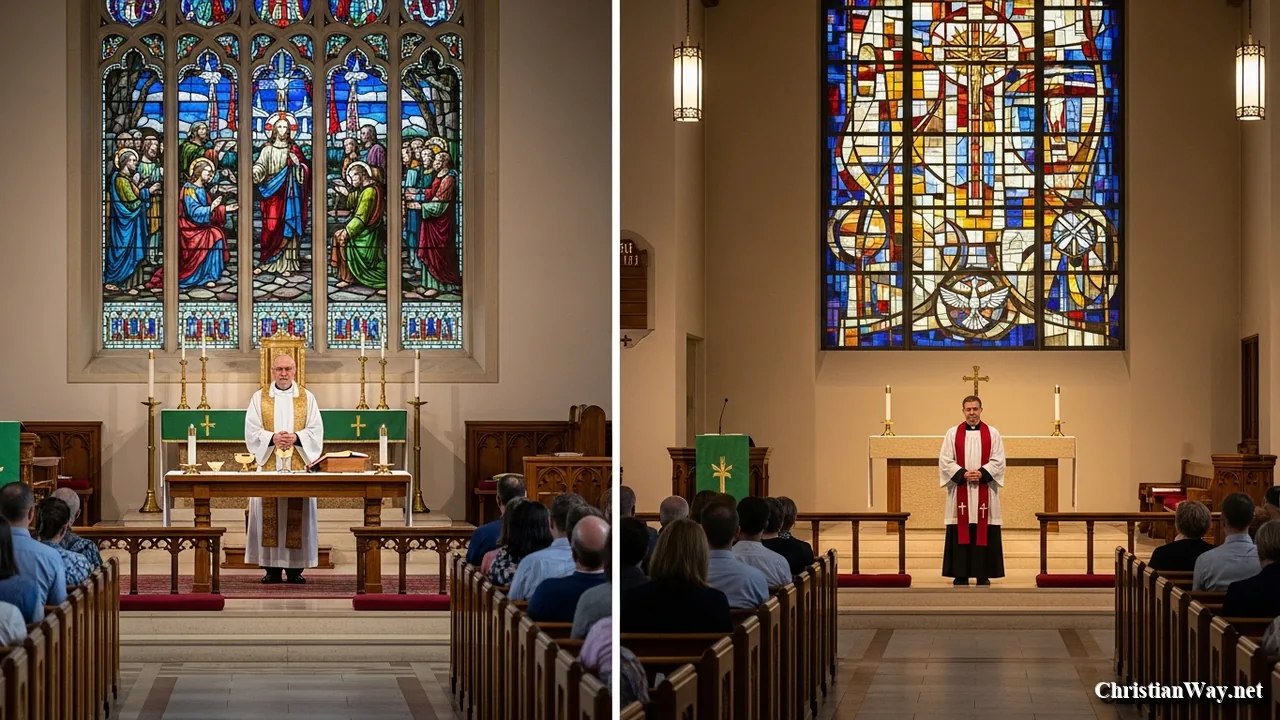
Visitors may enter an Anglican parish and a Lutheran congregation and find many familiar features in both. Each tradition commonly follows the Christian year, observing Advent, Christmas, Epiphany, Lent, Easter, Pentecost, and the seasons that follow. Both use lectionaries, vestments, hymns, written prayers, and structured forms of worship.
Lutheran worship grew from the Western liturgical tradition but was reformed so that the Gospel could be clearly proclaimed and the congregation could participate more fully. Luther did not believe every medieval practice should be abolished merely because it was old. He retained ceremonies that served the Gospel and Christian freedom.
The sermon occupies a central place because faith comes through hearing the Word of Christ. Holy Communion is also central, especially in churches that celebrate it weekly. Lutheran hymnody is particularly rich. Luther himself wrote hymns so that Christian doctrine could be carried into the hearts and memories of ordinary believers.
Anglican worship developed through the Book of Common Prayer. Its genius lies in the way it weaves Scripture into confession, praise, intercession, sacramental worship, and the rhythms of daily prayer. Morning Prayer and Evening Prayer became important elements of Anglican spirituality, while the Eucharist gradually returned to the center of Sunday worship in many Anglican churches.
Anglican worship varies widely. One parish may be simple, evangelical, and focused on preaching. Another may use incense, bells, icons, chant, elaborate vestments, and ceremonial resembling Roman Catholic worship. A third may combine Anglican liturgy with charismatic music and spontaneous prayer.
Lutheran worship also varies, from highly traditional liturgical services to contemporary evangelical forms. Even so, confessional Lutheran worship tends to remain closely connected to the proclamation of forgiveness and the real presence of Christ in the sacrament.
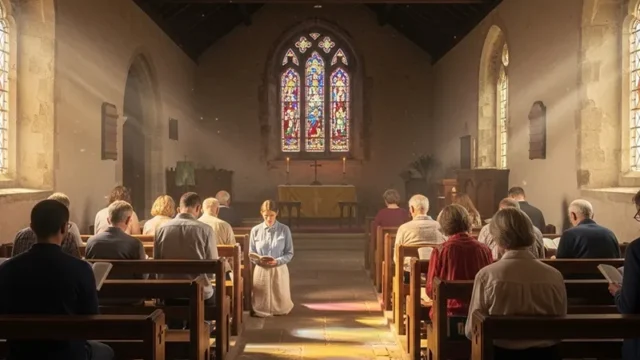
At their best, both traditions understand liturgy not as religious theater but as the prayer of the whole Church. Worship is not primarily something we perform for God. It is the place where God gathers His people, speaks His Word, forgives sins, nourishes faith, and sends believers into the world.
Anglicans and Lutherans Approach Tradition Differently
Lutherans respect the ancient Christian tradition but insist that every tradition remain subject to Scripture. Practices that conflict with the Gospel must be rejected. Practices that do not contradict Scripture may be retained when they serve good order, reverence, and pastoral care.
Luther therefore kept many traditional forms but removed teachings he believed obscured the sufficiency of Christ’s saving work. He rejected the sacrificial understanding of the Mass as a work offered by human beings to merit grace, yet strongly defended the real presence of Christ. He rejected the invocation of saints, yet honored the saints as examples of faith. He rejected compulsory clerical celibacy, yet valued chastity and faithful Christian vocation.
Anglicanism often places a more visible emphasis on continuity with the ancient and medieval Church. The English Reformation sought to reform the national Church rather than replace it with an entirely new institution. Ancient prayers, episcopal ministry, cathedral worship, liturgical seasons, and patristic theology continued to shape Anglican life.
The later Oxford Movement of the nineteenth century renewed Anglican interest in the Catholic heritage of the Church. It emphasized apostolic succession, sacramental grace, the holiness of worship, the Church Fathers, religious communities, and continuity with the undivided Church.
This Catholic revival had no exact equivalent across Lutheranism, although Lutheran theologians and liturgical movements also recovered ancient forms and renewed sacramental practice.
Thus, Lutheranism generally asks whether a tradition clearly serves the Gospel and agrees with Scripture. Anglicanism asks the same question but often adds a strong concern for whether a practice reflects the worship and faith of the historic Church.
Mary and the Saints Are Honored in Different Ways
Both traditions respect the Virgin Mary as the mother of Jesus Christ and affirm the ancient title Theotokos, meaning “God-bearer” or “Mother of God.” This title does not claim that Mary is the source of Christ’s divine nature. It protects the truth that the one born of Mary is truly God incarnate.
Luther spoke warmly of Mary and believed in her perpetual virginity. Lutheran churches may observe festivals associated with Mary and other biblical saints. Yet Lutheran confessions reject praying to saints or treating them as mediators who must be approached for divine help. Christ alone is the mediator between God and humanity. The saints are remembered as examples of God’s grace and faithful discipleship.
Historic Anglican formularies also reject what they call the “Romish doctrine” concerning the invocation of saints. Evangelical Anglicans therefore do not pray to Mary or the saints. They honor them through biblical remembrance and imitation.
Anglo-Catholic Anglicans, however, may ask for the prayers of the saints, use Marian devotions, pray the rosary, and celebrate a wider calendar of saints. Other Anglicans regard such practices as inconsistent with the Reformation character of Anglicanism.
Once again, Lutheranism usually presents a more clearly defined confessional position, while Anglicanism contains a broader spectrum of practice.
Private Confession Exists in Both Traditions
Many people assume that private confession belongs only to Roman Catholicism or Eastern Orthodoxy. In reality, both Lutheran and Anglican traditions retain forms of confession and absolution.
Luther strongly valued private absolution. He rejected the idea that Christians must enumerate every sin or perform acts of satisfaction to earn forgiveness. Yet he cherished the personal word of grace spoken by a pastor: “Your sins are forgiven.”
Lutheran worship ordinarily begins with corporate confession and absolution. Private confession may also be available, though its use varies greatly among congregations.
Anglican worship also includes corporate confession and priestly absolution. The Book of Common Prayer encourages those whose consciences remain troubled to seek counsel and absolution from a minister. A familiar Anglican saying summarizes the practice: all may, some should, none must.
In both traditions, the pastor does not forgive by personal spiritual power. Christ forgives through the ministry entrusted to His Church. The spoken absolution is meant to comfort the burdened conscience with a promise more solid than changing human emotions.
Christian Vocation Is Especially Important in Lutheran Spirituality
Lutheran teaching gives distinctive attention to vocation. The Christian serves God not only through church work, monastic life, or explicitly religious activity but also through ordinary responsibilities in family, work, society, and community.
A parent changing a child’s clothing, a farmer tending the land, a teacher preparing a lesson, a carpenter building a safe home, and a neighbor caring for the lonely may all serve God through love. These works do not earn salvation. Because salvation is already given by grace, believers are free to serve their neighbors without using good deeds to prove their worth before God.
Anglicanism shares this belief and has developed rich teachings about holiness in daily life, social responsibility, public service, education, family, labor, and care for the poor. Anglican spirituality often speaks of the sanctification of ordinary life through prayer, sacrament, moral discipline, and participation in God’s mission.
The difference is mainly one of theological emphasis. Lutheranism’s doctrine of vocation grew directly from its understanding of justification and Christian freedom. Anglican spirituality often approaches daily life through the incarnational and sacramental conviction that God’s grace meets us within the created world and the common duties of human existence.
Both insights are precious. Grace frees us from the exhausting need to justify ourselves, and grace teaches us to encounter Christ in the neighbor placed before us.
Neither Tradition Is Completely Uniform
It is important not to speak as though every Anglican or every Lutheran believes and worships in exactly the same way.
Anglicanism includes evangelical Anglicans, classical prayer-book Anglicans, broad-church Anglicans, Anglo-Catholics, charismatics, and combinations of these identities. Some emphasize personal conversion and biblical preaching. Some emphasize sacramental worship and continuity with Catholic tradition. Some are theologically conservative, while others embrace more progressive interpretations of doctrine and morality.
Lutheranism also contains significant diversity. Some Lutheran churches strongly emphasize the Book of Concord, traditional liturgy, closed Communion, and historic Christian moral teaching. Others interpret the confessions more broadly, practice open Communion, and adopt contemporary theological or ethical positions. Some Lutheran congregations resemble evangelical Protestant churches in worship, while others appear highly liturgical and sacramental.
Therefore, a comparison of Anglicanism vs Lutheranism must distinguish between official theological inheritance and the lived reality of particular church bodies and congregations. A traditional Anglican parish may have more in common liturgically with a traditional Lutheran congregation than with another Anglican parish. A progressive Lutheran denomination may cooperate more readily with a progressive Anglican province than with a confessional Lutheran church body.
The labels tell us something important, but they do not tell us everything. Whenever possible, it is wise to examine the actual teaching, worship, and pastoral life of the specific church being considered.
The Deep Beliefs Anglicans and Lutherans Share
The differences between Anglicanism and Lutheranism should not cause us to overlook their substantial unity in the foundational truths of Christianity.
Both confess one God—Father, Son, and Holy Spirit.
Both confess that Jesus Christ is truly God and truly human, conceived by the Holy Spirit and born of the Virgin Mary.
Both proclaim His atoning death and bodily resurrection.
Both receive the Old and New Testaments as Holy Scripture.
Both confess the Apostles’ and Nicene Creeds.
Both practice Trinitarian baptism.
Both celebrate the Lord’s Supper as a sacred means through which believers receive Christ’s grace.
Both teach that salvation is given through Jesus Christ and cannot be earned by human merit.
Both believe that the Church is called to preach the Gospel, forgive sins, serve the poor, pursue holiness, and bear witness to God’s kingdom.
Both await the resurrection of the dead and the life of the world to come.
These shared convictions are not minor. They concern the living center of the Christian faith. Anglicans and Lutherans may disagree about ecclesiastical order, sacramental explanation, confessional authority, and the role of tradition, but they kneel before the same crucified and risen Lord.
Christ prayed that His disciples would be one, “that the world may believe” (John 17:21). Christian unity does not require pretending that disagreements are unimportant. Genuine unity grows through truth, repentance, patient dialogue, and a shared return to Christ.
Which Tradition Is More Catholic or More Protestant?
People often ask whether Anglicanism or Lutheranism is closer to Roman Catholicism.
The answer depends upon what aspect of church life is being considered.
Anglicanism is generally closer to Roman Catholicism in its episcopal structure, threefold ministry of bishops, priests, and deacons, historic succession, and the range of sacramental and devotional practices found within Anglo-Catholicism.
Lutheranism may be closer to Catholic sacramental realism than some Anglican expressions, particularly in its firm confession of Christ’s objective bodily presence in the Eucharist and its strong theology of baptismal regeneration.
Lutheranism is more consistently identified with the Protestant principles of justification by faith alone and confessional submission to Scripture. Anglicanism also affirms Reformation doctrine, but its identity contains a more deliberate tension between Protestant reform and Catholic continuity.
Describing Anglicanism simply as halfway between Catholicism and Protestantism is inadequate. Anglicanism is historically a reformed catholic tradition, but its internal breadth allows different interpretations of what that means.
Describing Lutheranism simply as another form of generic Protestantism is also inadequate. Lutheranism retained infant baptism, liturgy, sacramental grace, vestments, the historic creeds, and the real presence at a time when other reform movements rejected or radically reinterpreted some of these elements.
Both traditions stand within Western Christianity. Both are shaped by the Reformation. Both also claim continuity with the ancient Church. Their differences lie in how that continuity is understood and which theological truths receive the strongest emphasis.
What Might a Christian Experience in Each Church?
A person entering a Lutheran congregation may encounter preaching centered on the distinction between law and Gospel, a strong assurance of forgiveness, reverent sacramental worship, and hymns rich in theological content. The Christian life may be presented as a daily return to baptism, repentance, faith, and service within ordinary vocations.
A person entering an Anglican parish may encounter the beauty of the Book of Common Prayer or a modern liturgy shaped by it, substantial readings from Scripture, weekly Communion, the Christian calendar, and a visible sense of connection with the historic Church. Depending on the parish, the theology may be evangelical, Catholic, charismatic, contemplative, or a blend of these.
A Lutheran visitor to an Anglican church may appreciate its liturgy and episcopal continuity but wonder about the range of permitted Eucharistic and doctrinal interpretations. An Anglican visitor to a Lutheran church may admire the clarity of its teaching on grace and the sacraments but find its confessional boundaries or Communion discipline unfamiliar.
Neither experience should be judged only by personal taste. A church is not a spiritual product selected according to musical preference, architecture, or emotional comfort. The deeper questions concern the Gospel being preached, the sacraments being administered, the faith being confessed, and the kind of discipleship being formed.
How Should Someone Choose Between Anglicanism and Lutheranism?
For someone discerning between these traditions, the decision should be made slowly, prayerfully, and honestly.
Read the New Testament with particular attention to the person of Christ, the meaning of grace, the nature of the Church, baptism, the Lord’s Supper, ministry, and Christian holiness. Study the Augsburg Confession and Luther’s Small Catechism. Read the Thirty-Nine Articles and experience the prayers of the Book of Common Prayer. Speak with faithful pastors from both traditions.
Consider how each tradition answers several central questions. Is the Church defined chiefly by the preaching of the Gospel and the administration of the sacraments, or is historic episcopal succession an essential mark of ecclesial continuity? How should the real presence of Christ in the Eucharist be confessed? How much doctrinal diversity can a communion faithfully contain? What authority should ancient tradition exercise? How do justification and sanctification relate? What does it mean to worship in continuity with the apostles?
The character of the local congregation also matters. A denomination may possess beautiful official teachings while a particular parish neglects them. Conversely, a local congregation may display exceptional faithfulness, wisdom, and pastoral care despite wider denominational tensions.
Seek a church where Christ is proclaimed rather than merely mentioned; where sin is taken seriously but grace is proclaimed more deeply; where Scripture is not manipulated to serve ideology; where worship turns the heart toward God; where the sacraments are treated reverently; where the weak are protected; and where disciples are formed to love God and neighbor.
Above all, do not approach the question merely as a search for the tradition that agrees with every existing preference. Christ sometimes calls us beyond preference into repentance, reverence, community, and costly love.
In the Light of Christ
The question “Anglicanism vs Lutheranism: What Is the Difference?” leads us through history, doctrine, worship, sacraments, ministry, and Christian identity. Lutheranism emerged from a powerful recovery of the Gospel of justification by grace through faith. It is shaped by clear confessional standards, the distinction between law and Gospel, baptismal grace, Christ’s real presence in the Eucharist, and the freedom to serve God through ordinary vocation.
Anglicanism emerged through the English Reformation as a church both reformed and historically catholic. It is shaped by Scripture, ancient creeds, episcopal ministry, common prayer, sacramental worship, and a broad theological heritage that includes evangelical, Catholic, and charismatic expressions.
Lutheranism tends to offer greater confessional precision. Anglicanism tends to permit greater theological breadth. Lutheran churches may or may not be governed by bishops. Anglican churches are necessarily episcopal. Lutheran Eucharistic doctrine is comparatively definite. Anglican Eucharistic belief ranges across several interpretations. Both affirm grace, baptism, Scripture, the creeds, and the saving work of Jesus Christ.
Yet no comparison is complete until it brings us back to the Lord Himself. The Church does not exist to celebrate its own denominational distinctiveness. Its mission is to bear witness to Jesus Christ, who forgives sinners, reconciles enemies, feeds the hungry, heals the brokenhearted, and gathers His scattered children into one family.
Our traditions may help us receive the riches of the Gospel, but they must never become idols. We do not belong ultimately to Luther, Cranmer, Augsburg, Canterbury, a national church, or a denominational institution. As Saint Paul reminded the divided Christians of Corinth, “Ye are Christ’s; and Christ is God’s” (1 Corinthians 3:23).
May Anglicans and Lutherans continue to speak honestly about their differences without forgetting their baptismal kinship. May they receive from one another what is faithful, beautiful, and true. May Lutheran clarity concerning grace comfort anxious souls. May Anglican reverence for common prayer and historic continuity deepen the Church’s worship. May both traditions resist the temptation to replace the Gospel with politics, cultural fashion, institutional self-preservation, or spiritual pride.
And may every Christian remember that the goal of theology is not victory over another believer, but faithful communion with the living God.
Let us pray:
Lord Jesus Christ, eternal Word of the Father and Shepherd of Your Church, forgive the divisions that obscure our witness to Your love. Keep us faithful to Holy Scripture, humble before Your truth, and generous toward all who confess Your holy name. Nourish us through Your grace, unite us in the faith of the apostles, and teach us to serve one another without fear or pride. May Your cross be our hope, Your resurrection our joy, and Your kingdom the desire of every heart. Amen.
May the peace of Christ dwell richly within you, and may His Spirit guide you into truth, humility, and faithful love.
— Fr. John Matthew