Dear friends in Christ,
Some saints speak to us through great sermons, dramatic conversions, miraculous works, or long writings that have shaped the faith of generations. Others speak through something quieter. Their lives are partly hidden from us, their words are not preserved in long pages, and yet their place in the story of the Church is deeply precious. Saint Linus belongs among these quiet witnesses.
He stands near the beginning of Christian history, at the threshold between the age of the apostles and the life of the Church that continued after them. He is remembered in the Catholic tradition as the second Pope and the first successor of Saint Peter as bishop of Rome. Yet Saint Linus is not important merely because he held an office. His life points us toward something much deeper: the Gospel entrusted by Christ to His apostles did not disappear when the first witnesses died. It was received, guarded, proclaimed, prayed, and handed on within the living community of the Church.
This is a comforting truth for every Christian heart. We do not believe in a faith invented by one generation and reinvented by another. We receive a faith that has been carried through suffering, prayer, persecution, worship, teaching, repentance, and love. The names of the early bishops may seem distant to us, but they remind us that the Church did not survive because of human strength alone. She survived because Christ remained faithful to His promise.
Saint Linus lived in a world where Christians were small in number, misunderstood by many, and often vulnerable. The Church did not yet have grand cathedrals, public institutions, or worldly influence. Christians gathered in homes, prayed together, broke bread, cared for the poor, and proclaimed Jesus Christ as Lord in a society that often found such faith strange or dangerous. In this fragile beginning, Linus became a bridge: a man who received the apostolic witness and helped preserve it for those who would come after.
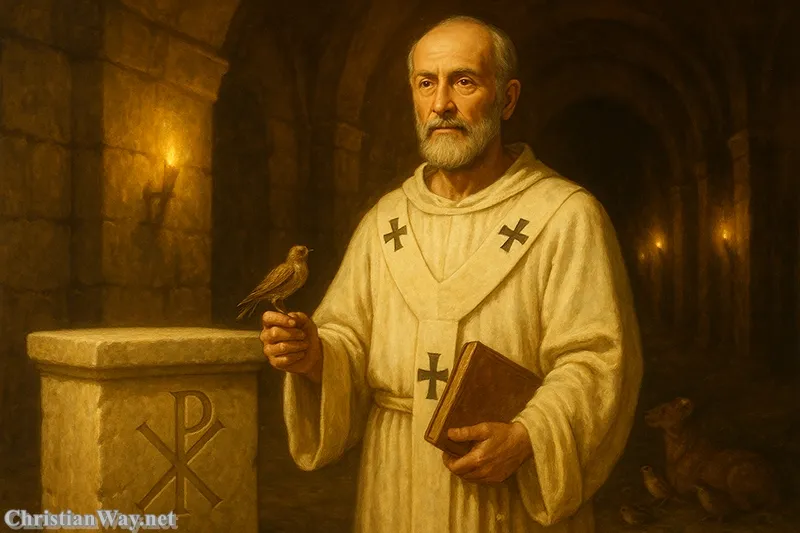
His life invites us to reflect on a question that remains important today: What does it mean to receive faith faithfully and pass it on with love? Every parent who teaches a child to pray, every priest who celebrates the sacraments, every teacher who explains the Gospel, every grandparent who tells a story of God’s faithfulness, and every believer who chooses integrity in daily life becomes, in a small but real way, part of this same holy bridge.
Saint Linus in the Memory of the Early Church
The historical details preserved about Saint Linus are few. We do not have a long letter written by him, a detailed account of his childhood, or a complete record of his ministry in Rome. This silence can feel frustrating to modern readers, who often want dates, documents, and clear descriptions. Yet the early Church remembered him with enough consistency to show that his place in the succession of Rome was deeply valued.
Saint Irenaeus of Lyons, writing in the second century, spoke of the Church in Rome as founded and built up by the apostles Peter and Paul. He then wrote that the apostles entrusted “the office of the episcopate” to Linus, followed by Anacletus and then Clement. This testimony matters because Irenaeus was not writing a romantic legend. He was defending the continuity of the Church’s apostolic faith against teachings that claimed secret knowledge apart from the public Gospel received from the apostles.
Later, Eusebius of Caesarea also described Linus as the first to receive the episcopate of the Church in Rome after the martyrdom of Peter and Paul. Eusebius connected Linus with the Linus mentioned near the end of Paul’s Second Letter to Timothy, though modern readers should approach that identification with humility rather than treating it as absolute certainty.
The Catholic Church’s official list identifies Linus as the second Pope, placing his pontificate approximately between the years 68 and 79. Such dates help us situate him historically, but they should not make us forget the limits of our sources. The earliest years of the Church were not recorded with the administrative detail that later centuries would provide. What remains most certain is the Church’s memory that Linus belonged to the generation immediately following the apostles and served the Christian community in Rome during a decisive period of its life.
This quiet historical outline is enough to reveal something beautiful. Linus was not called to invent a new Gospel. He was called to receive what had been entrusted to the Church. He was not asked to create a faith according to the spirit of the age. He was asked to guard the faith that had been preached by Peter, Paul, and the other apostolic witnesses.
There is great humility in this kind of leadership. The world often admires the person who creates something entirely new, who leaves a personal mark, who changes everything around him. But in the Church, there is also a sacred vocation of faithful preservation. Some people are called to begin things. Others are called to protect what has been received. Saint Linus reminds us that both callings can be holy.
The Linus Mentioned by Saint Paul
At the end of Second Timothy, Saint Paul writes: “Eubulus sends greetings to you, as do Pudens, Linus, Claudia, and all the brothers” (2 Timothy 4:21). The letter places Linus among Christians in Rome during the final period of Paul’s life.
Western Christian tradition has often identified this Linus with the later bishop of Rome. The connection is ancient and meaningful, but Scripture itself does not explicitly say that the Linus named by Paul became Peter’s successor. The New Testament gives us a name; the Church’s later memory gives us a wider context. For this reason, it is wise to receive the tradition with reverence while avoiding unnecessary certainty about details that God has not chosen to reveal fully.
Still, even this brief biblical greeting carries a tender message. Linus appears not as a distant figure in a list of offices, but as one of the “brothers” gathered in Rome. Before he is remembered as a bishop, he is remembered as a Christian. Before he is associated with succession, he belongs to a community of believers who prayed, served, endured hardship, and remained near the apostles.
This is an important reminder for every Christian leader. No title can replace discipleship. No responsibility in the Church matters if it is separated from friendship with Christ. Before Peter was the shepherd of the apostles, he was a man who had heard Jesus say, “Follow me.” Before Paul became the great missionary to the nations, he was a man who fell to the ground before the risen Lord. Before Linus became a successor in the Church of Rome, he was a brother among believers who needed grace as much as anyone else.
The Bridge Between the Apostles and the Church
The title of this reflection calls Saint Linus “the bridge between the apostles and the Church.” This does not mean that the apostles vanished and Linus somehow replaced them. The apostles hold a unique place in the life of the Church. They were chosen by Christ, formed by His teaching, witnesses to His resurrection, and sent to proclaim the Gospel to the world.
Yet the apostles themselves knew that the Church would continue after their earthly lives had ended. They did not preach a faith that depended upon their physical presence alone. They preached Christ crucified and risen. They formed communities. They appointed leaders. They taught believers to remain rooted in prayer, fellowship, the breaking of bread, and the apostolic teaching.
The Acts of the Apostles gives us a beautiful image of the first Christian community: “They devoted themselves to the teaching of the apostles and to the communal life, to the breaking of the bread and to the prayers” (Acts 2:42). This was not a passing moment of enthusiasm. It was the beginning of a living Church.
Saint Linus belongs to the generation that received this apostolic life and continued it. He stands as a sign that the Church was never meant to be built on private opinion alone. Christianity is not simply an individual choosing a few teachings from the Gospel according to personal preference. It is a communion of faith received from Christ, proclaimed by the apostles, and lived within the people of God.
The apostolic witness is more than a memory of the past. It is a living inheritance. The Church continues to proclaim the same Jesus who called fishermen by the Sea of Galilee, forgave sinners, healed the sick, died on the Cross, rose from the dead, and sent His disciples into all nations. The words may be preached in different languages. The Church may live in different cultures. The world may change in countless ways. But Christ remains the same.
Saint Linus reminds us that faithfulness is not rigidity. To hand on the faith does not mean refusing to speak to the needs of the present world. It means allowing the truth of Christ to speak freshly into every generation without changing Christ into the image of the age.
A bridge does not exist for itself. It joins two places that need to remain connected. Saint Linus joined the Church of the apostles with the Church of the future. He received the testimony of those who had known Christ’s first witnesses and helped ensure that this testimony would remain alive in the community of believers.
Apostolic Succession as a Living Gift
The phrase “apostolic succession” can sound technical, but its spiritual meaning is simple and beautiful. It refers to the continuity of the Church’s pastoral ministry and teaching from the apostles through the bishops who followed them.
For Catholics, apostolic succession is deeply connected with the ministry of bishops and the particular role of the bishop of Rome as successor of Saint Peter. Eastern Orthodox Christians also cherish apostolic succession as essential to the Church’s continuity, though they understand the place of the bishop of Rome and the exercise of primacy differently from Catholics. Anglicans likewise hold apostolic continuity in high regard, especially within traditions that see the episcopal ministry as a visible sign of the Church’s unity and historical faithfulness.
These differences should not lead Christians into hostility. They should lead us to prayer for greater understanding and deeper unity. Saint Linus belongs to a time before many later divisions in Christian history. He reminds us of the shared apostolic roots from which Catholic, Orthodox, Anglican, and many other Christians still draw life.
The deepest purpose of apostolic succession is not power. It is service. It is not about creating distance between clergy and people. It is about ensuring that the Church remains grounded in the Gospel rather than being carried away by whatever teaching happens to be popular in a particular generation.
Saint Irenaeus appealed to apostolic succession precisely because he wanted Christians to know that the faith of the Church was public, received, and recognizable. He opposed the idea that truth belonged only to a small spiritual elite with hidden knowledge. The Gospel, he insisted, had been entrusted openly to the Church.
This remains important today. We live in a world overflowing with voices. Anyone can claim authority. Anyone can create a spiritual message. Anyone can speak confidently online about God, Scripture, prophecy, morality, or the future. Yet not every voice leads to truth. Saint Linus points us back to a faith that is received in communion, tested through prayer and tradition, and centered on Jesus Christ.
A Church Born in Humility, Not Power
When we imagine Rome, we may think of empire, armies, wealth, law, monuments, and political power. But the Church in Rome during the first century was not a powerful institution standing above society. It was a small and vulnerable community living within the heart of the empire.
Christians did not possess public influence. They did not have legal protection. They did not control the culture around them. They gathered in homes. They prayed quietly. They cared for widows, the poor, strangers, and the sick. They were known by their faith in a crucified Lord, a faith that many people found difficult to understand.
Saint Linus served in this environment. He was not leading a Church protected by wealth or status. He was helping shepherd a people whose strength came from prayer, communion, courage, and the promise of Christ.
This is one reason his witness remains so meaningful. Christians today can become discouraged when faith seems less visible in public life, when society no longer shares Christian assumptions, or when the Church faces criticism, misunderstanding, or weakness. Saint Linus reminds us that Christianity did not begin in comfort. The Church was born in the shadow of the Cross.
The first Christians did not ask whether they were influential enough to be faithful. They asked whether they were faithful enough to bear witness. They did not wait for the world to approve of them before they proclaimed Christ. They trusted that the Gospel itself had power.
Saint Paul wrote, “For when I am weak, then I am strong” (2 Corinthians 12:10). This does not mean Christians should seek weakness for its own sake. It means that when human strength fails, the grace of God can become more visible. The Church does not depend ultimately on popularity, wealth, public approval, or human skill. She depends upon Christ.
Saint Linus stands in this early atmosphere of hidden courage. His ministry reminds us that the Church is strongest when she knows that her true strength is not her own.
The Hidden Faithfulness of Ordinary Christians
We often remember the great names of history, but the Church has always been carried by countless unknown believers. There were women who opened their homes for prayer. Men who protected fellow Christians in dangerous times. Parents who taught their children the name of Jesus. Widows who gave what little they had. Workers who chose honesty. Elders who prayed for the community. Young people who remained faithful even when they were mocked.
Saint Linus was not alone. No bishop, priest, pastor, or teacher can carry the Church alone. The Church is the Body of Christ, and every believer has a place within it.
Perhaps this is one of the most encouraging lessons from the early Church. You may feel that your life is small. You may not preach publicly, lead a ministry, write books, or influence thousands of people. But your faithfulness still matters. A prayer offered in secret matters. A word of forgiveness matters. A child taught to trust God matters. A meal shared with someone lonely matters. A promise kept matters.
The Church grows not only through dramatic moments but through ordinary holiness.
Saint Linus teaches us that hidden faithfulness can become part of a story much greater than we can see. He could not have known that Christians centuries later would remember his name. He simply served the Church entrusted to him. That was enough.
The Meaning of Being Called “Second Pope”
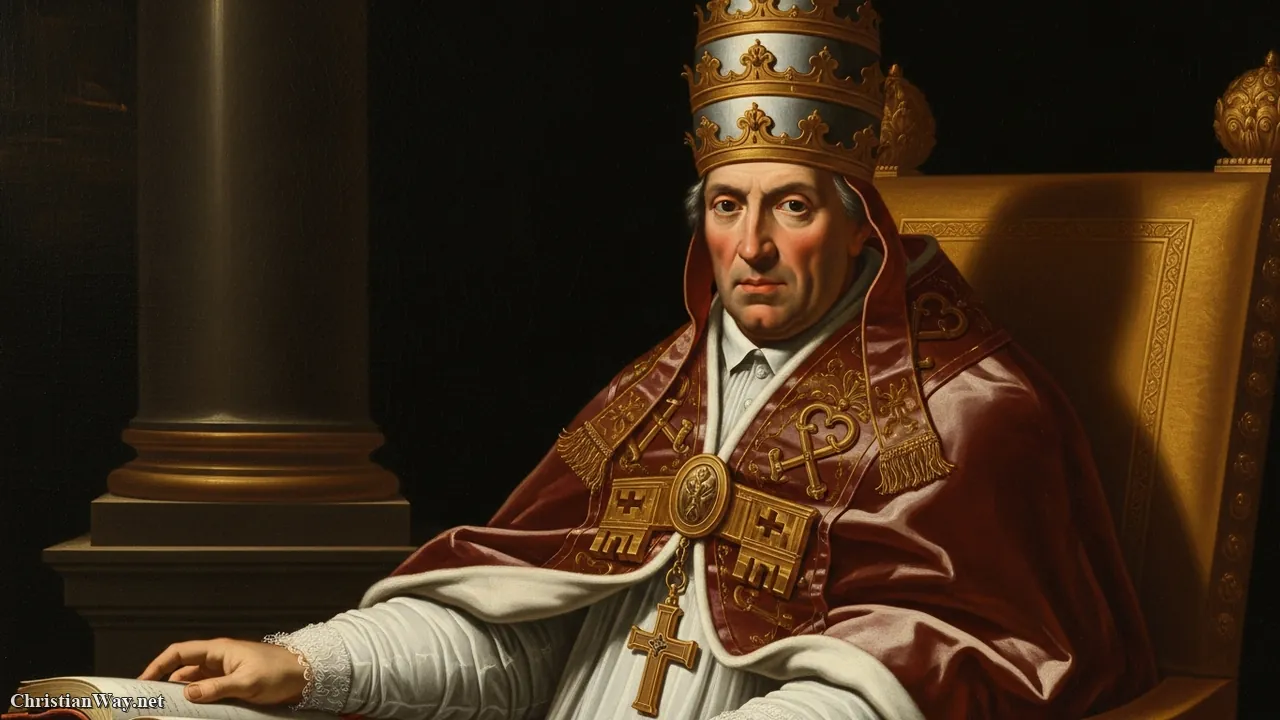
For Catholics, the phrase “second Pope” expresses a real continuity: Saint Peter is honored as the first bishop of Rome and Linus as his first successor. The Holy See’s official list identifies Linus in this way, and later Christian memory consistently places him near the beginning of the Roman succession.
Yet it is also helpful to approach the language with historical sensitivity. The first-century Church did not yet have every structure, title, and administrative pattern that would develop in later centuries. The Church was alive, but it was still growing. Its leadership was real, but its outward forms were simpler than those known in later Christian history.
This does not weaken the importance of Saint Linus. It makes his witness more human. He served at a time when the Church was learning how to remain united after the apostles had begun to pass from this world. He belonged to a generation that had to preserve what it had received without the comfort of centuries of established custom.
The word “pope” comes from a later historical development in the Church’s language, but the spiritual reality beneath the title is ancient: the Church in Rome had a bishop, and the succession from the apostles was remembered as a sign of continuity, communion, and responsibility.
The role of the bishop of Rome has been understood differently throughout Christian history. Catholic Christians see the Pope as the successor of Peter with a unique ministry of unity and pastoral service for the universal Church. Orthodox Christians honor the early bishops of Rome while holding a different understanding of how primacy should be exercised. Many Protestant Christians respect the early Church’s witness while interpreting the structures of authority in other ways.
Saint Linus can still speak to all Christians because he belongs to a shared time before many later divisions. He reminds us that the Church was first gathered around Christ, nourished by the apostles, and called to remain united in faith and love.
The most important question is not simply whether we can define every historical detail. The deeper question is this: Are we willing to receive the faith with the same humility that Saint Linus received it?
Saint Linus and the Ministry of Unity
One of the great needs of the Church in every age is unity. Jesus prayed for His disciples, “That they may all be one” (John 17:21). This prayer was not a wish for shallow sameness. It was a prayer that Christians would be united in the truth, love, and mission of Christ.
Saint Linus lived close to the time when the apostles themselves had taught the Church to remain united. He would have known that unity was not automatic. Christians were human. They could misunderstand one another, become divided by personality, struggle with pride, or disagree over difficult questions.
The New Testament itself shows this reality. Saint Paul had to write to communities experiencing conflict. He pleaded with believers not to divide themselves into competing groups. He urged them to remember that Christ is not divided.
This is still our challenge today.
Christians may disagree about theology, worship, leadership, culture, politics, and the ways faith should speak to the modern world. Some disagreements are serious and cannot be ignored. But Saint Linus reminds us that disagreement must never become contempt. We may seek truth without treating other Christians as enemies. We may hold convictions firmly without forgetting humility. We may defend what we believe without losing the love that proves we belong to Christ.
Unity is not created by pretending that differences do not exist. Unity grows when Christians return together to the One who is greater than every division.
Saint Linus had no social media, no modern political systems, no global conferences, and no public platform. Yet his vocation was deeply connected with unity. He helped preserve the apostolic faith in Rome so that believers could remain rooted in Christ rather than scattered by confusion.
This is the task of every Christian leader. A true shepherd does not gather people around himself. He gathers them around Jesus.
Unity Begins in the Heart
It is easy to speak about unity in the Church while carrying division within our own hearts. We may hold resentment against a family member. We may refuse to forgive a friend. We may look down upon people whose faith is expressed differently from ours. We may become proud of our own opinions, traditions, education, or spiritual experience.
But unity begins when we allow Christ to soften us.
Saint Linus invites us to ask whether our faith makes us more patient, more truthful, more humble, and more loving. If our religion makes us harsh, proud, and unable to listen, then something has gone wrong. Christ never asks us to abandon truth, but He always asks us to speak truth in love.
The Church needs leaders who are willing to protect the faith. But she also needs believers who know how to forgive, pray, serve, and remain close to one another in difficult times.
Perhaps the most beautiful way to honor Saint Linus is not simply to remember his place in a list. It is to become a person who helps hold others together.
The Courage to Serve Without Recognition
Saint Linus is not as widely known as Saint Peter, Saint Paul, Saint John, Saint Augustine, Saint Francis of Assisi, or many other saints. He does not have an extensive collection of writings preserved under his name. His life does not come to us through dramatic stories or vivid Gospel scenes.
Yet this hiddenness is part of his spiritual gift.
The world teaches us to seek recognition. We are encouraged to make ourselves visible, promote our achievements, defend our reputation, and measure our worth by whether others notice us. But the saints teach a different way. They show us that the most important work is often the work that God alone sees fully.
Saint Linus may have served quietly, but his service was not small. He helped carry the apostolic faith into the next generation. He helped ensure that the Church in Rome would remain connected to the witness of Peter and Paul. He stood in a place of responsibility during a time when the future of the Christian community was still uncertain.
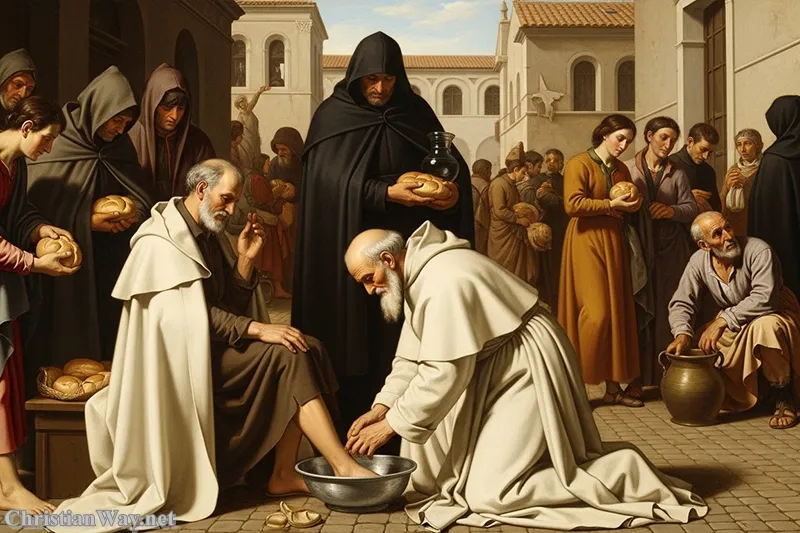
There are many people today whose lives resemble this quiet service. They are the caregivers who never receive applause. They are the parish volunteers who prepare chairs, clean rooms, welcome visitors, and pray for others. They are the parents who continue to love a difficult child. They are the teachers who patiently explain the same lesson again. They are the workers who remain honest when dishonesty would be easier. They are the elderly who offer hidden prayers for the Church.
The Kingdom of God is filled with such people.
Jesus said, “Whoever wishes to be great among you will be your servant” (Matthew 20:26). Saint Linus teaches us that greatness in the Church is not measured by fame. It is measured by faithfulness.
The Church Needs Quiet Saints
There is a temptation to believe that holiness must always appear dramatic. But many saints lived hidden lives. They did not change the world through noise. They changed it through prayer, humility, sacrifice, and love.
Saint Linus reminds us that the Church needs quiet saints now as much as ever.
It needs fathers who pray for their children before going to work. It needs mothers who carry burdens with patience. It needs young people who choose purity, honesty, and courage when nobody is watching. It needs workers who reject corruption. It needs leaders who serve rather than dominate. It needs Christians who are not ashamed to be gentle in a hard world.
The hidden life is not an unimportant life. The hidden life can become a place where God does His deepest work.
Saint Linus and the Faith We Hand On
Every generation receives a sacred responsibility. We are not the first Christians, and we will not be the last. Others prayed before us, suffered before us, built churches before us, translated Scripture, taught children, served the poor, defended the faith, and carried the Gospel through dark times.
Saint Linus received what had come before him. He did not own the Gospel. He served it.
This is a lesson especially needed today. We often speak about “my faith” in a way that can become too individualistic. Faith is personal, but it is never private in the sense of belonging only to ourselves. We receive it from the Church. We hear it in Scripture. We encounter it in worship. We learn it through the witness of others. We pass it on through love.
Parents pass on faith not only by teaching prayers but by the way they speak to one another, forgive one another, handle money, care for strangers, and respond to suffering. A child may forget many lessons, but he or she will remember whether faith made the home more peaceful, more truthful, and more loving.
Teachers pass on faith by helping students see that truth is not merely information. It is something that shapes character. Priests and pastors pass on faith by preaching Christ rather than themselves. Older believers pass on faith by showing younger Christians that a lifetime of trust in God is possible.
Saint Linus reminds us that faith is received in order to be given.
This does not mean merely repeating words from the past. It means allowing the living Gospel to enter our lives so deeply that others can see Christ in us. A person who knows doctrine but cannot love has not yet understood the heart of the Gospel. A person who speaks often about faith but never forgives has not yet allowed grace to reach the deepest places of the heart.
The Church is strongest when what she teaches becomes visible in how her people live.
A Saint for Times of Uncertainty
The early Church lived with uncertainty. Christians did not know what tomorrow might bring. They did not know whether persecution would intensify. They did not know how the faith would spread across the empire. They did not know how many generations would pass before Christ returned in glory.
Yet they continued to pray, break bread, serve, and proclaim the name of Jesus.
We also live in uncertain times. People worry about work, family, health, war, economic pressure, technology, social division, and the future of faith. Many Christians wonder whether the Church can remain strong in a changing world.
Saint Linus offers a quiet answer: remain faithful.
Do not allow fear to become the ruler of your heart. Do not let the noise of the world make you forget the voice of Christ. Do not assume that a difficult season means God has abandoned His people.
The Church has passed through many dark nights. She has known persecution, division, scandal, weakness, misunderstanding, and loss. Yet Christ remains faithful. His promise has not expired. His mercy has not grown weak. His Gospel has not lost its power.
Saint Linus did not need to know the entire future of the Church in order to serve faithfully in his own time. Neither do we. We are called to be faithful today.
Perhaps God is not asking you to solve every problem in the Church or in the world. Perhaps He is asking you to pray more deeply, forgive more freely, serve more humbly, teach your children more patiently, and remain close to Christ when the road feels uncertain.
This is how the faith is carried forward.
Reflect and Pray
Dear friends, Saint Linus invites us to give thanks for those who carried the faith before us. Think of the people through whom you first heard the name of Jesus. Perhaps it was a parent, grandparent, priest, pastor, teacher, friend, or even a stranger whose kindness revealed something of Christ.
Their faith became a bridge for you.
Now ask yourself gently: For whom am I becoming a bridge? Who may come to know God’s love through my prayer, my patience, my honesty, my forgiveness, or my quiet witness?
Saint Linus did not become important because he sought importance. He became important because he remained faithful to what Christ had entrusted to the Church. May we do the same.
Let us pray:
Lord Jesus Christ,
You called the apostles to proclaim Your Gospel
and promised to remain with Your Church always.
We thank You for Saint Linus,
who received the faith handed on by the apostles
and served Your people with humble courage.
Teach us to cherish the faith we have received,
to guard it with truth and tenderness,
and to pass it on through lives of love.
Strengthen Your Church in every land.
Heal divisions among Christians.
Give wisdom to those who lead,
peace to those who are afraid,
and faithfulness to all who seek to follow You.
May Saint Linus pray for us,
that we may remain close to Christ,
serve without seeking recognition,
and become faithful bridges of hope
for those who come after us.
Amen.
May the peace of Christ guard your heart, and may the faith handed down through the saints become a living light in every step you take.
— Fr. John Matthew