Experience the sacred beauty and deep historical roots of Barcelona’s most revered Catholic sanctuaries in this spiritual journey.
Dear friends, it is a joy to walk with you through the winding streets of Barcelona, a city where the Mediterranean breeze carries the whispers of saints and the echoes of centuries-old prayers. As we look upon the majestic spires that pierce the Catalan sky, we are reminded that a church is more than just a feat of architecture or a repository of art. It is a “domus Dei”—a house of God—and a “porta caeli,” a gate to heaven. Each stone laid by the faithful of old was an act of worship, a tangible prayer offered up for the glory of the Almighty.
In our modern world, we often rush past these sacred spaces, perhaps admiring their facades but failing to enter the silence within. Yet, for the pilgrim, every threshold crossed is an invitation to leave the noise of the world behind and encounter the Living Christ. Barcelona offers us a unique tapestry of faith, from the rugged simplicity of Romanesque chapels to the breathtaking, light-filled heights of Gothic cathedrals and the visionary brilliance of modern masters. Each site tells a story of devotion, resilience, and the enduring presence of the Spirit among His people.
As we journey through this list, I invite you to see these churches not merely as landmarks, but as living witnesses to the Gospel. Whether you are seeking solace, historical depth, or a moment of transcendent beauty, may these sanctuaries serve as resting places for your soul. Let us set out with open hearts, ready to see how the Divine has been etched into the very landscape of this vibrant city. Join me as we explore the sanctuaries that have served as the spiritual heart of Barcelona for generations.
A Summary of Sacred Treasures
| Rank | Church Name | Architectural Style | Key Spiritual Highlight |
|---|---|---|---|
| 10 | Basilica of Saints Justus and Pastor | Gothic | Connection to St. Ignatius of Loyola |
| 9 | Church of Sant Felip Neri | Baroque | A place of peace amidst historical suffering |
| 8 | Basilica of the Immaculate Conception | Gothic | A “moved” sanctuary of 15th-century stone |
| 7 | Monastery of Pedralbes | Catalan Gothic | The contemplative legacy of the Poor Clares |
| 6 | Sant Pau del Camp | Romanesque | Barcelona’s oldest surviving monastic anchor |
| 5 | Santa Maria del Pi | Catalan Gothic | The Great Rose Window and the Pine of Faith |
| 4 | Temple of the Sacred Heart (Tibidabo) | Neo-Gothic | Christ’s victory over temptation |
| 3 | Santa Maria del Mar | Catalan Gothic | The “People’s Cathedral” of the seafaring faithful |
| 2 | Barcelona Cathedral (La Seu) | Gothic | The relics and martyrdom of St. Eulàlia |
| 1 | Basilica of the Sagrada Família | Modernisme / Gothic | An eternal hymn to the Holy Family |
Top 10. Basilica of Saints Justus and Pastor: The Scholar’s Refuge
In the heart of the Gothic Quarter, tucked away in a quiet plaza, lies the Basilica of Saints Justus and Pastor. Entering this space feels like stepping back into the 14th century, where the shadows are long and the air is thick with the weight of centuries. The church is dedicated to two young martyr brothers, Justus and Pastor, who gave their lives for Christ in the early 4th century. Their courage as children reminds us that the faith is not just for the learned and the powerful, but for the “little ones” whom Jesus so dearly loved.
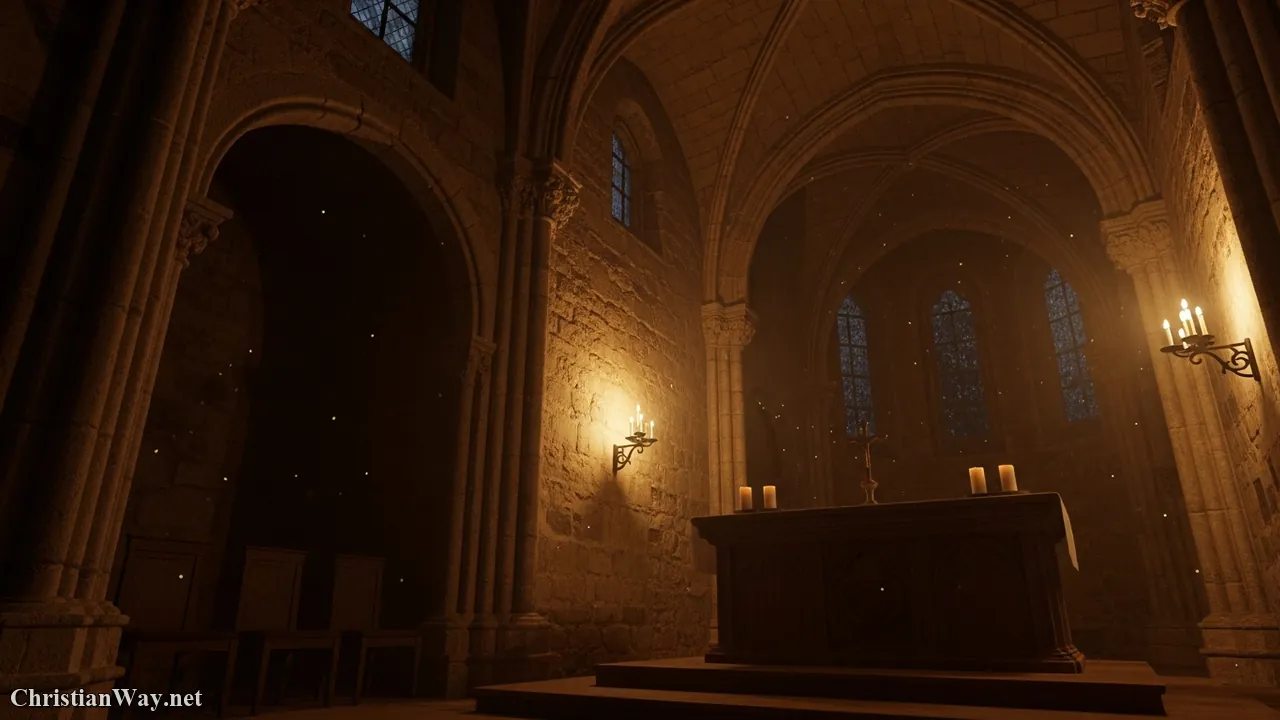
Theologically, this church holds a special place for those who follow the Ignatian path. It was here that St. Ignatius of Loyola, the founder of the Jesuits, often came to pray and beg for alms during his time as a student in Barcelona. Imagine the future saint sitting on these very steps, his heart burning with the desire to serve the Lord “for the greater glory of God.” In this humble space, we see the intersection of intellectual pursuit and profound humility, a reminder that our studies and our daily work find their true meaning only when surrendered to the Divine Will.
For the weary traveler, the Basilica offers a sanctuary from the bustling tourist crowds. Its interior, though sober, is filled with a sense of “precious quiet.” It challenges the modern believer to find the “hidden” God in the small corners of life. When you visit, look toward the altar and remember that you are standing where giants of the faith once knelt. Let their witness inspire you to be steadfast in your own small corner of the world.
Spiritual Highlights
- Ignatian Connection: Reflect on the site where St. Ignatius of Loyola begged for alms.
- Martyr Witness: “Let the children come to me” (Matthew 19:14); honors the child martyrs Justus and Pastor.
- Gothic Intimacy: One of the few churches that retains a deep sense of medieval seclusion.
Top 9. Church of Sant Felip Neri: Scars of Mercy
To enter the Plaza of Sant Felip Neri is to enter a space of profound silence and healing. The facade of the church still bears the jagged shrapnel marks from a tragic bombing during the Spanish Civil War—a somber reminder of human frailty and the suffering of the innocent. Yet, the congregation of St. Philip Neri, known as the Oratorians, has always been a community built on “love and charity.” Philip Neri, the “Apostle of Rome,” was known for his joy and his radical hospitality, and his spirit lives on in this quiet corner of Barcelona.
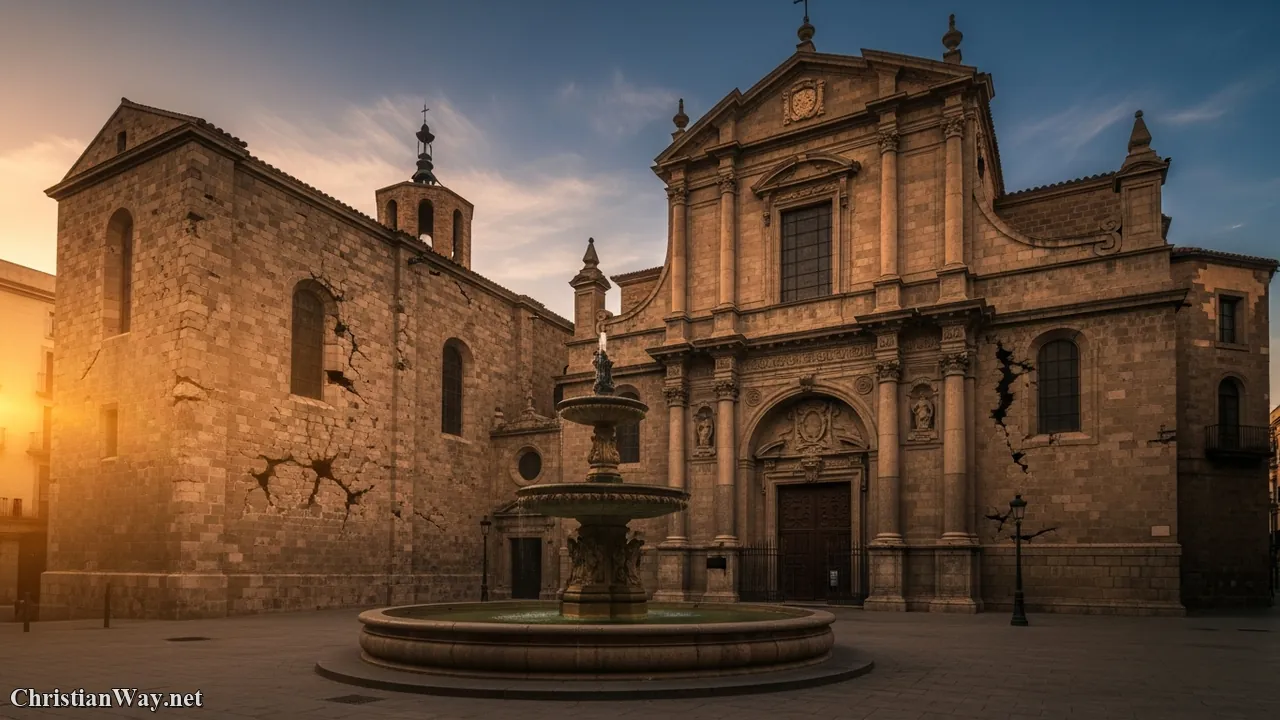
Theology here is written in the very walls. The scars on the stone serve as a “memento mori,” but the church’s continued presence is a testament to the Resurrection. It teaches us that God does not abandon us in our darkest hours; rather, He enters into our wounds. This site is particularly dear to those seeking inner peace, as it demonstrates how beauty can emerge from brokenness. The small fountain in the square provides a gentle soundtrack to a space that has witnessed both great sorrow and enduring hope.
In your own life, you may carry “shrapnel marks” of the heart—unhealed memories or past pains. Standing before this Baroque church, we are invited to bring those wounds to the Lord. Just as this church remains a place of worship despite its history, our lives can remain vessels of grace despite our trials. Christian Way encourages every visitor to sit by the fountain and offer a prayer for peace in our hearts and in the world.
Spiritual Highlights
- The Living Facade: Meditate on the scars of war as a call for global peace and reconciliation.
- St. Philip’s Joy: A reminder of the Oratorian mission of charity and spiritual friendship.
- Quiet Contemplation: Often cited as the most tranquil spot in the entire Gothic Quarter.
Top 8. Basilica of the Immaculate Conception: The Stone-by-Stone Miracle
The Basilica of the Immaculate Conception (La Puríssima Concepció) is a marvel of both architecture and persistence. Originally part of a 13th-century monastery, this beautiful Gothic structure was moved, stone by stone, from its original location to its current home in the Eixample district during the 19th century. This gargantuan effort was born out of a desire to preserve the sacred heritage of the city as it modernized. It reminds us that our faith is something we must actively carry with us as we navigate the changing landscapes of our lives.
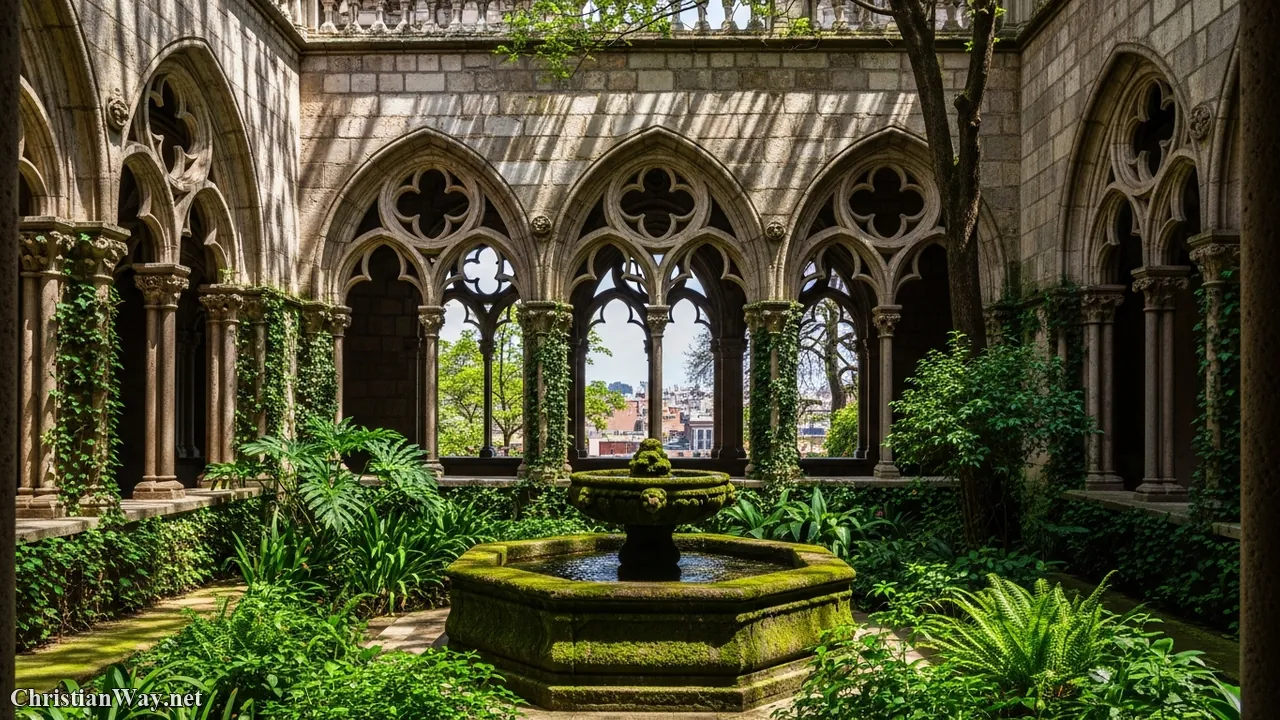
Theologically, the dedication to the Immaculate Conception speaks to the purity and grace of the Blessed Mother. Just as the church was meticulously rebuilt to its original glory, we are reminded of how God’s grace works within us—restoring, stone by stone, the image of Christ that may have been damaged by the world. The serene cloister, with its lush greenery and gentle fountain, provides a perfect setting for Marian devotion, inviting us to reflect on Mary’s “Yes” that changed the course of history.
When you walk through the doors, take a moment to admire the intricate stained glass and the soaring arches. There is a sense of “rightness” here, a harmony between the old world and the new. It challenges us to consider: What parts of our spiritual heritage are we willing to work to preserve? How do we carry our “stones of faith” into the modern city? Let this basilica be a reminder that nothing sacred is ever truly lost if we have the heart to rebuild it.
Spiritual Highlights
- Architectural Devotion: A symbol of the community’s dedication to preserving sacred space.
- Marian Peace: “Full of Grace”; the church centers on the dogma of the Immaculate Conception.
- Gothic Cloister: A 14th-century oasis preserved in the heart of a modern neighborhood.
Top 7. Monastery of Pedralbes: The Serenity of the Poor Clares
Nestled in a quiet residential area, the Monastery of Pedralbes is a jewel of Catalan Gothic architecture, founded by Queen Elisenda de Montcada in 1327. For centuries, it served as a home for the Poor Clares, the female branch of the Franciscan order. The monastery was designed as a place of retreat from the world, a “walled garden” where the sisters could focus entirely on the contemplation of God. Even today, the three-story cloister—one of the largest in the world—radiates a sense of profound stillness.
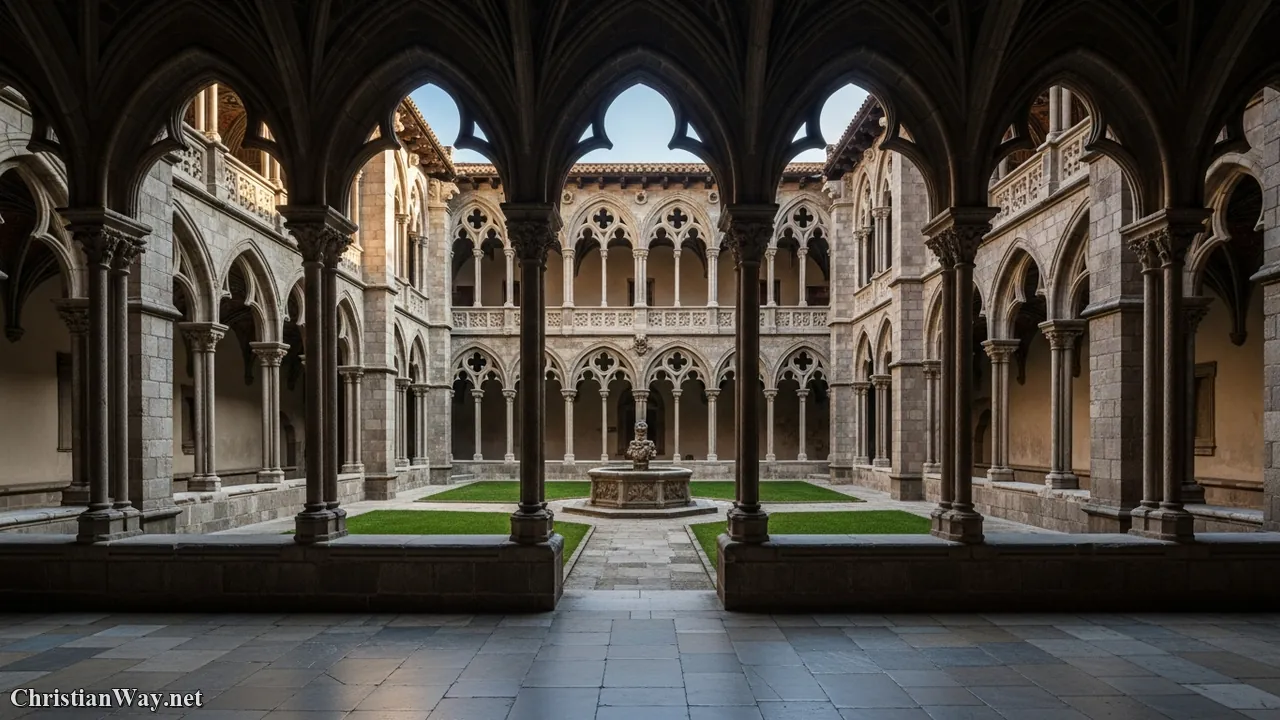
The theology of the Monastery is rooted in Franciscan simplicity. St. Clare and St. Francis taught that in letting go of material wealth, we find the true riches of the Kingdom. The architecture reflects this: the lines are clean, the spaces are vast, and the focus is always on the light. Standing in the middle of the cloister, surrounded by medicinal herbs and the sound of birds, one feels the “Peace and Good” (Pax et Bonum) that defined the Franciscan spirit. It is a powerful reminder that we do not need to “achieve” our way to God; we simply need to be present to Him.
For the modern believer who feels overwhelmed by the “busyness” of life, Pedralbes is a necessary stop. It invites us to practice the “Sabbath of the heart.” As you view the tomb of Queen Elisenda—depicted as a queen on one side and a humble widow on the other—reflect on the transitory nature of worldly power versus the eternal nature of a life lived for God. Let the silence of the Poor Clares teach you the value of listening for the “still, small voice.”
Spiritual Highlights
- Franciscan Heritage: Experience the “Lady Poverty” spirituality of the Poor Clares.
- The Great Cloister: One of the most harmonious and spacious Gothic cloisters in existence.
- Queenly Humility: The dual-natured tomb of Queen Elisenda offers a meditation on mortality and faith.
Top 6. Sant Pau del Camp: The Ancient Anchor
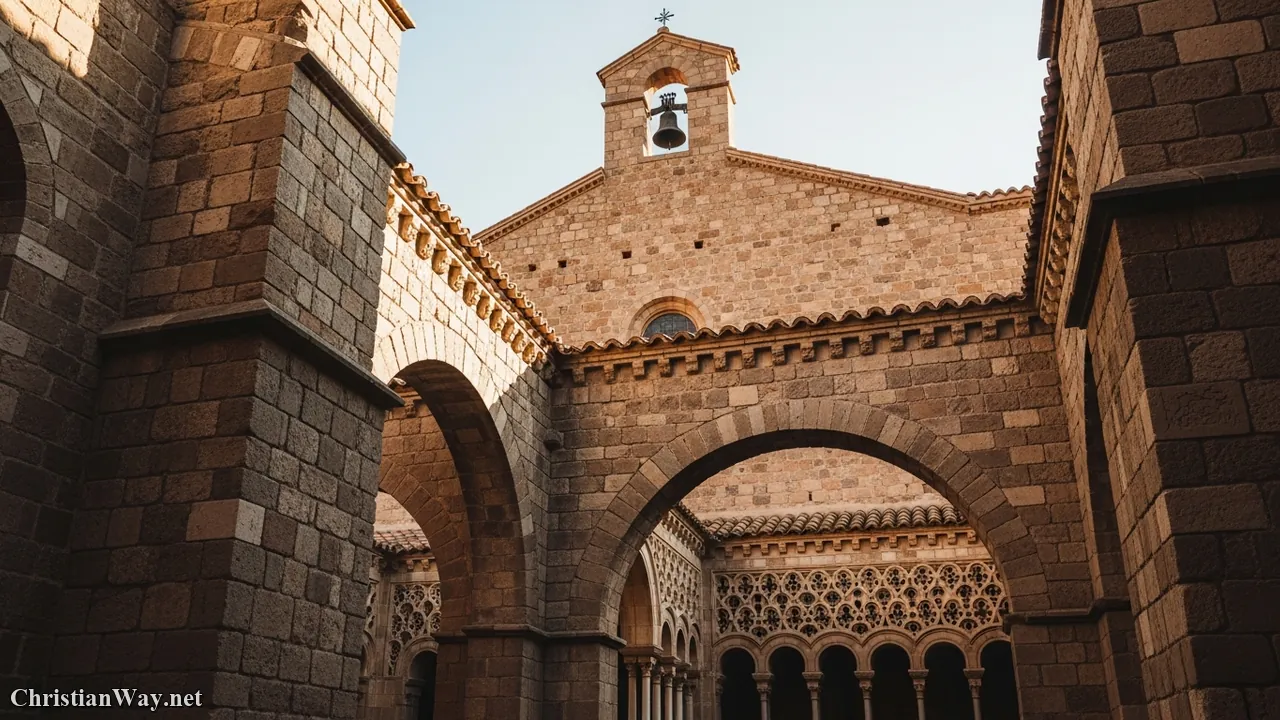
Located in the El Raval neighborhood, Sant Pau del Camp is the oldest church in Barcelona. This Romanesque monastery, with its thick stone walls and modest proportions, feels like an anchor holding the city to its early Christian roots. Built outside the original city walls (“del camp” means “in the field”), it has survived invasions, pillaging, and the relentless march of time. There is something deeply moving about its ruggedness; it does not try to impress with height or gold, but with the sheer weight of its endurance.
Theologically, Sant Pau del Camp represents the “primitive” church—the faith of the desert fathers and the early monks who sought God in the simplicity of manual labor and communal prayer. The Greek cross floor plan and the barrel vaults evoke a sense of protection and stability. It reminds us of the words of Christ: “Upon this rock, I will build my church” (Matthew 16:18). In an age of constant change, this little monastery stands as a witness to the “Unchanging One” who is the same yesterday, today, and forever.
When you enter the small, unique cloister with its Moorish-influenced arches, take a moment to touch the cool stone. Think of the thousands of monks who have walked these floors, chanting the Psalms. This is a place for the pilgrim who feels “out of place” in the modern world. It offers a spiritual home to those who long for the essentials of the faith. Let its ancient walls remind you that your faith is built on a foundation that cannot be shaken.
Spiritual Highlights
- Primal Faith: Barcelona’s oldest church, dating back to the late 9th or 10th century.
- Romanesque Beauty: A rare and perfectly preserved example of the pre-Gothic era.
- The Greek Cross: A floor plan that symbolizes the balance and universality of Christ’s sacrifice.
Top 5. Santa Maria del Pi: The Pine and the Rose
Standing in the lively Plaza del Pi, the Basilica of Santa Maria del Pi is a masterpiece of Catalan Gothic simplicity. Its name comes from a pine tree (pi) that once stood—and is still replanted—outside its doors. This church is famous for having one of the largest rose windows in the world, a stunning circle of light that dominates the facade. Unlike the ornate Gothic cathedrals of the North, the interior of “El Pi” is a single, vast nave, wide and open, creating a space of democratic worship where everyone feels close to the altar.
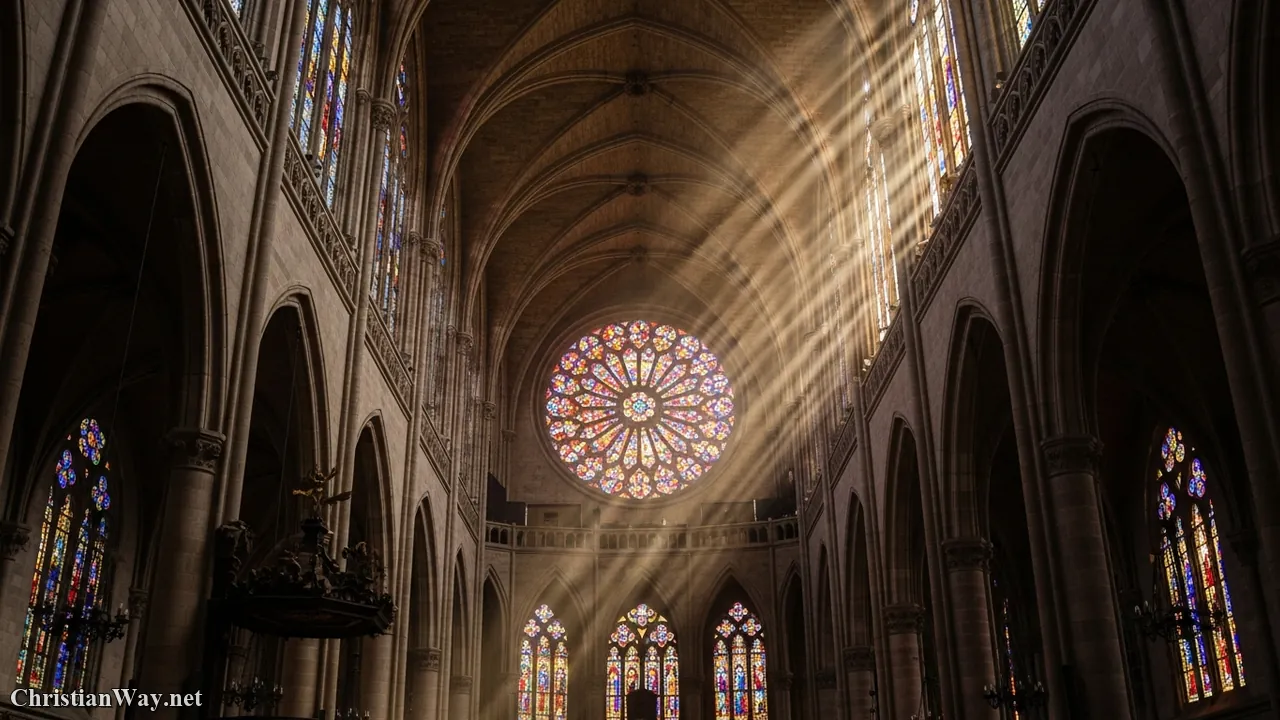
Theologically, the great rose window is a symbol of the “Eye of God” or the Virgin Mary as the “Mystical Rose.” When the sun hits the stained glass, the interior is bathed in a kaleidoscope of colors, reminding us that God’s grace takes many forms and illuminates every part of our humanity. The wide, pillar-less nave reflects the unity of the Body of Christ; here, there are no divisions, only a community gathered under the protective gaze of the Mother of God. It is a church of the “common folk,” built for and by the residents of the neighborhood.
For the visitor, Santa Maria del Pi offers a chance to see the “Treasury,” which includes a relic of what is traditioned to be the Crown of Thorns. This physical connection to the Passion of Christ brings the Gospel stories to life. As you look up at the soaring vault, let your spirit expand. This church teaches us that even in the midst of a crowded city, there is room for the soul to breathe and for the light to enter. It is a place of “broad horizons” within a narrow street.
Spiritual Highlights
- The Great Rose: Meditate on the “Mystical Rose” through one of the world’s largest Gothic rose windows.
- Sacred Relics: Home to historical treasures including a thorn from the Crown of Thorns.
- Catalan Gothic: A premier example of the “single-nave” style that emphasizes communal unity.
Top 4. Temple of the Sacred Heart of Jesus: The Mountain of Mercy
High atop Mount Tibidabo, overlooking the entire city and the vast Mediterranean, sits the Temple del Sagrat Cor de Jesús. The name “Tibidabo” comes from the Latin “Tibi dabo”—”I will give to you”—the words spoken by the devil to Jesus on the mountain of temptation. Here, at the highest point of Barcelona, the city has built a monument to Christ’s victory over that very temptation. Atop the Neo-Gothic spires stands a massive bronze statue of the Sacred Heart of Jesus, His arms outstretched in a gesture of eternal embrace and blessing over the city below.
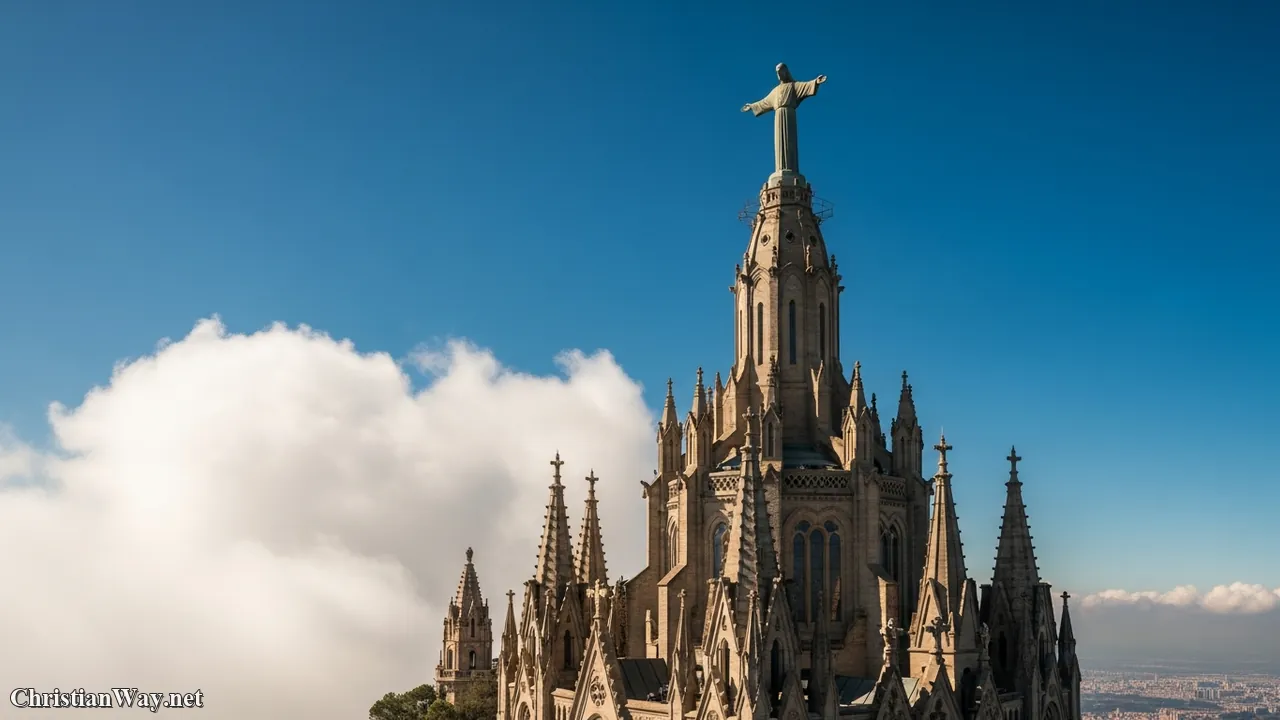
Theologically, this temple is a “redemptive” church. It was built as a place of atonement and prayer for the sins of the world. The Sacred Heart is the ultimate symbol of God’s boundless, self-sacrificing love. From this height, we are reminded that Christ is King over all our earthly “kingdoms”—our ambitions, our fears, and our daily struggles. The climb to the church is a physical pilgrimage that mirrors our spiritual ascent toward the Heart of God. It tells us that no matter how high we climb or how far we fall, His mercy is the horizon that meets us.
When you stand at the base of the Great Christ, looking out over the sprawling metropolis, you see the world from a “God’s-eye view.” All our problems seem small in the light of His love. This is a place to renew your baptismal vows and to reject the “tempter” who promises worldly power. It is a site of “Total Surrender.” Let the wind on the mountain clear your mind, and let the sight of the Sacred Heart remind you that you are never outside the reach of His blessing.
Spiritual Highlights
- Victory over Temptation: “Tibi dabo”; reflects on Christ’s refusal of worldly power (Matthew 4:9).
- Universal Blessing: The statue of Christ serves as a “sentinel of mercy” over the city.
- Double Sanctuary: Features both a modern crypt and a soaring Neo-Gothic upper church.
Top 3. Santa Maria del Mar: The People’s Cathedral
In the Born district stands Santa Maria del Mar, perhaps the most beloved church in Barcelona. Known as the “Cathedral of the Sea,” it was built in the 14th century in the remarkably short span of 55 years. What makes it unique is that it was not funded by kings or bishops, but by the ordinary people of the neighborhood—the porters, the sailors, and the merchants. These “bastaixos” (stone carriers) hauled the massive stones from the royal quarry on Montjuïc on their backs to build this home for the Virgin Mary. Their image is still carved into the main doors, a perpetual tribute to the dignity of labor.
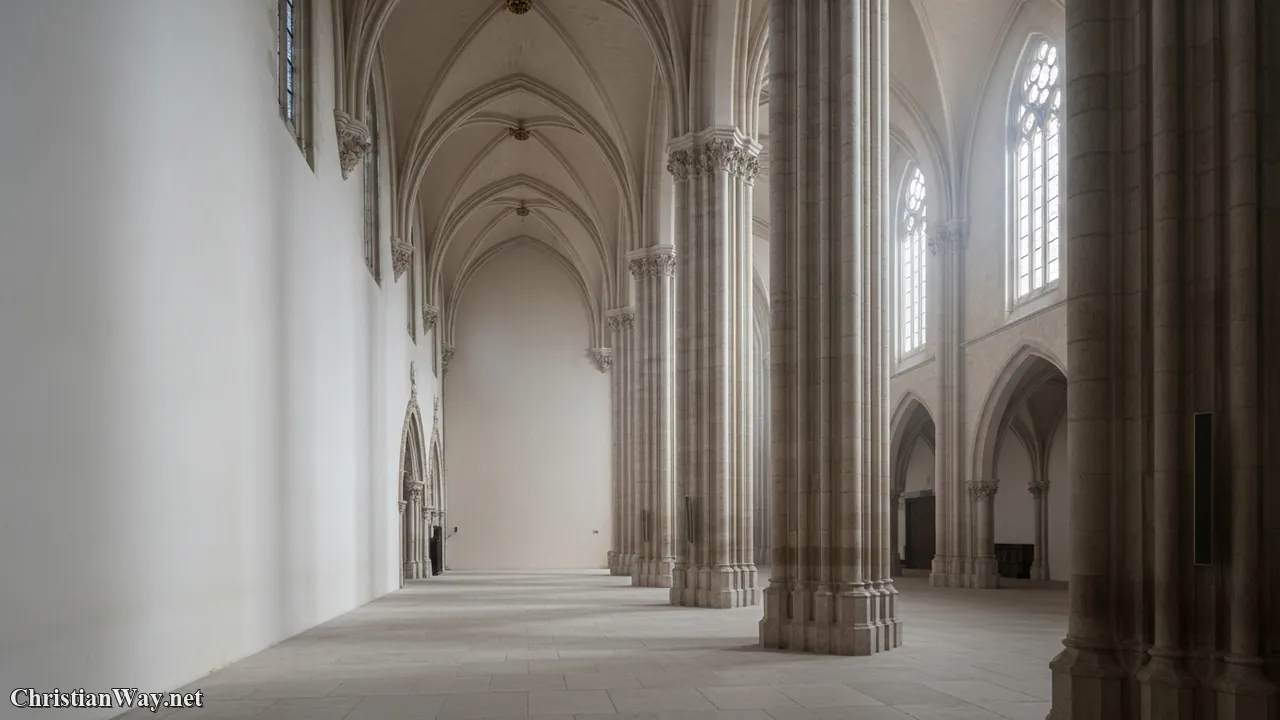
Theologically, Santa Maria del Mar is a testament to the “Priesthood of all Believers.” It shows us that the Church is not just a hierarchy, but a family where every member contributes their “living stone.” The interior is a masterpiece of Catalan Gothic—three naves of almost equal height supported by slender, octagonal pillars that seem to disappear into the ceiling. The result is a feeling of incredible lightness and space. It reminds us that in Christ, “the heavy becomes light,” and the burden of the faithful is transformed into a vessel of grace.
Walking into the vastness of Santa Maria del Mar, one is struck by its “sober majesty.” After a fire in 1936 destroyed the Baroque altarpieces, the church returned to its original Gothic purity. It is a space of “Essential Faith.” For the pilgrim, this church is a reminder that our daily work, no matter how humble, can be a path to holiness. As you gaze up at the stained glass, remember the porters who built this place and know that your own efforts for the Kingdom are seen and valued by the Lord.
Spiritual Highlights
- The Bastaixos: Honoring the common laborers who carried the stones for God’s glory.
- Oceanic Grace: Dedicated to Mary as the “Star of the Sea” (Stella Maris), protector of travelers.
- Pure Gothic: Widely considered the finest example of pure Catalan Gothic architecture.
Top 2. Cathedral of the Holy Cross and Saint Eulalia: The Seat of the Shepherd
Commonly known as “La Seu,” the Cathedral of Barcelona is the ecclesiastical heart of the city. While the Sagrada Família may be the most famous, this is the seat of the Archbishop and the historical center of the diocese. Built between the 13th and 15th centuries, it sits atop the ruins of Roman and Visigothic temples. The cathedral is dedicated to Saint Eulalia, a 13-year-old girl who was martyred during the Roman persecutions. Her remains rest in a beautiful white marble crypt beneath the high altar, a place of pilgrimage for those seeking courage in their witness for Christ.
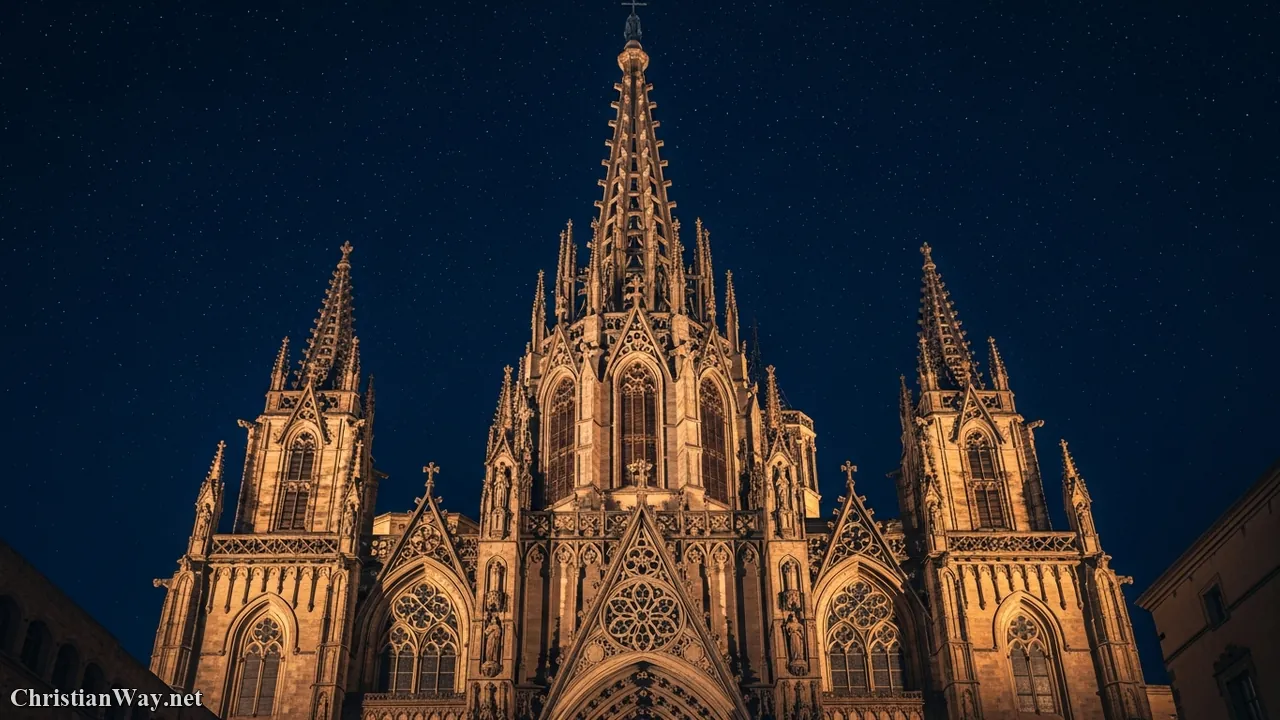
Theologically, the Cathedral represents the continuity of the Church. It is the “Cathedra”—the seat of teaching and authority. In the cloister, you will find thirteen white geese, representing the thirteen tortures Eulalia suffered and the thirteen years of her life. This blend of legend and liturgy reminds us that the “blood of the martyrs is the seed of the Church.” The cathedral’s soaring towers and intricate carvings are a physical representation of the “New Jerusalem,” a place where the earthly and the heavenly meet in the celebration of the Eucharist.
As you explore the side chapels, such as the one dedicated to the Christ of Lepanto, you feel the depth of the city’s spiritual history. This is a place to pray for the Church—for our shepherds and for the strength of the lay faithful. The Cathedral calls us to be “rooted and grounded in love” (Ephesians 3:17). Take time to descend into the crypt and offer a prayer for the youth of today, that they, like Eulalia, may have hearts that are bold for the Gospel.
Spiritual Highlights
- St. Eulalia’s Witness: Visit the crypt of the patron saint and reflect on the “Thirteen Geese.”
- Episcopal Heart: The spiritual center for the Catholic community in Barcelona.
- Christ of Lepanto: A revered crucifix associated with historical protection and victory.
Top 1. Basilica of the Sagrada Família: The Eternal Hymn
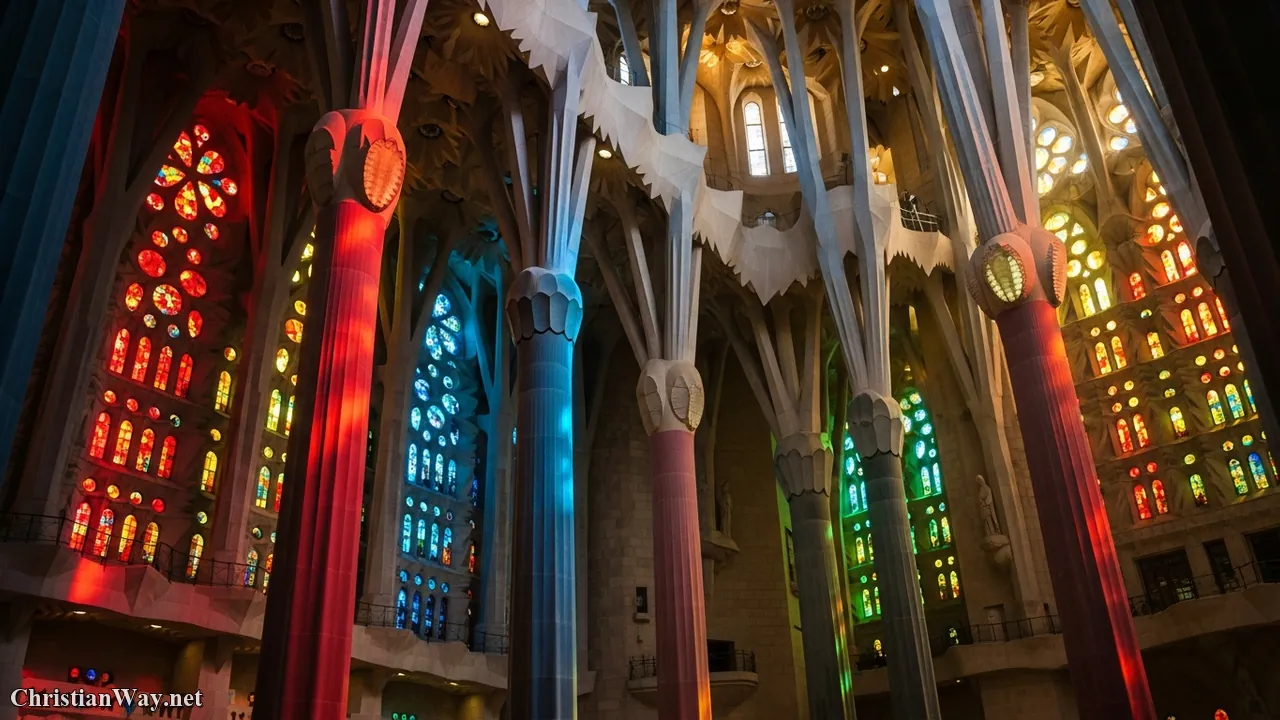
We arrive finally at the Basilica of the Sagrada Família, the “Bible in Stone” designed by the “Architect of God,” Antoni Gaudí. Though still a work in progress, this basilica is a living prayer, a visionary project that attempts to capture the entire story of salvation within its geometry. Gaudí understood that nature is the first “book of God,” and he designed the interior to resemble a forest, where the pillars branch like trees and the stained glass filters light like a canopy of leaves. It is, quite simply, an encounter with the Transcendent.
Theology is the very foundation of this structure. The eighteen towers are dedicated to the Apostles, the Evangelists, the Virgin Mary, and the tallest to Jesus Christ Himself. The facades depict the Nativity, the Passion, and the Glory of Christ, inviting the viewer to walk through the mysteries of the Rosary. Gaudí’s life was one of profound conversion and asceticism; he lived on the site, viewing his work as a form of expiation for the sins of humanity. The Sagrada Família reminds us that we are all “works in progress” in the hands of the Divine Architect.
Inside, the play of light—warm oranges and reds in the west for the setting sun (The Passion), and cool blues and greens in the east for the rising sun (The Nativity)—creates a world of “Spirit and Truth.” This is not just a building; it is a sermon. It challenges the modern world to look up, to wonder, and to believe. As you stand in the center of the nave, let the beauty overwhelm you. It is a foretaste of the Heavenly Banquet, a reminder that God’s creative power is still at work in our world today.
Spiritual Highlights
- The Nativity Facade: A celebration of the Incarnation and the “Word made Flesh.”
- Light of the World: Stained glass designed to elevate the soul through the theology of color.
- Gaudí’s Vision: A reminder that “My client [God] is not in a hurry,” emphasizing the eternal nature of faith.
Reflect and Pray
As our journey through the sacred heart of Barcelona comes to a close, let us pause to give thanks for the hands that built these sanctuaries and the Spirit that dwells within them. Whether you find yourself in the ancient Romanesque silence of Sant Pau del Camp or beneath the kaleidoscopic light of the Sagrada Família, remember that the true temple of God is you. These buildings of stone are meant to remind us of the beauty of the “living stones” that make up the Church.
May your time in Barcelona be more than a vacation; may it be a true pilgrimage. Take these moments of beauty back with you into your daily life. Let the resilience of Sant Felip Neri, the humility of Pedralbes, and the visionary hope of the Sagrada Família inspire you to live your own life as a hymn of praise to the Creator. Peace be with you on your journey.
— Fr. John Matthew, for Christian Way