A gentle introduction to Eastern Orthodox faith, worship, prayer, and the lifelong journey of becoming united with Christ.
Dear friends in Christ,
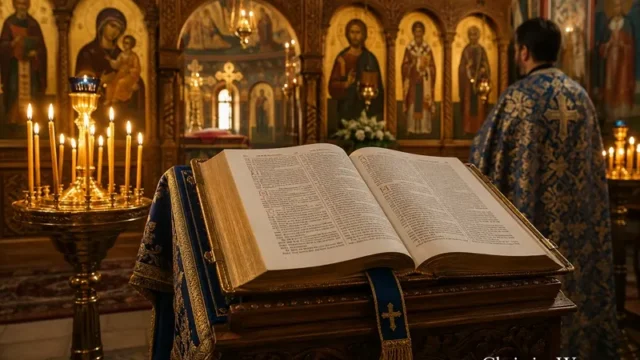
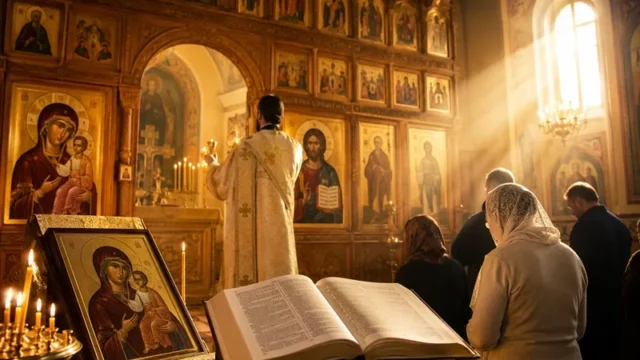
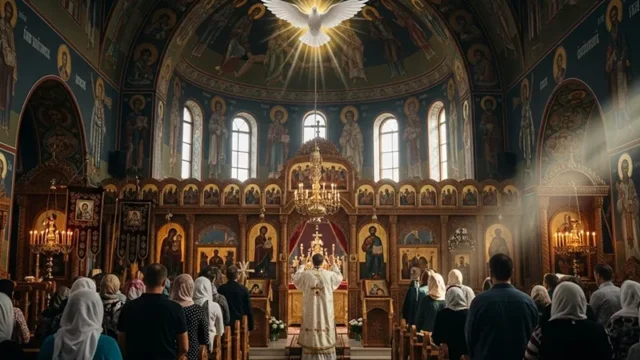
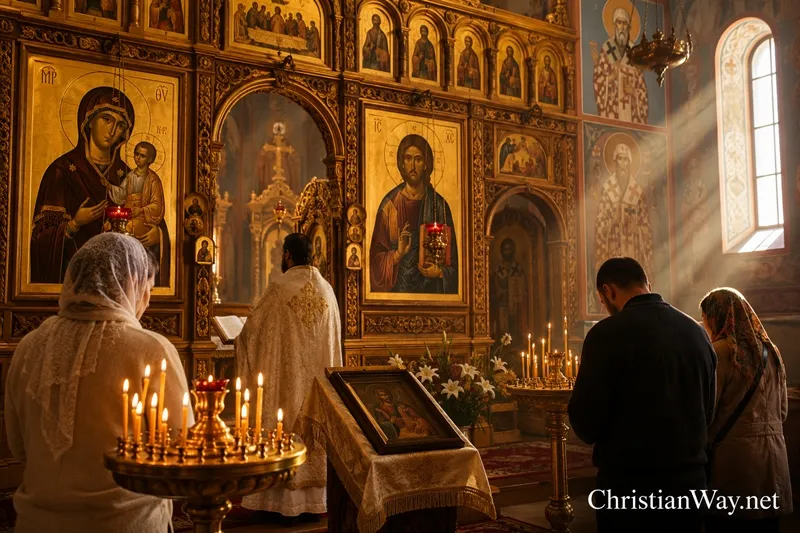
To encounter Eastern Orthodox Christianity for the first time can feel like stepping into a world both ancient and strangely familiar. One may enter an Orthodox church and immediately notice the golden icons, the fragrance of incense, the glow of candles, the chanting of prayers, and the absence of many things commonly found in modern Western churches. There may be no musical instruments, no large stage, and no attempt to make the service resemble a lecture, concert, or public presentation. Instead, the worshipper is surrounded by signs of mystery: Christ blessing from the holy icons, the Mother of God holding the infant Jesus, saints standing in prayer, and the faithful making the sign of the Cross as they listen to words that Christians have prayed for centuries.
For some visitors, this experience is beautiful. For others, it is unfamiliar or even overwhelming. Why do Orthodox Christians kiss icons? Why do they stand for so much of the service? Why is Mary mentioned so often? Why does the priest face the altar? Why is Communion treated with such solemnity? And what do Orthodox Christians actually believe about God, salvation, the Bible, the Church, and the Christian life?
These are good and sincere questions. Eastern Orthodox Christianity does not expect the mystery of faith to be understood in a single visit or reduced to a few easy definitions. It sees Christianity not merely as a collection of doctrines, but as a life to be entered, a healing to be received, and a communion with God to be lived. Its theology is expressed not only in books and sermons, but also in prayer, fasting, sacred art, the rhythm of the Church year, and above all in the Divine Liturgy.
At its heart, Eastern Orthodox Christianity proclaims the same central Gospel confessed by Christians throughout the world: the eternal Son of God became truly human in Jesus Christ, died for our salvation, rose bodily from the grave, and calls every person into communion with the Father through the Holy Spirit. Yet Orthodoxy expresses this Gospel through an ancient spiritual vision in which salvation is understood as healing, transformation, and participation in the divine life.
To understand the Orthodox Church, then, we must approach it not as a religious museum, but as a living community gathered around the risen Christ. We must listen not only to what Orthodox Christians say, but also to how they pray. For in the Orthodox tradition, theology and worship are inseparable. What the Church believes, it sings. What it teaches, it celebrates. What it receives from Christ, it seeks to embody in the lives of ordinary people who are learning, often slowly and imperfectly, to become holy.
Entering the World of Eastern Orthodox Christianity
An Ancient Church Still Living in the Present
Eastern Orthodox Christianity understands itself as a continuation of the Church established by Jesus Christ and proclaimed by the apostles. It looks back to the community described in the Book of Acts, where believers “continued steadfastly in the apostles’ doctrine and fellowship, in the breaking of bread, and in prayers” (Acts 2:42). These four elements—apostolic teaching, communion, the Eucharist, and prayer—remain central to Orthodox identity.
The word “Orthodox” comes from Greek terms that can convey both “right belief” and “right worship.” This does not mean that Orthodox Christians believe they are morally superior to others. Indeed, Orthodox prayers repeatedly teach worshippers to confess their own sins rather than judge their neighbors. The name expresses the conviction that the faith handed down from the apostles has been preserved within the Church’s worship, doctrine, and spiritual life.
The Eastern Orthodox Church is not a single national institution. It is a communion of self-governing local churches united by the same faith, sacraments, episcopal ministry, and basic liturgical tradition. These include, among others, the ancient patriarchates of Constantinople, Alexandria, Antioch, and Jerusalem, as well as churches associated with Greece, Russia, Romania, Serbia, Bulgaria, Georgia, Cyprus, Albania, Poland, and other lands. Orthodox communities are also found throughout Western Europe, the Americas, Africa, Asia, and Australia.
The word “Eastern” reflects the historical development of these churches within the eastern regions of the Roman Empire and the broader Christian East. Yet Eastern Orthodoxy is not limited to one ethnicity, language, or culture. A person does not need to become Greek, Russian, Arab, Romanian, or Serbian in order to become Orthodox. The Church’s cultural expressions are diverse, but its faith is intended for every nation and people.
It is also important to distinguish Eastern Orthodox Christianity from the Oriental Orthodox churches, such as the Coptic, Armenian, Syriac, Ethiopian, Eritrean, and Malankara traditions. These ancient Christian families share much with Eastern Orthodoxy but have followed distinct historical paths since the controversies surrounding the Council of Chalcedon in the fifth century. Today, dialogue has revealed deep areas of shared faith, though full ecclesial communion has not yet been restored.
What Eastern Orthodox Christians Believe About God
The Mystery of the Holy Trinity
At the center of Eastern Orthodox Christianity is faith in the Holy Trinity: one God in three divine Persons, the Father, the Son, and the Holy Spirit. This is not treated as a puzzle to be solved, but as the revealed mystery of God’s eternal life.
Orthodox Christians confess that the Father is God, the Son is God, and the Holy Spirit is God, yet there are not three gods but one God. The three divine Persons are distinct without being divided and united without being confused. They share one divine nature, one glory, one will, and one eternal life.
This belief is expressed in the Nicene-Constantinopolitan Creed, usually called the Nicene Creed, which is recited or sung during the Divine Liturgy. It begins: “I believe in one God, the Father Almighty, Maker of heaven and earth, and of all things visible and invisible.” It then confesses Jesus Christ as the only-begotten Son of God and the Holy Spirit as “the Lord, the Giver of Life.”
For the Orthodox Church, the doctrine of the Trinity is not an abstract theory. It reveals that the deepest reality is communion and self-giving love. God is not solitary isolation. The Father eternally loves the Son, the Son eternally responds in love to the Father, and the Holy Spirit rests in and manifests this divine communion. Human beings, created in the image of God, therefore find their true fulfillment not in selfish independence but in loving communion with God and one another.
The Christian life is Trinitarian from beginning to end. Orthodox Christians are baptized in the name of the Father, the Son, and the Holy Spirit. They begin prayers with the invocation, “In the name of the Father, and of the Son, and of the Holy Spirit.” They worship the Father through the Son in the Holy Spirit. Salvation means being brought into the life of the Trinity by grace.
Jesus Christ, Fully God and Fully Human
Eastern Orthodox Christianity places Jesus Christ at the center of all faith, worship, and spiritual life. Jesus is not merely a prophet, moral teacher, or inspired religious leader. He is the eternal Son and Word of God, through whom all things were created.
The Gospel of John proclaims, “In the beginning was the Word, and the Word was with God, and the Word was God,” and later, “The Word became flesh and dwelt among us” (John 1:1, 14). The eternal Son did not merely appear to be human. He truly became human while remaining fully divine.
Orthodox theology emphasizes that Christ is one divine Person with two complete natures, divine and human. He is not partly God and partly man. He is fully God and fully human. His divinity is not diminished by His humanity, and His humanity is not absorbed or destroyed by His divinity.
This teaching matters profoundly for salvation. As Saint Gregory of Nazianzus expressed it, what Christ did not assume could not be healed. The Son of God took the fullness of human nature so that the fullness of human nature might be restored. He entered human weakness, suffering, temptation, mortality, and death—not because He was conquered by them, but so that He might overcome them from within.
The Incarnation reveals both the humility of God and the dignity of humanity. In Christ, God comes near. He is born, grows, hungers, weeps, suffers, and dies. Yet through His humanity, He communicates divine life to us. The Orthodox Church therefore speaks of Christ not only as the One who forgives human sin but also as the Physician who heals human nature and the Victor who destroys death.
Scripture and Holy Tradition
The Bible Within the Life of the Church
Eastern Orthodox Christians receive the Holy Scriptures as the inspired Word of God and a central part of the Church’s life. The Bible is read in worship, proclaimed in preaching, quoted throughout the prayers, interpreted by the saints, and meditated upon in personal devotion.
Orthodox Christianity does not view the Bible as something separate from the Church. The Scriptures arose within the worshipping community of God’s people and were recognized, preserved, copied, and proclaimed within that community. The Church did not invent the Word of God, but the same Holy Spirit who inspired the Scriptures guided the Church in recognizing the books that belong to the biblical canon.
During the Divine Liturgy, the Gospel Book is treated with great reverence because it contains the written proclamation of Christ’s words and deeds. It is carried in procession, placed upon the altar, surrounded by candles, and kissed by the faithful. This outward reverence is not directed toward ink and paper as physical objects. It expresses love for Christ, whose Gospel is proclaimed through the written text.
The Orthodox approach to biblical interpretation is deeply Christ-centered. The Old Testament is read in the light of Christ’s death and resurrection, while the New Testament is understood within the living faith of the apostolic Church. The Church Fathers often saw biblical events as containing layers of meaning—historical, moral, spiritual, and sacramental—all centered upon God’s work of salvation.
This does not mean that Orthodox Christians are discouraged from reading the Bible personally. On the contrary, they are encouraged to read Scripture prayerfully and regularly. Yet personal interpretation is not considered entirely independent from the faith of the Church. The Bible is best understood in communion with the saints, the creeds, the councils, the liturgy, and the spiritual wisdom of generations who have lived and died in Christ.
Holy Tradition as the Life of the Spirit
The word “tradition” can sometimes suggest lifeless customs or human rules. In Eastern Orthodox Christianity, however, Holy Tradition means the living transmission of the apostolic faith through the Holy Spirit.
Saint Paul wrote to the Thessalonians, “Stand fast and hold the traditions which you were taught, whether by word or our epistle” (2 Thessalonians 2:15). The apostolic faith was transmitted through both written and oral teaching, through worship, pastoral practice, communal memory, and the lives of faithful witnesses.
Holy Tradition includes the Bible, the creeds, the decisions of the ecumenical councils, the writings of the Church Fathers, the Divine Liturgy, the sacraments, the iconographic tradition, the lives of the saints, and the continuing spiritual experience of the Church. These are not separate authorities competing with one another. They form a unified life centered upon Christ and guided by the Holy Spirit.
Orthodox Christians commonly recognize the first seven ecumenical councils as authoritative expressions of the Church’s faith. These councils defended essential teachings concerning the Trinity, the divinity and humanity of Christ, the person of the Holy Spirit, the title of Mary as Theotokos, and the proper veneration of icons.
Tradition does not mean that every local habit or cultural custom possesses equal authority. The Church must distinguish between the apostolic faith and practices that belong to particular times or places. Authentic Tradition is living because the Holy Spirit makes the unchanging Gospel present within changing human circumstances.
Salvation as Healing, Victory, and Union With God
More Than a Legal Acquittal
Eastern Orthodox Christianity speaks of salvation in many biblical images. Salvation is forgiveness, reconciliation, liberation, healing, adoption, illumination, rebirth, victory over death, and union with God. No single image contains the whole mystery.
Orthodox teaching certainly affirms that human beings need forgiveness. Sin creates real guilt, wounds relationships, darkens the mind, and separates us from the life for which we were created. Yet sin is also understood as a spiritual disease. It distorts our desires, enslaves our will, and weakens our capacity to love.
Christ comes not only as Judge but also as Physician. He does not merely declare the sick person healthy while leaving the disease untouched. He enters the depths of human brokenness in order to heal and transform us. The sacraments, prayer, repentance, fasting, charity, and participation in the life of the Church are therefore seen as part of a lifelong process of restoration.
The Cross stands at the center of this salvation. On the Cross, Christ bears the consequences of sin, offers Himself in perfect love and obedience, reconciles humanity to God, defeats the powers of evil, and enters death itself. His sacrifice is unique and unrepeatable. Yet the meaning of the Cross cannot be separated from the Resurrection.
At Pascha, the Orthodox celebration of Easter, the Church repeatedly sings, “Christ is risen from the dead, trampling down death by death, and upon those in the tombs bestowing life.” These words express one of the strongest themes in Orthodox theology: Christ conquers death from within. The tomb becomes the place of victory. Death, which once appeared to be the final prison of humanity, becomes through Christ a passage into life.
Theosis: Becoming by Grace What God Is by Nature
One of the most distinctive themes in Eastern Orthodox Christianity is theosis, often translated as deification or participation in the divine life. This does not mean that human beings become gods by nature or cease to be creatures. It means that through grace they become united with God and transformed into His likeness.
Saint Peter writes that believers may become “partakers of the divine nature” (2 Peter 1:4). Saint Paul speaks of being transformed “from glory to glory” by the Spirit (2 Corinthians 3:18). Jesus prays that His followers may share in the communion of love that He has with the Father: “That they all may be one, as You, Father, are in Me, and I in You” (John 17:21).
Theosis is the fulfillment of humanity, not its destruction. The closer a person comes to God, the more truly human that person becomes. Grace does not erase personality but heals it. Holiness does not make every saint identical. Rather, divine love purifies each person so that the unique beauty intended by God can shine more clearly.
The process begins in baptism, is nourished in the Eucharist, and unfolds through repentance, prayer, love, humility, and obedience to Christ. It is entirely dependent upon God’s grace, yet it involves the free response of the human person. Orthodox theology often calls this cooperation synergy. God acts first, sustains every good movement, and brings salvation to completion, but He does not treat human beings as lifeless objects. He invites a response of trust and love.
Theosis is not reserved for monks, theologians, or extraordinary mystics. It is the calling of every Christian. A mother who patiently cares for her children, a worker who refuses dishonesty, a grieving person who continues to pray, and a neighbor who quietly forgives an enemy may all be participating in the healing grace of God.
The Church as the Body of Christ
A Visible and Sacramental Communion
The Orthodox Church understands the Church to be both divine and human. It is divine because Christ is its Head and the Holy Spirit dwells within it. It is human because its members remain weak, sinful, and in need of repentance.
This distinction is important. The holiness of the Church does not mean that every Christian behaves in a holy manner or that every church leader makes wise decisions. History contains painful examples of failure, division, ambition, and injustice among Christians. Orthodoxy does not deny these wounds. Rather, it believes that Christ remains faithful even when His servants fail to reflect Him.
The Church is not merely an organization of individuals who share similar religious opinions. It is the Body of Christ, a sacramental communion in which believers are joined to Christ and to one another. Saint Paul writes, “You are the body of Christ, and members individually” (1 Corinthians 12:27).
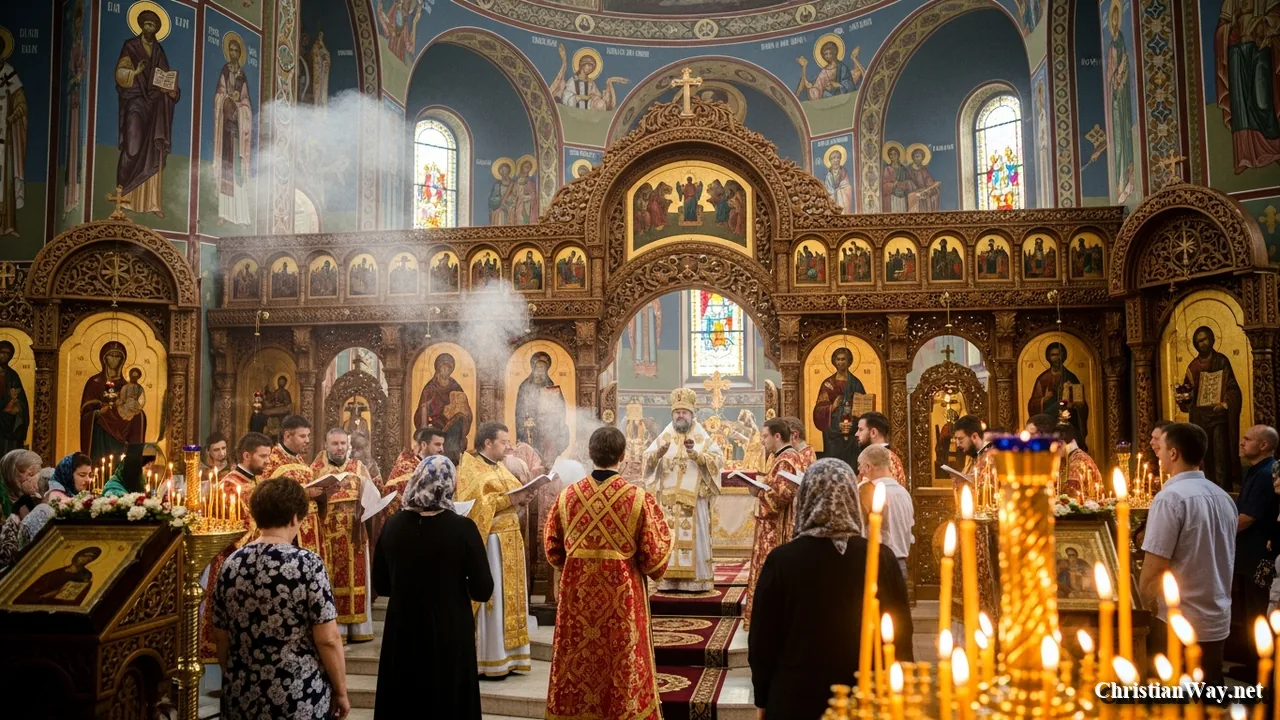
This communion is made visible in the local Eucharistic assembly gathered around its bishop or the priest who represents him. The bishop is understood as a successor to the apostles, entrusted with teaching the faith, guarding the unity of the Church, and presiding over its sacramental life.
Bishops, Patriarchs, and Conciliar Leadership
Eastern Orthodox Christianity does not have one universal bishop exercising direct jurisdiction over every Orthodox church. Instead, the Church is governed conciliarity, through bishops who share the same sacramental office and gather in councils to address questions affecting the Church.
Some bishops hold titles such as patriarch, metropolitan, or archbishop. These offices carry responsibilities of coordination, pastoral care, and honor, but Orthodox theology does not regard one bishop as possessing absolute authority over all others.
The Ecumenical Patriarch of Constantinople is traditionally regarded as “first among equals” among Orthodox primates. This position includes a primacy of honor and certain coordinating responsibilities, though the precise nature and extent of those responsibilities have been discussed and debated within Orthodoxy.
For a beginner, the essential point is that Orthodox unity is based not on submission to a single worldwide administrative center but on shared faith, sacramental communion, apostolic episcopacy, and conciliar life.
This structure can sometimes appear complex, especially when disagreements arise between local churches. Yet its theological ideal is deeply communal: bishops are called to listen to one another, preserve the apostolic faith together, and avoid both isolation and domination.
The Divine Liturgy: Heaven and Earth Meeting in Worship
Worship as Participation, Not Observation
The central public worship of the Orthodox Church is the Divine Liturgy, especially the Liturgy of Saint John Chrysostom, which is celebrated on most Sundays and feast days. Another form, the Liturgy of Saint Basil the Great, is used on certain occasions during the year.
The Divine Liturgy is not understood primarily as a religious performance presented by clergy to an audience. It is the prayer of the whole Church. The priest, deacon, choir, readers, altar servers, and congregation each participate according to their calling.
Much of the service is sung or chanted. Scripture is proclaimed, litanies are offered for the Church and the world, the Creed is confessed, and bread and wine are offered in thanksgiving. The service reaches its summit in the Eucharist, when the faithful receive the Body and Blood of Christ.
Orthodox worship engages the whole person. The eyes behold icons and candles. The ears hear Scripture and sacred chant. The nose receives the fragrance of incense. The body stands, bows, and makes the sign of the Cross. The lips confess the Creed and receive Holy Communion.
This physical quality reflects the Orthodox understanding of the Incarnation. Because the Son of God truly became flesh, the material world can serve as a bearer of grace. Matter is not evil. Water can become the means of baptism. Oil can become a sign of healing. Bread and wine can become the Eucharistic gifts. Wood and paint can bear a holy image. Human voices can become instruments of praise.
The Shape of the Divine Liturgy
The Divine Liturgy has two broad movements. The first is often called the Liturgy of the Word or the Liturgy of the Catechumens. It includes hymns, litanies, the reading of the Epistle and Gospel, and usually a sermon. Through these elements, the Church receives Christ in His proclaimed Word.
The second movement is the Liturgy of the Faithful, centered upon the offering and consecration of the Eucharistic gifts. The bread and wine are brought to the altar in the Great Entrance. The Church gives thanks to God for creation, redemption, the Cross, the Resurrection, the Ascension, and Christ’s promised return.
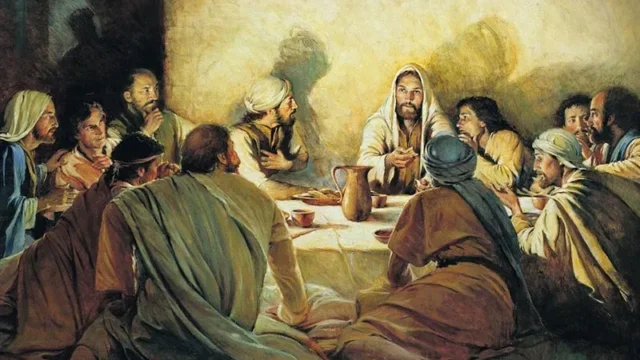
The priest repeats the words of Christ at the Last Supper: “Take, eat; this is My Body,” and “Drink of it, all of you; this is My Blood.” The Church then invokes the Holy Spirit to come upon the gathered people and upon the gifts.
Orthodox Christians affirm that the bread and wine truly become the Body and Blood of Christ. They do not treat Communion as a merely symbolic reminder. At the same time, Orthodox theology does not usually attempt to explain the mystery through a single philosophical definition. It receives Christ’s words with reverence and trusts the transforming work of the Holy Spirit.
The Eucharist as Communion With Christ
Holy Communion is the heart of Orthodox spiritual life. Christ says, “He who eats My flesh and drinks My blood abides in Me, and I in him” (John 6:56). In receiving the Eucharist, believers are united with the crucified and risen Lord and, through Him, with one another.
Because the Eucharist expresses the full unity of faith and Church life, Orthodox parishes ordinarily reserve Communion for baptized and chrismated Orthodox Christians who have prepared themselves according to the discipline of the Church. Visitors are warmly welcomed to attend the Liturgy, listen, pray, and speak with the priest, but they are usually asked not to receive Communion.
This practice is not intended as a declaration that non-Orthodox Christians have no faith or love for Christ. It reflects the conviction that sacramental communion and visible ecclesial unity belong together. The pain of divided Communion should awaken prayer for the healing of Christian division rather than indifference toward it.
The Holy Mysteries
Sacraments as Encounters With Divine Grace
Orthodox Christians often call the sacraments the Holy Mysteries. The term “mystery” emphasizes that God truly acts through visible signs in ways that surpass complete human explanation.
Western Christianity commonly identifies seven sacraments, and Orthodox Christians also speak of baptism, chrismation, the Eucharist, confession, marriage, ordination, and holy anointing. Yet Orthodoxy is often less concerned with limiting sacramental life to an exact number. The blessing of water, the consecration of a church, monastic tonsure, funeral rites, and many other actions also reveal the Church’s sacramental vision of creation.
In baptism, a person is united with the death and resurrection of Christ. Orthodox baptism is normally performed through threefold immersion in water in the name of the Father, the Son, and the Holy Spirit.
Chrismation follows baptism. The newly baptized person is anointed with holy chrism and receives the seal of the gift of the Holy Spirit. In the case of infants, baptism, chrismation, and first Communion are ordinarily celebrated together. Children are welcomed immediately into the sacramental life of the Church.
Confession is the sacrament of repentance and reconciliation. The penitent confesses sins before Christ in the presence of a priest, who serves as a witness, pastor, and spiritual physician. The priest is not meant to act as a distant official collecting information, but as a servant of God’s mercy who helps the person turn again toward healing.
Holy anointing is celebrated for the healing of soul and body. Marriage unites a man and woman in a covenant of love blessed by Christ. Ordination sets apart bishops, priests, and deacons for service within the Church.
These mysteries are not magical rituals. They call for faith, repentance, and a life of continuing conversion. The grace of God is a gift, but it is given so that the human person may be renewed in love.
Icons and the Beauty of the Incarnation
Windows Into the Kingdom of God
Icons are among the most recognizable features of Eastern Orthodox Christianity. An icon is a sacred image of Christ, the Mother of God, the angels, the saints, or events in the history of salvation.
Orthodox Christians do not believe that wood, paint, or artistic technique possesses divine power in itself. They do not worship icons. Worship belongs to God alone. They venerate icons, showing honor to the person represented.
A photograph of someone we love is not the person, yet we may hold it with affection because our love passes beyond the image to the one depicted. In a deeper sacramental way, an icon directs the heart toward Christ and His saints.
The defense of icons is rooted in the Incarnation. The invisible God cannot be represented according to His divine nature, but the Son of God truly became visible in Jesus Christ. Saint John writes, “The Word became flesh and dwelt among us,” and the apostles saw His glory (John 1:14). Because Christ took a human face, He may be depicted in His humanity.
To reject every image of Christ would risk treating the Incarnation as an appearance rather than a real entrance into material existence. The icon therefore becomes a visual confession: God has truly come among us in the flesh.
Orthodox icons are not ordinarily painted to create the illusion of ordinary physical space. Their purpose is not photographic realism. The faces are often solemn, the perspective unusual, and the light seems to come from within rather than from an external source. The icon shows the person or event as illuminated by the Kingdom of God.
The Iconostasis
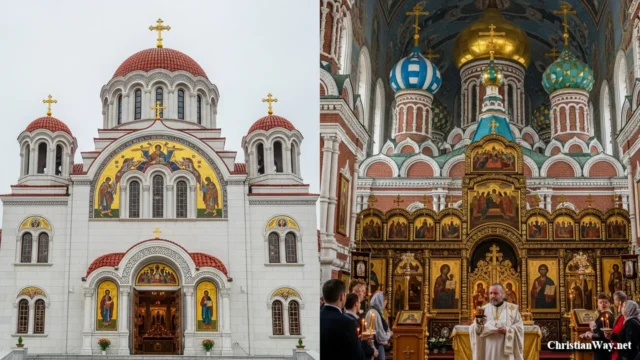
Most Orthodox churches contain an iconostasis, a screen or wall of icons separating the nave from the sanctuary. At first, this may seem to hide the altar. In reality, the iconostasis reveals the unity of heaven and earth.
The icons show Christ, the Mother of God, the angels, the apostles, and the saints gathered around the mystery of the Eucharist. The sanctuary is not a private room for the clergy, but a sign of the heavenly altar and the divine mystery into which the whole Church is being drawn.
The central doors are called the Holy Doors or Royal Doors. They are opened at significant moments in the service, revealing the altar and the Gospel Book. This movement of opening and closing expresses both the mystery of God and the revelation given through Christ.
Mary, the Theotokos, and the Communion of Saints
Why Orthodox Christians Honor Mary
Mary holds a prominent place in Eastern Orthodox worship and devotion because of her unique relationship to Jesus Christ. She is commonly called the Theotokos, a Greek title meaning “God-bearer” or “the one who gave birth to God.”
This title does not mean that Mary existed before God or created the divine nature of Christ. It safeguards the truth about Jesus. The child born of Mary is not a separate human person later joined to God. He is the eternal Son of God who truly became human.
The title Theotokos was affirmed by the Council of Ephesus in the fifth century because it protects the unity of Christ’s person. To call Mary the Mother of God is therefore ultimately a confession about who Jesus is.
Orthodox Christians honor Mary as the greatest example of human cooperation with divine grace. At the Annunciation, she responds to the angel, “Behold the maidservant of the Lord! Let it be to me according to your word” (Luke 1:38). Her obedience does not make her passive. It is a courageous and freely offered trust through which the Incarnation enters human history.
Mary is never worshipped as a goddess or treated as equal to the Trinity. She is a creature saved by her Son. Yet she is honored above the saints because she bore Christ in her womb, cared for Him, stood near His Cross, and remained faithful to God’s call.
Asking the Saints to Pray
Eastern Orthodox Christians believe that those who die in Christ remain alive in Him. Jesus says that God “is not the God of the dead but of the living, for all live to Him” (Luke 20:38). Death does not destroy the communion of Christ’s Body.
For this reason, Orthodox Christians ask the saints to pray for them, just as Christians on earth ask one another for prayer. They do not believe the saints replace Christ or possess power independent of God. Every authentic intercession flows from Christ, the one Mediator who unites heaven and earth.
The saints are not spiritual celebrities. They are witnesses to what the grace of God can accomplish in human lives. Some were bishops, monks, or missionaries. Others were mothers, soldiers, physicians, rulers, workers, children, or martyrs. Their lives differ greatly, but each reflects something of Christ.
Honoring the saints also protects Christianity from becoming merely theoretical. The Gospel has been lived. Forgiveness, courage, purity, humility, generosity, and sacrificial love are not impossible ideals. In fragile human beings, the Holy Spirit has made them visible.
Prayer, Fasting, and the Healing of the Heart
Prayer as Communion With God
Orthodox spirituality understands prayer not merely as speaking words to God but as entering consciously into communion with Him. Prayer may include praise, thanksgiving, repentance, intercession, silence, and attentive presence.
The Church offers a rich tradition of written prayers for morning, evening, meals, preparation for Communion, repentance, and many other circumstances. These prayers teach the heart how to speak when personal words are weak or confused.
Yet written prayer is not intended to eliminate spontaneous prayer. A person may speak to God directly in joy, fear, anger, sorrow, or gratitude. The Psalms themselves show that authentic prayer can contain the full range of human emotion.
One of the best-known Orthodox prayers is the Jesus Prayer: “Lord Jesus Christ, Son of God, have mercy on me, a sinner.” This prayer gathers the Gospel into a few words. It confesses Jesus as Lord and Son of God, calls upon His holy name, and asks for mercy with humility.
The purpose of the Jesus Prayer is not mechanical repetition or an escape from responsibility. It is meant to draw the mind into the heart, quiet scattered thoughts, and nurture continual remembrance of Christ. Under wise spiritual guidance, the prayer may gradually become woven into daily life.
A person can pray it while walking, waiting, working quietly, or facing temptation. Each repetition becomes a small turning of the heart toward the One who is already present.
Repentance as Returning Home
Repentance is central to Orthodox spiritual life. The Greek word metanoia refers to a change of mind, heart, and direction. Repentance is not self-hatred. It is awakening to the truth of God’s love and turning away from everything that prevents us from receiving it.
The parable of the prodigal son offers a powerful image. The younger son leaves his father, wastes his inheritance, and falls into misery. When he returns, the father runs to meet him, embraces him, and restores him to the household. The son’s repentance is real, but the father’s mercy is greater.
Orthodox prayers can sound severe because they speak honestly about sin. Yet their purpose is not despair. Sin is named so that it may be healed. The Church does not teach the sinner to hide from God, but to approach Him with the prayer, “A broken and a contrite heart—these, O God, You will not despise” (Psalm 51:17).
Fasting as Freedom for Love
Fasting has an important place in Eastern Orthodox Christianity. Orthodox Christians traditionally fast on Wednesdays and Fridays and during longer seasons such as Great Lent, the Nativity Fast, the Apostles’ Fast, and the Dormition Fast.
The exact discipline varies according to health, age, circumstance, and pastoral guidance. It often involves abstaining from meat, dairy products, and sometimes other foods. Yet the true purpose is spiritual, not dietary.
Fasting reveals how easily desire can dominate us. It teaches self-control, gratitude, simplicity, and compassion. By voluntarily limiting food, the Christian learns that life does not depend upon satisfying every appetite.
But fasting without love is spiritually empty. The prophet Isaiah warns against fasting while oppressing others, and the Fathers repeatedly teach that the food saved through fasting should become mercy for the poor. Saint John Chrysostom urged Christians not only to fast with the mouth, but also to fast from cruel speech, anger, and judgment.
The person who avoids meat but consumes another person through gossip has misunderstood fasting. True fasting makes room for prayer, generosity, and reconciliation.
The Liturgical Year and the Sanctification of Time
Living Within the Story of Christ
The Orthodox Church year leads believers through the mysteries of salvation. Rather than treating biblical events as distant memories, the liturgy makes them present to the worshipping community.
At Christmas, the Church does not merely recall that Christ was once born. It sings, “Today the Virgin gives birth to the Transcendent One.” At Theophany, Christ’s baptism and the revelation of the Trinity are celebrated. During Holy Week, the faithful walk with Christ toward the Cross. At Pascha, they proclaim His Resurrection as the present source of life.
The Church year includes feasts of Christ, the Mother of God, the angels, and the saints. It also contains seasons of preparation and fasting. This rhythm teaches that spiritual life includes celebration and restraint, light and struggle, expectation and fulfillment.
Time itself becomes an offering to God. Days, weeks, and seasons are no longer merely units on a calendar. They become opportunities to remember, repent, give thanks, and enter more deeply into the life of Christ.
Pascha, the Feast of Feasts
Pascha is the center of the Orthodox year. The service often begins late at night in a darkened church. The faithful wait in silence until a flame is brought forth and the priest proclaims, “Come, receive the light from the Light that is never overtaken by night.”
Candles are lit and the congregation processes outside the church. The Gospel of the Resurrection is proclaimed, the doors are opened, and the faithful enter singing, “Christ is risen from the dead.”
The darkness gives way to light. Fasting gives way to feasting. Sorrow gives way to joy. The Resurrection is not treated as a comforting conclusion after the tragedy of the Cross. It is the decisive revelation that death does not possess the final word over creation.
This Paschal vision permeates Orthodox Christianity. Even funeral services contain hope because Christ has entered the grave. The Christian does not deny grief, but grieves within the light of resurrection.
What It Is Like to Attend an Orthodox Church
A Worship Experience That May Feel Unfamiliar
A first visit to an Orthodox church can require patience. The service may be longer than expected. Much of it may be sung. People may enter and leave quietly, light candles, kiss icons, bow, or make the sign of the Cross at different moments.
In many Orthodox traditions, the faithful stand for most of the Divine Liturgy, though seating is often available for those who need it. No visitor should feel ashamed to sit because of age, illness, disability, pregnancy, or simple fatigue.
The priest usually faces east with the people during many prayers. This is sometimes misunderstood as turning his back on the congregation. The symbolism is different. Priest and people are facing the same direction, turning together toward God and awaiting Christ, the rising Sun of righteousness.
The service may use an ancient liturgical language or the local language of the congregation. Some parishes are strongly associated with a particular immigrant community, while others are highly diverse. A visitor’s experience can therefore vary greatly from parish to parish.
One should not judge all of Orthodoxy by a single community, just as one would not judge all Catholicism or Protestantism by one congregation. Every parish has its gifts, limitations, history, and local culture.
How a Visitor Can Participate Respectfully
Visitors are generally welcome to attend Orthodox services. There is no requirement to imitate every gesture. A newcomer may simply stand or sit quietly, listen to the prayers, and observe.
Modest clothing is appropriate, though customs differ between communities. Some women cover their heads and others do not. Some churches have traditional expectations, while others are less formal. Courtesy and simplicity are usually more important than anxiety about perfect behavior.
Visitors should not approach Holy Communion unless they have been received into the Orthodox Church and are properly prepared. In many parishes, blessed bread called antidoron is distributed at the end of the Liturgy and may be offered to everyone, including visitors.
The best way to understand the service is not to analyze every movement during the first visit. Allow the worship to unfold. Listen for the repeated prayer, “Lord, have mercy.” Hear the Gospel. Notice how often the Trinity is praised. Observe how the whole service moves toward thanksgiving and Communion.
Afterward, a respectful conversation with the priest or knowledgeable parishioner can clarify questions. Orthodox Christianity is learned gradually through worship, study, prayer, and relationship.
Unity and Diversity Within Eastern Orthodoxy
Eastern Orthodox churches share the same core faith, sacraments, and liturgical inheritance, yet they express this inheritance through different languages, musical traditions, architectural styles, and local customs.
A Greek parish may chant in a Byzantine style. A Russian parish may use rich choral harmonies. An Antiochian parish may preserve melodies shaped by Arabic-speaking Christianity. A Romanian, Serbian, Georgian, or Ukrainian community may have its own liturgical beauty and cultural memory.
These differences are not separate denominations in the Protestant sense. Ideally, they are local expressions of one Orthodox faith. An Orthodox Christian from one canonical local church may ordinarily receive the sacraments in another church that is in communion with it.
National and political tensions, however, sometimes affect relations among Orthodox churches. This can be painful and confusing. The Church’s human members do not always embody the unity they proclaim. Orthodox Christians themselves are called to repentance whenever nationalism, ethnic pride, or political loyalty becomes more important than the Gospel.
The true catholicity of the Church is revealed when every culture offers its gifts to Christ without turning those gifts into walls against others. At Pentecost, the apostles did not erase human languages. The Holy Spirit enabled every people to hear the mighty works of God. Orthodox diversity is most faithful when it reflects this Pentecostal unity.
Eastern Orthodoxy and Other Christian Traditions
A Shared Center in Jesus Christ
Eastern Orthodox Christians share essential beliefs with Roman Catholics, Oriental Orthodox Christians, Anglicans, Lutherans, Reformed Christians, Evangelicals, and many other followers of Jesus. They confess one God, revere the Holy Scriptures, believe in Christ’s Incarnation, death, and Resurrection, practice baptism, and await the resurrection of the dead and the life of the world to come.
These common convictions should not be minimized. In a fragmented world, Christians should recognize one another’s sincere love for Christ and cooperate wherever possible in works of mercy, defense of human dignity, care for creation, and service to the suffering.
At the same time, real differences remain. Eastern Orthodoxy differs from Roman Catholicism concerning the universal authority of the pope, certain later dogmatic definitions, and aspects of theological expression. It differs from many Protestant traditions concerning apostolic succession, the authority of Tradition, the nature of the Church, the Eucharist, the sacraments, icons, prayers for the departed, and the intercession of saints.
Orthodox Christians also understand salvation differently from traditions that emphasize a purely external declaration of righteousness or a single moment of conversion as the complete meaning of being saved. Orthodoxy values personal conversion and trusts wholly in divine grace, but it normally presents salvation as a lifelong journey of healing and transformation.
These differences should be discussed honestly but without contempt. Christian truth does not need anger in order to be defended. Saint Paul teaches that the servant of the Lord must correct others “with gentleness” (2 Timothy 2:25). Genuine dialogue seeks clarity while remembering that every person bears the image of God.
Common Misunderstandings About Orthodox Christianity
One misunderstanding is that Orthodoxy is merely Christianity from the past. Its worship is ancient, but its purpose is not nostalgia. Ancient practices are preserved because Orthodox Christians believe they continue to communicate the living Gospel.
Another misunderstanding is that Orthodox worship is empty ritual. Any ritual can become empty when the heart is absent, including modern forms of worship. Yet ritual itself is not the enemy of sincerity. Human life is filled with meaningful repeated actions: wedding vows, family meals, greetings, funerals, and acts of remembrance. Sacred ritual gives bodily form to faith.
Some assume that the Orthodox Church discourages a personal relationship with Jesus. In reality, Orthodox prayer is intensely personal, though it resists separating the individual from the community. The Christian says “my Lord,” but also prays “Our Father.” Personal communion with Christ grows within His Body, the Church.
Others believe that Orthodox Christians worship Mary and the saints. Orthodox teaching clearly distinguishes worship, which belongs to God alone, from veneration, which honors God’s work in His servants. Whether one finds this distinction immediately convincing or not, it is important to describe the belief accurately.
Still others imagine that salvation in Orthodoxy is earned through fasting, prayer, and good works. Orthodox Christianity teaches that salvation is entirely the gift of God’s grace. Spiritual disciplines do not purchase grace. They help the believer receive, cooperate with, and live within the grace already given.
A window does not create sunlight. It can, however, become clouded or be opened. Prayer, repentance, fasting, and charity do not manufacture God’s love. They open the human heart to the light that God freely gives.
The Relevance of Eastern Orthodox Christianity Today
Modern life is filled with speed, noise, distraction, and constant demands for attention. Many people feel restless even when surrounded by comfort. They are connected digitally but lonely inwardly. They consume endless information while remaining uncertain about the meaning of life.
Eastern Orthodox Christianity speaks to this condition by calling the human person back to stillness, reverence, embodied prayer, and communion. It reminds us that we are not minds floating above the physical world. We are embodied persons who need sacred time, meaningful relationships, repentance, beauty, and silence.
The Orthodox tradition does not offer an escape from reality. Its saints often lived amid war, persecution, illness, poverty, political upheaval, and personal grief. Yet they learned to recognize that no place is beyond the presence of Christ.
The Jesus Prayer can be whispered in a hospital corridor. A candle can be lit while praying for a troubled child. A fast can teach gratitude in a culture of excess. The Eucharist can gather strangers into one family. The icon of Christ can remind the anxious heart that it is seen.
Orthodoxy also challenges the modern habit of constructing faith entirely according to personal preference. It asks the believer to receive before attempting to redesign, to listen before speaking, and to enter a wisdom larger than the individual self.
This can feel demanding. Yet there is freedom in discovering that the Christian faith does not depend upon our ability to invent it anew. We receive a life handed down through generations, test it through prayer and repentance, and then hand it on to those who come after us.
Beginning the Orthodox Journey
A person interested in Eastern Orthodox Christianity does not need to understand everything immediately. Orthodoxy is not mastered through information alone. It is encountered over time.
Reading the Gospels is an excellent beginning. Attending the Divine Liturgy regularly can reveal truths that remain abstract in books. Speaking with a priest can help distinguish authentic Orthodox teaching from internet arguments, cultural stereotypes, and exaggerated claims.
A beginner should be cautious about learning Orthodoxy mainly through online debates. The internet often rewards harshness, certainty, and controversy. Yet the spiritual life grows through humility, patience, prayer, repentance, and personal communion.
The most reliable Orthodox teacher is not always the loudest defender of Orthodoxy. A person may possess many theological arguments and still lack gentleness. Saint Paul reminds us that knowledge without love can become empty pride.
Anyone considering formal entry into the Orthodox Church normally becomes a catechumen and receives a period of instruction and preparation. This process is not merely academic. It allows the person to participate in parish life, develop a rule of prayer, confront personal struggles, and discern the commitment carefully.
No one should become Orthodox simply because the worship appears beautiful, because another Christian community has caused disappointment, or because Orthodoxy seems culturally exotic. Beauty may open the door, and past wounds may awaken deeper searching, but entry into the Church should ultimately be a response to Christ.
The question is not merely, “Do I prefer this style of worship?” It is, “Is Christ calling me to receive this life, to repent, to carry my cross, and to be transformed within this communion?”
Reflect and Pray
Eastern Orthodox Christianity is a vast spiritual world, and no beginner’s guide can contain its full depth. It is a faith sung through the centuries, confessed by martyrs, contemplated by monks, taught by bishops, and lived quietly by ordinary families.
Its central message is not that human beings must climb toward a distant God through their own effort. Its message is that God has come down to us in Jesus Christ. The eternal Son has entered our weakness, carried our suffering, descended into death, and risen in glory.
Because Christ has risen, despair is never the final truth about a human life. Because the Word became flesh, the material world can be sanctified. Because the Holy Spirit has been given, the wounded heart can be healed. Because the Church is the Body of Christ, no believer is called to walk alone.
The Orthodox path is a path of continual return. We fall and rise again. We become distracted and return to prayer. We sin and return through repentance. We grow cold and approach the fire of divine love once more.
God does not demand that we become holy in a single moment. He asks us to remain near Him, to trust His mercy, and to allow His grace to work within us. The Christian life is not hurried. It is a pilgrimage in which every sincere act of repentance, every hidden work of mercy, and every whispered prayer can become a step toward communion with God.
Let us pray:
Lord Jesus Christ, eternal Son of the Father,
You entered our world and took upon Yourself the fullness of our humanity.
Heal what is wounded within us, enlighten what has become dark,
and awaken our hearts to the presence of Your Holy Spirit.
Teach us to worship You in humility and truth.
Deliver us from pride, judgment, and empty religion.
Give us love for Your Word, reverence for Your mysteries,
compassion for those who suffer, and courage to forgive.
Lead all Christians toward deeper faithfulness and unity.
Strengthen those who seek You, comfort those who grieve,
and guide every searching heart into the light of Your Kingdom.
May the peace of Christ dwell richly within you, and may His risen life guide every step you take toward the eternal embrace of God.
— Fr. John Matthew