Dear friends in Christ,
Every Christian tradition carries stories, prayers, teachings, and practices that have been handed down through generations. Anglican Christianity has its ancient creeds, its pattern of common prayer, its reading of Scripture, its sacraments, its hymns, its parishes, and its longing for unity. Yet none of these gifts can be understood rightly unless they lead us toward the One who gives them their meaning: Jesus Christ.
Jesus Christ in the Anglican Tradition is not merely one subject among many subjects. He is the living center. He is the Word to whom Scripture bears witness. He is the Lord confessed in the creeds. He is the Savior remembered at the Lord’s Table. He is the Good Shepherd whose mercy is proclaimed in prayer. He is the risen King who sends His Church into the world with hope, courage, and love.
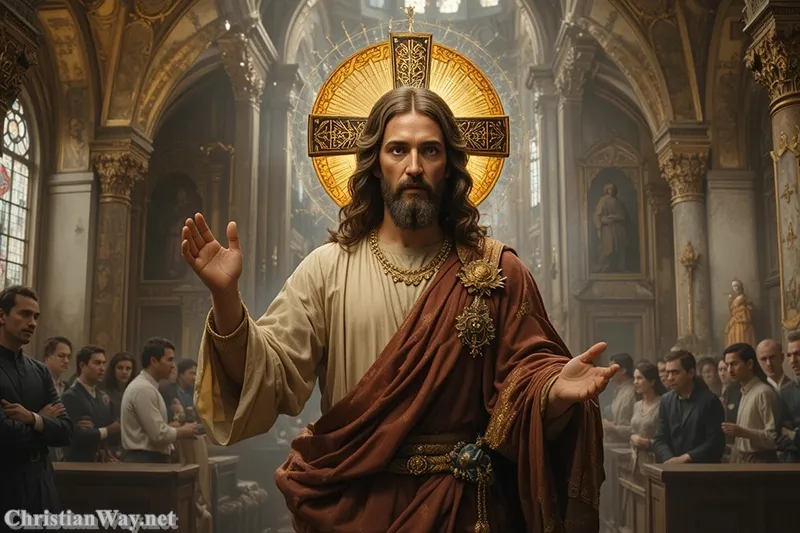
This matters because religion can sometimes become crowded with things that are good in themselves but dangerous when they take the first place. We may become attached to a style of worship, a beloved hymn, a church building, a theological argument, a cultural identity, or a familiar pattern of prayer. These may all be gifts. Yet even the most beautiful tradition becomes empty when it no longer helps people encounter Christ.
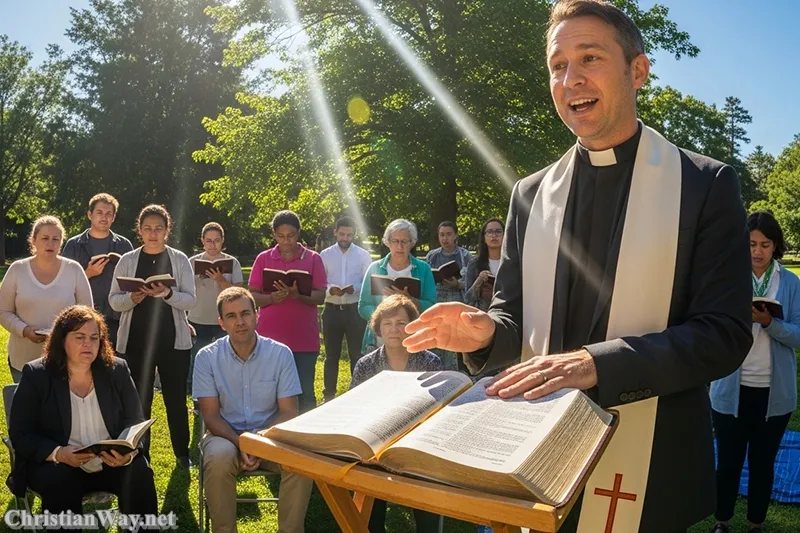
The Anglican tradition has long sought to preserve a faith that is both rooted and living. It receives the ancient Christian confession that Jesus is truly God and truly human, crucified and risen, Lord of heaven and earth. It hears the Scriptures read aloud in worship. It gathers believers around baptismal water and the bread and wine of Holy Communion. It teaches Christians to pray not only in private moments, but together as the Body of Christ.
At its best, Anglican faith does not ask us to admire Christianity from a distance. It invites us to meet Jesus. It tells the weary that Christ has not turned away from human sorrow. It tells the guilty that forgiveness is real. It tells the grieving that death does not have the final word. It tells the searching that God has come near, not as an idea or distant force, but in the person of His Son.
Jesus Christ did not come merely to improve religious behavior. He came to save, heal, reconcile, and renew. He came to reveal the Father’s love. He came to bear the weight of sin. He came to defeat death through His resurrection. He came to gather strangers into one family and to make all things new.
This is why the Anglican tradition returns again and again to the Gospels, to the creeds, to the cross, to the empty tomb, and to the prayer of the Church. It knows that the Christian life cannot survive on memory alone. Every generation must hear again the good news that Christ is alive.
Perhaps you are reading with a heart that feels tired. Perhaps faith once felt simple, but life has brought grief, disappointment, failure, or questions you did not expect. Perhaps you are surrounded by religious language but are longing to know whether Jesus is truly near. The Anglican witness begins with this gentle assurance: Christ is not distant from the wounds of your life. He is the One who says, “Come unto me, all ye that labour and are heavy laden, and I will give you rest” (Matthew 11:28).
Jesus Christ Is the Center of Anglican Faith
The first truth to remember is simple: Christianity is not finally about a system. It is about a person.
The Anglican tradition speaks of Scripture, tradition, reason, worship, sacraments, ministry, mission, and Christian ethics. Yet all these things must remain connected to Jesus Christ. Scripture is received because it reveals Him. Tradition is valued because it carries the Church’s memory of Him. Reason is used because God has given believers minds capable of seeking His truth. Worship is offered because Christ is worthy of praise. The sacraments are cherished because they speak of His grace. Mission exists because He sends His people into the world.
The Eternal Word Made Flesh
The Anglican faith stands within the ancient Christian confession that Jesus Christ is the eternal Son of God. He is not merely a wise teacher, an inspiring prophet, or a moral example from the past. He is the Word made flesh.
The Gospel of John begins with words that have shaped Christian worship and theology for centuries: “In the beginning was the Word, and the Word was with God, and the Word was God” (John 1:1). Then John declares, “And the Word was made flesh, and dwelt among us” (John 1:14).
This is the mystery of the incarnation.
The God who created the stars entered the world as a child.
The One who holds all things in being accepted human weakness.
The One who knows every heart entered a human home.
The One beyond time accepted a human life marked by growth, work, friendship, fatigue, suffering, and death.
This is not a distant theological idea. It means that God has entered the places where human beings most need Him. He knows hunger. He knows tears. He knows rejection. He knows the pain of betrayal. He knows what it is to stand beside graves and weep. He knows what it is to carry a cross.
For Anglican Christians, as for the whole historic Church, the incarnation is the foundation of hope. Jesus is not God standing far above human pain. He is God with us.
Truly God and Truly Human
The ancient creeds confess that Jesus Christ is “God of God, Light of Light, very God of very God,” and also that He “was made man.” These words protect something precious.
If Jesus were only a human teacher, He could inspire us, but He could not save us from sin and death.
If He were only divine in appearance, but not truly human, then He could not enter the full depth of our wounded humanity.
But the Gospel proclaims that in Jesus Christ, God has come near without ceasing to be God, and humanity has been taken up into divine love without ceasing to be human.
This means that no faithful act of ordinary human life is beneath God’s concern.
The work of caring for children matters.
The grief of losing someone matters.
The struggle to remain honest at work matters.
The hidden loneliness of a person sitting in silence matters.
The questions we are afraid to speak aloud matter.
Jesus Christ has entered human life. Therefore, human life is never invisible to God.
Christ in the Scriptures Read by the Church
Anglican worship gives Holy Scripture a central place because the Bible is the living witness to God’s saving work in Christ. The Old Testament tells the long story of creation, covenant, promise, failure, judgment, mercy, and hope. The New Testament reveals Jesus as the fulfillment of God’s promises.
The Bible is not simply a book of religious quotations. It is the story through which God teaches His people who He is, who they are, and what grace has accomplished.
The Scriptures Point Toward Christ
Jesus Himself taught His disciples to read the Scriptures in the light of His own life, death, and resurrection. After rising from the dead, He opened the Scriptures to His followers and showed them how the Law, the Prophets, and the Psalms bore witness to Him.
This is why Anglican Christians hear the Bible not as a collection of disconnected passages, but as a great story that finds its center in Christ.
In Genesis, we see the God who creates human beings in His image.
In the Psalms, we hear the cries of the suffering and the praise of those who trust in God.
In the prophets, we hear the promise of justice, mercy, and redemption.
In the Gospels, we encounter Jesus Himself: healing the sick, receiving sinners, speaking truth, blessing children, touching those whom others avoided, weeping with the grieving, and calling people into new life.
In the letters of the apostles, we learn what it means to live as the Church, the Body of Christ, in a broken world.
The Scriptures do not lead us toward an abstract spirituality. They lead us toward the living Lord.
Scripture in Common Prayer
One of the particular gifts of Anglican life is the way Scripture is woven through worship. The Psalms are prayed and sung. Lessons from the Old and New Testaments are read. The Gospel is proclaimed. Biblical language appears in confession, intercession, thanksgiving, and blessing.
This regular pattern teaches believers that God’s Word belongs not only to private study, but to the shared life of the Church.
A person may enter worship carrying fear and hear the words, “The Lord is my shepherd.”
A grieving heart may hear Jesus say, “I am the resurrection, and the life” (John 11:25).
A person who feels ashamed may hear the promise that Christ came not to condemn the world, but that the world through Him might be saved.
A weary believer may hear again, “My grace is sufficient for thee” (2 Corinthians 12:9).
The Scripture readings of the Church become a steady stream of grace. They form the heart over time. They remind believers that the truth of Christ does not depend on the mood of the day or the shifting opinions of the world.
Christ in the Creeds and the Church’s Confession
The Apostles’ Creed and the Nicene Creed hold a central place in Anglican worship. They are not merely old statements repeated from habit. They are acts of worship and trust.
When Christians say, “I believe in Jesus Christ His only Son our Lord,” they are confessing that Jesus is Lord over every fear, every power, every nation, every success, every failure, and even death itself.
The Creed Gives the Soul a Place to Stand
There are seasons when a believer may not feel strong. Faith may seem fragile. Questions may be heavy. Prayer may feel dry.
In such moments, the creed can become a gift.
The Christian does not stand only upon the strength of personal feelings. The Church speaks the faith together. A person may whisper the words while carrying doubt, grief, or exhaustion, and still find themselves held by the wider communion of believers.
“I believe in Jesus Christ.”
These words are not a claim that life is easy.
They are a declaration that Christ is greater than the darkness.
“I believe in the resurrection of the body.”
These words do not deny grief.
They proclaim that grief is not the final horizon.
“I believe in the forgiveness of sins.”
These words do not excuse wrongdoing.
They announce that mercy is open for those who return to God.
The creed teaches Christians to look beyond themselves. It directs the heart toward the God who remains faithful even when human beings are weak.
Jesus Christ in Anglican Worship
Anglican worship is often recognized for its reverence, biblical language, sacred music, liturgical rhythm, and common prayer. Yet these outward features are meant to serve something deeper: the worship of Jesus Christ.
The Christian year itself is shaped around His life.
Advent teaches the Church to wait for Him.
Christmas celebrates His birth.
Epiphany proclaims His light to the nations.
Lent leads believers toward repentance and the cross.
Holy Week remembers His suffering and self-giving love.
Easter rejoices in His resurrection.
Ascension celebrates His reign.
Pentecost rejoices in the gift of the Holy Spirit poured out by the risen Christ.
Worship Is an Encounter, Not a Performance
The purpose of worship is not to entertain people or to preserve a religious atmosphere. It is to help the Church stand before God in truth.
In worship, believers confess that they need mercy.
They hear the Scriptures.
They pray for the world.
They remember the cross.
They give thanks.
They receive the blessing of God.
The liturgy is not meant to hide Christ behind ceremony. It is meant to make room for the Church to encounter Him with reverence.
A beautiful hymn can lift the heart toward Christ.
A psalm can give language to sorrow.
A moment of silence can allow the conscience to rest before God.
A prayer of confession can help someone stop hiding.
A blessing can send a weary person back into the world with hope.
When Anglican worship is faithful, it does not make the congregation admire its own style. It helps people see Jesus more clearly.
The Book of Common Prayer and the Face of Christ
The Book of Common Prayer has shaped Anglican spirituality by teaching generations how to pray. Its prayers speak of confession, mercy, grace, forgiveness, resurrection, peace, and eternal life.
The language of common prayer matters because it gives believers words when their own words fail.
At a funeral, the Church proclaims hope in the face of death.
At a baptism, the Church declares that a person belongs to Christ.
At Holy Communion, the Church remembers Christ’s self-giving love.
At Morning Prayer, believers offer the new day to God.
At Evening Prayer, they release the day into His mercy.
The prayers of the Church are most beautiful when they keep turning the heart toward Christ. He is the one who forgives. He is the one who heals. He is the one who gathers. He is the one who gives peace.
The Cross: The Heart of Grace
Jesus Christ in the Anglican Tradition is inseparable from the cross. The cross stands at the center because it reveals both the seriousness of sin and the depth of God’s love.
Sin is not merely breaking a rule. It wounds the human heart. It damages relationships. It creates injustice, cruelty, betrayal, greed, violence, and fear. It turns us away from God and from one another.
At the cross, we see what sin can do.
Yet we also see what God’s love will do.
Christ Gives Himself for the World
Jesus does not answer hatred with hatred. He does not abandon humanity in its brokenness. He gives Himself.
The cross reveals a love that goes to the deepest place of human suffering. Christ enters betrayal, injustice, shame, violence, and death. He carries the burden that human beings cannot carry alone.
This does not mean that suffering itself is good. Christians should never glorify cruelty, abuse, oppression, or pain. The cross does not make evil acceptable. It exposes evil for what it is.
But the cross also tells us that evil does not have the final word.
God can meet us even in the places where life has been broken.
Christ can bring forgiveness where guilt has become heavy.
Christ can bring courage where fear has taken root.
Christ can bring hope where grief seems unbearable.
Christ can bring new life where human beings see only failure.
Grace Before Human Achievement
The Anglican tradition, shaped by the Reformation, has strongly emphasized that salvation is the gift of grace. We do not save ourselves through religious performance, intelligence, money, good reputation, or moral self-confidence.
Saint Paul writes, “For by grace are ye saved through faith; and that not of yourselves: it is the gift of God” (Ephesians 2:8).
This is not a message of passivity. Grace changes the heart. A person who receives mercy learns to show mercy. A person who is forgiven learns to forgive. A person who is loved by Christ begins to serve others with gratitude.
But the order matters.
We do not do good works in order to make God love us.
We do good works because God has loved us first.
This is especially important for people who are spiritually exhausted. Christ does not ask us to climb toward heaven by our own strength. He comes down to us in mercy.
The Resurrection: Hope Stronger Than Death
The cross cannot be separated from the resurrection. If Christ had remained in the grave, Christianity would be only a memory of noble suffering. But the Gospel proclaims that Jesus rose from the dead.
The resurrection is not merely a symbol that good feelings can survive difficult times. It is the declaration that God has acted decisively against sin and death.
Christ Is Alive
The risen Christ meets frightened disciples. He speaks peace to them. He shows Thomas His wounds. He walks with confused travelers on the road to Emmaus. He prepares food for His friends. He calls people by name.
This is a deeply tender truth.
The risen Jesus is not distant from those who are confused.
He does not abandon those who have failed.
He does not shame Thomas for needing reassurance.
He does not reject Peter after Peter has denied Him.
He comes near.
The resurrection means that no failure is too final for grace.
No grave is beyond the promise of God.
No darkness is deeper than the light of Christ.
For Anglican Christians, Easter is not one celebration among many. It is the heart of Christian hope. Every Sunday gathers believers in remembrance of the resurrection. Every baptism speaks of dying and rising with Christ. Every Holy Communion proclaims His death until He comes again.
Hope for the Grieving
The resurrection does not tell grieving people to stop crying. Jesus Himself wept at the tomb of Lazarus. Christian hope does not deny sorrow. It gives sorrow a horizon.
When believers stand beside the grave of someone they love, they do not pretend death is natural or harmless. They entrust the person they love to the mercy of God. They remember that Christ has gone into death and opened a way toward life.
The risen Christ gives courage to those who are afraid of the future. He gives consolation to those whose hearts have been broken. He gives strength to those who have lost much but still choose to believe that God has not abandoned them.
Jesus Christ in Baptism and Holy Communion
The sacraments are central in Anglican life because they speak of Christ’s grace through ordinary things.
Water, bread, wine, spoken words, gathered worship, and human touch become signs of God’s mercy and promise.
Baptism: Joined to Christ
In baptism, Christians are marked as belonging to Christ. Baptism speaks of cleansing, forgiveness, new life, and union with the death and resurrection of Jesus.
It tells us that our deepest identity is not found in success, failure, wealth, status, appearance, or the opinions of others.
Our deepest identity is that we are called by Christ.
This is good news for the child learning who they are.
It is good news for the young person carrying pressure to fit in.
It is good news for the adult who feels defined by past mistakes.
It is good news for the elderly believer wondering what remains when strength has faded.
In baptism, the Church says: you belong to Christ.
Holy Communion: Christ Gives Himself
At the Lord’s Table, Christians hear again the words of Jesus: “This is my body which is given for you” and “This cup is the new testament in my blood” (Luke 22:19–20).
Anglicans have expressed the mystery of Holy Communion in different ways. Some emphasize the real presence of Christ in a strongly sacramental sense. Others speak more especially of Christ nourishing believers spiritually through faith and the Holy Spirit.
These differences should be spoken about honestly. Yet the heart of the Eucharist remains clear: Christ gives Himself to His people.
The Eucharist is not an empty ritual. It is a holy act of thanksgiving, remembrance, grace, and communion.
It calls believers to receive Christ with reverence.
It calls the Church to become one body in love.
It calls those who have been forgiven to forgive.
It calls those who have received mercy to care for the poor.
It calls those who have been fed spiritually to remember those who are hungry in body and spirit.
At the Lord’s Table, the Church learns that Christ’s love is never private. It creates a people.
Christ and the Life of Daily Discipleship
Jesus Christ in the Anglican Tradition is not confined to church buildings, Sunday services, or theological study. Christ calls His people into a life of discipleship.
To follow Jesus means learning, day by day, to think, speak, serve, forgive, and love as His people.
Christ in the Ordinary Places of Life
Many people imagine that holiness belongs only to famous saints, clergy, missionaries, or people who do extraordinary things. But Christ meets His followers in ordinary places.
He is present in the home where a parent patiently cares for a child.
He is present in the workplace where someone chooses honesty over profit.
He is present in the hospital room where a friend sits quietly beside the sick.
He is present in the classroom where a teacher sees the dignity of every student.
He is present in the difficult conversation where someone chooses truth without cruelty.
He is present in the apology offered after anger.
He is present in the prayer whispered before sleep.
The Christian life becomes holy not because every day feels dramatic, but because ordinary life is offered to Christ.
The Anglican tradition has often emphasized this truth through its prayers, its parish life, and its sense of vocation. Every person has a calling. Not every calling looks the same. Some are called to ordained ministry. Some to teaching. Some to raising children. Some to caring for the sick. Some to work that serves the community. Some to hidden prayer and quiet acts of mercy.
But every calling becomes meaningful when it is offered in love.
Abiding in Christ
Jesus says, “Abide in me, and I in you” (John 15:4).
This is the heart of discipleship.
We cannot produce the fruit of Christian life through effort alone. We cannot become patient, forgiving, courageous, truthful, and merciful simply by trying harder in our own strength.
We need to abide in Christ.
We abide through prayer.
We abide through Scripture.
We abide through worship.
We abide through repentance.
We abide through receiving grace.
We abide through serving others.
We abide by returning to Him whenever we have wandered.
The Christian life is not the attempt to become independent from God. It is the slow discovery that life becomes whole only when rooted in Him.
Christ and the Church as His Body
The Anglican tradition teaches that the Church is not merely an organization or gathering place. It is the Body of Christ.
This means that believers are joined to one another through Him. We do not follow Jesus as isolated individuals. We are gathered into a people.
A Community of Grace
The Church should be a place where people are welcomed, taught, corrected, forgiven, strengthened, and sent into the world.
It should be a place where children learn that they are loved by God.
It should be a place where the grieving are not left alone.
It should be a place where people can ask sincere questions.
It should be a place where the poor are remembered.
It should be a place where the wounded are treated with tenderness.
It should be a place where truth is spoken without humiliation.
Of course, churches are made of human beings. There can be disappointment, misunderstanding, hypocrisy, and failure. This is why the Church must continually return to Christ.
The Church is not faithful because her members are perfect. She is faithful when she remembers that Christ is merciful.
Ordained Ministry and the Ministry of All Believers
Anglican churches retain the historic ministries of bishops, priests, and deacons. These ministries are meant to serve the Church through worship, teaching, pastoral care, mission, and charity.
But ordained ministry is never meant to suggest that only clergy belong to the work of Christ.
Every baptized believer has a place in the Body.
The parent teaching a child to pray has a ministry.
The volunteer visiting someone lonely has a ministry.
The musician helping the congregation worship has a ministry.
The person preparing food for someone in need has a ministry.
The worker who lives honestly in a difficult environment has a ministry.
The elderly believer who prays faithfully has a ministry.
Christ gives gifts to His people so that His love may become visible in the world.
Christ and the Anglican Hope for Unity
The Anglican tradition stands within the wider Christian family. It shares much with Roman Catholic, Orthodox, Lutheran, Reformed, Methodist, Baptist, Pentecostal, Evangelical, and other Christian communities.
Yet Christians remain divided in serious ways. Questions about authority, sacraments, ministry, worship, and doctrine still matter.
Unity cannot be built by pretending these differences do not exist.
But neither should division become a reason for pride.
The Prayer of Jesus
Before His passion, Jesus prayed that His followers “may all be one” (John 17:21).
This prayer remains before every Christian community.
The Anglican tradition, shaped by both ancient catholic faith and the Reformation, often carries a particular concern for unity. It remembers that Christians do not honor Christ by speaking contemptuously about one another. We honor Him by seeking truth with humility, by serving together where possible, by repenting of old wounds, and by praying for deeper communion.
The goal of unity is not shallow agreement. It is communion in Christ.
We may not be able to resolve every historical and theological question quickly. But we can refuse hatred. We can learn from one another. We can recognize the work of Christ beyond our own familiar traditions. We can remember that every Christian stands beneath the cross in need of mercy.
Christ is greater than the divisions of history.
Christ for a Restless and Wounded World
The modern world carries many forms of restlessness. People are busy, connected, informed, and exhausted. Many live with anxiety, loneliness, pressure to achieve, fear about the future, and a deep hunger for meaning.
The Anglican tradition offers no simple escape from these realities. But it points toward Christ, who enters them.
The One Who Meets Us Where We Are
Jesus does not wait for people to become impressive before He calls them.
He meets fishermen at work.
He speaks with a woman drawing water.
He receives children.
He eats with sinners.
He touches those whom others avoid.
He stands beside the grieving.
He forgives those who have failed.
He calls ordinary people to follow Him.
This is good news for anyone who feels that faith is only for the spiritually successful.
Christ comes to those who are tired.
Christ comes to those who are ashamed.
Christ comes to those who are unsure.
Christ comes to those who have been wounded by others.
Christ comes to those who need to begin again.
The Church’s task is not to make Christ seem farther away. It is to bear witness that He is near.
Reflect and Pray
Dear friends, Jesus Christ in the Anglican Tradition is the living center of faith, worship, grace, and hope.
The Scriptures lead us to Him.
The creeds confess Him.
The prayers of the Church call upon Him.
The sacraments reveal His mercy.
The cross shows His love.
The resurrection gives His victory.
The Church belongs to Him.
And every ordinary life can become a place where His grace is made visible.
Perhaps you are carrying questions, sorrow, guilt, or uncertainty today. Do not be afraid to bring them to Christ. He is not frightened by your weakness. He is not impatient with your questions. He does not turn away from the wounded heart.
Come to Him as you are.
Read His words.
Speak His name.
Receive His mercy.
Follow Him one faithful step at a time.
Let us pray.
Lord Jesus Christ, You are the living Word of God, the Savior of the world, and the true center of Your Church. Draw us nearer to You through Scripture, prayer, worship, and the grace of Your sacraments. Forgive us where we have wandered, strengthen us where we are weak, and comfort us where we are burdened. Teach us to abide in Your love and to reflect that love in our homes, our work, our churches, and our daily lives. May Your Church be faithful to Your Gospel, humble in service, and radiant with the hope of Your resurrection. Amen.
May the peace of Christ dwell richly in your heart, and may His love guide every step you take toward Him.
— Fr. John Matthew