Dear friends in Christ,
When Christians speak about Eastern Orthodoxy and Protestantism, it is easy for the conversation to become too quickly divided into contrasts. One person may think first of Orthodox churches filled with icons, incense, chanting, fasting, and ancient liturgy. Another may think first of Protestant churches shaped by Bible preaching, hymns, personal conversion, mission, and the language of grace through faith. The outward differences can seem striking. Yet beneath them are two great Christian streams that have sought, each in its own history and language, to confess Jesus Christ as Lord and to lead people into His mercy.
Eastern Orthodoxy and Protestantism are not two unrelated religions. Both arise from the Christian faith proclaimed by the apostles. Both confess one God—Father, Son, and Holy Spirit. Both believe that Jesus Christ is truly God and truly human, that He died upon the cross for the salvation of the world, that He rose from the dead, and that He will come again in glory. Both read the Holy Scriptures, call people to repentance, pray for the world, and look toward the resurrection of the dead.
At the same time, Eastern Orthodoxy vs Protestantism involves genuine differences that should not be ignored or made to sound smaller than they are. The two traditions differ in how they understand the authority of Scripture and Tradition, the visible unity of the Church, the role of bishops, the sacraments, Holy Communion, icons, the saints, Baptism, worship, and the way salvation is commonly expressed and lived.
There is also another important truth to remember: Protestantism is not one single church. It includes Lutheran, Reformed, Presbyterian, Anglican, Methodist, Baptist, Pentecostal, Evangelical, Anabaptist, and many other communities. Some Protestant churches worship with formal liturgy and weekly Communion. Others gather in simpler settings around preaching, prayer, worship songs, and Bible study. Some baptize infants; others baptize only those who personally profess faith in Christ. Any honest comparison must make room for this diversity.
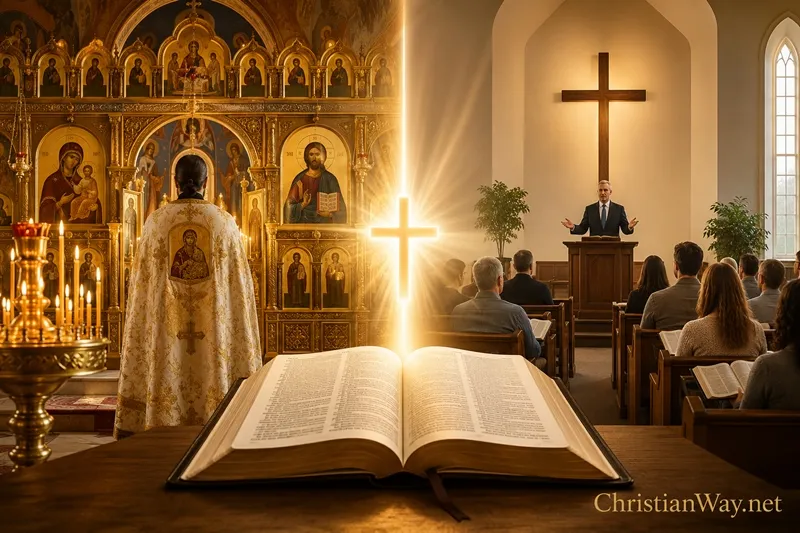
Yet the question is not merely historical or theological. It reaches into the human heart. How do we know God? How do we receive His grace? How do we worship Him? How do we become more like Christ? How do we remain faithful when life brings grief, temptation, loneliness, or fear? These are questions that Orthodox and Protestant Christians alike bring before the same risen Lord.
The Shared Center: Jesus Christ Is Lord
Before considering the differences, we must begin with what Eastern Orthodox and Protestant Christians share most deeply.
Both confess that Jesus Christ is the Son of God and Savior of the world. He is not merely a teacher whose wisdom remains helpful, nor simply a prophet whose words inspire moral improvement. He is the eternal Word of God who took flesh, entered human history, and made the love of the Father known in a wounded world.
The Gospel of John says, “And the Word was made flesh, and dwelt among us” (John 1:14). This truth stands at the heart of both Orthodox and Protestant faith. God did not remain distant from the pain of human life. In Jesus Christ, He came near. He knew hunger and weariness. He knew friendship and betrayal. He wept at the tomb of Lazarus. He welcomed children, touched the sick, forgave sinners, comforted the grieving, and spoke truth to those blinded by pride.
Both traditions also confess that human beings are created in the image of God, yet wounded by sin. Sin is not only a list of visible wrong actions. It is the deeper turning of the heart away from God’s truth and love. It appears in pride, dishonesty, selfishness, resentment, cruelty, greed, lust, violence, and indifference to the suffering of others.
The Christian message is not that humanity can repair itself through intelligence, success, or moral effort. It is that God has acted in Christ. The Apostle Paul writes, “God commendeth his love toward us, in that, while we were yet sinners, Christ died for us” (Romans 5:8).
Orthodox and Protestant Christians may use different theological language to describe the saving work of Christ, but both proclaim that salvation comes from Him. Christ bears the weight of sin. Christ defeats death. Christ reconciles humanity with God. Christ offers forgiveness, healing, new life, and hope.
Both also confess the resurrection. Jesus did not remain in the tomb. He rose from the dead, opening the way to eternal life. The resurrection is not merely a poetic symbol that goodness survives after suffering. Christians proclaim that the crucified Christ is the risen Lord.
This shared confession gives courage to people who grieve. It does not tell them that sorrow is unreal. Jesus Himself wept. But it tells them that death does not have the final word. It gives strength to those who carry guilt, anxiety, illness, or disappointment. Christ has entered the darkest places of human life, and He has overcome them.
Two Different Historical Journeys
Eastern Orthodoxy and Protestantism did not emerge from the same moment in history.
Eastern Orthodoxy understands itself as preserving the faith, worship, and spiritual life of the ancient Church in the Christian East. Its roots reach back to the apostles and the early Christian communities of Jerusalem, Antioch, Alexandria, Constantinople, and other centers of the ancient world. Orthodox Christians see themselves as continuing the Church’s life through the Scriptures, the ecumenical councils, the saints, the Divine Liturgy, the sacraments, and the pastoral oversight of bishops.
Protestantism emerged much later, during the Reformation movements of the sixteenth century in Western Europe. Reformers such as Martin Luther, Ulrich Zwingli, John Calvin, Thomas Cranmer, and many others called for renewal within the Western Church. They were concerned about abuses of power, confusion about salvation, practices surrounding indulgences, the limited access ordinary people had to Scripture in their own language, and teachings or customs they believed had drifted away from the Gospel.
The Protestant Reformation did not produce one unified church. It gave rise to many traditions, each shaped by particular reformers, regions, languages, worship patterns, and theological emphases. Lutheran, Reformed, Anglican, Anabaptist, Presbyterian, Baptist, Methodist, Pentecostal, and Evangelical communities developed across centuries.
This means that Eastern Orthodoxy vs Protestantism is not a comparison between two institutions of identical shape. Eastern Orthodoxy is a communion of churches sharing a common sacramental, liturgical, and episcopal life. Protestantism is a broad family of churches with significant internal diversity.
The historical paths of Orthodoxy and Protestantism also developed differently in relation to the Church of Rome. Eastern Orthodoxy separated from the Roman Catholic West through a long process that became especially visible in the Great Schism between East and West. Protestantism emerged later through reform movements within Western Christianity.
For this reason, Orthodox Christians often see Protestantism not simply as another ancient branch alongside them, but as a family of churches that arose after the separation between East and West. Protestant Christians, however, often see the Reformation as a necessary call to renew the Church according to Scripture and the grace of Christ.
These historical differences shape the way each tradition understands continuity, reform, and the life of the Church.
Scripture and Holy Tradition
One of the most important differences between Eastern Orthodoxy and Protestantism concerns the relationship between Holy Scripture and Christian Tradition.
Eastern Orthodox Christians deeply honor the Bible. The Scriptures are read constantly in worship, sung in the Psalms, proclaimed in the Divine Liturgy, prayed in homes, and reflected upon throughout the liturgical year. The Gospels are especially revered because they reveal the words and actions of Jesus Christ.
Yet Orthodoxy does not treat the Bible as a book detached from the living life of the Church. Orthodox Christians read Scripture within Holy Tradition. Tradition does not simply mean old customs, cultural habits, or human preferences. It refers to the living faith of the Church handed down from the apostles through worship, councils, saints, creeds, preaching, prayer, and the work of the Holy Spirit.
For Orthodox Christians, Scripture is not outside Tradition as though the two are rivals. Scripture is the heart of the Church’s written witness, received and interpreted within the worshipping community that has preserved and proclaimed it through the centuries.
Protestant Christians also love and honor the Bible. In fact, the authority of Scripture is one of the defining themes of Protestant faith. The Bible is read in worship, preached in sermons, studied in homes, memorized by children, translated into local languages, and used to guide Christian discipleship.
The Apostle Paul writes, “All scripture is given by inspiration of God, and is profitable for doctrine, for reproof, for correction, for instruction in righteousness” (2 Timothy 3:16). Protestant Christians treasure this conviction. They believe that Holy Scripture is the final standard by which every human teaching, tradition, leader, or institution must be tested.
This is often expressed through the Reformation phrase Sola Scriptura, meaning “Scripture alone.” The phrase does not necessarily mean that Protestants reject Church history, ancient creeds, or the wisdom of earlier Christians. Many Protestants value the Apostles’ Creed, the Nicene Creed, the early councils, the Church Fathers, and historic confessions of faith.
Rather, they mean that Scripture alone has final authority over the conscience of the believer and the teaching of the Church. Traditions may be helpful. They may preserve great wisdom. But they must always remain subject to the Word of God.
Orthodox Christians may worry that this approach can lead to excessive individual interpretation and countless divisions. Protestant Christians may worry that an appeal to Tradition can allow human customs to carry authority that belongs to Scripture alone.
These concerns should be taken seriously. Yet both traditions can learn from the other. Orthodox Christians remind believers that the Bible was received within a worshipping Church and should not be read merely as a private collection of verses. Protestant Christians remind believers that every custom, leader, and institution must remain open to correction by God’s Word.
The Church: Communion, Authority, and Visible Unity
Eastern Orthodox Christianity has a strong sense of the Church as a visible, sacramental communion gathered around bishops, priests, deacons, and the Eucharist.
The Church is not merely an invisible collection of individual believers who happen to trust Christ. It is a concrete body living in history, worshipping together, receiving the sacraments, confessing the apostolic faith, and remaining united through the ministry of bishops.
Orthodox Christians preserve the ancient threefold ministry of bishops, priests, and deacons. Bishops are called to guard the faith, ordain clergy, serve as visible signs of unity, and care for the Church within their dioceses. Priests lead local parishes, celebrate the Divine Liturgy, preach, hear confessions, and offer pastoral care. Deacons serve in worship and remind the Church of its duty toward those in need.
Orthodoxy does not have one universal bishop with governing authority over all Orthodox churches. Instead, it is made up of self-governing churches that remain connected through shared faith, sacramental life, bishops, and councils. This is often described as conciliarity or synodality.
Protestant churches understand the nature and structure of the Church in many different ways.
Some Protestant traditions, such as Anglican, Lutheran, and Methodist churches, retain bishops. Others, such as Presbyterian churches, are governed through elders and representative councils. Baptist and many independent churches emphasize congregational governance, where local believers have a strong role in making decisions about the life of the church.
Most Protestants share the conviction that the Church is the Body of Christ and that every believer has a calling within it. The Apostle Peter writes, “Ye are a chosen generation, a royal priesthood, an holy nation” (1 Peter 2:9). This teaching is often called the priesthood of all believers.
Protestants do not usually mean that pastors and teachers are unnecessary. They recognize the value of preaching, pastoral care, spiritual leadership, and orderly worship. But they emphasize that every Christian has direct access to God through Jesus Christ and is called to pray, serve, read Scripture, bear witness, and take part in the mission of the Church.
The Orthodox emphasis on apostolic succession and visible sacramental unity differs from many Protestant approaches. Orthodox Christians generally see continuity with the ancient episcopal Church as essential. Many Protestants see faithfulness to the Gospel and Scripture as the primary mark of the true Church, even when church structures differ.
Both traditions, however, are called to remember that authority in the Church must be shaped by the humility of Christ. Jesus said, “Whosoever will be great among you, let him be your minister” (Matthew 20:26). Leadership that does not serve becomes empty. Knowledge that does not love becomes hard. Unity that does not reflect Christ becomes only an outward arrangement.
Sacraments and the Mystery of Grace
Eastern Orthodox Christians commonly speak of the sacred life of the Church as the Holy Mysteries. These include Baptism, Chrismation, the Eucharist, Confession, Marriage, Ordination, and Anointing of the Sick. Orthodox life is profoundly sacramental because it sees the whole human person—body, soul, mind, and heart—as invited into communion with God.
Baptism is the beginning of Christian life. Through water and prayer in the name of the Father, Son, and Holy Spirit, a person is united with Christ and welcomed into the Church. In many Orthodox churches, Baptism is followed immediately by Chrismation, anointing with holy chrism as a sign of the gift of the Holy Spirit. Infants may then receive Holy Communion, reflecting the belief that the sacramental life belongs to the whole baptized people of God.
The Eucharist, celebrated in the Divine Liturgy, stands at the center of Orthodox worship. Orthodox Christians believe that the bread and wine become the true Body and Blood of Christ through the holy action of God. The mystery is received with reverence, fasting, repentance, and prayer.
Protestant churches also recognize Baptism and the Lord’s Supper as central acts given by Christ. Yet they do not all use the same language or understand these practices in the same way.
Many Protestants recognize Baptism and Holy Communion as sacraments. Others prefer the word ordinances, emphasizing that Christ commanded His followers to practice them. Lutheran and Anglican Christians often speak of Baptism and Communion as means of grace. Reformed Christians speak of real spiritual nourishment through faith. Baptist and many Evangelical churches often emphasize obedience, remembrance, thanksgiving, and public confession of faith.
Protestants also differ over Baptism. Lutheran, Anglican, Methodist, Presbyterian, and Reformed churches often baptize infants, trusting in God’s grace and the Church’s promise to nurture a child in faith. Baptist, Pentecostal, and many independent churches practice believers’ baptism, baptizing those who have personally confessed faith in Christ.
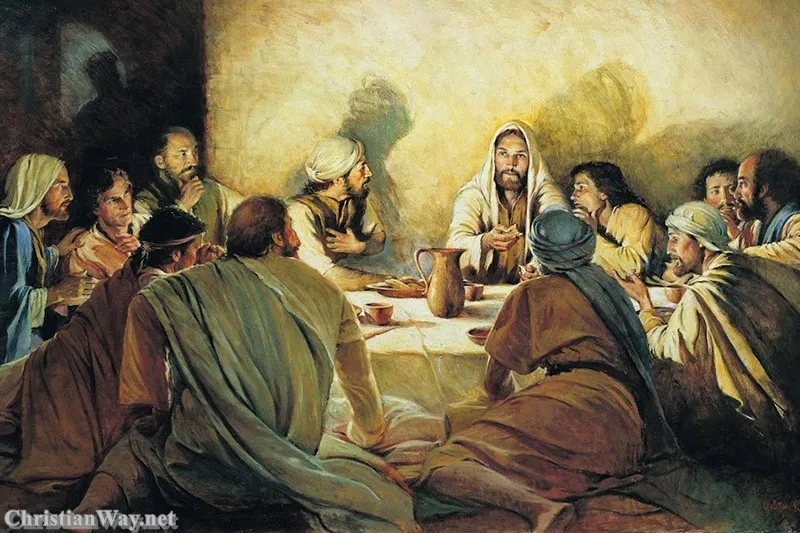
These differences matter, but they should not hide what is shared. Both Orthodox and Protestant Christians look to the command of Jesus to baptize in the name of the Father, Son, and Holy Spirit. Both understand Baptism as a sign of belonging to Christ. Both remember the Lord’s Supper because Jesus said, “This is my body which is given for you: this do in remembrance of me” (Luke 22:19).
The deepest difference is often in the way sacramental grace is understood. Orthodox Christianity sees the Mysteries as central places where Christ gives Himself to His Church. Protestant traditions vary from deeply sacramental views to more symbolic or memorial understandings. Yet all sincere Christians are called to approach Baptism and Communion with reverence, repentance, and gratitude.
The Eucharist: Real Presence and Different Protestant Understandings
The Eucharist is one of the places where Eastern Orthodoxy and Protestantism can appear closest in some communities and farthest apart in others.
Orthodox Christians confess that Holy Communion is the true Body and Blood of Christ. The bread and wine are not treated as merely ordinary bread and wine after the sacred prayer of the Church. Yet Orthodoxy usually avoids explaining this mystery through detailed philosophical definitions. The Eucharist is received as a holy mystery, a gift of Christ, and a foretaste of the Kingdom of God.
The Divine Liturgy is not simply a gathering for instruction. It is the worship of heaven and earth, where the Church gives thanks, hears the Scriptures, prays for the world, and receives Christ’s life.
Among Protestants, there is no single Eucharistic theology.
Lutherans often speak strongly of Christ’s true presence in the Lord’s Supper. Reformed Christians emphasize real spiritual communion with Christ, received through faith by the work of the Holy Spirit. Anglicans contain several theological emphases, ranging from evangelical to Anglo-Catholic understandings of Holy Communion. Methodist Christians often speak of Communion as a means of grace. Baptist and many free-church Christians commonly emphasize remembrance of Christ’s sacrifice, thanksgiving, and fellowship among believers.
For Orthodox Christians, the Eucharist is inseparable from the Church’s sacramental and apostolic life. It is celebrated by a priest or bishop within the gathered community of faith. Many Protestant churches understand Communion differently in relation to ministry, church order, and the presence of Christ.
Still, both traditions hear the same words of Jesus. Both are called to remember His self-giving love. Both are warned not to approach the holy meal carelessly or without concern for others. Both are invited to receive with humility.
The Apostle Paul reminds the Church that the bread shared draws believers into one body. Communion is never only a private moment between one person and God. It calls Christians toward reconciliation, gratitude, mercy, and care for the poor.
Worship: Divine Liturgy and Protestant Simplicity
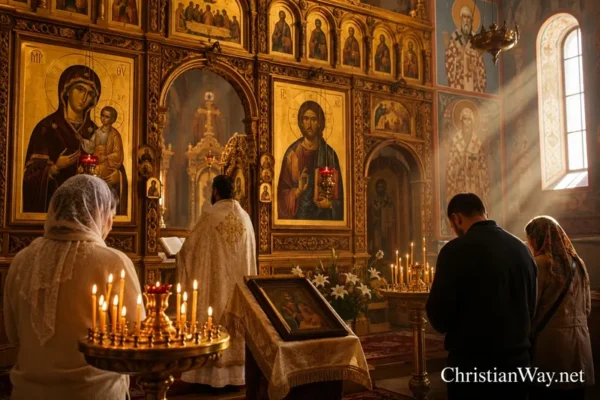
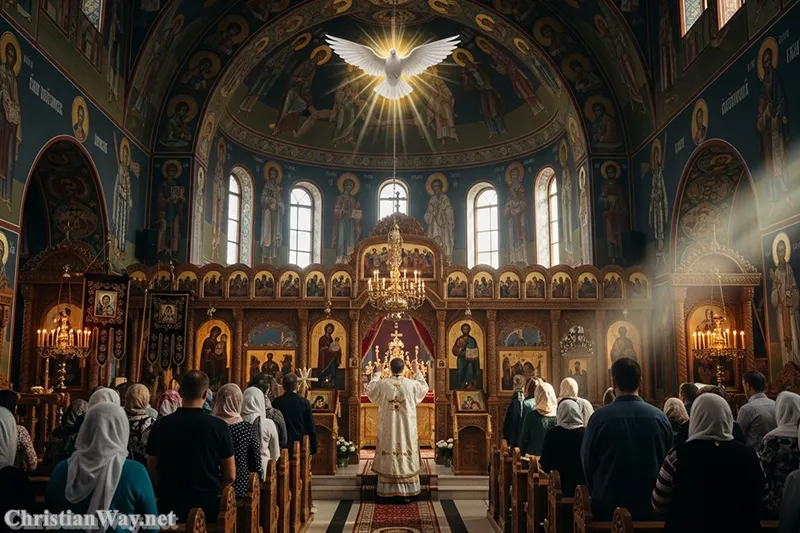
Orthodox worship is often deeply sensory and contemplative. A person entering an Orthodox church may encounter candles, incense, chanting, icons, processions, vestments, repeated prayers, bowing, crossing oneself, and extended periods of standing.
The Divine Liturgy is not intended to entertain. It is meant to bring the whole person before God. The voice sings. The body stands and bows. The eyes look upon icons. The hands light candles. The mind hears Scripture. The heart is invited into repentance and praise.
For Orthodox Christians, beauty is not merely decoration. It is an offering to God and a witness that the Kingdom of heaven is already breaking into the world. The Church’s worship seeks to reveal that human life is not trapped within what is temporary, commercial, or ordinary. In Christ, even matter can become a bearer of grace.
Protestant worship is much more varied.
A Lutheran or Anglican congregation may gather with hymns, creeds, Scripture readings, vestments, a sermon, prayer, and Holy Communion. A Presbyterian or Reformed church may emphasize preaching, psalm singing, prayer, and careful Bible teaching. A Baptist congregation may center its worship around congregational singing, preaching, testimony, prayer, and believers’ baptism. A Pentecostal church may worship with joyful music, spontaneous prayer, expectation of the Holy Spirit’s gifts, and missionary zeal.
Some Protestant churches worship in cathedrals or historic chapels. Others meet in homes, school halls, community centers, or simple church buildings. Some sing hymns that have carried Christian faith through centuries. Others sing contemporary songs in the language of present-day life.
Orthodox Christians may sometimes feel that Protestant worship lacks the fullness of ancient liturgical continuity. Protestants may sometimes feel that Orthodox worship is unfamiliar, too formal, or difficult to understand without careful guidance.
Yet both traditions are called to worship God “in spirit and in truth” (John 4:24). Worship is not measured only by outward form. It is measured by whether it leads people to Christ, teaches humility, nourishes faith, strengthens love, and sends believers into the world as servants.
Icons, Saints, and the Communion of Believers
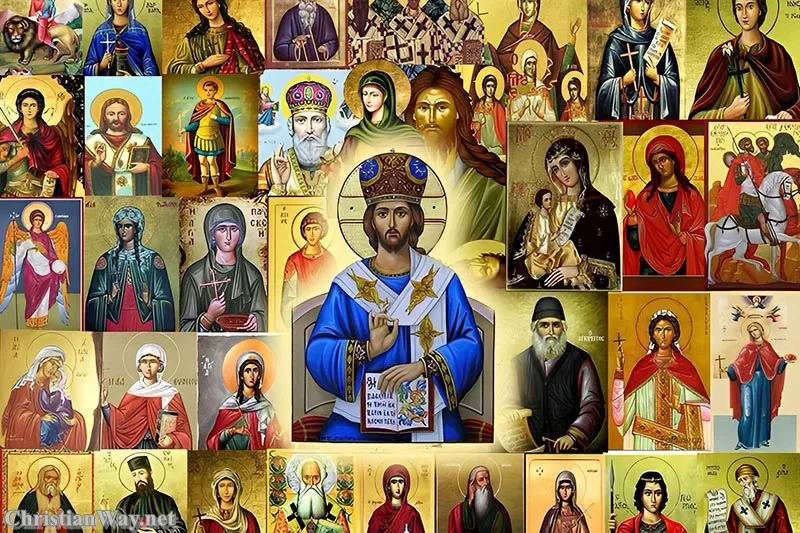
Eastern Orthodox Christianity gives a central place to icons. Icons are sacred images of Christ, the Virgin Mary, angels, saints, and biblical events. They are not merely religious decoration. They are witnesses to the Incarnation.
Because Jesus Christ truly became human, Orthodox Christians believe that He may be depicted in holy images. Icons proclaim that God did not save humanity through an idea or a distant message. He entered the visible world, took a human face, and sanctified human life.
When Orthodox Christians kiss an icon, bow before it, or light a candle nearby, they are not worshipping wood and paint. Worship belongs to God alone. The honor offered to an icon is directed toward the person represented.
Orthodox Christians also ask the saints to pray for them. They believe that those who have died in Christ remain alive in Him and continue to belong to the communion of the Church. The saints are not rivals to Jesus. They are witnesses to what His grace can do in human lives.
Most Protestant traditions do not practice the veneration of icons or the invocation of saints. Protestants honor Mary as the mother of Jesus and may remember the saints of Scripture and Church history with gratitude. But they usually pray directly to God through Jesus Christ rather than asking departed saints for intercession.
This difference is rooted in different understandings of prayer, mediation, and the communion of saints. Protestants often emphasize that Christ is the one mediator between God and humanity. Orthodox Christians agree that Christ alone is the Savior and mediator in the fullest sense, while believing that Christians may still pray for one another across the boundary of death because all who belong to Christ remain united in Him.
Here again, the difference should not become mockery. Protestants should not imagine that Orthodox Christians worship saints. Orthodox Christians should not imagine that Protestants reject all memory, honor, or gratitude for those who have faithfully followed Christ.
Both traditions can agree that all true holiness comes from God. All saints point beyond themselves toward Jesus.
Salvation: Justification, Healing, and Theosis
Eastern Orthodoxy and Protestantism share the conviction that salvation is God’s gift. Human beings cannot save themselves through effort, morality, knowledge, or religious performance.
Yet the traditions often speak about salvation with different emphasis.
Protestant theology, especially in Lutheran and Reformed traditions, often emphasizes justification by grace through faith. The sinner is made right with God not because of personal merit, but because of the grace of Christ received through faith.
The Apostle Paul writes, “For by grace are ye saved through faith; and that not of yourselves: it is the gift of God” (Ephesians 2:8). These words stand near the heart of Protestant preaching. God loves first. Christ saves. Faith receives what grace gives.
This does not mean Protestants believe that Christian life ends with forgiveness. They also speak of sanctification: the lifelong work of the Holy Spirit making believers more like Christ. Faith should bear fruit in love, honesty, courage, patience, justice, mercy, and service.
Eastern Orthodox theology also speaks clearly of grace, forgiveness, repentance, and faith. Yet it often places special emphasis on salvation as healing, liberation from death, and transformation into the likeness of God.
Orthodox Christians frequently use the word theosis, meaning participation in the life of God by grace. This does not mean that human beings become God by nature. God alone is God. It means that Christ restores what sin has wounded and gradually makes the human person more fully alive in divine love.
Saint Peter writes that believers may become “partakers of the divine nature” (2 Peter 1:4). Orthodox spirituality sees this as a promise of transformation. The Christian life is a journey of repentance, prayer, fasting, worship, confession, mercy, and growing communion with God.
A helpful image is that of iron placed in fire. The iron remains iron, yet it becomes hot and bright with the energy of the fire. In the same way, the human person remains human, yet may become filled with the light and grace of God.
Protestant Christians may sometimes worry that the language of theosis could make salvation sound like a human climb toward divinity. Orthodox Christians would answer that theosis is possible only because God first comes near in Christ and pours out His grace through the Holy Spirit.
Orthodox Christians may sometimes worry that Protestant emphasis on justification could sound like forgiveness without deep transformation. Protestant Christians would answer that genuine faith always bears fruit and that grace not only pardons but renews the heart.
The traditions use different language, but both are trying to safeguard essential truths: salvation comes from God, Christ is the Savior, sin must be confronted, grace transforms, and the Christian life must become visible in love.
Prayer, Fasting, and the Shape of Daily Discipleship
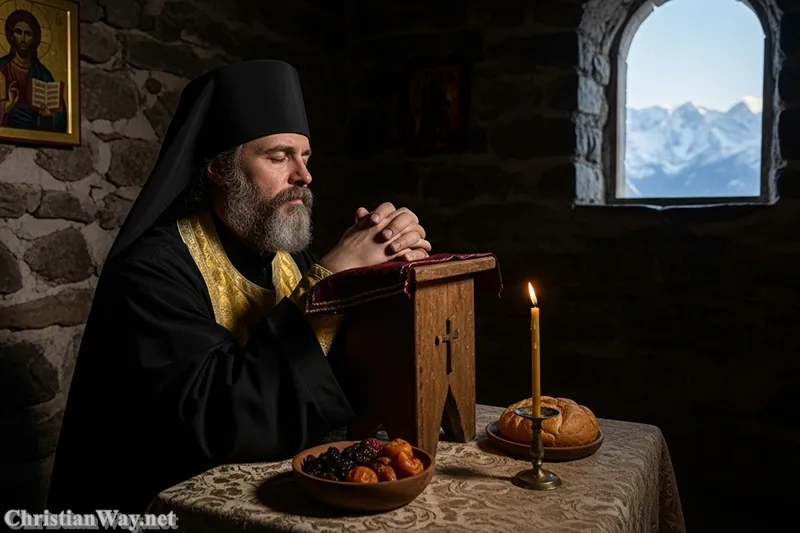
Eastern Orthodox Christianity often follows a rich rhythm of fasting and feasting. Great Lent before Pascha, the Nativity Fast, and other seasons invite believers to pray, fast, give alms, repent, and prepare the heart for Christ.
Fasting is not meant to be a display of spiritual superiority. A person may reduce food and still become proud, impatient, or harsh. True fasting is joined to humility, mercy, confession, and care for others.
The prophet Isaiah asks, “Is not this the fast that I have chosen? to loose the bands of wickedness… to deal thy bread to the hungry” (Isaiah 58:6–7). Orthodox Christians understand fasting as a way of making space for God and neighbor.
The Jesus Prayer also holds a treasured place in Orthodox life: “Lord Jesus Christ, Son of God, have mercy on me, a sinner.” It can be prayed in silence, during work, while walking, in anxiety, or in times of suffering. It brings the mind and heart back to Christ.
Protestant Christians also value prayer and spiritual discipline, though practices vary widely. Many begin the day with Bible reading and personal prayer. Some gather in small groups for Scripture study and mutual encouragement. Others keep seasons such as Advent and Lent. Many Evangelical and Pentecostal communities place special emphasis on spontaneous prayer, intercession, worship, fasting, and seeking the guidance of the Holy Spirit.
Protestant spirituality often encourages believers to bring their lives directly before God in personal words. A person may pray while working, driving, caring for children, facing a difficult decision, or sitting beside a hospital bed. The language may be simple: “Lord, help me.” “Lord, forgive me.” “Lord, give me wisdom.” “Lord, be near to my family.”
Both Orthodox and Protestant Christians know that prayer is not a way to control God. Prayer is a relationship. It teaches surrender, gratitude, honesty, repentance, and trust.
The person who prays is not always given an immediate answer. Yet the heart learns that it is not alone.
Mission, Mercy, and the Life of the World
Eastern Orthodoxy and Protestantism may express mission differently, but both are called to bear witness to Christ in the world.
Protestant Christianity has often placed strong emphasis on preaching the Gospel, Bible translation, evangelism, missionary work, education, social reform, and local church outreach. Protestant missionaries have carried the Scriptures, schools, medical care, and Christian teaching to many regions of the world, though the history of mission must also be remembered with humility where it became entangled with colonial power or cultural superiority.
Orthodox Christianity has often expressed mission through the beauty of worship, the witness of saints, monastic life, pastoral care, service to the suffering, and the patient transmission of faith through family, parish, and community. Orthodox missionaries have also brought the Gospel to many peoples and places, often translating liturgical texts and Scripture into local languages.
Both traditions are called to remember that Christian mission is not about making a church appear successful. It is about proclaiming Christ and serving those whom Christ loves.
Jesus said, “By this shall all men know that ye are my disciples, if ye have love one to another” (John 13:35).
A church that preaches beautifully but ignores the hungry has forgotten part of the Gospel. A community that preserves ancient worship but treats strangers without compassion has forgotten part of the Gospel. A believer who speaks often about grace but refuses to forgive has forgotten part of the Gospel.
Faith must become visible.
It becomes visible when a parent speaks gently after a difficult day. It becomes visible when a worker chooses honesty over advantage. It becomes visible when a young person refuses to join cruelty. It becomes visible when a church visits the lonely, feeds the hungry, helps the sick, protects children, and walks beside those who grieve.
The Christian faith is tested not only by what we say at worship, but by how we love when no one is applauding.
Can Orthodox and Protestant Christians Learn From One Another?
Eastern Orthodoxy vs Protestantism should never be treated as a contest in which one side has nothing to receive from the other.
Orthodox Christians can remind Protestants of the beauty of ancient Christian worship, the value of silence, the importance of fasting, the communion of saints, the sacredness of the Eucharist, and the truth that salvation touches the whole human person.
Protestant Christians can remind Orthodox believers of the urgency of personal faith, the need for clear Bible teaching, the value of making Scripture accessible to ordinary people, the call to evangelism, and the truth that every believer has a vocation in the mission of Christ.
Orthodox Christians may help Protestants remember that Christianity did not begin with the Reformation and that the wisdom of the ancient Church is a precious gift. Protestants may help Orthodox Christians remember that every generation must return continually to the Scriptures and ask whether its practices are leading people faithfully toward Christ.
Neither tradition should use its strengths as a reason for pride.
The Church is never strongest when it becomes impressed with itself. It is strongest when it kneels before Christ.
Humility does not mean pretending differences do not matter. The differences are real. Orthodox and Protestant Christians do not share full Eucharistic communion, and they do not agree on the nature of the Church, the sacraments, the authority of Tradition, or the role of icons and saints.
Yet humility means speaking truth without contempt. It means listening carefully. It means refusing to make false accusations about brothers and sisters in Christ. It means praying that the divisions of history may one day be healed in the truth and love of God.
A Closing Word: Unity Begins With Christ
Eastern Orthodoxy and Protestantism are distinct Christian traditions with different histories, structures, worship patterns, and theological emphases.
Eastern Orthodoxy is rooted in the ancient Church of the Christian East. It treasures Holy Tradition, the Divine Liturgy, the sacraments, icons, saints, bishops, councils, fasting, and salvation as healing and transformation in Christ.
Protestantism is a broad family of churches shaped by the Reformation. It emphasizes the authority of Scripture, salvation by grace through faith, the preaching of the Gospel, personal trust in Christ, and the calling of every believer to serve God in daily life.
The differences are meaningful. They affect how Christians pray, worship, receive Communion, understand Church authority, and speak about salvation.
Yet both traditions confess the Triune God. Both proclaim Jesus Christ as Savior and Lord. Both read the Scriptures. Both call people to repentance and faith. Both believe that grace is stronger than sin, that Christ is stronger than death, and that no searching heart is beyond the reach of God’s mercy.
For Orthodox Christians, may the beauty of the ancient faith continue to lead hearts into humility, prayer, repentance, and love.
For Protestant Christians, may the freedom of grace and the authority of Scripture continue to lead hearts into faithful discipleship, courage, mission, and service.
For all Christians, may we remember that the deepest unity is not found in a label, a tradition, or an argument. It is found in Jesus Christ, who gave Himself for the world and who still calls His people to love one another.
Let us pray:
Lord Jesus Christ,
You are the foundation of Your Church
and the hope of every searching heart.
Teach us to love Your truth without pride,
to receive Your grace with humility,
and to serve one another with patience and compassion.
Heal the wounds that divide Christians,
strengthen those who are weary,
and guide Your people into deeper faith,
greater love, and lasting peace.
May Your mercy shape our worship,
our homes, our work, and our daily lives,
until we see You face to face. Amen.
— Fr. John Matthew