Dear friends,
Welcome. It is a joy to walk with you today as we explore the intersection of stone, light, and the Holy Spirit. In our journey of faith, we often look for tangible reminders of God’s majesty, and few periods in history captured this longing quite like the Baroque era. Emerging in the wake of the Counter-Reformation, Baroque architecture was not merely a stylistic choice; it was a theological statement. It was the Church opening her arms, employing drama, movement, and an abundance of light to show the world that the Kingdom of Heaven is vibrant, alive, and breaking into our reality.
When we step into these sacred spaces, we are not just tourists admiring gold leaf or marble; we are pilgrims encountering a “theatrum sacrum”—a holy theater where the mysteries of salvation are played out in stucco and paint. The architects of these basilicas and cathedrals understood that beauty is a path to God—the Via Pulchritudinis. They designed curves to mimic the embrace of the Father and domes to draw our eyes upward to the infinite.
Here at Christian Way, we believe that understanding our history enriches our present walk with Christ. As we traverse continents to visit these ten masterpieces, I invite you to look beyond the architecture. Look for the heart of the artist who yearned to capture the ineffable glory of the Risen Lord. May this list serve not just as a travel guide, but as a meditation on the beauty of Holiness.
Let us quiet our hearts and begin our pilgrimage.
Table of The Top 10 Baroque Catholic Churches in the World
| Rank | Church Name | Location | Spiritual Essence |
|---|---|---|---|
| 10 | La Compañía de Jesús | Quito, Ecuador | The Golden Reflection of God’s Glory |
| 9 | Cathedral Basilica of Zacatecas | Zacatecas, Mexico | The Exuberance of Faith |
| 8 | Santa Maria della Salute | Venice, Italy | A Votive Offering of Hope |
| 7 | Church of Saint Nicholas | Prague, Czech Republic | The Heavens Opening to Earth |
| 6 | San Carlo alle Quattro Fontane | Rome, Italy | Infinity in a Small Space |
| 5 | Cathedral of Santiago de Compostela | Galicia, Spain | The Pilgrim’s Joyful Arrival |
| 4 | Melk Abbey Church | Melk, Austria | The Fortress of Prayer and Reason |
| 3 | Karlskirche (St. Charles Church) | Vienna, Austria | Healing and Divine Protection |
| 2 | The Church of the Gesù | Rome, Italy | The Triumph of the Holy Name |
| 1 | St. Peter’s Basilica | Vatican City | The Embrace of the Universal Church |
Top 10. La Compañía de Jesús (Quito, Ecuador)
We begin our journey in the high Andes, where the Spanish Baroque style met the indigenous artistry of South America. La Compañía is often called the “Church of Gold,” and the moment you cross the threshold, you understand why. The interior is almost entirely covered in gold leaf, glowing with a warmth that defies the cool mountain air outside. It is intricate, patterned, and overwhelmingly radiant.
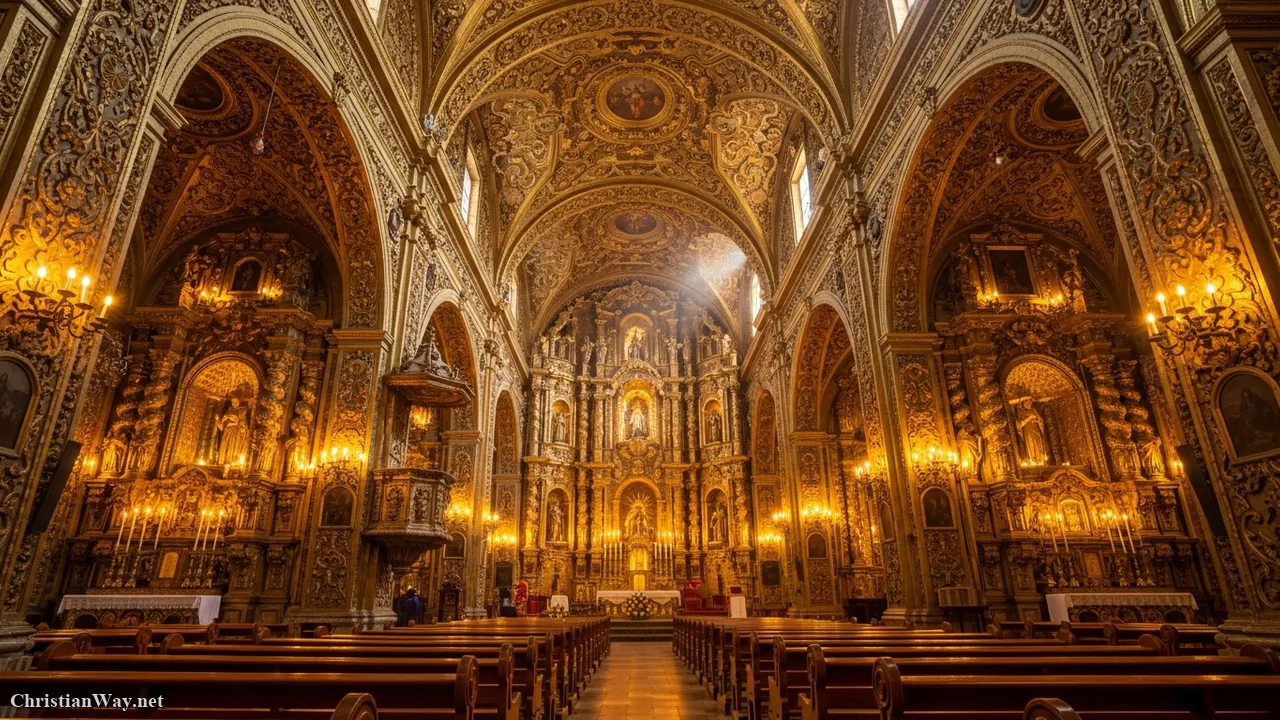
Theologically, this abundance of gold is not about material wealth, but about the uncreated light of God. In the biblical tradition, gold represents divinity and purity—that which does not tarnish. Walking into this nave feels like stepping inside a tabernacle. It reminds us that God’s presence is precious and all-encompassing. The intricate carvings, featuring local flora, remind us that all creation groans for redemption and that Christ is the Lord of every culture and every land.
For the weary soul, La Compañía offers a reminder of your value in God’s eyes. If man can build such a temple to honor the Creator, how much more precious are you, the living temple of the Holy Spirit? Let the golden glow remind you of the light of Christ that dwells within you, a treasure in a jar of clay.
Spiritual Highlights:
- The Mudéjar Influence: Observe the geometric patterns on the ceiling, a testament to the universality of beauty.
- Scripture: “The city was pure gold, like clear glass.” (Revelation 21:18)
Top 9. Cathedral Basilica of Zacatecas (Zacatecas, Mexico)
Moving north to Mexico, we encounter a stunning example of what is known as Mexican Churrigueresque—an ultra-Baroque style that is breathless in its complexity. The façade of the Zacatecas Cathedral is a tapestry carved in stone. Every inch is filled with angels, vines, apostles, and saints. It is a visual explosion of life, contrasting sharply with the more austere interior.
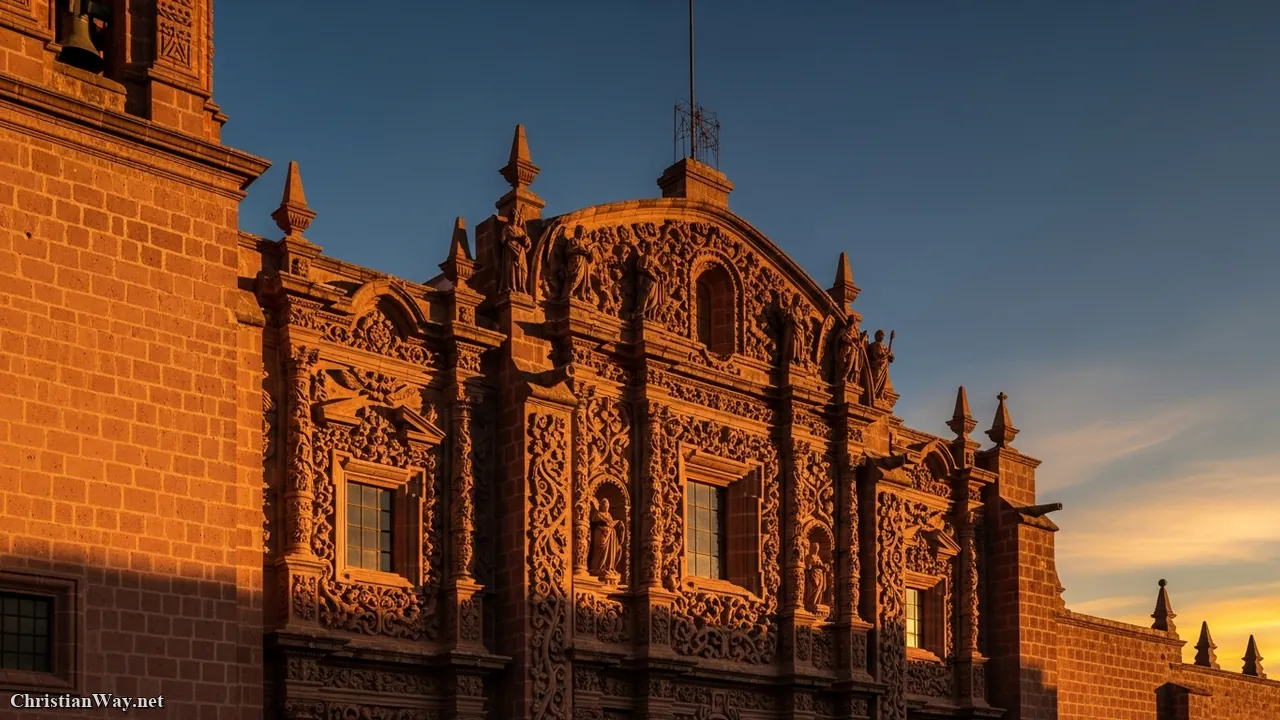
This façade teaches us about the “exuberance of grace.” God’s love is not minimal; it is lavish. The sheer density of the artwork reflects the psalmists who could not stop praising God, piling adjective upon adjective to describe His greatness. The stone seems to be alive, moving and breathing, suggesting that when the Spirit touches nature, it erupts in praise. It is a stone version of the burning bush—on fire with art, yet not consumed.
Pastoral care often requires us to simplify, but sometimes we need to be reminded of the complexity and richness of the Communion of Saints. When you feel alone, look at this façade and see the “great cloud of witnesses.” You are part of a crowded, joyous, and intricate family of faith that stretches across time and space.
Spiritual Highlights:
- The Eucharist in Stone: The center of the façade focuses on the Eucharist, placing Christ at the heart of the chaos.
- Scripture: “I tell you, if these were silent, the very stones would cry out.” (Luke 19:40)
Top 8. Santa Maria della Salute (Venice, Italy)
Floating on the Grand Canal is a church born from tragedy and hope. Santa Maria della Salute (Saint Mary of Health) was built as a votive offering after a devastating plague in 1630. Its massive dome serves as a beacon, a crown of white stone resting upon the waters. Unlike the dark, mysterious interiors of earlier churches, the Salute is flooded with light, constructed in an octagonal shape representing the eighth day—the day of Resurrection.
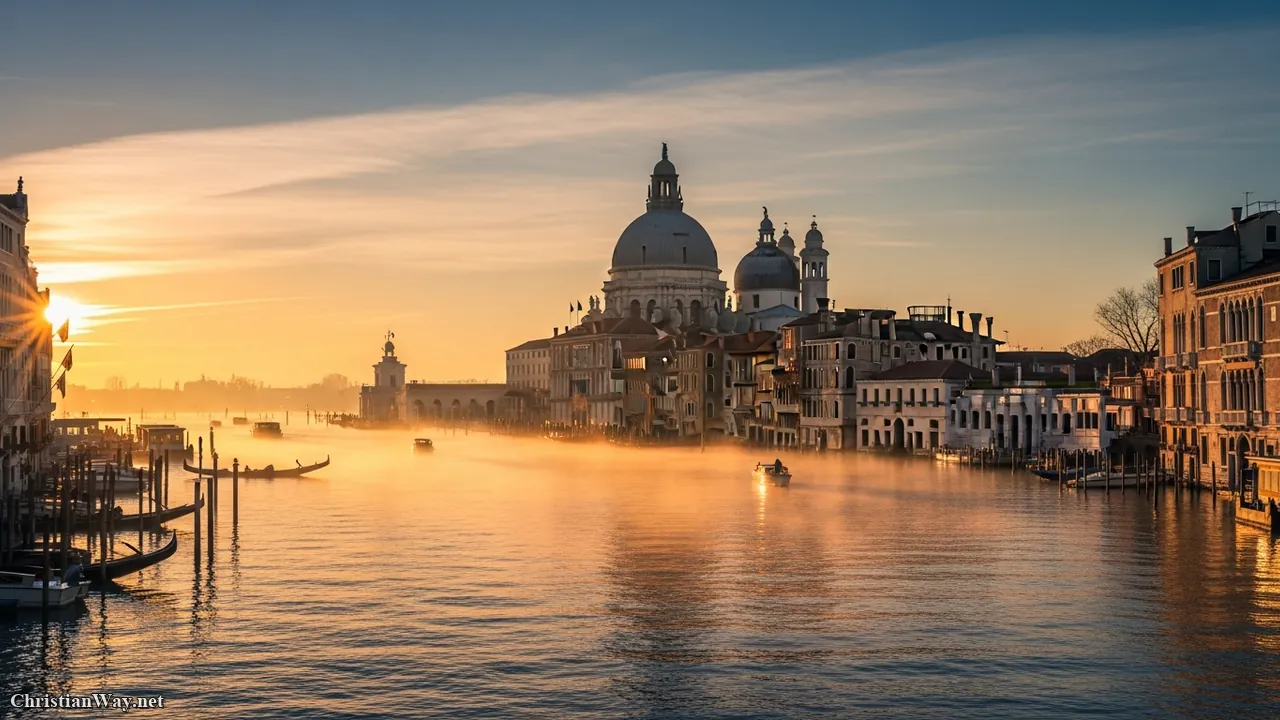
Here we find the theology of deliverance. This structure stands as a permanent prayer of thanksgiving. It reminds us that our relationship with God is often forged in the fires of suffering. The Baroque style here is not just ornamental; it is triumphant. It asserts that sickness and death do not have the final word. The Virgin Mary, to whom the church is dedicated, stands at the top of the dome, pointing us always to her Son, the true Healer.
If you are carrying a heavy burden of illness or grief, let this church be a comfort to you. It stands as a physical testament that God hears the cries of His people. Just as the Venetians found hope in the midst of the plague, we too can find our “Salute”—our health and salvation—in the mercy of Christ.
Spiritual Highlights:
- The High Altar: Depicts the Virgin Mary driving away the Plague, a powerful visual of spiritual warfare.
- Scripture: “Heal me, O Lord, and I shall be healed; save me, and I shall be saved, for you are my praise.” (Jeremiah 17:14)
Top 7. Church of Saint Nicholas (Prague, Czech Republic)
In the heart of Prague’s Lesser Town stands a masterpiece of the Bohemian Baroque. The Church of Saint Nicholas is famous for its dynamic undulating façade and an interior that draws the eye irresistibly upward. The fresco on the ceiling is one of the largest in Europe, depicting the Apotheosis of St. Nicholas. The architecture here is designed to blur the line between the roof and the sky, between the physical church and the heavenly Jerusalem.
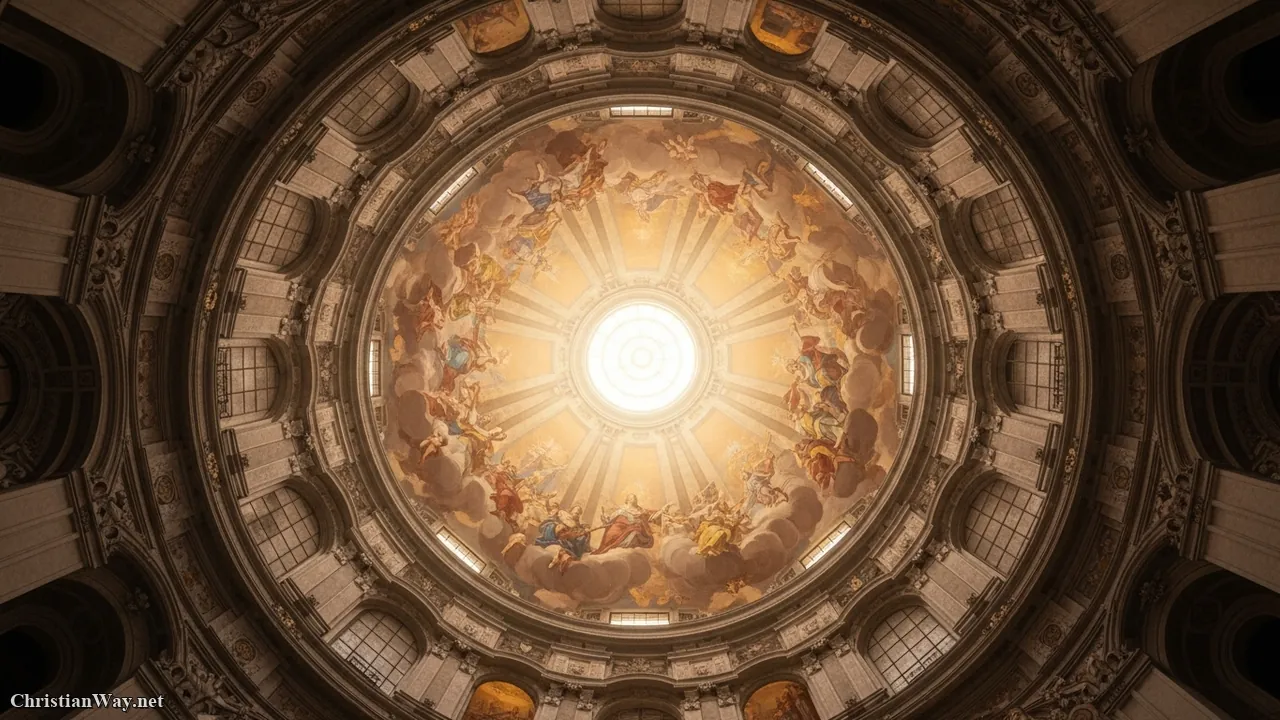
This church embodies the Baroque desire to make the invisible visible. The pastel colors—pinks, greens, and faux marbles—create an atmosphere of softness and joy. It is a visual representation of the Transfiguration. The theology here is one of ascension; it pulls us out of the mundane mud of daily life and forces us to look up. The interplay of light and shadow (chiaroscuro) mimics the spiritual life, where grace illuminates the dark corners of our souls.
Dear friends, we often walk with our heads down, burdened by the worries of the world. St. Nicholas Church invites us to “Lift up your hearts.” It is a sanctuary that encourages us to dream of heaven, reminding us that our ultimate citizenship is not here, but in the Kingdom of the Father.
Spiritual Highlights:
- The Baroque Organ: Played by Mozart himself, reminding us that music is the language of the spirit.
- Scripture: “Set your minds on things that are above, not on things that are on earth.” (Colossians 3:2)
Top 6. San Carlo alle Quattro Fontane (Rome, Italy)
Designed by the brilliant yet troubled Francesco Borromini, this church is tiny—it is said the whole building could fit inside one of the piers of St. Peter’s. Yet, “San Carlino” is perhaps the most intellectually stimulating Baroque church in the world. The walls undulate in concave and convex waves, creating a sense of movement in a confined space. The dome is an intricate geometric puzzle of crosses, octagons, and hexagons, diminishing in size to create an illusion of great height.
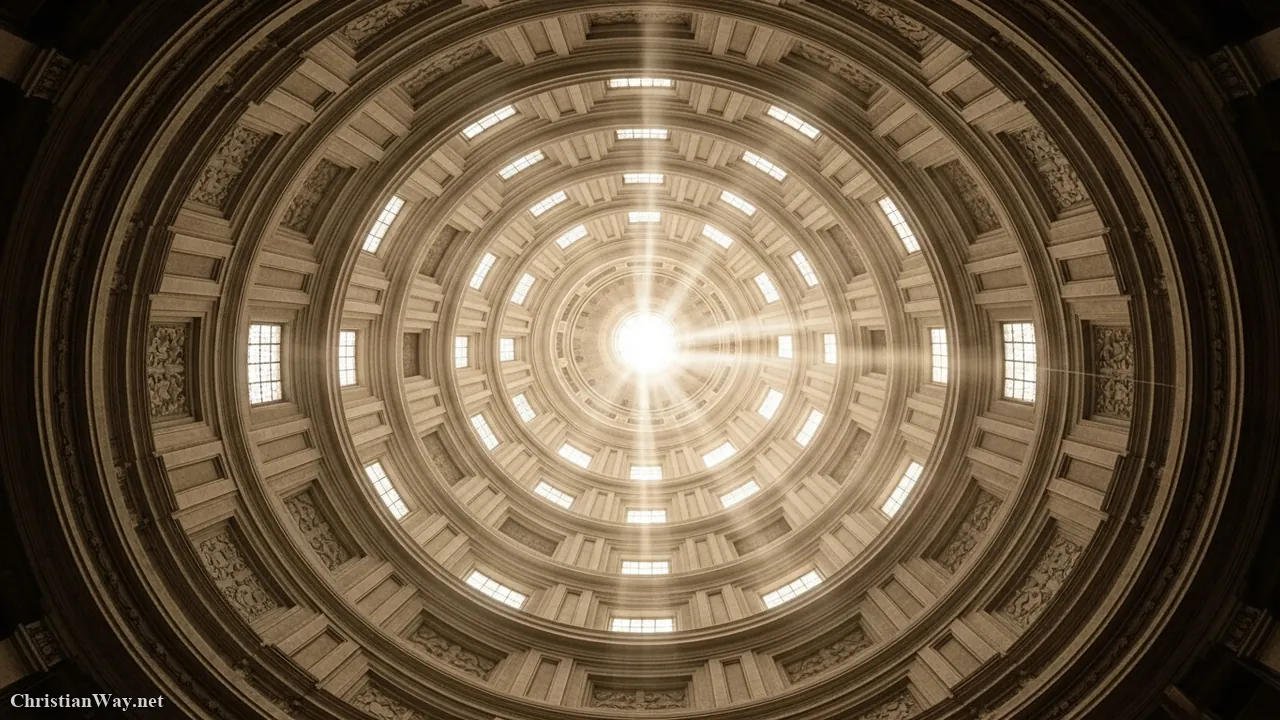
This is the theology of the infinite within the finite. Borromini shows us that God’s vastness can be found in the smallest of places. It is a rejection of the idea that “bigger is always better.” The complex geometry speaks to the order of the cosmos, designed by a rational Creator, yet the fluid walls speak of the Spirit who blows where He wills. It is a perfect marriage of reason and mystery.
For those who feel small, insignificant, or constrained by their circumstances, San Carlo is a revelation. It teaches us that you do not need to be grand to be beautiful. You do not need to be powerful to house the Holy Spirit. In the small spaces of your life, God can work the most intricate and beautiful miracles.
Spiritual Highlights:
- The Hidden Cloister: A moment of perfect symmetry and peace in the chaos of Rome.
- Scripture: “Do not despise these small beginnings, for the Lord rejoices to see the work begin.” (Zechariah 4:10)
Top 5. Cathedral of Santiago de Compostela (Galicia, Spain)
While the interior of this great cathedral is Romanesque, the façade—the Obradoiro—is a towering masterpiece of the Spanish Baroque. For centuries, pilgrims have walked the Camino, and this façade is the final sight that greets their weary eyes. It rises like a stairway to heaven, adorned with saints and intricate carvings, shielding the ancient Portico of Glory behind it.
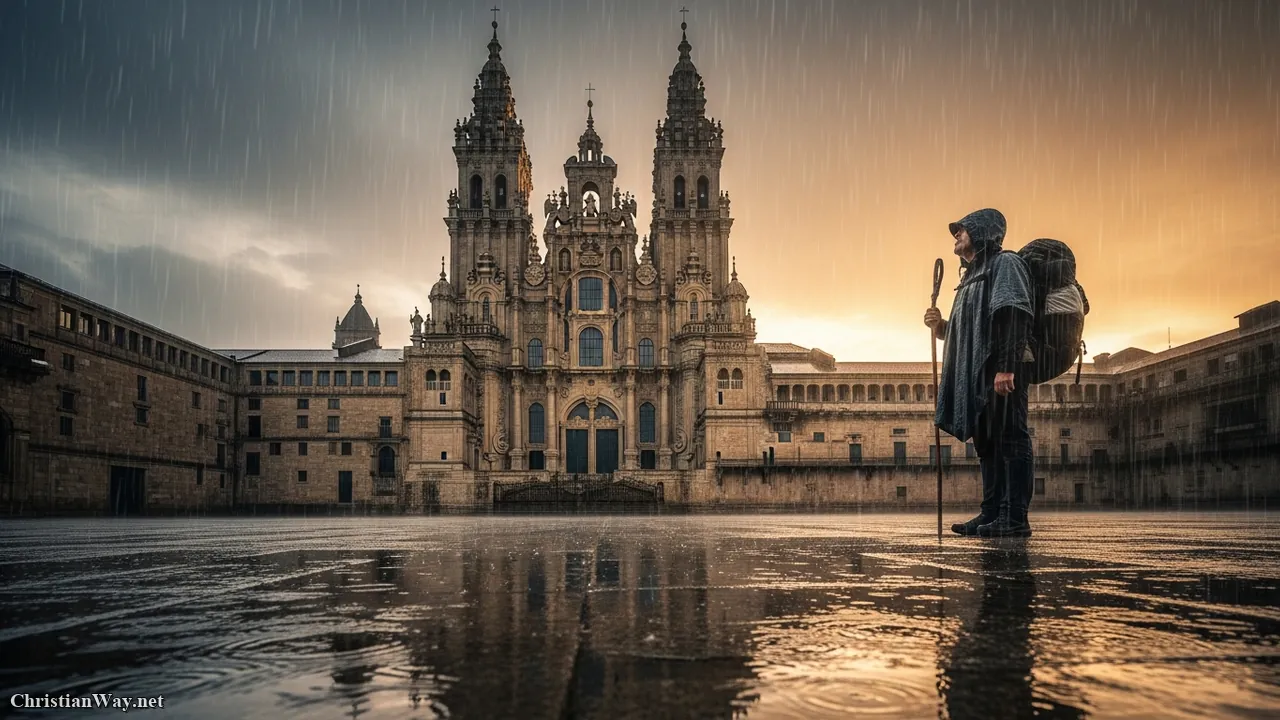
This façade represents the “Beatific Vision” at the end of a long journey. The Baroque addition was meant to protect the older structure, much like grace protects nature. It is a theology of arrival. After the mud, the rain, and the pain of the pilgrimage, the pilgrim is met not with a plain wall, but with a triumphant explosion of joy. It signals that the destination is worth the struggle.
We are all pilgrims in this life. We carry burdens, we stumble, and we get tired. This cathedral stands as a promise: the finish line is glorious. It encourages us to keep walking, to keep praying, and to keep helping one another along the Way. The beauty of the Lord awaits those who endure.
Spiritual Highlights:
- St. James the Apostle: His statue watches over the square, welcoming the faithful home.
- Scripture: “I have fought the good fight, I have finished the race, I have kept the faith.” (2 Timothy 4:7)
Top 4. Melk Abbey Church (Melk, Austria)
Perched on a rocky outcrop overlooking the Danube River, Melk Abbey is the definition of “High Baroque.” It serves as both a monastery and a fortress of the faith. The church interior is a symphony of gold, orange, and marble. The frescoes open up the ceiling to the heavens, and the organization of the abbey—balancing the library and the church—speaks volumes about the Benedictine tradition.
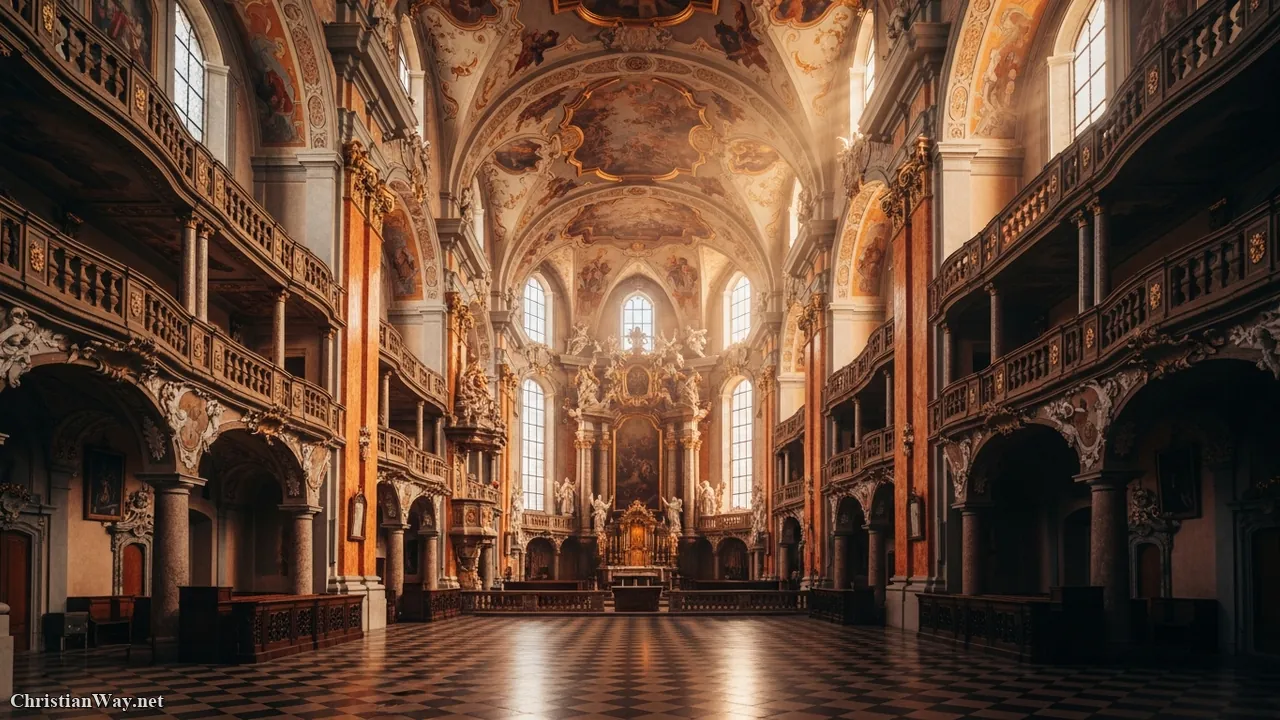
Here, we see the unity of Faith and Reason. The Baroque era was not anti-intellectual; it embraced the mind as a gift from God. The beauty of Melk is orderly yet passionate. It reminds us that loving God involves all our heart, soul, and mind. The monks who have prayed here for centuries serve as a “living living stone,” sustaining the church through their daily rhythm of Ora et Labora (Pray and Work).
In a world that often separates science from faith or emotion from logic, Melk Abbey brings them together. It invites us to study God’s word and His world with equal passion. Let this place remind you that your intellect is a tool for worship, and that true wisdom begins with the fear of the Lord.
Spiritual Highlights:
- The Inscription: “Absit Gloriari Nisi in Cruce” (Far be it from me to glory except in the Cross) adorns the high altar.
- Scripture: “The fear of the Lord is the beginning of wisdom.” (Proverbs 9:10)
Top 3. Karlskirche (Vienna, Austria)
The St. Charles Church in Vienna is a unique blend of styles that comes together in a Baroque masterpiece. Commissioned by Emperor Charles VI following the last great plague epidemic, it is dedicated to St. Charles Borromeo, a bishop famous for ministering to plague victims. The two massive columns at the front are modeled after Trajan’s Column in Rome but are also meant to evoke the pillars of Solomon’s Temple, Boaz and Jachin.
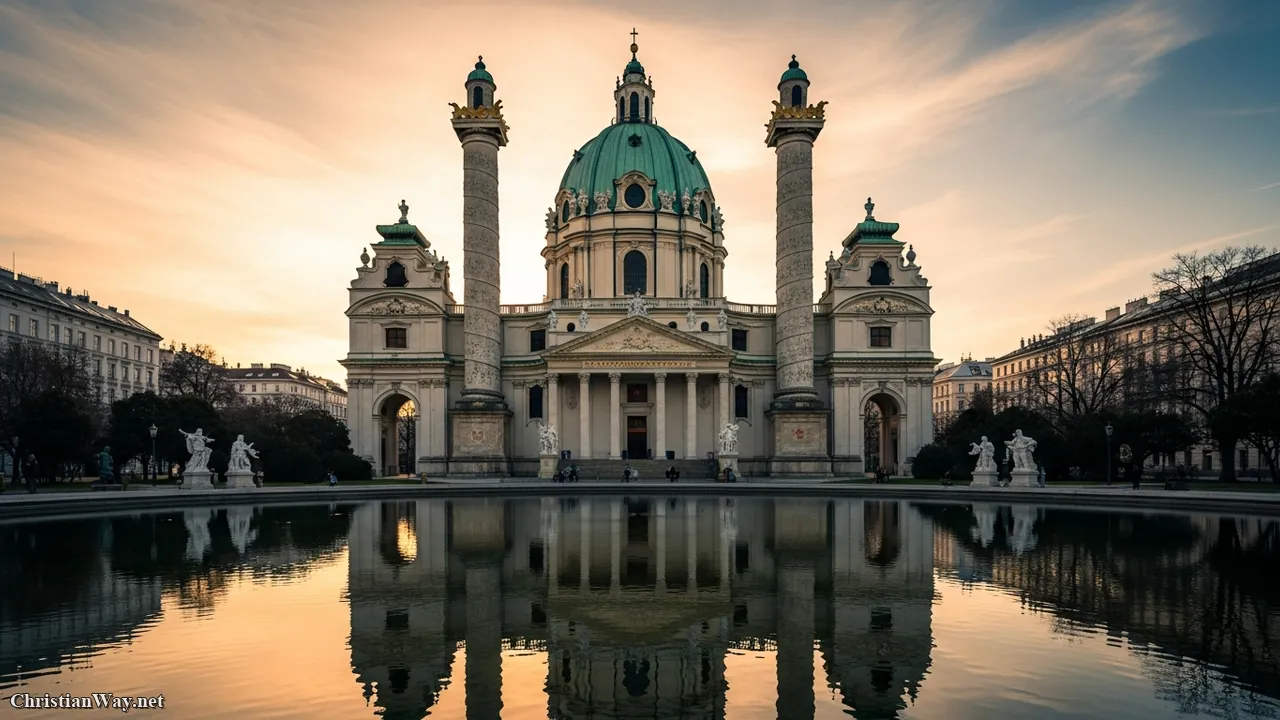
This church is a theological bridge between the Old and New Testaments, and between Rome and Vienna. It asserts the continuity of God’s saving plan. The columns spiral upward, depicting scenes from the life of St. Charles—a visual hagiography showing that the path to holiness is a steady ascent. The oval nave inside creates a sense of communal embracing, pulling the congregation together.
Karlskirche reminds us of the power of intercession. St. Charles Borromeo did not flee from the plague; he ran toward it to serve. This architecture challenges us: are we willing to be pillars of support for those who are suffering? In the grandeur of this building, we hear the call to be servants of the poor and the sick.
Spiritual Highlights:
- The Dove: The Holy Spirit is depicted in the center of the dome fresco, radiating golden light throughout the church.
- Scripture: “Bear one another’s burdens, and so fulfill the law of Christ.” (Galatians 6:2)
Top 2. The Church of the Gesù (Rome, Italy)
This is the Mother Church of the Society of Jesus (Jesuits) and the prototype for almost all Baroque churches that followed. The façade introduced the world to the “Baroque scroll” and the broken pediment. But the interior is where the true revolution happened. It was designed as a single, wide nave without aisles, ensuring that every person could hear the sermon and see the altar clearly.
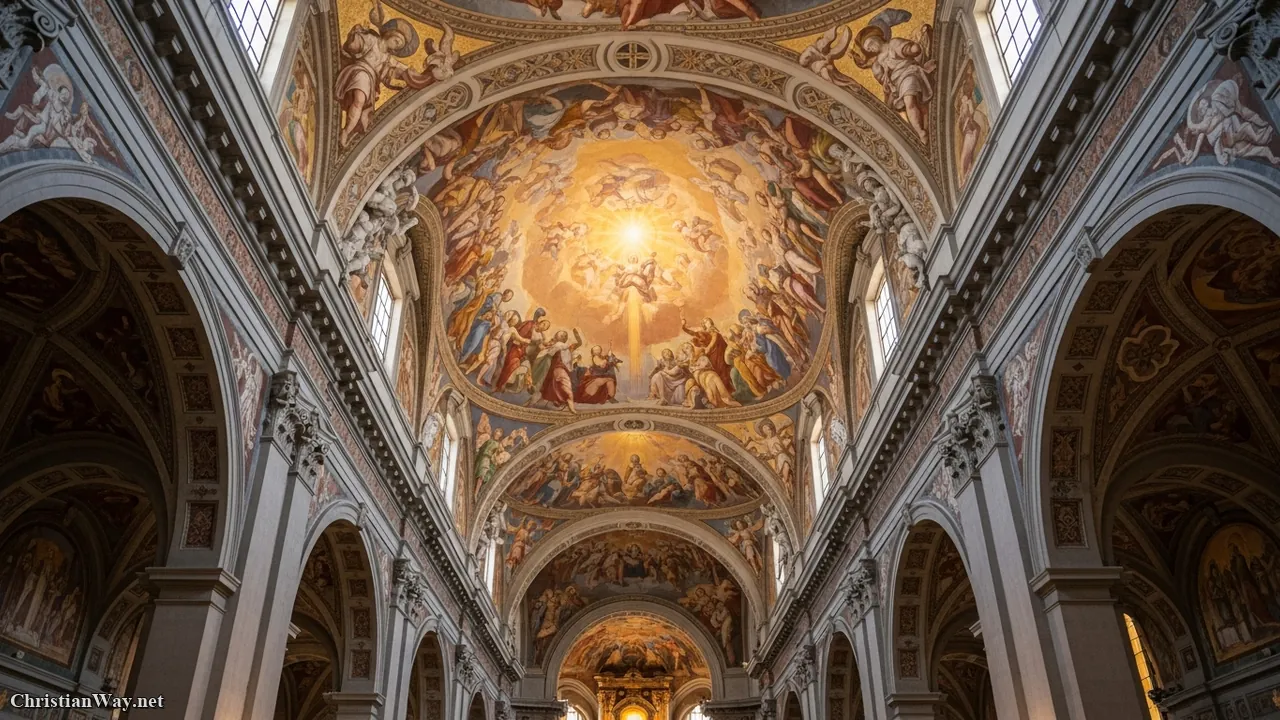
The Gesù represents the theology of the Word and the Eucharist combined. It was built for the proclamation of the Gospel. The ceiling fresco, The Triumph of the Name of Jesus, is a dizzying masterpiece where figures seem to be falling out of the sky or being pulled up into the blinding light of the Name “IHS.” It vividly depicts the spiritual reality that at the name of Jesus, every knee shall bow.
Pastoral care begins with listening to the Word. The Gesù was designed to facilitate that listening. It invites us to focus. In our distracted modern lives, this church asks us to center our eyes on the altar and our ears on the Gospel. It is a place of decision: will we step into the light of His Name, or remain in the shadows?
Spiritual Highlights:
- St. Ignatius’ Tomb: A marvel of lapis lazuli and bronze, honoring the founder of the Jesuits.
- Scripture: “Therefore God has highly exalted him and bestowed on him the name that is above every name.” (Philippians 2:9)
Top 1. St. Peter’s Basilica (Vatican City)
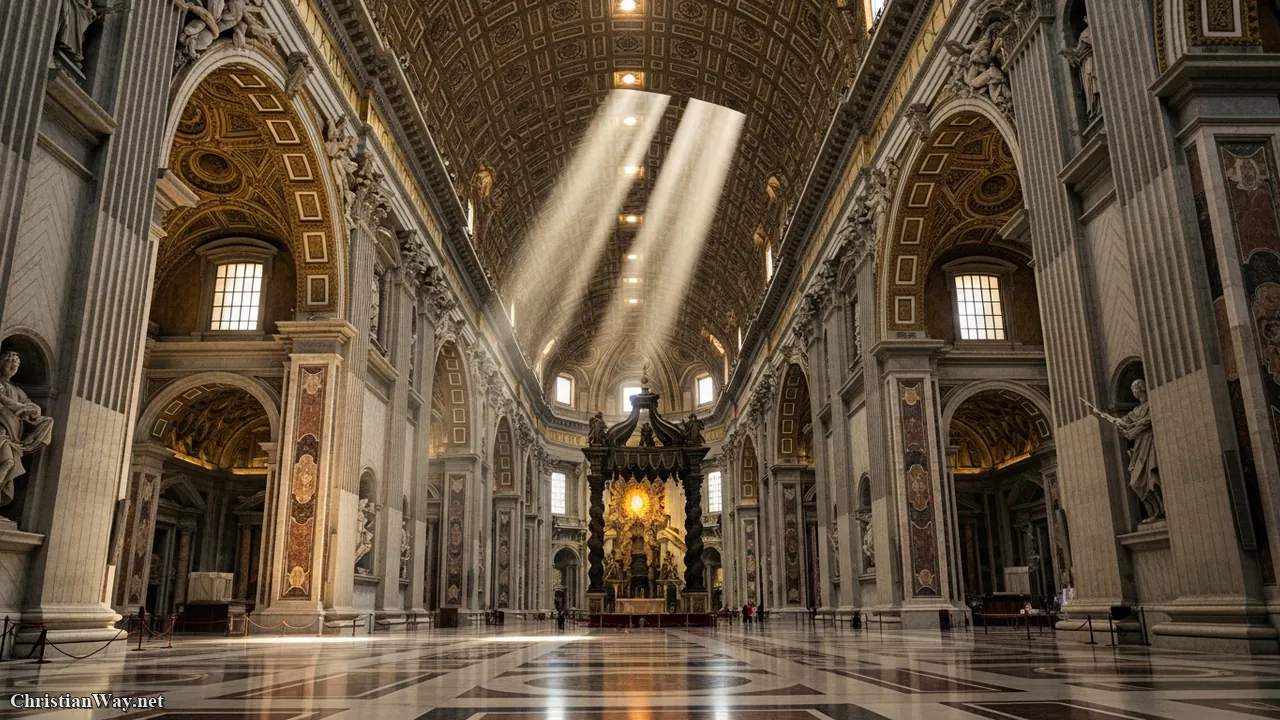
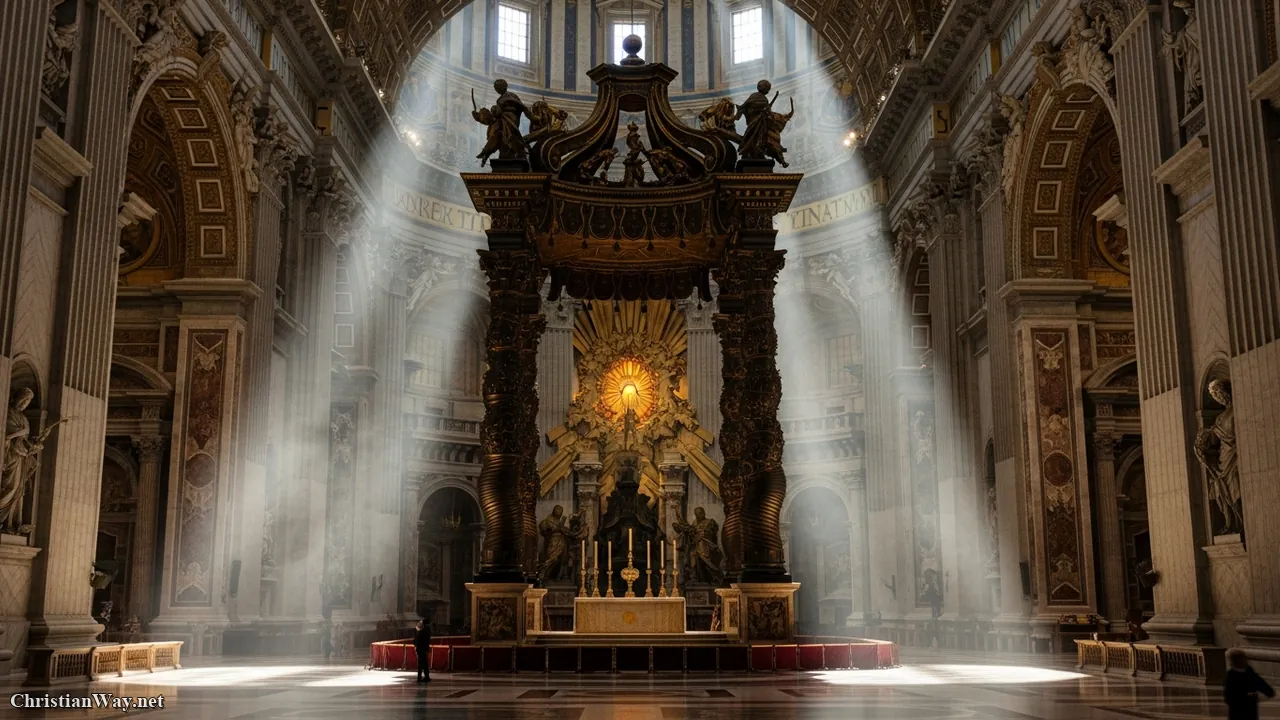
We arrive at the pinnacle. While its roots are Renaissance, the completion of St. Peter’s—the façade by Maderno, the colonnade by Bernini, and the interior decorations—is the ultimate expression of the Baroque spirit. It is the largest church in the world, built over the tomb of the Fisherman. The vast St. Peter’s Square, with its elliptical colonnade, was explicitly designed by Bernini to represent “the maternal arms of Mother Church” embracing all of humanity.
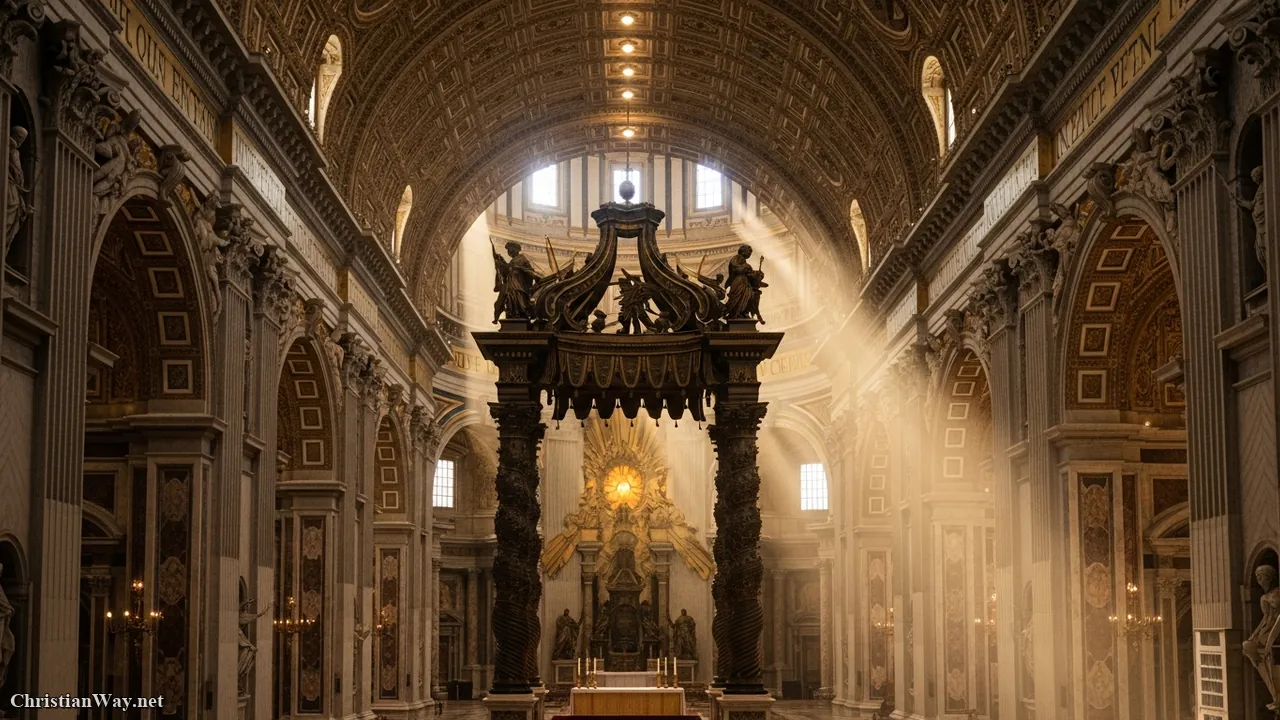
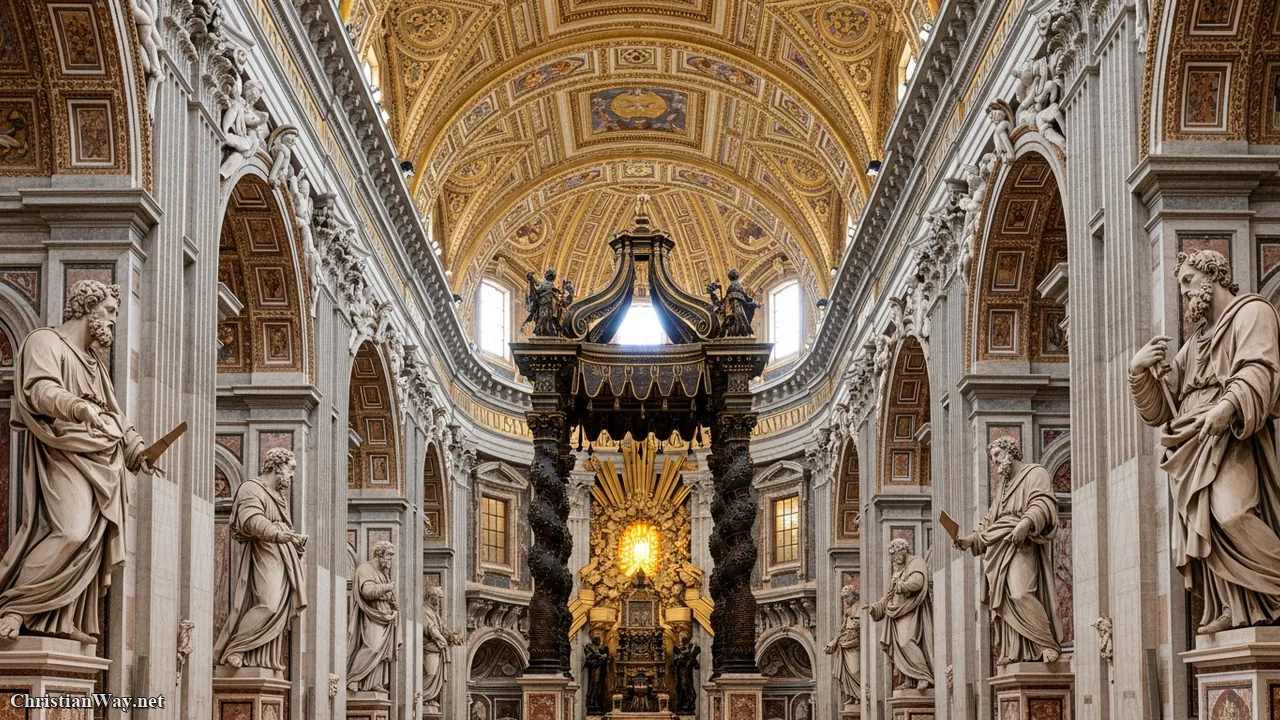
St. Peter’s is the physical embodiment of the promise: “You are Peter, and on this rock I will build my church.” The Baldachin (the great bronze canopy over the altar) spirals upward, twisting with energy, connecting the tomb of the Apostle below with the dome of heaven above. It is grand, yes, but it is also deeply personal. It is a place where the universal Church meets the individual pilgrim.
Standing in the nave of St. Peter’s, one feels incredibly small, yet incredibly safe. It is a testament to the stability of the Faith. despite centuries of turmoil, the Church stands. For you, dear reader, St. Peter’s is a reminder that you are not alone. You belong to a family that spans continents and millennia. In the arms of this great colonnade, may you feel the embrace of God Himself, who welcomes the prodigal, the saint, and the seeker alike.
Spiritual Highlights:
- The Cathedra Petri: The Throne of St. Peter in the apse, bathed in the light of the Holy Spirit (the alabaster window).
- Scripture: “And I tell you, you are Peter, and on this rock I will build my church, and the gates of hell shall not prevail against it.” (Matthew 16:18)
Reflect and Pray
As we conclude our journey through these ten sanctuaries of the Baroque, we must remember that these buildings are mere shadows of the true Temple—the one built without hands, eternal in the heavens. But God, in His mercy, allows us to use stone, gold, and light to catch a glimpse of His beauty here on earth.
I encourage you, whether you visit these places in person or in spirit, to let their beauty lead you to prayer. Let the height of the domes raise your hope; let the light of the naves illuminate your faith; and let the embrace of the architecture deepen your love for the One who dwells not just in temples made by man, but in the humble tabernacle of your own heart.
— Fr. John Matthew, for Christian Way