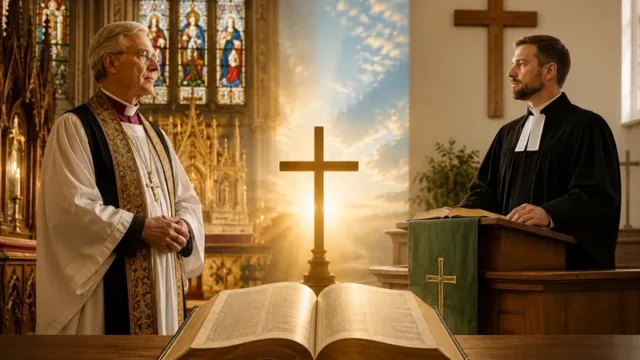
Anglicanism belongs historically to the Protestant Reformation while preserving ancient Catholic worship, ministry, and sacramental life.
Dear friends in Christ,
When someone first encounters Anglican Christianity, the question often arises quite naturally: Is Anglicanism Protestant? The answer seems as though it should be simple, yet the closer we look, the more we discover that Anglicanism carries a history, identity, and spiritual character that cannot be expressed adequately by a single label.
In the broad historical and theological sense, Anglicanism is Protestant. It emerged from the religious changes of the sixteenth century, separated from the authority of the pope, embraced worship in the language of the people, affirmed the supreme authority of Holy Scripture, and received important teachings associated with the Protestant Reformation. Most historians, theologians, and reference works therefore include Anglicanism among the major Protestant traditions.
Yet many Anglicans also understand themselves as Catholic—not Roman Catholic, but catholic in the older sense of belonging to the one, holy, catholic, and apostolic Church confessed in the Nicene Creed. Anglican churches retained bishops, ancient creeds, liturgical worship, the sacraments of Baptism and Holy Communion, and a strong sense of continuity with the historic Church.
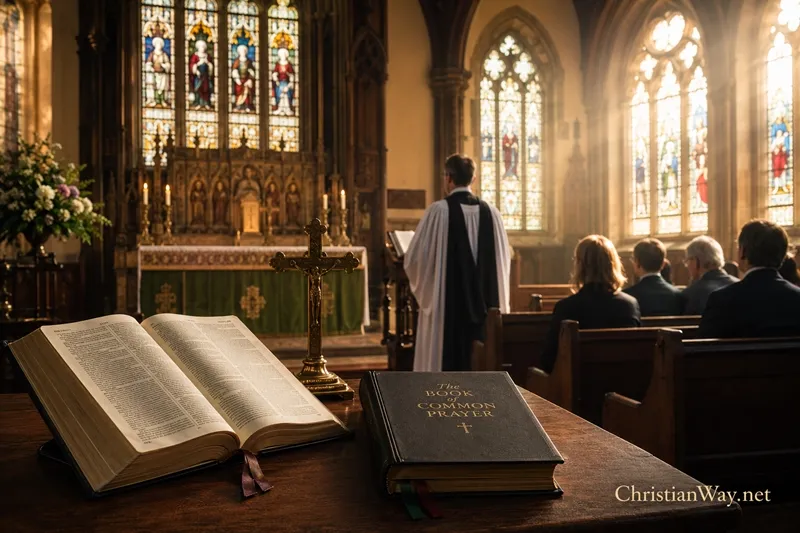
For this reason, Anglicanism is often described as both Reformed and Catholic, or as a Christian tradition seeking to hold together truths that were sometimes divided during the Reformation. It is Protestant in its historical formation and many of its theological convictions, but it also preserves a visible and intentional continuity with the worship, ministry, and sacramental life of the ancient Church.
To understand Anglicanism fairly, we must therefore move beyond the idea that “Protestant” and “Catholic” are always complete opposites. Anglicanism stands within the Protestant family while continuing to cherish much of the Catholic inheritance shared by Christians long before the divisions of the sixteenth century.
The Clear Historical Answer: Anglicanism Is Protestant
If the word Protestant refers broadly to the Western Christian traditions that emerged from the Reformation and rejected the universal jurisdiction of the pope, then Anglicanism is unquestionably Protestant.
The Church of England separated institutionally from the authority of Rome during the reign of King Henry VIII. This separation was initially driven more by political and dynastic conflict than by a complete acceptance of Protestant theology. Henry rejected papal authority, but he continued to defend many traditional Catholic beliefs and practices.
The deeper Protestant transformation of the English Church unfolded gradually. Under Henry’s son, Edward VI, Archbishop Thomas Cranmer and other reformers introduced substantial changes to doctrine and worship. The liturgy was placed in English, the Book of Common Prayer was developed, many medieval devotional practices were removed, and the theological influence of reformers from continental Europe became increasingly visible.
After the reign of the Catholic queen Mary I, Elizabeth I established a religious settlement that gave the Church of England a recognizably Protestant identity while preserving bishops, liturgical worship, and a certain degree of continuity with the pre-Reformation Church.
Anglicanism was therefore not created in one moment, nor can its identity be reduced to the personal decisions of Henry VIII. It developed through decades of political upheaval, theological debate, pastoral reform, martyrdom, compromise, and prayer.
By the end of the sixteenth century, the Church of England had clearly rejected papal supremacy, embraced worship in the vernacular, affirmed the sufficiency of Scripture for salvation, and adopted doctrinal statements shaped by the Reformation. Historically, this places Anglicanism within Protestant Christianity.
The English Reformation Was More Than a Royal Divorce
A common misunderstanding says that Anglicanism began simply because Henry VIII wanted a divorce. This explanation contains a piece of historical truth, but it is far too narrow.
Henry’s desire to have his marriage to Catherine of Aragon declared invalid was an immediate cause of England’s break with papal authority. Yet religious reform had already been stirring across Europe and within England itself. English Christians were debating the authority of Scripture, corruption within the Church, the nature of salvation, the meaning of the Mass, the role of clergy, and the need for worship in the language of ordinary people.
Once England separated from Rome, reformers gained opportunities to reshape the Church according to principles associated with the wider Protestant movement. Thomas Cranmer, Hugh Latimer, Nicholas Ridley, and others sought not merely national independence from the pope but theological and liturgical reform.
The later Anglican tradition was shaped far more deeply by the Book of Common Prayer, the Thirty-Nine Articles of Religion, the English Bible, and the pastoral vision of the reformers than by the marital struggles of Henry VIII.
To say that Anglicanism exists only because a king wanted a divorce is therefore like saying that the early Church spread only because Roman roads existed. A political event opened a door, but a much larger religious movement passed through it.
Why Anglicanism Is Usually Classified as Protestant
Several central features place Anglicanism firmly within the Protestant tradition. These include its understanding of biblical authority, its teaching on salvation, its rejection of papal jurisdiction, its reformed liturgy, and its historic doctrinal standards.
The Authority and Sufficiency of Holy Scripture
Classical Anglican teaching gives Holy Scripture the highest authority in matters necessary for salvation.
Article VI of the Thirty-Nine Articles teaches that Scripture contains everything necessary for salvation. A doctrine cannot be required of all Christians as necessary to salvation unless it can be read in Scripture or proved from Scripture.
This conviction reflects one of the central concerns of the Protestant Reformation: the Church must remain under the judgment and guidance of the Word of God.
Saint Paul writes:
“All Scripture is inspired by God and is useful for teaching, for reproof, for correction, and for training in righteousness.”
Anglicanism does not necessarily interpret this principle as a rejection of tradition. Classical Anglican thinkers frequently speak of Scripture being read within the Church and with the assistance of reason and the witness of historic Christianity. Nevertheless, tradition cannot stand above Scripture or contradict its essential teaching.
The Anglican appeal to Scripture therefore differs from an approach in which later ecclesiastical definitions are considered equally binding by virtue of an infallible teaching authority. Anglicanism respects councils, creeds, bishops, theologians, and ancient customs, but it insists that all human authorities remain accountable to the revelation given in Holy Scripture.
Salvation by Grace Through Faith
Classical Anglicanism also shares the Reformation emphasis on justification by faith.
Article XI of the Thirty-Nine Articles teaches that human beings are accounted righteous before God only through the merit of Jesus Christ, received by faith, and not because of their own works or deserving.
This does not mean that good works are unimportant. Article XII explains that good works are the fruits of faith and are pleasing to God in Christ. They do not purchase salvation, but they flow from the grace already received.
This teaching echoes Saint Paul’s words:
“Therefore, since we are justified by faith, we have peace with God through our Lord Jesus Christ.”
The Christian does not save himself through religious achievement. Salvation begins in the mercy of God, is accomplished through the death and resurrection of Christ, and is received through faith. Obedience, charity, holiness, and service are the living fruits of grace, not a price paid to persuade God to love us.
This emphasis places Anglicanism within the central theological stream of the Protestant Reformation, even though Anglicans have expressed the relationship between faith, works, sacraments, and spiritual growth in several different ways.
Rejection of Papal Supremacy
Anglican churches do not accept the pope as possessing universal jurisdiction over the whole Church.
The bishop of Rome may be respected as an important Christian leader, a historic patriarch, or a powerful voice in global Christianity. Some Anglicans speak of the pope with deep reverence and hope for greater Christian unity. Nevertheless, Anglicanism does not teach that communion with the pope is necessary for belonging to the Church of Christ.
The Church of England’s separation from Roman jurisdiction was one of the decisive events that gave birth to Anglicanism as a distinct tradition. Anglican churches are governed through bishops, synods, canons, and provincial structures rather than through submission to the Holy See.
This rejection of papal supremacy is one of the clearest reasons Anglicanism is historically and institutionally Protestant.
Worship in the Language of the People
The Protestant Reformation sought to make the Word of God and the worship of the Church understandable to ordinary Christians. Anglican reformers translated and reshaped the liturgy so that congregations could pray in their own language.
The Book of Common Prayer became one of the great spiritual treasures of English-speaking Christianity. Its language gave generations of believers a pattern for morning and evening prayer, Holy Communion, Baptism, marriage, burial, confession, and the observance of the Christian year.
The use of the people’s language was not merely a practical change. It expressed a pastoral conviction: the whole congregation should hear, understand, and participate in the worship of God.
This concern was deeply Protestant, though the liturgical form in which Anglicanism expressed it remained more traditional than the worship of many other Reformation churches.
Why Some Anglicans Hesitate to Call Themselves Protestant
Although Anglicanism is historically Protestant, not every Anglican prefers the label. This hesitation arises partly because the word Protestant has acquired several meanings.
For some people, Protestantism suggests churches with informal worship, no bishops, little emphasis on sacraments, suspicion of religious art, rejection of ancient tradition, and a strongly individualistic approach to faith. Many Anglican churches do not fit this image.
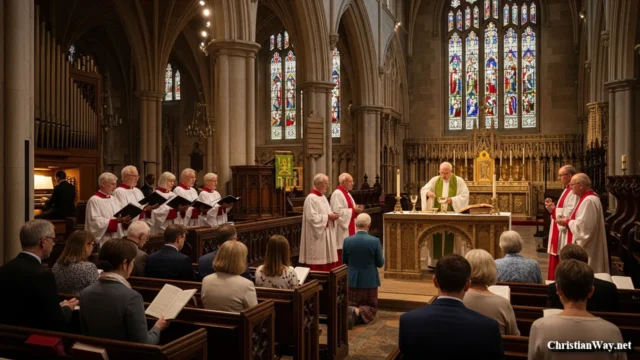
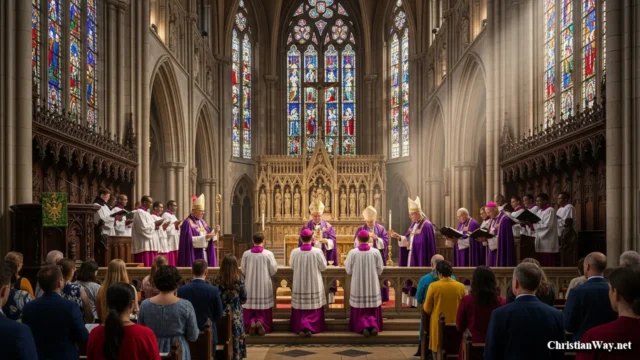
An Anglican cathedral may contain stained glass, candles, processions, incense, vestments, a choir, weekly Eucharist, and a liturgy shaped by ancient Christian prayer. Anglican priests may hear confessions, anoint the sick, celebrate saints’ days, and speak of the real presence of Christ in Holy Communion.
To Christians accustomed to identifying Protestantism mainly with Baptist, Pentecostal, independent evangelical, or non-denominational churches, such Anglican practices may appear Catholic rather than Protestant.
Some Anglicans therefore say, “We are not Protestant; we are Catholic and Reformed.” Others say, “We are Protestant, but not only Protestant.” Still others are entirely comfortable identifying simply as Protestant.
These different answers often reflect different meanings of the word rather than complete disagreement about Anglican history.
Catholic Does Not Always Mean Roman Catholic
In ordinary conversation, the word Catholic usually refers to the Roman Catholic Church. Historically, however, the word is broader. It comes from a Greek word meaning universal or according to the whole.
When Anglicans recite the Nicene Creed and confess belief in “one holy catholic and apostolic Church,” they are not necessarily declaring submission to Rome. They are confessing that the Church of Christ is universal, holy, rooted in the apostles, and united across nations and centuries.
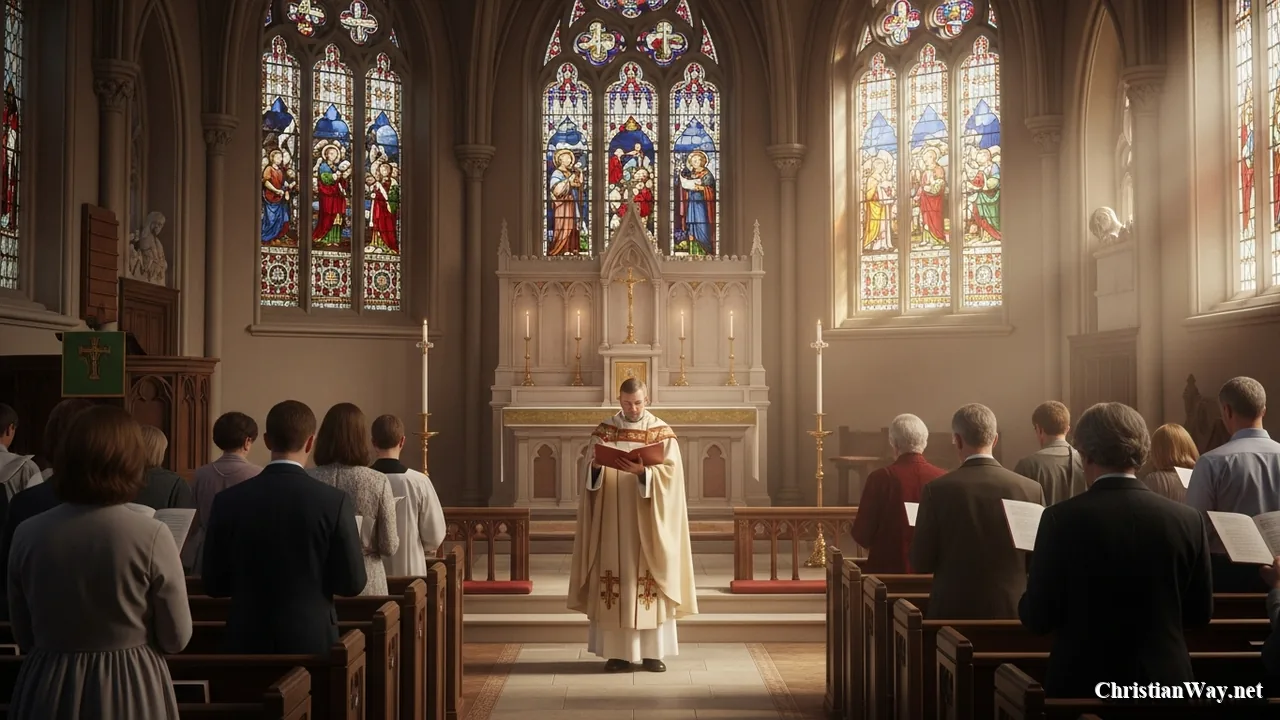
Anglicans may therefore describe themselves as catholic because they retain the ancient creeds, the historic episcopate, sacramental worship, and continuity with the early Church.
They believe that the Church of England did not cease to be part of the catholic Church when it rejected papal jurisdiction. From the Anglican perspective, reform was intended to purify the national Church according to Scripture and the faith of the early centuries, not to create Christianity from the beginning.
This is why Anglicanism can affirm a catholic identity without being Roman Catholic.
Anglicanism as Both Reformed and Catholic
One of the most characteristic Anglican claims is that the tradition is both Reformed and Catholic.
It is Reformed because it passed through the Reformation, rejected doctrines and practices judged to lack sufficient biblical foundation, emphasized salvation by grace through faith, placed Scripture above all merely human authorities, and refused the universal jurisdiction of the pope.
It is Catholic because it retained the ancient creeds, the threefold ministry of bishops, priests, and deacons, the administration of Baptism and Holy Communion, the rhythm of the Christian year, and a liturgical life consciously connected to the historic Church.
This dual identity is not always peaceful. At different times, Anglican communities have argued intensely about which side should receive greater emphasis. Yet the tension itself has become one of the defining marks of Anglicanism.
Anglicanism does not usually see the Reformation as the birth of the true Church after centuries of darkness. Nor does it generally regard every medieval development as binding and irreformable. Instead, classical Anglicanism seeks continuity with the ancient Church while allowing that the visible Church may require correction according to the Word of God.
The Meaning of the Anglican “Middle Way”
Anglicanism is often called a via media, a Latin expression meaning “middle way.”
This phrase is sometimes misunderstood as though Anglicanism simply chooses a moderate position between Roman Catholicism and Protestantism on every issue. The historical reality is more complex.
The early Church of England was often described as a middle way between different Protestant movements, especially between more traditional English reformers and Puritans who wanted further changes. In later centuries, Anglican theologians increasingly used the idea to describe a path between Roman Catholicism and certain forms of Protestantism.
The Anglican middle way is not meant to be compromise for its own sake. At its best, it is an attempt to preserve the fullness of Christian truth without forcing every mystery into a narrow system.
Anglicanism seeks to confess grace without denying the importance of holiness, Scripture without despising tradition, sacraments without superstition, order without spiritual oppression, and freedom without disorder.
This aspiration is beautiful, though Anglicans themselves would admit that it has not always been achieved consistently.
The Thirty-Nine Articles and Anglican Protestant Identity
The Thirty-Nine Articles of Religion are among the clearest witnesses to Anglicanism’s Protestant character.
They affirm the Trinity, the incarnation, the death and resurrection of Christ, the authority of Scripture, original sin, justification by faith, and the necessity of good works as the fruits of faith. They also reject several beliefs and practices associated with late medieval Western Christianity.
The Articles deny that the bishop of Rome has jurisdiction within the realm of England. They reject the doctrine of purgatory as it was commonly taught, challenge the invocation of saints and the veneration of relics as practiced at the time, and deny the doctrine of transubstantiation as a necessary explanation of Christ’s presence in the Eucharist.
They recognize two sacraments of the Gospel—Baptism and the Lord’s Supper—as directly instituted by Christ, while acknowledging other sacramental rites that developed within the Church.
The Articles also state that general councils may err and that visible churches may fall into error. These claims are distinctly Protestant because they deny that any earthly ecclesiastical body is automatically protected from all doctrinal error.
Not every Anglican today interprets the Articles in precisely the same manner. Some provinces give them strong confessional authority, while others treat them as historic formularies that must be read in their sixteenth-century setting. Even so, their existence makes it difficult to deny the Protestant foundation of Anglican doctrine.
The Book of Common Prayer: Reformed Theology in Catholic Form
The Book of Common Prayer reveals Anglicanism’s identity perhaps more beautifully than any abstract definition.
Its structure preserves much of the ancient pattern of Christian worship. It includes daily prayer, the Psalms, Scripture readings, the Eucharist, Baptism, confirmation, marriage, burial, and prayers for the Church and the world.
Yet its theology bears the marks of the Reformation. The prayers emphasize human sin, divine mercy, the sufficiency of Christ’s sacrifice, the need for sincere faith, and the grace of God received through Word and sacrament.
In the service of Holy Communion, worshippers confess that they do not approach the Lord’s Table trusting in their own righteousness but in God’s abundant mercy. They hear the promises of forgiveness, receive Christ’s gifts with faith, and are sent into the world to live in love and holiness.
The Prayer Book therefore holds together elements that later Christians sometimes separated. It is liturgical yet biblical, sacramental yet Reformed, ancient in structure yet accessible in the language of the people.
Through this pattern of prayer, Anglicanism teaches that doctrine is not merely something Christians analyze. Doctrine becomes worship, repentance, gratitude, communion, and daily obedience.
The Diversity Within Anglicanism
Any answer to the question “Is Anglicanism Protestant?” must recognize the considerable diversity found within Anglican churches.
Anglicanism is not represented by one spiritual style. It contains evangelical Anglicans, Anglo-Catholic Anglicans, charismatic Anglicans, and those often described as broad-church or liberal Anglicans. These groups share a historical and ecclesial inheritance, but they may express Anglican identity very differently.
Evangelical Anglicans
Evangelical Anglicans strongly emphasize the authority of Scripture, the preaching of the Gospel, personal conversion, the atoning death of Christ, justification by faith, and the importance of missionary work.
Their worship may be simpler, though it often still follows a liturgical pattern. They usually identify Anglicanism clearly as a Protestant tradition and may feel a close kinship with Reformed, Lutheran, Baptist, or other evangelical Christians.
For evangelical Anglicans, the Reformation was a necessary recovery of the biblical Gospel. They value Anglican structures and prayers, but they insist that the Church must always be renewed through the Word of God.
Anglo-Catholic Anglicans
Anglo-Catholicism developed particularly through the Oxford Movement of the nineteenth century. Its leaders emphasized the Church’s continuity with ancient and medieval Catholic Christianity.
Anglo-Catholic churches may celebrate the Eucharist with incense, vestments, candles, bells, processions, and prayers associated with the wider Catholic tradition. Some honor Mary and the saints, practice private confession, and speak strongly of apostolic succession and the sacrificial character of the Eucharist.
Many Anglo-Catholics are reluctant to call themselves Protestant. They may view Anglicanism as a branch of the Catholic Church that was separated from Rome but did not abandon Catholic faith and order.
Nevertheless, Anglo-Catholicism exists within a communion whose historical formularies were shaped by the Protestant Reformation. This creates an ongoing tension between Catholic devotional practice and the more explicitly Reformed language of classical Anglican documents.
Broad-Church and Other Anglican Traditions
Broad-church Anglicanism generally places less emphasis on strict party labels. It values comprehensiveness, reasoned theological inquiry, pastoral flexibility, and the ability of Christians with different convictions to worship together.
Charismatic Anglicanism, meanwhile, combines the Anglican sacramental and liturgical inheritance with an emphasis on the gifts of the Holy Spirit, contemporary worship, healing prayer, and personal renewal.
The diversity of Anglicanism can sometimes be confusing. One Anglican parish may feel similar to a Roman Catholic parish, another to an evangelical Protestant congregation, and another may combine traditional liturgy with charismatic prayer.
Yet all remain connected through shared history, episcopal structures, patterns of worship, and membership in an Anglican province or communion.
How Anglicanism Differs From Roman Catholicism
Although some Anglican worship may appear Catholic, important differences remain between Anglicanism and Roman Catholicism.
The most fundamental institutional difference concerns papal authority. Roman Catholicism teaches that the pope possesses a unique office of universal pastoral authority in the Church. Anglicanism does not accept this claim.
The two traditions also differ regarding the authority of later dogmatic definitions, the precise number and nature of the sacraments, certain Marian teachings, the ordination of clergy, the interpretation of Eucharistic doctrine, and the relationship between Scripture, tradition, and the teaching office of the Church.
Many Anglican provinces ordain women as priests and bishops, while the Roman Catholic Church does not. Most Anglican clergy may marry, while celibacy is ordinarily required of priests in the Latin Church.
Anglican teaching does not require belief in doctrines such as the Immaculate Conception or the Assumption of Mary as dogmas necessary for all Christians. Some individual Anglicans accept them devotionally, while others do not.
At the same time, Anglicans and Roman Catholics share much more than is sometimes recognized. Both confess the Trinity, the full divinity and humanity of Christ, His death and resurrection, the authority of the ancient creeds, the importance of Baptism, and the central place of the Eucharist.
Decades of ecumenical dialogue have revealed substantial areas of agreement, even while serious divisions remain.
How Anglicanism Differs From Other Protestant Traditions
Anglicanism differs from many Protestant churches by retaining the historic episcopate and a strongly liturgical pattern of worship.
Baptist and many independent evangelical churches are generally governed congregationally rather than by bishops. Presbyterian and Reformed churches are often governed through elders and assemblies. Anglican churches retain bishops as a visible sign of unity and continuity.
Anglican worship also gives the sacraments a central and regular place. Holy Communion is not merely an occasional memorial in many Anglican communities but the principal act of Sunday worship.
Anglican theology often allows a wider range of interpretation regarding the Eucharist than some other Protestant traditions. While rejecting the obligation to accept the Roman Catholic doctrine of transubstantiation, many Anglicans strongly affirm that Christ is truly present and truly received in Holy Communion.
Classical Anglicanism also retains written prayers, a church calendar, lectionary readings, collects, and liturgical seasons such as Advent, Lent, Easter, and Pentecost.
These features do not make Anglicanism non-Protestant. Lutheran churches also retain liturgy, sacraments, vestments, and a strong sense of continuity with historic Christianity. They show that Protestantism has always been more diverse than the popular image of informal worship and minimal ceremony.
Is the Anglican Communion Protestant Today?
The worldwide Anglican Communion is generally recognized as one of the principal families of Protestant Christianity. Its provinces trace their spiritual and institutional origins to the Church of England or to churches formed through Anglican missionary activity and historical development.
Yet the Communion rarely speaks with only one theological accent. Some provinces emphasize evangelical and Reformation convictions very strongly. Others preserve a more Anglo-Catholic identity. Still others contain a broad mixture of traditions.
The Anglican Communion is held together not by a single centralized authority but through relationships among autonomous provinces. The archbishop of Canterbury is regarded as a focus of unity and is traditionally described as “first among equals,” but he does not exercise authority over all Anglicans in the way the pope exercises authority in Roman Catholicism.
This decentralized structure is itself connected to Anglicanism’s Reformation heritage. No single bishop is understood to possess universal jurisdiction over the entire Church.
Therefore, when Christianity is described in broad family groupings—Catholic, Orthodox, and Protestant—Anglicanism normally belongs under the Protestant heading. When the internal character of Anglicanism is described more precisely, however, the phrase Reformed and Catholic often communicates its identity more fully.
Does Anglicanism Claim Apostolic Succession?
Anglican churches generally claim to preserve apostolic succession through the historic line of bishops.
Apostolic succession may be understood in more than one way. It can refer to the continuity of episcopal ordination from the apostles, but it can also refer more broadly to faithfulness to the apostles’ teaching, mission, sacraments, and pastoral ministry.
Anglicans often affirm both dimensions. Bishops are ordained by other bishops through prayer and the laying on of hands, and they are entrusted with guarding the faith, ordaining clergy, and serving the unity of the Church.
Roman Catholicism does not officially recognize Anglican ordinations as valid, following the judgment expressed by Pope Leo XIII in the nineteenth century. Anglicans have disputed that judgment, and later ecumenical developments have made the historical discussion more complex.
Eastern Orthodox churches have also taken different approaches at different times toward Anglican orders, though full sacramental communion has not been established.
The Anglican claim to apostolic succession shows why many Anglicans resist the idea that their Church began entirely in the sixteenth century. They believe the English Church existed long before the Reformation and continued afterward in a reformed form.
Can an Anglican Be Both Protestant and Catholic?
Yes, provided the terms are defined carefully.
An Anglican may be Protestant by affirming the Reformation principles of biblical authority, justification by faith, and the rejection of papal supremacy. The same Anglican may be catholic by confessing the ancient creeds, receiving the sacraments, participating in episcopal Church order, and seeing the Anglican Church as part of the universal Body of Christ.
These identities are contradictory only when Catholic is used to mean exclusively Roman Catholic or when Protestant is used to mean the rejection of all Catholic tradition.
Historically, the Protestant reformers did not believe they were abandoning the universal Church. They believed they were calling the Church back to the Gospel and correcting abuses. Likewise, many Anglican reformers appealed repeatedly to the Church Fathers and the early ecumenical councils.
They sought a Church that was biblical, ancient, sacramental, and reformed.
Whether they succeeded perfectly is a question Christians may answer differently. Yet their intention helps us understand why Anglicanism does not easily fit modern stereotypes.
What Anglicans Share With Other Christians
The question of labels matters, but it should never become more important than the Lord whom Christians confess.
Faithful Anglicans join Roman Catholics, Eastern Orthodox Christians, Lutherans, Reformed Christians, Methodists, Baptists, Pentecostals, and many others in confessing Jesus Christ as Lord.
They believe in one God—Father, Son, and Holy Spirit. They confess that the eternal Son became truly human, died for our sins, rose bodily from the dead, and will come again in glory. They baptize in the name of the Trinity, read the Holy Scriptures, pray the Lord’s Prayer, and proclaim the hope of eternal life.
Saint Paul writes:
“There is one body and one Spirit, just as you were called to the one hope of your calling, one Lord, one faith, one baptism, one God and Father of all.”
Christian divisions are real, and theological differences should not be hidden beneath polite language. Truth matters because Christ matters. Yet truth must be spoken with humility, charity, and grief over division.
Our labels should help us understand one another, not excuse contempt.
Why This Question Matters Spiritually
The question “Is Anglicanism Protestant?” is not merely academic. It may arise because someone is considering visiting an Anglican church, entering a relationship with an Anglican Christian, studying Christian history, or seeking a spiritual home.
Perhaps a Roman Catholic wonders whether attending an Anglican service means entering a Protestant church. Perhaps an evangelical encounters Anglican liturgy and wonders whether it is truly Protestant. Perhaps an Anglican feels caught between labels and is unsure how to describe his or her faith.
The most helpful answer is honest and peaceful: Anglicanism is historically Protestant, yet it intentionally preserves Catholic elements of the ancient and Western Christian tradition.
Someone entering an Anglican church may therefore encounter both the language of the Reformation and the beauty of historic liturgy. Scripture may be read extensively. A sermon may proclaim salvation through Christ alone. The congregation may confess the Nicene Creed, receive Holy Communion at an altar, and follow prayers rooted in centuries of Christian worship.
For many believers, this combination creates a spiritual home in which the mind is nourished by Scripture, the heart is formed by prayer, and the body participates through sacramental worship.
Yet no tradition should be chosen merely because its style feels attractive. The deeper question is whether the Church faithfully proclaims Christ, administers His sacraments, teaches the apostolic faith, calls sinners to repentance, and forms people in holiness and love.
A Balanced Final Answer
So, is Anglicanism Protestant?
Yes. Historically, institutionally, and in its classical doctrinal foundations, Anglicanism is a Protestant tradition. It emerged from the English Reformation, rejected papal supremacy, affirmed the authority and sufficiency of Scripture, taught justification by faith, and adopted explicitly Reformed doctrinal formularies.
At the same time, Anglicanism differs from many other Protestant traditions because it retained bishops, liturgical worship, ancient creeds, sacramental life, and a conscious claim to continuity with the historic catholic Church.
The fullest answer is therefore this:
Anglicanism is Protestant in its Reformation origins and core historic doctrine, while also being catholic in its creedal, liturgical, sacramental, and episcopal inheritance.
Some Anglicans emphasize the Protestant side more strongly. Others emphasize the Catholic side. The Anglican tradition as a whole has long attempted to hold both together under the authority of Christ.
Reflect and Pray
Christian history reminds us that the Church is both holy by the grace of Christ and wounded by human sin. The divisions among Christians cannot be dismissed as unimportant, but neither should they lead us into pride, suspicion, or bitterness.
Jesus prayed for His disciples:
“That they may all be one. As you, Father, are in me and I am in you, may they also be in us.”
This unity is not achieved by pretending that doctrinal differences do not exist. True unity must be rooted in truth, repentance, love, and the patient work of the Holy Spirit.
Anglicanism carries within itself the marks of both Reformation and catholic continuity. Its history is complex because the history of the Church is complex. Yet beyond every label stands the same gracious Lord, calling His people to hear His Word, receive His mercy, walk in holiness, and love one another.
May we speak truthfully about our traditions without forgetting that no denomination died for our sins. Christ alone is our Savior. No human institution rose from the tomb. Christ alone conquered death. No Christian label can replace the living faith that unites a repentant heart to Jesus.
Let us pray:
Lord Jesus Christ, Shepherd of Your people and Head of the Church, lead all who bear Your name into deeper truth, humility, and love. Heal the wounds of division, purify every Christian tradition, and keep our eyes fixed upon Your cross and resurrection. May Your Word guide us, Your grace sustain us, and Your Holy Spirit make us faithful witnesses to the Gospel. Draw Your people toward the unity for which You prayed, so that the world may believe and the Father may be glorified. Amen.
May the peace of Christ dwell richly in your heart, and may His truth guide you with gentleness, courage, and love.
— Fr. John Matthew