A clear and gracious reflection on why Protestants are Christians, what they believe, and where traditions still differ.
Dear friends in Christ,
The question “Are Protestants Christians?” may sound simple, yet it often carries a deeper burden. Sometimes it is asked by someone trying to understand the many branches of Christianity. Sometimes it arises from painful disagreements between Catholics and Protestants, or between Orthodox and Protestant believers. At other times, it comes from a sincere concern about salvation: Does a person truly belong to Christ if he or she worships outside my own church tradition?
These are not merely academic questions. They touch families, friendships, marriages, local communities, and the tender conscience of the believer. A Catholic may have a Protestant spouse. An Orthodox Christian may have evangelical friends who love Scripture deeply. A Protestant may wonder whether Catholics and Orthodox Christians genuinely trust in Jesus. Behind the labels are real people who pray, suffer, hope, repent, and seek the mercy of God.
The clearest answer is this: Yes, Protestants are Christians. Historic Protestant churches confess Jesus Christ as Lord, believe in the Holy Trinity, receive the Bible as the Word of God, proclaim Christ’s death and resurrection, practice baptism, gather for worship, and call people to repentance, faith, and discipleship.
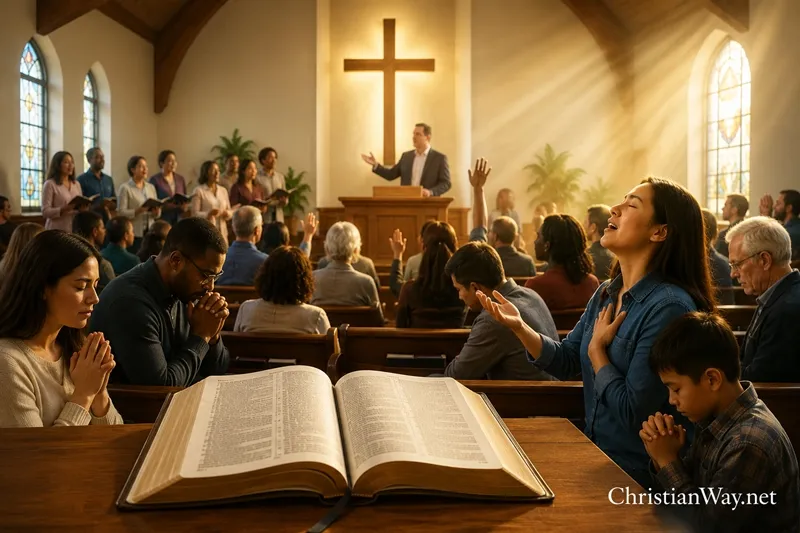
This does not mean that all Christian traditions teach exactly the same things. Serious differences remain concerning the authority of the Church, the sacraments, the Eucharist, salvation, ordained ministry, apostolic succession, devotion to Mary and the saints, and the relationship between Scripture and tradition. These disagreements should not be ignored or treated as unimportant. Truth matters because Christ matters.
Yet disagreement within the Christian family does not automatically mean that one group has ceased to be Christian. To understand why, we must look beyond modern labels and return to the heart of the Christian faith: the person of Jesus Christ, the Gospel of His saving work, and the confession of the Church through the centuries.
The Direct Answer: Protestants Belong to the Christian Tradition
A Protestant is generally understood as a Christian whose church emerged directly or indirectly from the Reformation movements of the sixteenth century. Protestant traditions include Lutherans, Reformed and Presbyterian Christians, Anglicans, Baptists, Methodists, Pentecostals, many evangelical churches, and numerous independent congregations.
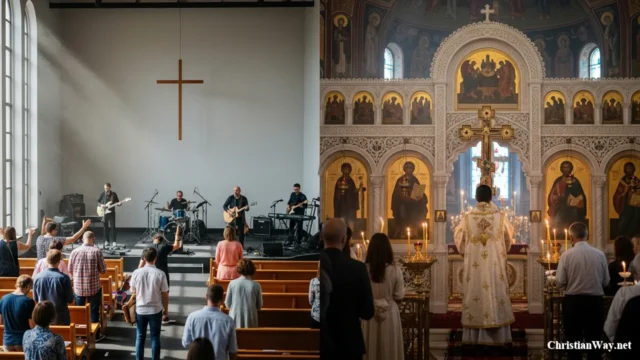
These communities differ greatly from one another. A Lutheran Divine Service may appear liturgical and sacramental, while a Baptist worship service may emphasize preaching and congregational singing. An Anglican parish may preserve ancient prayers and vestments, while a Pentecostal congregation may place greater emphasis on spontaneous prayer and the gifts of the Holy Spirit. There is no single Protestant institution that governs every Protestant believer.
Nevertheless, the great majority of historic Protestant churches stand within the broad stream of orthodox Christianity. They confess one God in three Persons: Father, Son, and Holy Spirit. They believe that Jesus Christ is truly divine and truly human. They proclaim that He died for our sins, rose bodily from the dead, ascended into heaven, and will come again. They teach that salvation is made possible by God’s grace and that human beings are called to repent, believe, receive baptism, and follow Christ.
The apostle Paul wrote:
“If thou shalt confess with thy mouth the Lord Jesus, and shalt believe in thine heart that God hath raised him from the dead, thou shalt be saved.”
— Romans 10:9
Historic Protestantism is centered upon this confession. Protestants do not merely admire Jesus as a moral teacher. They worship Him as Lord, Savior, Son of God, and Redeemer of the world.
For this reason, to say that Protestants are not Christians simply because they are not Catholic or Orthodox would use the word “Christian” too narrowly. Christianity is larger than any one modern denominational label, even though Christians continue to disagree about where the fullness of the Church is most faithfully preserved.
What Does the Word “Christian” Mean?
The New Testament tells us that “the disciples were called Christians first in Antioch” (Acts 11:26). The word was used for those who belonged to Christ, followed His teaching, and were identified with the community that proclaimed His death and resurrection.
A Christian, in the most basic and historic sense, is a person who confesses Jesus Christ as Lord and seeks to live as His disciple within the faith of the Church. This faith is not invented privately. It is rooted in the apostolic witness preserved in Scripture and proclaimed by the Christian community from generation to generation.
The central Christian confession includes several inseparable truths. God is the Creator of all things. Humanity has fallen into sin and cannot heal itself. The eternal Son of God became human in Jesus Christ. He lived without sin, announced the kingdom of God, died upon the cross, and rose from the grave. Through Him, forgiveness, reconciliation, and eternal life are offered to the world. The Holy Spirit draws people into communion with Christ and forms them into His Body, the Church. Christ will come again, the dead will be raised, and God will make all things new.
Historic Protestants affirm these truths. Most also accept the theological substance of the Apostles’ Creed and the Nicene Creed, even when those creeds are not recited regularly in public worship.
The Nicene Creed confesses Jesus Christ as:
“God from God, Light from Light, true God from true God, begotten, not made, of one Being with the Father.”
Lutherans, Anglicans, Methodists, Presbyterians, Reformed Christians, and many other Protestants confess this same Christ. Their understanding of the Church may differ from Catholic and Orthodox teaching, but the Lord whom they worship is not a different Jesus.
Christianity Is More Than a Denominational Name
A denominational label tells us something about a person’s theological and historical tradition, but it does not reveal the whole condition of that person’s soul.
Someone may call himself Catholic while rarely praying, rejecting the Gospel, and living with no desire for repentance. Another person may call herself Protestant while loving Christ deeply, studying Scripture, caring for the poor, forgiving enemies, and faithfully seeking God’s will. The label matters, but it is not a substitute for living faith.
At the same time, sincere faith does not make doctrine irrelevant. Christ calls us to love God not only with the heart but also with the mind. Christians should desire the truth, receive correction humbly, and seek the unity for which Jesus prayed.
The Lord said:
“That they all may be one; as thou, Father, art in me, and I in thee.”
— John 17:21
Our divisions should therefore grieve us. Yet grief over division should lead to prayer, repentance, honest dialogue, and charity—not to the careless declaration that millions of baptized believers who confess Christ are not Christians at all.
How Protestantism Began
Protestant Christianity emerged from a complex period of spiritual renewal, political conflict, theological controversy, and institutional crisis in Western Europe.
In 1517, the German monk and theologian Martin Luther publicly challenged certain practices associated with indulgences and called for theological reform. Luther did not initially set out to create a new religion. He believed that the Church needed to return more clearly to the Gospel of God’s grace.
The disputes soon widened. Questions arose concerning papal authority, the nature of justification, the number and meaning of the sacraments, the authority of Scripture, clerical discipline, and the structure of the Church. Luther’s conflict with ecclesiastical authorities eventually resulted in separation.
Other reform movements followed different paths. Huldrych Zwingli led reforms in Zürich. John Calvin became influential in Geneva and throughout the Reformed tradition. The English Reformation developed through a distinctive mixture of royal politics, Catholic continuity, Protestant theology, and liturgical renewal. Later movements, including the Baptists, Methodists, evangelicals, and Pentecostals, arose within or beyond these earlier Protestant traditions.
The history was not pure on any side. Political ambition, national rivalry, violence, fear, and pride became mixed with sincere theological conviction. Catholics persecuted Protestants in some places, and Protestants persecuted Catholics and other Protestants in others. Churches were damaged, communities were divided, and Christians sometimes treated one another in ways that contradicted the Gospel they claimed to defend.
When we remember the Reformation, we should neither romanticize it nor reduce it to a story of villains and heroes. It was a profound rupture within Western Christianity. Some reformers raised legitimate concerns about corruption and pastoral abuse. At the same time, the divisions that followed produced new wounds and further fragmentation.
Protestantism did not begin as a rejection of Jesus Christ. It began as a dispute among Christians about how the Church should understand and faithfully proclaim the Gospel.
What Protestants Share with Other Christians
The similarities between Protestants, Catholics, and Orthodox Christians are deeper than many ordinary believers realize. These shared convictions do not erase disagreement, but they give Christians a genuine foundation for recognizing one another as followers of Christ.
Faith in the Holy Trinity
Historic Protestants believe in one God who eternally exists as Father, Son, and Holy Spirit. They reject the idea that the Father, Son, and Spirit are merely three names or temporary appearances of one divine Person. They also reject the belief that there are three separate gods.
This Trinitarian faith was articulated through the early ecumenical councils, especially Nicaea in 325 and Constantinople in 381. Mainstream Protestant churches receive the doctrine established by these councils, even when they differ from Catholic and Orthodox Christians about the authority of later councils.
The Trinity is not an optional theological detail. It is central to Christian worship. Christians are baptized in the name of the Father, the Son, and the Holy Spirit, according to Christ’s command in Matthew 28:19. Protestant baptism is ordinarily administered with water and this Trinitarian formula.
Faith in Jesus Christ
Protestants confess that Jesus is the eternal Word made flesh. He is not merely a prophet, philosopher, or religious reformer. He is the Son of God who entered human history for our salvation.
The Gospel of John declares:
“And the Word was made flesh, and dwelt among us, and we beheld his glory.”
— John 1:14
Historic Protestant teaching affirms Christ’s virgin birth, sinless life, miracles, saving death, bodily resurrection, ascension, heavenly reign, and future return. This places Protestantism firmly within the central confession of Christianity.
The Cross and Resurrection
All major Christian traditions proclaim the cross and resurrection as the heart of salvation. Protestants frequently emphasize that Christ died in the place of sinners, bearing judgment and reconciling humanity to God. Catholic and Orthodox theology may express the mystery through additional images—sacrifice, victory, healing, participation, restoration, and liberation—but no historic Christian tradition can abandon the cross.
Paul writes:
“Christ died for our sins according to the scriptures; and that he was buried, and that he rose again the third day.”
— 1 Corinthians 15:3–4
This is the Gospel Protestants preach. Whatever theological disagreements surround the explanation of Christ’s saving work, the event being proclaimed is the same: Jesus Christ crucified and risen.
The Authority of Holy Scripture
Protestants are widely known for their strong devotion to the Bible. The Reformation principle of sola Scriptura teaches that Scripture is the supreme infallible authority for Christian faith and doctrine.
Catholics and Orthodox Christians do not accept sola Scriptura as Protestants ordinarily define it. They understand Scripture within the living apostolic tradition of the Church and give a more authoritative role to councils, bishops, liturgy, and historic tradition.
Even so, Catholics, Orthodox, and Protestants all receive the Bible as inspired by God. They read the same Gospels, proclaim the same Christ, pray the Psalms, and receive the apostolic writings. Differences concerning the Old Testament canon remain, but the common scriptural inheritance is immense.
The Bible is not a Protestant invention. Nor is it foreign to Catholic or Orthodox life. It belongs to the whole Church, and the Church is called to hear within it the voice of God.
Baptism and Christian Worship
Most Protestants baptize in the name of the Father, Son, and Holy Spirit. Lutherans, Anglicans, Presbyterians, Methodists, and many Reformed Christians baptize infants as well as adult converts. Baptists and many evangelical churches reserve baptism for those who personally profess faith.
Christians debate the meaning, timing, and effects of baptism. Yet Protestant baptism performed with water and the Trinitarian formula is generally regarded by Catholic Christianity as valid. It is not ordinarily repeated when a Protestant becomes Catholic, provided the original baptism was properly administered.
Protestants also gather on Sunday, the day of Christ’s resurrection, to pray, hear Scripture, sing praise, confess faith, receive teaching, and celebrate the Lord’s Supper. Their forms of worship vary widely, but worship remains directed toward the Triune God revealed in Jesus Christ.
Protestant Christianity Is Diverse
The word “Protestant” covers a very broad range of churches. It is therefore dangerous to speak as though all Protestants believe the same things.
Lutherans emphasize justification by grace through faith, the proclamation of the Gospel, baptismal grace, and the real presence of Christ in the Lord’s Supper. Reformed Christians stress the sovereignty of God, covenant theology, and the authority of Scripture. Anglicans often seek to hold together Scripture, ancient tradition, sacramental worship, and Reformation theology.
Baptists emphasize personal conversion, believer’s baptism, congregational life, and religious liberty. Methodists draw heavily from John Wesley’s teaching on grace, holiness, and sanctification. Pentecostals emphasize the work and gifts of the Holy Spirit, vibrant worship, prayer for healing, and the experience of spiritual renewal.
Some Protestant churches preserve bishops, liturgy, vestments, creeds, and weekly Eucharistic worship. Others are governed by elders or local congregations and practice a much simpler form of worship. Some speak of sacraments, while others prefer the word “ordinances.” Some baptize infants; others do not. Some believe salvation cannot be lost; others warn that believers may fall away. Some ordain women; others reserve ordained ministry for men.
Therefore, when someone asks, “What do Protestants believe?” the responsible answer must begin by asking which Protestant tradition is being discussed.
Diversity does not mean that Protestantism has no common identity. Most Protestants share a commitment to the authority of Scripture, the centrality of Christ, salvation by grace, the importance of personal faith, and the calling of every believer to live as a disciple. Yet their interpretations of these convictions may differ substantially.
Where Protestants Differ from Catholics and Orthodox Christians
Recognizing Protestants as Christians does not require pretending that all differences are minor. Some disagreements touch the deepest questions of ecclesiology, sacramental life, and authority.
Scripture and Sacred Tradition
Protestants generally teach that Scripture is the final authority by which every doctrine and tradition must be tested. They may value early creeds, councils, theologians, and historic practices, but they do not normally regard any post-biblical church institution as infallible.
Catholic teaching holds that Scripture and Sacred Tradition form one deposit of faith entrusted to the Church. The Magisterium—the teaching authority exercised by the pope and bishops in communion with him—serves the Word of God by authentically interpreting it.
Orthodox Christianity also rejects the idea that Scripture should be separated from Holy Tradition. Scripture is understood as the inspired heart of the Church’s living tradition, received through worship, councils, bishops, saints, and the continuing life of the Holy Spirit within the Church.
The disagreement is not simply about whether tradition is useful. Nearly every Protestant community has traditions, confessions, worship patterns, and inherited interpretations. The deeper question is whether the apostolic tradition is an authoritative living reality within the visible Church and, if so, how that authority is recognized.
The Nature of the Church
Many Protestants understand the universal Church primarily as the spiritual body of all true believers in Christ, known perfectly to God. Local congregations and denominations are visible expressions of this one spiritual Church.
Catholics and Orthodox Christians place stronger emphasis on the visible, sacramental, and apostolic continuity of the Church through ordained bishops. They believe the Church Christ founded is not merely an invisible fellowship but a historically continuous communion with a definite sacramental structure.
Catholicism teaches that the Church of Christ subsists in the Catholic Church, governed by the successor of Peter and the bishops in communion with him, while also acknowledging that genuine elements of sanctification and truth are present outside its visible boundaries.
Orthodox Christians generally identify the fullness of the Church with the Orthodox communion, though approaches toward Christians outside that communion may differ.
This disagreement has practical consequences. It shapes beliefs about ordination, apostolic succession, the Eucharist, church authority, and the restoration of Christian unity.
The Sacraments
Catholics and Orthodox Christians ordinarily recognize seven sacraments or holy mysteries: baptism, confirmation or chrismation, the Eucharist, reconciliation, anointing of the sick, marriage, and holy orders.
Most Protestants formally recognize two sacraments or ordinances instituted directly by Christ: baptism and the Lord’s Supper. Some Anglican traditions also speak of the other five rites as sacramental in a broader sense.
Even where Protestants retain two sacraments, they disagree about how those sacraments work. Lutherans speak strongly of God’s objective gift of grace in baptism and the Eucharist. Reformed Christians often emphasize the Holy Spirit’s action and the believer’s spiritual participation in Christ. Baptists commonly describe baptism and Communion primarily as acts of obedience, testimony, remembrance, and communal faith.
These differences are substantial, especially because the sacramental life is central to Catholic and Orthodox understandings of the Church.
The Eucharist
The Lord’s Supper is one of the most painful places of Christian division.
Catholic teaching holds that, through consecration, the bread and wine become the Body and Blood of Christ, while their outward appearances remain. The Mass makes sacramentally present the one sacrifice of Christ; it does not repeat Calvary but participates in its eternal saving reality.
Orthodox Christians likewise confess that the Eucharistic gifts truly become the Body and Blood of Christ, though they generally resist defining the mystery through one mandatory philosophical explanation.
Protestant views range widely. Lutherans confess the true presence of Christ’s Body and Blood in the sacrament. Reformed Christians often teach a real spiritual participation in Christ through the Holy Spirit. Many Baptists and evangelicals understand Communion primarily as a memorial commanded by Jesus, though still spiritually meaningful.
All gather in obedience to Christ’s words, “Do this in remembrance of me,” but they do not agree on what precisely occurs at the table or altar.
Salvation, Faith, and Works
One of the best-known Reformation principles is sola fide, justification by faith alone. Protestants teach that sinners are justified before God through faith in Christ, not because their works earn divine favor.
This principle is sometimes misunderstood as meaning that good works do not matter. Historic Protestant theology does not teach that Christians are free to live without obedience, love, or holiness. Rather, it teaches that good works are the fruit of salvation, not the price paid to obtain it.
Paul says:
“For by grace are ye saved through faith; and that not of yourselves: it is the gift of God: not of works, lest any man should boast.”
— Ephesians 2:8–9
Yet the next verse continues:
“For we are his workmanship, created in Christ Jesus unto good works.”
— Ephesians 2:10
Catholics also teach that salvation begins entirely with God’s grace and cannot be earned by unaided human effort. They emphasize that the grace received in faith transforms the believer, enabling a life of love and obedience. Orthodox Christianity often describes salvation as healing, participation in divine life, and theosis—being united to God by grace.
Real theological differences remain, especially concerning justification, sanctification, merit, assurance, and cooperation with grace. Nevertheless, careless slogans often exaggerate the disagreement. No historic Christian tradition teaches that human beings save themselves without grace, and no responsible Protestant tradition teaches that a barren faith without love represents mature Christian discipleship.
James warns:
“Faith, if it hath not works, is dead, being alone.”
— James 2:17
The living faith that receives Christ will gradually bear the fruit of Christ.
Mary and the Saints
Protestants honor Mary as the mother of Jesus and often call her blessed, following Luke 1:48. Historic Protestant reformers themselves spoke respectfully of her faith and unique role in the story of salvation.
However, most Protestants do not ask Mary or the saints to intercede for them. They fear that such practices may obscure the unique mediation of Christ or lack sufficient biblical foundation. They ordinarily direct prayer to God alone through Jesus Christ.
Catholic and Orthodox Christians distinguish between worship, which belongs to God alone, and the honor given to the saints. They believe that Christians in heaven remain alive in Christ and may pray for believers on earth, just as Christians pray for one another within this life.
The disagreement is not about whether Jesus is the Savior. Catholics, Orthodox Christians, and Protestants all confess that salvation comes through Christ. The disagreement concerns the communion of saints and whether requesting their heavenly intercession belongs to faithful Christian practice.
How the Catholic Church Regards Protestants
The Catholic Church does not teach that all Protestants are non-Christians. It recognizes baptized Protestants who believe in Christ as brothers and sisters in the Lord, though they are not in full communion with the Catholic Church.
Catholic teaching acknowledges that many elements of Christian life exist within Protestant communities: Holy Scripture, faith in the Trinity, baptism, prayer, grace, spiritual gifts, and genuine discipleship. The Catholic Church also teaches that the Holy Spirit can use these communities as means through which people are drawn toward salvation.
At the same time, Catholicism maintains that Protestant communities lack certain elements belonging to the fullness of Catholic ecclesial life, especially full communion with the successor of Peter and, in many cases, valid apostolic ministry and Eucharistic succession.
Thus Catholic teaching seeks to hold together two convictions: Protestants truly belong to Christ through faith and baptism, and the divisions within Christianity remain wounds that should not be accepted as permanent or harmless.
This is a more careful position than either extreme. It neither says, “All differences are meaningless,” nor declares, “No Protestant can be a Christian.”
How Orthodox Christians Regard Protestants
Orthodox Christianity does not have one centralized authority that always expresses its relationship to every Protestant group in identical language. Orthodox jurisdictions may differ in pastoral practice, especially regarding how converts are received.
Nevertheless, Orthodox Christians generally recognize that Protestants confess Christ, read the Scriptures, and may possess sincere faith. At the same time, Orthodoxy teaches that the fullness of apostolic faith and sacramental life is preserved within the Orthodox Church.
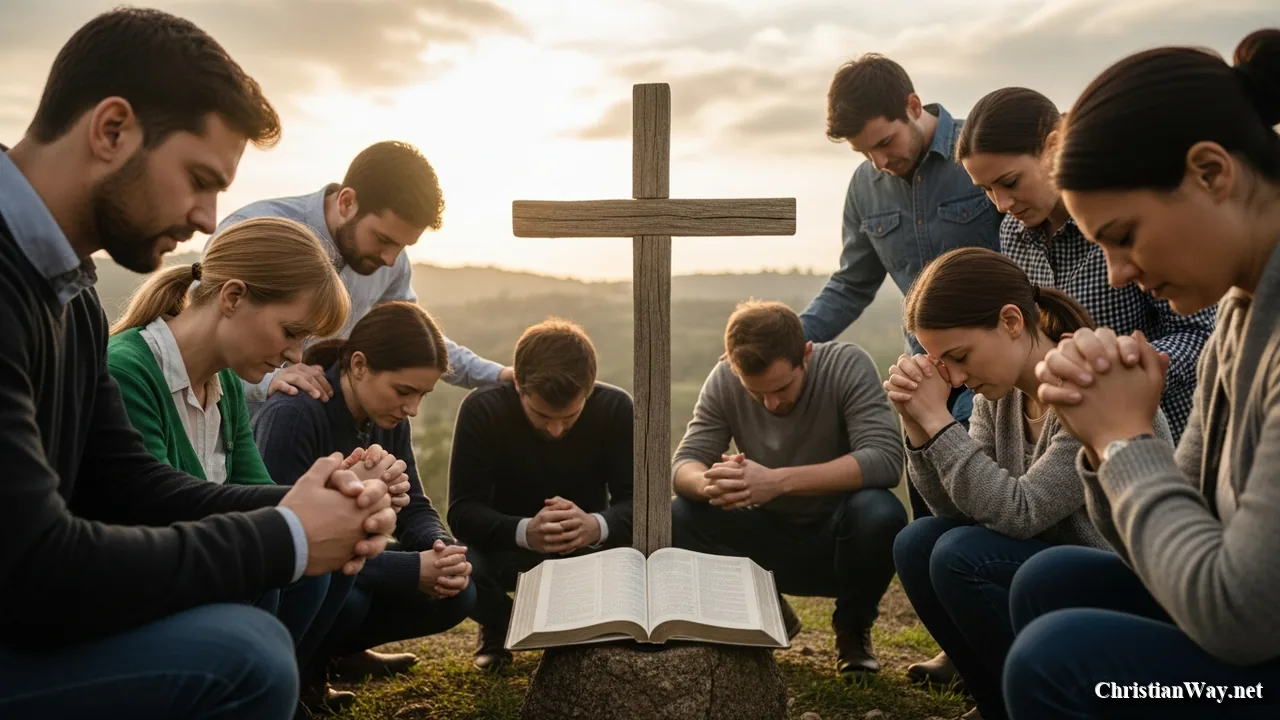
From an Orthodox perspective, Protestantism often appears fragmented and separated from the continuity of Holy Tradition, the episcopate, the sacraments, and the liturgical life of the ancient Church. Yet this theological judgment should not become a judgment upon the hidden state of every Protestant soul.
God alone sees the heart perfectly. Orthodox Christians, like all Christians, are called to speak truthfully without pride and to entrust every person to the mercy and justice of Christ.
Are All Groups That Call Themselves Protestant Christian?
Not every community historically associated with Protestant culture necessarily holds the essential beliefs of Christianity.
Some groups deny the Trinity, reject the full divinity of Christ, or teach that Jesus is a created being rather than the eternal Son of God. Such teachings fall outside the boundaries of historic Nicene Christianity, even when the groups use Christian vocabulary or emerged in a predominantly Protestant environment.
The name “Protestant” by itself is therefore not enough to establish Christian orthodoxy. The decisive questions concern what a community teaches about God, Jesus Christ, the Holy Spirit, salvation, Scripture, and the resurrection.
This distinction should be made carefully. It is possible to recognize mainstream Protestants as Christians while also acknowledging that certain movements have departed from the historic Christian confession.
The goal is not to insult people. It is to use words truthfully. Christian faith has content. The Church did not confess the Trinity and the divinity of Christ because it enjoyed drawing boundaries, but because it believed that the identity of Jesus is inseparable from the Gospel itself.
Why Some Christians Say Protestants Are Not Christians
When Catholics or Orthodox Christians claim that Protestants are not Christians, they may be using the word “Christian” to mean “a member of the one true visible Church in its fullness.” From that perspective, separation from the historic apostolic communion may seem equivalent to separation from Christianity itself.
Others repeat the claim because they have encountered distorted Protestant teachings, aggressive anti-Catholic preaching, shallow worship, or churches that appear disconnected from Christian history. Painful experiences can harden perceptions.
Likewise, some Protestants claim that Catholics or Orthodox Christians are not Christians because they misunderstand Catholic and Orthodox teaching. They may believe Catholics worship Mary, earn salvation by works, or replace the Bible with human traditions. Catholics and Orthodox believers may feel deeply wounded by these accusations.
Such language rarely heals. It often reduces a complex tradition to its worst examples and judges millions of people by caricature.
Christ warned:
“Judge not according to the appearance, but judge righteous judgment.”
— John 7:24
Righteous judgment requires truth, patience, and humility. We should examine actual teachings rather than rumors. We should listen before accusing. We should distinguish official doctrine from popular misunderstanding, and institutional claims from the personal faith of individual believers.
Most importantly, we should remember that doctrinal correctness is not a reason for spiritual pride. Truth is a gift to be received with gratitude, not a weapon with which to humiliate others.
Can Protestants Be Saved?
Christians should speak carefully about the eternal destiny of particular people. Salvation belongs to God, who alone knows every heart, every circumstance, every hidden wound, and every response to grace.
The New Testament teaches that salvation is found in Jesus Christ:
“Neither is there salvation in any other: for there is none other name under heaven given among men, whereby we must be saved.”
— Acts 4:12
Protestants place their hope precisely in this Jesus. They confess His name, receive baptism, hear His Word, seek forgiveness, and trust in His death and resurrection.
Therefore, Christians should not say that a person cannot be saved merely because that person is Protestant. Such a judgment would go beyond what we are permitted to know.
This does not make church membership or doctrine unimportant. God calls every believer to seek truth, obey conscience, receive grace faithfully, and pursue unity. A person should not knowingly reject truth simply because denominational identity feels familiar or comfortable.
Yet salvation is not achieved by possessing the perfect denominational label. We are saved by the mercy of God revealed in Christ. The Church, the sacraments, Scripture, faith, obedience, and love all belong within God’s saving purpose, but none gives us permission to boast.
At the final judgment, no one will stand before Christ and say, “My religious label made me righteous.” Every saved person will owe everything to grace.
What Makes a Person a Faithful Christian?
The question “Are Protestants Christians?” should eventually lead to a more personal question: “Am I truly following Christ?”
It is possible to defend the correct tradition while neglecting prayer. It is possible to know theological terminology while refusing forgiveness. It is possible to receive the sacraments outwardly while resisting conversion inwardly. It is possible to memorize Scripture while ignoring the poor, the lonely, and the wounded.
Jesus said:
“If ye love me, keep my commandments.”
— John 14:15
A faithful Christian confesses the truth about Christ, but also abides in Him. Faith becomes visible through repentance, humility, mercy, chastity, courage, generosity, worship, and love. The Christian life is not sinless perfection achieved by human effort. It is a life continually surrendered to grace.
The fruit of the Spirit remains the mark of Christ’s transforming presence:
“Love, joy, peace, longsuffering, gentleness, goodness, faith, meekness, temperance.”
— Galatians 5:22–23
Where these fruits are growing, we should give thanks. Where pride, hatred, dishonesty, cruelty, and contempt dominate, we should examine ourselves—even when our doctrine is formally correct.
How Christians Should Speak Across Denominational Divides
Christian unity does not require pretending that contradictions are compatible. Catholics, Orthodox Christians, and Protestants cannot all be correct in every disputed claim. Honest dialogue must allow each tradition to explain what it truly teaches and why.
Yet truth should be spoken in love.
A Protestant should not tell a Catholic, “You worship Mary,” without listening to the Catholic distinction between worship and veneration. A Catholic should not tell a Protestant, “You reject all tradition,” when many Protestant communities value creeds, early Christian writers, and historic worship. An Orthodox Christian should not dismiss every Protestant church as spiritually empty, and a Protestant should not treat Orthodox liturgy as meaningless ritual.
The apostle Peter instructs believers to give an answer for their hope “with meekness and fear” (1 Peter 3:15). Christian apologetics without gentleness easily becomes self-glorification.
We can begin with what is shared: the love of Christ, the Holy Scriptures, baptism, prayer, the call to holiness, the dignity of human life, and the hope of resurrection. From that foundation, differences can be discussed more honestly.
True ecumenism is not the weakening of truth. It is the pursuit of truth without hatred. It recognizes that unity is not created by ignoring doctrine but by being drawn more deeply into Christ.
The Scandal and Sorrow of Christian Division
The existence of thousands of separate Christian bodies should not be treated as a triumph. It is a sign that human sin, cultural conflict, political ambition, theological confusion, and spiritual pride have wounded the visible unity of Christ’s followers.
Some divisions arose because conscience required resistance to serious error or corruption. Others arose from disagreements that might have been healed through patience. Still others grew from ethnicity, nationalism, personality conflicts, or the desire for independence.
Whatever their origin, divisions weaken Christian witness. A world searching for hope sees Christians proclaiming one Lord while often refusing communion with one another. This contradiction should move us to repentance.
Unity cannot be achieved through sentimentality. Nor can it be produced by pretending that the Eucharist, ministry, authority, and doctrine do not matter. Christian unity must be unity in truth, holiness, sacramental life, and love.
Only the Holy Spirit can heal wounds this deep. Yet each believer can participate in that healing by refusing slander, learning accurately about other traditions, praying for fellow Christians, repenting of inherited hostility, and seeking Christ above tribal pride.
A Clear and Balanced Conclusion
Are Protestants Christians? Yes. Historic Protestants are Christians because they confess the Triune God, believe in Jesus Christ as Lord and Savior, receive the Holy Scriptures, proclaim the cross and resurrection, practice baptism, gather for Christian worship, and seek to live by the Gospel.
They are not Catholics, and they are not Orthodox Christians. The differences are real, sometimes profound, and should be examined honestly. Protestant teachings concerning Scripture, tradition, the Church, ministry, the Eucharist, justification, Mary, and the saints often differ significantly from Catholic and Orthodox doctrine.
Yet these disagreements do not erase the Christian identity of mainstream Protestant believers.
Christians should resist two temptations. The first is relativism, which says doctrine does not matter. The second is sectarian pride, which assumes that anyone outside one’s own communion must have no genuine relationship with Christ.
The faithful path is narrower and more demanding. It confesses truth without cruelty. It recognizes grace without denying error. It seeks unity without sacrificing conviction. Above all, it keeps Jesus Christ at the center.
Reflect and Pray
Perhaps this question has been personal for you. Perhaps someone you love belongs to another Christian tradition. Perhaps you have heard harsh words spoken from pulpits, in families, or across the internet. Perhaps you have wondered whether you must choose between conviction and charity.
Christ never asks us to choose between truth and love, because in Him they are perfectly united. He is the Truth who washes the feet of His disciples. He is the Lord who corrects error while receiving sinners. He is the Shepherd who gathers the scattered sheep and gives His life for the flock.
Let us therefore pray for the whole Christian family. Let us ask forgiveness for the contempt we have shown, the caricatures we have repeated, and the pride with which we have defended our own communities. Let us seek a deeper knowledge of Scripture, a more faithful life of prayer, and a more humble obedience to Christ.
Most of all, let us remember that our hope is not finally in the word Catholic, Orthodox, Anglican, Lutheran, Baptist, Methodist, Reformed, evangelical, or Pentecostal. These names carry histories, convictions, gifts, and wounds. But the name above every name is Jesus.
Lord Jesus Christ, Son of the living God, have mercy upon Your divided people. Preserve us from falsehood, pride, and bitterness. Lead us into all truth by Your Holy Spirit. Deepen our faith, purify our worship, and teach us to recognize Your grace wherever it bears holy fruit. Heal the wounds of Your Church, draw all Christians closer to Your heart, and make us one according to Your will, so that the world may believe. Amen.
May the peace of Christ dwell richly in your heart, and may His truth teach you to love without compromise and to speak without fear.
— Fr. John Matthew