Grace and peace be with you, beloved reader, as we turn our gaze toward one of the most consequential figures to ever sit upon the Chair of Saint Peter: Saint Pius V. In the annals of the Church, few pontiffs embody the necessary rigor, the profound personal holiness, and the sheer apostolic zeal required to navigate an existential crisis quite like this Dominican friar, born Antonio Ghislieri. His six-year pontificate (1566–1572) was not a period of quiet administration, but a spiritual and temporal battle for the soul of the Church and the survival of Christian Europe.
He inherited a Church wounded by scandal, challenged by the rising tide of Protestantism, and threatened by the advance of the Ottoman Empire. St. Pius V faced these giants with the simple, unwavering resolve of a man whose heart was entirely surrendered to Christ. He was the great executor of the decrees of the Council of Trent, transforming doctrinal clarity into pastoral reality. When the world demanded a politician, God provided a saint; when the Church needed reform, He raised up a relentless purist. For this, we honor him on his feast day, April 30th, remembering the Pope who, through prayer, austerity, and an unshakeable faith in the intercession of the Blessed Virgin, saved Western Civilization at the Battle of Lepanto and fixed the ancient Roman Rite for centuries to come. His life proves that true reform begins not with policy, but with profound personal holiness, reminding us of the Lord’s promise: “The gates of hell shall not prevail” (Matthew 16:18).
Profile of Holiness (The Table)
| Attribute | Detail |
|---|---|
| Birth Name | Antonio Ghislieri |
| Lifespan | January 17, 1504 – May 1, 1572 |
| Birthplace | Bosco Marengo, Duchy of Milan (Italy) |
| Service Period | Papacy: January 8, 1566 – May 1, 1572 |
| Feast Day | April 30 |
| Patronage | Valletta (Malta), Bosco Marengo, Diocese of Alessandria, The Rosary, Other popes named Pius |
| Key Virtue | Unflinching Zeal and Apostolic Austerity |
The Cradle of Grace: Historical Context & Early Life
Antonio Ghislieri was born into a world consumed by tectonic shifts, a spiritual landscape profoundly different from the settled Catholic Christendom of previous centuries. The year of his birth, 1504, placed him directly in the crucible of the Renaissance Papacy—a period of both high artistic flowering and deep moral corruption within the Church hierarchy. Just thirteen years after his birth, Martin Luther would nail his 95 Theses to the door of the Wittenberg church, effectively rupturing the religious unity of Europe. Ghislieri’s entire life was lived under the shadow of the Protestant Reformation, a movement that gained traction largely because of the very moral laxity and theological uncertainty that he would spend his pontificate eradicating.
He hailed from the humble northern Italian town of Bosco Marengo, then part of the Duchy of Milan. His family was impoverished but noble, having fallen on hard times. This background of poverty instilled in the young Antonio a lifelong commitment to austerity and a keen understanding of material need, virtues that would stand in stark contrast to the opulence of the Roman Curia he would later govern. We are reminded of the words of Christ: “It is easier for a camel to go through the eye of a needle than for a rich person to enter the kingdom of God” (Matthew 19:24). St. Pius V, by keeping his heart poor, was perfectly positioned to lead the Church.
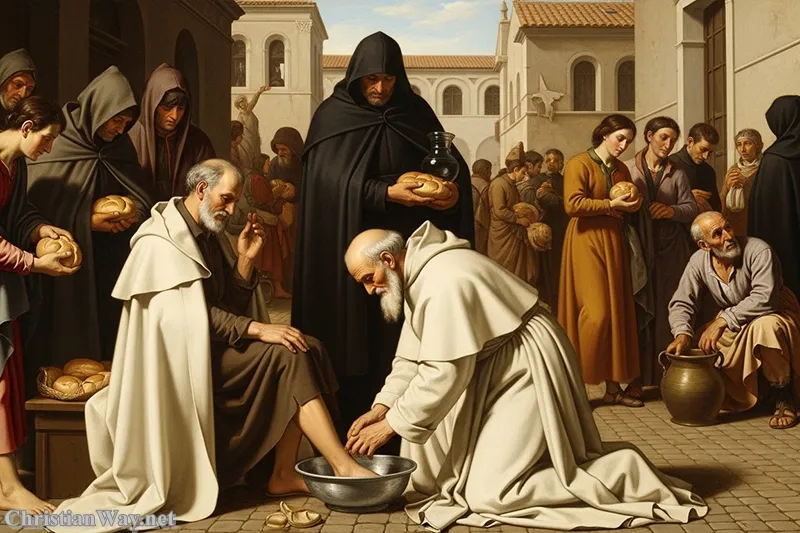
At the tender age of fourteen, in 1518, Antonio sought refuge and learning within the Order of Preachers (the Dominicans), taking the religious name Michele. This decision was the single most formative step of his life. The Dominican charism of study, preaching, and defense of the Faith against heresy was perfectly suited to his serious, intellectually rigorous nature. He was ordained a priest in 1528 in Genoa and spent sixteen years lecturing on philosophy and theology at the university in Pavia, becoming known not only for his profound knowledge of St. Thomas Aquinas (whom he would later declare a Doctor of the Church) but also for his staunch defense of papal authority against the rising tide of heterodox ideas. His commitment to discipline was absolute; even as a friar, he insisted on the strictest observance of the monastic rule, traveling silently and barefoot, a living example of the reform he preached. This Dominican rigor defined the Pope he would become, an unyielding pillar of traditional piety against the chaos of his era.
The Turning Point: Vocation and Conversion
St. Pius V’s vocation was not marked by a single, dramatic moment of conversion, but rather by a slow, unyielding ascent toward perfection, fueled by an extraordinary zeal for the purity of the Church. His “turning point” was less a pivot away from sin and more an embrace of a higher, more demanding mission that pushed him reluctantly out of the cloister and into the contentious arena of public life. His internal struggle was one of preferring the quiet contemplation of the monastic cell over the brutal political reality of the Roman Curia.
The call came through service. His reputation for learning and unassailable integrity brought him to the attention of the Roman authorities. In the 1540s, he was sent on critical missions to combat heresy in various regions of Italy, culminating in his appointment as Commissary General of the Holy Office (the Inquisition) in Rome around 1550. This role, often misunderstood and maligned by modern revisionism, was, in Pius V’s hands, fundamentally about the defense of the depositum fidei—the deposit of faith. He saw heresy not merely as a theological error, but as a spiritual plague capable of destroying souls.
The external obstacles he faced were immense, chief among them the widespread moral laxity and political corruption that permeated the highest levels of the Church. He clashed repeatedly with powerful figures, even Popes. Under Pope Paul IV (who recognized his virtue and appointed him Bishop of Sutri and Nepi, then Cardinal Inquisitor General in 1557), he was once publicly insulted and threatened for defending the Archbishop of Toledo, Bartolomé Carranza, who was under suspicion of heresy. Yet, Ghislieri’s boldness in the face of papal anger only underscored his commitment to justice over political expediency.
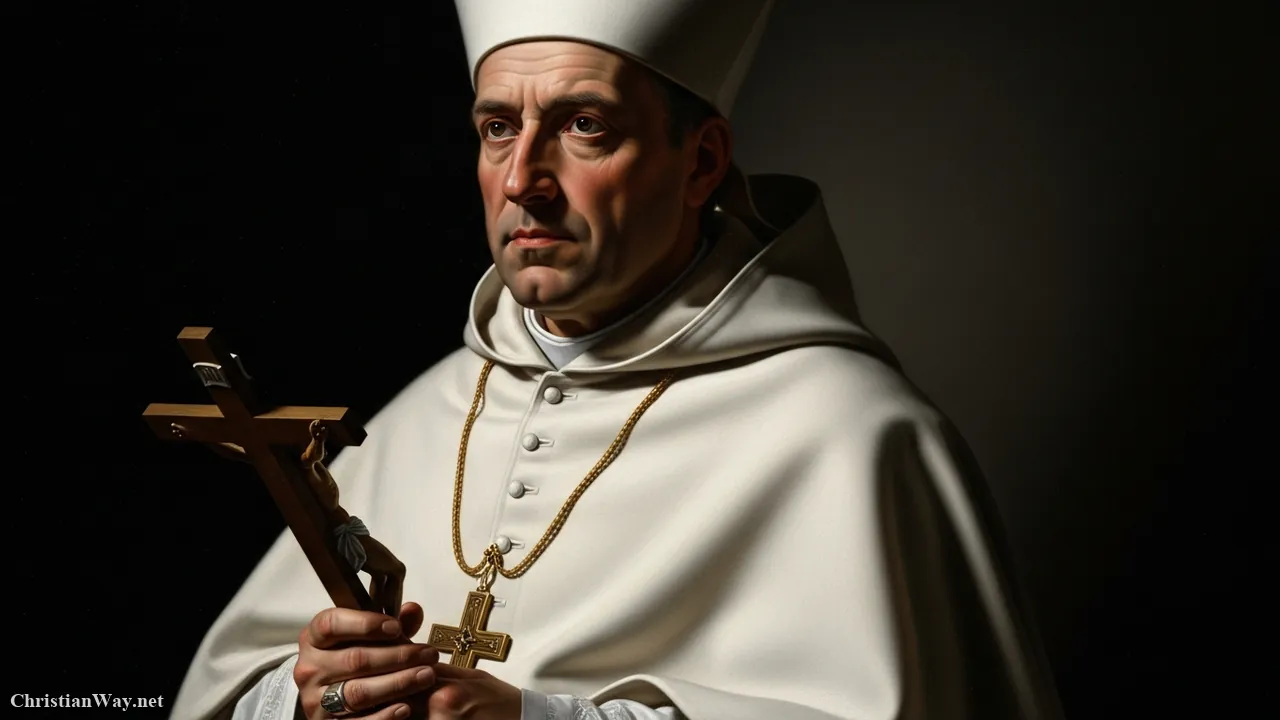
The ultimate turning point came with his election to the Papacy on January 7, 1566. The conclave, driven largely by the influence of Saint Charles Borromeo, sought a man who would finally, truly implement the reforms of Trent. Michele Ghislieri was the antithesis of the Renaissance princes who preceded him. When elected, he refused to abandon his simple white Dominican habit, a custom that has, by God’s providence, become the attire of the Roman Pontiff to this day. More powerfully, he shocked the Curia by refusing to enrich his own family through nepotism, a practice that had devastated the Church’s finances and reputation for decades. He sent away his impoverished relatives, stating firmly that the Church’s treasure was for the poor, not for his kin. This single act of renunciation was a prophetic sign to the whole world that the post-Tridentine era of austere, Christ-centered leadership had begun. He embodied the Psalm: “The Lord is my light and my salvation; whom shall I fear?” (Psalm 27:1).
The Great Labor: Ministry and Mission
As Pope, St. Pius V immediately set about the monumental task of spiritual housecleaning. His ministry was a relentless, top-down implementation of the Council of Trent’s mandates. His first priority was the Roman Curia itself. He purged the Curia of officials known for corruption or simony, appointed cardinals and bishops solely based on merit and piety, and, crucially, enforced the residency requirement: bishops were compelled to live in their dioceses and shepherd their flocks, ending the scandal of absentee prelates who collected revenues while ignoring the spiritual needs of the people. This focus on clerical discipline was the bedrock of the entire Catholic Reformation.
Within the city of Rome, he enforced strict moral laws. He sought to transform the Eternal City from a hotbed of vice and worldly excess into a model Christian metropolis. Famously, he issued decrees against gamblers and, most controversially, attempted to expel prostitutes from Rome. The backlash from secular authorities and even the city’s economy was so severe that some measures had to be mitigated, yet his unwavering moral stance signaled a profound change in papal priorities: the salvation of souls now superseded political and financial considerations. He embraced the work of saints like St. Philip Neri, whose simple piety helped revitalize the faith of Rome’s populace from the ground up.
His major achievement, however, was political and military: the defense of Christian Europe against the encroaching Ottoman Empire. By 1570, the Turks had seized Cyprus, threatening to overrun the entire Mediterranean. While secular European powers were paralyzed by internal rivalries and skepticism, Pius V—the former inquisitor, now the “Warrior-Pope”—tirelessly negotiated the formation of the Holy League in 1571, an alliance between the Papal States, Spain, Venice, Genoa, and other smaller Catholic powers. He did more than organize fleets; he mobilized the spiritual strength of the Church, calling on all the faithful to pray the Rosary for victory.
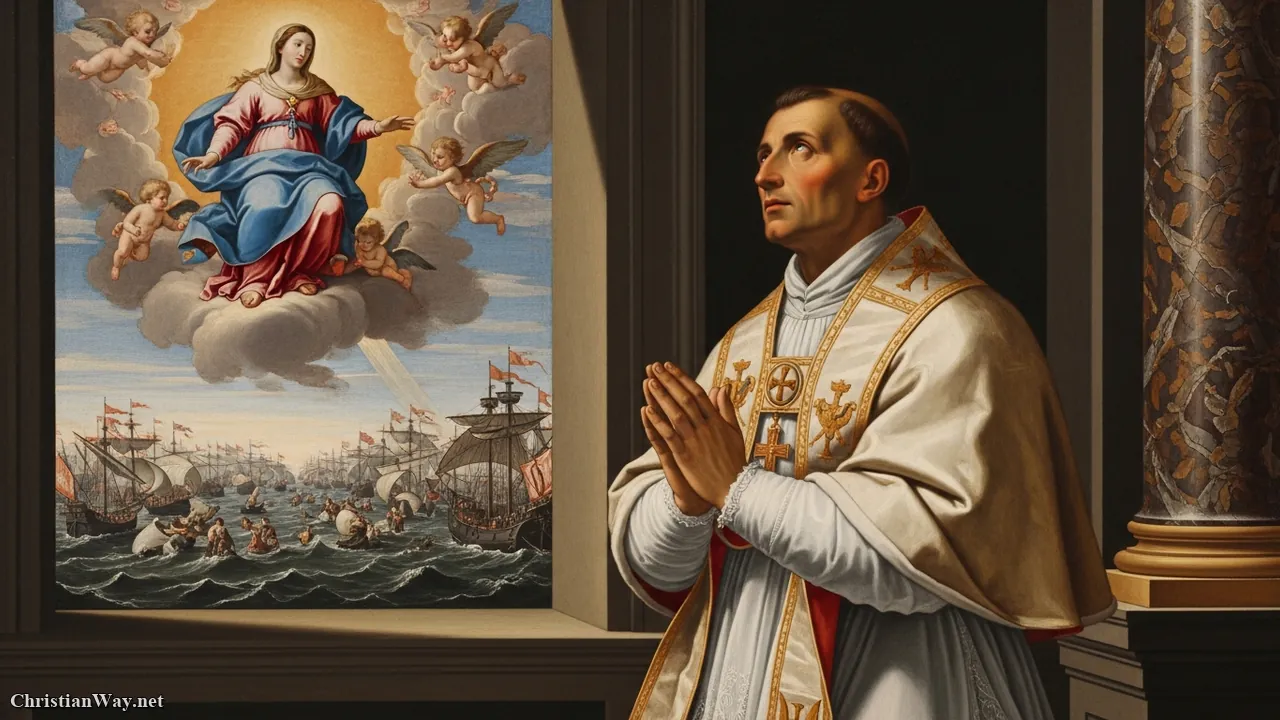
The decisive confrontation occurred on October 7, 1571, at the Battle of Lepanto. The vastly outnumbered Christian fleet, commanded by Don John of Austria, faced the main Ottoman navy. On that very afternoon, as the battle raged far across the sea, Pope Pius V was meeting with his cardinals in Rome. According to tradition, the Pope suddenly broke off the meeting, walked to a window, and entered a state of ecstasy. Upon returning, he declared, tears streaming down his face: “The Christian fleet is victorious!” News confirming the stunning, miraculous victory arrived two weeks later. The Ottoman naval power was broken, and Europe was saved. Pius V immediately consecrated October 7th as the feast of Our Lady of Victory, later changed to Our Lady of the Rosary, forever linking his papacy and the safety of the West to the power of Marian devotion. The victory was a powerful demonstration of the truth of “Some trust in chariots and some in horses, but we trust in the name of the Lord our God” (Psalm 20:7).
The Teacher of Souls: Theological & Spiritual Legacy
While his temporal defense of the West was vital, St. Pius V’s most enduring and spiritually significant labor lay in his codification of the Church’s liturgical and doctrinal treasures. Having spent years as a master theologian and lecturer, he understood that the Protestant challenge was fundamentally a crisis of authority, doctrine, and worship. His primary goal was to make the fruits of the Council of Trent accessible, systematic, and uniformly practiced.
First, in 1566, he oversaw the publication of the Roman Catechism (also known as the Catechism of the Council of Trent). This was not aimed at children, but at parish priests, providing them with a clear, authoritative, and structured presentation of Catholic doctrine derived directly from Scripture, the Fathers, and the conciliar decrees. It served as the standard reference for catechesis for over four centuries, ensuring doctrinal fidelity across the globe.
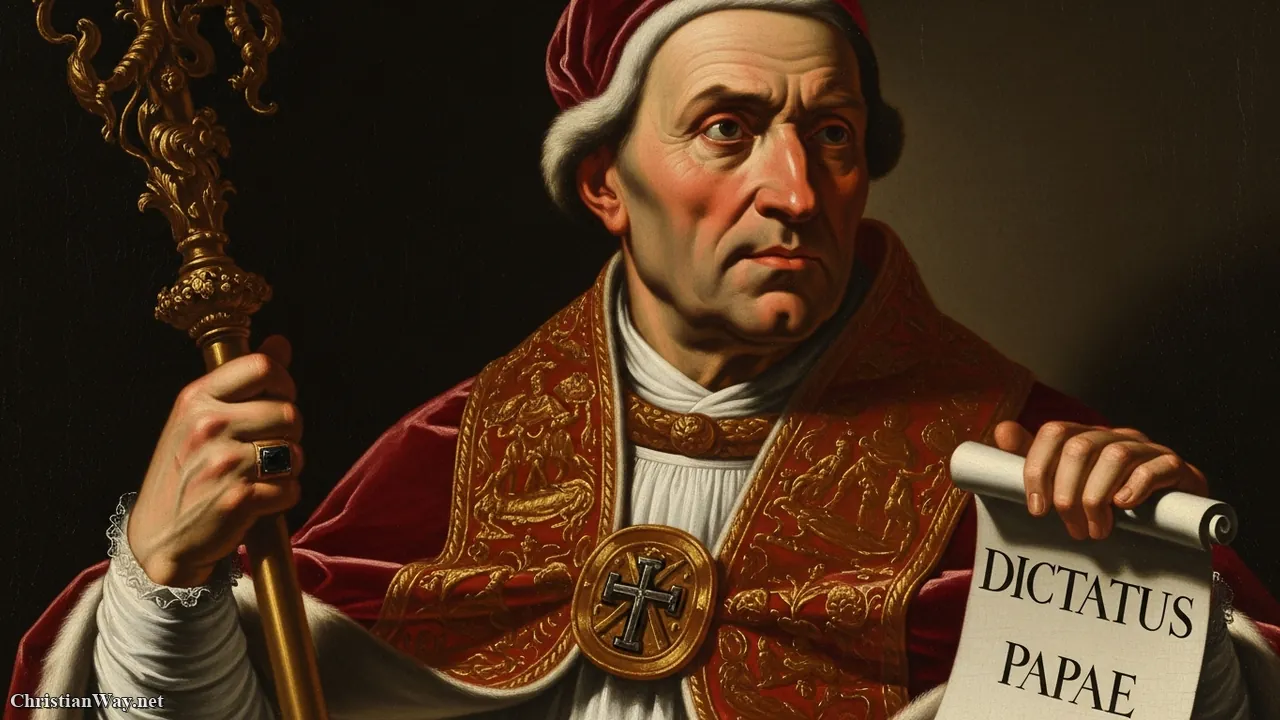
Second, and perhaps his most famous legacy, was the standardization of the Roman Rite through the promulgation of the Roman Missal in 1570 by the Apostolic Constitution Quo Primum. The Council of Trent had decreed that the liturgy must be purified of superfluous medieval accretions and unified throughout the Latin Church. Pius V took the ancient Roman Curial Rite—which, as liturgical scholars confirm, stretched back essentially unchanged to the time of St. Gregory the Great—and codified it. This was not an act of invention, but of preservation, designed to combat the Protestant belief that the Mass was merely a meal rather than a true propitiatory sacrifice. The goal was uniformity, dignity, and theological clarity.
In Quo Primum, the Pope declared his intention was to ensure that the “Holy Church of God may sing to God with one voice” and asserted that this Missal was to be used “for all time to come.” By mandating its use universally, while graciously exempting rites of proven antiquity (like the Ambrosian or Mozarabic), he forged a profound liturgical unity across the Catholic world. This Missal, which became known later as the Tridentine Mass, fostered an untold number of saints and solidified the principle of lex orandi, lex credendi (the law of prayer is the law of belief). By fixing the Mass, St. Pius V ensured that the faith passed down from the Apostles would continue to be expressed faithfully at the altar.
He summarized his entire theological approach in his own words:
“We have judged that it be our duty to entrust this work to learned men… so that the Holy Church of God may sing to God with one voice.”
His key teaching, therefore, was fidelity to Tradition—not as a nostalgic attachment to the past, but as the living source of grace and the necessary bulwark against error. He understood that without liturgical and doctrinal anchor points, the Christian soul is left adrift in the winds of novelty and doubt.
The Via Dolorosa: Suffering, Death, and Sainthood
The life of a reformer is rarely easy, and St. Pius V bore his cross with courage and deep spiritual fortitude. His austerity and unrelenting schedule took a severe toll on his health. Throughout his pontificate, he suffered intensely from painful gall and bladder stones, a condition which he refused to have surgically treated, offering the physical pain up to God as a penance for the sins of the Church. His life was a continuous act of self-denial, marked by severe fasting and long hours spent kneeling in prayer—often late into the night—while his flock was threatened both by internal decay and external enemies.
Beyond physical pain, he endured the deep spiritual suffering of his militant role. The political consequences of enforcing Tridentine discipline were immense. Perhaps the most drastic and regrettable political act of his papacy was the issuance of the Papal Bull Regnans in Excelsis in 1570, which declared England’s Queen Elizabeth I a heretic, excommunicated her, and purported to release her Catholic subjects from allegiance. While Pius V’s intention was to safeguard the faith of English Catholics, the practical effect was to make their position untenable, leading to increased persecution and the painful martyrdom of many holy priests and laypeople. He carried the heavy burden of command in a time when the spiritual authority of the Papacy was increasingly challenged by the temporal power of secular monarchs. This was his Via Dolorosa—the agonizing realization that defense of the faith often demands sacrifice and the acceptance of terrible political risk.
The end of his earthly pilgrimage came seven months after the triumph of Lepanto. On May 1, 1572, Pope St. Pius V died in Rome at the age of 68. His final days were marked by great weakness, yet perfect peace. As his life ebbed away, he was heard to offer his last, beautiful words:
“O Lord, increase my sufferings and my patience!”
He sought not comfort, but grace to endure, perfectly modeling the words of St. Paul: “I rejoice in my sufferings for your sake, and in my flesh I complete what is lacking in Christ’s afflictions for the sake of his body, that is, the church” (Colossians 1:24).
The road to official sainthood was swift, considering the times. He was beatified by Pope Clement X on May 1, 1672—exactly 100 years after his death. He was finally canonized as a Saint by Pope Clement XI on May 22, 1712. His body is entombed in a magnificent monument in the Sistine Chapel of the Basilica di Santa Maria Maggiore in Rome, where he remains venerated as a spiritual giant whose zeal defined an entire epoch of Catholic history.
Spiritual Highlights: Lessons for the Modern Christian
The life of St. Pius V, the austere Friar-Pope, offers profoundly relevant lessons for navigating our own turbulent 21st century. His example calls us to a radical commitment to Christ that transcends political fashion and worldly comfort.
- Embrace Austerity and Discipline: Pius V demonstrates that true reform starts in the mirror. By rejecting opulence and continuing to wear his simple habit, he teaches us that personal spiritual discipline and simplicity are prerequisites for effective ministry and leadership.
- The Rosary as a Weapon: The victory at Lepanto was directly attributed to the collective prayer of the Rosary. For the modern Christian facing cultural, social, or personal battles, St. Pius V insists that our most powerful tool is this simple, Marian prayer. Pray the Rosary daily for peace in your life and in the world.
- Fidelity to the Deposit of Faith: He dedicated his life to preserving and clarifying Catholic doctrine and liturgy. We are called to be students of the Faith, grounding ourselves in the Roman Catechism (or its modern successor) and honoring the venerable tradition of the Church’s worship, recognizing that authentic faith requires intellectual commitment.
- Duty over Comfort: He repeatedly accepted higher offices—bishop, cardinal, and Pope—even though he preferred the cloister. He teaches us that when God calls us to a greater, more difficult duty, we must surrender our personal preferences for the sake of the Lord’s will and the good of the Church.
A Prayer for Intercession
O God, who didst choose the blessed Pius, Thy servant and our Holy Father, to strengthen Thy Church in the face of spiritual rebellion and temporal threat; grant, we beseech Thee, by his merits and intercession, that we may so defend the purity of the Catholic Faith with unyielding zeal and practice the Christian life with such unwavering holiness, that we may merit to be victors over all spiritual enemies. Through Christ our Lord. Amen.
— Fr. John Matthew, for Christian Way