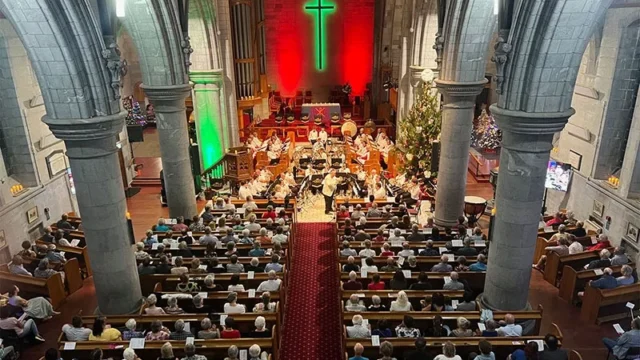
A pastoral reflection on shared faith, enduring differences, and the hope for deeper unity between Anglicans and Catholics.
Dear friends in Christ,
When Christians speak about Anglicanism and Catholicism, the conversation can easily become a catalogue of disagreements. Questions quickly arise about the pope, the Eucharist, the Virgin Mary, the authority of Scripture, the ordination of women, the marriage of priests, and the meaning of apostolic succession. These questions matter, and they deserve truthful answers. Yet if we begin only with what separates Anglicans and Catholics, we may fail to see the deeper and more beautiful reality: both traditions confess Jesus Christ as Lord, proclaim His death and resurrection, baptize in the name of the Father, Son, and Holy Spirit, read the Holy Scriptures, recite the ancient creeds, and gather around the mystery of the Lord’s Supper.
The story of Anglicanism vs Catholicism is therefore not the story of Christianity confronting something entirely foreign to itself. It is the painful story of Christians who share a profound spiritual inheritance but remain divided over important questions of authority, doctrine, ministry, and communion. The differences are real. They cannot be healed by pretending that they do not exist. At the same time, the shared faith is also real, and it should not be obscured by suspicion, exaggeration, or inherited prejudice.
Many ordinary Anglicans and Catholics know one another as neighbors, relatives, colleagues, and friends. They may attend one another’s weddings and funerals. They may pray together during times of illness or grief. They may cooperate in feeding the hungry, defending human dignity, caring for refugees, educating children, and serving local communities. In such moments, theological differences remain, but something of the prayer of Christ becomes visible: “That they all may be one” (John 17:21).
To understand these two traditions faithfully, we must look at both their common Christian roots and their distinctive convictions. We must resist caricatures. Catholicism is not simply Christianity with a pope added to it, nor is Anglicanism merely Catholicism without a pope. Each tradition possesses a developed theological identity, a historical memory, a form of worship, and a particular understanding of how Christ guides His Church.
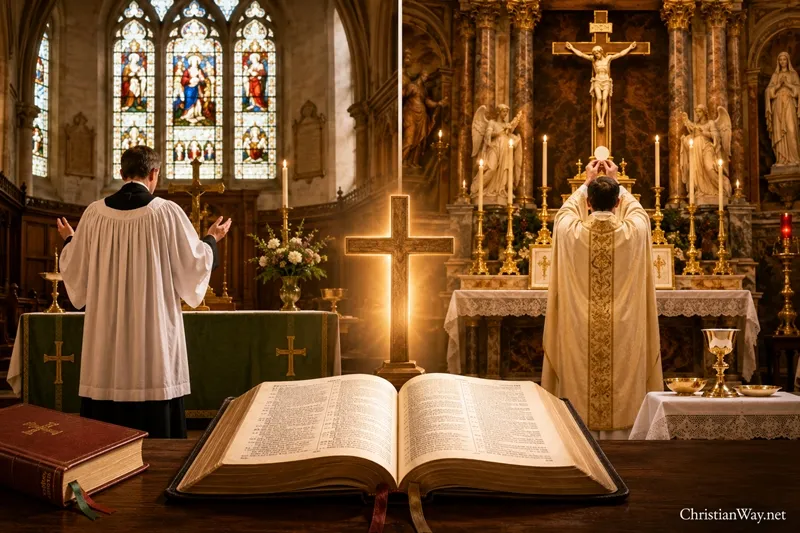
This reflection is offered not as a weapon for debate, but as a pastoral guide for understanding. Truth and charity belong together. Charity without truth becomes sentimentality, while truth without charity can become cold and destructive. The Lord calls us to something better: to speak honestly, listen patiently, and recognize the grace of God wherever Christ is faithfully confessed.
A Shared Foundation in Jesus Christ
Before considering the differences between Anglicans and Catholics, we should begin where the Christian faith itself begins: with Jesus Christ.
Both traditions confess that Jesus is the eternal Son of God who became truly human for our salvation. Both proclaim His virginal conception, His public ministry, His miracles, His suffering under Pontius Pilate, His death upon the cross, His bodily resurrection, His ascension into heaven, and His promised return in glory. Both believe that salvation comes through Christ, not through human achievement. Both worship one God in the Holy Trinity: Father, Son, and Holy Spirit.
In Anglican and Catholic churches alike, worshippers regularly hear the words of the Nicene Creed:
“We believe in one God, the Father, the Almighty, maker of heaven and earth.”
They confess Jesus Christ as “God from God, Light from Light, true God from true God,” and they profess faith in the Holy Spirit, “the Lord, the giver of life.” These are not secondary agreements. They concern the heart of the Christian revelation.
Anglicans and Catholics also share the Holy Scriptures. Their biblical canons are not identical in every respect, particularly regarding the Old Testament books often called the Deuterocanonical books or Apocrypha, but both traditions receive the Bible as the inspired witness to God’s saving work. Both hear the Law and the Prophets, the Psalms, the Gospels, the apostolic letters, and the testimony of the early Church.
Both traditions baptize with water in the name of the Father, Son, and Holy Spirit. Catholicism generally recognizes Anglican baptisms as valid when they are celebrated with water and the Trinitarian formula. This means that when a baptized Anglican is received into full communion with the Catholic Church, baptism is not ordinarily repeated. There is “one Lord, one faith, one baptism” (Ephesians 4:5).
Both traditions celebrate the Eucharist, though they understand aspects of it differently. Both preserve ordained ministry through bishops, priests, and deacons. Both follow the Christian year through seasons such as Advent, Christmas, Lent, Easter, and Pentecost. Both remember the saints, honor the witness of the martyrs, pray the Lord’s Prayer, proclaim the Ten Commandments, and seek to live according to the Gospel.
These shared foundations should not be treated as polite formalities. They are signs of a genuine, though incomplete, communion in Christ.
How Anglicanism and Catholicism Became Separated
The historical separation between the Church of England and the Church of Rome is often reduced to a single sentence: King Henry VIII wanted a divorce, and so he created a new church. This account contains part of the story, but it is far too simple.
The English Church existed for centuries before the Reformation. Christianity had reached Britain in ancient times, and the English Church had long participated in the spiritual, sacramental, and institutional life of Western Catholicism. English saints, bishops, monasteries, theologians, and missionaries contributed greatly to the wider Church. Figures such as Saint Bede, Saint Anselm, Saint Thomas Becket, and Julian of Norwich emerged from this Christian world.
In the sixteenth century, however, Europe entered a period of profound religious and political upheaval. Reformers questioned abuses in the Church, challenged aspects of medieval theology, and called for renewed attention to Scripture. Political rulers also sought greater independence from papal authority. Humanism, nationalism, disputes over church property, and new theological movements all shaped the crisis.
Henry VIII’s attempt to obtain an annulment of his marriage to Catherine of Aragon became the immediate political cause of England’s break with Rome. When the pope did not grant the annulment, the English crown rejected papal jurisdiction and declared the king supreme head of the Church in England. Yet Henry himself did not initially embrace many Protestant doctrines. The religious identity of the English Church continued to change under his successors.
During the reigns of Edward VI, Mary I, and Elizabeth I, England moved through intense periods of Protestant reform, Catholic restoration, and religious settlement. The Church of England eventually developed a distinct identity that sought, in different ways, to preserve elements of the ancient catholic tradition while incorporating principles of the Reformation.
This history explains why Anglicanism has often understood itself as both catholic and reformed. It retained bishops, liturgical worship, ancient creeds, church seasons, vestments, and sacramental language. At the same time, it emphasized the authority of Scripture, reformed certain doctrines and practices, rejected papal jurisdiction, and adopted formularies such as the Thirty-Nine Articles and the Book of Common Prayer.
Catholics, meanwhile, remained in communion with the bishop of Rome and experienced persecution during various periods of English history. Anglicans also suffered persecution when political power shifted. The divisions were not merely intellectual. They involved imprisonment, exile, confiscation of property, and martyrdom. Their wounds entered family memories and national identities.
Remembering this painful history should make Christians humble. Neither triumphalism nor romantic nostalgia can heal the Body of Christ. Healing begins when history is told honestly, when suffering is acknowledged, and when Christians refuse to inherit the hatreds of previous generations.
Scripture, Tradition, and the Authority of the Church
One of the most important differences between Anglicanism and Catholicism concerns religious authority. Both traditions value Scripture, tradition, reason, and the teaching ministry of the Church, but they relate these authorities differently.
The Catholic Understanding of Authority
Catholicism teaches that God’s revelation has been entrusted to the Church through Sacred Scripture and Sacred Tradition. These are not understood as two unrelated sources competing with one another. Rather, they flow from the same divine revelation and are interpreted authentically through the Church’s teaching office, known as the Magisterium.
For Catholics, the bishops are successors of the apostles, and they exercise their teaching ministry in communion with the bishop of Rome. The pope and the bishops do not stand above the Word of God. Their responsibility is to guard, interpret, and faithfully transmit what the Church has received.
The Catholic understanding of authority is therefore communal, sacramental, and historical. The Church is not recreated by each generation. She receives a faith already confessed, prayed, and lived by those who came before. Development in doctrine is possible, but authentic development must remain faithful to the apostolic deposit of faith.
Catholics believe that Christ did not leave His followers with a book alone, but formed a visible community with apostles, sacraments, and pastoral authority. Scripture itself arose within this believing community, and the Church recognized the biblical canon under the guidance of the Holy Spirit.
The Anglican Understanding of Authority
Anglicanism gives a foundational place to Holy Scripture. Classical Anglican formularies describe Scripture as containing all things necessary for salvation. No teaching is to be required as an article of faith if it cannot be grounded in, or faithfully derived from, Scripture.
At the same time, Anglicanism is not generally based on the idea that each Christian should interpret the Bible in isolation. Anglicans read Scripture within the worshipping life of the Church, with attention to the ancient creeds, the Church Fathers, historic councils, liturgical tradition, and disciplined theological reason.
Anglican thought is sometimes summarized by the phrase “Scripture, tradition, and reason.” This summary can be helpful, but it should not be misunderstood as though the three possessed identical authority. In classical Anglicanism, Scripture occupies a unique and governing place, while tradition and reason help the Church interpret and apply the biblical witness.
Unlike Catholicism, the Anglican Communion does not possess a universal teaching office capable of issuing binding doctrinal judgments for all Anglicans in the same way that the Catholic Magisterium does. Anglican provinces are self-governing. They are connected through shared history, worship, episcopal ministry, consultation, and communion, but no single Anglican bishop possesses universal jurisdiction over the entire Communion.
This structure allows a certain breadth and adaptability, but it can also produce serious differences between provinces. On questions of doctrine, morality, and liturgical practice, Anglicans in one region may reach conclusions that Anglicans elsewhere reject.
The contrast is therefore not simply “Catholics follow tradition while Anglicans follow the Bible.” Both traditions read Scripture within a living community. The deeper difference concerns who possesses final authority when Christians disagree about the meaning of Scripture and tradition.
The Pope and the Nature of Christian Unity
Perhaps the clearest visible difference in Anglicanism vs Catholicism is the role of the pope.
Catholics believe that the bishop of Rome is the successor of Saint Peter and possesses a unique ministry within the universal Church. Jesus said to Peter, “You are Peter, and on this rock I will build my church” (Matthew 16:18). Catholics understand this promise, together with other New Testament passages, as the biblical foundation for a continuing Petrine ministry.
The pope is not regarded as a replacement for Christ. Christ alone is the head of the Church in the ultimate sense. The pope is understood as a servant of Christ and a visible source of unity among the bishops and faithful.
Papal infallibility is also frequently misunderstood. Catholics do not believe that every statement, opinion, decision, or personal action of a pope is free from error. Nor do they believe that a pope is morally perfect. Infallibility applies only under particular conditions when the pope definitively teaches a doctrine of faith or morals to be held by the whole Church.
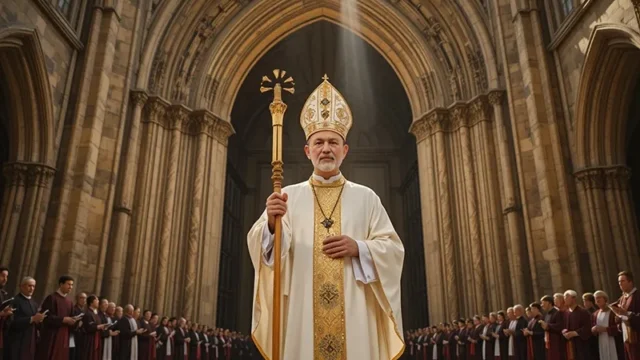
Anglicans reject the claim that the bishop of Rome possesses universal jurisdiction over all Christians by divine right. The Archbishop of Canterbury serves as an important focus of unity within Anglicanism, but he is not an Anglican pope. He cannot govern every Anglican province or impose doctrine upon the entire Communion.
Some Anglicans regard the bishop of Rome with deep suspicion because of Reformation history. Others, especially within Anglo-Catholic traditions, honor the pope as a significant Christian leader and may hope for a renewed form of universal primacy acceptable to the whole Church. Yet Anglicanism as a communion does not accept the Catholic doctrine of papal authority.
The question is not merely whether Christians appreciate a particular pope. The deeper issue is theological: Did Christ establish a permanent universal office of Petrine authority, and if so, what form should that authority take? Until this question is resolved, full communion remains difficult.
The Sacraments and the Grace of God
Catholicism recognizes seven sacraments: Baptism, Confirmation, the Eucharist, Penance or Reconciliation, Anointing of the Sick, Holy Orders, and Matrimony. These are visible signs instituted by Christ through which God communicates grace.
Anglican teaching gives a unique place to Baptism and the Eucharist as the two great sacraments directly instituted by Christ in the Gospel. Other rites—including confirmation, ordination, marriage, reconciliation, and anointing—may also be described as sacramental ministries or sacramental rites. Anglo-Catholic Anglicans frequently speak of seven sacraments, while evangelical Anglicans may reserve the word “sacrament” primarily for Baptism and the Lord’s Supper.
This difference partly reflects contrasting definitions. Catholics classify all seven as sacraments in a full theological sense. Classical Anglican formularies distinguish Baptism and the Eucharist from the other five rites. Yet in actual pastoral life, Anglicans may practice confirmation, private confession, anointing, marriage, and ordination with great reverence.
Both traditions believe that the grace of God is not merely an abstract idea. God meets His people through created realities: water, bread, wine, oil, human words, human touch, and the gathered community. Christianity is incarnational because the Son of God truly became flesh. The material world can become an instrument of divine mercy.
The Eucharist and the Presence of Christ
The Eucharist stands at the heart of both Catholic and Anglican worship, but it is also an area of significant theological difference.
Catholics believe that during the Eucharistic prayer, the bread and wine become the Body and Blood of Christ. The term “transubstantiation” expresses the conviction that the deepest reality of the bread and wine is changed, even though their outward appearances remain. The Eucharist is not merely a symbol that reminds believers of an absent Christ. It is the sacramental presence of Christ Himself.
Catholics also understand the Mass as a sacramental participation in the one sacrifice of Christ. Jesus is not sacrificed repeatedly. His sacrifice on Calvary was complete and unrepeatable. In the Eucharist, that one eternal offering becomes sacramentally present to the Church.
Anglican teaching on the Eucharist contains a wider range of interpretations. Most Anglicans affirm that Christ is truly present, but they may explain this presence differently. Anglo-Catholic Anglicans may hold beliefs very close to Catholic teaching and may use language such as “Mass,” “altar,” “tabernacle,” and “Real Presence.” Other Anglicans emphasize a spiritual reception of Christ by faith. Some speak primarily of the Eucharist as a memorial meal, though not necessarily a merely symbolic one.
Classical Anglicanism rejected certain medieval explanations of transubstantiation, but it did not simply deny that believers truly receive Christ. The Book of Common Prayer and Anglican liturgical traditions preserve a profound reverence for Holy Communion.
This diversity means that two Anglican parishes may look and sound quite different. One may resemble a Catholic parish in ceremonial, vestments, incense, devotion, and Eucharistic theology. Another may have simpler worship and emphasize biblical preaching and the communal meal.
Despite increasing theological agreement through ecumenical dialogue, Catholics and Anglicans do not yet share full Eucharistic communion. For Catholics, receiving Communion expresses not only personal faith in Christ but also full communion with the Catholic Church and acceptance of her sacramental and ecclesial faith. Therefore, Anglican Christians are not ordinarily admitted to Catholic Communion, though limited exceptional provisions exist in particular pastoral circumstances.
This discipline can feel painful, especially at weddings, funerals, and ecumenical gatherings. It should never be used as a gesture of hostility. The closed Eucharistic table is intended to express the truth that sacramental communion and ecclesial communion belong together. At the same time, the pain of separation should deepen the desire for genuine unity.
Apostolic Succession and the Validity of Holy Orders
Both Catholicism and Anglicanism maintain a ministry of bishops, priests, and deacons. Both understand bishops as standing within the historical succession of the apostles. Yet the Catholic Church and the Anglican Communion disagree about the sacramental validity of Anglican ordinations.
Catholic teaching holds that Anglican orders are not valid in the Catholic sacramental sense. This judgment arose from questions concerning changes to ordination rites, the intention of the ordaining Church, and interruptions in the sacramental understanding of priesthood during the Reformation.
Anglicans reject this judgment. They maintain that their bishops stand within the historic episcopal succession and that Anglican ordinations preserve the ministry entrusted to the apostles. Anglican theologians have also argued that later developments, including participation by bishops from other historic lines of succession, further strengthen their claim.
This is not a dispute about whether Anglican clergy are sincere, educated, holy, or pastorally fruitful. Many Anglican priests and bishops have served Christ with extraordinary faithfulness. The question is sacramental and ecclesiological: What is required for valid ordination, and who possesses authority to judge it?
Because Catholicism does not recognize Anglican priestly ordination as sacramentally valid, an Anglican priest who becomes Catholic and is called to Catholic priestly ministry must be ordained in the Catholic Church. This is not intended to erase his previous Christian service. It reflects the Catholic understanding of Holy Orders.
Clerical Celibacy, Marriage, and the Ordination of Women
Catholic and Anglican practices regarding ordained ministry differ in several visible ways.
In the Latin Catholic Church, priests are ordinarily required to remain celibate. Celibacy is understood as a gift through which a priest gives himself more completely to Christ and the service of the Church. It is a discipline rather than an unchangeable doctrine. Eastern Catholic Churches have long ordained married men to the priesthood, although bishops are normally chosen from among celibate clergy. There are also limited circumstances in which married former Anglican ministers may be ordained as Catholic priests.
Anglican clergy may marry, and this has been part of Anglican practice since the Reformation. Married Anglican priests and bishops often understand family life as deeply connected to their pastoral vocation.
Another major difference concerns the ordination of women. The Catholic Church ordains only men to the priesthood and episcopate, teaching that it does not possess authority to confer priestly ordination upon women. Women exercise many forms of leadership, scholarship, ministry, service, and consecrated life, but they are not ordained as priests.
Many Anglican provinces ordain women as deacons, priests, and bishops, though the practice is not universal across the Anglican Communion. Some Anglicans regard the ordination of women as a faithful development guided by the Holy Spirit. Others believe it contradicts apostolic tradition and the example of Christ in choosing male apostles.
This difference creates a serious obstacle to full ecclesial unity. It touches not only social questions about equality, but the deeper theology of priesthood, sacramental representation, Scripture, tradition, and the authority of the Church to change inherited practice.
The disagreement should be discussed with respect. It is unjust to assume that Catholics oppose women’s dignity, just as it is unjust to assume that Anglicans who ordain women have abandoned the Bible. Both sides claim to be acting in faithfulness to Christ, though they reach incompatible conclusions.
Mary, the Saints, and Christian Devotion
Catholics possess a strong and highly developed devotion to the Virgin Mary and the saints. They honor Mary as the Mother of God because the child she bore is truly God the Son made flesh. They believe in her Immaculate Conception, her perpetual virginity, and her bodily Assumption into heaven. Catholics ask for Mary’s intercession and may pray the Rosary, celebrate Marian feasts, visit shrines, and use sacred images as aids to devotion.
Catholics do not worship Mary. Worship belongs to God alone. Mary is honored because of the grace God gave her and because of her unique relationship to Christ. Her words, “My soul magnifies the Lord” (Luke 1:46), reveal the true purpose of Marian devotion: to magnify God and lead believers to her Son.
Anglican attitudes toward Mary and the saints vary widely. All Anglicans who accept the ancient creeds can properly call Mary the Mother of God, and she is remembered in Anglican liturgy. Many Anglican churches celebrate feasts of Mary and other saints. Anglo-Catholic Anglicans may pray the Rosary, ask for the intercession of saints, venerate icons, and hold beliefs close to Catholic devotion.
Other Anglicans are cautious about invoking the saints. They may honor Mary as the faithful mother of Jesus and remember the saints as examples of Christian discipleship while directing prayer only to God. Evangelical Anglicans often worry that strong devotional practices can obscure the unique mediation of Christ.
Catholics respond that the intercession of saints does not compete with the mediation of Christ. Christians on earth ask one another for prayer, and the saints in heaven remain alive in Christ. Their prayers participate in Christ’s one mediation rather than replacing it.
The difference therefore concerns not whether holy Christians should be remembered, but how the communion between the Church on earth and the Church in heaven is expressed.
Salvation, Grace, Faith, and Good Works
Both Anglicans and Catholics confess that salvation is the gift of God’s grace through Jesus Christ. Neither tradition teaches that human beings can save themselves by moral effort.
The Catholic Church teaches that justification begins entirely through grace. Human beings cannot earn the first movement of salvation. Through faith and baptism, they are united with Christ, forgiven, and made new. The grace of God then enables them to love, obey, repent, persevere, and grow in holiness.
Good works do not replace grace. They are the fruit of grace and the living expression of faith. As Saint Paul writes, “faith working through love” is what matters (Galatians 5:6). Catholics understand salvation not merely as a legal declaration but also as a real transformation of the human person.
Classical Anglican teaching strongly emphasizes justification by faith. Human beings are accepted by God because of Christ’s merits, not because of their own moral worth. Yet authentic faith is expected to bear fruit in love and obedience. The Thirty-Nine Articles describe good works as the fruit of faith, even though they cannot remove sin or earn justification.
At their best, both traditions avoid two opposite errors. The first is the belief that people can purchase salvation through religious works. The second is the belief that saving faith can remain barren, producing no repentance, love, mercy, or transformation.
Jesus does not merely pardon us while leaving us unchanged. He forgives us in order to restore us. Grace is not divine permission to remain imprisoned by sin. It is the power of God that awakens the heart, heals the will, and teaches us to love.
The historic controversies surrounding faith and works were often sharpened by differing vocabulary, abuses, and mutual suspicion. Real differences remain, but ecumenical dialogue has shown that Catholics and Anglicans can affirm together many essential truths about grace, justification, and the saving work of Christ.
Confession, Forgiveness, and the Healing of the Soul
Catholics receive the Sacrament of Reconciliation by confessing serious sins to a priest, expressing sorrow, receiving absolution, and undertaking penance. The priest acts not by personal power but through the ministry entrusted to the Church. Christ said to the apostles, “Whose sins you forgive are forgiven them” (John 20:23).
For Catholics conscious of grave sin, sacramental confession is ordinarily necessary before receiving the Eucharist. Regular confession is also encouraged as a means of spiritual growth, healing, and humility.
Anglican worship includes general confession and absolution, especially within the Eucharistic liturgy. Private confession to a priest is also available in many Anglican traditions, particularly among Anglo-Catholics. Yet it is generally not required of all believers in the same way that Catholic sacramental discipline requires confession of grave sins.
Some Anglicans find private confession deeply healing. Others confess directly to God and seek pastoral counsel when needed. Anglican spirituality has often expressed the freedom of private confession by saying that all may use it, some should use it, but none are universally compelled to use it.
Both traditions affirm that forgiveness comes from Christ. The pastoral question concerns how Christ has entrusted the ministry of reconciliation to His Church and how the believer receives the assurance of divine mercy.
Confession should never be presented as humiliation for its own sake. It is an encounter with the wounded and risen Lord, who knows the truth about us and still calls us by name. The purpose is not shame but freedom.
Marriage, Divorce, and Family Life
Catholics understand marriage between a baptized man and woman as a sacrament. A valid sacramental marriage is an enduring covenant that reflects the faithful love of Christ for the Church. The Catholic Church therefore teaches that a valid consummated sacramental marriage cannot be dissolved by human authority.
A declaration of nullity, commonly called an annulment, is not a Catholic divorce. It is a judgment that a valid marital bond was never established because something essential was absent at the time of consent.
Anglican churches also honor marriage as a holy covenant and a sign of God’s grace. However, many Anglican provinces permit divorce and remarriage under certain circumstances. Their pastoral practices and theological explanations differ from one province to another.
Anglican provinces also differ among themselves on questions of same-sex relationships, blessings, and marriage. Some have adopted practices that the Catholic Church rejects, while other Anglican provinces uphold traditional Christian teaching on marriage with great firmness.
This internal diversity reveals a larger difference between the two communions. Catholic moral doctrine is intended to be universal, even when local pastoral practice is inconsistent. Anglican moral teaching may be shaped more directly by the synods and pastoral decisions of individual provinces.
These issues touch real human lives. They involve families, children, wounds, hopes, failures, and the desire to belong. Christians must therefore speak with both clarity and compassion. No person should be reduced to a moral controversy. Christ never separated truth from mercy.
Worship: The Mass and the Book of Common Prayer
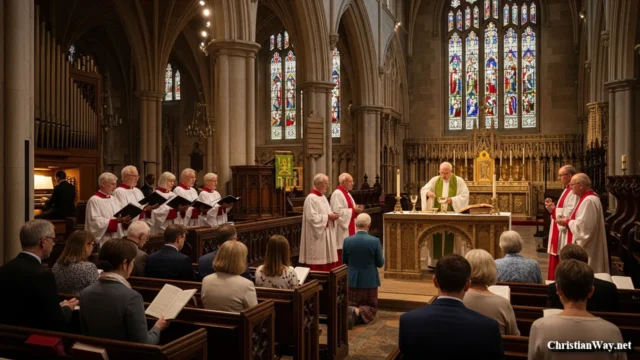
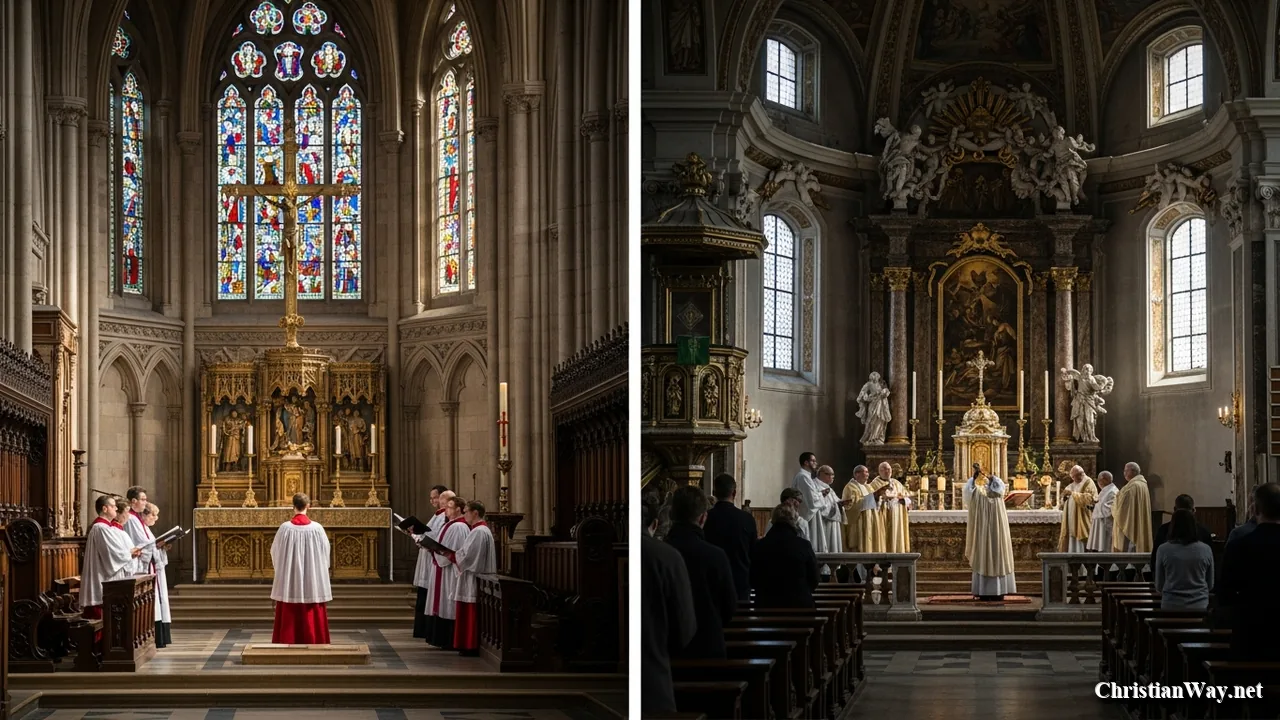
Visitors to Anglican and Catholic churches may notice many similarities. Both may use candles, vestments, processions, Scripture readings, psalms, sermons, creeds, intercessions, bread, wine, and a liturgical calendar. In some Anglican parishes, the service may appear almost indistinguishable from a Catholic Mass.
Catholic worship centers on the Mass, in which the Word of God is proclaimed and the Eucharistic sacrifice is celebrated. The liturgy is governed by universal and regional norms, with authorized variations among rites and languages.
Anglican worship has been profoundly shaped by the Book of Common Prayer. Its language has formed generations of Christians through Morning Prayer, Evening Prayer, the Eucharist, the Psalms, marriage rites, funeral prayers, and the rhythm of the Church year. Modern Anglican provinces also use revised liturgical books.
Anglican worship varies greatly. An Anglo-Catholic parish may celebrate a solemn Eucharist with incense, chanting, statues, and Marian devotion. An evangelical Anglican parish may emphasize preaching, contemporary music, spontaneous prayer, and simpler ceremonial. A broad-church parish may combine elements of both.
Catholic worship also displays legitimate diversity. A quiet weekday Mass, a charismatic prayer gathering, a Byzantine Catholic Divine Liturgy, and a solemn Latin celebration may look very different while remaining within the same Catholic communion.
The essential question is not which style is more beautiful. Beauty can take many forms. The deeper question is whether worship directs the heart toward the living God, faithfully proclaims Christ, and forms believers in holiness.
Unity and Diversity Within Each Tradition
Neither Anglicanism nor Catholicism should be treated as a completely uniform spiritual culture.
Within Anglicanism, one may encounter evangelical, charismatic, broad-church, liberal, and Anglo-Catholic communities. They share certain structures and historical formularies, but their theological emphases can differ significantly. One Anglican may speak about the Eucharist, Mary, confession, and priesthood in language that sounds very Catholic. Another may speak in ways more closely associated with Reformed Protestantism.
Catholicism also includes different spiritual traditions and theological schools. Benedictines, Franciscans, Dominicans, Jesuits, Carmelites, Eastern Catholics, charismatic Catholics, contemplatives, and social activists may express the same faith through distinct spiritual languages. Catholics may disagree about politics, pastoral priorities, liturgical preferences, and theological approaches while remaining united in the same sacramental communion and doctrine.
The difference is that Catholic diversity exists within a universal structure of doctrinal and sacramental authority centered upon communion with the pope and bishops. Anglican diversity exists within a looser communion of autonomous provinces connected by shared heritage and episcopal relationships.
This distinction helps explain why disagreements within Anglicanism can sometimes threaten the unity of the Communion itself. Without a universally binding teaching office, disputes may remain unresolved or lead provinces to impaired communion with one another.
Catholicism faces a different challenge: maintaining universal unity while respecting legitimate local cultures and pastoral realities. Centralized authority can protect doctrinal coherence, but it must always be exercised as service rather than domination.
What Anglicans and Catholics Can Learn From One Another
It is possible to recognize serious differences while also receiving spiritual gifts from another Christian tradition.
Catholics may appreciate Anglicanism’s beautiful tradition of scriptural prayer, its reverence for the English language, its choral heritage, its pastoral sensitivity, and its ability to hold together different spiritual temperaments. The Book of Common Prayer has nourished Christians far beyond the boundaries of Anglicanism. Anglican preaching, hymnody, scholarship, and public witness have enriched the wider Christian world.
Anglicans may appreciate Catholicism’s visible universality, sacramental coherence, continuity of doctrine, rich contemplative traditions, devotion to the saints, social teaching, missionary life, and defense of the unity between faith and reason. The Catholic Church’s global communion demonstrates that believers from countless cultures can belong to one sacramental body.
Learning from one another does not require abandoning conviction. True ecumenism is not the search for the smallest possible set of beliefs. It is a movement toward the fullness of truth in Christ.
An Anglican should not pretend to accept papal authority merely for the sake of politeness. A Catholic should not minimize the Catholic understanding of the Eucharist in order to avoid discomfort. Honest dialogue allows each tradition to speak from its deepest convictions while listening for the voice of the Spirit.
Ecumenical Dialogue and the Hope for Reconciliation
During the centuries following the Reformation, relations between Anglicans and Catholics were often marked by hostility. In the modern period, however, both communions have taken important steps toward dialogue and reconciliation.
Anglican and Catholic theologians have studied questions such as the Eucharist, ministry, authority, salvation, Mary, and the nature of the Church. These conversations have revealed a greater degree of shared faith than earlier generations sometimes recognized. They have also clarified the remaining obstacles to full communion.
Ecumenism does not mean pretending that unity already exists in its fullness. Nor does it mean creating a vague Christianity without doctrine. Christian unity must be visible, sacramental, apostolic, and grounded in truth.
At the same time, unity is not something Christians manufacture by diplomacy alone. It is a gift of the Holy Spirit. Believers cooperate with this gift through repentance, prayer, theological study, friendship, and conversion of heart.
Catholics must repent of every form of arrogance, coercion, and lack of charity toward Anglicans. Anglicans must also examine inherited prejudices and misrepresentations of Catholic faith. Both communities must allow Christ to purify their memories.
The prayer of Jesus for unity was not an optional aspiration. On the night before His death, He prayed that His disciples might be one so that the world might believe. Christian division weakens the witness of the Gospel. When churches compete for prestige or treat one another with contempt, the face of Christ is obscured.
Unity cannot be achieved by sacrificing truth, but neither can truth be separated from humility. The closer Christians draw to Christ, the closer they should draw to one another.
Choosing Between Anglicanism and Catholicism
Some readers are not approaching this question merely from academic interest. They may be discerning where to worship, whether to become Catholic, whether to remain Anglican, or how to respond when a spouse belongs to another tradition.
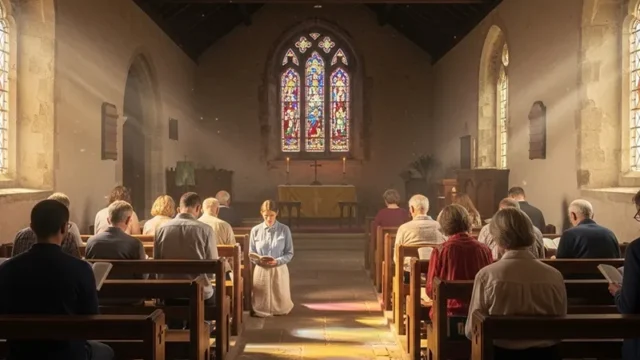
Such decisions should not be made through internet arguments alone. A person should pray, read Scripture, study the history of the Church, attend worship, speak with trustworthy clergy, and examine the deepest theological claims of each tradition.
The decisive questions are not only emotional or aesthetic. A beautiful choir, a welcoming congregation, or a gifted preacher can be a great blessing, but these alone cannot determine the truth of a church’s claims.
The seeker must ask: What did Christ intend His Church to be? Did He establish a universal Petrine ministry? Where is the fullness of apostolic authority found? What is the Eucharist? What makes ordination valid? Can the Church definitively teach in Christ’s name? How should Scripture and tradition be interpreted when Christians disagree?
These questions require patience. They should be approached without fear. God is not threatened by sincere inquiry. The Lord who said, “Seek, and you will find,” desires not merely to win our arguments but to possess our hearts.
Catholics should welcome sincere questions without pressuring or manipulating anyone. Anglicans should not fear an honest investigation of Catholic claims. In every case, conscience must be formed by truth rather than convenience.
Those who are already Anglican or Catholic should also resist the temptation to judge the spiritual lives of others. God alone sees the heart completely. A Catholic may possess the fullness of sacramental means and still live carelessly. An Anglican may lack full communion with Rome and yet love Christ with profound sincerity. Grace calls every believer to deeper conversion.
The Heart of Anglicanism vs Catholicism
The central differences between Anglicanism and Catholicism concern the authority of the pope, the teaching office of the Church, the number and nature of the sacraments, the validity of Anglican orders, the ordination of women, Eucharistic doctrine, Marian dogmas, and certain areas of moral teaching.
Yet beneath these differences lies a vast shared inheritance: faith in the Trinity, belief in the Incarnation, reverence for Scripture, baptism, the ancient creeds, prayer, liturgical worship, service to the poor, hope in the resurrection, and the confession that Jesus Christ is Lord.
The differences should not be minimized, because they affect the visible structure and sacramental life of the Church. But the shared beliefs should not be minimized either. Anglicans and Catholics are not strangers to one another. They are Christians whose separation remains a wound within the Body of Christ.
A mature understanding of Anglicanism vs Catholicism therefore avoids two extremes. One extreme says that the traditions are essentially identical and that their differences do not matter. The other says that they have almost nothing in common. Neither is true.
They share much, but not yet everything required for full communion. They stand near one another in many places, but a real distance remains. The Christian response is neither indifference nor hostility, but prayerful perseverance.
Reflect and Pray
Perhaps the most important question is not whether we can recite every difference between Anglicans and Catholics. The deeper question is whether these differences lead us to greater love for Christ, deeper humility, and more earnest prayer for His Church.
Knowledge can become a form of pride. We may use theology to prove that we belong to the correct group while forgetting that every Christian stands before the cross as a sinner in need of mercy. The truth is not given to us so that we may despise others. It is given so that we may be converted.
Catholics should live their faith so faithfully that Anglican neighbors can see the beauty of communion, the reality of the Eucharist, and the tenderness of Mary’s maternal witness. Anglicans should live their faith so faithfully that Catholics can recognize their love of Scripture, their reverence in worship, and their devotion to Christ.
Where disagreement remains, let there be honesty. Where misunderstanding persists, let there be patient explanation. Where history has left wounds, let there be repentance. Where cooperation is possible, let Christians serve together. And where full sacramental communion is not yet possible, let the pain itself become a prayer.
Christ is not divided. His love is not divided. His desire for His people is not confusion, rivalry, or bitterness, but unity in truth and holiness.
Let us pray:
Lord Jesus Christ,
You prayed that all Your disciples might be one.
Forgive us for the pride, fear, and hostility
that have deepened the divisions among Christians.
Guide Anglicans and Catholics into the fullness of truth.
Preserve all that is good, holy, and faithful in each tradition.
Heal the wounds of history, purify our memories,
and teach us to speak with honesty and love.
Draw every Christian closer to Your Sacred Heart.
Make us faithful to Your Word, obedient to Your Spirit,
and eager for the unity that reflects Your own love.
May the day come when all who confess Your holy name
may worship together in visible communion,
sharing one faith, one sacramental life, and one apostolic fellowship
for the glory of the Father.
May the peace of Christ dwell richly in your heart, and may His love guide you in truth, humility, and hope.
— Fr. John Matthew